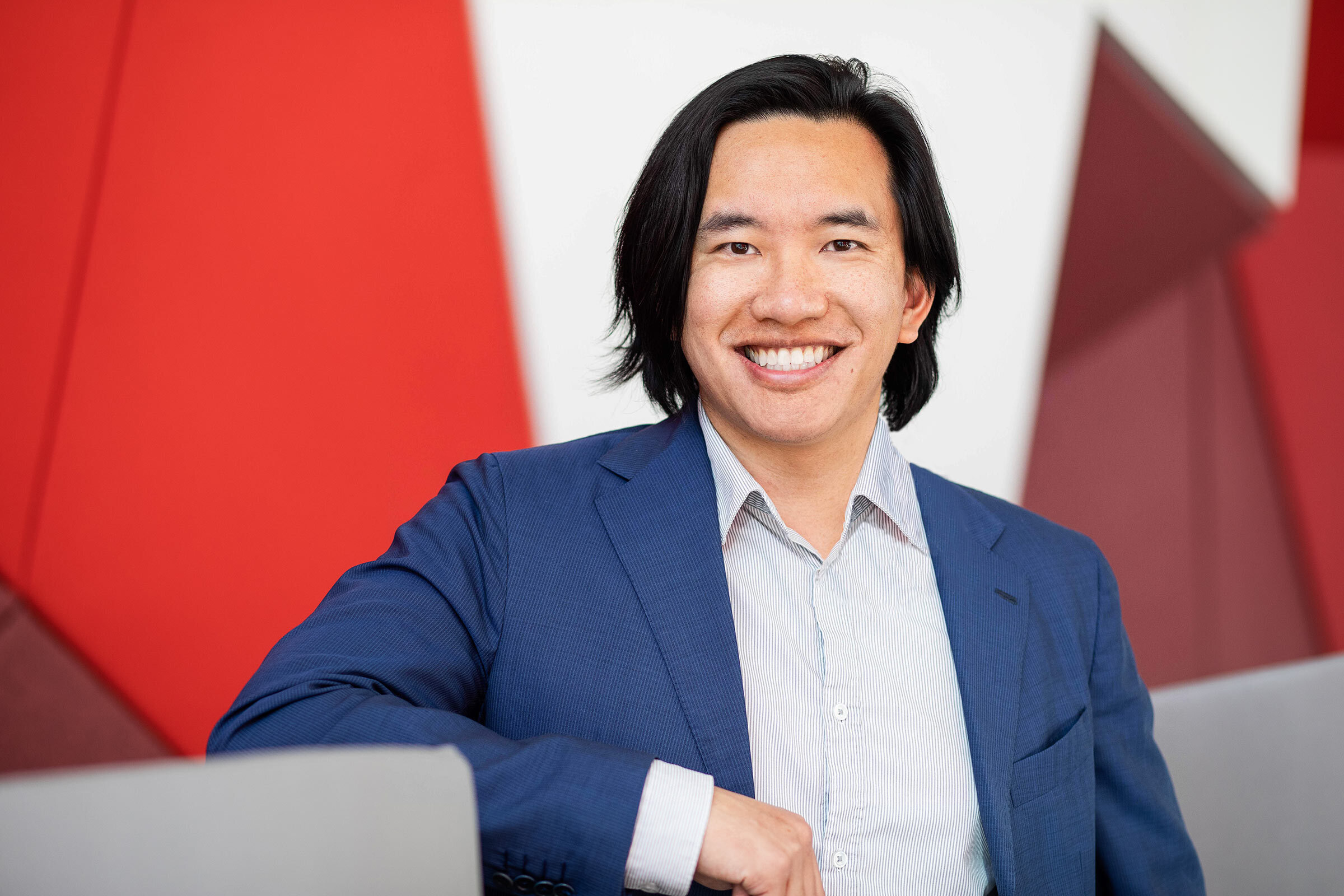
Erik Prytz is a Senior Associate Professor in Cognitive Science at the Department of Computer and Information Science (IDA) at Linköping University. His research focuses on applying human factors principles to improve safety-critical systems, particularly in emergency response domains such as first aid, disaster medicine, and prehospital care. He holds a PhD in Human Factors Psychology and has served in roles including Director of the Forum Securitatis graduate school and Program Chair for the Cognitive Science BSc program. Education: PhD in Human Factors Psychology (Old Dominion University, 2014), MSc in Cognitive Science (LiU, 2010). Research Interests: Simulation-based training, stress and mental workload, emergency responder teamwork, and human-system interaction in crisis scenarios. His work emphasizes interdisciplinary collaboration, combining cognitive science, computer science, and medicine to enhance emergency response systems. Recent projects explore driver behavior toward emergency vehicles, ad-hoc responder group dynamics, and optimal placement of bleeding control kits in public spaces. He contributes to initiatives like the Center for Advanced Research in Emergency Response (CARER) and the Forum Securitatis graduate school. Erik’s teaching includes courses on human factors, distributed cognition, and emergency response systems. He actively participates in curriculum development and quality assurance committees within the Faculty of Arts and Sciences.
Dr. Md Noor-A-Rahim is an Assistant Professor (Lecturer-Above the Bar) at the School of Computer Science and Information Technology, University College Cork (Ireland). He previously served as a Senior Researcher and Marie Curie Fellow at the same institution. His academic journey includes a PhD from the University of South Australia (2015) and the prestigious Michael Miller Medal for his outstanding thesis on wireless communication systems. His research focuses on Intelligent Transportation Systems, Machine Learning, IoT, Wireless Networks, and DNA-based data storage. He has published extensively on topics like 6G-V2X systems, time-sensitive networking, and error characterization in DNA storage. His work integrates cutting-edge technologies such as intelligent reflecting surfaces (IRS), federated learning, and ultra-reliable low-latency communication (URLLC). Research Interests : Dr. Rahim's research bridges theoretical advancements and real-world applications in vehicular networks, smart manufacturing, and next-generation communication systems. He explores challenges in autonomous driving, edge computing, and bio-constrained data storage. His contributions include novel coding schemes for anytime transmission and frameworks for mitigating big vehicle shadowing in V2X communications. Key Publications : His recent work includes a comprehensive survey on wireless TSN (2025), analysis of 6G-V2X systems (2022), and breakthrough studies on DNA data storage error modeling (2023). These publications highlight his expertise in both foundational research and industry-relevant solutions. Awards : Recipient of the Michael Miller Medal (2015) for doctoral research excellence. Grants & Labs : While specific grants are not listed in the text, his research portfolio suggests involvement in collaborative projects with industry partners and funding bodies. He leads interdisciplinary efforts in smart manufacturing and vehicular communication systems.
Vitor Sencadas is an Associate Professor at the Department of Materials and Ceramic Engineering, University of Aveiro, Portugal. His research focuses on advanced materials for biomedical, energy, and environmental applications, with a strong emphasis on nanotechnology and additive manufacturing. He leads projects such as 3S4Leather, addressing leather waste valorization and sensorized additive manufacturing solutions. He has supervised multiple PhD students and contributed to over 150 publications in journals like Advanced Functional Materials and ACS Applied Materials & Interfaces. His research interests include biomimetic materials, flexible electronics, wearable sensors, and sustainable materials. Notable achievements include developing piezoelectric and luminescent solar concentrators, and contributions to Stanford’s 2022/2024 World Top 2% Scientists list. His work bridges materials science with practical applications in healthcare, energy harvesting, and environmental biorefinery processes. He collaborates extensively with CICECO – Aveiro Institute of Materials, contributing to interdisciplinary research and innovation in smart materials and biomedical devices. His group explores multifunctional materials for healthcare monitoring, energy systems, and sustainable manufacturing.
Alp Akcay is an Associate Professor of Industrial Engineering at Northeastern University's College of Engineering in Boston, USA. He specializes in smart manufacturing systems and supply chain optimization using stochastic operations research, machine learning, and simulation techniques. His research collaborations with semiconductor firms like NXP, Nexperia, and ASML have produced data-driven solutions for production planning, predictive maintenance, and obsolescence management. Education: PhD in Operations Management and Manufacturing from Carnegie Mellon University. Research interests include digital twin technologies, semiconductor manufacturing processes, and Industry 4.0 applications. He currently serves as Associate Editor for the Journal of Simulation and coordinates the Manufacturing & Industry 4.0 track at the Winter Simulation Conference. Professional affiliations: INFORMS, INFORMS QSR Society, I-SIM (INFORMS Simulation Society).
Babak Abedin is a Professor of Business Analytics and Head of the Department of Actuarial Studies and Business Analytics at Macquarie Business School, Macquarie University. He holds a PhD in Information Systems from UNSW Business School and has expertise in AI ethics, cybersecurity governance, and digital transformation. His research focuses on responsible AI, data analytics governance, and the societal impact of technology. He has secured over $4M in external funding and led projects with organizations like the Reserve Bank of Australia and Cancer Council NSW. He is the program leader of Responsible AI at Macquarie’s Centre for Applied AI and serves on editorial boards for journals such as Information Systems Frontiers and Electronic Markets . His teaching emphasizes real-world challenges, earning him the UTS Learning & Teaching Citation (2019) and Macquarie’s Faculty of Business Teaching Award (2010). He has supervised over 10 PhD/Master’s students. His recent work explores agile cybersecurity policy frameworks, digital empowerment in health communities, and AI’s ethical implications. He frequently engages with media on topics like health informatics and AI governance. Key collaborations include studies on blockchain systems, dynamic capabilities in digital transformation, and gender bias in AI. His articles address cybersecurity policymaking, adult learning in online communities, and value co-creation in digital ecosystems.
Sagar Samtani is an Associate Professor and Weimer Faculty Fellow at the Kelley School of Business , Indiana University. He serves as Director of the Kelley’s Data Science and Artificial Intelligence Lab (DSAIL) . His research focuses on Artificial Intelligence for Cybersecurity , including cyber threat intelligence, deep learning, and dark web analytics. He holds a PhD from the University of Arizona (2018), and has received prestigious awards such as the Indiana University Outstanding Junior Faculty Award (2023) and IEEE Big Data Security Junior Research Award (2023). Education : PhD in Information Systems, University of Arizona, 2018 MSMIS, University of Arizona, 2014 BSBA, University of Arizona, 2013 Research Interests : Samtani’s work addresses cybersecurity challenges through AI, including proactive threat detection, vulnerability assessment, and healthcare analytics. He emphasizes explainable AI (XAI) for transparency in cybersecurity systems. Grants & Awards : NSF Grant: CyberCorps SFS Program ($2.3M, 2020–2025) NSF Grant: AI4Cyber Research Education ($300K, 2020–2022) Multiple teaching awards, including the Trustees Teaching Award (2023) and recognition as one of Top 50 Undergraduate Professors (2022) Labs & Teams : Leads the DSAIL lab, focusing on AI-driven solutions for business and cybersecurity. Collaborates with NSF-funded initiatives on cyber AI education and threat intelligence.
Fernando Sánchez-Figueroa is a Full Professor at the University of Extremadura's Department of Computer Systems Engineering and Telematics. He is a co-founder of Homeria Open Solutions, a spin-off engaged in R&D projects under EU frameworks. His research focuses on Software Engineering, Machine Learning, Data Visualization, and Ambient Intelligence. He has authored over 50 scientific articles and led numerous R&D contracts with public and private entities. Key roles include: Academic: Full Professor at University of Extremadura Entrepreneur: Co-founder of Homeria Open Solutions Research: Participation in EU-funded projects and development of AI-driven solutions for healthcare, smart cities, and education Research Interests: Machine Learning applications in healthcare, predictive analytics for education, and sustainable smart city technologies. His work bridges theoretical advancements with practical implementations, such as medical image segmentation using SAM models and cost-efficient UAV systems. Publications: Recent works include decision support systems for employability analysis, zero-shot learning in medical imaging, and recommender systems for education. He emphasizes data-driven approaches and model-driven engineering in software development. Impact: Developed tools like CompareML for preliminary data analysis and LiveSankey for advanced web visualization. His contributions span academia and industry, addressing challenges in healthcare, urban sustainability, and educational technology.
Jonathan L. Goodall is a Professor of Civil and Environmental Engineering and Director of the Link Lab at the University of Virginia. His research focuses on hydroinformatics, urban hydrology, and flood modeling, leveraging data science and cyber-physical systems to enhance resilience in coastal urban environments. He leads efforts in reproducible environmental modeling through integration of platforms like HydroShare, emphasizing open science and computational workflows. His work includes advancing machine learning techniques for real-time flood forecasting, integrating IoT and sensor networks for smart city applications, and assessing climate change impacts on coastal communities. Notable contributions involve developing surrogate models for flood prediction in Norfolk, VA, and studying compound flooding effects using hydrodynamic modeling paired with crowdsourced data. Collaborations span universities, national labs, and agencies like CUAHSI, focusing on environmental data interoperability and infrastructure resilience. Goodall’s research often addresses socio-technical challenges in urban flood management, combining engineering solutions with community engagement strategies. His lab explores reinforcement learning for real-time stormwater control, IoT education initiatives, and geospatial tools for flood vulnerability analysis. Projects frequently involve interdisciplinary teams and emphasize reproducibility through containerized environments and metadata standards.
Jeff Sadler is an Assistant Professor in the Department of Biosystems & Agricultural Engineering at Oklahoma State University, where he also serves as an Extension Specialist for Water Resources with OSU Extension. He leads the WaDE (Water Data and Education) Lab, focusing on data science and machine learning applications in water resources. Education: PhD in Civil and Environmental Engineering, University of Virginia (2019) MS in Civil Engineering, Brigham Young University (2015) BS in Civil Engineering, Brigham Young University (2013) Research Interests: Jeff’s research lies at the intersection of data science and water resources. He specializes in machine learning, particularly physics-guided and process-aware deep learning, for modeling stream temperature, water quality, flood dynamics, and hydrological forecasting. His work emphasizes real-time decision support, reproducible modeling, and integrating domain knowledge into data-driven systems. Recent Research Trends: His recent publications demonstrate a strong focus on advanced deep learning architectures (e.g., graph neural networks, recurrent models), data assimilation, multi-task learning, and surrogate modeling for environmental systems. Applications center on the Delaware River Basin and coastal Virginia, with implications for climate change adaptation and infrastructure resilience. Scientific Awards: No awards explicitly listed in the provided text. Advising and Grants: Jeff mentors graduate students and supervises master's and doctoral research. He is actively funded through multiple grants from the USDA, NOAA, and USGS, supporting projects in water quality monitoring, rural health, evapotranspiration forecasting, and integrated hydrological modeling. Labs and Teams: He leads the WaDE Lab, which develops data-driven tools for water resource education and management. He has collaborated extensively with researchers from the U.S. Geological Survey, University of Virginia, and other institutions on cyberinfrastructure, reproducible modeling, and environmental machine learning.
Professor Carsten Rudolph serves as Deputy Dean at Monash University's Faculty of Information Technology and directs the Oceania Cyber Security Centre (OCSC). He holds a PhD in Information Security from Queensland University of Technology (2002) and a Diplom in Computer Science from Goethe University Frankfurt (1997). His interdisciplinary research focuses on cybersecurity foundations, including cryptographic protocols, AI-driven security, human factors, and national cybersecurity policy. Key areas include securing smart grids, digital health systems, and transnational energy networks. Notable contributions include establishing the OCSC, leading Pacific region cybersecurity maturity reviews with Oxford University, and advancing frameworks for firmware security in virtual power plants. He chairs major projects like RAI4IoE (Responsible AI for Energy) and Post-Quantum Cryptography initiatives. Teaching responsibilities include cybersecurity modules like FIT3173 and FIT3168. Rudolph's research outputs (137+ publications) emphasize phishing detection via AI, blockchain-based energy trading, and resilient smart grid systems. He collaborates internationally on policy development and has advised 12 major research projects funded by agencies like the U.S. Bureau of East Asia and Pacific Affairs.
Dr. Andy Nguyen is a Senior Lecturer in Structural Engineering at the University of Southern Queensland, within the School of Engineering. He is an active researcher and educator, specializing in the Structural Health Monitoring (SHM) of critical civil infrastructure such as bridges, buildings, and transport tunnels. Bachelor of Engineering (BEng), NUCE, 1999 Master of Engineering (MEng), NUCE, 2003 Doctor of Philosophy (PhD), Queensland University of Technology (QUT), 2014 Dr. Nguyen's research is at the forefront of integrating advanced technologies into civil engineering. His primary focus is on developing and deploying sophisticated SHM systems that utilize sensors, data analytics, and machine learning to provide real-time insights into the structural integrity of ageing infrastructure. His work aims to enable proactive maintenance, extend the lifespan of structures, and enhance public safety. He has successfully implemented monitoring systems on major bridges and high-rise buildings in Queensland and New South Wales, with systems capable of even detecting distant earthquake events. His research interests span Structural Health Monitoring, Machine Learning for Engineering, Damage Detection, Finite Element Model Updating, Sustainable Building Materials like bamboo, and the application of AI for automated condition assessment of transport infrastructure. The analysis of his recent publications reveals a strong and consistent research trajectory centered on the application of data-driven and AI methods to solve practical problems in civil infrastructure. His work frequently combines signal processing techniques (like Stockwell Transform) with deep learning models for tasks such as crack detection in concrete and pavement. He also conducts significant research on model updating for complex structures like cable-stayed and arch bridges, using vibration data and optimization algorithms. The integration of machine learning for overload classification and the development of cost-effective, automated monitoring systems are key trends in his recent output. Advanced Queensland Fellow (2024-2027) Dr. Nguyen is actively involved in research supervision and collaboration. He is currently supervising several postgraduate students on projects related to AI-powered condition assessment, bamboo as a sustainable building material, and railway track design. He receives research funding from the Queensland Government through his Advanced Queensland Fellowship. His research has direct practical applications, as evidenced by his public engagement, such as writing for The Conversation on safeguarding ageing bridges, and his work with the Australian Network of Structural Health Monitoring. Dr. Nguyen's work embodies the development of a next-generation 'Living' Laboratory for engineering education, where research, teaching, and real-world infrastructure monitoring are integrated. His current projects involve creating smart, automated fault detection systems and advancing 'digital twin'-based monitoring platforms for infrastructure.
Hussein T. Mouftah is a Professor at the University of Ottawa , affiliated with the College of Engineering and Computer Science and the Department of Electrical and Computer Engineering . He is a leading figure in Intelligent Transportation Systems , Wireless Networks , and Smart Cities research. His research spans vehicular ad hoc networks (VANETs) , autonomous electric vehicles (CAEV) , edge computing , IoT security , and 5G/6G-enabled infrastructure . He pioneers dynamic wireless charging , deep reinforcement learning , and federated learning for mobility solutions. The 15 most recent articles highlight his work in edge computing (4 entries), vehicular networks (5 entries), machine learning (3 entries), and blockchain (2 entries), with sub-fields including UAV energy management , real-time task offloading , multi-modal fusion , and smart grid integration . His methodology combines deep RL for autonomous driving , federated learning for decentralized energy trading , and blockchain to secure ITS systems . He collaborates extensively with researchers like Parisa Fard Moshiri , Burak Kantarci , and Binod Vaidya on smart city infrastructure and vehicular security projects.
Flavio Bezerra Costa serves as an Assistant Professor in the Department of Electrical and Computer Engineering at Michigan Technological University's College of Engineering. His research focuses on critical areas of modern power systems, including smart grid technologies, renewable energy integration, power system protection, and advanced applications of signal processing and artificial intelligence in electrical power networks. Dr. Costa's research interests span a comprehensive range of power system topics with particular emphasis on Smart Grid technologies, Integration of Renewable Energy Systems, Power System Protection, Control, and Monitoring, Power Quality analysis, Power Systems and Power Electronics, AC/DC Microgrids, High-Voltage Direct Current (HVDC) Electric Power Transmission Systems, and the application of Signal Processing and Artificial Intelligence (including Machine Learning) in power systems. His work bridges traditional power engineering with modern computational techniques to address contemporary grid challenges. Analysis of Dr. Costa's recent publications reveals a consistent focus on wavelet transform applications for power system protection and monitoring, particularly in the areas of fault detection, classification, and location. His research demonstrates strong integration of machine learning techniques with traditional power system protection methods, with significant contributions to transformer protection, transmission line fault analysis, and microgrid stability. The work shows an evolving trajectory from fundamental wavelet-based protection techniques toward more sophisticated AI-enhanced approaches for modern power grid challenges. Dr. Costa maintains an active research program with numerous publications in top-tier IEEE journals and conferences, demonstrating his significant contributions to the field of power systems engineering and protection.
Edith C. H. Ngai is an Associate Professor in the Department of Information Technology at Uppsala University, Sweden. She leads the Smart City Arena initiative and serves as project leader for the national GreenIoT project on energy-efficient IoT for sustainable city development funded by Vinnova. Her academic career spans multiple prestigious institutions including Chinese University of Hong Kong, Imperial College London, Simon Fraser University, UCLA, and Tsinghua University. Dr. Ngai's research focuses on Internet-of-Things, mobile crowdsensing, network security and privacy, cloud computing, and data analytics, with particular applications in smart cities and healthcare. Her work bridges theoretical foundations with practical implementations for sustainable development. She has pioneered research in energy-efficient IoT systems, data privacy in participatory sensing, and mobile health monitoring applications. Her recent publications demonstrate strong trends in IoT for smart cities, privacy-preserving techniques in social sensing, and energy-efficient data collection systems. The research spans both theoretical contributions and practical implementations, with applications ranging from urban environmental monitoring to healthcare solutions. Her work consistently addresses the tension between functionality and privacy in connected systems. Professional recognition includes: ACM Senior Member (2016) IEEE Senior Member (2015) ACM/IEEE IPSN Best Paper Runner-Up (2013) IEEE IWQoS Best Paper Runner-Up (2010) VINNMER Fellow from Swedish government agency (2009) Dr. Ngai actively mentors PhD and Master's students, with numerous graduates working at leading technology companies including Google. She serves as Associate Editor for IEEE Access, IEEE Transactions on Industrial Informatics, and IEEE Internet-of-Things Journal. Her current research projects include EU SimpliCITY, EU CRUNCH, and the GreenIoT platform for sustainable development, with funding from European Commission, Swedish Research Council, and Vinnova. She leads the Uppsala Urban Computing Lab, which focuses on IoT and mobile crowdsensing for smart cities, network security and data privacy, and smart sensing for healthcare applications. The lab develops integrated decision support tools for smart cities and citizen engagement platforms.
Andy Shih is a Professor in the Department of Electrical Engineering at École de technologie supérieure (ÉTS) in Montreal, Canada. He holds a B.Eng. and M.Eng. in Electrical Engineering from McGill University and a Ph.D. in Electrical Engineering from Massachusetts Institute of Technology. His research is conducted at the LaCIME (Communications and Microelectronic Integration Laboratory), where he focuses on innovative materials and advanced manufacturing. Dr. Shih's research interests span organic semiconductor devices, microfabrication & nanofabrication, printed and flexible electronics, sustainable electronic materials, organic transistors and sensors, soft MEMS, AI-enhanced sensing, and biomedical monitoring technologies. His work bridges materials science, electrical engineering, and biomedical applications, with particular emphasis on developing smart bandages, printed sensors, and flexible electronics for healthcare monitoring. His publications reveal a strong focus on organic electronics, sensor development, and biomedical applications, with increasing integration of AI techniques for sensor enhancement and data analysis. Dr. Shih teaches courses including Electromagnetism (ELE312), Microsystem Fabrication Processes (ELE676), and Photovoltaic Solar Energy Systems (ENR889). His supervision portfolio includes numerous doctoral and master's students working on diverse projects spanning printed electronics, MEMS, sensor development, AI applications in sensing, and photovoltaic systems. His research has resulted in multiple patents related to thin-film transistors, acoustic resonators, and sensor technologies.