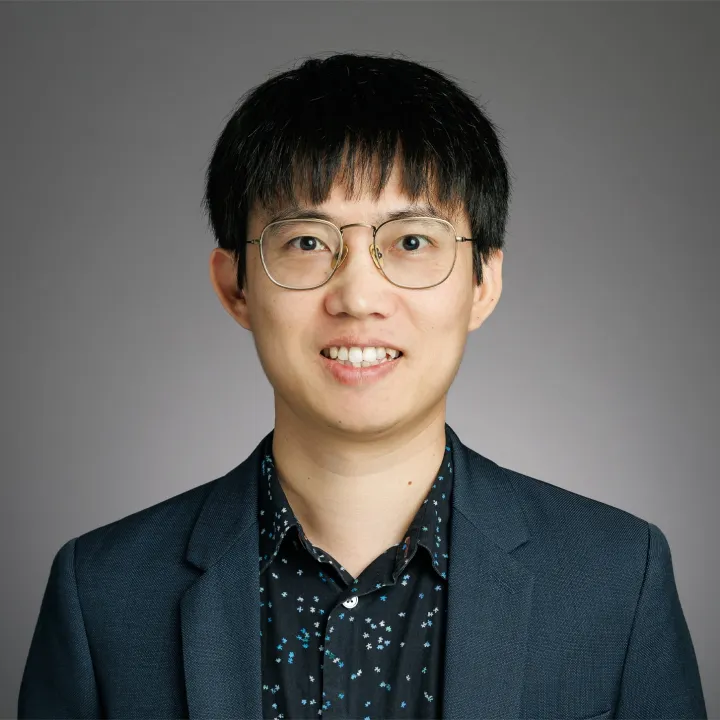
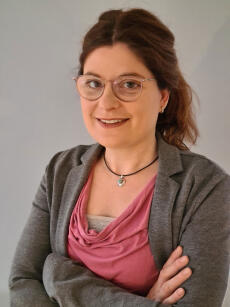
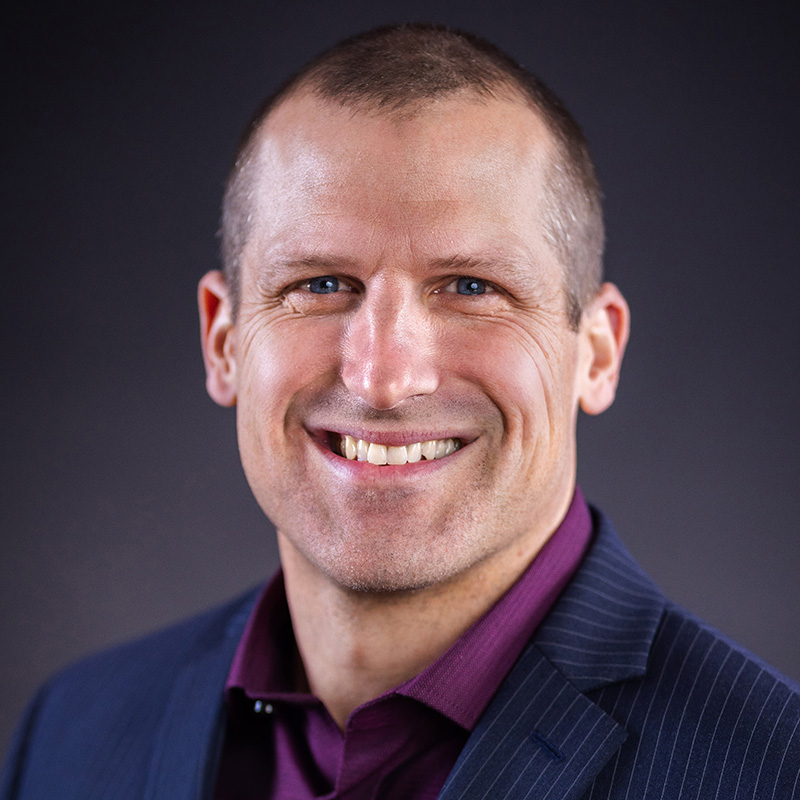
Chi Zhou is an Associate Professor and Director of Graduate Studies in the Department of Industrial and Systems Engineering at the University at Buffalo. He also holds an adjunct appointment as Adjunct Associate Professor in the Department of Computer Science and Engineering. His research focuses on additive manufacturing, rapid prototyping, and advanced material systems. Zhou has a PhD in Industrial and Systems Engineering (2011) from the University of Southern California, with additional degrees in Computer Science and Industrial Engineering. His work bridges manufacturing processes, material science, and computational methods. Key research areas include inkjet printing process optimization, hydrogel-based 3D printing, thermal insulation materials from agricultural byproducts, and smart material systems like magnetorheological metamaterials. He has pioneered methods for real-time process monitoring and defect detection in additive manufacturing. Zhou’s recent publications emphasize sustainable manufacturing solutions, such as bio-based insulation materials and cost-effective silica aerogel production. His contributions also span energy harvesting (e.g., conductive hydrogel generators) and advanced structural designs using triply periodic minimal structures. He has led interdisciplinary projects integrating digital twins for cyber manufacturing systems and geometric deep learning for mass customization applications.
Jeremy Crampton is an Adjunct Professor focusing on the societal and political implications of geolocational technologies. He is a leading scholar in critical cartography, surveillance studies, and spatial big data governance. His work explores how technologies like AI, blockchain, and geoweb platforms shape everyday life and power dynamics. He is a Fellow of the Alan Turing Institute and Royal Geographical Society (UK), and a member of the American Association of Geographers. His research spans over three decades, including a seminal 2010 monograph on critical cartography and ongoing projects on counter-GeoAI. He is currently writing The Map and the Spyglass: The New Geographical Analytics of Everyday Life , to be published by Verso. Crampton teaches GEOG 3146 - Political Geography , addressing how spatial technologies influence political structures and governance. Key themes in his work include algorithmic decision-making, geospatial surveillance ethics, and the interplay between technology and sovereignty. His recent articles analyze smart cities, festival security, and the societal impacts of locational data. He critiques techno-utopian narratives, advocating for equitable and transparent geospatial systems. Scientific awards include recognition for his contributions to critical GIS theory and digital geography. His interdisciplinary approach bridges human geography, technology studies, and policy analysis, influencing debates on data governance and spatial justice.
Naho Matsuda serves as a Senior Research Fellow at Northumbria University within the School of Design Arts and Creative Industries, focusing on critical design practices that bridge art, technology, and social justice. Her academic credentials include: BA in Information Design from Tama Art University (awarded 2014) MA in Other Courses (awarded 2014) Matsuda's research interrogates more-than-human ecosystems through eco-feminist lenses , specializing in multispecies design methodologies and public art interventions . Her work challenges anthropocentric urban frameworks by developing participatory tools for reimagining food systems and smart cities, often employing sensory ethnography and critical making to expose hidden power structures in technological environments. Recent publications (2024-2025) reveal a concentrated trajectory toward artistic activism in ecological crises , with recurring motifs of pig symbolism, urban regeneration, and feminist technoscience. These works consistently deploy collaborative design workbooks and site-specific installations to facilitate community-driven reimagination of sustainable futures, particularly within London's financial districts and food infrastructure. No scientific awards were documented in the provided materials. Matsuda's advisory and grant activities remain unspecified in available records, though her collaborative projects demonstrate significant external engagement with cultural institutions and academic networks. She operates within Northumbria's Interaction Research Studio, co-developing the More-than-Human Smart Cities design framework through projects like SOW—a public art commission generating discourse across X, Bluesky, and academic platforms—with collaborators including Ella Gladkova, Bill Gaver, and the Nature Scenes collective.
Mingjiang Zhong is an Associate Professor in the Department of Chemical & Environmental Engineering at Yale University, with additional appointments in Materials Science and Chemistry. His research is centered on the development of advanced synthetic methodologies for functional organic materials and organic-inorganic hybrid systems. Education: B.S., Peking University Ph.D., Carnegie Mellon University His research interests lie at the intersection of polymer chemistry, materials science, and sustainability. He focuses on polymer-derived carbon materials and hierarchical nanostructures for applications in energy conversion, catalysis, and environmental technologies. His group combines sophisticated molecular design with advanced analytical techniques to probe and control complex soft matter behaviors . An analysis of his 15 most recent publications reveals a strong and consistent research trajectory in controlled radical polymerization , particularly in developing novel methods for branching and stereocontrol . His work frequently involves block copolymer self-assembly to create functional nanocomposites and membranes, with a growing emphasis on applications in water treatment (e.g., anti-scaling polymers, desalination membranes) and energy (e.g., electrocatalysts, ion conductors). Scientific Awards and Honors: Camille Dreyfus Teacher-Scholar Award (2022) Wiley Journal of Polymer Science Early Career Investigator (2021) 3M Non-Tenured Faculty Award (2020) National Science Foundation CAREER Award (2019) ACS PMSE Young Investigator (2019) ACS Petroleum Research Fund Doctoral New Investigator (2017) Dr. Zhong leads an active research group, mentoring numerous graduate students and postdoctoral scholars, as evidenced by frequent lab news celebrating student achievements such as passing qualifying exams and successful PhD defenses. His group has secured significant recognition, indicating strong support for research grants. The lab is equipped with state-of-the-art instrumentation for polymer synthesis and characterization, including GPC, GC, and preparative chromatography systems.
Ifana Mahbub is an Associate Professor at the Erik Jonsson School of Engineering and Computer Science , University of Texas at Dallas, specializing in Electrical & Computer Engineering . Her research focuses on energy-efficient integrated circuits, wireless power transfer systems for biomedical sensors, and advanced antenna designs for UAV and mm-wave applications. She leads the Integrated Biomedical, RF Circuits and Systems Lab . Education: Ph.D. in Electrical Engineering (2017), University of Tennessee, Knoxville B.S. in Electrical Engineering (2012), Bangladesh University of Engineering and Technology Research interests include: Ultrawideband/mm-wave phased-array antennas Far-field wireless power beaming V2V communication for UAVs Energy harvesting via reverse electrowetting Implantable/wearable sensor systems Recent work highlights advancements in high-efficiency rectennas, beamforming algorithms, and AI-driven metasurface design. Her systems address critical challenges in biomedical telemetry and aerial communication.
Matthias Mnich is a Professor and Head of the Institute for Algorithms and Complexity at Hamburg University of Technology (TUHH), within the School of Electrical Engineering, Computer Science and Mathematics. He also serves as Deputy Dean International, reflecting his leadership in academic administration and international collaboration. He is a principal investigator at the Helmholtz Graduate School for the Structure of Matter, further emphasizing his interdisciplinary impact. His research lies at the intersection of theoretical computer science and practical algorithm design, focusing on parameterized algorithms , approximation algorithms , combinatorial optimization , scheduling , and algorithmic game theory . His work often bridges theoretical guarantees with real-world applications in energy systems, quantum computing, and logistics. The recent publications (2023–2025) highlight his sustained excellence in top-tier venues such as FOCS, ICALP, ESA, STACS, and journals like Mathematical Programming and ACM Transactions on Algorithms . These works explore foundational problems in vector bin packing , integer programming , graph algorithms , and kernelization , while also applying algorithmic techniques to microgrid energy optimization and quantum algorithm engineering . He is deeply embedded in the theoretical computer science community, having served on program committees of major conferences including: STACS 2023 ESA 2024 FOCS 2023 ICALP 2024 IJCAI 2019–2025 AAAI 2018 SWAT 2018 He has successfully supervised several PhD students to completion, including Matthias Kaul , Roland Vincze , and Alexander Göke , many of whom have taken postdoctoral positions at institutions like the University of Bonn and University of Augsburg. His current research projects include PATTERN (2025–2031) , Hamburg Quantum Computing (2024–2029) , and Kernelization for Big Data , indicating long-term funding and strategic research directions. He leads the Institute for Algorithms and Complexity (E-11) , fostering a research environment focused on high-impact algorithmic research.
Christian Haubelt is a Professor at the Institute of Computer and Network Engineering, School of Engineering, University of Rostock, Germany. He is actively engaged in research and teaching in the areas of embedded and cyber-physical systems, smart implants, and IoT. His work is supported by multiple national and international projects including ELAINE (SFB 1270), SmILE (EU), 6G-Health (BMBF), and GenerIoT (BMBF). His research interests include: Embedded and Cyber-Physical Systems Smart Sensors and Smart Implants System-Level Design Methodologies SystemC-based Modeling and Verification Design Space Exploration and Multi-Objective Optimization Industrial Internet of Things and 6G for Healthcare His recent publications focus on real-time communication protocols, 5G/6G localization, smart implants, and secure IoT systems. Trends show a strong emphasis on integrating embedded systems with medical and industrial applications, particularly leveraging TSN, MQTT-SN, and OPC UA for reliable and secure communication. His work bridges theoretical modeling with practical implementation in safety-critical domains. Christian Haubelt has supervised multiple researchers including Michael Nast, Benjamin Rother, Nico Kalis, and Nico Graumüller. He leads several funded research projects such as ELAINE, SmILE, 6G-Health, and SUSTAIN, which focus on smart implants, secure IoT, and next-generation medical systems. These projects involve collaboration with DFG, EU, and BMBF. He is involved in the following research labs and teams: Embedded Systems and Cyber-Physical Systems Group Smart Implants Research Team (SmILE, ELAINE) 6G-Health Localization Team Industrial IoT Security (SUSTAIN, CargoAssist)
Daniel W Armstrong is a Professor at the University of Texas at Arlington in the Department of Chemistry and Biochemistry. With over 35 years of experience, he is a pioneering figure in chiral recognition, enantiomeric separations, and the biological relevance of D-amino acids. His work has led to over 740 publications, 35 patents, and 560 invited seminars worldwide. Developed first chiral recognition mechanism by cyclodextrins First to use macrocyclic antibiotics as chiral selectors Synthesized most new ionic liquids (ILs) globally Created ultra-fast separation techniques now standard in analytical chemistry Contributed to FDA 1992 guidelines on chiral drug separation His research focuses on chiral separations, ionic liquids, and the role of D-amino acids in biological systems. He has commercialized over 30 HPLC and GC columns, transforming analytical chemistry and pharmaceutical analysis. Recent publications demonstrate continued innovation in chiral chromatography, biomarker analysis, and AI-driven separation optimization. His grants include industry collaborations with Merck, Alcon, and Sigma-Aldrich, emphasizing practical applications of his work. Scientific honors include multiple lifetime achievement awards, fellowships in the Royal Society of Chemistry and American Chemical Society, the Chirality Medal, and induction into the National Academy of Inventors. He has mentored over 100 PhD students, many from first-generation college backgrounds.
James Gibert is an Associate Professor of Mechanical Engineering at Purdue University's West Lafayette School of Mechanical Engineering. His research focuses on vibrations and nonlinear dynamics, smart material systems, non-pneumatic tires, optimization of mechanical systems, and additive manufacturing. He holds a B.S., M.S., and Ph.D. from Clemson University (2002-2009). His work spans fundamental dynamics, material behavior, and applications in transportation and energy harvesting. Key research contributions include studies on ultrasonic additive manufacturing dynamics, viscoelastic materials for cushioning, and nonlinear energy harvesting systems. His awards include the Emerald Engineering Outstanding Doctoral Award (2012) and NSF fellowships. Recent publications explore bistable systems, metamaterials, and advanced robotics. Awards highlight his academic and research excellence, including recognition for doctoral work and impactful papers on ultrasonic consolidation dynamics. His advising and grants focus on mechanical systems optimization and advanced manufacturing technologies. Ongoing efforts involve collaborative projects on energy-efficient materials and smart systems integration.
Chi-Kwan Lee is a Professor at the University of Technology Sydney (UTS), School of Electrical and Data Engineering since 2024. Previously, he held roles including Associate Professor (2018-2023) and Assistant Professor (2012-2017) at the University of Hong Kong. He earned his B.Eng. and Ph.D. in Electronic Engineering from City University of Hong Kong (1999 and 2004). His research focuses on electric power conversion, electromagnetic devices, wireless power transfer, renewable energy, and smart grid technologies. He was a Visiting Researcher at Imperial College London (2010-2020). Research Highlights: Prof. Lee has pioneered advancements in wireless power transfer for medical devices (e.g., capsule endoscopy) and electric vehicles, with breakthroughs in efficiency optimization and misalignment mitigation. His work on hybrid stepper motor systems and magnetoresistive sensors addresses challenges in contactless actuation and high-voltage current sensing. Awards & Contributions: A Senior Member of IEEE and recipient of the 2015 IEEE Power Electronics Society Transactions First Prize Paper Award. He serves on IEEE PELS committees and editorial boards of key journals like IEEE Transactions on Power Electronics. Grants & Labs: Active in funded research projects related to wireless charging systems, smart grids, and renewable energy integration. His work spans academic collaborations, industry partnerships, and international conferences.
Prof. Chris Dent is a Professor at the University of Edinburgh's School of Mathematics, specializing in the intersection of mathematical sciences and engineering. He holds a fellowship at the Alan Turing Institute and directs the Statistics Consultancy Unit. His career spans theoretical physics, operational research, and energy systems analysis, with notable contributions to National Grid strategies, policy-driven decision support, and pandemic data communication. Education: MMath (Cambridge), PhD in Theoretical Physics, MSc in Operational Research (Edinburgh). Research focuses on energy system reliability, uncertainty quantification, and interdisciplinary policy modeling. He critiques data communication practices in crises, advocating for rigorous reporting frameworks. Key activities include projects on electricity supply security, smart grid optimization, and post-pandemic economic recovery. Collaborations involve government bodies, the National Grid, and international energy networks. The Statistics Consultancy Unit supports cross-disciplinary projects in academia and industry.
Ronald Zirbs is a Research Fellow at the Institute of Colloid and Biointerface Science , University of Natural Resources and Life Sciences, Vienna (BOKU). With a PhD in Polymer Chemistry (Martin-Luther-University Halle/Saale, 2007-2009; TU Wien, 2005-2006), his research focuses on nanoparticle synthesis , surface-active ionic liquids , and thermoresponsive polymer architectures .
Professor Anne Remke leads the safety-critical systems group at the Faculty of Mathematics and Computer Science at Westfälische Wilhelms-Universität Münster since October 2014. She is also affiliated with the Design and Analysis of Communication Systems group at the University of Twente, where she served as assistant professor from June 2010 and became associate professor in March 2016. Her research focuses on dependability and security in critical infrastructures, particularly electrical power systems and telecommunication networks. Her educational background includes a PhD (2008) and MSc (2004) in Computer Science from the University of Twente and RWTH Aachen respectively. Her doctoral research focused on 'Model Checking Structured Infinite Markov Chains,' for which she publicly defended her thesis in June 2008. Professor Remke's research interests center on cyber-physical systems, with particular focus on evaluation of charging strategies for local energy storage in smart homes and security of control networks (SCADA) in smart grids. Her work bridges theoretical model checking techniques with practical applications in critical infrastructure protection. She has made significant contributions to the analysis of hybrid Petri nets, stochastic models, and the development of tools for dependability evaluation. Her recent publications demonstrate a strong trend toward integrating machine learning with formal verification methods for cyber-physical systems. The research spans stochastic hybrid systems, reachability analysis, and security evaluation of smart grid infrastructures, showing consistent growth in both theoretical foundations and practical applications of dependability analysis. Veni award from Dutch Science foundation (NWO) for 'Counting on a reliable water supply' GI/ITG MMB prize for best diploma thesis in computer and communication systems Best Paper Award at Valuetools 2023 conference Best Repeatability and Artifact Evaluation Award at QEST21 Teaching award from Fachschaft FB10 (2019) Professor Remke has successfully secured multiple research grants including the DFG project 'RealyST: Reachability Analysis for Stochastic Hybrid Systems' in collaboration with RWTH Aachen. She has supervised numerous students including Katharina Sichma, Pauline Blohm, Joanna Delicaris, Verena Menzel, Mathis Niehage, Jonas Stübbe, and Lisa Willemsen. Her research group actively participates in international collaborations and standardization efforts in critical infrastructure security. The safety-critical systems group maintains several research tools including HYPEG (for simulation and analysis of hybrid Petri nets), TimeNET (a GUI for modeling hybrid Petri nets), and a Smart Neighbourhood Simulation Tool for community energy storage and trading. These tools support their research in modeling and evaluating complex critical infrastructures through both analytical methods and simulation techniques.
Dr. Mario Wriedt is an Associate Professor of Chemistry and Biochemistry at the University of Texas at Dallas (UTD), where he holds the Francis S. and Maurine G. Johnson Chair. His research focuses on designing and characterizing metal-organic frameworks (MOFs) and porous organic polymers (POPs) for applications in energy, health, and environmental challenges. Education: Bachelor's, Master's, and Doctoral degrees in Chemistry from Christian-Albrecht University of Kiel (Germany); postdoctoral work at Texas A&M University Research Interests include: Structure-property relationships of porous materials via X-ray diffraction Tailoring MOFs/POPs for water harvesting from low-humidity environments Carbon dioxide capture and sequestration Pollutant removal from water Viral genome detection Drug delivery systems Collaborations & Funding : Research supported by the Department of Defense, National Science Foundation, Estée Lauder Companies (advanced skincare), and Corning Inc. (smart-glass materials). He organizes national crystallography workshops and mentors graduate/undergraduate students using cutting-edge instrumentation like the Bruker Venture X-ray diffractometer. Awards : Kodak CAMP Distinguished Professor
Krist Vaesen is an Associate Professor in the Philosophy of Innovation at Eindhoven University of Technology (TU/e), within the Department of Philosophy & Ethics in the School of Industrial Engineering and Innovation Sciences. He is a founding member of the Eindhoven Meta-Science Center (META/e) and maintains an external position as a Research Fellow at Leiden University's Human Origins Group, Faculty of Archaeology. Dr. Vaesen earned his degrees in Applied Biology (1998) and Philosophy (2003) from the University of Leuven, Belgium, and completed his PhD at TU/e in 2008 with a dissertation on artifacts and norms. His academic career progressed from post-doctoral researcher (2008-2012) in the NWO program 'Things that make us smart' to Assistant Professor (2012), and eventually to his current Associate Professor position. He received a prestigious NWO Vidi grant in 2014 for his research on cultural evolutionary theory. Vaesen's research spans multiple interconnected domains including the philosophy of innovation, meta-science, cultural evolution, and the philosophy of scientific models. His current work focuses extensively on meta-scientific questions examining science funding practices, interdisciplinary research challenges, PhD attrition causes, academic research values, and research integrity. He is preparing a book titled 'Neophilia--why our obsession with innovation leads to bad science' addressing replication crises in science. His publication record shows consistent scholarly output, with 49 research outputs documented through 2025, appearing in high-impact journals across multiple disciplines including Proceedings of the National Academy of Sciences, Behavioral and Brain Sciences, PLoS ONE, and various philosophy and anthropology journals. His work demonstrates a clear trajectory toward increasingly meta-scientific concerns, with recent publications focusing on research values, PhD attrition, and science funding ethics. NWO Vidi Award (2013) for 'The Darwinisation of culture' Excellence grant from TU/e's Executive Board for work on the 'Things that make us smart' program Elected member of the Eindhoven Young Academy of Engineering (2018) Vaesen has supervised multiple graduate students (with 4 supervised works documented) and secured significant research funding, including his Vidi grant for the 'Darwinizing culture' project (2014-2019). He has been actively involved in science policy discussions, particularly regarding research funding reform and interdisciplinary research assessment. His work has generated substantial media attention, with 127 press/media mentions including coverage by Times Higher Education, Volkskrant, and various radio outlets. As co-founder of the Eindhoven Meta-Science Center, Vaesen plays a key role in advancing meta-scientific research at TU/e. His external position at Leiden University's Human Origins Group demonstrates his interdisciplinary reach across philosophy, anthropology, and evolutionary studies. He teaches courses including 'Metascience' (since 2024), 'Philosophy of science and technology,' and 'Research methodology for the innovation sciences,' shaping the next generation of scholars in these critical areas.