Dr. Gemma Newlands is a Departmental Research Lecturer in AI & Work at the Oxford Internet Institute (OII), University of Oxford, since September 2022. Her research focuses on the sociological impact of AI on work and organizations, emphasizing surveillance, occupational value, and sustainability in AI production. She holds a PhD from the University of Amsterdam (2023) and previously served as Assistant Editor at Big Data & Society . Her work is supported by grants from the Norwegian Research Council and European Research Council. Research Interests : AI & Work, Sustainable AI Production, Surveillance in Digital Labour, Occupational Prestige, and Social Theory. She leads the Research Programme on AI & Work and contributes to the Reasoning with Machines AI Lab. Awards : 2024 University of Oxford Divisional Teaching Excellence Achievement Award (shared with Dr. Fabian Stephany). Teaching : Courses include Qualitative Interviewing and Data Analysis and Internet and Society . Grants & Projects : Multiple funded projects on algorithmic management, gig economy dynamics, and occupational evaluation via AI. Supervises Recognised Student Noah Khan in Social Data Science. Labs/Teams : Active in OII research groups such as the Fair Digital Economies and Mind and Emerging Technologies Lab.
Martina Čaić is an Assistant Professor in Strategic Service Design at Aalto University's School of Arts, Design and Architecture. She leads the ENCORE (Engaging Co-Design) research group, focusing on innovative service design methodologies. Her PhD from Maastricht University, supported by a Marie Curie Fellowship, emphasized service design for innovation. Research Interests: Her work explores intersections between service management, AI, and emerging technologies like social robots and chatbots. Key themes include human-agent interactions in healthcare, education, and industrial contexts, emphasizing ethical implications, well-being, and organizational transformation. She advocates for network-conscious design approaches to address complex service ecosystems. Publications: Recent work highlights frameworks for human-robot collaboration (e.g., chatbot integration in workplaces, ethical robotic care systems) and the role of smart technologies in aging populations. She also investigates scaling diversity initiatives and the societal impact of AI/robots in service networks. Labs/Teams: The ENCORE group develops participatory design methods for inclusive services, with projects ranging from healthcare AI ethics to municipal diversity programs. Her research bridges academic rigor with practical industry applications.
Claudio De Persis is a Professor in the Faculty of Science and Engineering at the University of Groningen, Netherlands. He holds a Laurea degree (cum laude) in Electrical Engineering from the University of Rome La Sapienza (1996) and a PhD in Control Systems (2000) from the same institution. His research focuses on automatic control, particularly data-driven control, nonlinear systems, cyber-physical systems, and energy systems. He has held academic positions at the University of Rome La Sapienza (2002–2011), the University of Twente (2009–2011), and currently leads the Groningen Center for Systems and Control within the Engineering and Technology Institute. His expertise includes fault detection in nonlinear systems, resilient control under Denial-of-Service attacks, and distributed control of energy networks. He has authored over 250 publications, including seminal works on quantized control and cyber-physical systems. He serves on editorial boards of journals like Automatica and IEEE Transactions on Automatic Control . De Persis has received two IEEE Outstanding Paper Awards for contributions to control theory. His research integrates control theory with data science, addressing challenges in smart grids and distributed systems. He holds patents for energy system control and collaborates on interdisciplinary projects, such as data center optimization and resilient networked systems. His current research emphasizes data-driven methods for controller synthesis, leveraging convex optimization and system identification to ensure stability and performance. He also explores privacy-preserving distributed control algorithms for power networks and aggregative games.
Prajal Pradhan is an Assistant Professor at the University of Groningen’s Faculty of Science and Engineering, affiliated with the Integrated Research on Energy, Environment & Society (IREES). He holds a Visiting Scientist position at the Potsdam Institute for Climate Impact Research (PIK). His research focuses on climate change mitigation, sustainable development goals (SDGs), food systems, and urban resilience. He earned a PhD in Geoecology from the University of Potsdam and holds degrees in Environmental Management (University of Kiel) and Agricultural Engineering (Tribhuvan University). Education: PhD in Geoecology, University of Potsdam (2015) MSc in Environmental Management, University of Kiel (2008) BEng in Agricultural Engineering, Tribhuvan University (2006) Research Interests: Pradhan’s work addresses systemic sustainability challenges through interdisciplinary approaches. Key themes include SDG interactions, climate-resilient food systems, urban transformations, and policy frameworks for long-term sustainability. He emphasizes synergies between environmental protection, social equity, and economic development. Grants & Projects: ERC Starting Grant (€1.5M, 2023–2028): Transformation towards long-term sustainability beyond SDGs DAAD-ForHimSDG (€325k, 2022–2025): Himalayan sustainable development education BIOCLIMAPATHS (€400k, 2019–2021): EU bioeconomy resilience Awards: ERC Starting Grant 2022 Best Sustainable Development Article (1st, 2022; 2nd, 2021) Mondialogo Engineering Award 2007 Labs & Teams: Leads IREES research group on climate policy and SDG integration. Collaborates with PIK’s Urban Transformations group and international networks like the Global Land Programme.
Noreen McDonald is a Professor and Senior Associate Dean for Social Science and Global Programs in the College of Arts and Sciences at the University of North Carolina at Chapel Hill. She holds a joint appointment in the Department of City and Regional Planning. Her research focuses on transportation planning, particularly the intersection of infrastructure, technology, and public health. She leads projects addressing urban freight systems, road safety, and healthcare mobility challenges. Key affiliations include the Carolina Transportation Program and the Center for Urban and Regional Studies. Current research initiatives involve optimizing non-emergency medical transport, analyzing parcel delivery impacts, and rethinking traffic impact assessments. She has published extensively on youth travel patterns, school siting policies, and the effects of emerging mobility services on vulnerable populations. Her work bridges academic research and policy application, with a focus on equity and sustainability. She is actively involved in shaping interdisciplinary programs and global partnerships within the university's social sciences division.
Derek Lynch is a Professor in the Department of Plant, Food, and Environmental Sciences at Dalhousie University's Faculty of Agriculture. He holds a B.Sc. (1989) and M.Sc. (1992) in Plant Science from McGill University and a Ph.D. (2002) in Land Resource Science from the University of Guelph. From 2005–2015, he was Canada Research Chair in Organic Agriculture. His research focuses on agroecological approaches to agronomy and soil science, examining how farming systems influence productivity and ecosystem services. Key areas include soil health, soil carbon dynamics, organic agriculture, and nutrient management. He co-founded the Atlantic Soil Health Lab and is a founding member of the Centre for Sustainable Soil Management. Lynch teaches undergraduate courses like Soil Science, Organic Field Crop Management, and Agroecology, and contributes to the Certificate in Sustainable Soil Management. He is cross-appointed to the Dalhousie College of Sustainability. He serves on committees like the Canadian Society of Agronomy and CIRCASA, focusing on soil carbon research. His work emphasizes bridging science with policy, addressing climate change, biodiversity, and sustainable farming systems. Notable awards include the Canada Research Chair designation. His recent articles explore soil carbon sequestration, farming system impacts, and soil biodiversity. He has authored over 70 peer-reviewed publications and book chapters, with a focus on organic agriculture's environmental and socio-economic dimensions.
Associate Professor Ke Deng is affiliated with the School of Computing Technologies at RMIT University. His research focuses on urban computing, spatiotemporal data analysis, and social networks, with expertise in data mining and artificial intelligence. He holds a PhD in Computer Science from The University of Queensland (2007), a Master's in Information and Communication Technology (2001), and a Bachelor's in Electrical Engineering (1994). Previously, he was a postdoctoral researcher at CSIRO ICT Centre and a researcher at Huawei Noah's Ark Lab. His work emphasizes practical applications of AI, such as fairness-aware recommendation systems, traffic scenario modeling, and energy-efficient protocols for IoT. Dr. Deng's career includes roles as an acting lecturer at The University of Queensland and co-supervisor of a PhD student. He has supervised numerous research projects, including advancements in quantum annealing for recommenders, fake news mitigation via reinforcement learning, and smart human sensing using millimeter-wave radar. His research outputs span journals like ACM Transactions on Information Systems and IEEE Transactions on Knowledge and Data Engineering. Education: PhD in Computer Science, The University of Queensland (2007) MSc in Information and Communication Technology (2001) BEng in Electrical Engineering (1994) Key Research Themes: Urban computing and smart cities Mechanisms for fair AI systems Energy-efficient IoT protocols Spatiotemporal data mining Grants and Collaborations: ARC Australian Postdoctoral Fellowship (2010–2012) Research at Huawei Noah's Ark Lab (2013) His recent projects highlight interdisciplinary innovation, such as quantum computing for feature selection and self-supervised networks for traffic scenario clustering. Dr. Deng is actively involved in mentoring PhD/Masters students and contributes to RMIT’s research initiatives in AI and urban informatics.
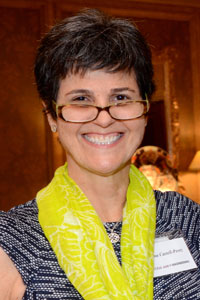
Elena Castell-Perez is a Professor at Texas A&M University's College of Agriculture & Life Sciences, Department of Biological and Agricultural Engineering. She holds a B.S. in Food Engineering from Campinas State University (1980), followed by an M.S. (1984) and Ph.D. (1990) in Agricultural Engineering from Michigan State University. Her research focuses on food safety technologies, including antimicrobial packaging systems, biomass pretreatment for bioenergy, and food irradiation applications. She is affiliated with Texas A&M AgriLife Research and Extension Service. Her work integrates nanotechnology (e.g., ZIF-8 nanoparticles) with food engineering to enhance packaging safety and develop sustainable materials. Key contributions include optimizing electron beam irradiation for pathogen decontamination and advancing predictive modeling for microbial contamination risks in fresh produce. She also explores CO₂ capture innovations for agricultural sustainability. Recent articles highlight advancements in antimicrobial delivery systems, 3D-printed biomass composites, and machine learning for food safety prediction. Her research spans food rheology, smart packaging, and waste reduction within the water-energy-food nexus. Dr. Castell-Perez collaborates on multidisciplinary projects involving food phantoms, Monte Carlo simulations for irradiation dosimetry, and agent-based modeling of microbial cross-contamination. Her labs focus on translating engineering principles into practical solutions for the food industry.
Jeff Huang is an Associate Professor in the Department of Computer Science & Engineering at Texas A&M University, affiliated with the College of Engineering. His research focuses on software engineering, programming languages, concurrency, and runtime verification, with notable contributions to static analysis, race detection, and vulnerability mitigation in concurrent systems. Education: Postdoc, Computer Science, University of Illinois at Urbana-Champaign (2013-2014) Ph.D., Computer Science, Hong Kong University of Science and Technology (2012) B.E., Electrical Engineering, National University of Defense Technology, China (2008) Research Interests: Huang's work bridges theoretical foundations and practical applications in concurrency debugging, static analysis tools, and cybersecurity for smart contracts. He emphasizes scalable solutions for pointer analysis, race detection, and vulnerability detection in distributed systems and blockchain technologies. Recent Trends in Publications: His recent work explores AI-driven program execution (e.g., SGLang), blockchain security (e.g., Smart Contract analysis), and dynamic/static analysis techniques for memory safety. These studies underscore advancements in automated tools for securing concurrent and distributed systems. Awards: 2023 ACM SIGSOFT Distinguished Paper Award 2019 DARPA Young Faculty Award 2016 NSF CAREER Award 2013 ACM SIGSOFT Outstanding Doctoral Dissertation Award Advising & Grants: Huang has advised PhD students including Bozhen Liu and Peiming Liu, who have contributed to OpenMP race detection and pointer analysis tools. His grants include NSF awards for pointer analysis as a service and DARPA funding for young faculty research. Labs & Teams: He leads the O2 Lab, focused on concurrency verification and cybersecurity, collaborating with industry partners like Coderrect Inc. and DOE on scalable static analysis frameworks.
Krishna Jayakar is a Professor of Telecommunications and Public Policy and Head of the Department of Telecommunications at The Pennsylvania State University's College of Communications. He specializes in telecommunications policy, broadband access, intellectual property rights, and media economics, with a focus on disability accessibility in technology. His research frequently compares policy frameworks across nations, particularly analyzing China and India's approaches to digital economies. Education includes a Bachelor's from the Institute of Technology-BHU in India, and Master's and PhD degrees from Indiana University. His work bridges policy analysis and technical implementation, with notable contributions to understanding broadband adoption models, smart city governance, and the effects of national innovation strategies on 6G development. Key research trends in his articles include cross-national policy comparisons, the socio-economic impacts of broadband investments, and regulatory frameworks for emerging technologies like AI. His studies on domain name arbitration regimes and media company responses to streaming services highlight his interdisciplinary approach to telecommunications challenges. Dr. Jayakar has advised on grants related to broadband initiatives and rural economic development, leveraging his expertise in policy diffusion and regulatory federalism. He leads the Telecommunications Department at Penn State, fostering research into digital equity and telecommunications infrastructure's societal impacts.
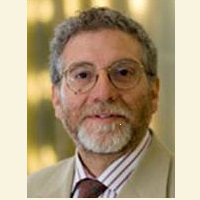
Dr. Jonathan Liebenau is an Associate Professor (Reader) in Technology Management at the London School of Economics (LSE), part of the Department of Management. He also holds a visiting professorship at Columbia University’s Graduate School of Business and School of Engineering. His expertise spans technology management, innovation policy, and the socio-economic impacts of information systems in developing countries. He has authored/co-authored over 70 publications and advised global organizations such as Dell, IBM, and the UK Office of Science and Innovation. Education: PhD in History and Sociology of Science (University of Pennsylvania, 1981), BA in Science Policy (University of Rochester, 1976). His career includes roles at the Smithsonian Institution, Boston University, and academic leadership roles at LSE. Research focuses on technology policy, telecommunications, and the role of digital infrastructure in development. He leads LSE Tech, a research group exploring internet economics and policy. Notable work includes studies on payment systems modernization, blockchain regulation, and the economic implications of cloud computing in emerging economies. Advisory roles include membership on boards at Istanbul Bilgi University and the American University in Cairo. He has supervised numerous PhD students researching topics like ICT in Sub-Saharan Africa, banking innovation in Thailand, and DSS applications in national debt management. His recent articles address global technological competition with China, urban mobility policy, and fintech innovation mechanisms. He emphasizes interdisciplinary approaches to understanding how technology shapes economic development and regulatory frameworks.
Yan Kyaw Tun is a Tenure Track Assistant Professor in the Department of Electronic Systems at Aalborg University's Technical Faculty of IT and Design, located in Copenhagen, Denmark. His research lies at the intersection of wireless communications, edge computing, and artificial intelligence, with a strong focus on next-generation networks (5G/6G), UAV-assisted systems, and intelligent resource management. His educational background includes a Ph.D. in Computer Engineering from Kyung Hee University, South Korea, where he was awarded the Best Ph.D. Thesis Award in 2021, and a Bachelor of Engineering in Marine Electrical Systems and Electronic Engineering from Myanmar Maritime University. Dr. Tun's research interests span Edge Computing , Multi-Access Edge Computing (MEC) , Resource Allocation , Unmanned Aerial Vehicles (UAVs) , Reinforcement Learning , Energy Efficiency , and Integrated Sensing and Communication (ISAC) . His work leverages AI and optimization techniques to enhance the performance of wireless networks, particularly in space-air-ground integrated systems and satellite-HAP environments. The recent publications highlight a clear trend toward intelligent and sustainable networking: the integration of STAR-RIS (Simultaneously Transmitting and Reflecting Reconfigurable Intelligent Surfaces), Federated Learning for satellite-HAP systems, and AI-driven optimization for UAV trajectories and beamforming. These works are published in high-impact venues such as IEEE Transactions on Mobile Computing and IEEE ICC , showcasing his leadership in cutting-edge communication technologies. His scientific accolades include: IEEE ComSoc Outstanding Young Researcher Award for EMEA Region (2024) Best Ph.D. Thesis Award (2021) Student Best Paper Award at APNOMS 2019 Korea Network Operation and Management Conference Award (2020) Korea Computer Congress 2018 Award Dr. Tun is actively engaged in the academic community as an advisor and grant participant. Though no direct advisees are listed, his involvement in large collaborative projects—evidenced by co-authorship with senior researchers like Prof. Choong Seon Hong—indicates mentorship and team leadership. He has served on the editorial boards of IEEE Internet of Things Journal , IEEE Open Journal of the Communications Society , and IEEE Network , and has secured research support through participation in IEEE-organized workshops and special issues. He is a key organizer of upcoming workshops, including the 'Sustainable AI for Next-Generation Wireless Communications and Networking' at IEEE GLOBECOM 2025 and the 'Digital Twin Networks' workshop at IEEE/CIC International Communications in China 2025, reflecting his role in shaping future research directions in intelligent and green networking.
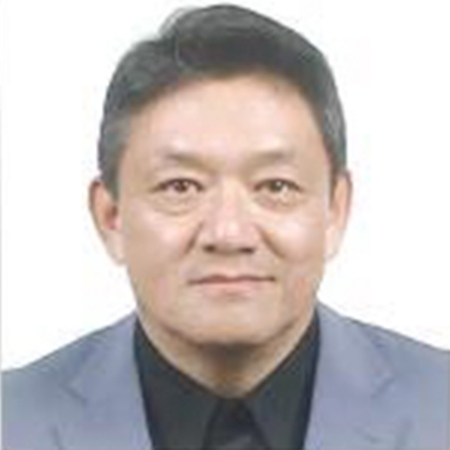
Heekyung Park, Ph.D., P.E., is a Visiting Professor in the Department of Civil and Environmental Engineering and Construction at the University of Nevada, Las Vegas (UNLV), within the Howard R. Hughes College of Engineering. With over 30 years of global experience, he brings expertise in environmental engineering, water resources, and sustainable infrastructure development. His research focuses on integrated water management , smart urban infrastructure , disaster resilience using smart technologies , and urban sustainability . He has pioneered work in the modeling and systems analysis of water and environmental facilities, as well as the standardization of water and wastewater services. His technical background is complemented by leadership in global academic initiatives and innovation. The available articles reflect a consistent focus on sustainability, smart systems, and resilience in urban environments, integrating engineering solutions with environmental stewardship and societal needs. Expert in green and smart regeneration of urban infrastructure Leader in integrated disaster management with smart technology Advocate for experiential education and global cooperation in engineering Dr. Park has led significant academic and innovation initiatives, including efforts to establish a KAIST campus in New York City at the request of Mayor Bloomberg. He founded a green-tech startup and has worked on major infrastructure projects worldwide as a licensed Professional Engineer in Illinois. His mentorship philosophy emphasizes societal responsibility and empowering students through science and technology. He has been deeply involved in expanding global academic programs and advancing sustainability through research, education, and entrepreneurship. His leadership roles at KAIST and current position at UNLV underscore his commitment to innovation and sustainable development.
Marco Giacalone is a Research Professor at the Private and Economic Law Department (PREC) of the Vrije Universiteit Brussel (VUB), where he also serves as Co-Director of the Research Group on Digitalisation and Access to Justice (DIKE). He holds adjunct professorships at VUB (2018-2019) and has been a postdoctoral researcher at the Brussels Research Institute on Development, Governance, and Empowerment. His work focuses on the intersection of digital technologies and legal processes, particularly in Private International Law, ODR, and ADR. **Education**: PhD in Law (Doctor Europaeus, 2016) from VUB and University of Naples Federico II, specializing in Dispute Resolution and emerging IT realities. **Research Interests**: Digital transformation of legal systems, blockchain applications in justice, AI-driven conflict resolution, cross-border dispute mechanisms, and equitable algorithmic systems. His projects include EU-funded initiatives like CREA3 (Equitative Algorithms) and IDEA (Access to Justice tools). **Grants & Projects**: Over 10 projects funded by the EU, including EU683 (Equitative Algorithms), EU681 (IDEA), and EU676 (Digitalising Small Claims). Active in consortiums like IPSU 2022 (Digital Ius Knowledge Empowerment) and OZR4193 (VUB-UNIPARTHENOPE PhD collaboration). **Awards**: 2019 Best Paper Award and Marie Skłodowska-Curie Fellowship (2020). Extensive speaking engagements on topics like AI in judiciary, blockchain legal frameworks, and digital justice. **Labs/Teams**: Leads the DIKE Research Group and collaborates with the Brussels Research Institute. Involved in developing tools like Prodigit (digital tax justice) and CREA’s cloud-based decision support systems.
Prof. Peter Hertkorn is a full professor of Computer Science at Reutlingen University's Faculty of Computer Science, specializing in programming languages and databases. He holds leadership roles including Chair of the Examination Board for Media and Communication Informatics B.Sc. and BAföG Officer for the same program. His research focuses on model-driven software development, domain-specific languages, DevOps automation, interactive learning technologies, and distributed ledger technologies. He co-leads the Software Engineering and User Experience (swuxLAB) and Distributed Ledger Technologies (DLT-LAB) research groups. Education background includes a Diplom-Informatiker (master's equivalent) and Dr.-Ing. (PhD) from University of Stuttgart. Professional experience includes 5 years at T-Systems International GmbH and prior academic roles at University of Stuttgart. His teaching focuses on Software Engineering and Database Systems courses. Publications span interactive learning environments, collaborative innovation systems, and AR-based knowledge spaces. Active in academic service roles and interdisciplinary research collaborations since 2009.