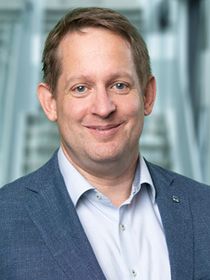
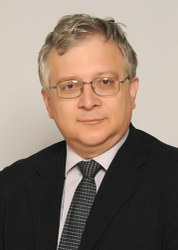
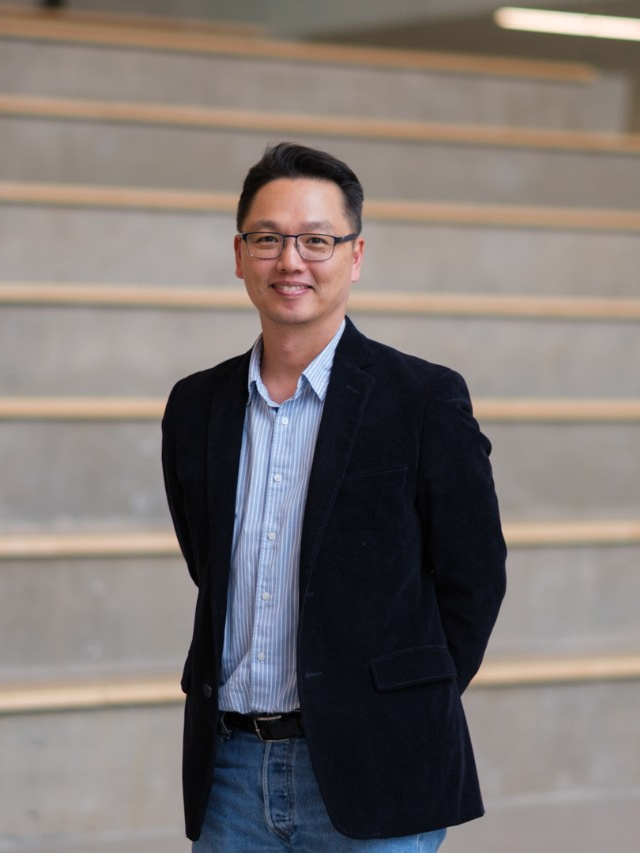
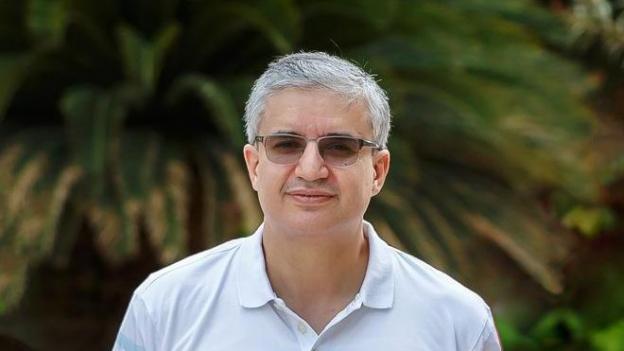
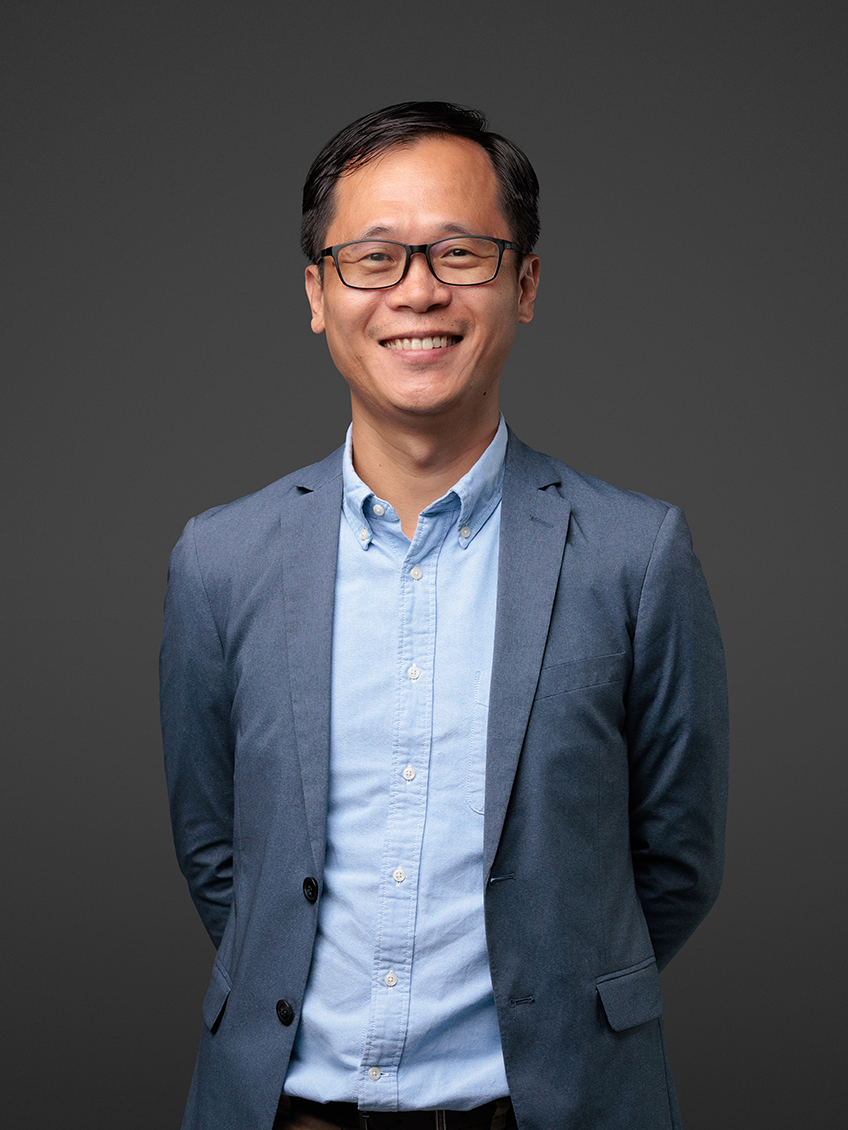
Albert Treytl is a Senior Researcher at the Danube University Krems , serving as Head of the Center for Distributed Systems and Sensor Networks and Deputy Head of the Department for Integrated Sensor Systems. He holds a Master’s degree in Electrical Engineering from the Vienna University of Technology (2001) and has over two decades of experience in communication technologies and security. Current roles: Head of Center, Deputy Head of Department Research focus: Security for embedded systems, IoT, digital twins, AI in energy optimization Involvement: IEEE, CEN TC 247 WG4, IEEE1588 standardization His work addresses distributed data management, smart grid security, and model predictive control strategies for energy efficiency in buildings and traffic systems. He leads multiple national and international projects funded by FFG and EU programs. Recent research projects include KI4HVACS (AI-driven HVAC optimization), Factories4Renewables (industrial renewable energy integration), and Dataskop (sensor-based data economy). He has authored over 100 peer-reviewed publications and serves as co-lecturer at the Vienna University of Technology.
He Zhu is an Assistant Professor at Rutgers, The State University of New Jersey, affiliated with the Department of Computer Science. His research focuses on programming languages, compilers, wireless communications, IoT systems, and 5G network protocols. He received the PLDI 2019 Distinguished Paper Award for his contributions to formal methods in programming systems. His work addresses challenges in vehicle-to-everything (V2X) communication, resource allocation in sidelink networks, network security, and dynamic authorization frameworks for IoT devices. Key research interests include optimizing 5G NR (New Radio) protocols for vehicular environments, developing efficient data aggregation techniques for user equipment, and enhancing service layer mechanisms for IoT systems. He leads projects funded by the NSF, such as 'Formal Symbolic Reasoning of Deep Reinforcement Learning Systems,' and has contributed to advancements in beam management, RACH protocols, and energy-efficient DRX configurations in wireless networks. His office is located in Core 315. Notable Awards: PLDI 2019 Distinguished Paper Award Grants: NSF Grant: Formal Symbolic Reasoning of Deep Reinforcement Learning Systems His research group explores intersections between compiler design, distributed systems, and network architecture, with applications in smart mobility, edge computing, and secure IoT communication. He actively contributes to standards development for 5G and future generations of wireless networks.
Vahid Behzadan is an Assistant Professor in Data Science and Computer Science at the University of New Haven's Tagliatela College of Engineering. He leads the SAIL Lab, focusing on AI safety and security, particularly in autonomous systems like driverless cars and smart cities. His work addresses adversarial attacks on machine learning and reinforcement learning, with applications in cybersecurity and healthcare. Behzadan has held prior positions at Kansas State University, University of Nevada Reno, and University of Birmingham, UK. He holds a Ph.D. in Computer Science and an M.S. from the University of Nevada Reno, and a B.Eng. from the University of Birmingham. His research spans AI ethics, cybersecurity, and complex systems. Behzadan advises the UNH hacking team and actively participates in policy initiatives, including Connecticut's AI Working Group and the Connecticut AI Alliance. He has contributed to over 30 peer-reviewed articles and frequently engages in media discussions on topics like AI safety, facial recognition, and cybersecurity threats. Key research areas include adversarial machine learning, AI forensics, and ethical AI design. His work bridges theoretical advancements with real-world applications in transportation, healthcare, and national security. Behzadan collaborates with organizations such as the Transportation Research Laboratory (TRL) and Open Web Application Security Project (OWASP).
Assoc. Prof. Iliev Atanas is affiliated with the Faculty of Electrical Engineering and Information Technologies (FEIT) at the Ss. Cyril and Methodius University of Skopje. He holds the position of Associate Professor at the Institute for Power Plants and Switchgear. His academic journey includes a PhD (2003), MSc (1993), and BSc (1987) in Electrical Engineering from FEIT. His work experience spans over three decades, starting as a Junior Assistant (1987–1994), progressing to Assistant Professor (1994–2008), and attaining his current rank in 2008. His research focuses on optimizing power systems through advanced algorithms, particularly genetic algorithms applied to unit commitment, hydrothermal scheduling, and microgrid management. Key areas include renewable energy integration, grid reliability, and security-constrained optimization. He has contributed to over 50 publications addressing topics like dynamic programming for hybrid power systems, fuzzy logic for hydroelectric project evaluation, and reliability modeling of substations under distributed generation uncertainty. Notable contributions include developing novel self-adaptive genetic algorithms for short-term scheduling and energy management in hybrid systems. His work bridges theoretical optimization with practical grid challenges, emphasizing sustainability and resilience in power infrastructure.
Talal Shaikh is an Associate Professor at Heriot-Watt University's School of Mathematical and Computer Sciences in Dubai. He serves as Director of Undergraduate Studies and Programme Director for BSc Computer Science, BSc CS (AI), and MSc Software Engineering. With a decade of industry experience as a Chief Information Officer and Software Engineer, he bridges practical insights with academic research. Research Interests: Pervasive Computing, IoT/M2M, AI/ML, WiFi Sensing for Healthcare, Financial Machine Learning, Educational Technology Awards: Teaching Excellence Awards (2017/18), Fellow of the Higher Education Academy (FHEA), multiple Learning and Teaching Oscars (2016, 2017, 2018) His work spans Ubiquitous Computing and IoT , focusing on sensor networks and WiFi-based sensing for healthcare. In Artificial Intelligence , he applies ML to robotics, financial analytics, and educational innovation. Recent articles analyze Reinforcement Learning , Emotion Recognition , and WiFi Sensing applications. His teaching emphasizes student-centric learning, with over 100 supervised dissertations achieving distinctions. Collaborations include international conferences and interdisciplinary research in smart environments and adaptive systems.
Woo Soo Kim is a Professor and Associate Director in the School of Mechatronic Systems Engineering at Simon Fraser University. As a Graduate Student Supervisor, he leads the SFU Additive Manufacturing Laboratory, focusing on advanced 3D printing, sensing robotics, and agritech applications. His research integrates additive manufacturing with smart systems for healthcare, agriculture, and IoT. Education: Ph.D. in Materials Engineering (KAIST, 2006), Postdoc at MIT (2009) Research Themes: 3D printed devices, bio-medical sensors, AI-driven robotics, and sustainable manufacturing His work emphasizes practical applications, such as wireless pressure sensors for helmets, AI-based crop monitoring, and portable health diagnostics. The lab collaborates on projects like the Agritech 4.0 Bootcamp and develops 3D printed neuromorphic systems. Kim’s publications span advanced materials, sensor integration, and robotics, with a focus on solving real-world challenges through additive manufacturing. He supervises graduate students in mechatronic design and teaches courses like MSE220 (Engineering Materials) and MSE812 (Advanced 3D Printing). The lab’s innovations include 3D printed disposable sensors, smart robotic grippers, and flexible electronics. His research bridges academia and industry, addressing sustainability and technological advancement in multiple sectors.
Sylvie Nadeau is a Full Professor in the School of Rehabilitation at the University of Montreal's Faculty of Medicine. Her research focuses on locomotor activity assessment, rehabilitation interventions for neurological conditions, and biomechanical analysis of movement. She leads interdisciplinary projects addressing spinal cord injuries, stroke recovery, and mobility challenges in aging populations. Key affiliations include the INTER strategic research group and the REPAR provincial rehabilitation research network. She collaborates with institutions like the Institut de Réadaptation Gingras-Lindsay-de-Montréal (IRGLM) and has secured funding from agencies such as FRQNT, MITACS, and the Rick Hansen Institute. Her work integrates technologies like smart stationary bikes and real-time avatars to enhance rehabilitation outcomes. Research interests span gait analysis, dynamic balance, and sensorimotor rehabilitation. She has supervised over 30 graduate students, contributing to advancements in post-stroke mobility, incontinence management, and telerehabilitation. Recent projects include developing intelligent exercise systems and evaluating environmental impacts on mobility in museum settings. Directed the 2019 SOFPEL international congress Co-led the TRIVEL intelligent cycle prototype development Pioneered studies on bilateral upper limb coordination post-stroke Her teaching includes courses in physiotherapy and evidence-based practice, shaping future generations of rehabilitation professionals. She prioritizes translating research into clinical practice through innovative interventions and technology integration.
Simon Neill is a Professor in Physical Oceanography at Bangor University’s School of Ocean Sciences, specializing in marine renewable energy, particularly tidal and wave energy resource characterization. He leads the MSc in Marine Renewable Energy and chairs IEC Technical Specification 62600-201 on tidal energy assessment. His research spans energy resource optimization, environmental impacts, and coastal management. He has secured £multi-million grants, including the £708k NERC-funded Southeast Asia Plastics project and the £7M European Regional Development Fund Smart Efficient Energy Centre. Education: PhD in Estuarine Physics (University of Strathclyde), BEng in Civil Engineering (University of Dundee), PGCertHE (Bangor University). Research Interests: Wave-tidal interactions, marine energy grid integration, sediment dynamics, microplastic dispersal, and climate change adaptation. He is lead sediment scientist at FORCE (Fundy Ocean Research Center for Energy) and contributes to the editorial board of Renewable Energy. Grants & Projects: NERC SEAmap: Marine Plastic Pollution Mitigation (2020-2023) European Regional Development Fund SEEC (£7M, 2019-2023) INTERREG ECOSTRUCTURE: Climate-Resilient Coastal Infrastructure (£3.5M, 2017-2020) Teaching: Module organizer for Marine Renewable Energy (MSc), Ocean Modelling (Undergraduate), and RV Prince Madog cruise. External examiner for Plymouth University’s MSc Marine Renewable Energy (2018-2022). Advising: Supervises PhD students researching underwater noise impacts, remote sensing for energy resources, microplastic dispersal, and estuarine energy modeling. Labs/Teams: Collaborates with FORCE, IEC, and industry partners like Repetitive Energy Ltd and Extra Mussel. Leads multi-institutional projects on estuarine dynamics and plastic pollution.
Mohamed-Slim Alouini is a Professor of Electrical Engineering and Associate Dean of the Computer, Electrical and Mathematical Science and Engineering (CEMSE) Division at King Abdullah University of Science and Technology (KAUST) in Saudi Arabia. He also serves as the Associate Vice President for Research and holds the UNESCO Chair in Education to Connect the Unconnected. With over 500 journal publications and more than 46,000 citations, he is a world-renowned expert in wireless communications who was elected IEEE Fellow in 2009 at the age of 39. Education: PhD in Electrical Engineering, California Institute of Technology (Caltech), 1998 MS in Electrical Engineering, Georgia Institute of Technology (Georgia Tech), 1995 Diplôme d'Etudes Approfondies (DEA) in Electronics, Université Pierre & Marie Curie (Sorbonne University), 1993 Diplôme d'Ingénieur, École Nationale Supérieure des Télécommunications (Télécom Paris Tech), 1993 Habilitation, Université Pierre & Marie Curie (Sorbonne University), 2003 Dr. Alouini is a world-renowned expert in wireless communication and networking with research interests spanning diversity combining techniques, MIMO systems, multi-hop/cooperative communications, optical wireless systems, cognitive radio, UAV communications, and advanced modulation schemes. His current focus addresses the technical challenges of uneven information and communication technology distribution, particularly targeting rural, low-income, disaster-prone, and hard-to-reach areas through integrated ground-airborne-space networks. His work bridges theoretical foundations with practical implementations to solve real-world connectivity problems. His recent publications (2020-2024) demonstrate a clear research trajectory toward integrated communication networks combining terrestrial, aerial, and space components. There's growing emphasis on UAV communications, satellite systems, optical wireless technologies, and rural connectivity solutions, with increasing integration of machine learning techniques for network optimization. His work shows consistent focus on addressing the digital divide, with several publications specifically targeting 6G challenges for connecting underserved populations and recycling existing infrastructure for enhanced rural connectivity. Scientific Awards: Member of the European Academy of Sciences and Arts (2019) Fellow of the African Academy of Sciences (2018) IEEE Fellow (2009) Abdul Hameed Shoman Award for Arab Researchers (2016) OIC Science & Technology Achievement Award (2017) Multiple recognitions as Highly Cited Researcher NSF CAREER Award (1999) Dr. Alouini has mentored numerous successful students and post-doctoral fellows who have secured positions at top institutions worldwide including Harvard, Caltech, Imperial College, and faculty positions at Korea University, Hanyang University, and universities across the Middle East. His December 2018 PhD graduate Qurrat-Ul-Ain Nadeem received the prestigious Marconi Society Paul Baran Young Scholars award, while post-doctoral fellows have won IEEE ComSoc Young Professionals Best Innovation Award and attended the Lindau Nobel Meeting. His Communication Theory Lab at KAUST drives significant research in wireless communications with funding supporting extensive publication output and innovative projects. Dr. Alouini leads the Communication Theory Lab at KAUST and holds the UNESCO Chair in Education to Connect the Unconnected, focusing specifically on technical solutions for connecting underserved communities. His lab works on integrated ground-airborne-space networks to bridge the digital divide, with particular emphasis on rural, low-income, and hard-to-reach areas. The team develops practical solutions using UAVs, satellite communications, and recycled infrastructure to provide cost-effective connectivity where traditional approaches fail.
Roziana Ramli is an academic affiliated with Northumbria University, holding a PhD in Computer Science. Her research focuses on medical imaging techniques, cybersecurity in healthcare systems, and bio-inspired optimization algorithms. She has contributed to advancements in retinal fundus image registration and IoT security protocols. Her work integrates computer vision with biomedical applications, addressing challenges in healthcare monitoring and assistive technologies. Key research areas include federated learning in healthcare networks, prosodic feature analysis for language recognition, and secure communication for drone networks. Her systematic literature reviews and algorithmic innovations highlight her interdisciplinary approach to solving technical and clinical problems. Though no formal awards are listed, her active publication record from 1999 to 2024 demonstrates sustained academic engagement.
Pauwke Berkers is a full professor of Sociology of Popular Music at the Erasmus School of History, Culture and Communication, Erasmus University Rotterdam, where he is also head of the Department of Arts and Culture Studies. He specializes in the sociology of popular music with a focus on inclusion, well-being, and resilience. Berkers co-founded the Rotterdam Popular Music Studies (RPMS) research group and the EUR minor MU$IC, and is a founding member of the Rotterdam Arts and Sciences Lab and part of the EUR Cultuurcampus core team. His educational background includes an MA in Sociology from Tilburg University, where he specialized in the sociology of arts and culture, with a thesis on women in punk and feminism. He completed his PhD at Erasmus University Rotterdam, studying the integration of ethnic minority authors into literary mainstreams in the U.S., the Netherlands, and Germany. Berkers' research spans cultural sociology, focusing on social inequality, boundary work, authenticity, and stigmatization in music. His recent work explores well-being and resilience in the music ecosystem, including projects like NWO Smart Culture's POPLIVE and a pilot on resilience principles with Codarts and Utrecht University. He has led major initiatives such as the HERA project FestiVersities and the EUR Fellowship Hearing Diversities. The most recent publications reflect a strong interdisciplinary trend, merging cultural sociology with emotional and interactional theory, especially in the 2025 book A Sociology of Awkwardness , which introduces a new theoretical framework for understanding social discomfort. Other works address gender inequality in metal, music festivals, and fair pay for artists, demonstrating a consistent focus on equity, inclusion, and systemic change in cultural sectors. Berkers has not received explicitly mentioned scientific awards in the provided texts. However, his leadership in funded projects and public engagement highlights significant recognition. He supervises PhD candidates, including Wessel Coppes, and has secured multiple grants from NWO, EUR, and other funding bodies. His research often involves collaboration with arts councils, municipalities, and cultural institutions, such as the Rotterdam Arts Council and the City of The Hague. He is currently active in the National Workgroup Inclusion, advising on cultural policy. Berkers is involved in several research groups and labs, including RPMS, Rotterdam Arts and Sciences Lab, and Cultuurcampus. His collaborative projects with Codarts Rotterdam and Utrecht University emphasize transdisciplinary approaches to music, well-being, and resilience.
Chen Binbin is an Associate Professor and Associate Head of Pillar (Innovation and Enterprise) in the Information Systems Technology and Design (ISTD) pillar at Singapore University of Technology and Design (SUTD). He serves as Deputy Director for the Future Communications Research and Development Programme (FCP), Singapore. Previously, he was a Principal Research Scientist at the Advanced Digital Sciences Center (now Illinois ARCS), affiliated with the University of Illinois. Education: PhD in Computer Science from National University of Singapore, and Bachelor's from Peking University. Research focuses on wireless networking, distributed systems, and cyber security for critical infrastructures like smart grids and industrial control systems. His work addresses secure communications, intrusion detection, and resilience against cyber-physical threats. Notable contributions include error-estimating coding, provenance verification in ICS, and AI-driven network security solutions. Key awards include the 2010 ACM SIGCOMM Best Paper Award for error-estimating coding research. His grants span agencies like Singapore's National Research Foundation (NRF), Cyber Security Agency (CSA), and Energy Market Authority (EMA). He leads projects on secure smart grid communication, industrial control system defense, and AI-enhanced cybersecurity tools. Technical leadership involves developing frameworks like CyberSAGE for security assessment and CMD for IoT malware detection. Active in collaborations with industry and government, his work bridges theory and practice in securing critical infrastructure systems.
Thaier Hayajneh , Ph.D., is a University Professor at Fordham University's Department of Computer and Information Sciences. He serves as Founder Director of the Fordham Center for Cybersecurity and Program Director for the MS in Cybersecurity program. Previously, he held academic roles at New York Institute of Technology and Hashemite University in Jordan. Specializes in cybersecurity, networking, and applied cryptography Focus areas include blockchain, IoT security, and wireless network vulnerabilities Active in NSF cybersecurity review panels and as a CAE reviewer for NSA Recipient of peer-review awards from Publons His research spans secure protocols for medical IoT systems, lightweight cryptographic algorithms, and smart contract implementations in healthcare. Publications in IEEE IoT Journal, IEEE Systems Journal, and Journals like Future Generation Computer Systems demonstrate his expertise in securing emerging technologies. Dr. Hayajneh has received research funding from federal agencies including NSA, Department of Defense, and NSF. He has published over 80 papers and maintains active editorial roles in prestigious journals. Scientific Awards: Peer-review awards from Publons
Professor Xiaodong Liu is a faculty member at Edinburgh Napier University, affiliated with the School of Computing, Engineering and the Built Environment . His research spans Internet of Things , Edge Computing , Artificial Intelligence , and Cybersecurity , with a focus on decentralized systems and data-driven decision-making. Research Themes : IoT orchestration, federated learning, smart city infrastructure, building maintenance optimization, and automotive cybersecurity. Current Projects : Leading Swarmchestrate (EU-funded), Long-range Perceptive Autonomous Vehicles (Royal Society), and Met-Bot for Disaster Surveillance (Royal Society). His recent publications emphasize privacy-preserving edge learning , semantic IoT data validation , and deep learning for weather prediction . As a supervisor, he has guided PhD students in areas like federated learning, smart building systems, and IoT security. Collaborations include partnerships with institutions in Scotland, China, and Italy, alongside funding from European Commission , Royal Society , and Scottish Funding Council . He contributes to international conferences and journals, with notable work in IEEE Transactions , ACM TAAS , and MDPI publications.
Dr. Yanjun Zhang is an Honorary Research Fellow at the School of Electrical Engineering and Computer Science, The University of Queensland. His research focuses on privacy-preserving technologies, federated learning, cybersecurity in IoT systems, and machine learning security. He holds a PhD in Privacy-Preserving Sharing for Genome-Wide Analysis from The University of Queensland (2021). Education: PhD in Information Technology, School of Information Technology and Electrical Engineering, The University of Queensland (2021) Research Interests: Designing secure collaborative machine learning frameworks Defending against adversarial attacks in cyber-physical systems Privacy preservation in distributed genomic and medical data analysis Compliance and ethics in virtual personal assistant applications Key Contributions: Developed privacy-preserving federated learning frameworks (AgrAmplifier, PrivColl) Conducted foundational studies on evasion attacks in IoT systems Created datasets for analyzing malicious browser extensions and Alexa skills Labs/Teams: Active contributor to UQ Cyber initiatives, including the 2021-2022 Seed Funding project on federated deep learning for medical imaging.