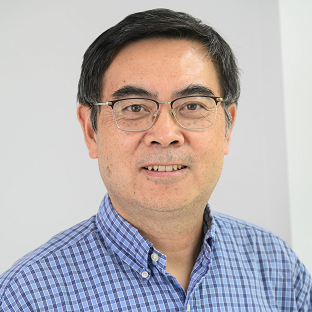
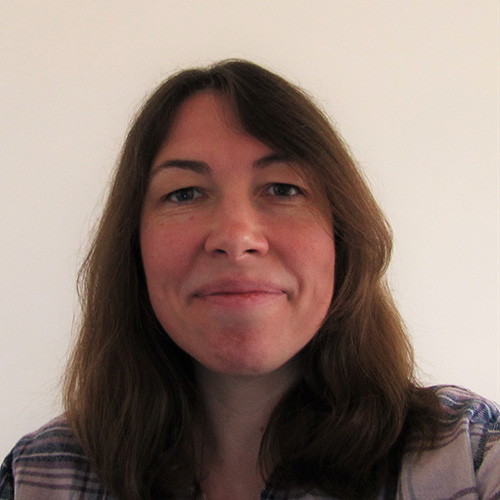
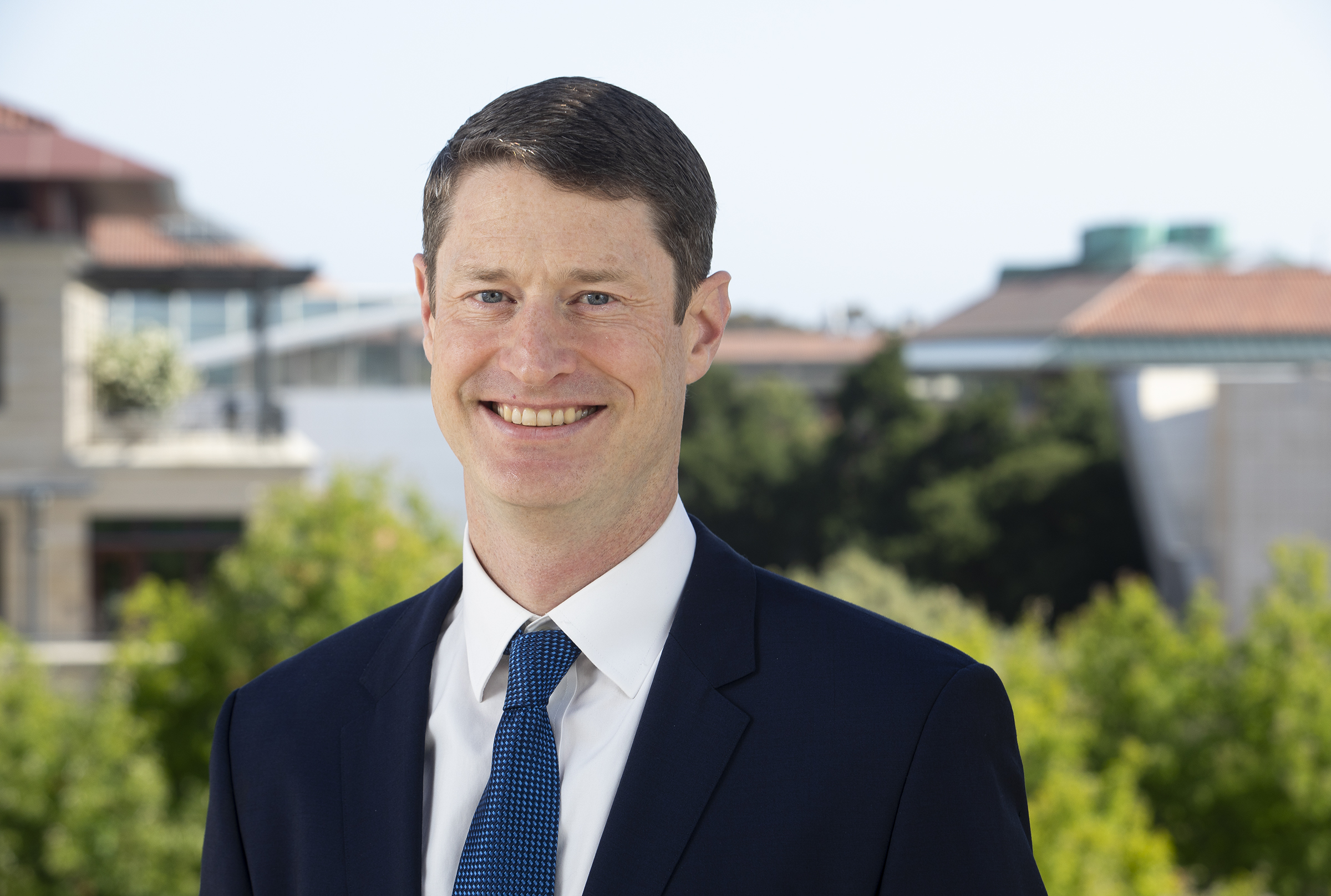
Linbing Wang is a Professor and Director of The Sensing and Perception Lab at the University of Georgia. His research focuses on smart infrastructure, pavement engineering, and IoT-enabled monitoring systems. He holds notable professional certifications including ASCE Fellow and F.EMI Fellow. Education details are not explicitly provided, but his academic and industry expertise are evident through his roles and publications. Research interests span asphalt and cement pavement performance, material behavior under dynamic loads, sensor networks, and machine learning applications in civil engineering. Recent work emphasizes IoT integration for real-time infrastructure monitoring, acoustic emission analysis for material failure prediction, and sustainable pavement material development. His articles highlight advancements in pavement vibration analysis, fatigue damage modeling, and smart transportation systems. Notable awards include ASCE Fellow and F.EMI Fellow, reflecting his contributions to civil engineering and infrastructure resilience. His lab, The Sensing and Perception Lab, drives innovation in sensor technologies and data-driven infrastructure solutions.
Dr. Lynn Hulse is a Senior Research Fellow in Human Behaviour at the University of Greenwich's School of Computing and Mathematical Sciences. She joined the university's Fire Safety Engineering Group (FSEG) in 2005, focusing on understanding human responses to threats like fires, wildfires, and autonomous vehicle interactions. Her work integrates cognitive psychology, forensic science, and engineering to improve safety protocols. Educated at the University of Aberdeen (PhD in Psychology) and Simon Fraser University (Visiting Scholar), she brings expertise in forensic road collision investigation and justice system reforms. Her research collaborations include fire services in Italy, Corsica, and the UK, emphasizing practical applications of behavioral models in emergency scenarios. Key research areas include evacuation modeling, post-traumatic stress in emergency responders, and cultural differences in disaster responses. Her publications analyze behavioral aspects of wildfires, construction safety, and autonomous vehicle interactions. She contributes to national guidance on emergency preparedness and has pioneered methodologies for collecting survivor testimonies in high-risk environments. Lynn's interdisciplinary approach bridges academic research with real-world safety innovations, addressing both technical and human factors in crisis situations.
Jack Baker is a Professor of Civil & Environmental Engineering and Associate Dean for Faculty Affairs at Stanford University's Doerr School of Sustainability. His research focuses on quantifying and managing disaster risk and resilience using probabilistic and statistical tools. He has contributed to risk analysis of spatially distributed systems, earthquake ground motion characterization, and post-disaster recovery modeling. He is the author of the textbook Seismic Hazard and Risk Analysis , directs the Stanford Urban Resilience Initiative, and serves as Editor-in-Chief of Earthquake Spectra . Education: B.A. in Mathematics/Physics from Whitman College (2000), M.S. in Civil & Environmental Engineering (2002), M.S. in Statistics (2004), and Ph.D. in Civil & Environmental Engineering (2005) from Stanford University. Research interests include disaster risk analysis, infrastructure resilience, probabilistic modeling, and the integration of machine learning in hazard assessment. His work bridges engineering principles with societal impacts, emphasizing practical applications in policy and disaster preparedness. Publications highlight advancements in seismic fragility modeling, atmospheric river flood risk, and post-disaster recovery simulations. His articles underscore interdisciplinary approaches, combining statistical methods with geospatial data to address complex challenges like urban resilience and climate adaptation. Award-winning scholar recognized for contributions to earthquake engineering, risk analysis, and teaching excellence. Leads initiatives such as the Stanford Catastrophe Modeling & Resilience Program, fostering collaboration between academia, industry, and policymakers to enhance community resilience.
Prof. Wolf-Georg Ringe is a Professor of Law & Finance and Director of the Institute for Law & Economics at the University of Hamburg. He concurrently serves as a permanent Visiting Professor at the University of Oxford and holds roles such as Research Member at the European Corporate Governance Institute and Vice President of the European Banking Institute. His research focuses on corporate law, financial market regulation, and the intersection of law with emerging technologies like AI and blockchain. Education: LL.M. (M.Jur.) from the University of Oxford (2004) Ph.D. in Law from the University of Bonn (2006) Legal Training in Hamburg (2004–2006) Research Interests: Prof. Ringe examines interdisciplinary legal issues in finance, including blockchain externalities, AI governance in banking, and ESG integration into corporate law. He emphasizes European integration challenges, such as Eurozone resilience and post-Brexit regulatory frameworks. His work bridges theoretical legal analysis with practical policy applications. Publications & Projects: He co-authored Business Law and the Transition to a Net Zero Economy (2022) and leads initiatives like the Network for AI and Law (NAIL) . Recent articles address topics like AI-driven financial supervision and blockchain’s environmental costs. His scholarship spans over 150 works, including contributions to the Journal of Financial Regulation . Awards & Roles: Fellow, European Banking Institute (Frankfurt) Research Member, European Corporate Governance Institute (Brussels) Editorial Board Member, Journal of Financial Regulation Advisory & Collaborations: He advises on fintech regulation, climate finance, and AI ethics. His projects include the Nordic Finance and the Good Society initiative at Copenhagen Business School and the Law, Finance, and Technology research group at Hamburg. Labs/Teams: Directs the Institute for Law & Economics and co-leads the NAIL network, fostering interdisciplinary research on AI’s legal implications.
Overview Prof. Nils Rüther is a Professor of Hydraulic Engineering at the Technical University of Munich (TUM) within the TUM School of Engineering and Design . His research focuses on sediment transport mechanics, hydraulic modeling of rivers and urban flooding, and hydropower infrastructure sustainability. He specializes in integrating advanced numerical methods with geospatial data analysis for environmental engineering applications. Research Interests His work spans experimental hydraulics, CFD modeling, and field observations. Key areas include: Braided river morphodynamics using satellite imagery Sediment transport quantification via ADCP and SfM techniques Flood risk assessment in steep mountain rivers Optimization of hydropower plant designs Climate change impacts on river systems Technical Expertise Rüther employs cutting-edge tools like OpenFOAM, TELEMAC, and machine learning models for predictive hydraulics. His experimental work uses physical scale models and advanced instrumentation (ADCPs, SfM, ultrasound). Awards & Grants While no specific awards are listed, his active participation in EU-funded projects like HYPOS and DIRT-X indicates recognition in the field.
Isabelle LINDEN is a Professor in Information Management at the University of Namur (UNamur), affiliated with the School of Management and the Department of Management Sciences . She leads research within the Namur Digital Institute (NADI) and Management of Information and Digital Transformation (MIND IT) research groups, while also collaborating with the Research Group on the Foundations of Computer Science (FOCUS) . Ph.D. in Computer Science (FUNDP 2007) Master in Computer Science (FUNDP 2002) Master in Philosophy (ULg 1999) Master in Mathematics (ULg 1995) Her research focuses on Knowledge Representation , Decision Support Systems , and Business Intelligence , with key projects exploring: Temporal coordination languages (semantics, expressiveness) Expert systems in legal and logistics domains Interactive visualizations preserving textual polysemy Data culture models for local governments Recent collaborative work includes projects like CYBEREXCELLENCE (cybersecurity), ARIAC (trusted AI), and GenQuAD (anomaly detection in industry 4.0), funded by Walloon Region and DigitalWallonia4.AI initiatives.
Dr. Anna Syberfeldt is a Professor in Production Engineering at the Department of Engineering Science, University of Skövde. She leads the Virtual Production Development research group and serves as research director at the ASSAR Industrial Innovation Arena. With a background in computer science from De Montfort University and habilitation in automation engineering, her work bridges AI, robotics, and immersive technologies with industrial production systems. Professor in Production Technology Research Director at ASSAR Industrial Innovation Arena University of Skövde Affiliation Her research focuses on developing innovative industrial solutions through: Artificial Intelligence and Machine Learning Collaborative Robotics and Human-Robot Interaction Digital Twins and Simulation-Based Optimization Augmented/Virtual/Mixed Reality Applications Smart Manufacturing and Industry 4.0 Worker Well-Being and Productivity Optimization Recent publications demonstrate her leadership in simulation-based optimization, collaborative robotics, and mixed reality applications in manufacturing. Her work emphasizes creating ultra-flexible production systems through cyber-physical approaches while prioritizing environmental sustainability and human-centric design. Key trends in her research include: Unified frameworks for virtual commissioning Knowledge graph applications in production systems Multi-objective optimization balancing productivity and ergonomics Smart glasses evaluation for industrial operators Evolutionary algorithms for complex manufacturing problems Her projects demonstrate practical implementations of: MAXLabs distributed cyber-physical testbed ERAIVA posture identification software Virtual environments for human-robot collaboration testing Digital support functions for factory layout planning
Houxiang Zhang is a Professor and Deputy Head of Department (Research) at the Department of Ocean Operations and Civil Engineering , Faculty of Engineering , Norwegian University of Science and Technology (NTNU) in Ålesund, Norway. He joined NTNU in 2011 and holds an industry-supported gift professorship (2011-2016). His research focuses on biological robots/modular robotics and virtual prototyping/marine mechatronics , with over 300 publications and 8 patents. Ph.D. in Mechanical and Electronic Engineering (2003) Habilitation in Informatics (2011) Research Interests include: Bio-inspired robotics and system design Marine automation and ship intelligence Digital twin technology and co-simulation Hybrid modeling approaches Artificial intelligence applications in maritime systems Scientific Awards and recognitions: Multiple IEEE best paper awards (2008, 2014, 2015, 2023, 2024) Finalist in IEEE Robotics and Automation conferences Dimitris N. Chorafas Award for outstanding PhD work Academy memberships: IEEE Senior (2012), NTVA (2019), DKNVS (2024) Advising and Research Leadership : Supervised 21 PhD/Master's students WP Leader for EU Horizon project RoboSAPIENS (2024-2026, 7.5M Euros) Key member in Norwegian Digital Ocean Space-Møre Ocean Lab (2023-2030, 30.7M NOK) Coordinated major SFI projects (2015-2022, 190M NOK each)
David Ness is an Adjunct Professor at UniSA STEM, University of South Australia, with a focus on sustainable built environments, resource efficiency, and climate mitigation. His work bridges architecture, engineering, and policy analysis. Research Interests : Sustainable urban systems, circular economy critiques, sufficiency policies, and climate adaptation strategies. Publications : Recent articles explore carbon-neutral urban dynamics, technological efficiency limitations, and architectural regeneration models. Scientific Contributions : He has advanced frameworks for resource-efficient infrastructure, urban symbiosis, and post-circular economic models, emphasizing equity and global climate justice.
Muhammad Iqbal is a Research Fellow at Aalto University, affiliated with the Department of Electrical Engineering and Automation. His work focuses on resilient control systems, cybersecurity for cyber-physical systems, and advanced signal processing techniques. Research Interests: Resilient control of connected automated vehicles Robust Kalman filtering under cyber-attacks Multi-agent systems and distributed optimization Signal denoising and sparse signal processing Microgrid fault diagnostics and control Hydropower system regulation Research Groups: Sensor Informatics and Medical Technology.
Andreea Minca is a Professor in the School of Operations Research and Information Engineering at Cornell University, holding a PhD in Applied Mathematics from Sorbonne University and a Diplome from Ecole Polytechnique. Her research focuses on mathematical modeling of financial systems under uncertainty, with emphasis on systemic risk and network-based contagion dynamics. Her educational background includes: PhD in Applied Mathematics, Sorbonne University Diplome de l'Ecole Polytechnique, Ecole Polytechnique Minca's research pioneered structural models for systemic risk using network theory to represent financial interconnections. She developed foundational work on contagion in large systems through asymptotic analysis of diffusions on random graphs and introduced optimization frameworks under network uncertainty. Current interests extend to decentralized finance, stablecoin design, reinforcement learning in graphon games, and pandemic-related risk mitigation for supply chains. Her methodology integrates stochastic analysis, game theory, and network science to derive stability-promoting policies. Recent publications reveal a strategic shift toward decentralized finance applications while maintaining core systemic risk research. Key trends include modeling stablecoin vulnerabilities, applying clustering algorithms to financial networks, and developing reinforcement learning solutions for mean-field games. This interdisciplinary work bridges operations research, finance, and computer science to address contemporary challenges in financial stability and emerging technologies. Her distinguished awards include: 2016 SIAM Activity Group on Financial Mathematics and Engineering Early Career Prize NSF CAREER Award (2017) Research Fellow of GARP (2014) AXA Research Fund Awardee (2020) Minca has advised seven PhD students with placements at JPMorgan, Northwestern University, Citadel, AQR, Tower Research Capital, and Gyroscope Stablecoin (founded by her student). Her research is supported by competitive grants including the NSF CAREER award and AXA-funded project on pandemic risk mitigation. She serves on editorial boards of Mathematical Finance, SIAM Journal on Financial Mathematics, and European Journal of Operational Research. Her work operates within complex financial systems research, collaborating across disciplines to develop mathematical frameworks for crisis management and system resilience, particularly through network analytics and machine learning applications.
Ali M. Memari is the Bernard and Henrietta Hankin Chair Professor at The Pennsylvania State University, with joint appointments in the Departments of Architectural Engineering and Civil and Environmental Engineering. He serves as Director of the Pennsylvania Housing Research Center (PHRC) and Editor-in-Chief of the ASCE Journal of Architectural Engineering. His research integrates structural engineering, building science, and sustainable construction technologies. Research Focus: Dr. Memari leads investigations in residential building systems, including seismic resilience of structures, energy-efficient envelope design, and sustainable materials development. His pioneering work in multi-story modular construction and 3D concrete printing addresses housing affordability and environmental impact. Current projects explore hurricane/flood-resistant designs, hempcrete applications, and performance optimization of 3D-printed structural elements. Teaching & Advising: He teaches graduate courses in Building Enclosure Science and Earthquake Resistant Design. Since 2000, he has mentored over 45 graduate students, with dissertations/theses spanning seismic testing of wall systems, additive manufacturing, building energy modeling, and tornado shelter design. Honors & Innovations: Recognized as an ASCE Fellow and endowed chair holder, Memari holds patents for earthquake-resistant glass panels and transparent sustainable wall systems. His research receives support through PHRC industry partnerships and federal grants. Laboratory Leadership: He directs experimental research at PHRC's Air Bladder Load Test Facility and 3D printing laboratories, advancing testing protocols for building components under environmental and seismic loads.
Steven Beites is a tenured Professor at Laurentian University's McEwen School of Architecture, where he directs the Institute for Northern Housing Innovation and serves as Graduate Coordinator. He holds a Master of Architecture from the University of Toronto, a Master of Science in Digital and Material Technologies from the University of Michigan, and is a Ph.D. candidate at the European Graduate School in Switzerland. Previously, he taught at Toronto Metropolitan University and the University of Waterloo, with visiting appointments at Harvard’s Graduate School of Design. His research integrates robotics, material science, and bio-based materials to transform affordable housing in Northern Ontario, focusing on decarbonization, automated construction, and sustainable design. Key themes include: Robotic fabrication for in-situ construction Low-carbon bio-material assemblies Cable-driven parallel robot (CDPR) systems Community-driven design-build frameworks Publications emphasize robotic construction (68% of recent works), material innovation (21%), and pedagogical/community design (11%), with consistent focus on practical applications for housing affordability. Significant awards include: Voyageur Innovation Challenge 2025 (1st Place) Kathryne Kril-Atkins Innovation Fellowship National Award of Excellence from Canadian Society of Landscape Architects Azure Magazine’s Social Good AZ Award Over 15 national/international competition wins including Postmark Hotel (2024) and Venice Biennale exhibitions He secured $1.75M+ in grants (SSHRC, NFRF) establishing the Institute for Northern Housing Innovation, and advises the Ontario government on modular housing policy through the Council of Ontario Universities.
Prof. Francesca Tittarelli is a Full Professor at the Polytechnic University of Marche, affiliated with the Department of Materials, Environmental and Urban Science Engineering (SIMAU) within the School of Engineering. Her research focuses on sustainable construction materials, particularly alkali-activated systems, waste valorization in cementitious composites, and structural health monitoring. Recent publications highlight her work on: Development of sustainable alkali-activated mortars using copper mine tailings and metakaolin (2025) Creation of multifunctional finishes for indoor air quality improvement (2025) Comparative analysis of textile-reinforced mortars with different binder systems (2024) Implementation of AI-enabled monitoring platforms for concrete structures (2024) Characterization of construction and demolition waste (2024) Development of waste-valorized nanowebs for water purification (2024) The research demonstrates consistent focus on: Environmental sustainability in material science Waste-to-resource strategies Smart sensing materials Cultural heritage preservation Climate-resilient construction techniques Energy-efficient building solutions
Professor Dominic C.Y. Foo is a distinguished academic at the University of Nottingham Malaysia, serving as Professor of Process Design and Integration and Founding Director of the Centre of Excellence for Green Technologies . He holds multiple prestigious fellowships including Fellow of the Institution of Chemical Engineers (IChemE) and Fellow of the Academy of Sciences Malaysia (ASM) , and is recognized in the Stanford list of top 2% scientists for several consecutive years. Department of Chemical and Environmental Engineering Active in international collaborations across Asia, Europe, Americas, and Africa Editor-in-Chief of Process Integration and Optimization for Sustainability (Springer Nature) Research Focus : His work centers on process integration and optimization for sustainability, particularly through pinch analysis and mathematical programming to address resource conservation , CO2 reduction , and decarbonization . Key areas include water minimization , energy planning , and carbon management networks , with applications spanning from the oil palm industry to hydrogen production systems. Scientific Contributions : With over 190 journal papers , 8 books , and 30+ keynote speeches , Professor Foo's research has had significant global impact. He has examined 40+ PhD/MSc theses internationally and developed specialized software like RCNet and DECO2 for resource conservation and carbon management. 2009 IChemE Innovator of the Year 2013 Outstanding Asian Researcher (SCEJ, Japan) 2016 Top Research Scientist Malaysia (ASM) International Engagement : He serves as Visiting Professor at several institutions including University of the Philippines Los Baños and De La Salle University in the Philippines. His editorial roles span multiple leading journals in chemical and environmental engineering.