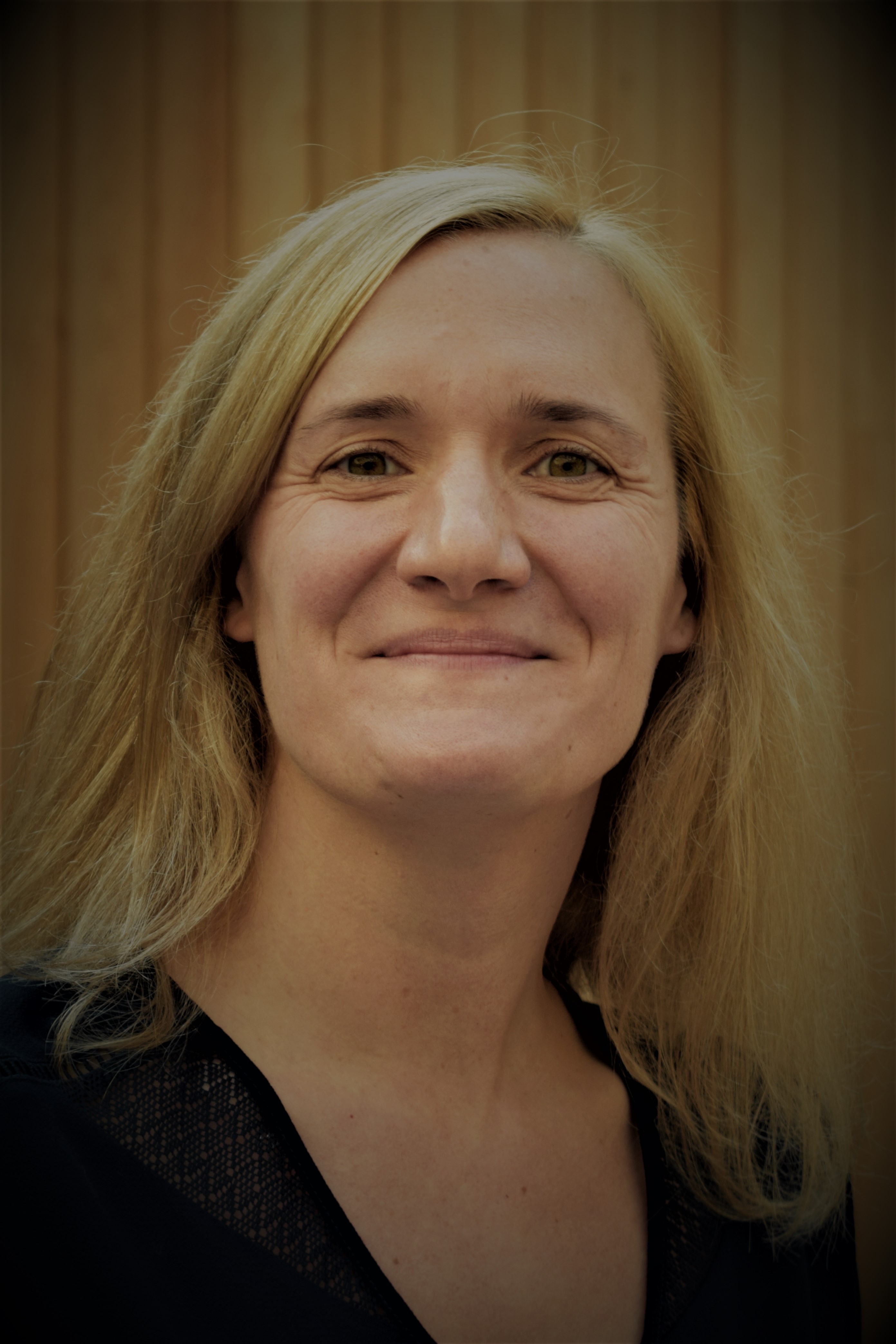
Sotirios Karatzimas is an Assistant Professor of Accounting at the Department of Accounting and Finance, Athens University of Economics and Business (AUEB). He holds a PhD and MSc from AUEB, with postdoctoral research on Greek public sector accounting during austerity. He has also taught at Universitat Autònoma de Barcelona and Neapolis University Cyprus. His research focuses on public sector accounting, management accounting, and financial sustainability in public institutions. Education: PhD in Accounting (AUEB) MSc in Human Resources Management (AUEB) Bachelor's in Accounting and Finance (AUEB) Research emphasizes public sector accountability mechanisms, fiscal transparency, and citizen engagement through innovative reporting methods. He has contributed to EU-funded projects and collaborates with AUEB’s distance learning programs on public sector accounting. His work bridges accounting practices with socio-political contexts, particularly in crisis-affected economies like Greece. Notable contributions include studies on debt management in local governments, smart cities’ climate change reporting, and participatory budgeting frameworks. He is actively involved in European Study Groups on public sector accounting education and advocates for integrating technology (e.g., eLearning platforms) into teaching. His research often examines the intersection of accounting standards, policy reforms, and citizen literacy for fostering participatory governance.
Professor Allan Rennie serves as Professor in Manufacturing Engineering at Lancaster University's School of Engineering and holds the administrative position of Associate Dean for Engagement within the Faculty of Science and Technology. With a career spanning over 30 years since initiating work in additive manufacturing during the mid-1990s, he has established himself as a leading figure in industrial applications of advanced manufacturing technologies across diverse sectors. His research expertise centers on Additive Manufacturing , Engineering Design , and Manufacturing Process Optimization , with current specializations including design for additive manufacturing (as co-leader of the UK's EPSRC DfAM Network), industrial digitalisation of manufacturing processes, and innovative tooling development using metallic and hybrid approaches. Rennie has significantly contributed to Engineering Education , particularly examining the integration of business and management principles into engineering curricula and analyzing the impacts of online/hybrid delivery modes on student engagement and graduate employability following the COVID-19 pandemic. Recent publication trends reveal Rennie's dual focus on practical manufacturing applications and scholarly analysis of technological evolution. His 2025 bibliometric study maps a decade of Design for Additive Manufacturing research, while his structural analysis of musical instruments demonstrates cross-disciplinary applications of manufacturing techniques. These works reflect his commitment to both advancing manufacturing technology and documenting its academic trajectory through rigorous analysis. Professor Rennie actively supervises PhD candidates including Jenny Roberts, Eunike Sembiring, and Joe Taylor while leading substantial research projects such as the EPSRC DfAM Network (2020-2023), Automating Design for Additive Manufacture with AI (2023-2024), and multiple Engineers in Business Competitions. His extensive grant portfolio spans industrial digitalization, sustainable manufacturing, and educational innovation, with notable projects including RENDER (powder recycling), TecHnology and EntrepreneUrship Education, and Production Capable Additive Manufacturing of Polymers. Rennie contributes to Lancaster's research ecosystem through affiliations with the Centre for Global Eco-innovation, Energy Lancaster initiative, and the Lancaster Product Development Unit. These platforms enable him to bridge academic research with industrial applications across multiple sectors, particularly supporting his work on sustainable manufacturing practices, technology commercialization, and industry engagement strategies that translate research into real-world impact.
Michele Gattullo serves as an Assistant Professor within the Department of Mechanics, Mathematics & Management at the Polytechnic University of Bari, Italy, specializing in design methods for industrial engineering (ING-IND/15). His research bridges cutting-edge extended reality technologies with practical industrial applications, focusing on human-centered solutions for manufacturing, maintenance, and workplace design. Dr. Gattullo's research portfolio centers on Augmented Reality, Virtual Reality, and Biophilic Design, with significant contributions to Human-Computer Interaction in industrial contexts. He investigates how nature-inspired elements in virtual workspaces enhance employee well-being and productivity, while simultaneously developing practical AR tools for assembly guidance, technical documentation, and maintenance support. His work uniquely integrates ergonomics, cognitive psychology, and industrial engineering to optimize human-technology interaction in complex production environments. Analysis of his 15 most recent publications reveals two dominant research trajectories: biophilic design frameworks for virtual/metaverse workspaces (2023-2025) and industrial AR authoring methodologies. The biophilic stream establishes evidence-based guidelines for digital nature integration, while the AR stream delivers validated tools like ADAM and minimal AR approaches that streamline technical documentation creation. Both trajectories emphasize user experience validation through rigorous industrial studies, demonstrating strong interdisciplinary impact across computer science, industrial engineering, and environmental psychology. Scientific Awards: No awards or honors were documented in the available sources. Advising and Grants: The provided materials contain no information regarding graduate student supervision, research grants, or funding sources. His academic profile emphasizes publication output over mentoring activities or project financing details. Laboratories and Teams: While Dr. Gattullo's research involves advanced XR technologies, the source text does not specify laboratory facilities, research groups, or collaborative teams associated with his work at Politecnico di Bari.
Daragh Byrne is an Associate Teaching Professor at the Carnegie Mellon University School of Architecture , with courtesy appointments in the School of Design and Human-Computer Interaction Institute (HCII) . Previously an Assistant Research Professor at Arizona State University’s School of Arts, Media and Engineering, he manages the NSF-funded XSEAD project and leads MakeSchools , a catalog of making practices in higher education. PhD in Digital Media from Dublin City University (2011) M.Res. in Design and Evaluation of Advanced Interactive Systems from Lancaster University B.Sc. in Computer Applications from Dublin City University His research explores experiential media systems through Internet of Things and tangible interaction design , focusing on how computational tools can capture human experience and enable multidisciplinary collaboration. Key projects include Sentient Concrete (thermochromic architectural surfaces) and Spooky Technology (speculative design around invisible technologies). He has developed CMU’s Designing for the Internet of Things course since 2016, creating hands-on curricula for connected product design. Recent publications examine creative physical computing education , AI-driven documentation systems , and XR-enabled skill training . Awards include multiple CMU research grants and the CHI 2018 Best Paper Award . He actively advises PhD and Masters students in Computational Design, emphasizing human-centered design and speculative technology research .
Jia Di serves as Professor and Department Head of the Department of Electrical Engineering and Computer Science at the University of Arkansas, holding the Rodger S. Kline Endowed Leadership Chair. He has been with the institution since 2004, progressing from Assistant Professor to his current leadership position within the College of Engineering. Education: B.S. in Automatic Control, Tsinghua University (1997) M.S. in Automatic Control, Tsinghua University (2000) Ph.D. in Electrical and Computer Engineering, University of Central Florida (2004) Research Focus: Dr. Di's work centers on asynchronous integrated circuit design and hardware security , with emphasis on Multi-threshold Null Convention Logic (MTNCL) for ultra-low-power secure systems. His research spans hardware Trojan detection, polymorphic logic gates, extreme environment electronics, and security solutions for IoT infrastructure. His Trustable Logic Circuit Design Lab has pioneered techniques for side-channel attack mitigation and cold boot attack prevention through self-destructive memory mechanisms. Publication Trends: Recent publications reveal a strategic shift toward hardware security applications for renewable energy systems and IoT edge devices, while maintaining core expertise in asynchronous circuit design. His work increasingly integrates machine learning (e.g., graph neural networks for hardware Trojan detection) and cross-platform verification frameworks, demonstrating evolution from pure circuit design to holistic cybersecurity solutions for critical infrastructure. Scientific Recognition: Senior Member of IEEE Eminent Member of Tau Beta Pi Elected Member of the National Academy of Inventors Research Leadership: Dr. Di has secured over $23 million in research funding for his Trustable Logic Circuit Design Lab, supporting development of 6 U.S. patents and two authoritative books. His lab collaborates with federal agencies and industry partners on hardware security challenges, with recent grants focusing on photovoltaic system protection and extreme-environment electronics. While specific student names aren't documented here, his extensive publication record indicates significant graduate mentorship in hardware security and asynchronous design. Lab Infrastructure: The Trustable Logic Circuit Design Lab maintains specialized capabilities for testing circuits in extreme environments (high temperature/radiation) and developing polymorphic security mechanisms. Current projects include RF aperture security, hardware-based IoT verification systems, and digital twin implementations for power electronics with integrated trust verification.
Eilif Pedersen is a Professor and Program Leader for Marine Technology at the Norwegian University of Science and Technology (NTNU). He leads the Department of Marine Technology under the Faculty of Engineering. His research focuses on mathematical modeling, simulation of machinery systems, and energy-efficient solutions in marine and offshore contexts. He is actively involved in projects such as SEACo, SFI Smart Maritime, and ViProMa, emphasizing virtual prototyping and hybrid power systems. Key research areas include bond graph methodology, thermodynamic system modeling, and dynamic analysis of marine systems. Pedersen supervises numerous PhD and industrial projects, including studies on hybrid propulsion, wind turbine dynamics, and fuel cell integration. He has contributed to over 50 publications, with recent work addressing co-simulation techniques, energy conservation in marine systems, and emission reduction strategies. His expertise spans marine engines, fluid dynamics, and renewable energy applications. Collaborations with industry partners like Rolls-Royce and Kongsberg Digital highlight his commitment to bridging academic research with practical maritime challenges.
Nele Mentens is a full professor at both KU Leuven and Leiden University, where she leads cutting-edge research in applied cryptography, hardware security, and secure embedded systems. At KU Leuven, she is affiliated with the Faculty of Engineering Technology and the Electrical Engineering Department (ESAT), leading the Emerging Technologies, Systems & Security (ES&S) research group at the Diepenbeek campus. Simultaneously, she holds a full professorship at Leiden University’s Leiden Institute of Advanced Computer Science (LIACS), focusing on applied cryptography and security. She has been instrumental in numerous national and international research initiatives, including Horizon Europe and NWO-funded projects. Full Professor, KU Leuven (since 2023) Full Professor, Leiden University (since 2020) Associate Professor, KU Leuven (2014–2023) Post-doctoral Researcher & Lecturer, KHLim / KU Leuven (2007–2014) Ph.D. in Engineering Science, KU Leuven (2007) M.Sc. in Electrical Engineering, KU Leuven (2003) Her research focuses on secure and efficient hardware design, particularly for cryptographic applications on FPGAs, reconfigurable architectures, IoT security, and neuromorphic computing. She explores physical attack resistance, side-channel analysis protection, and trusted computing architectures, with applications in healthcare, industrial monitoring, and endpoint AI. Her work bridges theoretical cryptography with practical hardware implementations, emphasizing energy efficiency and real-time performance. The 15 most recent publications reflect a strong trend toward secure, energy-efficient, and intelligent embedded systems. Topics include neuromorphic AI accelerators, trusted IoT architectures, dynamic reconfiguration for side-channel protection, and secure medical data processing. These works span disciplines such as computer architecture, cybersecurity, digital design, and embedded systems, with a focus on hardware-software co-design and real-world deployment. Nele Mentens has received recognition for her contributions, including: Best Paper Award, DATE'16 Best Paper Nomination, AsianHOST'17 Best Paper Award, CHES'19 She has supervised over 15 Ph.D. students and post-docs, both current and former, and has served as principal investigator in approximately 25 funded research projects. Her work has attracted significant grants from Horizon Europe, NWO, FWO, and national innovation programs. She actively contributes to the academic community through editorial roles in top journals and leadership in major conferences. Nele Mentens leads the ES&S research group at KU Leuven and collaborates closely with LIACS at Leiden University. Her team includes Ph.D. students, post-docs, and research experts working on projects like NimbleAI, NeuroSoC, and TrustedIoT. She has also established secure electronics labs through infrastructure grants and maintains strong international ties with institutions such as EPFL, Ruhr University Bochum, and ETH Zurich.
Dimitri Darzentas is a Lecturer at the School of Computing Engineering and the Built Environment , Edinburgh Napier University. His work bridges Interaction Design , Internet of Things , and Cultural Informatics , focusing on hybrid digital-physical experiences in museums and sustainable technology practices. Research Themes: Museum technology, hybrid gifting, IoT sustainability, data-driven co-design Projects: Library of Inspiration (Royal Academy of Engineering grant), UbiFix (repairability in smart devices) His design practice emphasizes emotional interpretation, temporal engagement, and ethical technology use. Recent work explores substitutional reality with museum objects and user-generated content in historical games. PhD Supervision: Guided students in Digital Storytelling (Gengyi Wang) and Mixed Reality Education (Suzi Cathro).
Jo Herstad is an Associate Professor in the Department of Information Systems Design at the University of Oslo , where she has worked since 2002. With a background in industry at Ericsson (1990-2003), Herstad bridges technical expertise with academic rigor. She teaches courses including: IN1030 - Introduction to Design, Use, Interaction (since 2017) IN2000 - Software Engineering with Project Work IN5480 - Interaction with AI and Autonomous Systems Research Focus: Her work explores Human-Computer Interaction through: Universal Design principles in digital environments Human-Robot Interaction for domestic applications Inclusive Technology across diverse populations Participatory Design methodologies Privacy Dynamics in smart homes Multimodal Systems for elderly care Key Publications (2017-2024) examine motion profiling in robotics, equitable digital feedback, and socio-technical systems. Her supervision includes 15+ master's theses on topics ranging from chatbot ethics to universal design in education. Current projects focus on: Artificial Intelligence and Sensor Technology Multimodal Elderly Care Systems (MECS) Podcast Accessibility (PUD) RHYME: Music Technology for All
Yuta Sugiura is an Associate Professor in the Department of Information and Computer Science at Keio University's Faculty of Science and Technology. His research focuses on innovative human-computer interaction techniques, particularly in wearable computing, tangible interfaces, and novel input methods. Previously, he worked as a postdoctoral researcher at the National Institute of Advanced Industrial Science. Dr. Sugiura's research interests span Human-Computer Interaction, Wearable Computing, Augmented Reality, Tangible User Interfaces, Gesture Recognition, Ubiquitous Computing, Haptics, and Virtual Reality. His work often explores how everyday objects and environments can become interactive surfaces, with notable projects including the iRing (intelligent ring), SenSkin (skin as interface), and EarHover (mid-air gesture recognition for hearables). He has developed numerous novel interaction techniques that leverage physical properties of materials and human physiology for input and output. His recent publications indicate a strong focus on hearable computing, medical applications of HCI, edible interfaces, and novel authentication methods. The research shows a consistent pattern of exploring unconventional interaction surfaces and leveraging subtle physical phenomena for input sensing. His work has significant implications for healthcare applications, particularly in neurological disorder screening and rehabilitation. Best Paper Award Dr. Sugiura has advised numerous students who have gone on to publish significant work in top-tier HCI venues. His research has been supported by various grants enabling the development of novel interaction techniques and systems. He maintains strong collaborations with researchers across Japan and internationally, particularly in the fields of wearable computing and medical applications of HCI. His laboratory appears to focus on lifestyle computing, developing interfaces that integrate seamlessly into daily activities. Current projects include exploring edible displays, adaptive ear interfaces, and novel authentication methods using wearable devices. Future work seems to be heading toward more medical applications of HCI, particularly in neurological assessment and rehabilitation.
Dr. Sepideh Ghodrat is an Assistant Professor of Shape Morphing Design at TU Delft's Faculty of Industrial Design Engineering. She bridges materials science and design, focusing on stimuli-responsive materials for dynamic, interactive products. Her research emphasizes 4D printing, smart materials, and sustainable applications. Research Projects include 4D Printing Magnetically Activated Shape Morphing Objects and SereniSleeve (wearables for anxiety modulation). Courses taught: Materials and Manufacturing (2023-2024). Research Interests : Shape Morphing Design (SMD) Stimuli-Responsive Materials (e.g., shape memory alloys, polymers) 4D Printing and Magnetic Soft Materials Applications in healthcare, automotive, and sustainability Key Contributions : Developed modular self-folding hinges (Mimosa Kit). Explored haptic wearables for visually impaired users. Advocates for adaptive, environment-responsive products. Labs/Teams : Involved in multiple interdisciplinary research teams at TU Delft, focusing on smart materials and sustainable design engineering.
Overview ASSILA Ahlem is a Researcher-Lecturer at CESI, specializing in Human-Machine Interaction (HMI), Augmented Reality (AR), and Virtual Reality (VR). She holds a PhD in Computer Science from Université de Valenciennes (2016) and a postdoctoral position at Institut Image ARTS ET METIERS PARISTECH (2017). Her research focuses on usability evaluation, digital twin technology, and BIM-integrated XR systems. She has supervised multiple engineering and master’s projects, including AR application development for network management. Research Contributions Developed frameworks for integrating subjective/objective usability metrics using ISO standards Proposed maturity models for BIM-based AR/VR systems Explored digital twin applications in manufacturing and construction industries Education & Responsibilities Teaches computer science at all engineering levels (L1-M2) at CESI Reims, including algorithmics, HMI design, and project-based learning. Served as pilot for engineering program cycles (2017–2020). Active in organizing international conferences (e.g., HCI 2020, Flexible Automation 2018) and peer review for journals like IJISE and IEEE VR. Awards & Recognition No specific awards listed, but recognized for contributions to HCI and industry-relevant research. Advising & Grants Supervised over 10 student projects including PFEs and internships. Actively participates in jury panels for engineering thesis defenses and academic promotions across multiple institutions. Labs & Collaborations Member of the CESI Chair for Industry and Services of Tomorrow, focusing on technology integration in construction and manufacturing sectors.
Xing-Dong Yang is an Associate Professor of Computer Science at Simon Fraser University (SFU) and holds an adjunct appointment as Assistant Professor at Dartmouth College. He directs the XDiscovery Lab and focuses on Human-Computer Interaction (HCI), particularly in developing interactive systems for smart everyday objects such as wearables, garments, and appliances. His research emphasizes accessibility for visually impaired users and prototyping tools for non-specialists. He earned his PhD from the University of Alberta, following degrees from the University of Manitoba and University of Alberta. Affiliations: Simon Fraser University (School of Computing Science), Dartmouth College (Adjunct) Education: PhD, Computer Science, University of Alberta MS, Computer Science, University of Alberta BS, Computer Science, University of Manitoba His research explores novel interactive systems, including tactile interfaces for education, assistive technologies for visual impairments, and innovative input methods for wearables. Key projects include MakeBronze (cultural preservation through interactive crafts), AccessibleCircuits (inclusive electronics for blind users), and systems like iWood and MicroFluID that merge materials science with HCI. His work has been recognized with awards such as the Best Paper Award at UIST'19 and multiple Honorable Mentions at CHI and UIST conferences. He advises a dynamic team of PhD and MSc students, emphasizing hands-on prototyping and industry collaborations through internships at companies like Google, Microsoft, and Apple. Yang has secured grants including an NSF CRII grant for device modulation and an NSF CSR Large grant for health-focused earpiece technology. His lab fosters interdisciplinary innovation, bridging computer science with design, engineering, and cultural studies.
Massimo Poncino is a Full Professor at the Department of Control and Computer Science (DAUIN) within the Faculty of Engineering at Politecnico di Torino. He serves as Scientific Advisor for the STMicroelectronics partnership and coordinates basic engineering subjects. A Senior Member of IEEE since 2012 and Fellow since 2012, he has served on editorial boards for IEEE Transactions on Computer-Aided Design, IEEE Design & Test of Computers, and ACM Transactions on Design Automation. Education: Laurea in Electronic Engineering (1989) and PhD in Computer and Systems Engineering (1993) from Politecnico di Torino Academic Career: Visiting Scientist University of Colorado (1993-1994), Researcher at Politecnico di Torino (1995-2001), Associate Professor at University of Verona (2001-2004), Full Professor at Politecnico di Torino (2006-present) His research focuses on energy-efficient digital systems , including design automation of SoCs, hardware-aware AI, battery management, cyber-physical systems, and embedded systems. Recent publications highlight advancements in digital twins for batteries , low-power neural network deployment , and IoT privacy . Scientific Awards: Recognition of Service Award - ACM (2013) Certificate of Appreciation - IEEE Circuits and Systems Society (2006, 2008, 2009) IEEE Fellow (2012-) Research Involvement: EU H2020, VI/VII Framework Programs evaluator Scientific Director for projects: Approxim@ction, EMBAI, DISLO-MAN, DAMASCO Member of EDA research group Teaching: Course director for Energy Management for IoT (2019-2025) Lecturer for Computer Science courses (2003-2025)
Lynne Grewe serves as a Professor in the Department of Computer Science at California State University, East Bay, where she maintains active research and teaching responsibilities with current office hours and contact information. Her work bridges theoretical computer science with real-world applications across healthcare, education, and emergency response domains. Her research portfolio centers on three interconnected thrusts: Medical Technology : Development of computer vision systems for stroke detection through facial pattern analysis (StrokeChange), infrared-based disease monitoring, and assistive navigation tools for the visually impaired (Seeing Eye Drone) Educational Innovation : Creation of multimodal systems like ULearn that detect student frustration using deep learning, alongside community college partnerships to broaden participation in computing Sensor Fusion Applications : Integration of multi-modal data for disaster response, infrastructure monitoring, and mobile health platforms using advanced machine learning techniques Publication analysis reveals consistent evolution toward real-time, deployable systems—particularly mobile health applications and educational tools—while maintaining foundational work in sensor fusion. Her 2020-2024 output shows increasing emphasis on healthcare applications (40% of recent work) and educational technology (25%), often combining computer vision with mobile platforms. Grewe demonstrates significant commitment to educational equity through the Faculty in Residence program, collaborating with community colleges to prepare underrepresented students for computing careers. Her Google partnership and focus on practical applications indicate strong industry engagement, though specific grant details aren't documented in source materials. Current projects suggest ongoing expansion into in-situ health monitoring and AI-driven educational support systems.