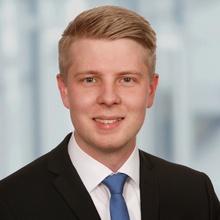
Anke Brocker is a Research Assistant at the Media Computing Group, Department of Computer Science, RWTH Aachen University. She works in Room 2.38 with office hours from 08:30-17:30 on Mondays, Wednesdays, and Thursdays. Her academic journey began with a Bachelor's thesis in 2015 followed by a Master's thesis in 2017, both at RWTH Aachen University. Her research focuses on empowering novices through personal fabrication techniques, with particular emphasis on: Supporting children learning embedded coding Integrating multiple senses (including smell) into HCI experiences Designing tangible and shape-changing interfaces using soft robotics Developing electronic toolkits for novel user experiences Creating interfaces that enable users to build their own interactive systems Brocker's publication record shows a clear trajectory in Human-Computer Interaction research, with increasing focus on soft robotics and tangible interfaces since 2018. Her work spans both theoretical investigations of user awareness with tangible interfaces and practical tool development like the SoRoCAD design system for pneumatic soft robotics and Flowboard for embedded coding education. As an active member of the HCI community, Brocker has served as a reviewer for major conferences including ACM CHI, UIST, DIS, and TEI since 2020, demonstrating recognition of her expertise in the field. She has supervised numerous Bachelor's and Master's theses on topics ranging from soft robotics design to smart jewelry and tangible interfaces, showing her commitment to mentoring the next generation of HCI researchers.
Michael Rohs is a full Professor of Human-Computer Interaction at the Leibniz University Hannover , Germany, within the Faculty of Electrical Engineering and Computer Science and the Institute of Practical Computer Science . Since 1 July 2012 he has led the Human-Computer Interaction research group, while also serving in numerous governance roles such as chair of the computer-science examination board, managing director of his research group, and elected representative of professors on the faculty council and study commission. Education & Career Path 1994–2000: Computer-science studies at Technische Universität Darmstadt & University of Colorado at Boulder 2000–2005: PhD candidate and research assistant, ETH Zürich 2005: Doctorate (Dr. sc. ETH Zürich) 2005–2010: Senior Research Scientist, Deutsche Telekom Laboratories (TU Berlin) 2007–2008: Visiting Professor for User Interface Engineering, Bonn-Aachen Int’l Center for IT (B-IT), University of Bonn & Fraunhofer IAIS 2010–2012: Junior Professor for Media Informatics, Ludwig-Maximilians-Universität München since 2012: Professor for Human-Computer Interaction, Leibniz University Hannover Research Focus Michael Rohs’ research lies at the intersection of mobile human-computer interaction , pervasive computing and wearable technologies . He explores novel interaction techniques for mobile and wearable devices , leveraging computer vision , sensor fusion , and haptic feedback to create seamless, context-aware user experiences. A particular emphasis is placed on integrating physical and virtual resources in users’ environments, enabling richer interactions that extend beyond the screen. His recent work delves into on-skin wearables , electrotactile and vibrotactile feedback , smartwatch interaction paradigms , and assistive technologies for visually impaired users . By combining rapid prototyping , electrical muscle stimulation (EMS) , 3D printing , and augmented-reality audio , his group investigates how subtle, always-available interfaces can support daily activities ranging from navigation to knowledge work. Publication Trends Across more than 100 peer-reviewed papers (2008–2024), a clear trend emerges: early work focused on mobile device input techniques (magic lenses, tilt & pressure input, around-device interaction), evolving toward wearable and on-body systems that integrate haptics , computer vision and machine learning . Recent publications emphasize health & well-being applications (proactive voice assistants for knowledge workers, cycling navigation aids), accessibility (tactile navigation aids, AR object recognition), and novel materials & fabrication (gold-plated 3-D printed on-skin devices). Venues include ACM MobileHCI, CHI, UIST, IMWUT, TOCHI, DIS, and specialized workshops on pervasive and ubiquitous computing. Scientific Awards & Honors No specific awards explicitly listed in the provided text. Funding, Labs & Teams Prof. Rohs heads the Human-Computer Interaction group at Leibniz University Hannover. While exact grant details are not reproduced here, the extensive publication record at top-tier venues indicates sustained funding from national (DFG, BMBF) and European sources, as well as industry partnerships (e.g., Deutsche Telekom Laboratories). The group maintains well-equipped labs for rapid prototyping (3-D printing, electronics), haptics & EMS experimentation , and mobile & wearable device evaluation . Regular collaboration with PhD, master’s and bachelor’s students is evident from co-authorship patterns, though individual student names are not itemized in the supplied text.
Prof. Susanne Boll is a Full Professor of Media Informatics and Multimedia Systems at the University of Oldenburg and Board Member of the OFFIS Institute. Her research focuses on human-centered interactive systems, cyber-physical systems, and digital transformation. She holds a PhD (Dr. techn.) from TU Wien and a Diploma from TU Darmstadt. Research: Her work bridges systems engineering, HCI, and computer science, emphasizing ethical technology integration. Key areas include automated vehicles, healthcare tech, Industry 4.0, and socio-technical systems. She has led over 60 projects funded by DFG, BMBF, and industry, including the DFG SPP 2199 and PIZ Center for Innovation in Care. Teaching: Teaches courses in HCI, Interactive Systems, and Digital Fabrication. Coordinates the MSc in Engineering Socio-Technical Systems, emphasizing interdisciplinary education and hands-on research. Awards & Leadership: Recipient of Best Paper Awards at CHI and MobileHCI. Serves on DFG’s Computer Science Review Board, OFFIS Board, and Germany’s AI Platform. Advocates for diversity in STEM, co-leading initiatives like the 25 in 25 gender equality strategy at OFFIS. Publications: Over 300 peer-reviewed articles with 10k+ citations (h-index 54). Recent work spans AI transparency in governance, smart home interfaces, and human-AI collaboration in workplaces.
Dr. Adwait Sharma is an Assistant Professor in Computer Science at the University of Bath, leading the Advanced Interaction and Sensing (AIS) Lab. His research focuses on enabling always-available computing through microgesture recognition, wearable technologies, and machine learning, with applications in healthcare, robotics, and smart environments. He holds a PhD from Saarland University and a Master's from the Media Interaction Lab, Austria. Education: PhD (HCI, Saarland University), MSc (Media Interaction, Austria) Research Interests: Interaction Design, Sparse Sensing, Real-Time Recognition, E-textiles His work bridges user-centered design with data-driven insights, addressing scenarios where traditional input methods are impractical. Recent projects include domestic robotics idle-time utilization, emotion-aware in-car systems, and electrotactile feedback for surgery. He has received awards such as the People's Choice Best Demo Award (CHI'23) and holds leadership roles in top conferences like UIST and CHI. Advised students include PhD researchers in wearable computing, robotics, and automotive interaction. His lab collaborates with institutions across Europe under the EMIL project, advancing XR innovation.
Weimin Zhong is a Professor in the Department of Automation at East China University of Science and Technology's School of Information Science and Engineering. With an extensive publication record spanning over two decades, Dr. Zhong specializes in applying advanced computational methods to industrial process control and optimization problems, particularly in chemical engineering contexts. Dr. Zhong's research interests focus on industrial process control , machine learning applications for fault diagnosis , and optimization of complex chemical processes . Their work bridges theoretical advancements in neural networks and multi-agent systems with practical industrial applications, particularly in refinery operations, emission control, and energy systems management. The research demonstrates a consistent trajectory toward more sophisticated integration of data-driven approaches with traditional process engineering. Analysis of recent publications reveals a strong trend toward applying cutting-edge deep learning techniques to industrial challenges, with particular emphasis on fault diagnosis under uncertainty, multi-objective optimization of energy systems, and transfer learning approaches for cross-domain prediction. The work frequently appears in top-tier journals including IEEE Transactions on Industrial Informatics, Computers & Chemical Engineering, and Neurocomputing. Dr. Zhong maintains an active collaborative research program, primarily with colleagues at East China University of Science and Technology, including frequent co-authorship with Xin Peng, Feng Qian, and Dayu Tan. The research group has secured substantial funding for projects related to industrial AI applications, process optimization, and smart manufacturing systems, though specific grant details aren't provided in the available information.
Katharina Bredies is a Researcher at the Design Research Lab and the Berlin University of the Arts , where she explores the intersection of electronic textiles , interaction design , and design theory . Her work emphasizes user agency and the repurposing of digital objects in everyday contexts. Education : Integrated Design (Diploma), Hochschule für Künste Bremen (2006) Current Affiliation : Berlin University of the Arts, School of Textiles (Borås, Sweden) Her research focuses on electronic textiles and the integration of traditional textile techniques with digital functionality , promoting sustainable design and social inclusivity in technology. She has contributed to 15 publications spanning topics like smart textiles , user-driven innovation , and design philosophy . Key projects include Architextiles , Cushion Pressure Sensors , and MINODU (fostering local sustainable development). Her work has been featured in DRS , CHI , and AMBIENT conference proceedings.
Tovi Grossman is a prominent researcher in Human-Computer Interaction, Virtual Reality, and Artificial Intelligence. His work focuses on user interface design, error mediation in immersive environments, and AI-assisted programming education. Research Trends: His recent publications explore multimodal interaction techniques in VR, AI-generated code scaffolding for novices, and mixed reality systems for collaborative tasks. Key themes include: Context-aware interfaces Gaze and gesture input systems LLM integration in educational tools 3D spatial navigation and telepresence Collaborative Work spans institutions and disciplines, with recurring partnerships in VR design, robotics, and educational technology.
Thomas Villmann is a Professor of Computational Intelligence and Techno-Mathematics at Mittweida University of Applied Sciences in Germany. He serves as Deputy Spokesperson for the Mathematics Department, AI Coordinator at the university, Director of the Saxon Institute for Computational Intelligence and Machine Learning (SICIM), and President of the German Chapter of the European Neural Network Society (GNNS). His academic credentials include the German 'Dr. rer. nat. habil.' designation, indicating both doctoral and habilitation qualifications in natural sciences. Professor Villmann's research focuses on computational intelligence with particular emphasis on vector quantization, learning vector quantization, neural networks, and interpretable machine learning. His work spans theoretical developments in mathematical foundations of machine learning algorithms as well as practical applications in bioinformatics, remote sensing, medical diagnostics, and autonomous systems. He has developed mathematically sound methods for data-based analysis (clustering), decision support systems, data-based prediction models, and visualization of complex data. His recent publication record demonstrates a strong trend toward interpretable and explainable AI, with emphasis on vector quantization techniques applied across diverse domains including medical diagnostics (particularly breast cancer detection), fairness in machine learning, satellite remote sensing, and autonomous vehicle systems. Villmann's work consistently bridges theoretical mathematics with practical applications, maintaining a focus on making machine learning models more transparent, reliable, and ethically sound. As Director of SICIM and leader of the Computational Intelligence Research Group, Professor Villmann oversees an integrated research ecosystem focused on problem-oriented intelligent data analysis. His institutes aim to stimulate interest in computational intelligence among students and young researchers while supporting public institutions, authorities, and companies in data analysis both regionally and internationally. His leadership extends to organizing academic events and workshops, including serving as president of the German Chapter of the European Neural Network Society.
Joachim Nitschke serves as a Research Fellow at the University of Hamburg within the Faculty of Mathematics, Informatics and Natural Sciences (MIN), specifically in the Department of Informatics' Human-Computer Interaction research group. His work bridges academic research with practical applications in critical infrastructure through the XR Lab and iPlanB project. Education: Master's degree in Computer Science and Communication Design from University of Hamburg and Hamburg University of Applied Sciences (2014) His research focuses on transformative Human-Computer Interaction domains: Tangible User Interfaces merging physical objects with digital functionality for maritime operations Cooperative Multitouch Systems enabling collaborative planning on shared tabletop surfaces Data Visualization techniques for complex port traffic and construction planning User-Centered Design methodologies applied to nautical environments Publication analysis (2014-2018) reveals consistent specialization in maritime HCI applications, particularly the development of the 'Peiltisch' digital planning table for Hamburg Port Authority. His work demonstrates iterative refinement of tangible interfaces for ship traffic management, emphasizing real-world usability in high-stakes operational environments like port control centers. Nitschke actively contributes to the iPlanB project developing multitouch applications for construction planning, collaborating with industry partners including Hamburg Port Authority under the smartPORT initiative. While no formal student advising is documented, his role involves mentoring within research teams. As a core member of the XR Lab, he advances extended reality applications for infrastructure planning, with current work focusing on integrating physical and digital elements for construction site management.
Colin Reiff serves as a Research Assistant at the Institute for Control Engineering of Machine Tools and Manufacturing Units at the University of Stuttgart, focusing on advanced manufacturing systems and process optimization. His work bridges theoretical research with industrial applications in automotive, aerospace, and general production contexts. His research interests center on process control and optimization in multi-stage production systems and Additive Manufacturing (Powder Bed Fusion Processes) . Reiff has developed innovative approaches for zero-defect manufacturing, particularly through smart centering methods for rotation-symmetric parts and automated vision data systems using collaborative robots. His work demonstrates how dimensional deviations can be compensated during production rather than detected at final inspection. Analysis of his publication record from 2018-2024 reveals consistent focus on manufacturing innovation, with increasing emphasis on data-driven approaches, software-defined manufacturing, and sustainable production. His research spans both theoretical frameworks and practical implementations, with several solutions transitioning to industrial applications. Reiff actively supervises student theses and practical experiments, including the "Simulation of a feed axis closed loop control with MATLAB/Simulink" laboratory course. His work has been supported through EU-funded projects like ForZDM under Horizon2020 and the High-Performance Center "Mass Personalization" in Stuttgart. His research group operates within the University of Stuttgart's manufacturing ecosystem, contributing to initiatives like the "Stuttgarter Maschinenfabrik" - a fully digitalized production environment for customer-individualized products. This environment leverages digital twins and new technological infrastructure to enable application development freedom and machine park flexibility.
Hamed Alavi is a tenured Assistant Professor at the University of Amsterdam and founding member of the Digital Interaction Lab. His work bridges computer science, architecture, and urban design to develop inclusive intelligent spaces that reflect human values across architectural and urban dimensions. His educational background includes a PhD in Computer Science from the Swiss Federal Institute of Technology (EPFL) and post-doctoral research at University College London (UCL). Prior to academia, he led an educational technology start-up for eight years with global impact. Alavi's research focuses on Human-Building Interaction (HBI), exploring how intelligent environments can co-create inclusive spaces through biophilic design, physiological sensing, and human-centered methodologies. His work emphasizes socio-technical integration in smart buildings and cities, addressing neurodiversity, environmental comfort, and ethical data practices. His recent publications reveal strong trends in multisensory interaction design, urban computing, and inclusive technology development. Key themes include physiological-environmental sensing integration, AI ethics in urban contexts, and human experience frameworks for smart buildings, with growing emphasis on neurodiverse populations and biophilic elements. Scientific recognition includes: Inclusive City-Making Grant (PI, €3.8M, NWO) Best Paper Award at CHI 2025 As Principal Investigator for the NWO-funded Inclusive City-Making project, Alavi leads large-scale interdisciplinary research translating academic insights into urban solutions. His entrepreneurial background informs practical technology deployment strategies and industry-academia collaboration models. The Digital Interaction Lab, which he co-founded, serves as a research hub for intelligent environment design, bringing together computer scientists, architects, and urban planners to prototype responsive built environments through living lab methodologies and wild deployment studies.
Benjamin Zierock serves as Professor of Design and Innovation Development at SRH University of Applied Sciences Heidelberg since January 2019, concurrently holding the position of Program Director for Digital Transformation until August 2024. His professional trajectory includes coordination of GamesHub Heidelberg (2021-2023) and partnership at KickAss Sports GmbH (2020-2022), demonstrating applied industry engagement alongside academic work. His educational foundation includes a Diplom Medienkünstler degree from Staatliche Hochschule für Gestaltung Karlsruhe, establishing his expertise in media arts and design. Professor Zierock's research interrogates innovation ecosystems through design thinking lenses, with particular emphasis on agile methodology adaptation across sectors. His work bridges theoretical frameworks with practical implementation in digital transformation contexts, examining user experience optimization in healthcare systems and sustainability integration in software development lifecycles. The cross-pollination of LEGO SERIOUS PLAY techniques with rapid prototyping methodologies represents a distinctive methodological signature in his scholarly contributions. Analysis of his 2022-2024 publications reveals three dominant thematic clusters: agile education transformation (OKR/SCRUM frameworks), sustainable technology development (green software, smart city data governance), and participatory design systems (hackathons, radical usability). These streams consistently prioritize human-centered approaches while addressing systemic challenges in digital adoption. His scientific recognition includes: Publikationspreis SRH Hochschule 2024 for outstanding scholarly contributions German Web Awards Winner 2021 for digital innovation excellence EIT Health Design Award 2018 for healthcare solution design While formal student advisement structures aren't documented in available materials, Professor Zierock's leadership in GamesHub Heidelberg and Democratia-Aqua-Technica Initiative demonstrates mentorship through project-based learning environments. His cross-sector initiatives including KickAss Sports GmbH reveal entrepreneurial grant-seeking approaches focused on practical innovation implementation. Current operational environments include GamesHub Heidelberg (fostering game development ecosystems) and ongoing involvement with the Democratia-Aqua-Technica Initiative, which employs cross-media strategies for sustainable project development aligned with European SDG frameworks. These platforms serve as living laboratories for testing his research on collaborative innovation and participatory design systems.