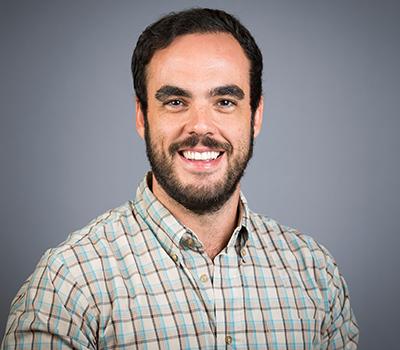
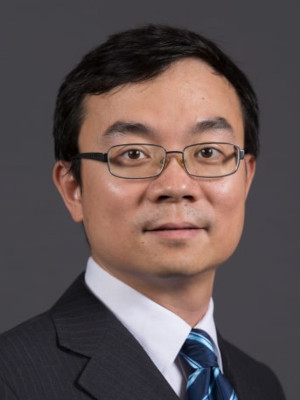
Saeed Peyghami is an Associate Professor at Aalborg University's Applied Power Electronic Systems department within the Faculty of Engineering and Science. He holds a PhD in Electrical Engineering from Sharif University of Technology (2017) and has been a faculty member since 2021 after a postdoc at Aalborg. His research focuses on power system reliability, power electronics control, and quantum computing applications in energy systems. He leads and collaborates on projects like SOLARIS (Horizon Europe) and Pro-Risk (Denmark), addressing renewable integration, risk modeling, and grid resilience. Key projects include designing resilient microgrids, optimizing motor drives for high-speed applications, and probabilistic risk assessment for green energy systems. He supervises four PhD students, including work on integrated motor drives and electromagnetic interference mitigation. His work contributes to UN Sustainable Development Goals related to clean energy and infrastructure. Publications emphasize reliability-driven design, microgrid stability, and EMI mitigation in power electronics. He actively publishes in journals like IEEE Access and Renewable and Sustainable Energy Reviews, focusing on both theoretical advancements and practical implementations in modern power systems.
Per Printz Madsen is an Associate Professor at the Department of Computer Science, Aalborg University, within The Technical Faculty of IT and Design. His research focuses on energy-efficient buildings, embedded systems, and intelligent control mechanisms.
Enrique Santiso Gómez is a Professor in the Department of Electronics at the University of Alcalá, specializing in electronic engineering applications for intelligent transport and renewable energy systems. His work bridges theoretical control strategies with real-world implementations in robotics and energy infrastructure. He earned his PhD from the University of Alcalá in 2003 with the thesis Absolute positioning of a mobile robot from brand recognition , supervised by Dr. Manuel Ramón Mazo Quintas and Dr. Jesús Ureña Ureña. His educational background established the foundation for his current research trajectory in mobile robotics and sensor systems. His research focuses on event-triggered and aperiodic control systems applied to diverse domains. Key areas include Robotics: Trajectory tracking, indoor positioning, and multi-robot coordination Renewable Energy: Blockchain-based microgrid management and photovoltaic integration Transport Systems: Railway safety with virtual balises and vehicle platooning Sensor Innovation: Laser scanning for state estimation and pressure monitoring in industrial processes Analysis of his 15 most recent publications (2022-2013) reveals a consistent evolution toward resource-efficient control architectures . Early work emphasized robot localization and event-based sensing (2013-2017), transitioning to energy-focused applications (2020-2022) where blockchain strategies now optimize community microgrids. The interdisciplinary nature spans electrical engineering, computer science, and transportation engineering with recurring themes of delay tolerance and measurement error reduction. He actively contributes to two major research groups: GEINTRA : Electronic Engineering Applied to Intelligent Spaces and Transport GEISER : Electronic Engineering Applied to Renewable Energy Systems These groups drive his collaborative projects in smart infrastructure and sustainable energy solutions.
Dr. Zhiwei Gao is an Associate Professor in the Department of Mathematics, Physics and Electrical Engineering at Northumbria University. He holds prestigious fellowships including IEEE Fellow (2023), Royal Academy of Engineering/Leverhulme Trust Research Fellowship (2024), and Fellowships of AAIA and AIIA. His research focuses on control systems, renewable energy, fault diagnosis, and real-time systems, with applications in wind turbine systems and wave energy conversion. Education: PhD in Engineering (1996). Research Interests: Real-time diagnosis and resilient control for industrial systems Energy management and renewable energy technologies Machine learning applications in anomaly detection and music generation Fault-tolerant control for fuzzy systems and multi-agent coordination Recent articles highlight advancements in distributed observers for LTI systems, deep reinforcement learning for energy management, and hybrid approaches for fault diagnosis. His work contributes to UN Sustainable Development Goals related to sustainable energy and technological innovation. Awards: IEEE Fellow, RAEng/Leverhulme Trust Fellowship, Alexander von Humboldt Awards (2015, 2018, 2022). Editorial Roles: Co-EIC of IEEE Transactions on Industrial Informatics, Senior Editor of IEEE Access, and editorial board member of Renewable Energy (Elsevier). Projects: Leading research on wave energy conversion systems and resilient control strategies. He advises PhD students in health monitoring and resilient control for complex systems, contributing to cutting-edge advancements in industrial informatics.
Eduardo Cotilla-Sanchez is an Associate Professor and Associate School Head for Graduate Programs in the School of Electrical Engineering & Computer Science at Oregon State University. His research focuses on power system resilience, cascading outages, microgrids, and energy access. He holds an M.S. and Ph.D. in Electrical Engineering from the University of Vermont (2009, 2012). He teaches courses on power systems analysis, protection, and smart grids. Awards include the 2022 Inclusive Excellence Award and 2019 Graduate Mentoring Award. He leads the ECS Lab, which develops models for sustainable and resilient electricity infrastructure. His work integrates cyber-physical security, wide-area data analysis, and disaster resilience strategies. Key contributions include the COSMIC cascading outage simulator (GitHub repository) and studies on earthquake/GMD impacts. He serves as IEEE WG on Cascading Failures Secretary and SHPE Oregon Chapter President. His research emphasizes equity in energy access and STEM inclusion.
Dr. Rui Bo is an Associate Professor in the Department of Electrical and Computer Engineering at Missouri University of Science and Technology (Missouri S&T). He holds a Ph.D. from the University of Tennessee, Knoxville, and worked at Midcontinent Independent Transmission System Operator (MISO) before joining Missouri S&T in 2017. His research focuses on computation, optimization, and economics in power systems, high-performance computing, and electricity market design. He is a Fellow of IET and a Senior Member of IEEE. Education: BSEE and MSEE from Southeast University (China), Ph.D. from University of Tennessee, Knoxville. Affiliations: CREE Research Investigator, Intelligent Systems Center, and IEEE editorial roles. Dr. Bo’s research interests include power system operation and planning, high-performance computing applications, and electricity market simulation. He has authored over 100 technical papers and received prestigious awards like the NSF CAREER Award (2024) and DARPA Young Faculty Award (2018). His work has been supported by DOE grants, including a $750,000 award for hydropower research. Key Projects: Hydropower market participation optimization, extreme fast charging stations, and grid cybersecurity.
Mehdi Ferdowsi is a Professor and Interim Dean at the College of Engineering and Computing (CEC) at Missouri University of Science and Technology (Missouri S&T). He holds the Schlumberger Endowed Professorship in Electrical and Computer Engineering and served as NSF Program Director (2020-2022). His expertise spans power electronics, energy storage, smart grids, and wide bandgap devices. Education: PhD in Electrical Engineering from Illinois Institute of Technology (2004), MS from Sharif University of Technology (1999), and BS from the University of Tehran (1996). Research Interests: Focuses on DC-DC converters, electric vehicle systems, and high-voltage power conversion. He leads projects like the Missouri S&T Microgrid Demonstration and has authored over 200 publications. Awards: NSF CAREER Award (2007), multiple Outstanding Teaching Awards (2005-2020), and the IEEE VPPC Prize Paper Award (2008). Advising & Grants: Oversees research initiatives in energy and environment through the Center for Research in Energy and Environment (CREE). His grants include NSF-funded REU sites and DoE projects on electric drive vehicles. Labs & Teams: Active in the Missouri S&T Power Engineering Group and teaches advanced courses like Advanced Electric-Drive Vehicles and Power Electronics.
Prof. Iosif Mporas is a Professor of Signal Processing and Machine Learning at the University of Hertfordshire, affiliated with the Department of Engineering and Technology under the School of Physics, Engineering & Computer Science. His research focuses on interdisciplinary applications of machine learning, including healthcare monitoring, energy systems optimization, and biomedical signal processing. He leads projects in AI-driven healthcare scenarios, microgrid management, and document authoring systems. Research interests span energy disaggregation, speech/audio processing, and AI ethics. Recent work includes machine learning for lung cancer biomarker discovery, aflatoxin detection in food, and cybersecurity in IoT systems. He collaborates internationally on smart grid technologies and medical AI applications. Notable contributions include the PyDTS toolkit for time series modeling and the HyperVein hyperspectral dataset. His work bridges theoretical machine learning with practical applications in energy efficiency, biomedical diagnostics, and secure communication systems. He actively leads research projects such as UHICS3 (AI in healthcare planning) and OMMU (Ukraine microgrid optimization). His grants focus on AI ethics, edge computing, and circular economy solutions.
Eduardo Rodrigues is a Professor at the ISEG School of Economics and Management, University of Lisbon. He holds a Bachelor's degree in Engineering from Instituto Superior Técnico and a Master's in Management from ISEG. His research focuses on power systems, renewable energy integration, control systems, and data analytics in business. He has supervised multiple students, including those exploring digitalization in banking systems and cybersecurity in Industry 4.0. Research Interests: Rodrigues' work spans fault diagnosis in photovoltaic systems, grid stability using modular multilevel converters, and energy storage solutions for insular grids. His publications emphasize practical applications in smart grids, electric vehicle charging, and predictive maintenance. Teaching: He teaches courses such as Management Information Systems, Data Platforms for Analytics, and Network Security. He coordinates programs in Management, Finance, and Economics at the undergraduate and graduate levels. Labs & Teams: He contributes to ISEG's research labs, including the Data Lab and Futures Lab, which focus on data-driven solutions for economic and industrial challenges.
Kristian Widén is a Professor of Innovation Science at Halmstad University's Academy of Entrepreneurship, Innovation and Sustainability. He specializes in construction production and smart cities, serving as Program Manager for the Smart Cities and Communities initiative. His research focuses on innovation diffusion in construction, renewable energy integration, and sustainable urban development. Notable projects include studies on solar cell implementation barriers and comparative analyses of prefabricated housing industries. Research interests span innovation adoption mechanisms, stakeholder engagement in construction projects, and the structural dynamics of emerging industries. He has published extensively on topics like BIM diffusion, procurement governance, and knowledge integration in construction workflows. Widén's work often bridges theoretical frameworks with practical industry challenges, emphasizing actionable insights for policymakers and practitioners. Key contributions include identifying obstacles to solar PV system adoption, analyzing supply chain barriers to innovation, and exploring governance models for collaborative infrastructure projects. His research frequently highlights the importance of stakeholder alignment and knowledge transfer for successful innovation implementation. Widén's global collaborations and comparative studies (e.g., Australia-Sweden housing comparisons) underscore his commitment to cross-disciplinary and cross-border solutions for urban sustainability challenges.
Dr. Ali Pourmousavi Kani is a Senior Lecturer at the University of Adelaide's School of Electrical and Mechanical Engineering, specializing in power systems and energy storage. His research focuses on optimizing battery storage systems, smart grid technologies, and renewable energy integration. He holds a PhD in Power Systems Engineering with first-class honors and is an IEEE Senior Member. Dr. Kani leads major projects like Mine Operational Vehicles Electrification (MOVE) and Flexible Aggregator Simulation Platform (FRESNO) , collaborating with industry partners such as BHP Nickel West and Watts (Denmark). His work addresses energy efficiency, grid reliability, and decarbonization in mining and smart grid contexts. He has been actively engaged in media discussions on energy transitions, including interviews with ABC, Nikkei Magazine, and Australian Mining Magazine. His research spans topics from battery management systems to demand response mechanisms, leveraging AI and advanced optimization techniques. His publications emphasize practical frameworks for energy storage applications, probabilistic forecasting for electricity markets, and innovative solutions for data-driven grid management. He is eligible to supervise postgraduate research and hosts international scholars through collaborative frameworks.
Ivona Brandić is a University Professor for High Performance Computing Systems at TU Wien's Institute of Software Engineering and Interactive Systems. Born in Gradačac, Bosnia and Herzegovina, she moved to Austria in 1992 as a refugee during the Bosnian War. She earned a master's degree (2002) and doctorate (2007) in business computer science from TU Wien and completed her habilitation in applied computer science there in 2013. Her career includes roles as an assistant professor (University of Vienna, 2002–2007) and postdoctoral researcher (University of Melbourne, 2008). She transitioned to a tenure-track position at TU Wien in 2014 and became a full professor in 2016. Brandić’s research focuses on cloud computing, energy-efficient ultra-scale systems, and hybrid quantum-classical computing. She has been recognized with the MiA Award (2011), the Austrian Science Fund's Start-Preis (2015), and membership in the Austrian Academy of Sciences' Young Academy (2016). Her work emphasizes sustainable computing, edge systems, and optimizing resource management for distributed applications. Education: Bachelor's degree in Business Informatics (University of Vienna/TU Wien) Master's in Business Computer Science (University of Vienna, 2002) PhD in Applied Computer Science (TU Wien, 2007) Habilitation in Practical Computer Science (TU Wien, 2013) Research Interests: Brandić’s work spans cloud computing, energy efficiency in HPC systems, edge computing, and quantum-classical hybrid systems. She explores autonomic resource management, distributed system resilience, and sustainability in ultra-scale infrastructures. Her projects often address real-world applications like drug design, environmental monitoring, and smart energy grids. Publications: Her 2009 paper Cloud Computing and Emerging IT Platforms is a seminal work in the field. Recent publications focus on quantum-edge integration, energy optimization in AI models, and adaptive edge analytics frameworks. These contributions highlight trends toward sustainable, distributed, and hybrid computational paradigms. Awards: 2011: MiA Award for distinguished contributions by international backgrounds 2015: Austrian Science Fund’s Start Prize 2016: Austrian Academy of Sciences Young Academy Membership Advising & Grants: Brandić leads research groups and has secured grants for projects like NESSUS (energy-efficient cloud systems) and CHIST-ERA’s SDCDN (distributed networks). She mentors students in HPC, edge computing, and quantum systems. Advised topics include workload scheduling, fault tolerance, and energy-aware algorithms. Labs & Teams: She directs research on autonomic cloud management, edge intelligence frameworks (e.g., Sea-LEAP, FRESCO), and quantum-classical workflow systems (RIGOLETTO). Her teams collaborate internationally, integrating academia and industry for scalable, sustainable solutions.
Pertti Pakonen is a University Lecturer at Tampere University's Faculty of Information Technology and Communication Sciences, Department of Electrical Engineering. His research focuses on power quality, partial discharge analysis, high voltage systems, and smart grid technologies. He has contributed extensively to understanding grid stability, electromagnetic compatibility, and renewable energy integration. Key research areas include partial discharge diagnostics in cables and transformers, power quality monitoring in distributed networks, and the impact of emerging technologies like electric vehicle charging stations and LED lighting on grid performance. His work emphasizes data-driven methods for fault detection, predictive maintenance, and grid optimization. Recent publications highlight advancements in HVDC/HVAC grid qualification, machine learning for load control detection, and synchronization challenges in power quality data. His research bridges theoretical analysis with practical applications in industrial and urban electrical systems. Mr. Pakonen's work has addressed challenges in rural grid management, including reserve power solutions and cabling practices. He collaborates on interdisciplinary projects involving energy economics, smart metering systems, and grid-industry interactions.
Ghanshyamsinh Gohil is an Assistant Professor in the Department of Electrical Engineering at the University of Texas at Dallas (UT Dallas), affiliated with the Erik Jonsson School of Engineering and Computer Science. His research focuses on advanced power electronics systems, including medium-voltage (MV) power conversion, smart grid technologies, and renewable energy integration. He leads the Power Electronics Lab, which develops innovative solutions for electric mobility, grid interface systems, and high-efficiency energy conversion. Research interests include the characterization of silicon carbide (SiC) devices for MV applications, medium-frequency isolated converters, and electromagnetic emission mitigation. His work addresses challenges in extreme fast charging for electric vehicles, microgrid management, and DC grid architectures. The lab also explores multi-objective optimization of power electronics systems and harmonic filter design for high dv/dt converters. Dr. Gohil’s publications span topics such as modular multilevel converters, dual active bridge (DAB) topologies, and distributed control algorithms for microgrids. His research emphasizes practical implementation, with a focus on real-time grid-edge systems and energy management solutions compliant with utility standards. Though no scientific awards are explicitly mentioned, his contributions to power electronics and renewable energy integration reflect a strong academic and applied research profile. Advising and grants details are not provided in the available text, but his lab’s active projects suggest ongoing collaborative efforts in industry and academia. The Power Electronics Lab at UT Dallas serves as a hub for interdisciplinary research, bridging electrical engineering with smart energy systems. Key projects include the design of grid-forming energy routers, MV DC grid interfaces, and intelligent fault current limiters to enhance grid reliability and resilience.
Jobert H.A. Ludlage is a Researcher in the Electrical Engineering department at Eindhoven University of Technology . He actively contributes to research in control systems, dynamic networks, and data-driven modeling, with a focus on applications in microgrid management and industrial process optimization. Research Interests: Model Predictive Control Dynamic Networks Smart Process Operations Adsorption Process Modeling Uncertain Systems Analysis Distillation Column Control Recent Research Trends: His work spans from theoretical control algorithms to practical implementations, including grid-connected microgrids and bio-molecular sensor applications. Key themes include predictive modeling, uncertainty handling, and process optimization. Scientific Awards: Journal of Process Control Paper Prize Award 2020 (Survey Category) Collaborations: He collaborates extensively with researchers like Leyla Özkan, Siep Weiland, and Paul Van den Hof, participating in projects such as SYSDYNET and contributing to conferences like the American Control Conference.