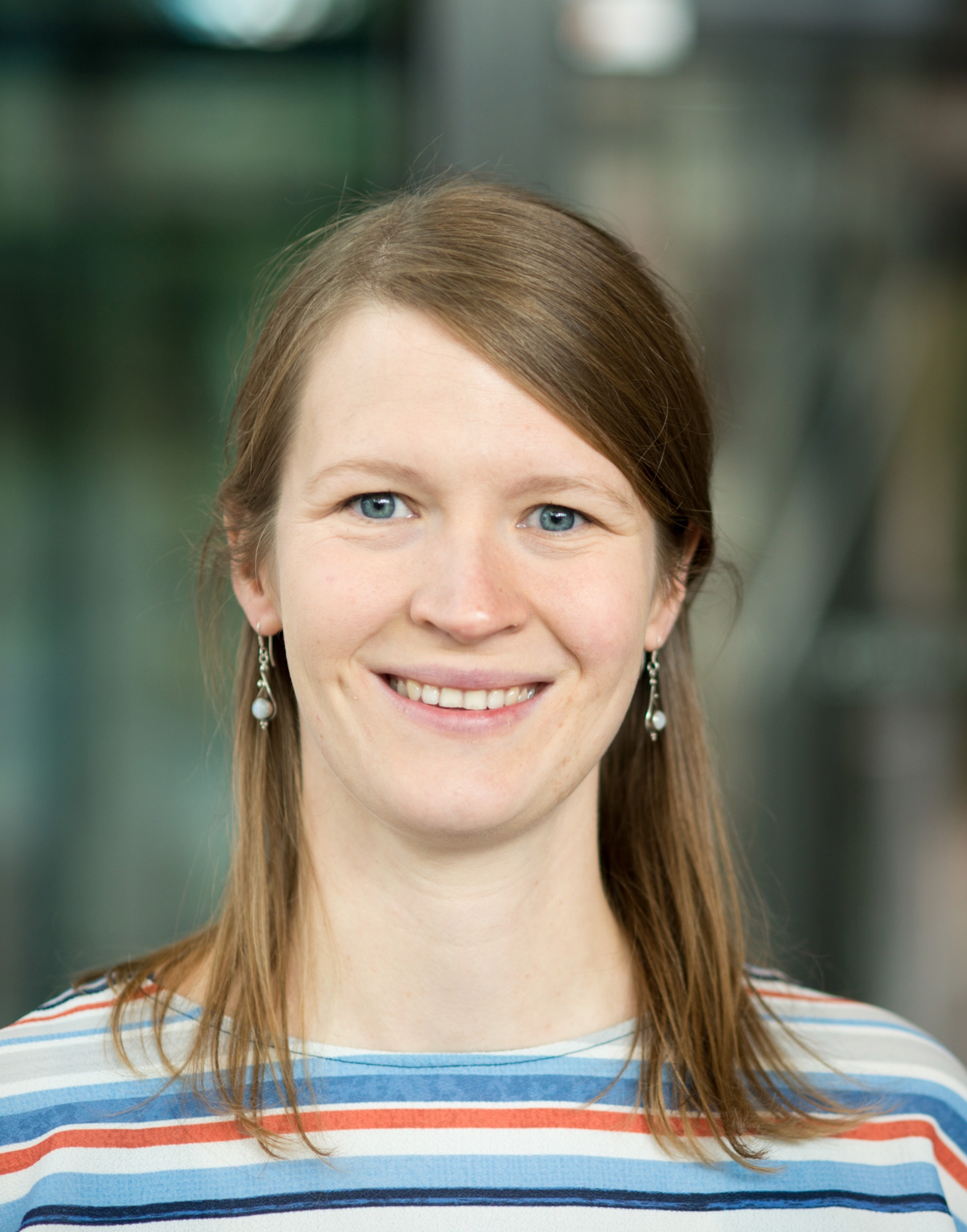
Dr. rer. nat. Thomas Hermann is a faculty member at Bielefeld University's Faculty of Engineering, leading the Ambient Intelligence Group and coordinating the Computer Science program. He specializes in sonification, auditory data science, and smart environments. Head of Ambient Intelligence Working Group Computer Science Program Coordinator Member of multiple academic advisory boards His research focuses on interactive sonification for biomedical applications, quantum systems, and smart environments. Key projects include ECG sonification for cardiac diagnosis, real-time auditory feedback in swimming, and sonic interfaces for AR cooperation. Recent publications span 2025 with Python-based sonification tools ( pya AGen ), quantum system sonification, and ST-elevation myocardial infarction monitoring. He contributes to open-access supplementary materials and interdisciplinary workshops. As a researcher , Hermann develops practical sonification frameworks like Panson for facial behavior analysis, CardioScope for portable ECG monitoring, and Base Cube One for smart environments. His work bridges academic research with industry applications.
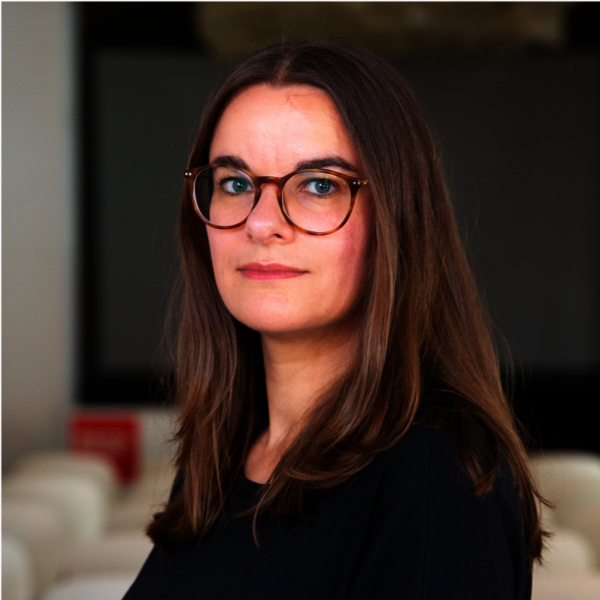
Thomas Berger is a Professor at the University of Hohenheim , affiliated with the Faculty of Agricultural Sciences and leading the Department of Economics of Land Use . He also contributes to the Computational Science Hub and Hohenheim Tropics initiatives. Focus Areas: Climate change adaptation, land-use modeling, biodiversity-productivity trade-offs, agent-based simulation, and machine learning in agricultural systems. Key Projects: Simulation frameworks for smallholder resilience in Ethiopia, bioeconomic modeling in the Amazon, and hybrid intelligence applications in European agricultural policy. Recent Publications: 2025 study on climate change effects on insecticide reduction in Germany, 2024 work on reconciling biodiversity with productivity via hybrid models, and 2023 methodological contributions to surrogate modeling and seasonal forecast integration. Research Trends: Interdisciplinary integration of climate science, agricultural economics, and computational modeling, with increasing emphasis on AI-assisted decision support systems and sustainability policy validation. Teaching & Outreach: Offers Agricultural Economics seminars and Hohenheim Tropics discussions, requiring advance email registration for office hours.
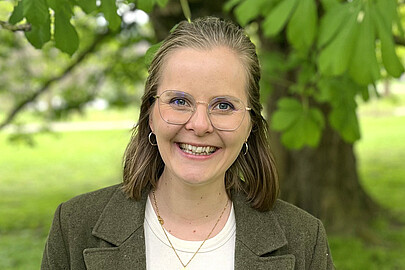
Jule Thober is a Scientific Manager at the Helmholtz Centre for Environmental Research - UFZ , leading Topic 5 "Landscapes of the Future" in the Helmholtz Program and managing the Integration Platform "Robust Pictures of the Future". She contributes to cross-disciplinary research in Smart Models / Monitoring and Computational Hydrosystems , focusing on agent-based models, sustainable land management, and climate risk analysis. Roles : Scientific Manager (2022–), Postdoc (2017–2021), PhD Student (2013–2016) Projects : Copernicus Contract Ulysses 2, LandYOUs Game Development Research Interests center on socio-environmental systems, integrating agent-based models with ecological economics. Her work explores decision-making under climate uncertainty, land use policy, and resilience of pastoral systems through computational methods. Publication Trends (15 most recent) span ecological complexity, environmental informatics, and computational hydrosystems. Key themes include agent-based land use models , climate risk mitigation , and participatory decision support tools . Collaborations involve UFZ departments, international institutions, and interdisciplinary teams in Germany and abroad. She contributes to Helmholtz POF IV programs and EU-funded initiatives like 4DHydro.
Berit Greinke is an Assistant Professor of Wearable Computing at the Berlin University of the Arts (UdK) and the Einstein Center Digital Future (ECDF) since 2018, previously serving as a researcher at UdK's Design Research Lab and DFKI (2016-2018). Her academic foundation includes a PhD from Queen Mary University of London (2017), an MA from Central St Martins (2009), and a Diploma from Weissensee Academy of Art Berlin (2007). Her educational trajectory: PhD in Media and Arts Technology, Queen Mary University of London (2017) MA in Design for Textile Futures, Central St Martins College of Art and Design (2009) Diploma in Textile and Surface Design, Berlin Weissensee School of Art (2007) Greinke's research pioneers the convergence of craft, textile design, and digital technology, with core expertise in electronic textiles and smart materials. She investigates metamaterial-based 'metatextiles' for electromagnetic applications and explores transdisciplinary collaboration between designers and scientists, particularly regarding 'negative data' in creative and scientific workflows. Her current UdK work focuses on four interconnected domains: performing materials for expressive textile/fashion design; multi-modal sensing converting visual processes into haptic/audible experiences; micro-to-macro material design spanning nanostructures to final products; and transdisciplinary processes for technology-art-science collaboration. Analysis of her 2020-2025 publications reveals dominant trends in sustainable textile electronics, with emphasis on knitted/folded sensor structures, origami-inspired capacitive shape estimation, and social sustainability in e-textile communities. Her work uniquely bridges fundamental material science (e.g., textile metamaterials) with artistic applications (e.g., interactive orchestra garments) and industrial production challenges. Berit Greinke supervises PhD students including Giorgia Petri. Her junior professorship is co-financed by SAP under a public-private partnership model, supporting projects like WEAR (Wearable technologists engage with artists for responsible innovation) and STELEC (Sustainable Textile Electronics), which emphasize ethical co-design and industry-academia collaboration. She leads research within UdK's Institute for Product and Process Design and collaborates with the Design Research Lab (formerly part of Connected Textiles group), focusing on sustainable industrial production of electronic clothing and transdisciplinary innovation frameworks.
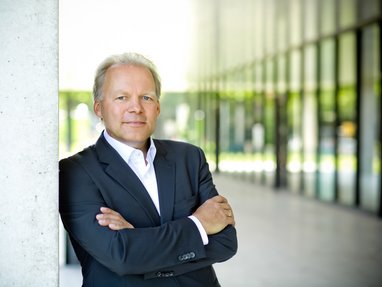
Dieter Uckelmann serves as Professor of Information Logistics and Scientific Director of the Institute for Applied Research at Stuttgart University of Applied Sciences (HFT Stuttgart). He holds multiple leadership positions including Spokesperson for the research focus 'Smart Technologies, Processes and Methods' at HFT Stuttgart since March 2023 and Scientific Director of the Institute for Applied Research since September 2023. His academic journey began with mechanical engineering studies in Braunschweig, followed by doctoral research at the University of Bremen focusing on 'Quantifying the Value of RFID and the EPCglobal Architecture Framework in Logistics.' Uckelmann's research spans Internet of Things applications across Industry 4.0, logistics, smart buildings, and smart cities, with significant contributions to educational technology including learning analytics and AI in teaching. His work bridges technical innovation with practical implementation, particularly in digital transformation of laboratories and smart city infrastructure. He has led numerous research projects including KNIGHT (AI for teaching), InDeckLe (earth composite ceiling systems), iCity initiatives, and DigiLab4U (online laboratories). His publication record shows a clear progression from foundational RFID and IoT research toward emerging technologies like the Industrial Metaverse, 5G applications, and AI-driven educational systems. Recent work demonstrates strong integration of physical and digital systems, particularly in urban environments and educational contexts, with increasing emphasis on sustainability and energy efficiency applications. Co-editor of International Journal of RF-Technologies: Research and Applications Member of PhD Association BW, Research Unit III Computer Science and Electrical Engineering Mentor in the HAWCareer mentoring program Program Committee Member for IEEE RFID, IEEE/ITMC, AIET, and other major conferences Associate Editor for Journal of Online and Biomedical Engineering Professor Uckelmann actively mentors students and researchers, with his team contributing to projects across smart city infrastructure, digital learning platforms, and industrial IoT applications. He leads the Industrie 4.0 Laboratory which focuses on industrial IoT applications, digital twins, and the industrial metaverse, with research spanning RFID, RTLS, wireless sensor networks, AR/VR, and IoT architectures. His work extends to international collaborations including visiting professorships at Auburn University and the University of Parma.
Hao Liu is a researcher affiliated with institutions like Chinese Academy of Sciences , Beihang University , and Stanford University . His work spans Computer Science , Artificial Intelligence , and Robotics . Key affiliations: National Space Science Center (Beijing), School of Astronautics (Beihang), Key Laboratory of Pervasive Computing (Tsinghua) Research interests include Machine Learning , Image Processing , Graph Neural Networks , and Wireless Communication Optimization His recent publications focus on: Advanced control systems for fuzzy models Medical imaging via hyperspectral analysis Transformer-based approaches in NLP and vision Quantum-safe and edge computing protocols
Dr. Wolfram Barfuss is the Argelander Professor of Integrated Systems Modeling for Sustainability Transitions at the University of Bonn, affiliated with the Center for Development Research (ZEF). He is a member of multiple interdisciplinary research areas including TRA Sustainable Futures, TRA Modeling, and TRA Individual and Societies, as well as the Cluster of Excellence PhenoRob and the Center for Earth System Observation and Computational Analysis (CESOC). He also collaborates with the Potsdam Institute for Climate Impact Research and the Earth Resilience Science Unit. His research focuses on understanding whether humanity is 'smart enough for the good life' by developing formal models of collective learning and decision-making in complex social-ecological systems. He integrates methods from complex systems, multi-agent reinforcement learning, and dynamical systems theory to explore sustainability transitions, cooperation, and Earth system resilience. The recent publications demonstrate a strong focus on modeling collective intelligence, cooperation in stochastic games, decision-making under uncertainty, and integrated World-Earth system modeling. His work spans disciplines including computer science, environmental science, game theory, and cognitive science, with frequent contributions to high-impact journals like PNAS , Nature Communications , and Environmental Research Letters . Argelander Professor for Integrated Systems Modeling for Sustainability Transitions Member, TRA Sustainable Futures Member, TRA Modeling Member, TRA Individual and Societies Cluster of Excellence PhenoRob Center for Earth System Observation and Computational Analysis (CESOC) Earth Resilience Science Unit (Potsdam) Earth Resilience and Sustainability Initiative (Princeton-Stockholm-Potsdam) Dr. Barfuss teaches graduate courses at the University of Bonn and Humboldt University Berlin, including Complex System Modeling of Human-Environment Interactions, Economics on Sustainability, Systems Modeling, and Introduction to Agent-Based Modeling. He leads the BarfussLab, where his team develops computational tools such as pyCRLD for modeling collective reinforcement learning dynamics. While specific student advisees are not listed, his lab and publications suggest active supervision and collaboration with early-career researchers. He has not received any explicitly mentioned scientific awards in the provided text. His research is supported through institutional affiliations and collaborative projects rather than individually listed grants.
Amy C. Edmondson is the Novartis Professor of Leadership and Management at Harvard Business School, holding a chaired position dedicated to human interactions in successful enterprises. She has been consistently ranked among Thinkers50's top management thinkers since 2011, achieving #1 status in 2021 and 2023. Her research focuses on psychological safety, teaming, and organizational learning, with significant contributions to understanding how organizations learn from failure. Key publications include The Fearless Organization (2019) and Right Kind of Wrong (2023), the latter winning the Financial Times and Schroders Best Business Book of the Year award. Her work spans organizational behavior, healthcare management, and innovation science, with articles in top journals like Administrative Science Quarterly and Harvard Business Review . Recent research trends show increasing focus on psychological safety dynamics in constrained environments, cross-boundary teaming, and the science of intelligent failure. Her 15 most recent articles (2021-2025) demonstrate expanding applications from healthcare to general management contexts, with growing emphasis on temporal dimensions of team learning and data-driven decision pitfalls. Major awards include: Thinkers50 #1 Management Thinker (2021, 2023) Thinkers50 Breakthrough Idea Award (2019) Financial Times Best Business Book Award (2023) Accenture Award for California Management Review (2003) Edmondson advises on organizational transformation through numerous Harvard Business School cases, including culture change initiatives at Microsoft, LEGO, and Cleveland Clinic. Her research has secured funding for studies on teaming in pharmaceutical development, smart city projects, and healthcare innovation. Current work examines psychological safety erosion in new hires and cross-boundary team dynamics in complex innovation projects.
Marina Petrova is a Professor at RWTH Aachen University, holding positions in both the Teaching and Research Area of Mobile Communications and Computing and the Chair and Institute for Networked Systems. She is also a member of the Steering Committee for the Mobility & Transport Engineering (MTE) profile area at the university. Her office is located at Kackertstraße 9, 52072 Aachen, Germany. Professor Petrova's research focuses on cutting-edge wireless communication technologies, with particular emphasis on next-generation mobile networks. Her work spans multiple dimensions of wireless systems including: 5G and 6G network architectures and protocols Cell-Free Massive MIMO systems Millimeter-wave communications Resource allocation and scheduling in wireless networks Wi-Fi sensing and coexistence analysis Integration of distributed learning services in wireless networks Beamforming and beam management techniques Ultra-Reliable Low-Latency Communications (URLLC) Her recent publications demonstrate a strong trend toward the integration of artificial intelligence and machine learning techniques in wireless network design and optimization. She has been particularly active in exploring the convergence of communication and sensing functionalities (ISAC - Integrated Sensing and Communication), which is considered a key enabler for future 6G networks. Professor Petrova's research also addresses practical implementation challenges in next-generation wireless systems, with several publications focusing on ns-3 implementations and experimental validations. Professor Petrova has received recognition for her contributions to the field through numerous publications in top-tier venues, though specific awards are not mentioned in the available information. Her work shows strong industry relevance with applications in smart industries, autonomous systems, and future communication networks.
Dr. Stefan Janke is an academic staff member at the University of Mannheim within the School of Social Sciences. His office is located at A 5, 6, Room B313 in Mannheim, Germany, and he can be contacted via email at stefan.janke@uni-mannheim.de. As a Privatdozent (PD), he holds a position that follows the completion of habilitation in the German academic system, granting him the right to teach independently at the university level. Dr. Janke's research program spans several interconnected domains in educational psychology. His primary focus is on motivation in educational contexts, particularly examining achievement goals and their relationship to academic dishonesty, faculty motivation, and how instructional practices influence student motivation. He has developed significant expertise in understanding how different goal orientations affect academic behaviors and outcomes. A second major research strand involves the digitalization of educational processes, where he investigates online self-assessment tools, AI applications in educational guidance systems, cheating behaviors in web-based testing environments, and how motivation and well-being are affected in online learning contexts. His work in this area has become increasingly relevant with the digital transformation of education. His recent publications (2022-2025) reveal a strong focus on achievement goal theory, academic integrity, digital educational tools, and the impact of social factors on educational outcomes. Many studies examine how social norms influence academic behavior, how motivation affects learning outcomes, and how digital tools can be optimized for educational guidance. There's also significant attention to equity issues, particularly how migration background and parental education affect students' sense of belonging and academic success. The research often employs longitudinal designs and international comparisons, with a growing emphasis on the impact of digitalization and the pandemic on educational processes. Dr. Janke serves as principal investigator for multiple externally funded projects including 'KISTE-BW' (developing an AI-supported procedure for measuring study interests), 'NEST-BW' (refining state-level initiatives for optimal student selection in higher education), and 'ZiFo' (in-depth studies on achievement goals in research, funded by the German Research Foundation). Previously, he led projects on academic dishonesty (CHEAT) and self-reflection tests for prospective students (SMArt²). He also supervises bachelor's and master's theses, contributing to student development and academic training.
Prof. Dr. Dr. hc Jörg Becker is a Senior Professor at the University of Münster, leading the Chair of Business Informatics and Information Management. He holds prominent roles such as Director of the European Research Center for Information Systems (ERCIS) and former Pro-Rector for Strategic Planning. His expertise spans e-government, process management, and digital transformation. Becker earned his habilitation and doctorate from Saarland University, specializing in information systems and material flow control. Research focuses include hybrid value creation, trade information systems, and smart energy business models. He has advised numerous institutions and served on national committees like the Plattform 'Digitale Verwaltung' and the National E-Government Competence Center (NEGZ). His editorial roles include Business & Information Systems Engineering and Information Systems and e-Business Management. Becker has authored over 200 publications, with recent work on digital government competencies, citizen involvement in smart cities, and trust in information systems. Awards include Fellow of the German Informatics Society (GI) and honorary doctorates. His grants include projects on digital middle-tier towns and IT requirements for social security digitization.
Prof. Thomas H. Kolbe serves as Chair of Geoinformatics at the Technical University of Munich (TUM), where he leads research in spatial, temporal, and semantic modeling of urban environments. His work focuses on developing foundational frameworks for 3D/4D city models, digital twins, and smart city applications through international standardization efforts including CityGML and IndoorGML. His research spans virtual city modeling, urban system simulation, and GIS integration with emerging technologies. Current projects emphasize AI-driven urban scenario generation, semantic streetspace modeling, and IoT integration in digital twin ecosystems. Recent publications demonstrate strong interdisciplinary connections between computer vision, urban planning, and geospatial data science, with particular emphasis on practical implementations of 3D city models for sustainability challenges. Prof. Kolbe actively contributes to professional organizations including the Round Table GIS eV (as Chairman since 2013) and the Munich Data Science Institute (as core member since 2021). His leadership extends to the Leonhard Obermeyer Center for digital methods in the built environment and the Hans Eisenmann Forum for agricultural sciences. His work bridges theoretical geoinformatics with practical urban applications through numerous collaborative projects with municipal governments and industry partners.
Tanja Blascheck is a PostDoc Researcher and Margarete von Wrangell Fellow at the Institute for Visualization and Interactive Systems (VIS) at the University of Stuttgart. Her work focuses on visual analytics , eye tracking , and microvisualizations for smartwatches and other wearable devices.
Professor Dietrich Darr is a faculty member at Hochschule Weihenstephan-Triesdorf (HSWT), specifically within the Department of Agriculture, Food, and Nutrition. His academic journey includes previous professorship at Hochschule Rhein-Waal (2012-2024) and visiting positions at Universidade de Brasília (2023-2024), Vietnam National University of Forestry (2020), and ICRAF Central Asia office (2018). Dr. Darr's research focuses on sustainable and resilient farming and food systems with particular expertise in agribusiness, corporate management, and sustainable resource utilization. His work prominently features baobab tree applications in African and European food industries, agroforestry systems, non-timber forest products, and sustainable land management. His international research projects span Sub-Saharan Africa, Central Asia, and Southeast Asia. His recent publications reveal strong trends in sustainable value chain development, climate-smart agriculture, and innovative approaches to rural livelihood improvement. The articles demonstrate consistent focus on practical applications of agroforestry systems, analysis of non-timber forest products commercialization, and sustainable land management solutions for smallholder farmers in developing regions. Dr. Darr leads numerous research projects including SUFACHAIN (2022-2025) on sustainable agroforestry value chains in Central Asia, CONFARMED (2024) on edible insects for circular food economy in Uganda, and previously led BAOQUALITY (2019-2022) on baobab quality improvement for food security in Africa. His projects are primarily funded by German institutions including BMBF, BMEL, and DFG. As an active member of professional organizations including ATSAF, EFARD, IUFRO, DeFAF, and EURAF, Dr. Darr contributes to international agricultural research communities with focus on tropical and subtropical agriculture, agroforestry, and forest research.
Dr. Thea Wübbelmann is a Researcher at the Institute of Earth System Sciences, Leibniz University Hannover, affiliated with the Physical Geography and Landscape Ecology Section and the Digital Landscape Ecology Group. She holds roles as Deputy Representative for Research Staff and serves on the Admissions Board for the MSc Landscape Sciences program. Education: PhD in Geography (2023), Leibniz University Hannover MSc in Landscape Sciences (2019), Leibniz University Hannover BSc in Geography (2016), Leibniz University Hannover Research Focus: Her work centers on human-environment interactions in urban areas under climate change and urbanization. Key areas include: Modeling nature-based solutions for flood regulation Climate change impacts on biodiversity and urban health GIS-based landscape process analysis Environmental justice and resource distribution Projects: FGZ: Research on environmental justice and resource distribution (2025–2029) Go Green Next: Urban health and climate resilience (2024–2028) Awards: IALE-D Dissertation Award (2023) Lower Saxony Scholarship (2017) Labs/Teams: Active member of the Digital Landscape Ecology Group, focusing on integrating technology into ecological research.