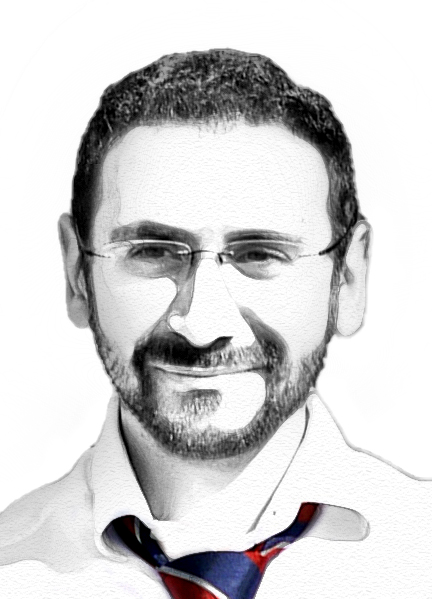
Ignacio Rodriguez Larrad is a researcher at Aalborg University , affiliated with the Department of Electronic Systems under the Technical Faculty of IT and Design . His work focuses on wireless communication engineering, industrial IoT, and path loss modeling. He is currently involved in the 5G-enabled autonomous mobile robotic systems project. Current affiliations: Aalborg University, Spanish Researchers in Denmark (Vice-chairman) Research interests include 5G wireless networks, industrial IoT deployment, real-time locating systems, and antenna engineering. His work addresses practical challenges in factory environments and rural connectivity solutions. Recent publications highlight applications in corrosion mapping, robotic control, and network integration. Key trends involve deep learning for industrial automation, UWB technology, and multi-connectivity frameworks. Scientific Awards : 5G-prisen (2019) - Recognizing 5G research contributions Neal Shepherd Memorial Best Propagation Paper Award (2017) - Radio propagation studies Ignacio has co-supervised PhD research and participated in industry-focused projects. His activities include media engagement and presentations on industrial wireless systems at conferences.
Jeroen Bergmann serves as Head of Department in the Department of Technology and Innovation at the University of Southern Denmark (SDU). His research spans multiple interdisciplinary fields at the intersection of biomedical engineering, medical devices, and regulatory science. As department head, he leads academic initiatives focused on translating engineering innovations into practical healthcare solutions while navigating complex regulatory landscapes. Dr. Bergmann's research portfolio demonstrates expertise across several interconnected domains: Prosthetics and sensor technologies for medical applications Temperature monitoring and thermal behavior in biomedical contexts Medical device regulatory affairs and compliance frameworks Wearable biosensors and electronic skin technologies Sleep apnea diagnostics and home testing solutions Inertial measurement and position tracking systems Medical device software and AI applications in healthcare His work consistently bridges technical innovation with practical healthcare implementation, as evidenced by his fingerprint showing strong connections between engineering disciplines and clinical applications. Analysis of Dr. Bergmann's recent publications reveals a strategic dual trajectory: advancing biomedical sensing technologies while simultaneously developing frameworks for medical device regulation. His research shows increasing focus on AI-driven regulatory decision-making, particularly examining cross-jurisdictional compliance frameworks through approaches like RAG-based systems. Concurrently, his biomedical engineering work continues to refine oral cavity-based monitoring systems, temperature estimation methods, and sleep disorder diagnostics. The integration of physiological monitoring with environmental factors represents a novel approach in his recent work, suggesting movement toward more holistic health assessment systems that consider both internal and external variables. Dr. Bergmann's leadership role as Head of Department suggests significant administrative responsibilities alongside his research activities. His involvement in Health Innovation Day 2025 demonstrates engagement with broader healthcare innovation initiatives, while his international collaborations suggest a global research network. The department under his leadership appears to focus on technology innovation with direct healthcare applications, particularly in medical devices and regulatory science, positioning it at the critical intersection of engineering advancement and healthcare implementation.
Abid Hussain serves as Associate Professor at Copenhagen Business School's Department of Digitalization, specializing in the convergence of digital technologies and organizational practices with emphasis on data-driven solutions and privacy-centric systems development. His research portfolio spans: Design Science in Information Systems Big Social Data and Big Data Analytics Enterprise Software Development (web, database, desktop solutions) Privacy by Design frameworks and data protection tools He has engineered solutions for data collection, transformation, and analytics pipelines alongside enterprise system integrations involving API security, document sharing, and WSDL protocols. Publication trends (2018-2025) reveal consistent innovation in privacy-preserving technologies (blockchain-based access control), immersive educational tools (VR classrooms), and multilingual social analytics. His work demonstrates interdisciplinary impact across computational social science, business informatics, and public health through event management systems, climate psychology studies, and interorganizational data sharing frameworks.
Professor Peter Nielsen is a faculty member at Aalborg University's Department of Materials and Production, part of The Faculty of Engineering and Science. He specializes in Artificial Intelligence for Operations Research, focusing on logistics optimization, unmanned aerial vehicles (UAVs), and heuristic algorithms. His work bridges theoretical research and practical applications in industrial automation and sustainable systems. He has led or participated in multiple research projects, including the ORMS project (Operational Reliability Management System) and the ValuePole initiative, which addressed value chain optimization for SMEs. His research emphasizes AI-driven solutions for maritime search and rescue, UAV operations in dynamic environments, and autonomous systems for healthcare logistics. Notable research interests include optimizing routing and scheduling problems, trustworthiness in autonomous vehicle algorithms, and cross-infection risk mitigation in indoor environments. His contributions span over 210 publications, with recent work highlighted in journals like Journal of Intelligent and Robotic Systems and Marine Policy . Peter has advised two PhD students and contributed to academic activities as a peer reviewer for Production & Manufacturing Research . His work often integrates computational fluid dynamics (CFD) and Taguchi methods for optimizing ventilation systems and reducing disease transmission risks.
Jesper Bláfoss Ingvardson is an Associate Professor in the Department of Technology, Management and Economics at the Technical University of Denmark (DTU), specializing in Transportation Systems Modelling and Transportation Science. His work contributes to sustainable urban mobility and public transport planning. Education: M.Sc. in Transport & Logistics, DTU (2009–2012) B.Sc. in Civil Engineering, DTU (2006–2009) His research focuses on travel behavior, public transport route choice, transit-oriented development (TOD), and the use of smart card data for behavioral modeling. He investigates how urban design, perceived safety, and station characteristics influence mode choice and ridership. His work integrates psychology, data science, and transport engineering to improve public transport attractiveness. The 15 most recent publications reflect a strong trend in using big data—especially smart card data—to model passenger behavior, reduce estimation bias, and evaluate policy impacts in cities worldwide, including Santiago, Addis Ababa, and Copenhagen. The research spans behavioral modeling, sustainable transport adoption, and emotional responses in urban mobility. Scientific Awards: P.H. Bendtsens Traffic Research Award (2019) RA's Research Award (2018) Jesper actively supervises PhD students and leads research projects such as 'Network Optimisation for Connected, Cooperative and Automated Mobility' and 'Behavioural Modelling for Public Transport.' He has been the principal investigator of the 'BELMOPAN' project, focusing on big data sources for passenger behavior modeling. His grants and projects often involve interdisciplinary collaboration with institutions and urban planners. He is involved in multiple research networks and has presented at numerous international conferences, contributing to the academic discourse on sustainable urban transport and behavioral modeling.
Tianyi Li is a Tenure Track Assistant Professor at the Department of Computer Science, Aalborg University, affiliated with The Technical Faculty of IT and Design and the Daisy - Center for Data-intensive Systems. His research focuses on data engineering, spatiotemporal systems, and digital twins, with applications in energy, transportation, and vehicular networks. Key areas include trajectory data management, graph neural networks, compression techniques, and federated learning. He has contributed to over 37 publications, including works on digital twin frameworks for autonomous driving and smart grids, trajectory prediction systems, and efficient time series compression. His research integrates machine learning, distributed systems, and cybersecurity to address challenges in data-intensive environments. Key Projects: Digital twin-enabled voltage control, federated vehicular networks, trajectory simplification frameworks. Labs: Involved with the Daisy Center, focusing on data-centric systems and scalable solutions. Technical Expertise: Blockchain systems, energy systems optimization, and real-time data processing.
Dr. Line Kryger Aagaard is a Researcher in the Department of the Built Environment at Aalborg University's Faculty of Engineering and Science. Her work focuses on sustainable transitions within everyday practices, particularly food systems, mobility, and housing. She investigates how consumption habits and household routines intersect with sustainability goals using anthropological and sociological frameworks. Key affiliations include the Sustainable Cities and Everyday Practice Research Group and the Division of Town, Housing and Property. Her research emphasizes practice theory, examining how material arrangements and social norms influence sustainable behavior. Notable projects include the FoMoHo initiative exploring food, mobility, and housing transitions, and the eCAPE project studying smart technologies' role in energy consumption. She has contributed to over 26 publications since 2020, addressing topics like energy flexibility, gendered domestic technology use, and sufficiency strategies. Dr. Aagaard actively participates in interdisciplinary collaborations, presenting at conferences such as SCORAI Europe and contributing to media discussions on sustainable consumption. Her work bridges academic research with practical implications for policy and urban planning, emphasizing equitable transitions toward sustainability.
Marianne Forman is a Senior Researcher at Aalborg University's Department of the Built Environment within The Faculty of Engineering and Science. Her research focuses on construction management, work environments, digital infrastructure, and innovative practices in the construction industry. She leads projects like Digital Infrastructures in Construction and collaborates with industry partners to address challenges in building automation, sustainability, and organizational change. Her work emphasizes the intersection of technology and human factors, such as ICT impacts on mental health in construction organizations and the role of data systems in facilities management. She has contributed to over 60 publications since 1999, with recent studies exploring organizational change in education and smart building technologies. Key projects include 'Digital Infrastruktur i byggeriet og arbejdsmiljøet' and 'Build 4.0', focusing on digital transformation, safety, and innovation. Her research also addresses sustainability through circular value chains and client-driven innovation strategies. She actively engages in academic activities, including conference presentations and media discussions on construction industry challenges.
Hans Holger Hundborg Koss is an Associate Professor in the Section for Structures and Safety within the Department of Civil and Mechanical Engineering at the Technical University of Denmark (DTU), Kgs. Lyngby. His work bridges structural engineering, environmental dynamics, and advanced materials, with strong emphasis on experimental and numerical simulation techniques. He leads research in wind engineering, atmospheric icing, urban climate, and sustainable construction via 3D printing. PhD in Civil Engineering, Ruhr-University Bochum, Germany (2000) Master of Civil Engineering, Ruhr-University Bochum, Germany (1994) European Research Network (HCM) on Wind Engineering, CSTB Nantes & DMI Lyngby (1994) His research focuses on wind effects on structures , particularly high-rise buildings and cable-supported bridges, using wind tunnel testing and computational fluid dynamics. He investigates atmospheric icing on bridge cables and wind turbine blades, including thermodynamic behavior of smart icephobic surfaces. His work extends into urban environmental engineering , assessing wind and thermal comfort, snow accumulation in Arctic regions, and exhaust dispersion. More recently, he has pioneered research in 3D additive manufacturing of structural components and developed biopolymer-based composites as sustainable building materials. His projects also include topology optimization and structural health monitoring under stochastic loads. The recent publications highlight a strong trend toward data-driven structural health monitoring and sustainable material innovation . His work combines experimental validation with computational modeling, particularly in vibration-based damage detection and rheological characterization of novel concrete mixtures. The integration of environmental variables and ambient excitation in monitoring systems reflects a modern, systems-level approach to civil infrastructure resilience. While no specific scientific awards are listed in the provided text, his sustained research output and leadership in multiple PhD projects indicate recognition within the field. Hans Holger Hundborg Koss actively supervises PhD students and leads several funded research projects, including those on structural health monitoring of offshore platforms, optimized 3D-printed constructions, wind load modeling via CFD, Arctic built environments, and aerodynamics of iced bridge cables. These projects reflect interdisciplinary collaboration with experts in materials, structural dynamics, and environmental engineering. He is involved in experimental work at DTU’s specialized Climatic Wind Tunnel and contributes to national and international research networks. His lab activities focus on wind tunnel testing, material characterization, and development of diagnostic methods for structural performance and safety.
Dominik Franjo Dominkovic is a Senior Researcher at the Department of Applied Mathematics and Computer Science, Dynamical Systems group at the Technical University of Denmark (DTU). His work primarily focuses on energy systems engineering, district heating, and renewable energy integration, contributing significantly to UN Sustainable Development Goals related to clean energy and climate action. His research interests span across energy systems engineering, district heating systems, energy planning, renewable energy sources, and smart energy systems. Dr. Dominkovic's work explores the intersection of computational methods and practical energy solutions, particularly focusing on data center cooling, demand response mechanisms, and energy community optimization. His research combines advanced mathematical modeling with real-world applications to address pressing energy challenges. His recent publications demonstrate a strong trend toward integrating artificial intelligence with energy systems, particularly reinforcement learning applications for cooling operations, price-based demand response mechanisms, and occupant behavior modeling in urban energy planning. His work bridges the gap between theoretical optimization approaches and practical implementation in energy communities and data center environments. 4th International DHC+ Student Awards - 1st prize (March 2016) Elite-Forsk-rejsestipendium (EliteForsk travel grant) (February 23, 2017) Dr. Dominkovic serves as a supervisor for PhD students, including Schledorn, A., on projects related to flexibility-centric energy systems. He leads multiple research projects with significant funding, focusing on energy systems modeling, data center cooling solutions, and district heating digitalization. His collaborative work spans multiple institutions and international projects, demonstrating strong research leadership in the energy domain. His laboratory and research team work closely with the CITIES partnership and participate in multiple international collaborations, particularly through IEA (International Energy Agency) annexes focused on district heating and cooling systems. The research group maintains strong connections with industry partners working on data center cooling technologies and district energy systems.
Saverio Giallorenzo is an Assistant Professor (tenure-track) at the Department of Computer Science and Engineering, University of Bologna. He is also a member of the Microservices Community communication group, OLAS team at INRIA (France), and the Italian National Laboratory for Cybersecurity (Bologna node). Previously, he was associated with the Focus team at INRIA (France), Concurrency and Logic group, DISI Jolie Lab, and SPACES groups. Dr. Giallorenzo's research spans multiple areas in computer science with a focus on distributed systems and programming languages. His primary research interests include: Programming Languages Process Calculi Choreographic Programming Microservices Session Types Dynamic Adaptability Security His work bridges theoretical foundations with practical applications, particularly in the areas of serverless computing, microservice architectures, and secure distributed systems. Analysis of Dr. Giallorenzo's recent publications (2024-2026) reveals a strong focus on serverless computing, microservices, and choreographic programming. His research demonstrates a consistent trajectory toward optimizing distributed systems through formal methods. Key themes include topology-aware function scheduling in serverless environments, energy-aware cloud-edge deployments, ransomware investigation frameworks, and formal models for choreographic programming. His work often combines theoretical rigor with practical implementations, as evidenced by tools like the tAPP OpenWhisk extension and SAFARI framework. Dr. Giallorenzo actively contributes to the academic community through teaching and research supervision. He teaches courses including Network Analysis, Programming Languages, and Social Network Analysis at both undergraduate and graduate levels. His teaching spans the First Cycle Degree in Computer Science and Second Cycle Degrees in Artificial Intelligence, Computer Science, and Digital Humanities and Digital Knowledge. His research activities are supported by collaborations with several institutions including INRIA in France and participation in the Italian National Laboratory for Cybersecurity. He has been involved in developing the Jolie programming language and related tools for microservice development and verification.
Tiantian Liu is an Assistant Professor in the Department of Computer Science at Aalborg University's Technical Faculty of IT and Design. Their research focuses on indoor location-based services, trajectory analysis, and spatial data management. Key areas include indoor navigation algorithms, temporal-variation-aware path queries, and uncertainty-aware contact tracing systems. Education details are not explicitly provided in the text. The researcher has collaborated on the Data Management Foundations for Indoor LBS project (2019-2021), contributing to foundational work in indoor spatial databases. Research interests span computer science , data management , and spatial computing . Notable contributions include keyword-aware routing systems (IKAROS), robust trajectory similarity computation (CLEAR), and time-constrained indoor pathfinding frameworks. Their work integrates machine learning, database systems, and algorithmic design to address challenges in indoor environments. In 2021, Liu co-authored the SSTD 2021 Best Paper Candidate . Their research emphasizes practical applications such as crowd-aware path planning and uncertainty modeling in indoor positioning data. Current work explores continuous similarity search for vessel trajectories (2025) and novel methods for handling temporal variations in indoor environments. The researcher's lab focuses on intelligent building systems and context-aware spatial analytics.
Hans H. K. Sønderstrup-Andersen is an Associate Professor at Roskilde University, affiliated with the Department of People and Technology and the Technology and Social Practice Center. He holds an MSc in Psychology and a PhD. His research focuses on social coordination practices, human-computer interaction (HCI), and computer-supported cooperative work (CSCW). He has conducted studies in aviation, healthcare, engineering design, and urban technologies, emphasizing tool-based coordination in complex work environments. Key projects include the Urban Tech Lab exploring urban everyday life through new technologies and participation in the CHMI Centre for Human-Machine Interaction. His work spans qualitative and quantitative studies on workplace safety, organizational culture, and socio-technical systems. Recent publications address work-life balance in four-day workweeks, architectural social affordances, and innovative pedagogical frameworks in higher education. He collaborates internationally on urban studies and workplace innovation, contributing to interdisciplinary research networks.
Samira Rahnama is an Associate Professor in the Department of the Built Environment at Aalborg University's Faculty of Engineering and Science. Her research focuses on indoor environmental quality, energy-efficient HVAC systems, and building energy optimization. She leads the Indoor Environmental Quality and Building Systems Research Group, specializing in ventilation systems, thermal energy storage, and smart grid integration. Her work emphasizes precision ventilation design for open-plan offices, multi-zone climate control, and energy flexibility in residential and commercial buildings. Key projects include developing novel HVAC systems for room-based climate control and exploring aggregator designs for grid integration of building energy systems. She has collaborated on IEA ECES Annex 32 and Danish initiatives to enhance mechanical ventilation satisfaction in renovated apartment buildings. Rahnama has published over 35 peer-reviewed articles, focusing on topics like thermal energy storage methodologies, advanced control strategies, and experimental validation of sensors in ventilation systems. Her research bridges technical innovation with occupant-centric solutions, addressing challenges in energy efficiency, thermal comfort, and smart grid dynamics. PhD Supervision: 1 student advised (name unspecified in provided texts). Grants/Projects: 2 active projects on energy storage models and demand-controlled ventilation systems. Labs/Teams: Indoor Environmental Quality and Building Systems Research Group.
Runa T. Hellwig is a Professor at Aalborg University's Department of Architecture, Design and Media Technology, part of The Technical Faculty of IT and Design. Her expertise spans thermal comfort, sustainable architecture, and occupant-centric building design. She holds a Dr.-Ing. from the Technical University of Munich and a Habilitation from Karlsruhe Institute of Technology. Hellwig has held academic positions at institutions like the National University of Singapore and Augsburg University of Applied Sciences, and has been a Visiting Professor at the University of Sydney and Harbin Institute of Technology. She is a member of the German Federal Ministry's Committee of Workplaces (ASTA). Her research focuses on adaptive thermal comfort, indoor climate quality, and the integration of user needs into building design. Key projects include the IEA EBC Annex 79 on occupant-centric building design and the 'Agency for Resilience' project addressing climate change impacts. Hellwig has authored over 100 publications, emphasizing thermal comfort standards, energy efficiency, and occupant behavior. Her awards include the 2022 Building and Environment Best Paper Award and the Endeavour Executive Fellowship. Her work aligns with UN Sustainable Development Goals related to climate action and quality education. She actively contributes to academic committees, journal editorial boards, and international conferences, advocating for evidence-based building practices and resilience strategies in architecture.