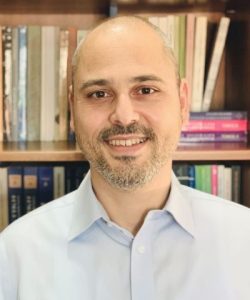
Geert Deconinck is a full professor at KU Leuven , leading the Electrical Energy Systems and Applications (ELECTA) research group within the Department of Electrical Engineering (ESAT). He also serves as scientific leader of the EnergyVille research center's algorithms domain, focusing on smart electrical networks and thermal systems. M.Sc. and Ph.D. from KU Leuven Head of ELECTA since 2012 (10 professors, 8 postdocs, 70+ PhDs) Over 8 million EUR research budget in last 5 years 44 completed PhDs and 10 current advisees IEEE Transactions editorial board member His research spans smart grid architectures , distributed control , and cyber-physical security , with recent focus on EV-grid integration , renewable energy democratization , and multi-carrier energy systems . Current projects include: Smart Charging - E-Mobility meets Renewable Energy Early Detection and Defense Systems for Smart Grids Open-source P2P energy sharing platforms Microgrid control strategies for PV-battery systems Awarded IET Fellow and IEEE Senior Member status, his work combines machine learning with power systems engineering through both theoretical modeling and experimental validation . He has contributed over 575 publications with 9800+ Google Scholar citations.
Yang Weng is an Associate Professor at the School of Electrical, Computer and Energy Engineering, Arizona State University. He leads the U.S.-Israel International Consortium on Energy Cyber Initiative on Cybersecurity R&D and directs a research lab focused on smart grid resilience and machine learning applications. Previously, he was a TomKat Postdoctoral Scholar at Stanford University. Education: Ph.D. in Electrical and Computer Engineering, Carnegie Mellon University M.S. in Machine Learning, Carnegie Mellon University Research: His interdisciplinary work bridges power systems, machine learning, and cybersecurity, emphasizing renewable integration, grid optimization, and cyber-physical resilience. Key themes include physics-informed AI, adversarial robustness in energy infrastructure, and real-time control algorithms for dynamic grids. Publications: Recent articles (2024–2025) demonstrate strong trends in AI-driven grid security, adaptive control under uncertainty, and climate-impact modeling. Dominant domains include neural network applications for stability guarantees, cyber-attack mitigation, and data-efficient renewable integration. Awards: NSF CAREER Award (2021), Amazon Research Award (2023) Best Paper Awards at IEEE SmartGridComm (2012, 2013), PES GM (2014), PMAPS (2016) IEEE Senior Member, Sun Award (ASU), Centennial Award (ASU) Grants & Leadership: Secured DOE, NSF, and AFOSR funding for projects on AI-enhanced grid resilience. Advises PhD/postdoc candidates and chairs the U.S.-Israel Energy Center consortium. Organized international workshops (e.g., ICRDE 2023) and validated research via hardware-in-the-loop experiments. Lab & Team: Directs a research group developing deployable ML solutions for utilities (e.g., OPAL-RT collaborations). Focus areas: cybersecurity toolchains, reinforcement learning for grid control, and anomaly detection architectures.
Magdy M. A. Salama is a Professor and University Research Chair at the University of Waterloo's Department of Electrical and Computer Engineering, Faculty of Engineering. He holds a P.Eng. license and is a Fellow of the IEEE. His research spans Energy Systems (Power Quality, Smart Grids, Renewable Energy) and Biomedical Engineering (Medical Imaging, Sleep Analysis). He has authored/co-authored over 460 publications and supervised numerous graduate students. Education: PhD (University of Waterloo), M.Sc. and B.Sc. (Cairo University). Awards include the IEEE Fellow distinction, University Research Chair, and multiple teaching/research awards from the University of Waterloo. Research trends in his articles focus on Smart Grid resiliency, renewable integration, cyber-physical security, and biomedical applications of AI. Notable projects include voltage sag mitigation, EV fleet electrification, and blockchain-based energy trading platforms. Scientific Awards: IEEE Fellow, University Research Chair, Teaching Excellence Award (2000) Grants/Consultation: Extensive industry and institutional collaborations on power systems and biomedical tech. Labs/Teams: Active in High Voltage Lab, Smart Grids Research Group, and Medical Image Processing Lab.
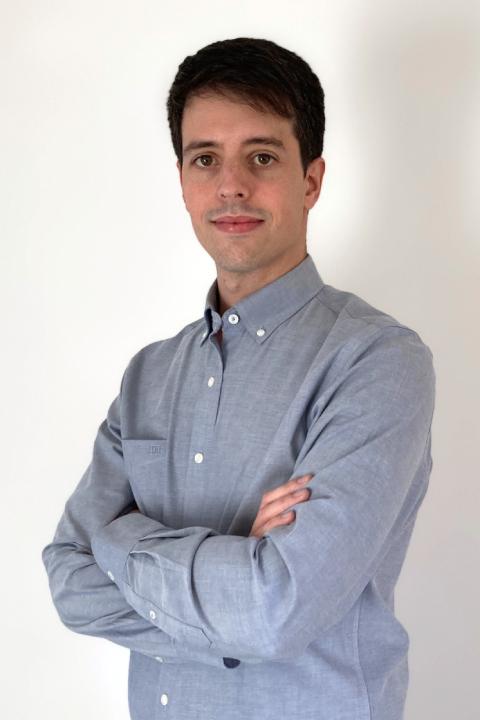
Gustavo Valverde Mora is a Lecturer at ETH Zurich's Power Systems Laboratory in the Department of Information Technology and Electrical Engineering. His research focuses on distributed energy resources, smart grid technologies, and power system control, with expertise in behind-the-meter DER integration and hosting capacity analysis. His recent work addresses key challenges in renewable energy integration, including voltage control coordination between transmission and distribution networks, data-driven local control schemes for active distribution grids, and unsupervised load disaggregation techniques using smart meter data. He has developed novel methods for DER modeling, GIS-based system analysis, and distribution network planning. Recognized with multiple awards including the 2022 Costa Rican National Technology Award, he actively contributes to IEEE Task Forces on DER integration. His research demonstrates strong emphasis on practical grid applications, combining theoretical power systems knowledge with advanced data analytics. Dr. Valverde teaches Power System Analysis (227-0526-00L) and maintains collaborations with utilities worldwide on renewable integration challenges.
Tim Huh is a Professor and Chair of the Operations and Logistics Division at the University of British Columbia's Faculty of Commerce and Business Administration. He specializes in inventory control, supply chain management, and operations research, with a focus on dynamic decision-making under uncertainty. B.A., B.Math, M.Math from University of Waterloo M.A. from Regent College M.S., Ph.D. from Cornell University His research spans theoretical and applied topics including renewable energy systems, healthcare operations, and digital learning analytics. Recent work explores wind power storage optimization, asynchronous video usage in education, and multi-echelon inventory solutions. Scientific recognition includes the Canada Research Chair in Operations Excellence and Business Analytics He teaches core business analytics and operations management courses at both undergraduate and graduate levels, emphasizing quantitative decision-making and process fundamentals.
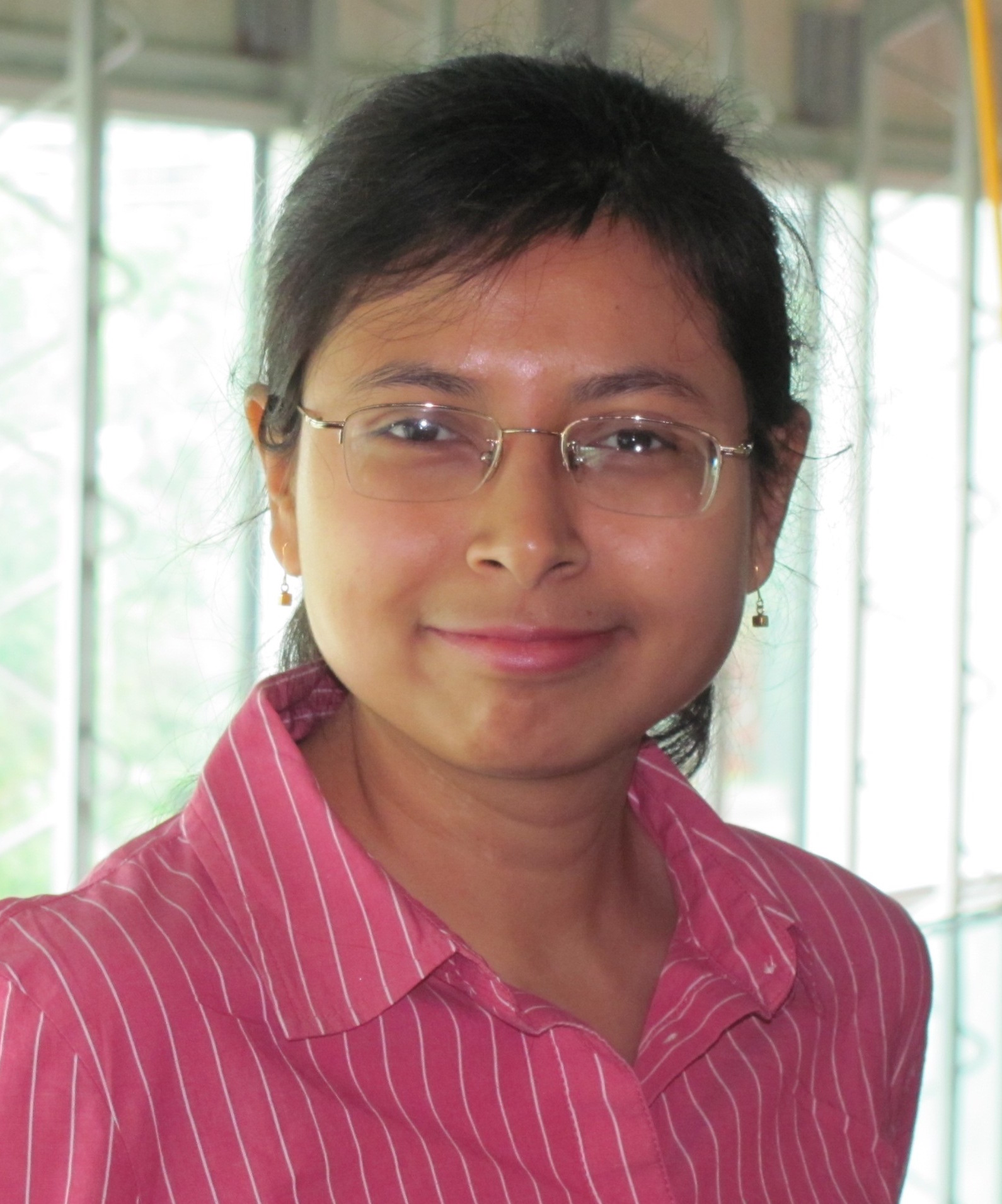
Sushmita Ruj is an Associate Professor in the School of Computer Science and Engineering at the University of New South Wales (UNSW), Sydney. She serves as the Faculty of Engineering Lead for the UNSW Institute for Cybersecurity (IfCyber) and as the Taste of Research (ToR) Coordinator within the School of Computer Science and Engineering. Her academic journey includes previous positions as a Senior Research Scientist at CSIRO's Data61 (2019-2022), Associate Professor at the Indian Statistical Institute, Kolkata, and Assistant Professor at the Indian Institute of Technology (IIT), Indore. Dr. Ruj's primary research interests focus on applied cryptography, post-quantum cryptography, cybersecurity, blockchains, and data privacy. She designs practical, efficient, and provably secure protocols for real-life applications, with particular emphasis on critical infrastructure including smart grids, cloud computing, ad hoc networks, and data sharing frameworks. As quantum technology advances, her work increasingly focuses on developing quantum-safe algorithms to ensure a more secure Internet infrastructure. Her research spans multiple domains including cryptographic key management, proofs of storage, verifiable computation, vector commitments, and privacy-enhancing technologies for cloud and IoT environments. Her recent publications demonstrate a strong trend toward post-quantum cryptography solutions, with particular emphasis on blockchain applications, DNS security, and privacy-preserving protocols for industrial IoT. The research shows increasing focus on practical implementations of theoretical cryptographic concepts, with applications across multiple sectors including finance, healthcare, and critical infrastructure. Her work bridges the gap between theoretical cryptography and real-world security challenges, with growing emphasis on the transition from classical to quantum-resistant systems. Best Paper Award at ACISP 2024 JNCA Best Survey Award (2023) NSW Innovation Award (iAward) Merit Winner (2022) Women in Science Award from CSIRO (2020) ACM Senior Member (2016) IEEE Senior Member (2015) Samsung GRO award (2014) Dr. Ruj has successfully mentored numerous PhD and Master's students, with many of her former students now holding academic positions at institutions like IIT Indore, TU Wien, and CISPA Helmholtz Center. She has secured significant competitive funding including multiple Australian Research Council (ARC) grants, Samsung GRO Award, NetApp Faculty Fellowship, Cisco Academic Grant, and IBM Research grant. Her current research portfolio includes projects on blockchain-based quantum-safe digital medical passports, embedding trust in digital IDs, and resilience of supply chain unstructured data. As Faculty of Engineering Lead for IfCyber, Dr. Ruj plays a key role in UNSW's cybersecurity research initiatives. She has served on editorial boards for prestigious journals including IEEE Transactions on Information Forensics and Security and has held leadership positions in major conferences such as ACISP 2021 and Indocrypt 2020. She was also a member of the working group on "Blockchain For Cybersecurity" for the National Blockchain Roadmap of Australia and the first Blockchain Working group set up by the Reserve Bank of India.
Dr. Amin Sakzad is an Associate Professor in the Department of Software Systems & Cybersecurity at Monash University's Faculty of Information Technology. His research focuses on lattice-based cryptography, wireless communications, and post-quantum security protocols. He holds a PhD in Applied Mathematics from Amirkabir University of Technology (2011) and has held academic roles at Carleton University and Monash since 2012. Dr. Sakzad’s expertise spans lattice coding theory, MIMO systems, and privacy-preserving technologies for genomic databases and blockchain applications. He leads multiple ARC-funded projects, including work on secure databases (SRDBMS) and post-quantum cryptographic primitives for FinTech and energy sectors. His research has been recognized through awards such as the FIT Dean’s Award for Teaching Excellence (2021). Key collaborations include projects on blockchain security (CollinStar Lab), genomic data privacy, and energy market cybersecurity. His work addresses UN SDGs through contributions to quality education (SDG 4) and industry innovation (SDG 9). Recent publications highlight advancements in lattice-based cryptography (e.g., CRYSTALS-Kyber variants), privacy-preserving energy trading, and secure blockchain protocols like FPPW watchtower systems. His research bridges theoretical cryptography with practical implementations in embedded systems and 5G telecommunications. Grants: 16 active/completed projects including $1.2M in ARC funding Advising: Supervising PhD projects on lattice applications in post-quantum crypto and blockchain Labs: Core member of Monash’s Software Defined Telecommunications (SDT) Lab and CollinStar Lab
Stelios Timotheou is an Associate Professor at the Department of Electrical and Computer Engineering and faculty member at the KIOS Research and Innovation Center of Excellence, University of Cyprus. He holds a Dipl-Ing from National Technical University of Athens, and MSc/PhD from Imperial College London. His research focuses on developing real-time distributed methodologies using mathematical optimization, machine learning, and computational intelligence to enhance efficiency in critical infrastructure systems. Research interests center on data-driven decision making for urban mobility management, traffic control systems, and energy optimization. Key areas include: Intelligent UAV-based sensing for traffic monitoring Cooperative control algorithms for multi-agent systems Optimization of renewable energy integration Robust infrastructure protection strategies Recent publications demonstrate strong focus on traffic state estimation (76%), energy system optimization (16%), and UAV applications (8%). Awarded the Cyprus Research Award (2017) and ERC Consolidator Grant for URANUS project. Secured multiple research grants focusing on real-time control systems.
Professor Ruchi Choudhary is a Professor in Architectural Engineering at the University of Cambridge, Department of Engineering, within the School of Technology. She leads the Energy Efficient Cities initiative (EECi), a cross-disciplinary research project focused on strengthening the UK's capacity to address energy demand reduction and environmental impact in cities through research in building and transport technologies, district power systems, and urban planning. Her research interests span urban energy systems, building energy modeling, sustainable cities, geothermal energy systems, and data-driven energy modeling . She has pioneered work in digital twins for energy systems, urban subsurface thermal modeling, and building-integrated agriculture. Her research group develops numerical tools to improve energy efficiency of cities, with particular focus on modeling energy consumption of large building sets at multiple time and spatial resolutions. Analysis of her recent publications reveals a strong trend toward integrating machine learning with physics-based modeling for energy systems, with increasing emphasis on uncertainty quantification, digital twins, and value of information analysis for decision-making. Her work bridges the gap between theoretical modeling and practical urban implementation, with significant focus on city-scale geothermal potential, underground climate change impacts, and energy equity considerations. Professor Choudhary has supervised numerous PhD students who have gone on to prominent positions at institutions including UCL, University of Cambridge, BEIS, Arup, and various international universities. Her research group includes faculty members, research associates, graduate students, and international collaborators from institutions worldwide. Her current research focuses on two parallel investigations: one on using multi-scale multidisciplinary models to address energy use questions in the built environment, and second, on quantifying uncertainties in model outcomes. Current projects include integration of food production in urban environments, analysis of underground transport systems as energy sources, large-scale integration of ground source heat pumps, and distributed energy networks.
Dr. Beibei Ren is an Assistant Professor in the Department of Mechanical Engineering at Texas Tech University. She earned her Ph.D. in Electrical and Computer Engineering from the National University of Singapore (NUS) in 2010, followed by postdoctoral work at UCSD and a research fellowship at NUS. Education: Ph.D. in Electrical and Computer Engineering (NUS, 2010) Previous Positions: Postdoctoral Scholar (UCSD, 2010-2013), Research Fellow (NUS, 2009-2010) Her research focuses on dynamic systems and control with applications in renewable energy integration, microgrids, UAVs, MEMS, marine systems, and manufacturing. At Texas Tech, she directs the Dynamic Intelligent Systems, Control and Optimization (DISCO) Group , emphasizing robust control strategies for uncertain systems. The 15 most recent publications highlight her expertise in uncertainty and disturbance estimator (UDE)-based control , with applications in smart grid technologies, wind and solar energy systems, quadrotor robotics, and power electronics. Her work bridges theoretical control theory with practical implementations in renewable energy and autonomous systems. STEM Outreach: Actively promotes diversity in engineering through Texas Tech's STEM CORE programs.
Xiaozhe Wang is an Associate Professor in the Department of Electrical and Computer Engineering at McGill University, holding the Canada Research Chair (Tier II) in Resilient and Stable Zero-Emission Electric Power Grids and the Rubin & So Foundation Faculty Scholar. He joined McGill in 2016 after a postdoctoral fellowship at MIT under Prof. Konstantin Turitsyn. He earned his Ph.D. from Cornell University (2015), with a minor in Applied Mathematics, and holds degrees from Zhejiang University (B.S., 2010) and Cornell (M.Eng., 2011). His research focuses on resilient power grids, data-driven methodologies, and cybersecurity in energy systems. Key areas include electric vehicle integration, stability assessment, and control strategies for renewable energy systems. He develops advanced techniques for uncertainty quantification, wide-area monitoring, and adversarial attack detection. Notable achievements include pioneering work on polynomial chaos expansion for probabilistic assessment and sparse identification for nonlinear dynamics. His articles explore topics like microgrid control, false data injection attacks, and decentralized energy trading. Awards: Canada Research Chair (Tier II), Rubin & So Foundation Scholar Grants/Projects: Focus on resilience, cybersecurity, and renewable integration funded via NSERC, Mitacs, and industry partnerships. He advises students through fellowships like Mitacs Elevate and Banting Postdoctoral Fellowships. His lab emphasizes interdisciplinary approaches to modern grid challenges, including lab experiments and field trials.
Dr Daniel Fosas de Pando serves as Chancellor's Fellow in Net Zero Buildings at the University of Edinburgh's School of Engineering, within the Department of Civil and Environmental Engineering and the Research Institute for Infrastructure and Environment. His work bridges building science, climate resilience, and humanitarian engineering with a focus on practical decarbonization strategies. Research interests center on net zero building retrofits at scale , indoor air quality optimization , and climate-adaptive design , particularly in vulnerable contexts like refugee shelters. His methodology combines computational modeling with field monitoring to address energy-carbon trade-offs under climate change constraints, emphasizing actionable decision-making tools for designers and policymakers. Publication trends reveal strong focus on building decarbonization pathways (38% of recent work), shelter environments for displaced populations (29%), and climate risk communication (16%). Key themes include scaling retrofit interventions, occupant behavior impacts, and simplified modeling for resource-constrained settings. Major recognitions include: Dufton Silver Medal (2022) for pioneering Active Buildings framework Best Paper Award Theme Energy (2022) Best Paper Award (2017) for building simulation research He leads the £36m InBuilt project decarbonizing non-domestic building portfolios, supervises PhD candidate M. Yildrim, and collaborates with international teams across Japan, Ethiopia, and the UK. His grant portfolio emphasizes scalable solutions for building stock management and climate resilience. Research is conducted through the Infrastructure and Environment Institute with strong ties to humanitarian engineering networks, producing open datasets on shelter thermals and building decarbonization pathways.
Ronnie Sircar is the Eugene Higgins Professor of Operations Research and Financial Engineering at Princeton University , where he contributes to the Department of Operations Research and Financial Engineering (ORFE). His work spans financial mathematics, stochastic modeling, and applied probability, with a focus on market volatility, optimal investment strategies, and dynamic game theory. Email: sircar@princeton.edu Office: Sherrerd Hall, Room 208, Princeton, NJ 08544 His research interests include: Stochastic Volatility: Asymptotic analysis, calibration, and impact on option pricing and portfolio optimization. Mean Field Games: Applications to cryptocurrency mining, energy markets, and interbank network formation. Portfolio Theory: Forward performance processes, drawdown constraints, and risk-averse strategies. Credit Risk: Multi-name credit derivatives, CDO valuation, and risk measures. Energy Systems: Renewable reliability, unit commitment, and electricity market design. Recent publications emphasize mean field games in energy and blockchain, stochastic volatility in portfolio optimization, and machine learning applications for financial engineering. He has advised graduate students such as Giulia Crippa, Nicolas Garcia, and Burak Aydin, often collaborating with researchers including M. Soner, P. Chan, and A.M. Reppen.
Dr. Yuzhang Lin is an Assistant Professor in the Department of Electrical and Computer Engineering at NYU Tandon School of Engineering. Previously, he held an Assistant Professor position at the University of Massachusetts Lowell (2018–2023). He earned his Ph.D. from Northeastern University and B.Eng./M.S. from Tsinghua University. His research focuses on smart grids, renewable energy systems, cyber-physical resilience, and machine learning applications. He leads editorial roles for IEEE Transactions on Power Systems and chairs IEEE PES Task Forces on standard test cases and distribution system operations. Dr. Lin’s research has been funded by NSF, DOE, ONR, and others. He is a recipient of the NSF CAREER Award and Northeastern’s Graduate Student Outstanding Research Award. His work emphasizes data-driven solutions for grid resilience, including state estimation, cyber-physical defense, and distributed energy integration. The Lin Group actively seeks PhD candidates interested in advancing smart grid technologies. Education: Ph.D. (Northeastern University), B.Eng./M.S. (Tsinghua University) Grants: NSF, DOE OE/EECE/CESER, ONR, NYSERDA, MassCEC Service Roles: IEEE PES Task Force Co-chair (Standard Test Cases), Secretary (Distribution System Operations Subcommittee) Publications span top journals/conferences, focusing on state estimation, inverter-based resource control, and machine learning for grid systems. His lab develops cutting-edge tools for power system resilience and renewable energy integration.
Professor Omer Rana serves as Professor of Performance Engineering and International Dean for the Middle East at Cardiff University's School of Computer Science and Informatics. He also holds the prestigious position of Cross-Council Research Director for the UK National Edge AI Hub, demonstrating his leadership in national research initiatives. Previously, he led the Complex Systems research group and served as Dean of International for the Physical Sciences and Engineering College at Cardiff University. Professor Rana is a Fellow of both the Learned Society of Wales and the Higher Education Academy, and serves on the Advisory Board of the Welsh Ethnic Minority Professors Initiative (WEMPI). His research expertise centers on the intersection of intelligent systems and high performance distributed computing, with particular focus on applying intelligent techniques to resource management in distributed systems. His scholarly contributions span edge computing, cloud computing, Internet of Things (IoT), artificial intelligence, cybersecurity, federated learning, privacy-preserving systems, and sustainable computing. Professor Rana has published extensively in top-tier journals and conferences, with recent work emphasizing practical applications in industrial automation, smart buildings, and sustainable computing solutions. Professor Rana's publication record demonstrates consistent leadership in edge computing and distributed systems research, with a growing emphasis on practical implementations across diverse application domains. His work bridges theoretical computer science with real-world technological challenges, particularly in industrial automation, smart environments, and sustainable infrastructure. Fellow of the Learned Society of Wales Fellow of the Higher Education Academy Professor Rana actively supervises postgraduate students and has secured significant research funding for projects related to edge computing, IoT, and distributed systems. His international collaborations span Europe, Asia, and the Middle East, reflecting his global influence in the field. He serves as a sought-after keynote speaker, workshop chair, and panel moderator at major international conferences including IEEE/ACM Utility and Cloud Computing (UCC) and IEEE Edge Computing. He leads multiple research initiatives, most notably as Cross-Council Research Director for the UK National Edge AI Hub, where he shapes national research directions in edge computing and AI. His work has practical applications across industrial automation, smart building management, electric vehicle infrastructure, and sustainable computing solutions.