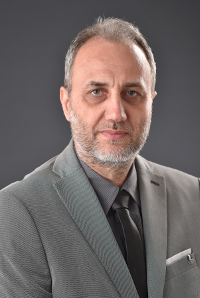
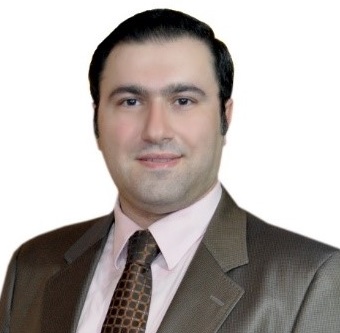
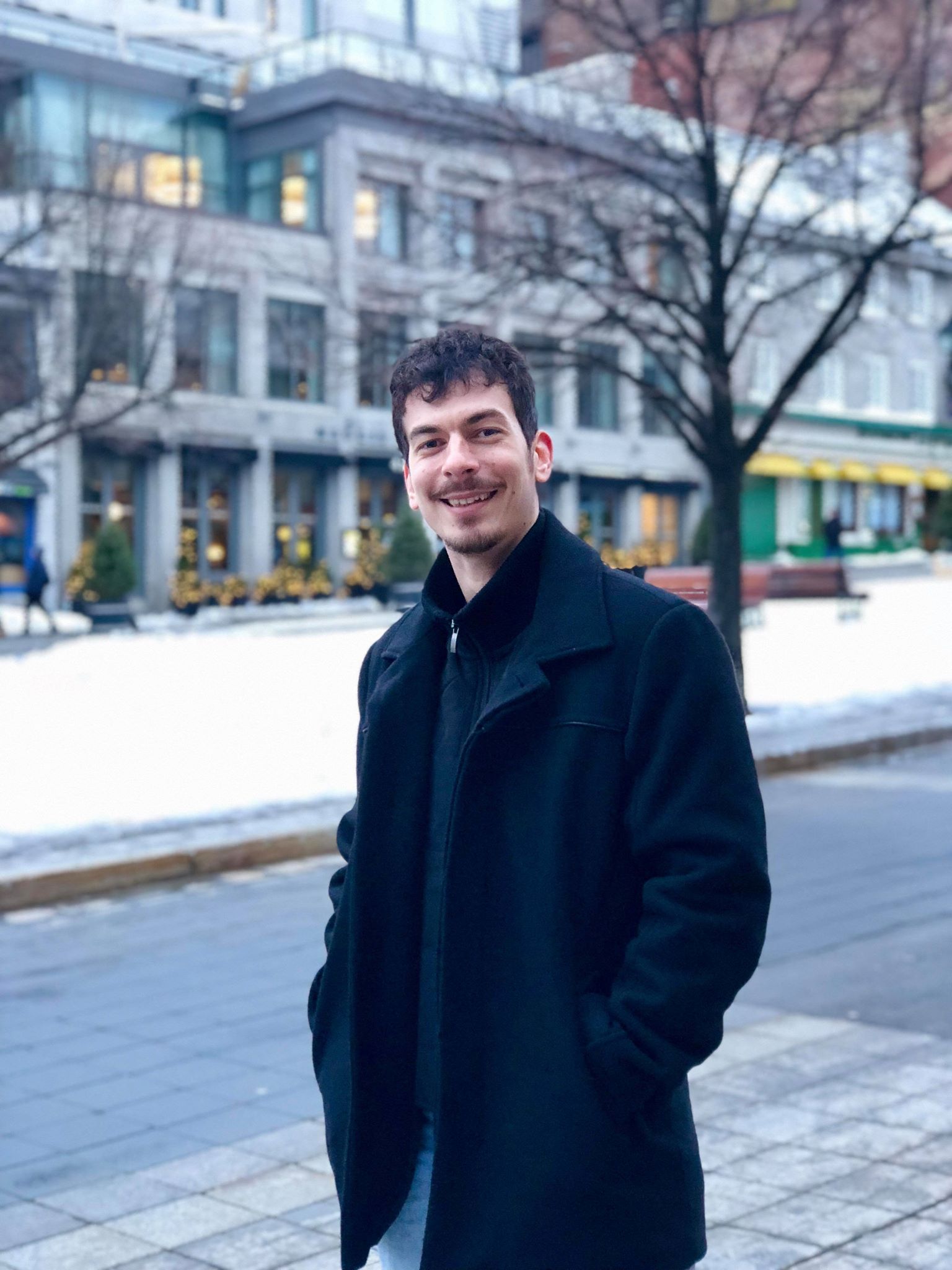
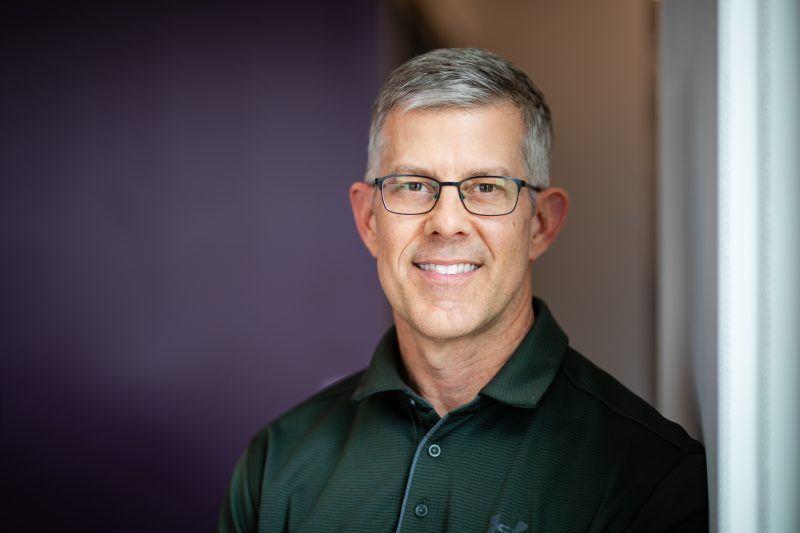
Babak Abedin is a Professor of Business Analytics and Head of the Department of Actuarial Studies and Business Analytics at Macquarie Business School, Macquarie University. He holds a PhD in Information Systems from UNSW Business School and has expertise in AI ethics, cybersecurity governance, and digital transformation. His research focuses on responsible AI, data analytics governance, and the societal impact of technology. He has secured over $4M in external funding and led projects with organizations like the Reserve Bank of Australia and Cancer Council NSW. He is the program leader of Responsible AI at Macquarie’s Centre for Applied AI and serves on editorial boards for journals such as Information Systems Frontiers and Electronic Markets . His teaching emphasizes real-world challenges, earning him the UTS Learning & Teaching Citation (2019) and Macquarie’s Faculty of Business Teaching Award (2010). He has supervised over 10 PhD/Master’s students. His recent work explores agile cybersecurity policy frameworks, digital empowerment in health communities, and AI’s ethical implications. He frequently engages with media on topics like health informatics and AI governance. Key collaborations include studies on blockchain systems, dynamic capabilities in digital transformation, and gender bias in AI. His articles address cybersecurity policymaking, adult learning in online communities, and value co-creation in digital ecosystems.
Jonathan L. Goodall is a Professor of Civil and Environmental Engineering and Director of the Link Lab at the University of Virginia. His research focuses on hydroinformatics, urban hydrology, and flood modeling, leveraging data science and cyber-physical systems to enhance resilience in coastal urban environments. He leads efforts in reproducible environmental modeling through integration of platforms like HydroShare, emphasizing open science and computational workflows. His work includes advancing machine learning techniques for real-time flood forecasting, integrating IoT and sensor networks for smart city applications, and assessing climate change impacts on coastal communities. Notable contributions involve developing surrogate models for flood prediction in Norfolk, VA, and studying compound flooding effects using hydrodynamic modeling paired with crowdsourced data. Collaborations span universities, national labs, and agencies like CUAHSI, focusing on environmental data interoperability and infrastructure resilience. Goodall’s research often addresses socio-technical challenges in urban flood management, combining engineering solutions with community engagement strategies. His lab explores reinforcement learning for real-time stormwater control, IoT education initiatives, and geospatial tools for flood vulnerability analysis. Projects frequently involve interdisciplinary teams and emphasize reproducibility through containerized environments and metadata standards.
Miloš Racković serves as a full Professor in the Department of Mathematics and Informatics at the University of Novi Sad, Serbia. He maintains active academic engagement through the Laboratory for the development of information systems, with his office located in the Information technologies and systems office (DMI&DF) on the second floor, room 49. Contact is available via telephone (485)-2868 or email rackovic@dmi.uns.ac.rs, and his personal website (http://www.is.pmf.uns.ac.rs/rackovicm/) provides additional resources. His research spans foundational and applied computer science, with seminal contributions in fuzzy database systems including PFSQL query language development and prioritized fuzzy logic for relational databases and XML. He has pioneered deep learning methodologies through innovative classification techniques using negative and missing features in convolutional neural networks. Additional expertise includes high-performance computing implementations of Lattice Boltzmann methods using OpenCL, robotics (symbolic modeling and trajectory planning), and blockchain applications for Industry 4.0 production processes. His sports analytics work applies neural networks to basketball player and referee movement analysis. Analysis of his 2012-2025 publications reveals a strategic evolution toward interdisciplinary applications, particularly in industrial transformation (blockchain-enabled traceability) and sports analytics. His work consistently bridges theoretical computer science with practical implementations, demonstrating increasing focus on real-world problem solving while maintaining strong foundations in database theory and computational methods. Professor Racković leads the Laboratory for the development of information systems, which focuses on advancing information system methodologies through formal modeling extensions (including Petri net innovations) and practical implementations for uncertainty management. The laboratory's work spans from foundational research in fuzzy logic systems to applied projects in high-performance computing and blockchain integration, fostering innovation in information technology development.
Craig Shultz is an Assistant Professor in the Department of Electrical and Computer Engineering at the University of Illinois Urbana-Champaign (UIUC), where he joined in January 2024. He is affiliated with the College of Engineering and conducts research through the Interactive Display Lab, which he founded upon joining UIUC. Prior to his academic position, Shultz co-founded Fluid Reality and served as VP of Research and Development at Tanvas, where he developed electroadhesive touchscreens based on his research at Northwestern University. Dr. Shultz's educational background includes: Ph.D. in Mechanical Engineering from Northwestern University (2017) M.S. in Mechanical Engineering from Northwestern University (2015) B.S. in Electrical Engineering from the University of Tulsa (2011) Shultz's research focuses on advancing human-computer interaction through innovative haptic technologies. His work centers on developing tactile interfaces that leverage electrostatic actuation and novel input/output devices to create immersive user experiences. His primary research areas include: Human-Computer Interaction - Exploring contemporary use cases and building novel input and output devices Electrostatic Actuation - Modeling and characterization of moderate to high voltage electrostatic actuators Haptic Technology - Designing and evaluating tactile interaction devices Interactive Embedded Systems - Creating systems that respond to human touch in sophisticated ways Shultz's research has demonstrated how haptic technologies can enhance user experiences across various domains including virtual reality, mobile devices, and interactive displays. His work aims to elevate haptic rendering to the sophistication level of graphics and audio systems through practical hardware and software solutions. Dr. Shultz has received numerous prestigious awards for his research contributions: IEEE Robotics and Automation Society Technical Committee on Haptics Early Career Award (2025) TCH Early Career Award at World Haptics 2025 Sony Faculty Innovation Award for Finger Mounted Haptic Displays (2025) Multiple Best Paper awards at premier ACM and IEEE conferences (2014-2022) As an educator and mentor, Shultz has advised multiple graduate students in the Interactive Display Lab, including Jung-Hwan (the lab's inaugural member), Seung Heon, and Yanjun (his first PhD student). His research has attracted significant attention, being featured in major media outlets including NBC Nightly News, TechCrunch, and Engadget. Shultz teaches courses such as ECE 210 (Analog Signal Processing), ECE 211 (Analog Circuits & Systems), ECE 445 (Senior Design Project Lab), ECE 598 CS (Interactive Haptic Systems), and ME 470 ZJ3 (Senior Design Project). The Interactive Display Lab, housed in room 3038 of the Electrical and Computer Engineering building at UIUC, is equipped with electronics assembly and debugging equipment, a prototyping lab, optical bench, student offices, and a photo and VR studio. The lab benefits from access to departmental mechanical, electrical, and clean room fabrication facilities. Current research directions include developing fast interactive soft buttons (DynaButtons), high-resolution haptic gloves (Fluid Reality), and flat panel haptics with embedded electroosmotic pumps.
David Lentink is a Full Professor of Biomimetics at the University of Groningen , leading the Biomimetics Group within the Faculty of Science and Engineering. His research bridges biomechanics, aerospace engineering, and robotics, focusing on avian flight mechanics and bio-inspired aerial robotics . Previously at Stanford University, he pioneered the development of the Aerodynamic Force Platform and low-turbulence wind tunnels for animal flight studies. Education : PhD in Aerospace Engineering (Stanford), MSc in Mechanical Engineering (Delft), BSc in Mechanical Engineering (Delft). Research Interests : Understanding bird flight biomechanics to design advanced drones, studying evolutionary adaptations in flight, and developing biohybrid robots with real feathers. Scientific Awards : Dutch Academic Year Prize for the Flight Artists (2013). World Economic Forum Young Scientist under 40 (2013). Alumnus of the Young Academy of The Royal Netherlands Academy of Arts and Sciences. Labs : The Lentink Lab at Groningen’s Linnaeusborg campus integrates bird aviaries, wind tunnels, and maker spaces for bio-inspired robotics development. His team collaborates globally with institutions like Stanford, TU/e, and Sorama.
K.K. Ang is an Associate Professor in the Department of Civil and Environmental Engineering at the National University of Singapore (NUS) Faculty of Engineering. He has been affiliated with NUS since 1987 and currently serves as Director of the Centre for IT and Applications (CITA Engineering) within the Faculty of Engineering. Qualifications: BEng (1st Class) from University of Singapore (1977) MEng from National University of Singapore (1980) PhD from University of New South Wales (1987) His research focuses on structural stability and vibration , smart adaptive structures , very large floating structures , computational mechanics , and meshless methods . Recent publications analyze carbon nanotube composites, high-speed rail dynamics, and offshore structural interactions. His awards include the NUS Teaching Excellence Award , Engineering Educator Award , and the IES/IStructE Best Structural Paper Award . He has taught courses in Computing, Structural Mechanics, Steel Design, and Finite Element Methods. Professor Ang is a Singapore-registered Professional Engineer (1991) and serves on the Singapore Structural Steel Society council. His work bridges structural engineering, IT applications, and advanced computational modeling.
Steven R. Hall is a Professor of Aeronautics and Astronautics at the Massachusetts Institute of Technology (MIT), School of Engineering. His research focuses on aerospace control applications and optimal control theory, with significant contributions to helicopter vibration reduction and actuator design. Education: S.B., 1980; S.M., 1982; Sc.D., 1985, all from MIT Dr. Hall's work bridges aerospace systems and electrochemical actuation, exploring innovative methods for vibration control and structural dynamics in rotorcraft. His career spans both technical and administrative roles, including Chair of the MIT Faculty (2013–2015). His recent publications highlight expertise in aerospace controls , rotor dynamics , electrochemical actuators , and engineering education . Notably, his 2024 article on dental prosthetics’ entrepreneurial aspects deviates from his core aerospace themes. Scientific Awards: Tau Beta Pi Member (1983–1985), Hertz Fellow (1998), Raymond L. Bisplinghoff Fellow Dr. Hall has served in leadership positions at MIT, including Assistant Department Head (1997–1998), and is affiliated with the Aerospace Controls Lab . His career demonstrates a commitment to advancing aerospace technology and education.
Bandaru Ramarao is a Professor and Chair of the Department of Chemical Engineering at the SUNY College of Environmental Science & Forestry (ESF). He holds a Ph.D. in Chemical Engineering from Clarkson University and has over three decades of academic and research experience. His expertise spans separation processes, biorefinery technologies, pulp and paper engineering, and environmental biotechnology. He has authored numerous books and journal papers, including Granular Filtration of Aerosols and Hydrosols and Separation Processes in Biorefineries . Education: Ph.D. (1986), M.S. (1982), and B.S. (1980) in Chemical Engineering from Clarkson University and the University of Madras, respectively. Research Interests: Focus on sustainable biorefineries, PFAS removal using nanomaterials, enzymatic hydrolysis of lignocellulosic biomass, and advanced filtration technologies. His work bridges fundamental engineering principles with industrial applications, particularly in the pulp and paper sector. Publications: Over 100 peer-reviewed articles and patents, including innovations in flocculation, biopolymer production, and geotextile dewatering. Recent work explores PFAS removal via cellulose nanocrystals and bioplastic synthesis from waste streams. Awards: Recipient of the Andrew Chase Award (2014) and the Alkyl Amines Tilak ChemCon Award (2012). Recognized for contributions to forest bioproducts and sustainable engineering. Advising & Grants: Supervises graduate students in MS and PhD programs, focusing on bioprocess engineering and paper physics. Leads research projects funded by NASA, industry partnerships, and academic grants. Labs & Teams: Director of the Empire State Paper Research Institute, advancing innovations in papermaking and biorefinery processes. Collaborates with global institutions on filtration, biorefinery design, and environmental remediation.
Nathalie Katsonis is a Professor of Chemistry at the University of Groningen, affiliated with the Faculty of Science and Engineering and the Molecular Active Systems department within the Stratingh Institute of Chemistry. Her research focuses on understanding and designing active molecular systems inspired by biological mechanisms, emphasizing the transmission of movement across molecular to macroscopic scales, particularly in liquid crystals, supramolecular chemistry, and molecular machines. She holds a Ph.D. in Chemistry from Sorbonne Université (2004), followed by postdoctoral research at the University of Groningen (2004–2007) and a Veni Fellowship (2009–2011). Prior to her current position, she held academic roles at the University of Twente, including Professor, Associate Professor, and Assistant Professor from 2011–2020. Her research explores molecular motion mechanisms, chirality control, and the creation of functional materials like light-responsive polymers and self-actuating systems. Key contributions include studies on rotaxane-based liquid crystal switches and macroscopic motion driven by molecular dynamics. She leads an international research group and chairs committees such as the Binding Study Advice Commission (FSE) and the Van't Hoff Foundation. Notable awards include the Professor-Werdelmann Award (2022), Koninklijke Hollandsche Maatschappij der Wetenschappen membership (2021), and an ERC Consolidator Grant (2017). Her work bridges fundamental science and applications in soft robotics, smart materials, and origins-of-life research.
Dr. Mohammad Yazdani-Asrami is a Lecturer in Electrically Powered Aircraft and Operations at the Autonomous Systems & Connectivity (ASC) division of the James Watt School of Engineering, University of Glasgow. He leads research in electrification and cryo-electrification of transportation, particularly in aviation, leveraging applied superconductivity and AI techniques. His research interests span the Electrification and cryo-electrification of power and transportation systems Design of superconducting components (machines, cables, fault current limiters) for aviation Application of AI, machine learning, and big data in engineering and superconductivity Hydrogen electrolysis, production, and integration in aerospace and power networks His recent publications demonstrate a strong trend toward intelligent modeling and AI-driven solutions in superconducting technologies, with a focus on electric aircraft, fault protection, and thermal management using cryogenic fluids. Dr. Yazdani-Asrami has received notable scientific recognition, including: UK Royal Academy of Engineering Global Talent (2021) Young Professional of the Year, Cryogenic Society of America (2023) He actively supervises PhD students and hosts visiting researchers. His advising portfolio includes Alireza Sadeghi, Kerr Smith, Dedao Yan, Giacomo Russo, and Fábio Gregório. He has secured funding from the EPSRC, University of Glasgow, and CSC for PhD students. He also supports postdoctoral fellowships from the Royal Academy of Engineering, Leverhulme Trust, and Marie Skłodowska-Curie actions. He is involved in several research groups and collaborations, particularly within the Aerodynamics, Propulsion and Electrification group. His editorial roles include serving on the boards of Superconductor Science and Technology , World Journal of Engineering , Aerospace Systems , and others. He regularly contributes to major conferences such as the Applied Superconductivity Conference and the International Conference on Magnet Technology.
Alexandros Kontogiannis is a research fellow at the University of Cambridge, Department of Engineering, specializing in fluid dynamics and applied mathematics. His work combines Bayesian inference, machine learning, and physics-informed algorithms to solve inverse problems in magnetic resonance velocimetry (MRV) and fluid-structure interaction. EPSRC National Fellow in Fluid Dynamics Member of Energy, Fluids and Turbomachinery Division Research Focus: Development of digital twin frameworks that integrate MRV data with Navier-Stokes equations to reconstruct flowfields, infer rheological parameters in non-Newtonian fluids, and estimate hidden quantities like pressure and wall shear stress. Key innovations include: Physics-informed compressed sensing for sparse MRV data Simultaneous boundary shape and flowfield estimation Bayesian turbulence model parameter learning Scientific Awards: ASME Fluids Engineering Division Graduate Student Scholar (2021) Technical Chamber of Greece (TEE) Award (2018) Limmat Foundation Academic Excellence (2017) Mentzelopoulos Scholarship for international studies (2017) Greek State Scholarships Foundation Award (2012) Key Contributions: Algorithms for 3D flow reconstruction with adaptive discretization, viscous signed distance field regularization, and multi-objective aerodynamic shape optimization. His methodologies enable 27x reductions in MRI scanning time while maintaining diagnostic accuracy.
Prof. Dr. Leonid Ionov is a leading academic at the Faculty of Engineering Science , University of Bayreuth, specializing in Biofabrication and 4D Printing . He has held professorial roles since 2017, with prior positions at the University of Georgia and TU Dresden. Research Priorities: Smart responsive polymers, 3D/4D bioprinting, self-healing electronics, and bioinspired surface engineering. Teaching: Offers advanced courses in 3D Printing of Polymers , Biofabrication , and Polymer Science . His work integrates stimuli-responsive materials with additive manufacturing to create bioinspired actuators, vascular scaffolds, and self-healing conductive systems. Recent articles focus on 4D-printed vascular junctions , multi-responsive cellulose composites , and dynamic bilayer morphing . Scientific Achievements Recipient of the 2022 North Bavaria Business Plan Competition award 2012 Georg Manecke Prize for biopolymer research Developed European patents for Li-S battery cathodes and microfluidic devices Trained over 20 PhD/postdoc alumni now at institutions like Iowa State University and Harvard Medical School . Leads a multidisciplinary lab with advanced equipment for polymer synthesis, electrospinning, and cell culture studies.
Mahsa Derakhshani is a Senior Lecturer (equivalent to Associate Professor) in Digital Communications at Loughborough University's Wolfson School of Mechanical, Electrical and Manufacturing Engineering. She leads research in the Signal Processing and Networks Research Group (SPNRG) and serves as an Associate Editor for the IET Signal Processing Journal. Her academic journey includes a PhD from McGill University (2013), followed by postdoctoral roles at the University of Toronto and Imperial College London. Key awards include the Royal Academy of Engineering/The Leverhulme Trust Research Fellowship (2020-21) and NSERC Postdoctoral Fellowships (2015-2017). Research interests focus on digital communications, machine learning for signal processing, wireless networks, and reinforcement learning applications. Recent work addresses challenges in satellite communications, OTFS modulation, and opto-physiological monitoring. She has authored over 70 publications spanning topics like NOMA systems, MIMO optimization, and edge-assisted live streaming. Education: PhD (McGill, 2013), MSc (Sharif University, 2008), BSc (Sharif University, 2006) Affiliations: IEEE Senior Member, IET Member, Fellow of the Higher Education Academy Grants & Funding: Leverhulme Trust, Royal Academy of Engineering, NSERC Labs/Teams: Active in SPNRG and collaborates on projects involving 5G/6G networks, satellite systems, and biomedical signal processing. Current research emphasizes AI-driven solutions for communication networks and wearable health monitoring technologies.
Michael L. Madigan is a Professor in the Grado Department of Industrial and Systems Engineering at Virginia Tech. His research focuses on human factors engineering, biomechanics, and ergonomics, particularly addressing issues related to slips, trips, falls, and musculoskeletal disorders. He leads the Madigan Biomechanics Group, which investigates the biomechanics of human motion and neuromuscular control to enhance occupational safety and elderly health. Education: Ph.D., Biomedical Engineering, Virginia Commonwealth University, 2001 M.S., Bioengineering, Texas A&M University, 1996 B.S., Bioengineering, Texas A&M University, 1994 Research Interests: Obesity’s impact on mobility, aging-related biomechanics, workplace ergonomics, and biomechanical interventions for fall prevention. His work combines experimental and computational methods to develop preventive measures like exercise interventions and ergonomic designs. Professional Roles: Editor-in-Chief, Journal of Applied Biomechanics (2017–present) Formerly Editor, Medicine and Science in Sports and Exercise (2013–2017) Secretary, American Society of Biomechanics (2009–2012) Awards: Kevin P. Granata Faculty Fellow (2013–2014) Virginia Tech College of Engineering Certificate of Teaching Excellence (2014) Finalist for International Society of Biomechanics Clinical Award (2005) Advising & Grants: Advised over 20 doctoral and undergraduate students since 2007. His grants support studies on obesity-related falls, exoskeleton design, and biomechanical modeling. Collaborates with the Virginia Tech-Wake Forest School of Biomedical Engineering and Sciences. Labs/Teams: Director of the Madigan Biomechanics Group and core member of the Occupational Ergonomics and Biomechanics Laboratories. Active in developing smart prosthetics and wearable technologies for injury prevention.
Dr. Mani Khezri is a Lecturer in the School of Civil Engineering at The University of Sydney since 2014, specializing in structural mechanics and innovative numerical methods. His research focuses on cold-formed steel structures, buckling behavior of plates and laminated assemblies, and functionalizing buckling for structural morphing. He holds a Ph.D. in Structural Engineering from UNSW, an M.Sc. from SUT, and a B.Sc. from IUT. Key research areas include extending cold-formed steel applications to mid-rise structures through built-up sections, analyzing buckling and post-buckling behaviors, and leveraging buckling for smart technologies like kinetic façades. He collaborates with industry to develop affordable, prefabricated structures and sustainable materials through additive manufacturing. His work bridges theoretical analysis (e.g., meshfree methods) with practical applications, such as optimizing ventilation systems via buckling-induced airflow control. He leads grants like 'Solid-State Additive Manufacturing For Recycled Aluminium Alloys' and 'Complete limit state analysis of steel structural framework.' Students include Pouya AFSHAR IMANI (additive manufacturing), Cynthia LIU (built-up columns), Emad TAYARANINAJJARAN (floor systems), and Ruilin ZHANG (serviceability analysis). His lab, the Centre for Advanced Structural Engineering, explores advanced structural systems and computational mechanics.