Emma Brunskill is an Associate Professor of Computer Science at Stanford University, with a courtesy appointment in Education. She holds a PhD in Computer Science from MIT (2009). Her research focuses on reinforcement learning, educational technology, and healthcare applications, aiming to develop AI systems that support human learning and decision-making. Notable projects include AI tutoring systems, policy evaluation methods, and behavior change interventions using large language models. Her work bridges theory and practice, addressing challenges in off-policy evaluation, fairness-aware decision making, and scalable educational tools. Brunskill has contributed to foundational research in reinforcement learning algorithms and their applications in real-world scenarios such as healthcare, education, and human-AI collaboration. She also leads initiatives to improve equity and efficiency in educational technologies through data-driven approaches. Brunskill's research has been supported by grants such as the NSF RI: Small grant for data-efficient reinforcement learning. She actively explores the ethical implications of AI systems, particularly in healthcare and education settings. Her recent work emphasizes leveraging large language models (LLMs) for personalized feedback and simulated training environments, as seen in studies like GPTCoach and LLM-based counselor upskilling.
Anna Levina is an Assistant Professor for Computational Neuroscience at the University of Tübingen , affiliated with the Department of Computer Science under the Faculty of Science. Her research focuses on the self-organization of neuronal activity, critical dynamics in neural networks, and the excitation/inhibition balance in cortical circuits. Current positions: Assistant Professor (since 2018), Group Leader (2017-2018), Equality Officer (Computer Science) Previous roles: IST Fellow (2015-2017), Associated Researcher (2011-2015), Postdoc/PI (2011-2015), Postdoc (2008-2011) Her research integrates mathematical modeling , statistical physics , and computational neuroscience to study criticality phenomena, neural avalanches, and adaptive network dynamics. Key interests include: Self-organized criticality in neural systems Excitation/Inhibition balance mechanisms Network topology and dynamics Timescale analysis in neural processing Stochastic modeling of neural activity Recent publications reveal trends in understanding critical dynamics across biological and artificial networks, with applications to memory systems, sensorimotor integration, and disease modeling. She has received recognition as an IST Fellow .
Donnacha M. Dennehy is a Professor of Music at Princeton University and Director of the Princeton Sound Kitchen. Previously a tenured lecturer at Trinity College Dublin, he was appointed a Global Scholar at Princeton University in Autumn 2012 and joined the music faculty in 2014. Dennehy founded Crash Ensemble, Ireland's renowned new music group, in 1997 after returning to Ireland from studies in the USA, France, and Holland. Dennehy's research interests focus on contemporary composition with particular emphasis on opera, experimental music theatre, overtone series exploration, and ensemble music. His work bridges traditional composition with innovative approaches to sound and performance, often incorporating elements of Irish musical tradition within contemporary frameworks. He has developed a distinctive compositional voice that has earned him international recognition. His compositions have been performed at major festivals and venues worldwide including the Edinburgh International Festival, Royal Opera House London, Carnegie Hall New York, The Barbican London, and many others. Dennehy's work shows consistent exploration of narrative structures within contemporary classical music, with a particular interest in collaborations across artistic disciplines including theatre, visual arts, and literature. Scientific Awards: Elected to Aosdána (Ireland's Academy of Creative Artists), 2005 Fulbright Scholarship Irish Times Theatre Award for best opera (for The Last Hotel), 2015 International Rostrum of Composers 'recommended' for Crane, 2010 Dennehy has received numerous commissions from prestigious organizations including Carnegie Hall, Wigmore Hall, Metropolitan Museum of Art, BBC, and RTE National Symphony Orchestra. His collaborations extend to renowned artists including Dawn Upshaw, Kronos Quartet, and writers Colm Tóibín and Enda Walsh. As Director of Princeton Sound Kitchen, he leads an ensemble dedicated to innovative contemporary music performance and creation. Dennehy's work with Crash Ensemble has been particularly influential in the new music scene, with their 2011 Nonesuch release of his music, Grá agus Bás, named by NPR as one of its '50 favorite albums' of 2011. His teaching at Princeton includes courses in composition, instrumentation, and music theory through performance.
Prof. Dr. Ulrich Kleinekathöfer is a Full Professor of Theoretical Physics at Constructor University (formerly Jacobs University Bremen) in the School of Science. His research focuses on computational physics and biophysics, particularly on light-harvesting complexes, membrane transport, and quantum dynamics in biological systems. He leads the Computational Physics and Biophysics research group and coordinates the MSCA Doctoral Training Network "PhotoCaM". His educational background includes: PhD from Max-Planck-Institut für Strömungsforschung, Göttingen (1996) Diploma in Physics from Universität Göttingen (1993) Habilitation in Physics from Technische Universität Chemnitz (2002) Prof. Kleinekathöfer's research spans multiple areas of computational biophysics and theoretical physics. His primary interests include excitation energy transfer in light-harvesting complexes , molecular transport through membrane channels and nanopores , and quantum dynamics in open systems . His group develops and applies advanced computational methods including molecular dynamics simulations, quantum chemistry calculations, and machine learning approaches to study these phenomena. A significant portion of his work focuses on photosynthetic systems, particularly how energy is transferred and converted in natural light-harvesting complexes, with implications for renewable energy technologies. His recent publications demonstrate a strong trend toward integrating machine learning with traditional computational methods, particularly in the fields of quantum chemistry and molecular dynamics. There's a clear focus on multifidelity approaches that balance computational efficiency with accuracy. His work spans from fundamental quantum dynamics to applied research on antibiotic transport mechanisms, showing remarkable breadth while maintaining depth in computational methodology development. His notable recognition includes: Tan Chin Tuan Exchange Fellowship, NTU Singapore (2019) Prof. Kleinekathöfer has supervised numerous PhD students and postdoctoral researchers, with a current group comprising several PhD candidates and research associates. His research is supported by multiple funding sources including the Deutsche Forschungsgemeinschaft (DFG), European Union through MSCA Doctoral Network PhotoCaM, and previously through the Innovative Medicines Initiative "Translocation" and Marie Curie Training Program "Translocation". His collaborative network spans internationally, with partnerships at institutions in Germany, USA, Greece, and Switzerland. The Computational Physics and Biophysics Group operates within Constructor University's research infrastructure, utilizing high-performance computing resources for their simulations. The group maintains active collaborations with experimental groups to validate and inform their computational models, creating a strong interdisciplinary research environment focused on understanding fundamental biophysical processes at the molecular level.
Dr. Christian Zeman serves as a Lecturer at the Department of Environmental Systems Science, ETH Zurich, based at the Institute for Atmospheric and Climate Science (CHN N 17.1) in Zurich, Switzerland. His research focuses on high-resolution atmospheric modeling with emphasis on kilometer-scale climate simulations and deep convection processes. Zeman's work centers on advancing regional climate modeling capabilities through rigorous model verification techniques and convection-resolving simulations. His research addresses critical challenges in simulating complex phenomena like island-induced vortex streets, tropical climate dynamics, and the impacts of reduced floating-point precision on model accuracy. Key methodologies include ensemble-based statistical verification and systematic model calibration for improved predictive reliability. Analysis of his 2020-2025 publications reveals a consistent trajectory toward higher-resolution climate modeling, with significant contributions to model intercomparison frameworks and computational efficiency optimization. His research bridges theoretical atmospheric science with practical applications in regional climate projection, particularly for island systems and tropical regions. Zeman operates within Prof. Christoph Schär's research group at ETH Zurich, contributing to cutting-edge developments in the Consortium for Small-scale Modeling (COSMO) and Integrated Forecasting System (IFS) frameworks. His work supports ETH Zurich's leadership in high-resolution climate simulation and verification methodologies.
Joseph Lanza is a Lecturer and Director of the Early Music Studio at the Don Wright Faculty of Music, University of Western Ontario. He previously served as Concertmaster of Orchestra London for over 25 years, performing solo works across diverse concert series. A dedicated chamber musician, he has performed extensively in small ensembles in London, Toronto, and internationally. His specialization in 17th- and 18th-century music led to mastery of period instruments, including Baroque violin under mentors like Jeanne Lamon and Jaap Schroder. He balances performance with teaching private lessons and university-level classes. Lanza's family background includes a legacy in orchestral music, having studied violin from age 7 with his father and renowned concertmasters like William de Pasquale and Joseph Silverstein. He is married to Orchestra London oboist Jennifer Short, with whom he shares a daughter, Heather, and a Shetland sheepdog, Fergus. His research interests focus on historical performance practices, particularly in Baroque violin, and he has collaborated with ensembles such as Tafelmusik Baroque Orchestra and Opera Atelier, with notable recordings and international tours.
Shin Yoo is a tenured Full Professor in the School of Computing at Korea Advanced Institute of Science and Technology (KAIST), where he leads the Computational Intelligence for Software Engineering (COINSE) research group. He received his PhD from King's College London in 2009 under the supervision of Prof. Mark Harman. Currently, he serves as the General Chair for ASE 2025, which will be held in Seoul, Korea. Professor Yoo earned his PhD in Computer Science from King's College London (2009), following an MSc in Software Engineering with Distinction from the same institution (2006). His academic journey includes positions as Tenured Associate Professor (2021-2025), Associate Professor (2018-2021), and Assistant Professor (2015-2018) at KAIST, as well as Lecturer and Research Associate positions at University College London and King's College London. His research focuses on the intersection of software engineering and artificial intelligence, particularly in search-based software engineering, software testing, automated debugging, SE4AI (Software Engineering for AI), and AI4SE (AI for Software Engineering). Professor Yoo's work bridges theoretical foundations with practical applications, developing innovative techniques for fault localization, test case generation, and debugging using machine learning and genetic programming approaches. His research has significant implications for improving software reliability and development efficiency in both traditional software systems and AI-powered applications. Professor Yoo's recent publications demonstrate a clear trend toward leveraging large language models and deep learning techniques for software engineering tasks. His work spans fault localization, automated debugging, GUI testing, and program analysis, with increasing focus on the challenges and opportunities presented by AI systems. His research shows a consistent evolution from traditional search-based software engineering to AI/ML-enhanced approaches, reflecting the broader trends in the field. ACM SIGEVO HUMIES Silver Medal (2017) for human competitive application of genetic programming to fault localization research IEEE TCSE Most Influential Paper Award (ICST 2024) for work on mutation-based fault localization Professor Yoo has supervised five PhD students to completion, with his former students now holding positions as assistant professors, post-doctoral researchers, and software engineers at institutions including Kyoungpook National University, Max-Planck Institute Security & Privacy, Università della Svizzera Italiana, Roku Korea, and NUS. He currently serves as an associate editor for the Journal of Empirical Software Engineering and ACM Transactions on Software Engineering and Methodology, and has held significant leadership roles in major software engineering conferences including Program Co-chair for SSBSE (2014), ICST (2018), and ICSE NIER track (2020), General Chair for SSBSE (2022), and Testing & Analysis Area Chair for ICSE (2024). As leader of the Computational Intelligence for Software Engineering (COINSE) group at KAIST, Professor Yoo directs research that combines computational intelligence techniques with software engineering challenges. The group focuses on developing novel approaches to software testing, debugging, and analysis using search-based and AI-driven methods. Their work spans both theoretical foundations and practical implementations, with strong connections to industry challenges and applications.
Matt DeChamplain serves as Assistant Professor of Jazz at the Jackie McLean Institute of Jazz within The Hartt School at the University of Hartford, while also teaching at the Greater Hartford Academy of the Arts and directing Glastonbury High School's big band. His academic credentials include: Master of Music (MM) from the University of Toledo Bachelor of Music (BM) from The Hartt School, University of Hartford Artistic Focus: DeChamplain specializes in synthesizing historical jazz traditions with contemporary expression. His creative work centers on fusing Harlem stride piano techniques with bebop and hard bop language, emphasizing rhythmic innovation and harmonic sophistication. He actively explores the continuum between early jazz pioneers like Fats Waller and modern innovators including McCoy Tyner, seeking to honor jazz heritage through original compositions and arrangements that integrate stride, swing, bebop and blues elements. His recorded output reveals an artistic trajectory from collaborative sideman work to leadership roles, consistently investigating the dialogue between historical jazz forms and modern sensibilities. Key thematic threads include reimagining jazz standards through stride-bebop synthesis and developing original compositions that bridge traditional piano techniques with contemporary ensemble concepts. Notable recognitions: Betty Carter Jazz Ahead Program selection (2008) Semifinalist in Martial Solal Jazz Piano Competition (2010) DeChamplain mentors students across multiple institutions including The Hartt School, Greater Hartford Academy of the Arts, and Glastonbury High School where he directs the big band program. His pedagogical reach extends to summer intensives at Litchfield Jazz Camp and New Hampshire’s Jazz All State. While specific research grants aren't detailed, his active performance schedule and recording projects demonstrate sustained professional development funding. He leads Glastonbury High School's big band and performs regularly with ensembles that have shared stages with jazz legends including Hank Jones, Wynton Marsalis, and Dave Brubeck.
Fabrice Fitch is a Senior Research Fellow at the Royal Conservatoire of Scotland, where he focuses on artistic research, early music, and musicology. He holds dual nationality (France/Canada), having been raised in Toronto and Bordeaux, and has lived in the United Kingdom since 1991. His academic journey includes studies at the Conservatoire National de Région de Bordeaux, McGill University, and private mentorship from Brian Ferneyhough, supported by Canada Council for the Arts grants. Research Interests: Fitch’s career spans both composition and musicology. His compositions explore the acoustic properties of instruments and prioritize audience communication, often written for soloists, duos, or small ensembles. Since 1986-7, collaborations with performers have been central to his work, leading to two ongoing cycles: Per Serafino Calbarsi (inspired by François Rabelais) and agricologies (blending Alexander Agricola’s Renaissance music with modern artists like Cornelia Parker). His musicology focuses on early Renaissance composers (Ockeghem, Obrecht, Agricola) and their relevance to contemporary practice. Publications & Collaborations: Recent work includes the 2024 scholarly edition of Jacob Obrecht’s Missa Scaramella and a 2020 Cambridge University Press book on Renaissance polyphony. He has contributed to journals like the Journal of the Alamire Foundation , analyzing modular composition in Motetti Missales and recovering anonymous works. His research bridges historical analysis with practical performance, emphasizing manuscript studies and interdisciplinary approaches. Awards & Recognition: Supported by Canada Council for the Arts grants during his studies, Fitch’s editorial work (e.g., Loyset Compère’s motets) and performances with ensembles like Exaudi and Fretwork highlight his scholarly and artistic impact.
Antonella Coppi is a Researcher (Juniorprofessur) in Music Pedagogy and Community Music at the Faculty of Education, Free University of Bozen-Bolzano. She holds a PhD and has been conducting the University Choir and Orchestra of Modena and Reggio Emilia since 2001. Her research focuses on Community Music, Intergenerational Choral Activities, and the Reggio Emilia approach to early childhood education. She previously served as Adjunct Professor of Music Pedagogy at the University of Perugia (2002–2006) and is currently the national coordinator for the Coordinamento Nazionale Cori ed Orchestre Universitarie (Italian University Choirs and Orchestras Network). Dr. Coppi’s work emphasizes music as a tool for social inclusion, with contributions to El Sistema-inspired initiatives and interdisciplinary education. She has authored books like Community Music: Nuovi orientamenti pedagogici (2017) and serves on international scientific committees for music education conferences. Her academic activities span musicology, pedagogical innovation, and the intersection of arts and education. Her professional roles include being Rector Deputy for Music at the University of Modena and Reggio Emilia, and she actively contributes to music education policy and internationalization efforts. Her research highlights the transformative potential of music in both formal and informal learning environments.
Prashant Shenoy is a Distinguished Professor and Associate Dean in the College of Information and Computer Sciences at the University of Massachusetts Amherst. He has been on the faculty since 1998 and heads the Laboratory for Advanced Systems Software while directing the Center for Smart and Connected Society. His research focuses on systems issues for distributed systems ranging from large server clusters to networks of small sensors. Shenoy received his PhD in Computer Science from the University of Texas at Austin in 1998, following an MS from the same institution in 1994. He earned his BTech in Computer Science and Engineering from the Indian Institute of Technology, Bombay in 1993. His academic progression at UMass Amherst has been from Assistant Professor (1998-2004) to Associate Professor (2004-2009) to Professor (2009-2020) to Distinguished Professor (2020-present). His primary research interests include distributed systems, networking, cloud and edge computing, mobile computing and Internet of Things, and energy and sustainability. Over the past decade, his work has increasingly focused on computational decarbonization, as evidenced by his recent $12 million NSF Expedition award in this area. His research group maintains several important resources including the UMass Trace Repository, UMass CS Weather Station, BenchLab, and Smart* Dataset. Shenoy's publications reflect a progression from foundational distributed systems work to increasingly sustainability-focused research. His recent work centers on carbon-aware computing, energy optimization, and computational decarbonization across various computing domains including cloud, edge, and IoT systems. ACM Fellow (2019) AAAS Fellow (2018) IEEE Fellow (2013) ACM Sigmetrics Test of Time Award (2016) NSF Career Award recipient Conti Research Fellowship recipient Lilly Foundation Teaching Fellow As an educator, Shenoy has consistently taught Distributed and Operating Systems (Compsci 677) and has mentored numerous PhD students who have received awards and gone on to successful careers. He serves as the founding Chair of the ACM Special Interest Group on Energy (SIGEnergy) and has organized numerous conferences including serving as PC chairs for the ACM Symposium on Edge Computing in 2025. His research has secured significant funding, including a recent $12 million NSF Expedition in Computational Decarbonization awarded in May 2024. Shenoy leads the Laboratory for Advanced Systems Software at UMass Amherst and directs the Center for Smart and Connected Society. He serves on editorial boards of several journals including ACM Transactions on IOT (TIOT), ACM Modeling and Performance Evaluation of Computing Systems (TOMPECS), and ACM Transactions on the Web (TWEB).
Megan Ken, MD, PhD is a Research Fellow in the Department of Integrative Structural and Computational Biology at Scripps Research, with joint appointments in Immunology & Microbiology and the Skaggs Graduate School of Chemical and Biological Sciences. Her work bridges RNA structural biology, computational modeling, and drug discovery, focusing on understanding RNA dynamics in cellular contexts. Dr. Ken holds a B.A. in Biology and Chemistry from Washington University in St. Louis (2013), an M.D. and Ph.D. in Biochemistry from Duke University School of Medicine (2022–2023). Her research emphasizes RNA conformational propensities, ensemble behavior, and their implications for therapeutic targeting. Her notable achievements include the 2025 Andy Kaplan Prize and the NIH Director’s Early Independence Award (2024). Her lab develops predictive models of RNA function and explores nonspecific drug-RNA interactions. She has pioneered methods for high-performance virtual screening targeting RNA dynamic ensembles. Dr. Ken advocates for inclusive excellence in STEM, co-developing curricula on health disparities and cultural determinants of health. Grants include NIH/NIAID funding for MD/PhD training and the Ellen Browning Scripps Foundation Award.
Saleh Ashkboos is a Ph.D. student in the Computer Science Department at ETH Zurich, advised by Professors Torsten Hoefler and Dan Alistarh. He is also a Research Assistant at the Scalable Parallel Computing Lab and an affiliated doctoral student of the ETH AI Center. His research focuses on accelerating deep neural network training and developing systems for large-scale graph processing. Prior to ETH Zurich, he earned his Master's degree in Computer Science from Sharif University of Technology, advised by Professor Amir Daneshgar. His work has led to notable contributions, including the best paper award at SC22 for 'ProbGraph.' Recent research emphasizes efficient LLM training and quantization techniques, with publications on topics like 4-bit inference, quantization-aware training frameworks, and scalable meteorological modeling. He has interned at Apple and Microsoft, and his work is accessible via Google Scholar and GitHub. Key projects include GPTQ (post-training quantization for transformers), SliceGPT (LLM compression), and ProbGraph (high-performance graph mining). His technical contributions span distributed systems, neural network optimization, and climate-related machine learning.
Professor Wiebke Thormählen is Director of Research and Strategic Lead for Research, Research Degrees and Knowledge Exchange at the Royal Northern College of Music (RNCM). As a historian and violinist, she explores music as a social and cultural activity at the intersection of domestic and public music-making, with particular interest in arrangements of large-scale works for small-scale performance, domestic devotional music, and audience engagement with opera across historical periods. Her research spans three historical moments: music moving between home and public spaces around 1800; institutionalization of professional music engagement around 1900; and contemporary use of sound in museum and heritage contexts. She draws on methodologies from the history of emotions, medical history, material history, and practice-based research. Professor Thormählen's scholarly work reveals significant trends across musicology, heritage studies, and education. Her publications demonstrate a consistent focus on the relationship between music, space, and identity formation, with particular emphasis on how musical practices shape and are shaped by social contexts. Her recent work increasingly intersects with digital humanities through projects like the 'Domestic Dance in Georgian Britain' database. Co-investigator on AHRC-funded project 'Music, Home and Heritage: Sounding the Domestic in Georgian Britain' (2017-2022) Steering Group Member, Sound Heritage Network (University of Southampton) Steering Group Member, Music, Medicine and History Network Core Member, Digital Humanities and Sensory Heritage Network (TORCH, Oxford University) As an educator, Professor Thormählen supervises PhD students in Sound Heritage, Eighteenth-Century Studies, and social history of the conservatoire. She has received research funding from the Arts and Humanities Research Council, Wellcome Trust, and Austrian Academic Exchange Service. Her extensive performance experience with period instrument ensembles in the US, Netherlands, and UK informs her research and teaching approach, which emphasizes tangible properties of musical materials and their interactive potential.
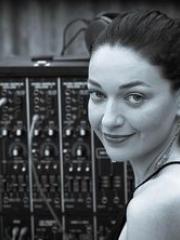
Dr. Eve Klein is an Associate Professor and Senior Lecturer in Music Technology and Popular Music at The University of Queensland (UQ) School of Music. She leads a research cluster in interactive composition, focusing on virtual/augmented reality works and guiding postgraduate composers. Her work bridges classical music traditions with digital innovation, addressing themes like gender in technology, identity, and participatory cultures. Dr. Klein holds a PhD in Music and Sound and has pioneered immersive art music experiences for festivals such as MONA FOMA and VIVID Sydney. Her artistic works include Vocal Womb (a laryngoscopy-based opera exploring voice and power) and City Symphony (an AR soundwalk overlaying Brisbane’s CBD). She is a recipient of the 2023 Art Music Award for Experimental Practice and the IASPM 2016 Open Publication Prize. Her research spans music technology curriculum design, future work skills in the arts, and epistemic fluency through transdisciplinary collaboration. She co-founded the Touch Ensemble, a technology-focused performance group collaborating with engineering students. Dr. Klein’s work frequently addresses social justice themes, including gendered violence and climate change. Education: PhD in Music and Sound Awards: 2023 Art Music Award, IASPM 2016 Prize, UQ Program Innovation Award Her articles critically examine virtual orchestras’ impact on classical norms, while her creative works challenge traditional performance boundaries. Klein collaborates internationally with festivals, scientists, and NGOs to create transformative cultural projects.