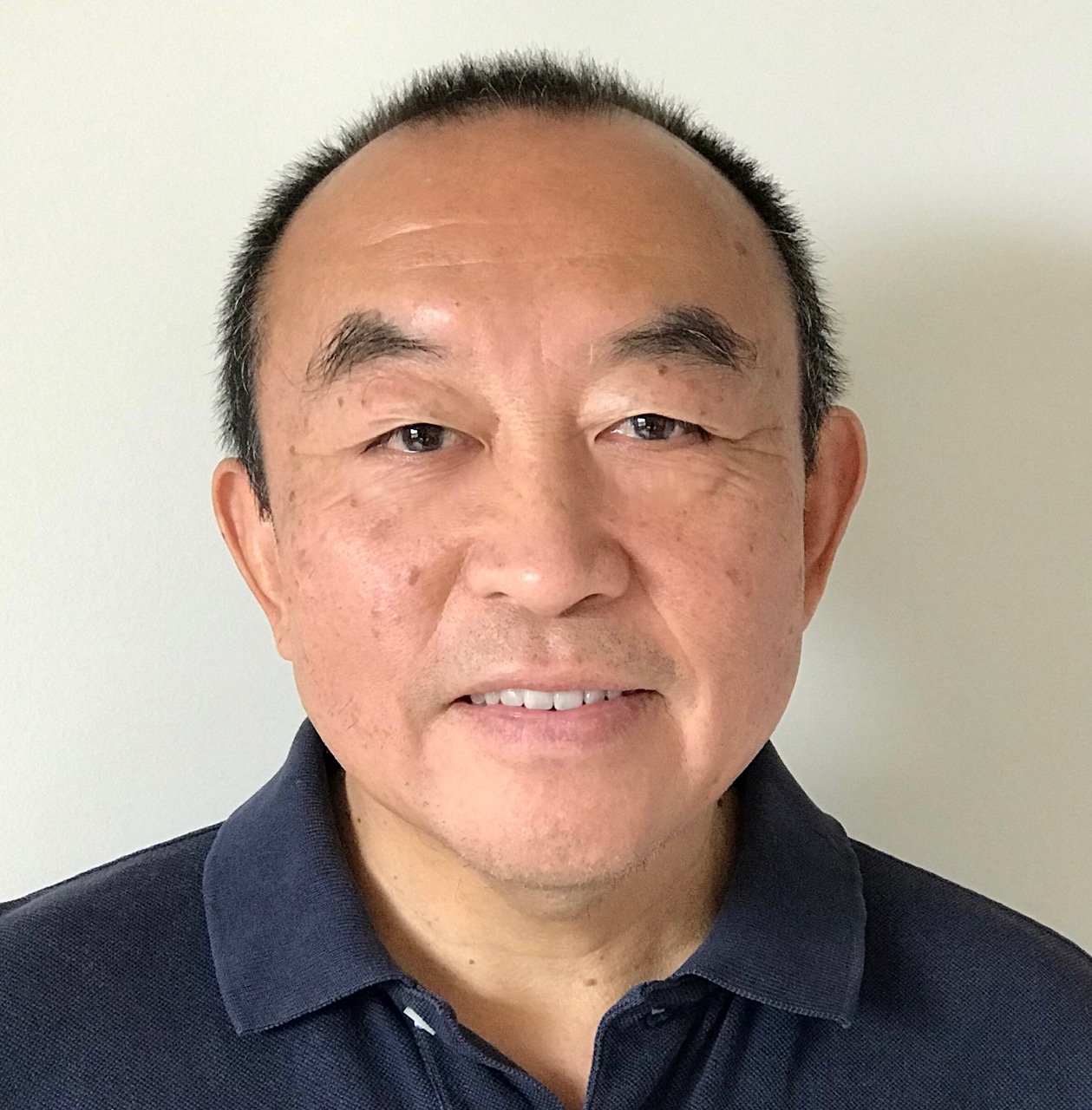
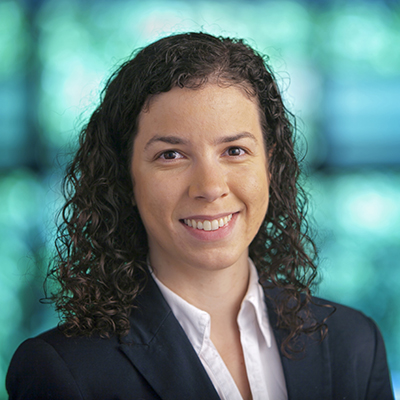
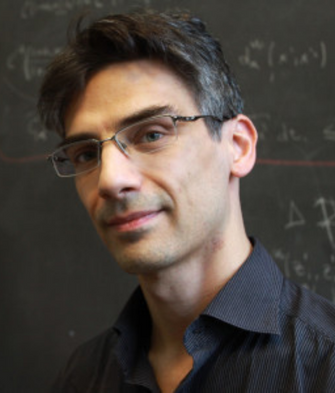
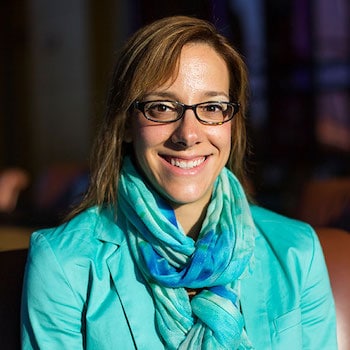
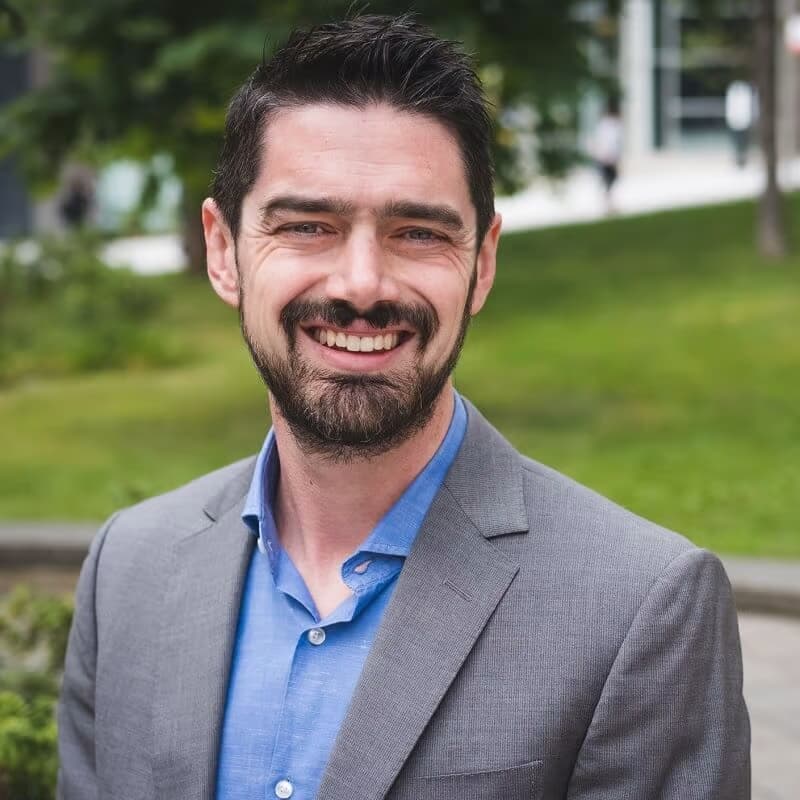
George Yin is a Professor in the Department of Mathematics at the University of Connecticut (since 2020). Previously, he held the position of Distinguished Professor at Wayne State University (2017–2020) and has been a faculty member there since 1988. He earned his Ph.D. in Applied Mathematics from Brown University in 1987, along with M.S. degrees in Applied Mathematics and Electrical Engineering, and a B.S. in Mathematics from the University of Delaware (1983). His research focuses on stochastic optimization, control theory, stochastic systems, and numerical methods, with applications to biology, finance, and engineering. He has held editorial roles at journals such as SIAM Journal on Control and Optimization and has received prestigious awards including SIAM Fellow (2015), IEEE Fellow (2002), and IFAC Fellow (2014–2017). Key funding includes continuous NSF support since 1989, grants from the Air Force Office of Scientific Research, and others. His work spans theoretical advancements in stochastic systems and practical applications in energy systems, control engineering, and data science. He has advised numerous students and maintains active collaborations internationally. Labs/Teams: Goldenson Center for Actuarial Research, Quantitative Learning Center. Grants: NSF, AFOSR, ARO, NSA, and multiple institutional grants.
Per Christian Hansen is a Professor at the Department of Applied Mathematics and Computer Science (DTU Compute), Technical University of Denmark (DTU), where he leads the Section for Scientific Computing. He is a VILLUM Investigator and heads the CUQI (Computational Uncertainty Quantification for Inverse Problems) research initiative, aiming to develop accessible computational platforms for uncertainty quantification in inverse problems. His expertise lies in numerical analysis, numerical linear algebra, iterative reconstruction methods, and computational inverse problems, with applications in tomography, signal analysis, and plasma physics. His research integrates theoretical analysis—such as perturbation and convergence analysis—with the development of robust, adaptive, and efficient computational methods. He has co-authored five books, over 100 scientific papers, and several widely used MATLAB software packages, including IR Tools and Regularization Tools. His recent work (2023–2025) emphasizes uncertainty quantification, Bayesian inversion, and high-dimensional tomography in fusion plasmas, reflecting a strong trend toward probabilistic and robust modeling in inverse problems. He is a SIAM Fellow (2015) for his contributions to computational methods for rank-deficient and discrete ill-posed problems and regularization techniques. His scientific leadership is evident in both theoretical advances and practical software implementations. He actively collaborates across disciplines, particularly in nuclear fusion and medical imaging, and continues to supervise PhD students and publish in top-tier journals such as Inverse Problems , SIAM Journal on Scientific Computing , and Nuclear Fusion . SIAM Fellow (2015) VILLUM Investigator He advises PhD and Master’s students in computational mathematics and inverse problems, and his research is supported by major grants, including the VILLUM Investigator award. He leads the CUQI team, which develops open-source tools for non-experts to apply uncertainty quantification in inverse problems. His lab focuses on creating modeling frameworks that bridge theory, computation, and real-world applications in materials science, imaging, and plasma diagnostics.
Professor Paul C. Bressloff holds the Chair in Applied Mathematics and Stochastic Processes at Imperial College London's Department of Mathematics within the Faculty of Natural Sciences. His research focuses on stochastic and non-equilibrium processes, particularly in molecular and cell biology, utilizing tools from probability theory, statistical physics, and dynamical systems. He authored a seminal textbook Stochastic Processes in Cell Biology (Springer), with a 2nd edition published in 2022. Previously, he led the graduate program in mathematical biology at the University of Utah from 2001 to 2023. Research interests include stochastic multi-particle systems, active particles, phase separation, and diffusion across semi-permeable interfaces. His work spans applications in neural field theory, cytoneme-mediated morphogenesis, and protein trafficking. He is affiliated with the Biomathematics Group and Mathematical Physics Group at Imperial. Recent articles explore stochastic resetting in search processes, narrow-capture problems, and hybrid models of switching diffusions. His advising includes over 20 graduate students, many now faculty in mathematical biology. His contributions bridge applied mathematics and biological systems, emphasizing interdisciplinary approaches to complex stochastic phenomena.
Bjorn Sandstede is the Alumni-Alumnae University Professor of Applied Mathematics at Brown University. His research focuses on applied dynamical systems, nonlinear waves, pattern formation, and computational biology. He holds a PhD from the University of Stuttgart and has held faculty positions at The Ohio State University and the University of Surrey before joining Brown in 2008. Sandstede has received numerous awards, including the SIAM J.D. Crawford Prize and the Royal Society Wolfson Research Merit Award. He served as Department Chair at Brown and directed the Data Science Initiative. His work involves interdisciplinary collaborations, such as modeling zebrafish stripe formation and developing computational tools like SCOT for single-cell data integration. Sandstede also mentors extensively, advising over 30 PhD students and postdoctoral researchers. He leads the NSF-funded Institute for Computational and Experimental Research in Mathematics (ICERM) and contributes to initiatives promoting diversity and inclusion in STEM. Education: PhD in Mathematics, University of Stuttgart Undergraduate Degree, University of Heidelberg Research Interests: Applied Dynamical Systems Nonlinear Waves and Pattern Formation Computational Biology Data Science PDE Analysis Awards and Recognition: Alfred P. Sloan Research Fellowship SIAM J.D. Crawford Prize Royal Society Wolfson Research Merit Award Elsevier Jack Hale Award Teaching Excellence Awards from Brown University Fellow of the AMS and SIAM Grants and Leadership: Principal Investigator of NSF grant establishing ICERM Director of Brown's Data Science Initiative Member of Research Advisory Board and Tenure Committees Labs and Teams: Leads the Sandstede Lab at Brown, focusing on computational biology and dynamical systems. Collaborates with the Volkening Lab on zebrafish pattern modeling and the Singh Lab on optimal transport methods.
Prof. Ruth Mugge is a Full Professor in Industrial Design Engineering at TU Delft, specializing in Responsible Marketing and Consumer Behavior within the Design, Organisation and Strategy department. Her research focuses on circular economy challenges, consumer decision-making around sustainable products, and strategies to extend product lifecycles. She leads major research projects like NWO VICI (slowing premature obsolescence) and NWO KIC (tackling fixophobia), and collaborates with the Circular Design Lab . She holds a PhD (dr.) and Engineering degree (ir.), and has been nominated for TU Delft's DINED Scientist of the Year Award (2024). Her work bridges academic research and public engagement, evidenced by media contributions in de Volkskrant and VPRO Tegenlicht , addressing topics like consumer electronics waste and repair culture. As an Elsevier columnist (2023–2025), she communicates sustainability insights to broader audiences. Key research areas include refurbished product adoption , reusable packaging systems , and design for longevity . Her FUN Scales framework assesses fundamental user needs in product interactions, while projects like 'Laptops at work' explore ICT circularity in organizations. She teaches courses on Sustainable Consumer Behavior and advises on policy strategies to combat 'throwaway culture'.
Dr. João Henriques is a Research Fellow of the Royal Academy of Engineering (RAEng) at the Visual Geometry Group (VGG), University of Oxford. His research focuses on advancing computer vision, deep learning, and robotics, particularly in areas like 3D scene understanding, reinforcement learning, and multi-agent systems. He is renowned for developing the KCF and SiameseFC visual trackers, which won the VOT Challenge and are deployed in consumer hardware. His work spans 3D geometry, self-supervised learning, causal inference, and neuro-symbolic systems. Key contributions include methods for egocentric video analysis, unsupervised reconstruction, and robot navigation. He leads the VGG's research on neural feature fields, hierarchical scene understanding, and real-time 3D perception. Recent publications emphasize 3D-aware segmentation, universal place recognition, and neuro-symbolic world modeling for robotics. His research often bridges theoretical guarantees with practical applications, such as medical imaging and autonomous systems. Dr. Henriques collaborates with industry and academia on AI ethics, friendly AI, and interpretable learning. His lab hosts DPhil students advancing creative AI applications, such as generative models for gameplay design and LLM evaluations in real-world editorial workflows.
Celia Reina is an Associate Professor in the Department of Mechanical Engineering and Applied Mechanics at the University of Pennsylvania’s School of Engineering and Applied Science (SEAS). Her research focuses on multiscale modeling of materials, bridging statistical mechanics, thermodynamics, and machine learning. She develops novel frameworks for predicting non-equilibrium material behavior using data-driven methods and uncertainty quantification. Her work emphasizes integrating computational tools like neural networks (Stat-PINNs, VONNs) with physical principles to model dissipative systems, phase transitions, and mesoscale dynamics. Key areas include coarse-graining techniques, epistemic uncertainty analysis, and predictive modeling of complex materials under dynamic loading. Recent publications highlight advancements in stochastic systems, resonant metamaterials, and the derivation of thermodynamic models from particle-level fluctuations. She leads efforts in experimental-simulation co-design to enhance predictive capabilities in materials science.
Dr. Marion Schrumpf is a Group Leader in the Soil Biogeochemistry research group at the Max Planck Institute for Biogeochemistry, affiliated with the Department of Biogeochemical Processes. Her work focuses on soil carbon dynamics, mineral-organic matter interactions, and climate change impacts on soil systems. Research areas: Soil biogeochemistry, carbon cycling, mineral-soil interactions, nutrient stoichiometry, microbial ecology, and climate modeling. Email: mschrumpf@... Phone: +49 3641 57-6182 Office: B2.015 Her recent publications address themes like mineral control over soil carbon stabilization, drought effects on soil processes, microbial stoichiometric adaptation, and the Jena Soil Model's role in simulating carbon-nutrient interactions. She leads efforts to disentangle the complex relationships between land use, mineralogy, and soil organic matter turnover across diverse ecosystems.
Jacopo De Simoi is a Professor in the Department of Mathematics at the University of Toronto, holding appointments at both the St. George and Mississauga campuses. His research focuses on dynamical systems, particularly hyperbolic dynamics, billiards, and rigidity phenomena. He has held roles at institutions like Université Paris Diderot and the University of Maryland, College Park, and currently teaches courses such as Game Theory and Real Analysis. His work explores the interplay between deterministic systems and stochastic processes, with contributions to topics like Fermi acceleration and KAM theory. Education: Ph.D. in Mathematics from the University of Maryland (2009), Diploma di Licenza in Physics from Scuola Normale Superiore (2005), and M.Sc./B.Sc. in Physics from Università di Pisa. Research interests include stochastic properties of dynamical systems, conservative dynamics, and the ergodic theory of billiards. He has published extensively on spectral rigidity, entropy rigidity, and applications of renormalization group techniques. His recent work addresses inverse problems in billiard geometry and the statistical behavior of fast-slow systems. Teaching includes undergraduate and graduate courses in analysis, calculus, and dynamical systems. Collaborations span institutions globally, and he serves on editorial boards for journals like Communications in Mathematical Physics.
Susan T. Lepri is a Professor in the Department of Climate and Space Sciences and Engineering at the University of Michigan's College of Engineering, where she serves as Director of the Space Physics Research Laboratory. Her work focuses on heliospheric physics, utilizing spacecraft data from missions like ACE, WIND, and Solar Orbiter to investigate solar wind origins and coronal mass ejections. Her educational background includes: Ph.D. in Atmospheric and Space Sciences, University of Michigan M.S. in Atmospheric and Space Sciences, University of Michigan B.S. in Physics, Astronomy and Astrophysics, University of Michigan Lepri's research centers on tracing charged particles in the heliosphere using heavy ion measurements to study solar wind sources, coronal mass ejection physics, and particle acceleration mechanisms. She develops space-based ion mass spectrometers for missions including the European Space Agency's Solar Orbiter (Heavy Ion Sensor) and the Interstellar Mapping and Acceleration Probe. Her work integrates statistical analysis of solar wind composition with magnetohydrodynamic model validation to unravel plasma behavior in space environments. Analysis of her 15 most recent publications (2015-2017) reveals consistent focus on solar wind composition dynamics, particularly charge state evolution and elemental fractionation. Key themes include magnetic reconnection signatures in slow solar wind formation, anomalous composition in depleted interplanetary coronal mass ejections, and solar wind charge exchange contributions to X-ray backgrounds. Her instrumentation work bridges observational gaps in inner heliospheric measurements. Major recognitions include: 2018 Claudia Joan Alexander Trailblazer Award (University of Michigan) 2012-2013 Kenneth M. Reese Outstanding Research Scientist Award 2008 JGR-Space Physics Excellence in Refereeing Citation NASA Graduate Fellowship (2001-2003) Lepri actively mentors through outreach programs including K-12 initiatives with the Michigan Space Grant Consortium and Detroit Area Pre-College Engineering Program. She has coordinated Rochester Adams High School STEAM fairs and elementary science outreach while developing educational content like MConnex videos. Her research is supported by NASA grants enabling instrument development for Solar Orbiter and IMAP missions, with collaborations spanning international space agencies and academic institutions. As Director of the Space Physics Research Laboratory, she leads teams developing next-generation space instrumentation, particularly ion mass spectrometers for heliospheric exploration. Current projects include the Heavy Ion Sensor for Solar Orbiter (measuring inner heliospheric composition) and innovative sensors for IMAP, advancing capabilities to trace solar wind sources and particle acceleration mechanisms.
Tasso J. Kaper is a Professor and Chair of the Department of Mathematics and Statistics at Boston University. He holds a Ph.D. in Applied Mathematics from the California Institute of Technology (1992). His research focuses on dynamical systems, nonlinear dynamics, reaction-diffusion equations, and mathematical biology. He is a Fellow of both the American Mathematical Society (AMS) and the Society for Industrial and Applied Mathematics (SIAM). He serves as Editor-in-Chief of Nonlinearity (UK Institute of Physics) and has held editorial roles for journals such as the SIAM Journal on Applied Dynamical Systems and Advances in Differential Equations. His work bridges applied mathematics and interdisciplinary fields, including fluid mechanics, climate modeling, and neuronal dynamics. Recent research highlights include studies on bifurcation phenomena, symmetry-breaking rhythms in coupled oscillators, and delayed Hopf bifurcations in reaction-diffusion systems. He has advised over 15 Ph.D. students, many of whom now hold academic and industry positions. Key awards include the AMS and SIAM fellowships, recognizing his contributions to dynamical systems theory and applications. His lab collaborates on topics ranging from glacial cycle modeling to chimera states in oscillator networks.
Hamish van der Ven is an Assistant Professor of Sustainable Business Management of Natural Resources at the University of British Columbia (UBC) within the Department of Wood Science and Faculty of Forestry. He leads the Business, Sustainability and Technology Lab and maintains affiliations with the Environmental Governance Lab at the University of Toronto, the Earth System Governance Project, and the United Nations Forum on Sustainability Standards. PhD in Political Science from University of Toronto Previous roles at McGill University and Yale University Research focuses on sustainable supply chain governance, eco-labeling, transnational environmental governance, corporate social responsibility, and digital technology impacts His recent work analyzes indirect climate impacts of generative AI and social media, transparency mechanisms in fast fashion, stakeholder influence on sustainability standards, and governance dynamics in buyer-driven supply chains. His 2019 book Beyond Greenwash? Explaining Credibility in Transnational Eco-Labeling (Oxford University Press) critiques eco-labeling efficacy. Van der Ven's research has been funded by grants including SSHRC Insight Grant (2025-2030), SSHRC Explore Grant (2023), SSHRC IDG Grant (2021-2023), FRQSC Collaborative Grant (2018-2021), and SSHRC Postdoctoral Fellowship (2016-2017). He examines both broad trends in global environmental governance and specific case studies across agriculture, aquaculture, and retail sectors.
Federico Bonetto is a Professor at the School of Mathematics , Georgia Institute of Technology. His research spans equilibrium and non-equilibrium statistical mechanics , chaotic systems , and mathematical physics . Research Themes : Fermi surfaces in interacting fermion systems Chaos and large deviations in billiards Fourier's law in anharmonic oscillators Game theory applications to economic models Teaching : Regular instructor of courses like Partial Differential Equations , Linear Algebra , and Probability & Statistics since 2002. Publications : Over 40 works since 1995, focusing on Kac models, thermostatted systems, and statistical mechanics of coupled maps. Recent articles (2019-2025) explore non-equilibrium entropy decay , fermionic criticality , and monetary policy experiments .
Daniel M. Liberzon is the Richard T. Cheng Professor in the Department of Electrical and Computer Engineering and a Professor at the Coordinated Science Laboratory at the University of Illinois Urbana-Champaign . He is also an affiliate professor in the Department of Mathematics . His career spans theoretical and applied research in control systems, with a focus on hybrid control, nonlinear systems, and communication constraints. Education : Ph.D. in Mathematics (Brandeis University, 1998), advised by Roger W. Brockett (Harvard). Undergraduate studies in Mathematics at Moscow State University (1989-1993). Research Interests include: Switched and Hybrid Systems with stability criteria and control design. Nonlinear Control Theory covering Lyapunov functions, ISS, and synchronization. Control with Limited Information focusing on quantized control and entropy-based methods. Uncertain/Stochastic Systems with applications in power grid synchronization and networked control. Article Trends show a focus on stability analysis, entropy metrics, and hybrid control algorithms across nonlinear and switched systems. Key themes include robust observer design, synchronization under disturbances, and quantized feedback. Scientific Awards : ACM SIGBED HSCC Best Paper (2019) IFAC Fellow (2016) IEEE Fellow (2013) AACC Donald P. Eckman Award (2007) NSF CAREER Award (2002) Advising and Grants : Collaborates with students and researchers like Sayan Mitra, Hyungbo Shim, and others. Leads NSF projects on Nonlinear Systems with Fast/Slow Dynamics and AFOSR MURI on Hybrid Dynamics . Labs and Teams : Directs the Decision and Control group at the Coordinated Science Lab, contributing to interdisciplinary projects in control theory and power systems.
Professor Asif Gill is Head of Discipline for Software Engineering at the School of Computer Science, University of Technology Sydney (UTS), where he was promoted to Professor of Computer Science in January 2024. He also serves as Director of the DigiSAS Research and Innovation Lab and is actively involved in the Global Big Data Technologies Centre at UTS. As a founder of both the DigiSAS Lab and the Future Generation Enterprise Architecture Community of Practice (FGEA CoP), he has established integrated teaching-research-engagement frameworks that translate academic research into practical applications while enhancing graduate employment opportunities. Professor Gill's research interests span Adaptive Enterprise Architecture , Agile Software Development , and Design Science Research & Innovation , with a particular focus on architecting large-scale data-intensive enterprise software systems. His work addresses challenges across academia, industry, government, and society, with significant contributions to AI systems architecture, digital identity management, and enterprise knowledge graphs. His applied research has resulted in numerous collaborations with organizations including the Reserve Bank of Australia, Revenue NSW, Capsifi, Data Zoo, and the NSW Department of Planning, Industry and Environment. His publication record includes 3 books and over 190 articles in major academic journals such as IEEE Transactions on Professional Communication, Information and Management, and Information Systems. His recent work demonstrates a consistent focus on cutting-edge topics in enterprise architecture, AI systems, and digital identity, with multiple publications appearing in 2024-2025. His research trajectory shows a clear evolution from foundational work in agile software development toward more sophisticated integration of AI, enterprise architecture, and data governance. Fellow of the Australian Computer Society (ACS) Fellow of DSE (ESCP Center for Design Science in Entrepreneurship) Senior Member IEEE Associate Editor, IEEE Transactions on Technology & Society Associate Editor, Springer Nature Discover Data journals Member, Data Sharing Committee, IFIP Technical Committee 8.1 Member, Standards Australia Software and Systems Engineering Committee IT-015 Professor Gill has successfully secured numerous research grants from 2019-2026, totaling significant funding for projects related to digital identity, enterprise architecture, and AI systems. His approach emphasizes industry-academia collaboration, with many projects involving direct partnerships with government agencies and industry organizations. He has supervised multiple PhD and Master's students through industry-sponsored scholarships and maintains active collaborations with researchers across multiple institutions. Leading the DigiSAS Research and Innovation Lab, Professor Gill has created an environment that bridges theoretical research with practical implementation. The lab focuses on developing frameworks and tools for adaptive enterprise architecture, with particular emphasis on AI-enabled systems, data governance, and digital identity solutions. His work on the Data Satellite Architecture represents a significant contribution to combating data pollution in federated digital ecosystems.