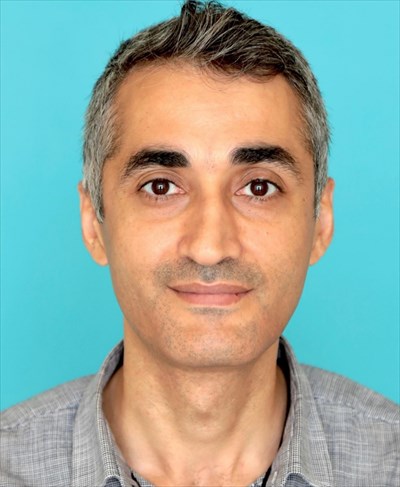
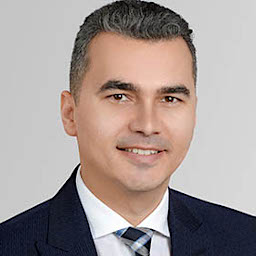
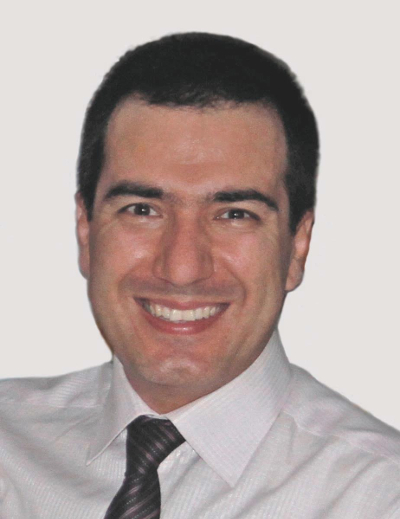
Gernot Grabmair is a Professor at the Automotive/Mobility Embedded Systems Department of the University of Applied Sciences Wels. He specializes in control systems, embedded systems, and motorcycle dynamics with a focus on safety margins, observer design, and nonlinear control. His research integrates theoretical control methodologies with practical applications in automotive and mechanical systems. Education: Not explicitly stated in the text. Key Projects: Led projects like 'BF-EmSense' (2018-2020) for embedded sensor platforms, 'FlashCheck' (2017-2020) for DC network analysis, and 'ecopowerdrive 2' (2014-2018) focused on fuel efficiency. His work emphasizes safety margins in motorcycle cornering, sliding-mode control, and robust observer concepts. Recent publications address tire lateral force estimation and nonlinear system observers. He received a High Quality Paper Award in 2024. Grants: Funded by Land OÖ, Climate and Energy Fund, and industry collaborations. Grabmair collaborates internationally on automotive control systems and embedded technologies. His lab focuses on toolchain development for optimal input design and parameter estimation in dynamical systems.
Giovanni Migliazza serves as a Research Fellow at the Department of Engineering Sciences and Methods, University of Modena and Reggio Emilia. His academic work focuses on advanced power electronics systems with particular emphasis on inverter topologies and motor drive applications. His primary research interests span Power Electronics , Electric Motor Drives , Renewable Energy Systems , and Control Systems . Notable contributions include innovative approaches to current source inverter (CSI) topologies, particularly the CSI7 architecture, with applications in photovoltaic integration and electric drives. His work addresses critical challenges in ground leakage current mitigation, thermal management, and efficiency optimization in power conversion systems. Analysis of his recent publications reveals strong focus on motor control strategies, including field-oriented control for hybrid stepper motors and sensorless techniques for permanent magnet synchronous machines. His research demonstrates consistent innovation in extending operational ranges of power converters while addressing practical implementation challenges in industrial applications. While no formal scientific awards are documented in available sources, his research output demonstrates significant contribution to power electronics engineering through numerous peer-reviewed publications and patent applications. His collaborative work spans multiple international research groups, with consistent contributions to IEEE transactions and conference proceedings. Migliazza maintains active research in wireless power transfer systems, particularly split-transformer architectures for compact inductive power transfer. His work bridges theoretical developments with experimental validation, as evidenced by frequent inclusion of hardware implementations and laboratory prototypes in his publications.
Judicaël Mohet is a researcher at the Namur Institute for Complex Systems, part of the University of Namur, specializing in mathematical control theory and systems engineering. His work focuses on state estimation for infinite-dimensional systems with applications in engineering domains. His research interests span several interconnected areas in mathematical systems theory: Development of state observers for distributed parameter systems Sliding mode control techniques for infinite-dimensional models Frequency domain analysis of Kalman filtering approaches Mathematical modeling of reaction-convection-diffusion processes Application of Hilbert space theory to control problems His recent publications demonstrate a strong focus on theoretical developments with practical applications, particularly in handling measurement errors and disturbances in complex physical systems. Mohet's work bridges abstract mathematical concepts with engineering implementations, showing particular expertise in handling partial differential equation models. Mohet has been active in the academic community, participating in the Benelux Meetings on Systems and Control in both 2022 and 2023. His research output shows consistent productivity with two peer-reviewed journal articles published in 2023 in reputable control theory journals. He completed his Master's thesis titled "Estimation par modes glissants de l'état d'un système de convection, diffusion et réaction linéaire" in June 2020 under the supervision of Professor Joseph Winkin. His thesis work laid the foundation for his subsequent research on sliding mode state estimation techniques.
Hansjörg Gisler is affiliated with the Department of Integrated Systems at ETH Zürich, contributing to the Professorship for Digital Integrated Circuits and Systems. His research focuses on interdisciplinary applications of machine learning, control systems, and medical informatics. Key areas include 3D object detection using advanced neural networks, optimization algorithms for convex-concave problems, and IoT-driven medical diagnostic systems. He has collaborated extensively with researchers on projects involving deep learning frameworks for adverse condition detection, semantic segmentation, and adaptive control systems. Publications span topics like parameter-separable optimization methods, proximal Lagrangian techniques, and weakly-supervised learning for 3D point cloud processing. His work bridges theoretical advancements in optimization with practical applications in healthcare monitoring and autonomous systems. Gisler's contributions to real-time sleep apnea diagnosis and muscle fatigue detection systems highlight his commitment to biomedical engineering innovations. Collaborations with institutions like ETH Zürich's Institute for Integrated Systems underscore his role in fostering cross-disciplinary research.
ABDULLAH GÖKYILDIRIM is an Associate Professor at the Department of Electromagnetic Fields and Microwave Technology within the Faculty of Engineering and Natural Sciences at Bandırma Onyedi Eylül University. He has held this position since 2024, following prior roles as Doctor Lecturer at Bingöl University (2011–2019). His research focuses on chaotic systems, fractional-order dynamics, memristive circuits, and secure communication, with applications in electronic circuit design and control systems. Key research areas include: Fractional-order chaotic systems and their applications in encryption and energy systems Memristive circuit design and nonlinear control techniques Chaotic synchronization and secure communication protocols Electronic implementations of chaotic systems using standard components His recent work emphasizes the practical realization of theoretical models through microcontroller-based implementations and sliding mode control. Statistical contributions include 21 articles (5% of the Electrical and Electronics Engineering Department's total) and 13 conference contributions (5% of departmental output). Student advising hours are held on Thursdays from 15:15 to 17:00. No scientific awards are explicitly listed in the provided data.
Haiping Du is a Professor at the School of Electrical, Computer and Telecommunications Engineering, University of Wollongong (Australia) since 2016. His research focuses on vibration control, vehicle dynamics, robust control theory, electric vehicles, robotics, and smart materials. He holds a PhD in Mechanical Design and Theory from Shanghai Jiao Tong University (2002) and has held postdoctoral positions at Imperial College London and the University of Hong Kong. He serves as Subject Editor for the Journal of the Franklin Institute and Associate Editor for IEEE Transactions on Industrial Electronics, among others. Education: PhD in Mechanical Design and Theory, Shanghai Jiao Tong University (2002) Research Fellow, University of Technology Sydney (2005–2009) Research Interests: His work integrates advanced control strategies with engineering applications, particularly in transportation systems and robotics. Key areas include magnetorheological systems, semi-active suspension control, and autonomous vehicle technologies. Awards: 2019 Andrew P. Sage Best Transactions Paper Award (IEEE) 2014 Shanghai Excellent PhD Thesis Award 2015 Vice Chancellor’s Interdisciplinary Research Excellence Award Australian Endeavour Fellowship (2012) Grants & Leadership: He leads major ARC-funded projects, including grants DP200100149 (electromagnetic suspension systems), LP160100132 (commercial vehicle seating solutions), and DP140100303 (X-by-Wire control systems). His research bridges academic innovation and industrial applications in automotive and robotics sectors. Labs & Teams: Active in collaborative research networks, his teams specialize in smart materials, vehicle dynamics, and advanced control systems. He supervises PhD candidates exploring topics like autonomous driving, robotics, and energy-efficient systems.
Dr. Aydin Azizi is a Senior Lecturer at Oxford Brookes University's School of Engineering, Computing and Mathematics. He holds a PhD in Mechanical Engineering and is certified as an instructor for the Siemens Mechatronic Certification Program. His expertise spans Control & Automation, Artificial Intelligence, and Simulation Techniques. Dr. Azizi has received notable awards, including Oman's National Research Award (2017) and the Royal Academy of Engineering's 'Exceptional Talent' recognition (2019). His research focuses on optimizing complex systems, with applications in robotics, mechatronics, and Industry 4.0. He has secured grants such as the 'Computer-Based Analysis of the Stochastic Stability of Mechanic Structures' (ORC/2015–2019) and led the 'Automated Guided Vehicle for Agricultural Purposes' project (2017–2018). Dr. Azizi also teaches as a visiting professor in Control & Automation at the German University of Technology in Oman and Simulation Techniques at Cyprus International University. He leads the Autonomous Driving and Intelligent Transport research group at Oxford Brookes.
Di Zhang is affiliated with Guangdong Medical College's School of Information Engineering and holds a PhD in Synthetic Aperture Radar Image Interpretation from the University of Hamburg (2022). Their research focuses on interdisciplinary fields such as deep learning, remote sensing, optimization algorithms, and their applications in medical imaging, environmental science, and education technology. They have published extensively in top-tier journals like IEEE Access, IEEE Transactions on Pattern Analysis and Machine Intelligence, and Remote Sensing. Key affiliations: University of Hamburg (PhD), Guangdong Medical College, and others listed in disambiguation entries. Research interests include AI-driven medical diagnostics, SAR image analysis, IoT data management, and educational assessment systems. Recent work emphasizes deep learning frameworks for image processing, algorithm optimization, and multimodal data fusion. Publications span diverse topics such as migraine diagnosis via radiomics, social support in online learning, and robust visual SLAM systems. Their work bridges theoretical advancements with practical applications in healthcare, robotics, and environmental monitoring.
Dr. Kianoush Emami is a Lecturer in the Department of Electrical Engineering at the School of Engineering and Technology, Central Queensland University (CQU). He holds a PhD in Power Systems from the University of Western Australia (2016) and has professional engineering experience in EPC projects across Mining, Oil & Gas, and Power Systems as an Electrical and Instrumentation (EI&C) engineer. His research focuses on Power Systems Dynamics, Smart Grids, Renewable Energy Integration, and Application of Machine Learning in Energy Systems. Education: PhD in Power Systems, University of Western Australia (2016) Master of Science in Electrical Engineering, Ferdowsi University of Mashhad, Iran (2002) Bachelor of Science in Electrical Engineering, Ferdowsi University of Mashhad, Iran (1999) Research Interests: Dr. Emami’s work centers on sustainable energy systems, including microgrid energy management, hybrid renewable energy solutions, and reducing carbon emissions. He specializes in load forecasting, battery energy storage systems, and the integration of solar/wind resources into smart grids. His expertise also extends to advanced control strategies for power systems, such as sliding mode control and deep learning-based solutions for grid stability. Publications: His recent work explores topics like hydrogen-based microgrids, hybrid renewable energy optimization, and forced oscillation mitigation in power systems. These studies highlight a trend toward sustainable energy solutions and data-driven control methodologies. Awards: Australian Postgraduate Award Supervision & Teaching: Currently available to supervise PhD candidates, Dr. Emami co-supervises research on renewable energy technology development in Far North Queensland. He teaches units such as Electrical Machines and Drives Applications and Engineering Futures at CQU. Affiliations: Active member of the Hydrogen Renewable Energies Centre and Centre for Intelligent Systems at CQU. Chartered Member of the Institution of Engineers Australia and Senior Member of IEEE.
Dr. Felicity McCormack is a Senior Lecturer at Monash University's School of Earth Atmosphere and Environment. She is an ARC DECRA Fellow in Antarctic Research and a Chief Investigator on the ARC Special Research Initiative Securing Antarctica's Environmental Future. Her work focuses on predicting Antarctica's contribution to sea level rise using ice sheet models, geophysical observations, and theory. She holds a PhD in Quantitative Marine Sciences from the University of Tasmania (2015) and a Fulbright Postdoctoral Fellowship (2019). Research interests include Antarctic ice dynamics, climate variability, and subglacial hydrology. Key projects include the ACCESS-NRI Ice Sheet Modelling team (2025–2028) and From creeping to sliding: controls on Antarctic Ice Sheet flow processes (2021–2026). Over 30 peer-reviewed articles since 2013 explore topics like El Niño influences, Southern Annular Mode impacts, and glacier stability. Awards: ARC DECRA Fellowship, Fulbright Postdoctoral Fellowship Grants/Projects: Leads two major Antarctic research initiatives funded by ARC Labs/Teams: Part of the ACCESS-NRI collaboration and international RINGS project
Lasse Schmidt is an Associate Professor at AAU Energy, part of the Faculty of Engineering and Science at Aalborg University. He holds a PhD in Robust Control of Industrial Hydraulic Cylinder Drives (2014), with expertise in electro-hydraulic drive networks and fluid power systems. His research focuses on energy-efficient control strategies for hydraulic drives in mobile machinery and industrial systems, contributing to UN Sustainable Development Goals through sustainable energy solutions. Education: M.Sc. in Mechatronics (2008), PhD from Aalborg University (2014). Professional experience includes roles at Bosch Rexroth and postdoctoral research at AAU Energy. He has supervised multiple PhD projects, including work on variable-speed drive networks and injection moulding process control. Research interests include hydraulic drive design, sliding mode control, and energy conservation. His work has resulted in over 70 peer-reviewed publications and the 2014 Best Paper Award at FFPS. Current projects involve energy-efficient excavator systems, predictive maintenance for hydraulic drives, and adaptive control for injection moulding machines. Key collaborations include work with Robert Bosch Foundation and industry partners. His lab focuses on developing novel electro-hydraulic technologies with applications in construction and manufacturing sectors.
Meysar Zeinali-Ghayeshghorshagh is an Associate Professor at Laurentian University's Bharti School of Engineering & Computat. He holds a BSc in Mechanical Engineering from the University of Tehran, an MSc in Aerospace Engineering from Sharif University of Technology, and a PhD in Mechanical/Mechatronics Engineering from Queen's University. He completed postdoctoral research at the University of Waterloo and is a licensed Professional Engineer in Ontario. His research focuses on AI-based control systems , robotics , and adaptive control methodologies . Key areas include: Adaptive sliding mode control for robotic systems Deep learning and neural network applications in control systems Human-robot interaction and object recognition Laser additive manufacturing process control High-performance hydraulic systems design Publication analysis shows consistent focus on robotics control , adaptive systems , and AI applications in engineering , with recent work emphasizing deep learning integration with traditional control methods. Achievements include: Best Paper Competition Finalist at iFUZZY 2017 Top 25 most read article in Journal of Mechanism and Machine Theory (2009-2010) He currently supervises graduate students and collaborates with the Automated Laser Fabrication research group at the University of Waterloo.
Assoc. Prof. Dr. Umut TİLKİ is a faculty member at the Faculty of Engineering and Natural Sciences of Middle East Technical University, specializing in Electrical and Electronics Engineering . His research spans robotics, control systems, and intelligent control mechanisms, with significant contributions to fault-tolerant control systems and autonomous vehicle navigation. Doctorate: Electrical and Electronics Engineering, Middle East Technical University (2012) Licence: Electronics and Communications Engineering, Süleyman Demirel University (2001) Research Focus: Robotics and control systems, particularly in: Fault-tolerant control systems for mobile robots and UAVs Sliding mode control and adaptive algorithms Autonomous underwater vehicle navigation Human gesture imitation via fluid swarm modeling Recent Publications (2021-2025): Focus on fault-tolerant control mechanisms for mobile robots and UAVs, trajectory tracking algorithms with sliding mode control, and fluid-based gesture imitation systems. His work demonstrates strong integration of theoretical control systems (e.g., adaptive algorithms, backstepping techniques) with practical applications in aerospace and robotics. Teaching Responsibilities: Covers academic research methods, circuit analysis, control systems, robot dynamics, digital control, and specialized field courses at both Master's and Doctorate levels.
Jean-Jacques Slotine is a Professor at the Massachusetts Institute of Technology (MIT), holding appointments in the departments of Mechanical Engineering, Information Sciences, and Brain Sciences. His research focuses on dynamical systems, control theory, robotics, and computational neuroscience. He is renowned for contributions to adaptive control, nonlinear systems, and contraction theory. Key research interests include the analysis and control of complex systems, with applications in robotics, neural networks, and biological systems. His work combines theoretical rigor with practical implementations, emphasizing stability and robustness in dynamic environments. Recent articles explore topics such as associative memory in neurons, obstacle avoidance in robotics, and quantum dynamics using classical action principles. His publications demonstrate interdisciplinary collaboration across engineering, neuroscience, and physics. No specific student advisees or scientific awards are listed in the provided texts. Active research continues, with a focus on advancing control methodologies for autonomous systems and understanding neural dynamics.
Mark Bedillion is an Associate Teaching Professor in the Department of Mechanical Engineering at Carnegie Mellon University (CMU), where he has been a faculty member since fall 2016. Prior to this, he served as an Associate Professor at the South Dakota School of Mines and Technology from 2011 to 2016. He earned all his degrees—B.S. (1998), M.S. (2001), and Ph.D. (2005)—in Mechanical Engineering from CMU. His industrial experience includes over seven years at Seagate Technology, focusing on servo-control systems for data storage. Current Position: Associate Teaching Professor, CMU Previous Position: Associate Professor, South Dakota School of Mines and Technology Education: All degrees from CMU in Mechanical Engineering Industry Experience: Seagate Technology (7+ years) His teaching focuses on dynamic systems, control theory, and mechatronics at both undergraduate and graduate levels. He has taught courses such as Multivariable Linear Control, Feedback Control Systems, and Electromechanical Systems Design. His research spans two main domains: (1) robotics and control, particularly distributed manipulation and brake-actuated mobile robots, and (2) STEM education, with a strong emphasis on systems thinking, systems engineering, and virtual laboratory development. His educational research aims to improve student learning outcomes through innovative curriculum design and assessment tools. The recent publications highlight a clear trend: a growing emphasis on educational research, particularly in systems thinking and systems engineering pedagogy. While earlier work focused on control algorithms and mechatronic design for robotics, the past five years have seen a significant shift toward developing and assessing educational tools, online modules, and inclusive teaching practices. This reflects his dual role as both a technical researcher and an educational innovator. Provost’s Inclusive Teaching Fellow, Carnegie Mellon University Mark Bedillion advises graduate students and is actively involved in curriculum development and educational grants, particularly in engineering education reform. He leads projects on virtual laboratories, systems thinking assessments, and outreach to underrepresented youth. His lab work includes experimental platforms for distributed manipulation and brake-actuated robots. He is also engaged in collaborative research on STEM education across multiple institutions, focusing on benchmarking and improving mechanical engineering curricula.