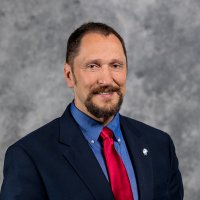
Robert Thomas Knight is a Professor of Psychology and Neuroscience at the University of California, Berkeley. He is affiliated with the Knight Cognitive Neuroscience Lab , focusing on prefrontal cortex function, attention, memory, and neural mechanisms in human cognition. His work combines electrophysiological recordings (ECoG/sEEG), behavioral studies, and clinical neurology to explore goal-directed behavior and brain-machine interfaces. Education: M.D., Northwestern University Research Interests: Neural basis of attention and memory Intracranial recordings in neurosurgical patients Role of prefrontal cortex in social and cognitive behavior Development of neural prosthetics for motor and language disorders Current Projects: Investigating prefrontal cortex connectivity in human evolution High-frequency neural activity (HFA) and its role in behavior Decoding neural signals for brain-machine interfaces Advising/Grants: No specific students or grants listed Labs/Teams: Knight Cognitive Neuroscience Lab
Dr. Daria Peleg-Raibstein is a Lecturer at ETH Zürich's Department of Health Sciences and Technology, affiliated with the Institut für Neurowissenschaften (Institute for Neuroscience). Her research focuses on how environmental and nutritional inputs, particularly maternal overnutrition, influence cognitive and behavioral outcomes across generations. Her independent research group has been continuously funded since 2012, investigating topics such as intergenerational effects of diet on reward systems, stress-linked cognition, and hypothalamic regulation of memory processes. Research Interests: Peleg-Raibstein’s work bridges nutritional science, neuroscience, and psychology. Key areas include the neurobiological consequences of maternal dietary choices, the role of hypothalamic circuits (e.g., orexin and MCH neurons) in memory and metabolic control, and the interplay between environmental inputs and long-term cognitive health. Her lab explores how nutritional exposures during critical developmental periods reprogram brain function, leading to risks of addiction, metabolic disorders, and cognitive decline. Recent Publications: Her 2025 review in Neuropharmacology explores hypothalamic control of memory phases and types, while her 2025 Nutrients paper highlights how maternal overnutrition impairs spatial memory in offspring. Ongoing projects include NIH-funded studies on reward systems and ETH-funded work on stress resilience mechanisms. Grants & Funding: Current grants include SNF support for reward system research and ETH funding for nutritional programming of Alzheimer’s risk. Her group maintains 1-2 postdocs and 1-3 PhD students, emphasizing translational neuroscience. Labs/Teams: Leads an independent research group at ETH Zürich, focusing on nutritional neuroscience and neuroendocrine signaling. Collaborates with institutions like the Burdakov Lab on orexin neuron studies.
Stewart Boogert is a Professor of Accelerator Physics at the University of Manchester’s Department of Physics & Astronomy. He currently directs the Cockcroft Institute for Accelerator Science at Daresbury Laboratory, a collaboration involving Lancaster, Liverpool, Manchester, Strathclyde University, and STFC ASTeC. Previously, he held roles as Professor of Accelerator Science at Royal Holloway University of London, Head of Physics Department, and Executive Dean for Engineering, Physical and Mathematical Sciences. His research focuses on accelerator physics (including Geant4 simulations and electron beam instrumentation) and particle physics (LUXE experiment, non-linear quantum electro-dynamics). He is a member of IEEE and contributes to UN Sustainable Development Goals through his work. He also holds a concurrent professorship at Lancaster University since April 2023. Education: MSci Physics from Imperial College London and DPhil in Particle Physics from the University of Oxford (St. Catherines College). His expertise spans accelerator design, beam dynamics, and high-energy physics applications such as radiotherapy research. He leads collaborations in international projects like the Higgs factory and LHC forward physics facilities. Research outputs include advancements in tracking codes (BDSIM), Higgs factory designs, and CLARA facility applications. His work bridges fundamental physics with applied technologies like medical accelerator systems. Awards and grants are not explicitly listed, but his extensive collaborative networks and institutional roles reflect significant recognition in his field.
Dr. Daniel Cox is a Senior Lecturer in Cognitive Neuroscience and Neuroimaging at the University of Manchester's Division of Neuroscience and Experimental Psychology. He specializes in investigating healthy ageing's impact on cognitive and neuroanatomical changes, with a focus on quantitative MRI and computational neuroanatomy. He serves as Deputy Director for the MSc in Neuroimaging for Clinical and Cognitive Neuroscience, teaching advanced neuroimaging techniques and supervising students across multiple programs. Cox holds professional certifications including Chartered Psychologist (British Psychological Society) and Senior Fellow of the Higher Education Academy. Education: PhD in Cognitive Neuroscience, University of Manchester (2013) MRes in Psychological Research Methods (Cognitive Neuroscience), Aston University (2008) BSc in Psychological Science (Hons), University of Hertfordshire (2006) Research Interests: His work explores MRI-based neuroanatomical changes in ageing, sleep disorders (e.g., obstructive sleep apnea), and recognition memory. Notable methods include multi-modal MRI analysis, stereological measurements, and neuroimaging experimental design. Recent studies investigate hypoxia effects in sleep apnea patients and white-matter structural alterations in paediatric populations. Publications: Recent articles focus on cortical thinning in sleep apnea, reproducible scholarship pedagogy, and grey matter changes. Key themes include neuroimaging biomarkers for age-related decline, sleep disorder pathophysiology, and open science practices. Awards: Experimental Psychology Society Grindley Grant (2012) Guarantors of Brain Travel Grant (2010, 2018) ISMRM Educational Stipend (2016) Collaborations: Active partnerships with researchers including Prof. Daniela Montaldi (Manchester), Prof. Geoff Parker (UCL), and Dr. Alex Kafkas. His work contributes to UN Sustainable Development Goals related to health and well-being.
Shannon Heald is an Assistant Instructional Professor in the Department of Psychology and The College at the University of Chicago. She specializes in cognitive psychology and neuroscience, focusing on how past experiences and goals guide attention, influencing perception, learning, and problem-solving. Her research integrates methodologies from cognitive psychology and neuroscience to explore perceptual and cognitive mechanisms. She earned her B.A. (2002), M.A. (2005), and Ph.D. (2012) in psychology at the University of Chicago, followed by a postdoctoral appointment there. She is a member of the Attention, Perception, & Experience Lab led by Dr. Howard Nusbaum and holds fellowships with the Psychonomic Society and the Open User Innovation Society. Dr. Heald's teaching includes courses such as Concepts and Categories, Introduction to Statistical Concepts and Methods, and The Psychology of Problem-Solving. Her work bridges theoretical and applied research, examining topics like absolute pitch, perceptual learning, and the neural correlates of decision-making. Recent studies highlight her exploration of how sleep consolidates perceptual learning and the role of auditory working memory in pitch recognition. Her research often emphasizes cross-modal interactions and contextual influences on cognitive processes. Research Themes: Attention & Perception, Auditory Learning, Cognitive Neuroscience, Problem-Solving Key Contributions: Demonstrated generalized learning effects through sleep, explored absolute pitch acquisition in adults, and investigated talker normalization in speech perception. Her awards reflect recognition for advancing cognitive science, particularly in perceptual and auditory domains. Dr. Heald’s interdisciplinary approach spans psychology, neuroscience, and education, with ongoing work on neural mechanisms underlying decision-making and market outcomes.
Maria Giulia Preti is a Senior Scientist at MIPLAB, Research Staff Scientist at the CIBM Center for Biomedical Imaging (Switzerland), and a Lecturer (Maître-Assistante) at the University of Geneva. She holds a PhD in Bioengineering from Politecnico di Milano (2013) and completed postdoctoral research in Dimitri Van De Ville’s group at EPFL. Her work focuses on integrating neuroimaging techniques (fMRI, DTI, EEG, fNIRS) with graph signal processing to study brain function-structure relationships in health and disease. Key clinical applications include Alzheimer’s disease, epilepsy, multiple sclerosis, and stroke. She has pioneered methods like groupwise fMRI-guided tractography to study neurodegenerative pathologies. Education: PhD in Bioengineering (2013), Politecnico di Milano MSc in Biomedical Engineering (2009), Politecnico di Milano BSc in Biomedical Engineering (2007), Politecnico di Milano Research emphasizes multimodal neuroimaging integration and computational neuroscience. Notable achievements include developing connectome embedding techniques and demonstrating brain fingerprinting via spectral signatures. She received the Progetto Rocca fellowship (2011) supporting her work at MIT/Harvard Medical School. Ongoing projects investigate structure-function coupling dynamics, drowsiness markers, and DBS mechanisms in depression. Labs/Teams: MIP:Lab (part of the Van De Ville group at EPFL and University of Geneva collaborations).
Carrie E. Bearden is a Professor-in-Residence in the Department of Psychiatry and Biobehavioral Sciences at the University of California Los Angeles (UCLA), David Geffen School of Medicine. She directs the Bearden Lab and is affiliated with the UCLA Integrative Center for Neurogenetics. Dr. Bearden is a leading researcher in neurodevelopmental disorders, particularly focusing on psychosis spectrum disorders and genetic conditions like 22q11.2 deletion syndrome. Dr. Bearden earned her BA in Psychology from UC Berkeley and her PhD in Clinical Psychology from the University of Pennsylvania. Her educational background has positioned her at the forefront of translational research bridging psychological science with neurobiological mechanisms. Her research interests span neurodevelopment, neurogenetic disorders, brain development, and psychosis spectrum disorders. Dr. Bearden's work particularly focuses on understanding the neural and genetic mechanisms underlying psychosis risk, with special attention to 22q11.2 deletion syndrome as a model for studying the developmental trajectory of schizophrenia. Her research employs multimodal approaches including neuroimaging, genetic analysis, and longitudinal clinical assessment to identify early biomarkers of psychosis risk. Analysis of Dr. Bearden's recent publications (2024-2025) reveals a strong focus on the Accelerating Medicines Partnership® Schizophrenia Program, where she examines digital health technologies, biomarkers, neuroimaging correlates, and clinical assessment tools for early psychosis detection. Her work spans multiple disciplines including neuroscience, genetics, psychiatry, and data science, with particular emphasis on understanding how genetic variations influence brain structure and function in relation to psychosis risk. Dreem Coup de Coeur Award, Sleep Research Society, 2022 George N. Thompson Award for Distinguished Service, Society of Biological Psychiatry (team award), 2022 Brain Research Institute HW Magoun Distinguished Lecture, UCLA, 2022 Clarivate Analytics Most highly cited researchers (top 1%), 2021 100 in 100 Honoree: 100 Trailblazing Women of UCLA Health, 2020 Fellow of the Association for Psychological Science, 2019 Joel Elkes Research Award, American College of Neuropsychopharmacology, 2017 Fellow, American College of Neuropsychopharmacology, 2016 Joanne and George Miller Family Endowed Term Chair, UCLA, 2015-2018 Dr. Bearden has been instrumental in large-scale collaborative research initiatives, particularly serving as a key investigator in the North American Prodrome Longitudinal Study (NAPLS) consortium and the Accelerating Medicines Partnership® Schizophrenia Program. Her work has been supported by numerous NIH grants and she has made significant contributions to understanding the developmental trajectories of psychosis risk. She actively mentors junior researchers and collaborates with international teams to advance early intervention strategies for psychosis. Dr. Bearden leads the Bearden Lab at UCLA, which focuses on neurogenetic disorders and psychosis risk. She is also affiliated with the UCLA Integrative Center for Neurogenetics, where her team employs advanced neuroimaging and genetic techniques to study brain development in high-risk populations. Her laboratory work bridges basic science with clinical applications, aiming to develop early intervention strategies for individuals at risk of developing psychotic disorders.
Peyman Golshani is a Professor-in-Residence in the Department of Neurology at the University of California Los Angeles (UCLA). His research focuses on hippocampal and cortical neural dynamics, particularly in the context of autism, epilepsy, and other neurological disorders. Golshani develops advanced neuroimaging technologies like miniature microscopes and voltage indicators for in vivo neural activity monitoring. Research Trends : His recent publications emphasize calcium/voltage imaging techniques hippocampal-prefrontal circuitry social and cognitive behavior in mouse models epilepsy-related neural oscillations 15q duplication syndrome biomarkers Grants : Golshani leads NIH-funded projects including U01NS122124 (Hippocampal affiliation dynamics) I01BX005202 (Network plasticity in epileptogenesis) UF1NS107668 (Miniature microscopes)
Kaz Brandt is an Associate Professor in the School of Psychology at the University of Roehampton, affiliated with the Centre for Research in Psychological Wellbeing. She holds qualifications including a PhD from the University of Bristol and is a Chartered Psychologist and Senior Fellow of the Higher Education Academy. Her research focuses on memory processes, aging, mental health, and neuropsychological interventions. Education: PhD in Psychology (Bristol University), MA in Psychology (St Andrews University), Postgraduate Certificate in Teaching and Learning (University of Keele), and a Senior Fellowship from the Higher Education Academy. Professional roles include Deputy Chair of the British Psychological Society Research Board and External Examiner for Leeds University's MSc in Cognitive Development and Disorders. Research Interests: Her work explores cognitive interventions for memory improvement in older adults (e.g., tDCS studies), mental health outcomes of dietary choices (vegan/vegetarian populations), and neurobiological effects of cannabis/tobacco use. Recently funded projects include a British Academy grant for tDCS-based memory enhancement and NIHR-funded mental health interventions. Awards: Recognitions include Associate Fellowships from the British Psychological Society and British Neuropsychological Society, plus multiple grant awards from UKRI, NIHR, and the British Academy. Key contributions include neuroimaging studies of substance abuse and pioneering puzzle therapy for dementia patients. Supervision & Grants: Active in supervising PhD students and leading interdisciplinary projects. Notable collaborations involve studies on hyperthermia's cognitive effects and dietary identity's mental health impacts. She has presented at over 30 academic conferences and published extensively in journals like Neuroscience & Biobehavioral Reviews and Counselling and Psychotherapy Research . Labs/Teams: Coordinates research teams focused on aging populations, cognitive neuroscience, and neuropsychopharmacology. Current initiatives include exploring the mnemonic time-travel effect and developing cognitive tools for mental wellness.
Sarah J Liva, PhD, RN, is an Assistant Professor at Trinity Western University's School of Nursing, where she joined in Fall 2018. She teaches courses including Evidence-informed practice (NURS 224), Maternal child Health (NURS 323), Evidence synthesis (NURS 520), Nursing Inquiry 1 (NURS 530), and Knowledge Translation (NURS 692/693). Her educational background includes a PhD from UBC (2018), MSN from UBC (2011), and BScN from UBC (2005). She also attended the Canadian Obesity Network Obesity Summer School in 2015. Dr. Liva's research focuses on qualitative inquiry, grounded theory, health decision-making, perinatal health vulnerabilities, postpartum transition, and physical activity health promotion. Her clinical background is in labour and delivery and family practice. She has conducted research on caregiving impacts on health outcomes and patient-centered measurement data application in healthcare practice. Her scholarly work shows consistent focus on women's health, maternal-child nursing, qualitative research methods, and knowledge translation. Recent publications demonstrate increasing engagement with cardiovascular health in women, contraceptive choices, and implementation science approaches to patient-centered care. Advancement of Nursing Knowledge Award, TWU (2021-2023) Laura Bassi Scholarship (Junior Academic) (2019) Margaret Duncan Memorial Scholarship (2015) Better Days, Better Nights Training Award, CIHR (2014) Fellowship in Transdisciplinary Primary Health Care Research Award (2014) Multiple Graduate Student Awards from UBC (2011-2013) Dr. Liva serves as a Co-investigator on multiple research grants, including a TWU Internal Grant examining the impact of caregiving on health outcomes of community-dwelling care recipient-caregiver dyads with comorbidity (2021-2023), and a BC SUPPORT Unit project on healthcare providers' application of patient-centered measurement data in practice (2019-2021). She is affiliated with the Women's Health Research Institute as an Affiliate, and is a member of the Canadian Alliance of Nurse Educators using Simulation, Obesity Canada, Canadian Fitness Professional Association, and the British Columbia College of Nurses and Midwives.
Dr. Roger Varela is a Postdoctoral Research Fellow at the Queensland Brain Institute (University of Queensland), specializing in neuroscientific research with a focus on psychiatric disorders. His work primarily investigates epigenetic mechanisms, neuroinflammation, and behavioral models of bipolar disorder and schizophrenia. He employs animal models to study the effects of environmental and pharmacological interventions on neurotrophic factors, oxidative stress, and neurochemical pathways. Key research areas include: 1) Development and validation of animal models for mania and depression; 2) Epigenetic regulation (e.g., histone deacetylase inhibition) as therapeutic targets; 3) Neuroinflammatory processes in mood disorders; and 4) Translational studies linking molecular changes to behavioral outcomes. His interdisciplinary approach integrates pharmacology, molecular biology, and behavioral neuroscience. Recent studies explore the anti-manic effects of sodium butyrate, lithium, and deep brain stimulation, alongside investigating trauma-induced epigenetic changes in psychiatric conditions. Collaborative efforts aim to bridge basic science discoveries with clinical applications in mental health treatment. Dr. Varela's work has contributed significantly to understanding disease mechanisms through over 40 peer-reviewed publications since 2011. His research emphasizes translational potential, with implications for developing novel mood stabilizers and personalized medicine strategies.
Dr. Vincent P. Clark is a Professor of Psychology and Director of the Psychology Clinical Neuroscience Center (PCNC) at the University of New Mexico (UNM). He holds additional roles as Professor of Translational Neuroscience at the Mind Research Network and Founding Chair of the Brain Stimulation and Imaging Meeting. His research focuses on developing neuroscience-based methods to address brain-related disorders and enhance cognitive function through neuromodulation techniques like tDCS, tACS, and transcranial ultrasound. He also serves on editorial boards for journals such as Human Brain Mapping and Brain Stimulation . Education: Ph.D., University of California, San Diego. Research Interests: Brain stimulation for neuroenhancement, understanding cognitive processes via neuroimaging (MRI, fMRI, EEG), and investigating neuromodulation effects on conditions like dementia, addiction, chronic pain, and schizophrenia. His work emphasizes closed-loop systems and multimodal approaches to optimize interventions. Recent Articles Highlight: Explores closed-loop tACS for sleep-dependent memory improvement, functional brain differences in substance use disorder relapse, and neuromodulation mechanisms. His studies bridge basic science and clinical applications, emphasizing translational outcomes. Lab Affiliations: PCNC and Mind Research Network, with a focus on integrating neuroimaging and stimulation techniques. He mentors students interested in cognitive neuroscience and neuromodulation.
Assaf Oshri is a Professor and Director of the Georgia Center for Developmental Science at the University of Georgia's College of Family and Consumer Sciences. He holds affiliations with the Integrated Life Science Program (Neuroscience group) and the Psychology Department. His research focuses on youth development, resilience, and risk behaviors using multi-method approaches (neuroimaging, psychophysiology, surveys). He directs the STAR Workgroup at the Owen Institute Behavioral Research (OIBR) and has led studies on early-life adversity, stress, and decision-making. Education: B.A. in Behavioral Sciences, Ben-Gurion University (2000) Ph.D. in Developmental Psychology, Florida International University (2009) Postdoctoral Fellowship in Developmental Psychopathology, University of Rochester (2011) Research Interests: Developmental psychopathology, resilience mechanisms, multi-level research (neural to societal), and the hormesis model. He investigates how early adversity influences adolescent risk behaviors (e.g., substance use) and resilience through biopsychosocial pathways. Key Contributions: Pioneered the hormesis model linking moderate stress to resilience. Published extensively on child maltreatment, socioeconomic hardship, and neural correlates of decision-making. His work informs interventions to promote resilience in vulnerable youth. Awards: Early Career Faculty Research Award (FACS, 2015) NIH-NIDA K01 Career Award ($1M, 2018–2023) NIH-NIDA R01 Grants (2023–2028) Service & Leadership: Associate Editor of Journal of Research on Adolescence ; editorial board member of Developmental Psychobiology , Development & Psychopathology , and others. Director of the Georgia Center for Developmental Science (since 2024). Labs/Teams: STAR Workgroup (Stress, Adversity, Trauma, & Resilience) within OIBR; affiliated with UGA's Integrated Life Sciences Neuroscience program.
Dr. Paul Markel is an Academic Director and Professor at the School of Psychology, Sociology and Rural Studies, South Dakota State University. He holds a PhD in Psychology from the University of Colorado, Boulder, with postdoctoral training in neuropharmacology and human genetics. His research spans behavior genetics, neuropharmacology, and haptic spatial cognition, with recent studies exploring individual differences in pleasure attainment and happiness. Previously, he held appointments at Boston University, Harvard Medical School, and Limburgs Universitair Centrum in Belgium. His work has addressed schizophrenia genetics, alcohol sensitivity in mice, and rural criminology trends. Education: PhD in Psychology, University of Colorado, Boulder MA in Psychology, University of Colorado, Boulder BA in Psychology, University of Mary, Bismarck, North Dakota Research Interests: Behavioral and molecular genetics Neuropharmacological mechanisms Haptic spatial cognition Psychology of happiness and well-being Alcohol and schizophrenia genetics Awards & Grants: No explicit awards listed, but his interdisciplinary research has been supported by institutions including the NIMH and collaborations with biotechnology sectors. Advising & Labs: No advisee list provided, though his work involves collaborations in genetics and rural studies. His office is located in Psychology, Sociology and Rural Studies Room 107.
Dr. Pia Maria Jolliffe is a Research Fellow at Blackfriars Hall, University of Oxford, and Member of the Las Casas Institute, specializing in early modern Japanese history. She teaches transnational Japanese history at Oxford and was elected Fellow of the Royal Historical Society (FRHistS) in 2022. Her interdisciplinary work bridges historical anthropology, childhood studies, and religious history. Her educational background includes: DPhil in International Development from the University of Oxford DESS in Asian Studies from the University of Geneva Master’s in Japanese Studies from the University of Vienna Jolliffe’s research centers on marginalized perspectives in Japan’s transition from civil war to Tokugawa rule (1590-1630), particularly children’s experiences, Buddhist memorial practices, and Christian-Japanese encounters. She employs multi-sited historical anthropology to reveal how elite children’s executions (e.g., the 1595 Hidetsugu incident) were memorialized through emotional rhetoric, challenging teleological narratives of Japanese “unification.” Her methodology integrates textual analysis with material culture studies, as seen in her work on seventeenth-century picture books. Her publication trajectory shows consistent focus on Japanese historical anthropology (65% of recent works), with growing emphasis on transnational religious exchange (25%) and Southeast Asian refugee studies (10%). Key thematic clusters include childhood in religious contexts, memory politics of political violence, and colonial labor systems. Her scientific recognition includes: Fellow of the Royal Historical Society (FRHistS), 2022 Associate Fellowship of the Higher Education Academy (AFHEA), 2022 Jolliffe actively engages diverse audiences through university teaching, school programs, and adult education. Current projects include monograph completion on girls’ roles in early modern Japan ( Himegimi ) and research on Empress Meisho’s upbringing in Buddhist imperial convents, to be presented at the 2026 University of Basel conference on dynastic reproduction.