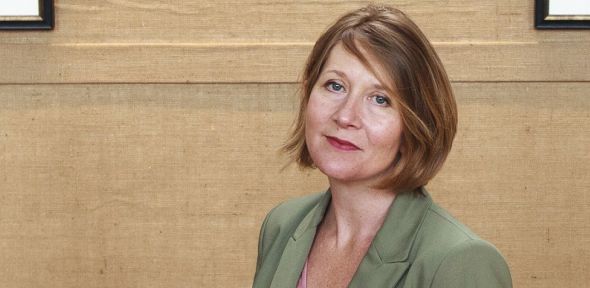
Professor Emma Widdis is a leading scholar at the Faculty of Modern and Medieval Languages and Linguistics at the University of Cambridge, specializing in the intersection of Soviet cinema, ideology, and cultural geography. Her work explores the reeducation of sensory perception through film, early Soviet urban spaces, and the construction of subjectivity via cinematic techniques. Teaches 20th-century Russian/Soviet literature, cinema, and film theory Focuses on sensory engagement, political avant-garde, and urban spatial representation Supervisor for MPhil and PhD students in Slavonic Studies Her recent book Socialist Senses (2017) examines how cinema shaped Soviet perceptions of reality. Her publications span topics like silence in sound film, set design materiality, and costume symbolism in early Soviet cinema. While no formal scientific awards are listed, her research has been supported through institutional grants and collaborations with centers like CRASSH and Cambridge Language Sciences.
Rachel Morley is an Associate Professor at the School of Slavonic and East European Studies (SSEES), University College London. She holds a BA in French Language and Literature from the University of Oxford (1992), followed by BA, MA, and PhD degrees from UCL (1999, 2001, 2011). Her roles include Academic Director of Education and Student Experience at SSEES (2022–2027) and Co-Convenor of the UCL SSEES Cinema Research Group. Dr. Morley's research focuses on Cinema studies Cultural studies Feminist and queer theory Literary studies with emphasis on Soviet/Russian cinema, gender representation, and film historiography. She held a Leverhulme Trust Research Fellowship (2020–2022) for her project on female subjectivity in contemporary Russian cinema. Her teaching spans Russian cinema, poetry, language, and translation. Past roles include Postgraduate Teaching Assistant at SSEES (1999–2009) and lecturer at the University of Cambridge (2006, 2008). She has also supported international students as SSEES International and Affiliate Tutor (2014–2018). Key Achievements: Leverhulme Trust Research Fellowship Fellow of the Higher Education Academy (2016) Her work bridges film, literature, and cultural history, emphasizing underrepresented narratives and feminist perspectives in Russian and Soviet cinema.
Elizabeth Blake is an Associate Professor of Russian and Division Coordinator in the Department of Languages, Literatures and Cultures at Saint Louis University's College of Arts and Sciences. Her research focuses on 19th-century Russian literature, particularly Dostoevsky and Tolstoy, with emphases on empire studies, exile cultures, and religious dialogues between Russian Orthodoxy and Polish/French Catholicism. She has published two major books: *Dostoevsky and the Catholic Underground* (2014) and *Travels from Dostoevsky’s Siberia* (2019). Her work bridges literary analysis with historical context, examining themes like human rights, cultural mobility, and gender roles. Blake teaches courses ranging from language proficiency to advanced topics in Russian literature and cinema, including *Russian and Soviet Cinema* and *Dostoevsky Through the Centuries*. She has received numerous grants including Mellon and Fulbright-Hays awards for research in Russia and Poland. Her academic career includes extensive reviews for journals like *Slavic Review* and *Canadian Slavonic Papers*, alongside professional involvement with organizations such as the North American Dostoevsky Society. Blake’s teaching excellence is recognized through awards like the Spirit of the Billiken Award (2016), reflecting her impact on both scholarship and student mentorship.
Dr. Anna A. Berman serves as Associate Professor of Nineteenth-Century Russian Literature and Culture within the Slavonic Studies section of the Faculty of Modern and Medieval Languages and Linguistics at the University of Cambridge, where she is also a Fellow of Clare College. Previously, she held an Associate Professorship at McGill University's Department of Languages, Literatures, and Cultures in Montreal, Canada. Her academic credentials include: B.A. from Brown University M.Phil. from the University of Cambridge Ph.D. from Princeton University Dr. Berman's research centers on nineteenth-century Russian and English novels, with specialized focus on family structures, kinship dynamics, love, and marriage. She extensively examines the intersection of scientific thought (particularly Darwinism and Mechnikov's phagocyte theory) with literary production, alongside operatic adaptations of Russian classics. Her current scholarly mission prioritizes recovering the legacy of marginalized nineteenth-century Russian women novelists, especially Nadezhda Khvoshchinskaya and Evgenia Tur. Her publication trajectory reveals sustained investigation into familial relationships within nineteenth-century literature, with sibling dynamics constituting a dominant theme across both Russian and English novels. She has pioneered critical analysis of science-literature dialogues in Russian contexts while recently shifting toward feminist recovery projects that challenge canonical exclusions in Russian literary history. Dr. Berman actively supervises postgraduate research, welcoming MPhil and PhD candidates pursuing topics aligned with her expertise in nineteenth-century Russian literature, comparative family narratives, and science-literature intersections. Within Cambridge's academic ecosystem, she contributes to the Slavonic Studies research community and participates in the Cambridge Centre for Central and East European Studies (CamCCEEES), advancing collaborative scholarship on Eastern European cultural production.
Dr. Sarah Young is an Associate Professor at the School of Slavonic and East European Studies (SSEES), University College London. Her academic journey includes a BA (Honours) in Russian and French from Trinity College, Cambridge, followed by an MA in European Languages and Culture at the University of Manchester and a PhD in Russian Literature from the University of Nottingham. Her research focuses on Russian literature, particularly Dostoevsky’s narrative structures, prison narratives, and the history of penal systems in Russia. She has held a Leverhulme Fellowship and previously taught at the University of Leeds and the University of Toronto. Her work explores themes like Siberian exile, political imprisonment, and revolutionary memoirs, as seen in her book Writing Resistance: Revolutionary Memoirs of Shlissel’burg Prison, 1884-1906 . She also investigates Gulag literature, societal impacts of quantum technologies, and inclusive STEM education for neurodivergent students. Her blogs ( www.sarahjyoung.com ) and websites ( Mapping Petersburg , Shlisselburg ) further her interdisciplinary research. Her scholarly contributions span literary criticism, historical analysis, and policy studies. Awards include the Leverhulme Special Research Fellowship (2001-2003). She actively engages in academic mentoring and has published on research practices across disciplines like environmental engineering and marine conservation.
Corinna May Lhoir is a Lecturer of Yoga History and a doctoral researcher in Indology at the University of Hamburg's Faculty of Humanities, specifically within the Culture and History of India and Tibet department. She is affiliated with the Centre for the Study of Manuscript Cultures (Cluster of Excellence "Understanding Written Artefacts") and serves as Program Coordinator for the Yoga Studies research focus. Her educational background includes an M.A. in Oriental Languages and Cultures: India (Summa Cum Laude) from Ghent University (2023), an M.A. in Traditions of Yoga and Meditation (Distinction) from SOAS, University of London (2020), a B.A. in Languages and Cultures of India and Tibet from Universität Hamburg (2021), and an earlier M.A. in American, English and Slavonic Studies from Ruhr Universität Bochum (1997). Dr. Lhoir's research centers on Jain Yoga, medieval Indian philosophy, and manuscript cultures across multiple linguistic traditions. Her current doctoral project explores the Yogapradīpa, a 15th-century Jain Yoga compendium, analyzing its reception through multilingual manuscript commentaries (ṭabos and bālāvabodhas). She investigates textual transmission, philosophical adaptation, and the vernacularization of Yoga knowledge in Jain traditions through extensive philological work and field experience in India and Europe. Her publication record shows a clear progression from foundational studies on Yoga to increasingly specialized work on Jain Yoga texts. The recent articles (2024-2025) demonstrate deep engagement with specific Jain Yoga texts like the Yogapradīpa, Tattvārthasūtra, and works by Haribhadra and Hemacandra, while her upcoming 2026-2027 publications promise to make significant contributions to understanding Jain concepts of self and philosophical approaches to Yoga. Dr. Lhoir has been actively involved in teaching and knowledge dissemination, designing courses on Introduction to Jain Philosophy and Jain Yoga, Indian Intellectual History, and Origins of Yoga at both undergraduate and continuing education levels. Her teaching often combines hybrid formats with close textual analysis and broader cultural framing. She has taught master classes at Ghent University and SOAS, and developed the blended-learning course "Light on the Dark Age of Jain Yoga" for the Arihanta Institute. She maintains a strong public engagement presence through media interviews, expert commentary in national outlets like Deutschlandfunk, and participation in roundtables on topics including "Alternative Career Paths in Religious Studies" and "Social Responsibility as Yoga Teachers." Her Arihanta Institute blog series has been particularly influential in making academic research on Jain Yoga accessible to broader audiences.
Allan Sikk is a Professor of Comparative Politics at the School of Slavonic and East European Studies (SSEES), University College London (UCL). He joined UCL in 2007 following a PhD from Tartu University and a tenure as head of the Estonian parliament’s research service. His research focuses on electoral candidates, party switching in parliaments, and party system evolution, with a 2023 co-authored book, *Party People: Candidates and Party Evolution* (Oxford University Press), analyzing party change through candidate data in Central and Eastern Europe. He leads the INSTAPARTY project, a 4-year initiative funded by the Norwegian Research Council, studying party instability in parliaments. Education: PhD, University of Tartu (2006) MA, University of Tartu (2001) BA, University of Tartu (1999) Research expertise spans political science, comparative government, and democratization, with a focus on Europe and Eastern Europe. His work integrates classic comparative models with insights from new democracies. He is fluent in English, Estonian, Danish, Finnish, Spanish, Russian, and reads multiple languages. Grants and Projects: Co-Principal Investigator, INSTAPARTY: Party Instability in Parliaments (Norwegian Research Council) His publications analyze party system volatility, parliamentary behavior, and electoral dynamics, emphasizing candidate turnover and institutional adaptation. He contributes to Sustainable Development Goals 5 (Gender Equality), 10 (Reduced Inequalities), and 16 (Peace, Justice, Strong Institutions).
Dr. Grzegorz Kotłowski serves as an Assistant Professor at the University of Gdańsk's Faculty of Languages within the Institute of Classical and Slavonic Studies, Division of Classical Philology. He concurrently holds the significant administrative position of Deputy Dean for Students Affairs at the Faculty of Languages, demonstrating dual expertise in academic scholarship and institutional leadership. His research centers on Classical Philology with intense specialization in Latin epigraphy, particularly the documentation and analysis of Neo-Latin inscriptions in historical churches of Gdańsk (notably St. Mary's Church) and Warmia (Frombork Cathedral). Dr. Kotłowski's work bridges philological rigor with historical contextualization, examining epitaphs, sepulchral plates, and commemorative texts from the early modern period to reconstruct social hierarchies, religious practices, and cultural identities within Gdańsk's multicultural urban landscape. His methodological contributions extend to digital approaches in Neo-Latin studies, addressing data acquisition and dataset creation challenges. Recent publications (2020-2022) reveal a highly focused epigraphic output, with over twenty articles detailing specific monuments while collectively forming a comprehensive corpus of Gdańsk's Latin funerary heritage. His collaborative multi-volume series with Elżbieta Starek— Łacińskie inskrypcje w kościołach Gdańska (covering Mariacka Basilica, Śródmieście, and Oliwa) and Łacińskie inskrypcje w kościołach Warmii (Frombork)—establishes foundational references for regional epigraphic studies. No scientific awards are documented in available sources. Administrative responsibilities as Deputy Dean for Students Affairs indicate active engagement in academic governance, though specific advising roles or grant funding remain unreported in current materials. The absence of laboratory or team descriptions suggests individual or small-collaboration research models centered on archival and field-based epigraphy.
Dr. Sophia Buck is a Junior Research Fellow in Modern Languages at Lady Margaret Hall (LMH), University of Oxford . Her academic journey spans German Literature and Philosophy studies at Heidelberg, Prague, and Oxford, culminating in a DPhil at Merton College (2019–2023). She is affiliated with the research network ‘Kulturtransfer und kulturelle Identität’ and serves as an elected member of the International Walter Benjamin Society .
Professor Pamela Davidson is a distinguished scholar of Russian Literature at University College London's School of Slavonic and East European Studies (SSEES). With over four decades of academic experience, she has held various leadership positions including Head of the Russian Department (2003-2006), Head of Teaching and Graduate Tutor (2012-2014), and currently serves as Admissions Tutor for Languages & Cultures programmes. Her scholarly work has significantly shaped the field of Russian literary studies, particularly in areas of Russian Symbolism, literary prophecy, and the interaction between religion and culture. Doctor of Philosophy, University of Oxford, 1984 Undergraduate studies in Russian, French and Italian, Newnham College, Cambridge Professor Davidson's research spans several interconnected areas within Russian and comparative literature. Her work on the "construction and dynamics of literary tradition" examines how Russian writers positioned themselves within broader cultural and historical contexts. She has made significant contributions to understanding "the interaction of religion and culture," particularly through her edited volume "Russian Literature and Its Demons," which opened up new interdisciplinary research avenues. Her long-standing interest in "Silver Age poetry" has focused extensively on Viacheslav Ivanov, whose work she has studied through multiple lenses including his engagement with Dante and classical antiquity. Most notably, she has developed an extensive body of work on "the representation of the writer as prophet in Russia," tracing this tradition from its biblical and classical roots through to the Soviet period. Professor Davidson's recent publications reveal a consistent focus on the prophetic dimension of Russian literature, with particular attention to Viacheslav Ivanov and Fedor Glinka. Her scholarship demonstrates a sophisticated interweaving of literary analysis, religious studies, and cultural history. Over the past decade, her work has increasingly examined how Russian writers engaged with biblical and classical traditions, often reinterpreting them within specifically Russian contexts. The recurring themes across her publications include the tension between Athens and Jerusalem in Russian thought, the role of the writer as moral authority, and the complex relationship between religious tradition and literary innovation. Her comparative approach frequently bridges Russian literature with Western European intellectual traditions, revealing unexpected connections and influences. Travelling Junior Research Fellowship at Queen's College Leverhulme Research Fellowship (2019-2021) Director of the CEELBAS Centre for Doctoral Training (2020-2021) Member of the AHRC Peer Review College of Assessors (2003-2007) As an academic mentor, Professor Davidson has supervised numerous doctoral students in Russian literature and thought, with particular expertise in 19th and early 20th century literature, Silver Age poetry, and comparative literature. Her leadership roles have included serving as Graduate Tutor and Chair of BA and MA Examination Boards at SSEES. In terms of research funding, she has successfully secured competitive grants including the Leverhulme Research Fellowship that supported her recent work on literary prophecy. Her collaborative projects have often involved international partnerships, particularly with Russian academic institutions including the Institute of Russian Literature (IRLI) in St Petersburg. Professor Davidson has also contributed to major scholarly initiatives such as the 12-volume academic edition of Ivanov's collected works. While Professor Davidson's work is primarily in humanities rather than laboratory-based research, she has been instrumental in building academic networks and collaborative projects. She served as Director of the CEELBAS Centre for Doctoral Training, liaising with the Arts and Humanities Research Council (AHRC) and consortium members at Cambridge, Manchester and Oxford. Her long-standing collaboration with the St Petersburg Institute of Russian Literature has been particularly significant, resulting in the completion of the first comprehensive bibliography of Viacheslav Ivanov's works. Professor Davidson has also been active in the international scholarly community through her membership on the Board of Directors of the Foundation "Centro Studi e Ricerche Vjacheslav Ivanov" in Rome.
Dr. Fabian Baumann is a historian specializing in Eastern European history, particularly nationalism and empire in Russia, Ukraine, and East Central Europe. He holds a position as Postdoctoral Research Fellow at Heidelberg University's Karl Jaspers Centre and previously held fellowships at institutions including the University of Chicago and the University of Vienna. His research emphasizes the agency of individuals in shaping national identities, as seen in his award-winning monograph Dynasty Divided , which examines the Shul’gin family’s divergent national allegiances. Education: PhD in East European History (University of Basel, 2020) M.Phil in Slavonic Studies (University of Oxford, 2016) BA in Russian and English Language (University of Geneva, 2012) Research Interests: His work explores the construction of national identities beyond ethnic determinism, focusing on the interplay of state-building, loyalty, and dissent. Current projects include the prosecution of state enemies in interwar Czechoslovakia and co-editing the Handbook of Ukrainian History (Oxford UP, 2028). Awards: 2024 W. Bruce Lincoln Book Prize 2025 Alexander Nove Prize Grants and Fellowships: Recipient of Swiss National Science Foundation (SNSF) grants, including Postdoc.Mobility fellowships at the University of Chicago and RECET Vienna. Labs/Teams: Active in the Karl Jaspers Centre and collaborative projects with the RECET research group.
Jiří Muryc is a researcher at the Department of Slavonic Studies, Faculty of Arts, University of Ostrava. He specializes in Polish-Czech language contact, bilingualism, and sociolinguistic dynamics of the Czech-Polish borderlands. His work spans translation studies, orthographic interference, and linguistic landscapes. Position: Head of Department International Affiliation: Collaborated with Vytautas Magnus University, University of Wrocław, and other institutions His research focuses on multilingual environments, Polish language visibility in Czech public spaces, and cross-border language policy. He explores code-switching, hybrid lects, and ethnolinguistic identity in bilingual communities. Muryc's publications analyze Polish-Czech legal terminology, phraseological dictionaries, and translation challenges between typologically close languages. He emphasizes practical applications in interpreter training and digital language platforms like Polski.info . He supervises theses on topics ranging from Polish literature in Czech translations to Czech-Polish business phraseology and UNESCO heritage linguistics. His projects include Erasmus+ initiatives for Polish language e-learning and sociolinguistic studies of Zaolzie.
Dr. Seth Graham is an Associate Professor at the School of Slavonic and East European Studies (SSEES), University College London. His academic journey includes a PhD in Russian literature from the University of Pittsburgh (2003), preceded by MA (1994) and BA (1990) degrees from the University of Texas at Austin. He has held teaching roles at the University of Washington and a post-doctoral fellowship at Stanford University before joining SSEES in 2006. Research interests span cultural studies, literary studies, language studies, and cinema studies, with a focus on Russian/Soviet cultural history, humor, satire, and cinematic representation. His work examines Soviet-era cultural policies, post-Soviet identity formation, and the role of laughter in political resistance. He also organizes student cultural activities involving Russian popular music. His recent publications explore topics like Stalinist cultural control, post-Soviet cinematic narratives, and the role of humor in authoritarian regimes. Notable works include analyses of Soviet film comedy and studies on satire in Putin’s Russia. Despite no listed scientific awards, his contributions to Slavic studies are recognized through his extensive publication record and academic appointments. Advising and grant activities remain unspecified in the provided texts. Labs/teams: None explicitly mentioned. His work primarily involves individual and collaborative academic writing within SSEES frameworks.
Diana Kudaibergenova is a Lecturer in Central Asian Politics and Society at the School of Slavonic and East European Studies (SSEES), University College London. She is a cultural and political sociologist specializing in power relations within authoritarian contexts, with particular expertise in Central Asian political systems and societies. Her academic profile reflects deep engagement with the complexities of post-Soviet political transformations across the region. Dr. Kudaibergenova earned her MPhil and PhD in Sociology from the University of Cambridge, where she previously served as an Assistant Professor in Political Sociology before joining UCL. Her educational background and early academic career at Cambridge provided the foundation for her extensive research on nationalism, authoritarianism, and political sociology in Central Asia. Her research program spans multiple interconnected domains including authoritarianism, political sociology, nationalism, and decolonial praxis. Kudaibergenova examines how power operates through state institutions, cultural production, and everyday practices in non-democratic contexts. She has developed innovative conceptual frameworks for analyzing 'everyday authoritarianism' and the resilience of dictatorial systems. Her work particularly focuses on Central Asia, where she has conducted extensive fieldwork across multiple countries, examining how citizens navigate and resist authoritarian rule through cultural expression, social movements, and digital activism. Her publications reveal consistent patterns of exploring how authoritarian regimes maintain control while citizens develop strategies of resistance and alternative meaning-making. Dr. Kudaibergenova has secured significant research funding including the Forces of Art joint grant by Hivos Foundation, Prince Claus Fund for Culture and Development, and European Cultural Foundation in 2018 for her work on protest art in Central Asia. She actively supervises graduate students and welcomes research projects that push disciplinary boundaries, employ innovative methodologies, and explore new conceptual ground in Central Asian studies. Her advisory work emphasizes decolonial approaches and creative methodologies for understanding complex political phenomena in the region. Her teaching portfolio at UCL includes modules on Central Asian Politics and Society, Post-Soviet Politics and Society, Political Sociology, and Political Art and Protest in Eurasia, reflecting the breadth and depth of her scholarly expertise and commitment to training the next generation of Central Asian specialists.
Dušan Hajduk-Veljković is a lecturer for special tasks at the Martin Luther University Halle-Wittenberg, Faculty of Philosophy II, Institute for Slavic Studies and Speech Science. He has held positions at three major German universities since 1989, specializing in Bosnian, Croatian, and Serbian language instruction and research. 1981-1984: BA in General Literature, Faculty of Philology, Belgrade 1988-1994: MA in Slavic Studies, University of Saarland His research focuses on South Slavic phraseology, Church Slavonic textual transmission, and literary translation. Notably, he contributed to the Slavic Creeds project and has been examining translation practices in Balkan contexts. His 15 most recent publications reveal expertise in: phraseological model analysis (1998), textual criticism of medieval Slavic texts (1997-2002), and cross-cultural translation studies (2004-2006). The research spans ethnolinguistic reconstruction, doctrinal text analysis, and modernist literature adaptation. Translation grants from ProHelvetia (2004), Goethe-Institut (2005), and German Literature Fund (2006) As a certified interpreter since 1989 and examiner at the Leipzig Regional School Authority since 2004, he bridges academic research with practical language expertise. His work with Roland Marti and Angela Richter demonstrates sustained interdisciplinary collaboration.