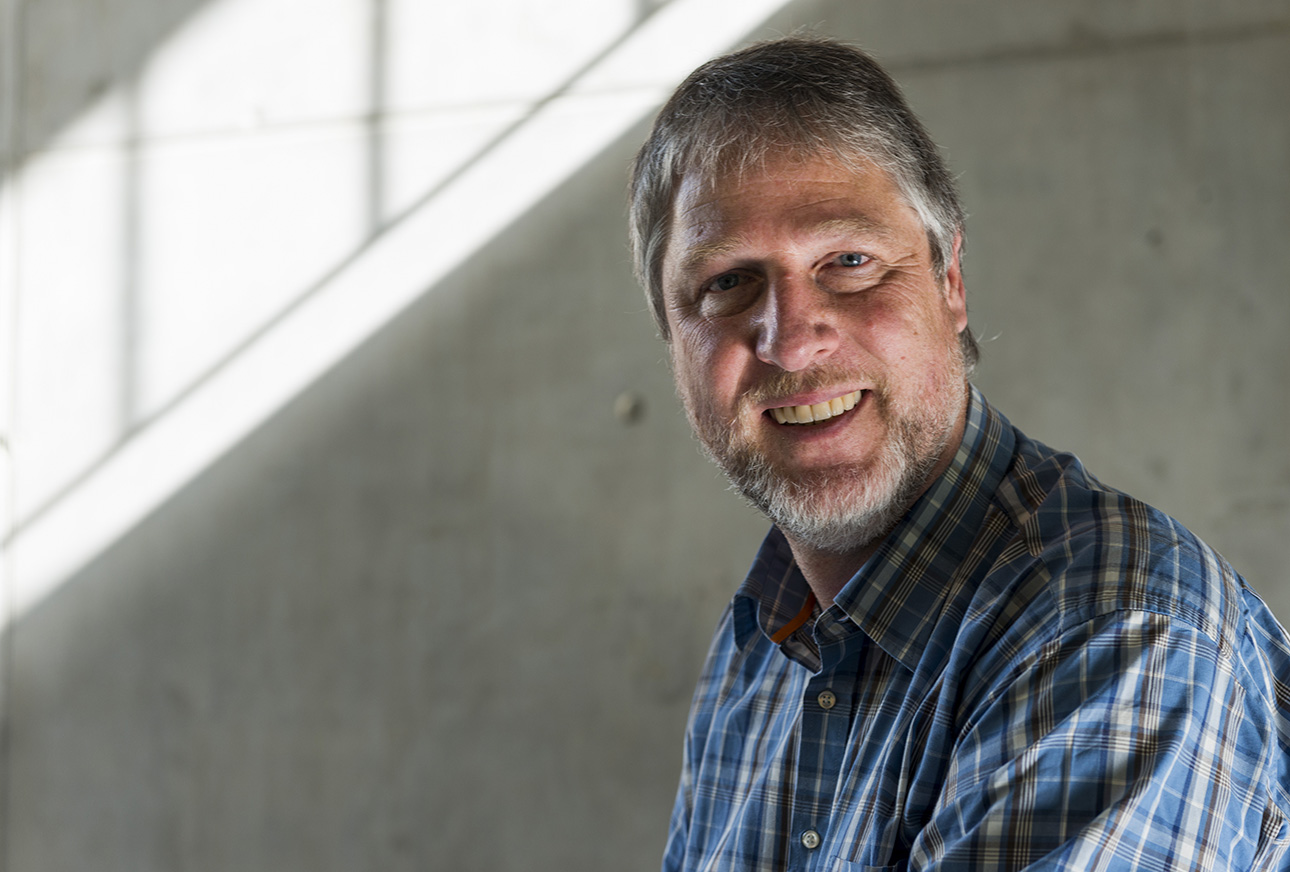
Professor Bernd Möbius is a leading academic in Phonetics and Phonology at the Department of Language Science and Technology, Saarland University. His research bridges phonetic theory with speech technology applications, focusing on text-to-speech systems, prosody modeling, and computational simulations of speech processes. Current research projects: DFG SFB 1102, C1: Information density and phonetic structure predictability DFG SFB 1102, C4: Slavic intercomprehension and surprisal theory (INCOMSLAV) Research Themes: Key areas include text-to-speech synthesis, speech prosody analysis, experimental methods in speech production/perception, information density in phonetics, and cross-linguistic studies of Slavic-Germanic languages. Scientific Contributions: Recent work explores Parkinson-induced dysarthria detection, breath noise acoustics, surprisal-driven speech behaviors, multilingual BERT models for idiomaticity, and perceptual consequences of acoustic adjustments.
Dr. Jacek Kudera is a post-doctoral researcher in the Department of Phonetics at the University of Trier, coordinator of the LODinG project at the Trier Center for Digital Humanities, and adjunct faculty at WSB Merito University in Wrocław. His work bridges phonetics, Slavic linguistics, digital humanities, and forensic speech science. Education 2022 – PhD, Department of Language Science and Technology, Saarland University, Germany 2019 – MA (Linguistics), Department of Linguistics, Cognitive Science and Semiotics, Aarhus University, Denmark 2015 – Magister (Slavic Philology), Institute of Slavic Studies, University of Wrocław, Poland Research Interests His research focuses on phonetic and prosodic aspects of Slavic languages , cross-linguistic speech perception , forensic automatic speaker recognition , and human-robot interaction . He employs experimental methods such as eye-tracking, articulatory measurements (EMA), and large-scale digital corpora to investigate how speakers of closely related languages understand one another and how machines can replicate or support this process. Publication Trends Across more than 25 peer-reviewed articles (2014-2025), Kudera has consistently explored Slavic intercomprehension , speech technology evaluation , and digital humanities infrastructure . Recent work (2024-2025) targets voice cloning security , linked open data for linguistics , and mismatch conditions in forensic speaker recognition . Scientific Awards & Fellowships Visegrad Fellowship, University of Presov (2025) Erasmus+ Fellowships (Ostrava 2025, Zagreb 2014, Rijeka 2012-2013) NAWA Fellowship, Polish Academy of Sciences (2022) Nordlys Fellowship, University of Eastern Finland (2018-2019) CEEPUS & additional Central-European mobility grants (2014-2018) Projects & Funding Coordinator : “Mismatch conditions in machine speaker identification” (University of Trier Research Fund, 2024-2025) Coordinator : LODinG – Linked Open Data in the Humanities (Trier Center for Digital Humanities, ongoing) Coordinator : “Patterns: Linguistic Creativity and Variation” (Trier Center for Language and Communication, 2022-2024) Member : SFB 1102 “Information Density and Linguistic Encoding” (Saarland University, DFG, 2019-2022) Member : Digital Atlas of Dialects of Bosnia and Herzegovina (2017-2018) Member : CLARIN-PL & European Roadmap for Research Infrastructures (2014-2017) Labs & Teams He conducts research within the Phonetics Team at the University of Trier , collaborates closely with the Trier Center for Digital Humanities , and maintains affiliations with the Phonetics Group at Saarland University and the WSB Merito University in Wrocław.
Professor Tania Avgustinova is a Professor of Slavic and Computational Linguistics in the Department of Language Science and Technology at Saarland University. She serves as Principle Investigator for SFB 1102 - Project C4 (INCOMSLAV) and is Head of the Slavic Lab. Her academic career spans several decades with significant contributions to Slavic linguistics, computational approaches to language, and cross-linguistic studies. Her academic qualifications include: Habilitation venia legendi in General Linguistics (2003) PhD in Slavic and Computational Linguistics (1997) Diploma in Slavistics (1987) Professor Avgustinova's research focuses on the intersection of Slavic linguistics and computational methods. She specializes in microsyntax, intercomprehension among Slavic languages, language contact phenomena, and the processing of non-compositional expressions. Her work examines how speakers of one Slavic language can understand related languages without formal instruction, with particular attention to cognitive and linguistic factors. She has developed computational models to analyze linguistic distances and asymmetries between Slavic languages, contributing significantly to understanding receptive multilingualism. Her recent publications reveal a strong focus on experimental approaches to studying cross-linguistic comprehension using web-based platforms, eye-tracking, and speech processing techniques. There's a clear trend toward investigating microsyntactic units and non-compositional expressions across Slavic languages, with applications in language technology and education. Her work bridges theoretical linguistics with practical applications in natural language processing and language learning. Principle Investigator of SFB 1102 Project C4 (INCOMSLAV) Head of Slavic Lab at Saarland University Contributor to Russian National Corpus project Developer of INCOMSLAV platform for measuring linguistic distances As Principle Investigator of SFB 1102 Project C4 (INCOMSLAV), Professor Avgustinova leads research on mutual intelligibility and surprisal in Slavic intercomprehension. She has been instrumental in developing the INCOMSLAV platform for measuring linguistic distances and asymmetries in receptive multilingualism. Her leadership extends to international collaborations, including contributions to the Russian National Corpus project where she provides expertise on grammatical phenomena at the borderline between lexicon and syntax. Professor Avgustinova heads the Slavic Lab at Saarland University, which focuses on applied, experimental, and computational linguistics. The lab conducts research on Russian corpus grammar, word embedding models, sense frequencies, and microsyntax. Her work has established important connections between theoretical linguistics and practical language technology applications, particularly in the Slavic language context.
Daniela Pusch, MA, is a lecturer for Czech language at the Georg-August-University Göttingen since winter semester 2024/2025, substituting for Dr. Lubomír Sůva. She previously taught at Heinrich Heine University Düsseldorf (since 2017) and the University of Münster (Summer Semester 2024). Her academic background includes studies in Slavic Studies (Russian and Bohemian) and Media Studies at Philipps University of Marburg (1998-2004), with stays in Prague, Brno, and Moscow. She specializes in Czech language instruction, Slavic intercomprehension courses, and German-Czech translation projects. Susanna Roth Prize (2014) for translating Bohumil Hrabal TransStar Europa Fellow (2013-2015) Translator's residency in Brno (2019) As co-editor of contemporary Czech literature dossiers in the journal Ostragehege , she contributes to promoting Czech poetry in German translation circles.