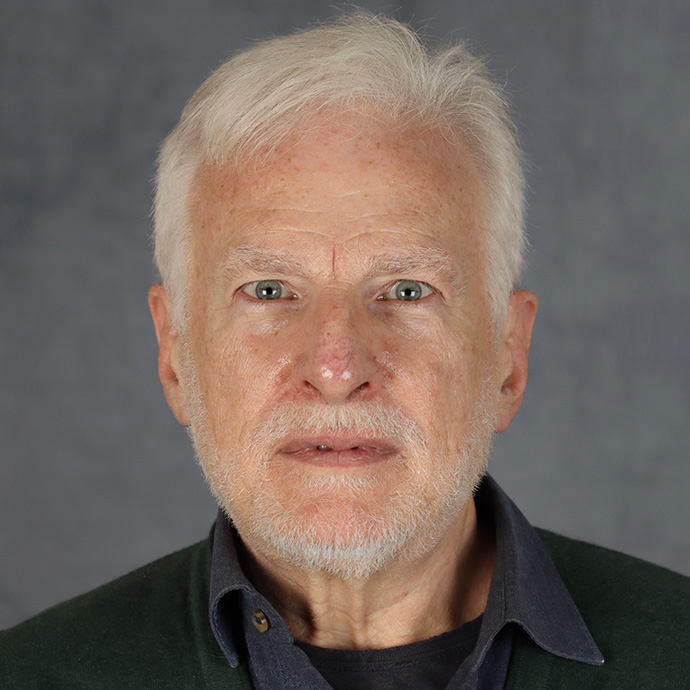
Svitlana Antonyuk-Yudina serves as a Lise Meitner senior postdoctoral researcher at the University of Graz, Austria, within the Institute of German Studies under the Austrian Science Fund (FWF) project M 3361-G "Deriving Discourse Configurationality of (East) Slavic" led by Prof. Victor Edgar Onea Gaspar. Her research centers on syntax-semantics interfaces , argument structure , and information structure in East Slavic languages (Ukrainian and Russian), with specific expertise in quantification, Instrumental syntax, Object Shift phenomena, and the realization of Givenness/Focus. Current investigations explore aspect-argument structure relations in East Slavic and cross-linguistic scope freezing, while her interests increasingly extend to generative typology and contact-induced language change. Dr. Antonyuk-Yudina holds the prestigious Lise Meitner Fellowship from the Austrian Science Fund (FWF). She is actively engaged in the FWF project M 3361-G and co-edits two Special Collection volumes for Glossa: a journal of general linguistics , with experimental work mapping East Slavic syntactic structures to prosodic realization upcoming.
Bistra Andreeva is a full Professor of Phonetics and Phonology at Saarland University, Department of Language Science and Technology. She is also a principal investigator of the DFG-funded project “Judeo-Spanish in Bulgaria: a contact language between archaism and innovation” (2022-2025) and leads or co-leads several other externally funded projects on prosody, information structure, and language contact. She teaches and has taught at Saarland University, Sofia University “St. Kliment Ohridski”, and other European universities. Education & Academic Background Habilitation (kumulative Habilitationsschrift): “Contrastive Prosody: Bulgarian vs. German”, Saarland University, 2016. PhD (Dr. phil.): “Zur Phonetik und Phonologie der Intonation der Sofioter-Varietät des Bulgarischen”, Saarland University, 2007. Research Interests Andreeva’s research focuses on the phonetics and phonology of intonation and rhythm, cross-language and individual differences in the production and perception of syllabic prominence, the relation between intonation and information structure, minority languages (especially Judeo-Spanish in Bulgaria), and the interaction between information density and prosodic structure. Her methodological expertise includes experimental phonetics, corpus-based studies, and acoustic analysis. Major Projects SFB 1102 C1: “Information Density and the Predictability of Phonetic Structure” (DFG, 2014-2026) JuSpa: “Judeo-Spanish in Bulgaria: a contact language between archaism and innovation” (DFG, 2022-2025) Prosodic aspects of Bulgarian compared to other languages with lexical stress (Bulgarian National Science Fund, 2019-2024) Prosodic manifestations of focus in French and English from a Bulgarian point of view (DAAD & Sofia University, 2021-2023) Scientific Awards & Recognition While no major named prizes are listed, Andreeva’s work has been continuously supported by competitive grants from the German Research Foundation (DFG), DAAD, and Bulgarian National Science Fund. Her publications appear in top-tier journals and conference proceedings (Journal of the Acoustical Society of America, Interspeech, Speech Prosody, International Congress of Phonetic Sciences). Teaching & Supervision She offers a broad spectrum of courses including Experimental Phonetics, Prosody, Phonetics & Phonology of Slavic Languages, Introduction to Instrumental Phonetics, and seminars on language contact. She has supervised numerous BA, MA, and PhD theses and regularly teaches at the PhD School of Sofia University. Labs & Teams She is affiliated with the Phonetics Laboratory at Saarland University and collaborates closely with the Institute for Bulgarian Language (Bulgarian Academy of Sciences), working in interdisciplinary teams involving phoneticians, computational linguists, and field linguists.
Prof. Dr. Gisela Zifonun is a retired University Professor of German Linguistics at the University of Mannheim and former Head of the Grammar Department at the Institut für Deutsche Sprache (IDS) until July 2011. She holds a doctorate (1971) and habilitation (1994) in German Linguistics. Her career includes roles as a scientific employee at the IDS (1973–1995), Head of the Grammar Department (1986–1995), and professorships at the Free University of Berlin (1995–1998) and the University of Mannheim (1998–2011). Her research focuses on grammar theory, German syntax/semantics/morphology, language typology, and comparative linguistics. Key projects include the Grammar of German in European Comparison (GDE-N) and the EuroGr@mm initiative. She has authored/co-authored over 130 works, including monographs and edited volumes on German linguistics. Notable publications include Das Deutsche als europäische Sprache (2021) and Grammatik des Deutschen im europäischen Vergleich (2017). Her work emphasizes cross-linguistic analysis and corpus-driven research. Research interests span syntax, morphology, and typological comparisons across German, Romance, and Slavic languages. Recent contributions address gender-inclusive language reform and corpus-based studies. She has supervised numerous academic projects and serves as a key figure in German linguistic infrastructure, including IDS initiatives. No explicit awards are listed, but her extensive bibliography reflects significant scholarly impact. Professional roles include managing the IDS’s Grammar Department and coordinating international collaborations. Her work bridges theoretical linguistics with applied research, contributing to both academic discourse and language policy discussions.
Curt Woolhiser is a Lecturer in the Department of Eastern, Slavic, and German Studies at Boston College. He specializes in Russian language and literature, contributing to the Morrissey College of Arts and Sciences. His contact information includes the email curt.woolhiser@bc.edu and telephone number 617-552-6856. No specific research interests, grants, or publications are detailed in the provided information, suggesting a focus on teaching and departmental contributions.
Jay Jasanoff is the Diebold Professor of Indo-European Linguistics and Philology at Harvard University's Department of Linguistics. His research focuses on Indo-European historical linguistics, with specialization in Anatolian Hittite, Tocharian, Greek, Celtic, and other branches. He holds an office at 312 Boylston Hall and can be reached via email at jasanoff@fas.harvard.edu. His work spans comparative grammar, morphological evolution, and phonological processes in ancient languages. Research Interests: Indo-European language family Historical phonology and morphology Preterite and aorist constructions Language contact phenomena in Balto-Slavic and Anatolian Publications reflect deep engagement with verb systems across Indo-European branches, including seminal work on Hittite and Latin. His contributions to understanding Lachmann’s Law in Latin and Tocharian verb paradigms have been widely cited. Recent work continues exploring diachronic patterns in Indo-European verb structures. Lauded for his scholarly contributions, Jasanoff was celebrated at a departmental retirement tribute in 2023, highlighting his mentorship and impact on historical linguistics.
Lars Richter is a Lecturer in the Department of German and Slavic Studies at the University of Manitoba's Faculty of Arts. His teaching focuses on German language, literature, and culture, including courses like Intermediate German I and Germany's Post-Millennium Literature and Film. Education: PhD in German Languages and Literatures (University of Alberta, 2016), MA in Germanic Languages and Literatures (Washington University in St. Louis, 2001) His research spans 20th/21st-century German literature and culture, with expertise in political literature, ecocriticism, transnationalism, gender studies, and intersections between German and Indigenous Studies. He has published on contemporary authors like Juli Zeh and explored themes of desire, empowerment, and transnational identity. Key trends in his publications include analyzing political engagement in German literature, transnational spaces in contemporary narratives, and feminist themes in popular music. University of Manitoba Faculty Association Merit Award (Teaching) Faculty of Arts Teaching Excellence Award Eva Dannhauer Summers Memorial Award William H. Thompson and Ivy Thompson Memorial Award Lars serves on the board of the German Canadian Congress, demonstrating commitment to community engagement. Contact details: 322 Fletcher Argue Building, 15 Chancellors Circle, Winnipeg, MB R3T 2N2 | Phone: 204-474-9398
Dušan Hajduk-Veljković is a lecturer for special tasks at the Martin Luther University Halle-Wittenberg, Faculty of Philosophy II, Institute for Slavic Studies and Speech Science. He has held positions at three major German universities since 1989, specializing in Bosnian, Croatian, and Serbian language instruction and research. 1981-1984: BA in General Literature, Faculty of Philology, Belgrade 1988-1994: MA in Slavic Studies, University of Saarland His research focuses on South Slavic phraseology, Church Slavonic textual transmission, and literary translation. Notably, he contributed to the Slavic Creeds project and has been examining translation practices in Balkan contexts. His 15 most recent publications reveal expertise in: phraseological model analysis (1998), textual criticism of medieval Slavic texts (1997-2002), and cross-cultural translation studies (2004-2006). The research spans ethnolinguistic reconstruction, doctrinal text analysis, and modernist literature adaptation. Translation grants from ProHelvetia (2004), Goethe-Institut (2005), and German Literature Fund (2006) As a certified interpreter since 1989 and examiner at the Leipzig Regional School Authority since 2004, he bridges academic research with practical language expertise. His work with Roland Marti and Angela Richter demonstrates sustained interdisciplinary collaboration.
Michael Wachtel serves as Professor and Director of Undergraduate Studies in the Department of Slavic Languages and Literatures at Princeton University, with additional affiliation in the Department of Comparative Literature. His office is located in 225 East Pyne Building, and he can be contacted at wachtel@princeton.edu. Dr. Wachtel's educational background: PhD in Comparative Literature, Harvard University (1990) MA in Comparative Literature, Harvard University (1986) BA in Comparative Literature, Yale University (1982) His research centers on Russian poetry and poetics from the eighteenth century to the present, with particular emphasis on literary interpretation and the integration of individual works into broader Russian and European traditions. Key figures in his scholarship include Aleksandr Pushkin and Viacheslav Ivanov, with significant contributions to Russo-German literary relations and the study of German influences on Russian Symbolism. His work bridges historical periods through close analysis of poetic form and cross-cultural adaptation. Wachtel's publication trajectory reveals sustained engagement with Russian poetic evolution, examining translation practices, literary correspondence, and metrical innovation across centuries. His scholarship consistently explores how Russian poets creatively adapt Western European models while maintaining distinct national traditions, with recurring focus on Pushkin's legacy and Symbolist movements. As an educator, Professor Wachtel teaches undergraduate courses on Russian poetry (in Russian) and literature in translation, alongside graduate seminars covering Pushkin, Russian Symbolism, and the development of Russian poetic form. His leadership as Director of Undergraduate Studies shapes curriculum and academic pathways for students in Slavic studies.
Dr. Silke Hamann is a researcher at the University of Amsterdam, Faculty of Humanities, Department of Linguistics. Her work bridges phonology and phonetics, focusing on the emergence of phonological features, perceptual cues in segmental contrasts, and the interaction of phonology with orthography and language acquisition. Current projects: diachronic loanword adaptation, congenital amusia's impact on speech perception, Bantu languages (with Nancy Kula and Laura Downing), Catalan studies (with Francesc Torres-Tamarit) Research interests span synchronic/diachronic phonology, phonetic perception, computational modeling of phonological acquisition, and cross-linguistic analysis of retroflex consonants. Her publications analyze phenomena in Korean, Japanese, Bantu languages, German, Portuguese, and Slavic languages, with recurring themes of cue weighting, phonological constraints, and orthographic influence. Recent articles highlight her focus on creaky voice diagnostics, loanword phonotactics, congenital amusia, and Bantu intonation systems. Collaborations with Nancy Kula (Bantu) and Francesc Torres-Tamarit (Catalan) underscore her international research network.
Stefan-Michael Newerkla is a University Professor of West Slavic Linguistics at the Department of Slavonic Studies, Faculty of Philology and Cultural Studies, University of Vienna. He has served as Head of the Institute of Slavic Studies since 2022, following previous leadership roles as Deputy Head (2018-2022) and Head (2005-2008). His academic leadership extends to significant positions including Member of the Academy Council of the Austrian Academy of Sciences (2022-2026), Member of the International Board of Palacký University Olomouc (2022-2026), and Member of the Scientific Council of the Czech Academy of Sciences (since 2013). Professor Newerkla earned his doctorate in 1998 with a dissertation on "Intended and actual linguistic reality in Bohemia. Diglossia in the school system of the Czech-speaking countries of the Habsburg Monarchy 1740–1918 using the example of the West Bohemian district town of Plzeň (Pilsen)" and completed his habilitation in 2003 on "Language Contacts Czech – German – Slovak. German Loanwords in Czech and Slovak: Historical Development, Evidence, Previous and New Interpretations." His academic journey began with studies in Slavic Studies, English Studies, and American Studies at the University of Vienna from 1992-1998. His research focuses on West Slavic linguistics with particular emphasis on contact linguistics, areal linguistics, linguistic geography, and historical sociolinguistics. He investigates the development of linguistic contacts between German, Hungarian and Slavic languages, examining Central Europe as a linguistic area with special attention to Austriazisms and Internationalisms research. His work also explores the school system and language teaching in the Habsburg Monarchy, analyzing language legislation versus language reality and diglossia or polyglossia in the educational system. Additional research interests include the National Renewal in the Bohemian Lands, Vienna's role in the Czech National Renewal, the Slovak national awareness process, and the grammatology and grammarography of West Slavic languages. Analysis of his recent publications (2023-2025) reveals a continued focus on historical language contact in Central Europe, particularly examining multilingualism in the Habsburg Monarchy and linguistic heritage. His work increasingly incorporates interdisciplinary approaches, connecting linguistic analysis with historical, educational, and cultural studies perspectives. Recent publications show particular attention to Czech language in Austria, language teaching methodologies, and the reconstruction of historical language contact phenomena, with several multilingual publications reflecting his expertise in cross-cultural communication. Professor Newerkla's scientific achievements have been recognized with numerous prestigious awards: Medal of the Minister for Foreign Affairs of the Czech Republic (August 7, 2024) for Services to Diplomacy Premia Bohemica for 2023 for outstanding contribution to promoting Czech literature abroad Josef-Dobrovský-Ehrenmedaille of the Czech Academy of Sciences (April 25, 2017) Full member of the Austrian Academy of Sciences (since 2018) Corresponding Member of the Austrian Academy of Sciences (since 2014) Member of the Academic Assembly of the Czech Academy of Sciences (since 2010) Award from University of Vienna for Innovative Teaching (June 22, 2001) As an academic leader, Professor Newerkla has supervised numerous theses across various levels of study. His research is supported by significant grants, most notably his role since 2016 as consortium member and board member of the Special Research Programme "German in Austria. Variation – Contact – Perception" (SFB F 60-G23), where he heads Task Cluster C and subprojects 05 and 06. He also led the research project "Slavists in Exchange: Austria and Russia 1849-1939" (2021-2025). His administrative roles have included Chairman of the Curricular Commission of the Senate of the University of Vienna (2010-2016) and Member of the Senate of the University of Vienna (2009-2016). Professor Newerkla is actively involved in multiple international research teams and collaborations, including the Permanent Conference of Austrian and Czech Historians on Common Cultural Heritage (SKÖTH), which he has co-chaired since 2009. His research group at the University of Vienna's Institute of Slavic Studies focuses on West Slavic linguistics, with particular expertise in historical language contact phenomena and the linguistic heritage of Slavic languages in Central Europe. He has also served as editor for numerous publications including the Vienna Slavic Yearbook (New Series) since 2013.
Bernhard Brehmer is a Professor of Slavic Linguistics at the University of Konstanz since 2020, holding a W3-professorship in Slavic Linguistics. He previously held academic positions at the Universities of Greifswald, Hamburg, and Tübingen, including a Juniorprofessur and W2-professorship. His research focuses on multilingualism, language attrition, heritage languages, and sociolinguistic aspects of Slavic languages. He earned his doctorate in Ostslavische Philologie from Eberhard Karls University of Tübingen in 2004 with a dissertation on politeness expressions in Russian. Brehmer has led numerous interdisciplinary research projects, including the DFG-funded 'Russian in Germany across Generations' (2021–2024) and the EU-funded 'Nachbarspracherwerb' initiative. His awards include the 2012 Junior Fellowship at FRIAS and the 2018 Sparkassen-Förderpreis for German-Polish collaboration. His scholarly contributions span monographs, edited volumes, and over 50 peer-reviewed articles. Key works include Politeness between Convention and Creativity (2009) and co-edited collections like Lost in Transmission (2020). He actively participates in academic governance, serving as director of Slavistik institutes and developing interdisciplinary programs like the Baltic Sea Region MA program. His research integrates corpus linguistics, sociolinguistics, and applied language policy, addressing contemporary issues such as minority language maintenance and digital language behavior.
Stefano Quaglia is an Assistant Professor at the Institute of Romance Studies , University of Graz. His research focuses on syntax and its interfaces with morphology and semantics , using Italian as a comparative framework within and beyond Romance languages. Email: stefano.quaglia@uni-graz.at Office: Room 003303056, Merangasse 70/III, Graz, Austria Consultation Hours: Wednesday, 3:30-4:30 p.m. Research interests include: Spatial expressions and functional sentence structure Long-distance dependencies Language contact phenomena Particle verbs and clausal organization Wh-movement and information structure Cross-linguistic syntactic analysis Recent publications highlight empirical and theoretical work on verbal theme vowels , Slavic prefix ordering , and L3 transfer dynamics . His studies integrate synchronic analysis with diachronic and contact linguistics frameworks. Articles demonstrate trends in: Syntax-morphology interfaces : Allomorphy, prefix stacking, particle systems Comparative Romance-Slavic analysis : Extraction patterns, convergence phenomena Language acquisition : CLI effects in bilingual/multilingual contexts Prosodic constraints : Stress and phrasing in particle verbs Information structure : Wh-questions in Romance
Roman Krivko is an Associate Professor at the Department of Slavonic Studies , University of Vienna. His research focuses on Old Church Slavonic , Byzantine hymnography , and historical linguistics of Slavic languages. Specializes in medieval Slavic epigraphy and liturgical text analysis Key contributor to studies on Christian traditions in Slavic contexts Active editor and researcher in international Slavic studies Research Themes include: Quantitative analysis of loanwords in Slavic Gospels Textological studies of service menaia and kontakia Historical development of Old Bulgarian language Linguistic networks in Central/Eastern Europe Scientific Contributions span Editorial work on Slověne journal Notable publications on the Temnić inscription and Samuil's epigraph Collaborations with institutions like Vinogradov Russian Language Institute
Prof. Magdalena Steciąg is a full-time faculty member at the University of Zielona Góra, affiliated with the Institute of Polish Philology and the Department of Journalism and Media Studies. Her research spans ecolinguistics, discourse analysis, multilingualism, and media studies, with a focus on conceptual metaphors, lingua receptiva, and gendered language in public protests. Key Research Trends: Ecological discourse in public debates and media Polish-Czech cross-border communication via lingua receptiva Gender studies in journalistic and feminist discourse Anthropocene-era linguistic analysis Contact: msteciag@g.elearn.uz.zgora.pl | ORCID: 0000-0002-6360-2987
Professor John T. Koch (PhD, Harvard 1985) is a Senior Fellow and Project Leader at the Centre for Advanced Welsh and Celtic Studies (CAWCS), University of Wales. An interdisciplinary expert in Celtic studies, historical linguistics, and archaeogenetics, he has led major AHRC-funded projects like Culture and Celtic Speech and Atlantic Europe in the Metal Ages . His work spans linguistic reconstruction, Bronze Age Europe, Celtic mythology, and ancient DNA analysis. Education : PhD in Celtic Languages and Literature, Harvard University (1985) Affiliation : CAWCS, University of Wales Role : Senior Fellow and Project Leader His research bridges linguistics, archaeology, and genetics, focusing on Celtic origins, Tartessian inscriptions, and Celto-Germanic vocabulary. Recent publications reflect collaborations with geneticists and archaeologists, emphasizing the archaeogenetic revolution's impact on Celtic studies. Koch is a leading voice in the Celtic from the West theory, challenging traditional models of Celtic expansion. Koch's articles reveal a strong interdisciplinary focus. These works analyze Bronze Age maritime networks, linguistic contact zones, and genetic dispersals, with recurring themes such as Celtic mythology, ancient DNA data interpretation, and epigraphic evidence from Iberia and Britain. Scientific Awards and Honors : Member of the Order of Australia (AM) Fellow of the Learned Society of Wales (FLSW) Grants and Leadership : Koch directed two AHRC-funded projects on Celtic languages and Atlantic Europe's prehistory. He co-founded and organized international forums on Celtic origins, archaeogenetics, and linguistics, including events at Oxford, Aberystwyth, and Uppsala. His supervision includes PhD research on Pictish inscriptions, Classical Celtic references, and Welsh phonology.