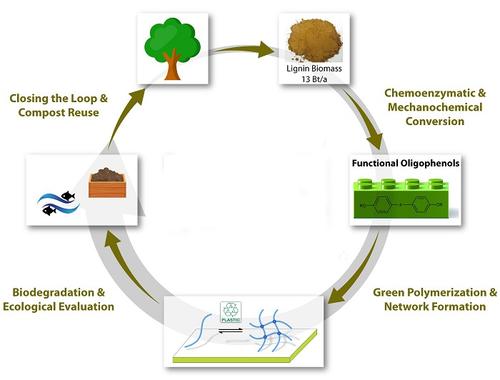
Rainer Haag is a Professor at the Department of Chemistry, Freie Universität Berlin, leading the Haag Group in the Institute of Chemistry and Biochemistry. His research focuses on biodegradable and sustainable materials, dynamic hydrogels, and polymeric nanosystems for biomedical applications. Department of Chemistry, Freie Universität Berlin Member of SFB 1449: Dynamic Hydrogels at Biointerfaces Collaborator in the StemGel startup project Co-founder of CSR|Berlin interdisciplinary research institute Research Interests: Development of stimuli-responsive polymers, multivalent virus inhibitors, and functional biointerfaces. Key projects include: Antiviral coatings using heteromultivalent polymers Thermoresponsive hydrogels for stem cell expansion Graphene derivatives for bacterial capture and disinfection Lignin upcycling for sustainable resin materials Supramolecular nanosystems for drug delivery Publication Trends highlight interdisciplinary work in polymer chemistry, nanotechnology, and biomedical applications. Recent articles focus on: 2D polyglycerols for virus interactions Redox-responsive nanogels Mucus-inspired adhesive hydrogels Tumor-targeting micelles Bacterial disinfection using graphene composites Labs & Collaborations include the Polymeric and Supramolecular Nanosystems subgroup, the Dynamic Hydrogels and Biointerfaces team, and partnerships with MIT in developing bioinspired adhesives. His group contributes to DFG-funded SFB 1449 and CSR|Berlin initiatives.
Kelly Arnold is an Associate Professor in the Department of Biomedical Engineering at the University of Michigan. Her research integrates systems engineering principles with immunology to investigate variability in immune responses across infection, vaccination, and injury, with a focus on computational modeling and clinical translation. Research Focus Systems-level immune response modeling Vaccination and antibody functionality Vaginal microbiome-host interactions Chronic lung disease progression Computational serology and proteomics Recent Work Her 2025 studies examine SARS-CoV-2 vaccination responses in cancer patients and computational frameworks for vaginal probiotics. Earlier works (2024-2007) span COPD progression, lupus fibrosis, HIV susceptibility, and tissue engineering for fertility preservation. Methodologies include proteomic profiling, network modeling, and microfluidic systems.
Konstantinos Kalogeropoulos is an Assistant Professor at the Department of Biotechnology and Biomedicine, Technical University of Denmark (DTU), leading research at the Cell Diversity Lab. His work bridges proteomics, computational biology, and snake venom research. Current projects: "The Proteomic Landscape during Influenza Infection" (2022-2025) Supervisor for PhD projects on protease network rewiring in psoriasis and wound exudate degradomics Research interests include: Proteomic analysis of inflammatory diseases Snake venom toxin structure prediction Extracellular matrix biomechanics De novo peptide sequencing algorithms Computational modeling of protease networks Recent article trends demonstrate his work in • Database-free proteomics (InstaNovo/InstaNexus) • Snake venom pathophysiology (V-ToCs clustering) • Inflammatory disease biomarkers (psoriasis, impaired healing) • Extracellular matrix mechanics (fibronectin tension, gut inflammation) Advising: Supervises PhD students Polhaus, C. J. M. and Haack, A. M., focusing on protease networks and wound healing.
Dr. Carla Vilela is an Assistant Professor in the Department of Chemistry at the University of Aveiro and Principal Researcher at CICECO. She coordinates the Sustainable Materials research line and leads projects on cellulose-based materials and circular economy. Her research focuses on sustainable materials from cellulose and renewable resources for applications in water remediation, food packaging, and textiles. Education includes a PhD in Chemistry from the University of Aveiro and postdoctoral work at CICECO and ISIS Neutron and Muon Source (UK). Research interests include: Development of cellulose-based functional materials Nanocomposites for biomedical applications Sustainable packaging solutions Biopolymer modification and characterization Publications demonstrate strong focus on cellulose nanocomposites, bioprinting bioinks, and active packaging. Recent articles frequently involve nanocellulose modifications, drug delivery systems, and sustainable material design. Awards include being named among World's Top 2% Scientists annually since 2020. Funding includes national projects (Cell4Janus) and EU collaborations (PRIMA Im-Pack). Leads the BioPol4Fun research group and supervises 6 PhD students. Current projects explore cellulose-based microrobots, resin valorization, and marine biopolymers.
Professor Hanadi Sleiman is a renowned academic in the Department of Chemistry at McGill University, specializing in DNA-based nanomaterials and their applications in drug delivery and supramolecular chemistry. She holds leadership roles, including Director of the NSERC CREATE training program in Nucleic Acids and President of the International DNA Nanotechnology Society (ISNSCE). Her research focuses on engineering DNA nanostructures for targeted therapies, such as cancer treatments, and advancing materials chemistry through DNA-functionalized systems. Education: Ph.D. in Chemistry, Stanford University (1990) Postdoctoral Fellow, University of Louis Pasteur (1993) Research Interests: Professor Sleiman’s work combines synthetic chemistry with DNA self-assembly to create programmable materials. Her lab designs DNA cages for drug encapsulation, explores DNA-minimal approaches to scalable materials, and integrates DNA with nanoparticles, polymers, and metals for biomedical applications. Key areas include cancer therapy, biosensors, and enzyme mimics. Awards & Honors: Fellow of the Royal Society of Canada (2017) Killam Research Fellowship (2018) R. U. Lemieux Award in Organic Chemistry (2018) William Dawson Scholar Award (2004–2012) Grants & Collaborations: She directs the NSERC CREATE program and collaborates with institutions like the Quebec Centre for Advanced Materials (QCAM) and the McGill Centre for Structural Biology (CRBS). Her training initiatives emphasize nucleic acid therapeutics and diagnostics. Labs & Teams: Her Sleiman Group at McGill develops innovative DNA architectures in the Otto Maass laboratory, with a focus on translational research for clinical applications.
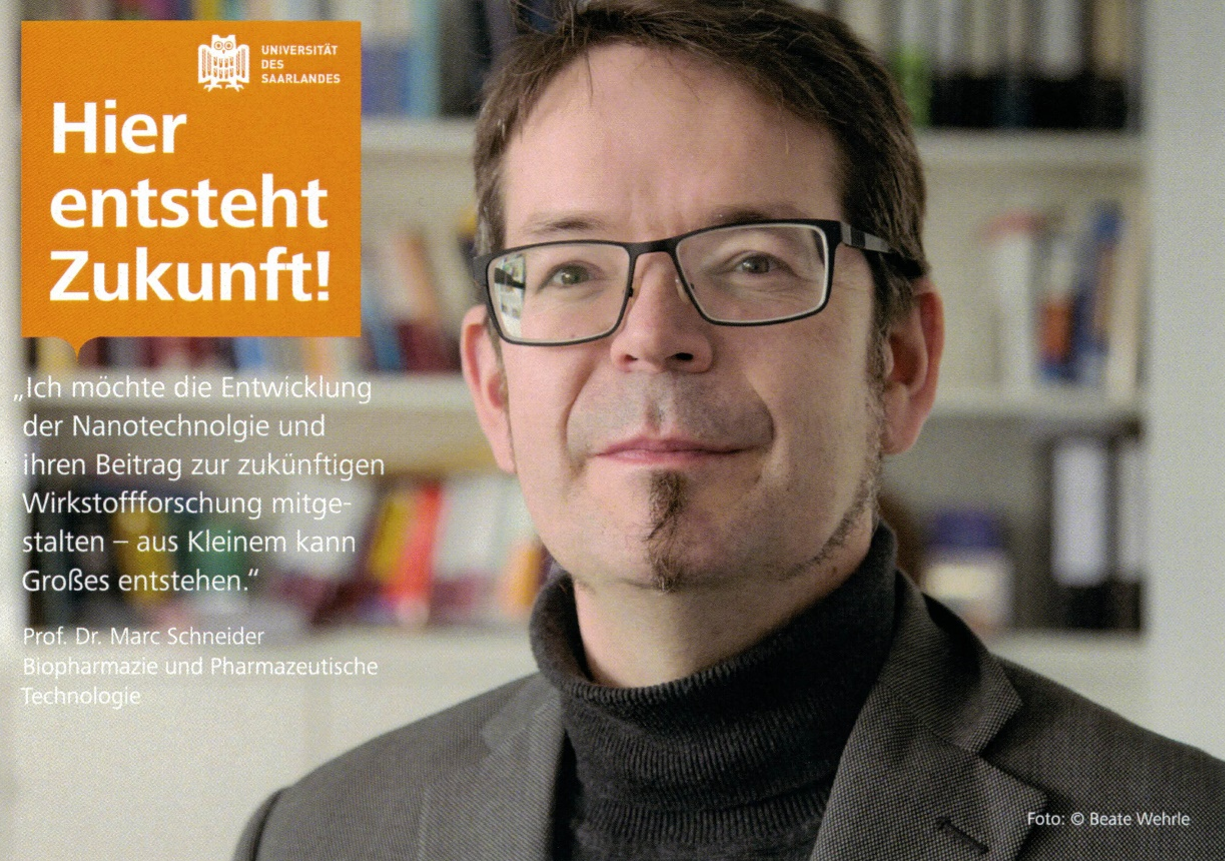
Prof. Dr. Marc Schneider holds a professorship in Biopharmaceutics and Pharmaceutical Technology at Saarland University's College of Pharmacy . His research focuses on colloidal drug delivery systems, particularly nanostructured and non-spherical particle engineering for overcoming biological barriers in pulmonary and transdermal applications. He leads an internationally recognized lab in Saarbrücken, collaborating with Helmholtz Institute for Pharmaceutical Research Saarland (HIPS) and trinational institutions. Research Highlights: Development of inhalable nano/microparticle systems Surface modification of gelatin nanoparticles Characterization of mucus-penetrating particles 3D printing for microneedle fabrication Atomic Force Microscopy (AFM) for nanoparticle analysis Selected Scientific Awards: European Journal of Pharmaceutics and Biopharmaceutics Best Paper Award (2018) for mucus-penetrating nanoparticles Recognized in 'Ausgezeichnete Orte im Land der Ideen' competition (2018) for 'Nano-Mais' drug delivery system Collaborative Networks: Co-editor for Advanced Drug Delivery Reviews special issue on biological barriers Key participant in trinational Master's program in Biomedicine with Strasbourg, Mainz, and Luxembourg Active in Controlled Release Society (CRS) conferences and local chapters
Christos Tapeinos is a Lecturer in Pharmaceutical Sciences at the University of Manchester, specializing in pharmaceutical nanotechnology for treating brain diseases (e.g., glioblastoma, neuroinflammation) and pancreatic cancer. His research focuses on developing smart nanomedicines, advanced in vitro models (e.g., fluidic systems mimicking brain environments), and stimuli-responsive nanomaterials to overcome biological barriers like the blood-brain barrier. He leads the development of skin-mimicking models for subcutaneous drug delivery as a Co-Investigator in the HALo program. Education: Docent in Pharmaceutical Nanotechnology (2022) PhD in Materials Science (2013) MSc in Materials Science (2010) BSc in Materials Science (2006) Research Interests: Drug delivery systems, nanoparticle engineering, in vitro disease models, biomimetic materials, and translational nanomedicine. He integrates nanotechnology with precision medicine to address complex diseases. Recent Articles Trends: Focus on nanoparticle-cell interactions, phototherapy systems, graphene-cerium oxide hydrogels, and targeted theranostics. Highlights include ROS-scavenging systems and multi-stage nanovectors for CNS pathologies. Awards: Marie Skłodowska-Curie Actions Fellowship. Grants/Projects: Supported by EPSRC, The Royal Society, and Translation Manchester. Active in the Hub for Long-Acting Technologies (2024–2030). Labs/Teams: Leads research groups developing fluidic BBB models, skin-mimicking drug diffusion systems, and nanomaterial-based therapies.
Maria Manuela Pintado is Full Professor and Director of CBQF research center at Universidade Católica Portuguesa's Faculty of Biotechnology. She leads interdisciplinary research in sustainable food systems and functional ingredients. Research domains include: Valorization of agro-industrial byproducts Development of bioactive edible films Design of functional foods for chronic disease prevention Circular economy applications in food systems Recent publications (2023-2025) show strong focus on sustainable biomaterials and health-promoting ingredients, with notable increases in circular economy applications and precision nutrition studies. Key innovations include antiviral biopolymers from yeast and bioactive films for food preservation. Awards include recognition for circular economy innovations and upcycling research. Directs extensive EU-funded projects including THRIVE (€4M) and CIRCUL-A-BILITY, supervising large research teams and industrial partnerships.
Louise Hunter is an Associate Lecturer at the Oxford School of Nursing and Midwifery, Oxford Brookes University, where she contributes to both undergraduate and postgraduate teaching in midwifery. She is actively involved in research, supervision, and professional development, with a strong focus on improving maternity care and the experiences of women and midwives. Education: PhD MA (Oxon) RM (Registered Midwife) Her research interests revolve around enhancing midwifery care through innovative models such as mindfulness training and group antenatal care. She has investigated mindfulness as a tool to improve workplace culture and support women during labor and early parenthood. Her work on the NIHR-funded REACH project explored group antenatal care, and she continues to research water birth feasibility, anemia in pregnancy, and equity in midwifery education. Her recent publications demonstrate a consistent focus on maternal and newborn health, midwifery education, and service user empowerment. Themes across her work include health equity, particularly for Black, Asian, and Minority Ethnic (BAME) students and birthing people, evidence-based practice, and the integration of psychological and social support into maternity care. Scientific Awards and Recognition: Fellow of the Higher Education Academy Louise Hunter is also a member of the Royal College of Midwives (RCM) and actively supervises research students, including Claire Litchfield, whose work examines water immersion in labor for obese women. She is involved in the Maternity Care (OxMater) research group and contributes to developing initiatives that involve service users in midwifery recruitment and training. Her work bridges clinical practice, education, and research, aiming to create more inclusive, effective, and compassionate maternity services.
Univ.-Prof. Dr. med. Martin A. Kriegel serves as full Professor and Department Head of the Department of Translational Rheumatology and Immunology at the Institute of Musculoskeletal Medicine, University of Münster, while maintaining an active laboratory at Yale School of Medicine. He leads the Section for Rheumatology and Clinical Immunology (SRKI) at Medical Clinic D, where his team integrates clinical care with cutting-edge microbiome research. His department operates from Röntgenstraße 21 and Von-Esmarch-Str. 54 in Münster, Germany, with extensive collaborations including the "Cells in Motion" research initiative and the CiM-IMPRS graduate program. Dr. Kriegel's research program focuses on the critical interface between host immunity and microbiota, particularly investigating how gut commensals translocate to host tissues and trigger autoimmune responses. His laboratory pioneered the discovery that specific pathobionts like Enterococcus gallinarum and certain Lactobacillus strains can translocate from the gut to mesenteric lymph nodes, liver, and other sites, driving autoimmune responses through molecular mimicry of human autoantigens. His work has established fundamental mechanisms by which microbiota influence rheumatic diseases, cutaneous autoimmunity, and cancer immunology, with particular emphasis on Ro60 autoantigen mimicry, TLR7-dependent pathways, and diet-microbiome interactions. The laboratory employs advanced techniques including gnotobiotic mouse models, humanized systems, and detailed molecular characterization of host-pathobiont interactions. Analysis of Dr. Kriegel's publication record reveals a consistent trajectory of high-impact research connecting microbiome dynamics to autoimmune pathogenesis. His most recent work (2023-2025) demonstrates increasingly sophisticated understanding of how specific bacterial strains influence disease phenotypes across multiple autoimmune conditions, with notable advances in identifying shared microbiome signatures across lupus and inflammatory bowel disease. The publications show progressive refinement from initial observations of microbial translocation to detailed mechanistic insights into tryptophan catabolism pathways, structural basis of molecular mimicry, and diet-sensitive microbial triggers. Dr. Kriegel's scientific recognition includes US Patent No. 11,058,756 B2 for compositions treating autoimmune diseases by reducing enterococcus, reflecting the translational potential of his research. His laboratory receives substantial funding, most notably a $3 million award from the Lupus Research Alliance for the TransLuMi project investigating gut pathobiont translocation in systemic lupus erythematosus. As an educator and mentor, Dr. Kriegel directs a substantial research team including multiple postdocs (Drs. Marcia Pereira, Nathalie Becker), PhD candidates (Anna Brinkhege, Carina Brune, Helen Fuhrmann), and laboratory specialists. He participates in the CiM-IMPRS graduate program and supervises medical students through the MedK program. His laboratory currently manages multiple significant research projects including: (A) intestinal wall permeability and pathobiont translocation in autoimmunity; (B) diet-environment-microbiome interactions; (C) microbiota disruption of immunological tolerance; and (D) microbiome roles in lymphoma development. The Kriegel laboratory maintains state-of-the-art facilities at both Münster and Yale, with specialized capabilities in gnotobiotic research, microbiome analysis, and immune profiling. His team collaborates with international partners including Dr. Eran Elinav at Weizmann Institute, Dr. Nissan Yissachar at Bar-Ilan University, Prof. George Tsokos at Harvard, and Prof. Ilana Brito at Cornell University. The laboratory's website (https://www.medizin.uni-muenster.de/mikrobiom/startseite/) details ongoing projects and research opportunities.
Catherine Bert is a Researcher affiliated with the University of Namur (UNamur), based in the Center for Vulnerabilities and Societies Transitions within the Philosophical Space of Namur. She holds a Doctorate in Philosophy (UNamur) and multiple diplomas in Sociology, International Relations, and Comparative Politics from Université catholique de Louvain (UCL). Her academic roles include being a Professor of Philosophy, Ethics, Anthropology, and Sociology at the IES Parnasse-Deux-Alice in Brussels, a member of the ethics committee at CHR de la Haute Senne, and an editorial board member of the journal Les politiques sociales . Research Interests: Dr. Bert specializes in clinical ethics, bioethics, and pandemic-related healthcare ethics. Her work intersects with sociological and anthropological perspectives, focusing on solidarity practices, care ethics, and gender-based violence in medical contexts. She actively contributes to the United Nations Sustainable Development Goals, particularly in eradicating poverty and promoting health equity. Projects & Activities: She has led or collaborated on projects like the 'Universality of Values in Bioethics' and 'Virtue Ethics in Care Practices Analysis'. Her research spans ethical dilemmas in healthcare, including reproductive rights and pandemic response. She frequently participates in workshops, conferences, and colloquia on ethics and healthcare, such as the 'Certificat interUniversitaire en Éthique des Soins de Santé (CUESS)'. Publications: Her recent work addresses solidarity initiatives, crisis care ethics, and gender violence in reproductive healthcare. She also explores molecular mechanisms in skin diseases, including fungal infections and epidermal barrier dysfunction. Affiliations & Roles: Beyond academia, she advises on ethical committees and editorial boards, emphasizing translational ethics into policy and practice.
Tommy Löfstedt is an Associate Professor at Umeå University , affiliated with the Department of Computing Science and the Department of Mathematics and Mathematical Statistics. His research focuses on machine learning , computer vision , and medical image analysis , with applications in life sciences, radiation therapy, and biomedical imaging. He leads multiple research projects, including AI-driven delineation in radiation therapy, quantitative MRI for radiotherapy, and machine learning for plant nutrient uptake. Current research emphasizes structured regularization methods to improve model interpretability and robustness. Key applications include medical image segmentation , Alzheimer's classification , and uncertainty estimation in MRI . Recent publications highlight his work on morphological regularization , adversarial attack mitigation , and multi-task learning in medical imaging contexts. His projects span 2022–2026 with funding for pediatric oncology automation and gynecological cancer staging. Affiliated with both computing and mathematical departments, he bridges algorithm development with applied mathematical frameworks in medical and life science domains.
Professor Sabine Eming is a Principal Investigator at the Department of Dermatology & FMNS at the University of Cologne, affiliated with the CMMC and collaborating with CECAD. Her research focuses on the molecular basis of age-related skin pathologies and regenerative responses. Investigates tissue regeneration, immunometabolism, and TOR signaling Develops therapeutic strategies for injured/aging tissues Uses cross-species models (mice, zebrafish, Drosophila, humans) Her work bridges basic science and clinical expertise to translate findings into therapeutic approaches, particularly examining: Metabolic reprogramming in wound healing Immune system's role in regeneration vs. scarring Lipid synthesis and filaggrin processing in skin barrier formation Scarless repair mechanisms in zebrafish vs. mammals She leads research into molecular control systems including: Cell death regulation (FADD-RIPK3 pathways) Nutrient-sensing TOR pathway in skin aging Glutamine metabolism in stem cell maintenance Her group develops genetically modified mouse models and collaborates on clinical trials for impaired healing conditions.
Dr. Kanwarpal Singh is an Associate Professor in the Department of Electrical & Computer Engineering at McMaster University. His research focuses on developing novel endoscopic devices using advanced optical imaging techniques, including optical coherence tomography (OCT), hyperspectral imaging, and multiphoton microscopy. His work aims to improve imaging of internal organs for medical applications, particularly in gastrointestinal and cardiovascular diagnostics. Dr. Singh leads a lab dedicated to advancing biomedical technologies, with a strong emphasis on device innovation and clinical translation. He teaches courses such as ECE 6BB3 (Cellular Bioelectricity) and IBEHS 4QZ3 (Modelling of Biological Systems). His research interests span biomaterials, health technology, and imaging systems. He has developed endoscopic devices for longitudinal monitoring of inflammatory bowel disease and coronary artery crystal detection. His publications emphasize optical imaging advancements, including motion-corrected microscopy and three-dimensional luminal reconstruction. Dr. Singh collaborates on projects involving tissue engineering, drug delivery, and material science. His work bridges engineering and medicine, with applications in cardiology, dermatology, and neurology. Dr. Singh’s lab also explores elastography and Brillouin microscopy for biomechanical property assessment. He has contributed to portable OCT systems and smartphone-based imaging platforms. While no formal awards are listed, his extensive publication record reflects significant contributions to biomedical imaging and device development. His research addresses clinical challenges through cutting-edge optical technologies, aiming to improve diagnostic accuracy and patient outcomes.
Freddy Radtke is a Full Professor at the School of Life Sciences at École polytechnique fédérale de Lausanne (EPFL), where he leads the Radtke Lab (UPRAD) within the Swiss Institute for Experimental Cancer Research (ISREC). He holds multiple affiliations across EPFL, including in the SSV-ENS and EDMS-ENS programs, reflecting his broad engagement in teaching and doctoral education in life sciences. His research is centered on the molecular mechanisms of stem cell maintenance and differentiation, particularly through the Notch signaling pathway. His work spans several self-renewing systems: the hematopoietic system, skin, and gut. Key findings include the identification of Delta-like 4 as the essential Notch1 ligand for T cell commitment, the tumor suppressor role of Notch1 in skin, and its critical function as a gatekeeper of intestinal progenitor cells by repressing CDK inhibitors. These discoveries have significant implications for understanding cancer development and regenerative processes. The recent publications highlight a consistent focus on Notch signaling across diverse biological contexts—hematopoiesis, skin development, intestinal regeneration, and stem cell systems biology. The keywords and subfields reflect deep mechanistic investigations into cell fate decisions, signal transduction, and tissue homeostasis, with strong translational relevance to cancer and inflammatory diseases. Freddy Radtke has mentored numerous Ph.D. students and is actively involved in teaching courses such as Stem Cells and Organoids and Scientific Project Design in Translational Oncology . His lab conducts research supported by external funding, and he collaborates across disciplines to integrate systems biology with stem cell research. The lab includes scientists, doctoral assistants, technicians, and administrative staff, indicating a vibrant and multidisciplinary research team.