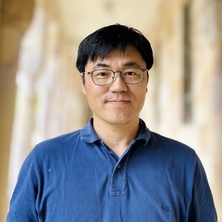
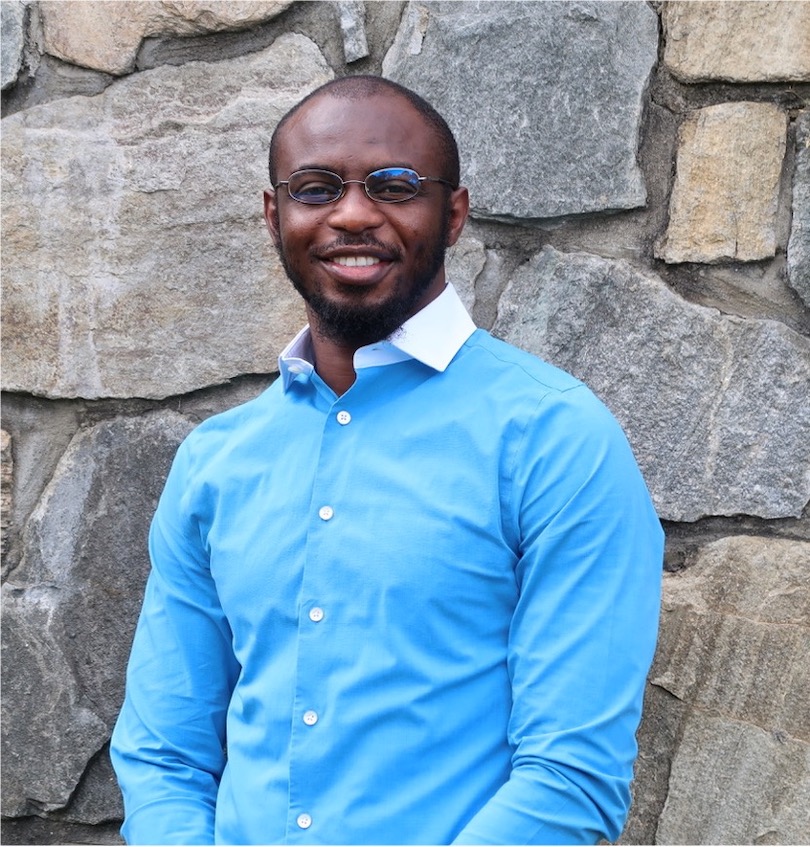
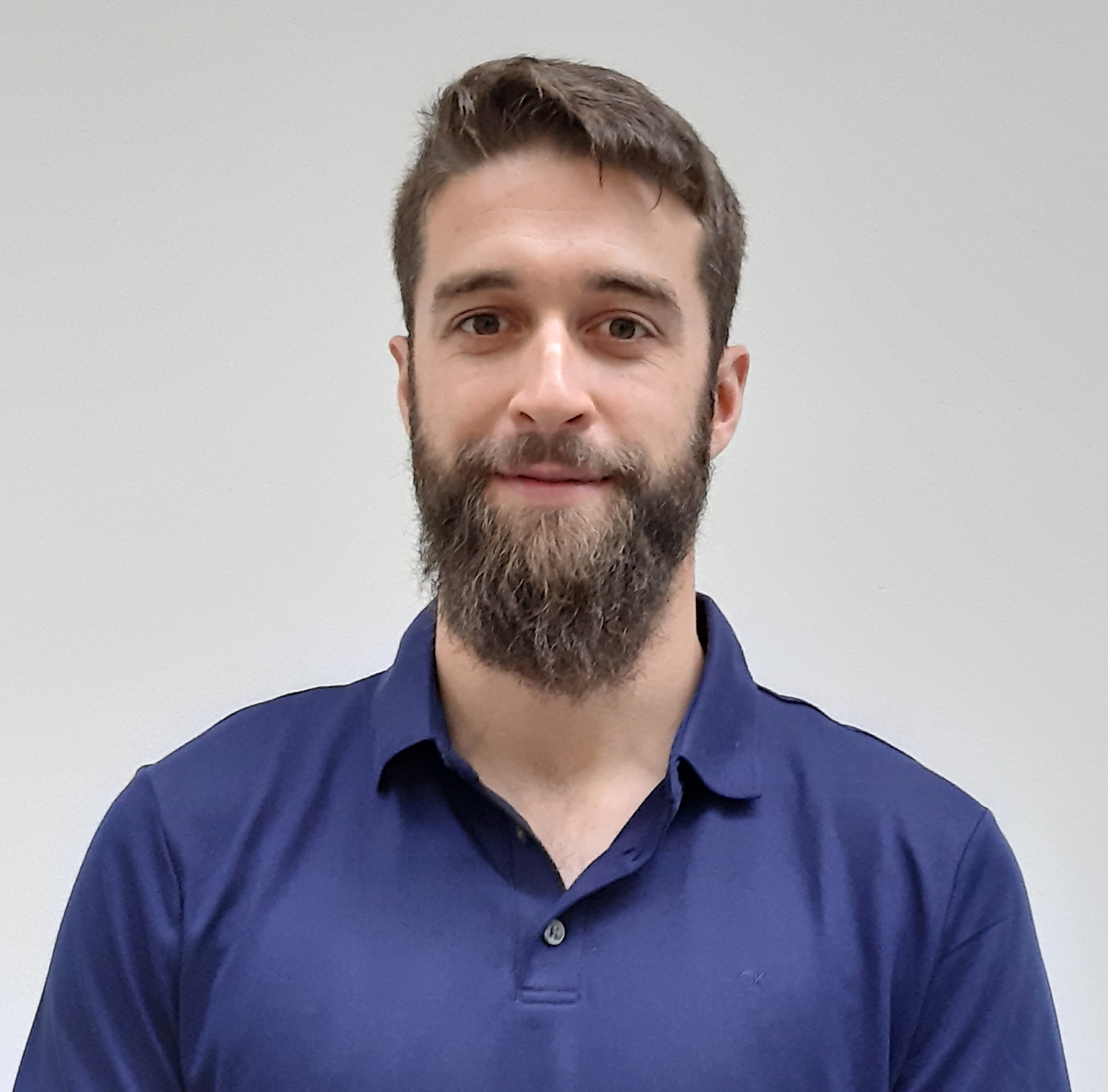
Dr. Leah Perlmutter is a tenure-track Assistant Professor in the Computer Science Department at Grinnell College, focusing on inclusive pedagogy and student belonging in post-secondary CS education. She earned her Ph.D. (2023) and M.S. (2020) in Computer Science and Engineering from the University of Washington, and her B.A. (2012) in Computer Science and Engineering from Colby College. Her research examines how course policies and teaching assistant interactions impact student inclusion in computer science, with a particular emphasis on resubmission opportunities and justice-centered approaches to teaching. Her work also includes human-robot interaction projects like GestureCalc (an eyes-free calculator for touchscreens) and EMAR (a social robot for emotional clarity support). Recent publications explore themes such as algorithmic ethics in education, student belonging in CS, and accessible interface design. She received the NSF Graduate Research Fellowship (2017) and the Outstanding Female Engineer Award (2018). At Grinnell, she teaches courses like Functional Problem Solving, Software Design, and Algorithms, Ethics, and Society.
Jukka Manner is a Full Professor (tenured) of Networking Technology at Aalto University's Department of Communications and Networking (Comnet), School of Electrical Engineering. With a career spanning over two decades in internet technologies, he leads research in networking, wireless systems, and energy-efficient ICT solutions. Dr. Manner received his MSc (1999) and PhD (2004) degrees in computer science from the University of Helsinki. His academic journey has been marked by significant contributions to internet standardization through the IETF since 1999, where he served as co-chair of the NSIS working group. Professor Manner's research focuses on networking, software and distributed systems, with particular emphasis on wireless and mobile networks, transport protocols, energy efficient ICT and cyber security. His work bridges theoretical advancements with practical applications, addressing critical challenges in modern communication systems, sustainable networking practices, and security frameworks. His research group has made significant contributions to 5G technologies, UAV communications, and energy-efficient network design. His extensive publication record shows a clear evolution toward sustainability in networking technologies, with recent work focusing on energy efficiency in 5G systems, sustainable web technologies, and the environmental impact of digital infrastructure. The research demonstrates strong interdisciplinary connections between telecommunications engineering, computer science, and environmental science, with particular emphasis on reducing the carbon footprint of digital systems while maintaining performance. Cross of Merit, Signals (2014) Medal for Military Merits for contributions in national defence and C4 (2015) Professor Manner has supervised over 200 MSc theses and more than 20 doctoral dissertations, establishing himself as a dedicated mentor in the field. He has been principal investigator and project manager for over 15 national and international research projects, including serving as Academic Coordinator for the Finnish Future Internet research programme (2008-2012). His leadership extends to conference organization, having served as local co-chair of Sigcomm 2012 in Helsinki, and active participation as a peer reviewer and member of various Technical Program Committees. As an active contributor to internet standardization through the IETF, Professor Manner's work has practical impact on global networking technologies. His research group maintains strong connections with industry partners and participates in shaping future networking standards and practices, particularly in the areas of sustainable networking, 5G evolution, and security frameworks for emerging technologies.
Prof. Dr. Silvia Schneider is a distinguished Professor of Clinical Child and Adolescent Psychology at Ruhr University Bochum, where she serves as Director of the Research and Treatment Center for Mental Health (FBZ). She also coordinates the Bochum-Marburg site of the German Center for Mental Health (DZPG). Previously, she held professorial positions at the University of Basel, where she served as Dean of the Psychology Faculty. Her academic career spans over three decades with significant contributions to child and adolescent mental health research. Dr. Schneider earned her doctorate from Philipps-University Marburg in 1992 with highest honors (summa cum laude) for her dissertation on "Psychological Transmission of Panic Syndrome." She completed her habilitation at Technical University Braunschweig in 2002. Her academic qualifications include board certification as a Psychological Psychotherapist (1999) and specialized credentials in behavioral therapy for children and adolescents (1998). Dr. Schneider's research primarily focuses on the etiology, prevention, and treatment of emotional disorders in childhood and adolescence. Her work examines familial transmission of emotional disorders, clinical baby and infant research, and diagnosis of mental disorders across the lifespan. She has pioneered research on anxiety disorders, particularly separation anxiety, and has developed innovative treatment approaches including exposure-based therapies. Her current work increasingly integrates neurobiological perspectives with clinical interventions, examining brain-behavior relationships in anxiety disorders through neuroimaging studies. Her extensive publication record demonstrates a consistent focus on child and adolescent mental health, with recent work expanding into digital interventions, virtual reality therapies, and large-scale multicenter studies examining anxiety disorders from both clinical and neurobiological perspectives. Her research bridges basic science with clinical application, maintaining a strong focus on evidence-based interventions for children and families. Visiting Professor at Anxiety and Depression Research Center, UCLA (2015-2016) Visiting Scholar at Center for the Treatment and Study of Anxiety, University of Pennsylvania (2009-2010) Honorary Professorship at University of Surrey Roehampton (2003-2010) Swiss National Science Foundation Professorship (2003-2006) DFG Habilitation Scholarship (1998-2001) Cassianeum Educational Foundation Dissertation Prize (1994) Dr. Schneider has successfully secured substantial research funding from major German and international funding bodies including the German Research Foundation (DFG), German Federal Ministry of Education and Research (BMBF), and Swiss National Science Foundation. Her current projects include "The Role of Parents in Child Development in the Context of Immigration" (DFG), "Mobile Research Laboratory" (DFG), and "Improving Mental Health in Refugee Families" (BMBF). As Director of the FBZ, she leads a large interdisciplinary team conducting cutting-edge research while providing evidence-based clinical services. As Director of the Research and Treatment Center for Mental Health (FBZ) at Ruhr University Bochum, Dr. Schneider oversees a comprehensive research infrastructure supporting studies from basic developmental science to clinical interventions. The FBZ serves as a hub for interdisciplinary collaboration across psychology, psychiatry, and neuroscience, with particular strengths in anxiety disorders research, early intervention, and innovative treatment approaches including digital health solutions.
Eshed Ohn-Bar is an Assistant Professor in the Department of Electrical & Computer Engineering at Boston University. He leads the Human-to-Everything (H2X) Lab, focused on developing intelligent systems for assistive and autonomous technologies. His research bridges machine perception, learning, and human-computer interaction, with applications in autonomous driving and accessibility for visually impaired individuals. Educated at UCLA (BS in Mathematics, 2010; MEd, 2011) and UCSD (PhD in Electrical Engineering, 2017), he holds a Humboldt Fellowship and has received the IEEE ITS Society Best PhD Dissertation Award (2017) and the 2025 BU Early Career Excellence in Research Award. His work emphasizes robust autonomy, real-time assistance, and inclusive design, collaborating with industry partners like Motional and receiving NSF grants (e.g., IIS-2152077). Research interests include autonomous systems, computer vision, and assistive technologies. Recent trends in publications highlight advancements in decision-making frameworks, neural volumetric models, and scalable learning for navigation. His lab’s projects address challenges in accessibility, such as blind motion generation and inclusive autonomous vehicle design. Awards: Humboldt Fellowship, IEEE ITS Best Dissertation, BU Early Career Award Grants: NSF IIS-2152077 Labs/Teams: H2X Lab, collaborating on projects with industry and academic partners
Wang Jianmin serves as Professor and Doctoral Supervisor at Tongji University's School of Art and Media, concurrently holding the position of Vice Dean since 2014. With a computer science PhD from Sun Yat-sen University, he bridges engineering and media arts through pioneering research in intelligent communication systems and digital media interfaces. His work focuses on human-centered design for emerging technologies, particularly in automotive and virtual environments. His academic foundation includes: PhD in Engineering (Computer Software and Theory), Sun Yat-sen University (2003) Master's in Computational Mathematics, Sun Yat-sen University (1999) Bachelor's in Computational Mathematics, Nankai University (1996) Professor Wang's research centers on intelligent communication systems and digital media art, with significant contributions to automotive human-machine interfaces (HMI), virtual reality applications, and user experience methodologies. His investigations into driver-robot transparency, augmented reality navigation, and mixed-reality educational platforms demonstrate interdisciplinary innovation connecting computer science, cognitive psychology, and design theory. Current projects explore AI-driven media systems for urban environments and safety-critical interaction frameworks. Analysis of his recent publications reveals a cohesive research trajectory focusing on automotive HMI (40% of output), human-robot interaction (30%), and mixed reality applications (30%). His work consistently emphasizes experimental validation through driving simulators and user studies, yielding practical design guidelines for industry implementation. The interdisciplinary nature spans computer science, cognitive ergonomics, and media studies, with increasing emphasis on AI integration in communication systems. His scientific recognition includes national and provincial awards for innovation in human-computer interaction and educational technology: 2019 China Industry-University-Research Innovation Award for automotive HMI systems 2020 China User Experience Alliance Excellence Award 2012 Guangdong Dingying Science and Technology Award Multiple national/provincial science progress awards (2001-2009) 2020 Tongji University Teaching Achievement Award for curriculum development As an educator, Professor Wang mentors graduate students in national design competitions including the 'Core Cup' Future Automotive HMI Challenge and International User Experience Innovation Competition. His research program is supported by substantial funding from diverse sources: National Grants: National Natural Science Foundation projects on driver behavior modeling and cognitive testing Ministry of Education: 15+产学合作 projects for virtual simulation labs and curriculum development Shanghai Municipal: Publicity Department funding for smart city media research Industry Partnerships: Huawei (intelligent vehicle HMI), SAIC Motor (AR-HUD design), and automotive electronics firms He directs Tongji's Media Experiment and Practice Teaching Center and the All-Media Research Institute, leading teams developing virtual simulation platforms for emergency news reporting, intelligent vehicle interaction testing systems, and mixed reality educational tools. Current initiatives focus on AI-enhanced media art for urban applications and next-generation HMI frameworks for autonomous mobility solutions.
Dongwook Yoon is an Associate Professor at the Department of Computer Science , University of British Columbia , and serves as Director of the SOCIUS Lab . He actively contributes to research in Human-Computer Interaction, Human-AI Interaction, and Virtual/Augmented Reality as a member of the Designing for People (DFP) and CAIDA research clusters. Education : PhD in Computer Science from Cornell University (2017), MS (2009) and BS (2007) in Computer Science from Seoul National University Research Focus : Designing socio-technical systems that bridge the gap between technology and human social processes, with innovations in AR/VR, multimodal interaction, and inclusive design Article Trends show his work spans: Temporal and bichronous learning environments AI self-clones and ethical implications Income inequality in virtual platforms Enhanced multimodal collaboration in VR Eyes-reduced interfaces for situational impairments Speculative participatory design for gig economy challenges Scientific Awards include: Google Academic Research Award (2024) Best Paper Award at CHI 2024 High Impact Award in Educational Technology (2024) CHCCS/SCDHM Graphics Interface Early Career Award (2023) Multiple Honorable Mentions at CHI, DIS, and CSCW Students & Collaborators range from active PhD candidates (Anika Sayara, Yuri Kim) to notable alumni (Thitaree Tanprasert, Ashish Chopra) across his SOCIUS Lab projects. His research receives funding from NSERC , KIST , Adobe , Microsoft , and Google grants.
Paul Boersma is a Professor of Phonetic Sciences at the University of Amsterdam within the Faculty of Humanities. His research explores how phonetic, phonological, and morphological phenomena emerge through computational modeling using artificial neural networks and Optimality Theory, with a focus on multi-level constraint interactions and distributional learning. University of Amsterdam Faculty of Humanities Phonetic Sciences Key research areas include: Computational Modeling : Simulations of phonological category emergence from phonetic data Optimality Theory : Gradual Learning Algorithm applications BiPhon Framework : Parallel bidirectional phonology/phonetics models Statistical Learning : Cross-situational and distributional learning mechanisms Recent publications emphasize: 2025: Inclusive speech recognition systems using Whisper model 2025: F0 ratio analysis for creaky voice diagnostics 2024: Prosodic clitics in child speech and checked tones in Shanghai Chinese 2023: Distributional learning in developmental language disorder contexts 2022: Substance-free phonological features and ghost segment phenomena He has also contributed extensively to the Praat software for phonetic analysis, with continuous updates since 1993.
Associate Professor Dan Dongseong Kim is Deputy Director of UQ Cybersecurity and an Associate Professor at The University of Queensland (UQ), Australia. Previously, he held permanent academic positions at The University of Canterbury (UC), New Zealand (2011-2018) as a Senior Lecturer and Lecturer. His research focuses on Cybersecurity and Dependability for AI, IoT, Autonomous Vehicles, Cloud Computing, and Moving Target Defenses (MTD). Doctor of Philosophy in Computer Engineering from Korea Aerospace University Postdoctoral Research at Duke University (2008-2011) Visiting Scholar at University of Maryland (2007) Dan's work explores Graphical Security Models , Moving Target Defense for proactive resilience, and AI-Driven Cybersecurity with emphasis on adversarial robustness and interpretable models. His recent publications (2024-2025) span journals like IEEE Transactions on Dependable and Secure Computing and conferences such as DSN , addressing automated defense, evolving attacks, and hardware-aware security frameworks. He has advised 15 Ph.D. graduates, including researchers now at institutions like RMIT University, La Trobe University, and CSIRO's Data61. Current supervision includes projects on Automated Penetration Testing , AI-Based Intrusion Response , and Moving Target Defense . Dan's research is funded by agencies including the Republic of Korea's Agency for Defence Development and US Army Research Lab . His professional roles include Associate Editor for IEEE Communications Surveys and Tutorials and Steering Committee Chair for IEEE PRDC .
Lisa Heldke is a Professor in the Department of Philosophy at Gustavus Adolphus College and an affiliated faculty member in Gender, Women and Sexuality Studies. She has been a longstanding contributor to the academic community, teaching courses such as Modern Philosophy, American Philosophy, Feminist Philosophy, Critical Race Theory, and specialized seminars on food and eating. Her interdisciplinary work bridges philosophy with social justice, education, and culinary ethics. B.A. in Music and Philosophy from Gustavus Adolphus College M.A. and Ph.D. in Philosophy from Northwestern University Her research centers on American Philosophy , Feminist Philosophy , Critical Race Theory , and most notably, the Philosophy of Food . She critically examines food adventuring, colonialist attitudes in cuisine, and the ethical dimensions of eating. Her work explores how food shapes identity, community, and moral responsibility. Her recent and forthcoming publications reveal a deepening inquiry into biological interdependence—particularly parasitism and mutualism—suggesting a novel ontological framework rooted in eating relationships. This innovative direction reflects her ability to connect everyday practices with profound philosophical questions. Lisa Heldke’s scholarly contributions include influential books such as Exotic Appetites: Ruminations of a Food Adventurer and Philosophers at Table: On Food and Being Human , as well as co-editing Oppression, Privilege and Resistance . She is also on the editorial board of The Encyclopedia of Food and Agriculture Ethics (Springer). While specific details about student advising are not listed, her long-standing teaching career and mentorship through seminars suggest active engagement with students. She has no listed scientific awards in the provided texts, but her sustained publication record and editorial roles indicate significant recognition in her field. She is deeply involved in experiential learning, combining her philosophical inquiries with hands-on activities like baking bread in a backyard mud oven and studying sustainable agriculture. Her current research promises to expand the boundaries of philosophical thought by integrating ecological and biological realities into metaphysical and ethical frameworks.
Miriam Stock is Professor of Cultural Studies at the Institute of Humanities at Pädagogische Hochschule Schwäbisch Gmünd, where she also serves as Director of the Cultural Studies Department and Spokesperson for the Master's program 'Interkultur und Integration.' She is a founding member of the Center for Migration and Integration Studies 'Migration – Society – School.' Dr. Stock holds a PhD in Geography from Europa-Universität Viadrina Frankfurt (Oder) and completed her diploma in Geography at Ludwig-Maximilians-Universität München. Her academic journey includes research fellowships, organizational roles in international projects, and advisory work with refugee communities. Her research focuses on migration geographies, cultural theories, postcolonial approaches, urban development from post-migrant perspectives, and qualitative research methodologies. She examines migration and flight between the Arab region and Europe, urban development and consumption, rural perspectives on migration society, anti-discrimination in schools, critical masculinity and family studies, and theoretical-practical approaches. Dr. Stock's recent publications reveal a strong emphasis on transnational migration experiences, particularly Syrian refugee families, with attention to emotional dimensions, gender dynamics, and educational contexts. Her work frequently bridges theoretical frameworks with practical applications through projects like Erasmus Mundus Joint Master Program 'Education, Migration, and Diversity' (2024-2030). Success Story 2020 award for the Enable project As an advisor, Dr. Stock has supervised PhD candidates like Sara Mazzei (University of Calabria/PH Schwäbisch Gmünd) working on Arab-Islamic education systems in migrant experiences. Her grant portfolio includes significant Erasmus+ projects such as Enable (Self-learning for Arab refugee children) and PARENTable (Communicating with parents of newly migrated children), alongside research funded by the Werner-Zeller Foundation. Dr. Stock leads the Institute for Humanities and directs Cultural Studies department activities, including organizing lecture series on topics like 'Right Established - How the New Right Changes Education and Society,' 'Migration and Body,' and 'Emotions in Migration Society.'
Christopher G. Healey is the Goodnight Distinguished Professor of Analytics in the Institute for Advanced Analytics and a Professor in the Department of Computer Science at North Carolina State University. His research spans visualization, data analytics, text analytics, sentiment analysis, machine learning, cognitive psychology, computer graphics, and social media analytics. He has graduated 15 Ph.D. and 26 master's students and secured over $6 million in research funding from agencies including the National Science Foundation, Department of Defense, National Security Agency, Army Research Office, and various industry partners. He has published over 100 peer-reviewed articles and is a senior member of both IEEE and ACM, as well as a member of the NC State Academy of Outstanding Teachers. His research focuses on developing visualization techniques that leverage visual perception to support rapid, accurate, and effective analysis of large, complex datasets. More recently, he has been investigating machine learning for natural language processing and text analytics. His work includes projects on visualizing election results, sentiment estimation for social media, and wildfire narratives using large-scale social media data. His publications demonstrate a strong trend toward integrating machine learning with visualization, particularly for text analytics and social media analysis. He has made significant contributions to visualizing deep neural networks, cyber situation awareness, and pandemic response analytics, showing how visualization can enhance understanding of complex systems and large datasets across multiple domains. IBM Faculty Award (2007, 2008, 2010, 2011, 2012) Senior member, Association of Computing Machinery (ACM) (2007) Senior member, Institute of Electrical and Electronics Engineers (IEEE) (2007) NC State Academy of Outstanding Teachers inductee (2003) National Science Foundation Faculty Early CAREER Award (2001) He has successfully mentored numerous graduate students and secured significant research funding across multiple projects. His work with the Laboratory for Analytic Sciences, National Science Foundation, and Department of Defense demonstrates strong industry and government partnerships. His recent projects focus on visualizing social media narratives, deep neural networks for text understanding, and predictive analytics for large document collections. He leads research groups focused on visualization and analytics, working with teams to develop innovative approaches for data exploration and analysis. His current work continues to push the boundaries of how visualization can be used to enhance understanding of complex data across domains including public health, cybersecurity, and social media analysis.
Carlos Toxtli is an Assistant Professor at Clemson University where he leads the Human-AI Empowerment Lab. His research applies Human-Centered AI to create fair workplace tools, focusing on NLP, computer vision, and crowdsourcing ethics. He holds a PhD in Computer Science from Northeastern University and previously worked at Google, Microsoft Research, and Snap Inc. Education: Ph.D. Computer Science, Northeastern University M.S. Innovation & Technological Entrepreneurship, Monterrey Institute of Technology MBA, IEDE Business School B.S. Computer Science, University of the Valley of Mexico B.S. Computer Engineering, National Autonomous University of Mexico Research Focus: Dr. Toxtli develops AI systems promoting workplace fairness through ethical frameworks. His work spans: 1) Human-AI collaboration for task management, 2) Bias mitigation in gig economies, 3) Multimodal interfaces for accessibility, and 4) Culturally adaptive systems. His lab explores how AI can augment human capabilities while ensuring transparency. Publication Trends: Recent works demonstrate strong focus on LLM reliability (7 papers), human-AI teaming (4 studies), and ethical AI frameworks (3 publications). Over 60% of 2024-2025 output addresses real-world deployment challenges. Awards: UNESCO IRCAI Global Top 100 project Google Apps Developer Challenge 1st Place Facebook Developers World Hack 1st Prize Intel Innovation Latin App 1st Prize NSF STIR Labs Research Grant Leadership: Founded the Human-AI Empowerment Lab securing $1.2M in NSF/industry grants. Supervises 8 PhD students in human-centered computing projects. Previously co-founded 5 tech startups including ComproPago (acquired by Coca-Cola FEMSA).
Garreth Tigwell is an Assistant Professor in the School of Information at RIT, co-directing the CAIR Lab with Dr. Kristen Shinohara. His research focuses on accessibility in digital design, particularly for disabled users, addressing challenges faced by novice and expert creators. His work spans topics like accessible prototyping tools, cultural considerations in design, and inclusive mixed reality interfaces. Education: BSc in Psychology, University of Dundee, 2012 MSc (Distinction) in User Experience Engineering, University of Dundee, 2014 PhD in Human-Computer Interaction (HCI), University of Dundee, 2019 Research Interests: Designing accessible digital systems for blind, deaf, and low-vision users Adaptable user interfaces for mixed reality and textured surfaces Cultural dimensions in accessibility pedagogy Authentication methods for visually impaired users Articles Trends: Recent work emphasizes AR/VR accessibility, cultural design frameworks, and haptic authentication. His studies often involve collaborations with global researchers and industry partners. Awards: Best Paper (MobileHCI 2022) CHI Honorable Mention (2023, 2024) NSF-funded research projects Advising & Grants: Active in mentoring graduate students and securing grants. His lab focuses on born-accessible AI tools and inclusive design education. Teaches courses like HCI Research Methods and Future Interactions. Labs/Teams: Co-leads the CAIR Lab, which develops technologies to bridge accessibility gaps in digital design and prototyping.
Habeeb Olufowobi is an Assistant Professor in the Department of Computer Science and Engineering at the University of Texas at Arlington (UTA), where he leads the Cyber-Physical System Security Lab. He holds a PhD in Computer Science from Howard University (2019) and previously served as a Lecturer at Howard before joining UTA in 2020. His research is centered on the security and trustworthiness of embedded and distributed systems, particularly in the domains of autonomous vehicles, IoT, and healthcare AI. He investigates cybersecurity challenges at the hardware-software interface in real-time systems and develops AI/ML models that are transparent, explainable, and equitable. His interdisciplinary work integrates principles from cybersecurity, real-time systems, and machine learning. The recent publications reflect a strong trend in securing cyber-physical systems using advanced AI techniques, with emphasis on intrusion detection, secure communication (e.g., named data networking), and robustness of autonomous systems. His work frequently appears in top-tier venues such as IEEE Transactions, VehicleSec, and ICMLA. Project Management Professional (PMP), PMI (2012–Present) Member, Institute of Electrical and Electronics Engineers (IEEE) (2020–Present) Habeeb has secured significant research funding, including an NIH grant on ethical AI for Chagas disease prediction and an AIM-AHEAD grant focused on health equity. He mentors several graduate students, including Paul Agbaje and Afia Anjum, who have received awards and internships at prestigious institutions like Los Alamos National Laboratory. He teaches courses in cloud computing, embedded systems, and information security, and serves as a faculty advisor for the National Society of Black Engineers (NSBE) at UTA. His lab, the Cyber-Physical System Security Lab, focuses on developing scalable and reliable security solutions for critical infrastructure, with growing emphasis on healthcare applications and fairness in algorithmic decision-making.
Dr. Jose Luis SANCHEZ LOPEZ is a Research Scientist at the Interdisciplinary Centre for Security, Reliability and Trust (SnT) of the University of Luxembourg, leading the Aerial Robotics Lab (AeRoLab) within the Automation & Robotics Research Group (ARG). He joined SnT in 2017 as a Postdoc Research Associate, promoted to Research Scientist in 2021. His research focuses on autonomous robotics, particularly aerial systems, emphasizing situational awareness, SLAM, and trajectory planning. Education: Ph.D. in Robotics (2017), M.Sc. in Automation & Robotics (2012), and Engineering degree in Industrial Engineering (2010), all from the Technical University of Madrid. Visiting Research: Arizona State University (2012), LAAS-CNRS (2014–2016). Research Interests: Multi-agent robotic systems, sensor fusion, localization/mapping, computer vision, machine learning, and trajectory control. He has authored over 56 peer-reviewed publications, with an h-index of 18. Projects: Leads projects like DEUS (PI), NEDA, ÄerdFly (PI), and RoboSAUR. Contributions span European, Luxembourg, and Spain-funded initiatives, focusing on autonomous systems, 5G integration, and construction-site robotics. Teaching: Lectured in MICS, BiCS, BING (Uni.lu) and GITI (UPM). Actively involved in academic service as a reviewer, editor, and competition participant (e.g., IMAV, IARC). Outreach: National Coordinator for Luxembourg’s Robotics European Week, promotes robotics education in schools and public events.