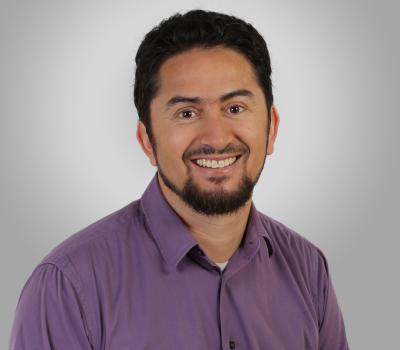
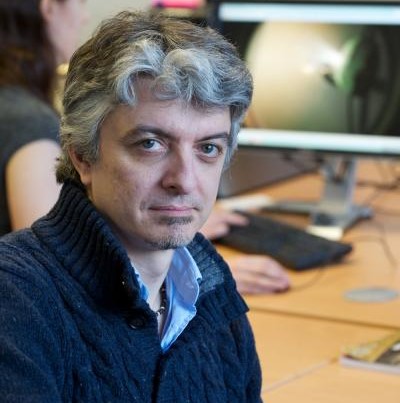
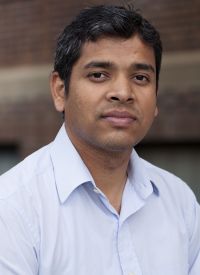
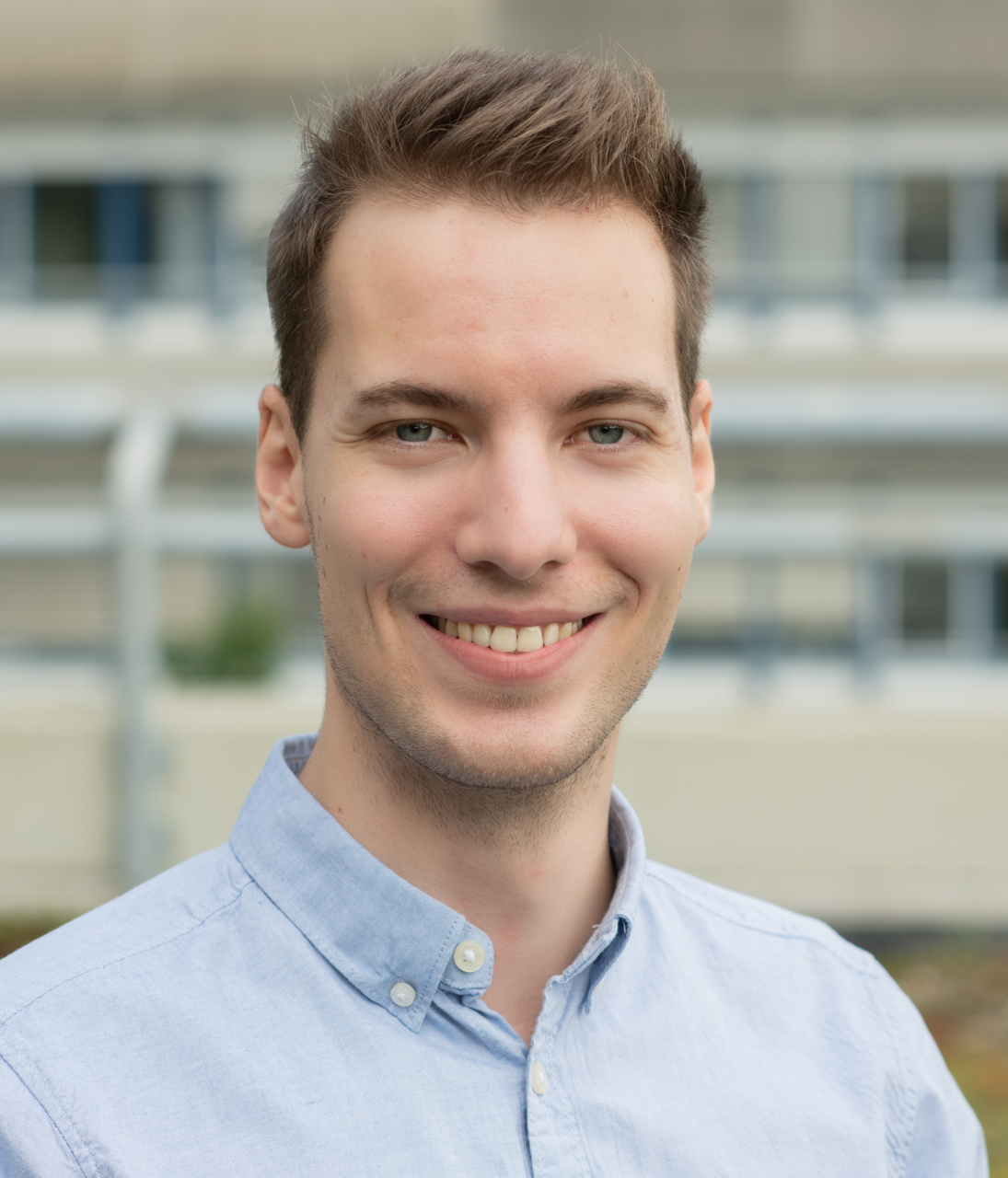
Philipp Urech lectures in digital landscape architecture at ETH Zürich's Department of Architecture. His pedagogy integrates point cloud technologies and narrative methods to enhance site-specific design processes. Research explores laser-scanning applications in Madagascar's water infrastructure, Swiss urban regeneration, and Singaporean landscapes. Articles demonstrate iterative frameworks bridging geospatial analysis with cultural narratives in landscape practice.
Andreia COSTA is a Researcher at the University of Luxembourg, affiliated with the Faculty of Humanities, Education and Social Sciences and the Department of Behavioural and Cognitive Sciences. She holds a Master’s in Experimental Psychology from the University of Minho (Portugal) and a PhD from the University of Luxembourg, focusing on emotional reactivity in children with ASD under Prof. Georges Steffgen’s supervision. Her research emphasizes understanding emotional difficulties in ASD, including alexithymia and family dynamics, alongside interventions and multilingualism impacts on academic success. Current projects include the Luxembourg National Research Fund-backed 'Academic Success in Autism: The Impact of Emotions and Multilingualism' (ASA) and 'The Situation of Autism in Luxembourg' (SAUL). She collaborates with local institutions to improve care for ASD individuals and their families. Notable contributions include exploring robotics in therapy for children with ASD and analyzing parental psychological wellbeing across neurodiverse conditions. Andreia has received a significant grant (€397,000) for her work on multilingualism and ASD. Her publications span emotional regulation in ASD, robotic interventions, and parental stress factors. She actively contributes to autism-related policy and clinical guidelines in Luxembourg.
Bechir Hamdaoui is a Professor at the School of Electrical Engineering and Computer Science, Oregon State University. He leads the Networked Systems and Technology Advanced Research (NetSTAR) Laboratory, focusing on advancing technologies for future networked information, computing, and communication systems. His affiliations include IEEE, where he holds senior membership, and he has served as Chair of the IEEE Communication Society’s Wireless Technical Committee. Ph.D., Electrical & Computer Engineering, University of Wisconsin at Madison (2005) M.S., Computer Sciences, University of Wisconsin at Madison (2004) M.S., Electrical & Computer Engineering, University of Wisconsin at Madison (2002) Hamdaoui's research expertise spans intelligent networked systems, wireless and network cyber security, AI-driven networking, and protocol design for next-generation systems. His work addresses challenges in spectrum availability, energy-efficient cloud datacenters, and edge cloud caching for smart cities. Publications highlight innovative approaches to blockchain-enabled IoT resource sharing, machine learning for spectrum sensing, and virtualized network architectures. His scientific accolades include the NSF CAREER Award (2009), ISSIP Distinguished Recognition Award (2020), and multiple best paper awards at ICC and IWCMC conferences. He has served on editorial boards for IEEE Transactions on Mobile Computing and IEEE Network, among others. NSF CAREER Award (2009) ISSIP Distinguished Recognition Award (2020) ICC Best Paper Award (2017) IWCMC Best Paper Award (2017) EECS Outstanding Research Award (2016) Hamdaoui mentors graduate students in the NetSTAR Lab, which focuses on wireless privacy, AI-driven networking, and resource optimization. The lab engages in theoretical and experimental research with applications to 6G networks, autonomous systems, smart agriculture, and cloud datacenters. Current projects include AI-driven hardware fingerprinting for IoT security, spectrum availability recovery, and energy-efficient resource utilization frameworks.
Amjad Ullah is a Research Fellow at the School of Computing, Engineering and the Built Environment , Edinburgh Napier University. His expertise spans cloud computing, edge computing, and bio-inspired models for resource management. MSc in Distributed Systems (University of Leicester, 2011) PhD in Cloud Elasticity (University of Stirling, 2017) Research interests include: Orchestration and runtime management in cloud-to-edge environments AI-driven resource optimization and network cost analysis Privacy-preserving encryption techniques Serverless computing frameworks and microservices deployment Current projects: Swarmchestrate (2024-2026): Decentralized orchestration across cloud-to-things continuum GREET (2025-2029): Explainability in cyber-physical systems Long-range Perceptive AVs (2024-2026): Autonomous vehicle situational awareness
Nasser Lashgarian Azad is a Professor and Associate Chair (Graduate Studies) in the field of Automation and Control Systems at the University of Waterloo. His research focuses on advanced control strategies for autonomous and connected vehicles, including reinforcement learning, model predictive control (MPC), and cybersecurity. He specializes in vehicle dynamics, energy management systems, and decision-making algorithms for complex scenarios such as platooning, collision avoidance, and shared spaces. His work spans interdisciplinary applications in automotive, aerospace, and robotics, with contributions to hybrid electric vehicle optimization, cyber-physical systems security, and real-time trajectory control. Key areas of interest include autonomous navigation, resilient control systems, and the integration of AI with traditional control methodologies. Dr. Azad has published extensively on topics such as deep reinforcement learning for autonomous driving, secure vehicle platooning, and adaptive cruise control. His research emphasizes practical implementation, with experimental validations in domains like electric vehicle energy management, lane-changing algorithms, and roundabout navigation. He is actively involved in advancing control systems for connected and automated vehicles, addressing challenges in safety, efficiency, and scalability. His contributions have been applied to both ground vehicles and space systems, reflecting a broad expertise in dynamic systems and intelligent control.
Dr. Amin Abken is an Associate Teaching Fellow at the School of Information Technology, Deakin University, where he contributes to academic instruction and research in artificial intelligence, data management, and distributed computing. He holds a Ph.D. from Deakin University and is affiliated with the Faculty of Science, Engineering, and Built Environment. His research spans Context-Aware Computing , Reinforcement Learning , and Internet of Things (IoT) , with a focus on adaptive caching strategies, group activity recognition, and intelligent transportation systems. His recent publications highlight advancements in context caching techniques and reinforcement learning for IoT environments. Dr. Abken's collaborative work includes co-authored articles in journals like ACM Transactions on Internet of Things , IEEE Internet of Things Magazine , and IEEE Transactions on Intelligent Transportation Systems . He employs methodologies in probabilistic analysis , dynamic system optimization , and edge-cloud platforms for urban IoT ecosystems. His articles demonstrate a consistent focus on IoT-based systems , context-aware algorithms , and distributed computing since 2014, with recent trends emphasizing reinforcement learning and smart city applications like carparking simulations. Dr. Abken collaborates frequently with researchers such as Weerasinghe , Zaslavsky , and Loke SW , addressing challenges in context caching , group activity recognition , and edge computing across publications in ACM, IEEE, and SpringerOpen.
Jiamin Dai is a Research Fellow at the Department of Computer Science, University of British Columbia, affiliated with the eDAPT Lab led by Dr. Joanna McGrenere. Their work focuses on interactive technologies that address personalization, universal usability, and Computer Supported Cooperative Work (CSCW), with applications for diverse users including those with cognitive impairments and aging populations. Ph.D. in Information Studies, McGill University Master of Information Studies, McGill University B.Sc. in Educational Technology, Shanghai International Studies University Research Interests include: Human-Computer Interaction (HCI) Digital Accessibility for Cognitive Impairments Universal Usability in Technology Design Gerontechnology for Aging Populations User Experience (UX) in Situational Impairments Social Computing for Diverse Communities Recent Publications highlight cognitive accessibility in digital payments (W4A’23) and social sharing solutions for dementia communities (TACCESS), alongside explorations of personal data curation (DIS 2020) and eyes-reduced interaction (CHI 2020). Scientific Awards include prestigious fellowships and scholarships from NSERC, EPIC-AT, Mitacs, the Wolfe Chair, and FRQNT. The eDAPT Lab at UBC, where Jiamin Dai is based, employs a human-centered approach to design technologies that adapt to user needs, ranging from situational impairments to permanent disabilities, using methodologies like qualitative fieldwork and quantitative experiments.
Peter André Busch is an Associate Professor at the Department of Information Systems, University of Agder, Norway. His research focuses on technology's societal impacts, particularly in public sector contexts, decision-making processes, and generative AI ethics. He holds a Master's in Information Systems and dual Bachelor's degrees in IT & Information Systems (University of Agder) and Theology (Ansgar Theological College). He teaches three core courses: IS-115 Web Programming in PHP, TFL102/119 IT and Society, and Research Methodology. His academic work emphasizes qualitative and quantitative methods, especially PLS-SEM analysis. Research interests include digital discretion in public services, problematic technology use, e-government frameworks, and human-centered AI applications. He participates in research groups such as CIEM (Integrated Emergency Management), CeDiT (Digital Transformation), and HCAI (Human-Centered AI). Recent publications analyze AI's role in bureaucratic decision-making, autonomous technology acceptance, and generative AI capabilities. No scientific awards are listed, but his work demonstrates strong theoretical contributions to digital government and IS research. Advising: No formal advisees listed. Grants and funding details are not explicitly mentioned. Active in research teams exploring crisis management technologies and digital governance innovations. Labs/Teams: Member of CIEM, CeDiT, and HCAI research centers focused on emergency systems, digital transformation strategies, and ethical AI implementation in public institutions.
Monroe Kennedy III is an Assistant Professor of Mechanical Engineering at Stanford University with a courtesy appointment in Computer Science. He directs the Assistive Robotics and Manipulation Lab (ARMLab), focusing on collaborative robotics, human-robot interaction, and assistive technologies. His research integrates machine learning, computer vision, and control theory to enhance robotic autonomy for service tasks requiring dexterity and situational awareness. His primary research areas include robotic perception for dynamic environments, adaptive control systems for human-robot collaboration, and wearable assistive devices. Recent work emphasizes tactile sensing, prosthetic interfaces, and safety in human-robot interaction, with applications in healthcare and rehabilitation. His publications demonstrate strong emphasis on multimodal sensing (visual-tactile fusion), human-centered robotics, and assistive technology validation. Article keywords frequently include rehabilitation engineering, haptic feedback, and robotic learning, showing consistent focus on bridging theoretical robotics with practical human needs. Scientific awards include the NSF CAREER Award for his work on collaborative robotics and multiple fellowships recognizing his contributions to assistive technology development. Mentoring includes doctoral and master's students in robotics and mechanical engineering, with research spanning mobile manipulation, tactile perception, and human-robot teaming. His lab collaborates with clinical partners for translational applications.
Dr. Lynn Hulse is a Senior Research Fellow in Human Behaviour at the University of Greenwich's School of Computing and Mathematical Sciences. She joined the university's Fire Safety Engineering Group (FSEG) in 2005, focusing on understanding human responses to threats like fires, wildfires, and autonomous vehicle interactions. Her work integrates cognitive psychology, forensic science, and engineering to improve safety protocols. Educated at the University of Aberdeen (PhD in Psychology) and Simon Fraser University (Visiting Scholar), she brings expertise in forensic road collision investigation and justice system reforms. Her research collaborations include fire services in Italy, Corsica, and the UK, emphasizing practical applications of behavioral models in emergency scenarios. Key research areas include evacuation modeling, post-traumatic stress in emergency responders, and cultural differences in disaster responses. Her publications analyze behavioral aspects of wildfires, construction safety, and autonomous vehicle interactions. She contributes to national guidance on emergency preparedness and has pioneered methodologies for collecting survivor testimonies in high-risk environments. Lynn's interdisciplinary approach bridges academic research with real-world safety innovations, addressing both technical and human factors in crisis situations.
Massimiliano Vasile is a Professor in the Department of Mechanical and Aerospace Engineering at the University of Strathclyde. His expertise lies in computational optimisation, astrodynamics, and autonomous space systems. He leads major networks such as Stardust (asteroids/space debris), UTOPIAE (uncertainty treatment), and the EPSRC ENCORE network (resilience in engineering systems). Vasile has pioneered methods like Evidence Based Robust Optimisation and developed algorithms for debris removal, asteroid navigation, and multi-objective control. Research focuses include: Optimisation under uncertainty Space debris mitigation and active removal Autonomous spacecraft navigation AI-driven sensor fusion Space sustainability metrics Key achievements include: Innovative trajectory design for binary asteroids Development of CubeSat-based debris removal systems Advances in hyperspectral imaging for space object analysis He has received prestigious awards including Royal Astronomical Society Fellowship, AIAA Associate Fellowship, and IEEE Senior Membership. Current projects address space traffic coordination, solar power satellite engineering, and ethical use of spatial data in human rights contexts.
Federica PIRAS is a Postdoctoral Researcher at the Luxembourg Centre for Systems Biomedicine (LCSB), part of the University of Luxembourg. Her work is situated within the Environmental Cheminformatics department, focusing on interdisciplinary approaches at the intersection of environmental science and computational biology. Dr. PIRAS's research interests center on applying cheminformatics and systems biology methodologies to study environmental chemical impacts on human health. This includes developing predictive models for toxicity assessment and analyzing environmental datasets through advanced computational tools. While no specific awards or grants are detailed in the provided text, her affiliation with LCSB—a leading systems biomedicine institute—suggests involvement in high-impact collaborative projects. No mentored students are listed in the current profile.
Yin Sun is the Godbold Associate Professor in the Department of Electrical and Computer Engineering at Auburn University. His research focuses on timely information updates, wireless networks, and IoT, with emphasis on data freshness metrics and remote estimation systems. He earned his B.S. and Ph.D. in Electronic Engineering from Tsinghua University. Education: B.S. Electronic Engineering, Tsinghua University Ph.D. Electronic Engineering, Tsinghua University His research interests include wireless communications, cloud computing, and machine learning applications in safety-critical systems. Notable achievements include co-authoring the seminal book on Age of Information and receiving the NSF CAREER Award for his work on goal-oriented status updating. He also serves as Technical Co-Chair for the ACM MobiHoc Symposium and leads Auburn's Wireless Engineering Research and Education Center, addressing real-world communications challenges through interdisciplinary collaboration. Awards include the 2021 Best Paper Award (Journal of Communications and Networks) and contributions to food pantry inventory optimization via machine learning. His work bridges theoretical foundations with practical systems, emphasizing real-time data relevance and efficient resource allocation strategies. Advisees/Grants: Leads NSF-funded projects on semantic status updating and collaborates on applications like disease detection in agriculture. Active in advising graduate students through his lab's focus on edge computing and network optimization. Labs/Teams: Core member of Auburn's Wireless Engineering Research and Education Center, fostering multi-university collaborations in communications research.
Dr. Deepak Tosh is an Associate Professor at the University of Texas at El Paso in the Department of Computer Science. He specializes in cybersecurity , blockchain , and cyber-physical systems , with a focus on decentralized solutions for critical infrastructure security. Ph.D. in Computer Science and Engineering, University of Nevada, Reno M.S. in Computer Science, University of Hyderabad, India Postdoctoral Researcher, Tennessee State University Former Cybersecurity Researcher, Norfolk State University His research bridges cybersecurity information sharing (CYBEX) , data provenance in cloud/edge environments , and game-theoretic models for cyber-investment and cyber-insurance. Recent work explores federated learning for anomaly detection , blockchain for industrial IoT , and cyber deception frameworks . Key publication trends include: Federated learning applications in industrial cyber-physical systems Game theory and SDN for battlefield communication security Blockchain for provenance in energy systems and medical IoT Graph machine learning for automotive network threats Cyber deception via Monte-Carlo planning Scientific recognitions include: NSF CAREER award for critical infrastructure resiliency NSF grant for cyber security network development At UTEP, Dr. Tosh teaches CS 5352: Computer Security and leads the TRUCYBER Lab , which focuses on decentralized trust frameworks, blockchain security, and cyber situational awareness. The lab has produced notable alumni like Adeel Malik (Ph.D.) and Abel Gomez (Ph.D.) , with projects published in IEEE MILCOM, SecureComm, and CCGrid.
Pascal Jansen is a PhD candidate and research associate at the University of Ulm's Institute of Media Informatics, specializing in Human-Computer Interaction (HCI). He joined the HCI group in June 2021, holding an M.Sc. (distinction) in Media Informatics (2021) and B.Sc. in Computer Science (2018) from Ulm University. His master’s thesis, SwiVR-Car-Seat , explored vehicle motion effects on VR interaction quality. Research Interests : Jansen focuses on inclusive UI design, computational modeling, and ubiquitous personalization in automotive systems, urban mobility, and AR/VR. He investigates motion-aware interfaces, automated vehicle visualization, and Bayesian optimization for context-aware UIs. His work bridges HCI with robotics and sustainability. Publications & Awards : Over 15 peer-reviewed papers include CHI, AutomotiveUI, and IMWUT contributions. Notable achievements include a 2025 CHI Honorable Mention (OptiCarVis) and multiple "Special Recognition for Outstanding Reviews" awards from top venues. His work has been featured at the Long Evening of Science (2024, 2023) and the German Computer Game Awards (2021). Projects : AutoVis (automotive UI analytics), UAM-SUMO (urban air mobility simulation), PedSUMO (AV-pedestrian interaction). Teaching : Lectures on Automotive UIs, UI Software Technologies, and media informatics seminars since 2021. Grants : Co-investigator in SituWare (2023), a project optimizing driver situation awareness in automated vehicles. His research also addresses energy-saving home appliances (IMWUT 2024) and precision agriculture robotics (CHI 2025).