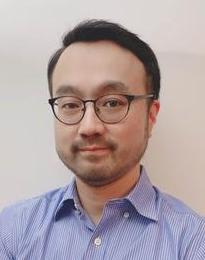
Dr. Je Hyeong Bahk is an Associate Professor jointly affiliated with the Departments of Mechanical and Materials Engineering and Electrical and Computer Engineering at the University of Cincinnati. His research focuses on thermoelectric materials and systems, wearable/flexible electronics, and nano-scale thermal transport phenomena. He holds a Ph.D. in Electrical Engineering from the University of California, Santa Barbara, and has authored over 100 peer-reviewed publications. Education: Ph.D., Electrical Engineering, University of California, Santa Barbara (2010) M.S., Electrical Engineering, Seoul National University (2000) B.S., Electrical Engineering, Seoul National University (1998) Research Interests: Human body-heat energy harvesting Thermoelectric materials and device fabrication Wearable/flexible electronics Nano-scale electron/thermal transport physics Thermoelectric air conditioning systems Recent Contributions: Dr. Bahk's work includes advancements in binder-jet printed ceramic composites, low-dimensional carbon-based energy harvesting, and thermoelectric cooling systems. His lab, the Thermoelectric Energy Conversion Lab, develops next-generation solid-state cooling and energy conversion technologies. Awards: 2023 URC Faculty Scholar Award 2016 UC Faculty Development Award 2010 Editor’s Choice Paper Award Lab & Team: The Thermoelectric Energy Conversion Lab collaborates on projects such as firefighter jacket cooling systems and nanocarbon-based composites. Recent student advisees include Thiraj, Nitin, Isaac, Anirudh, and Ahmad.
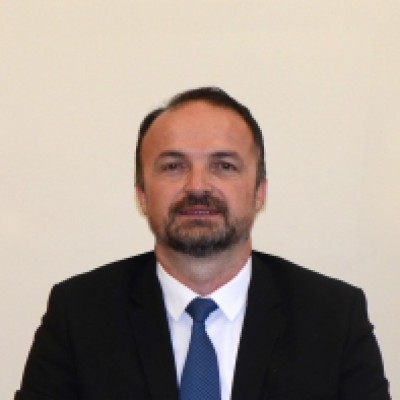
Joseph J. Beaman is Professor and Cockrell Family Dean's Chair in Engineering Excellence in the Walker Department of Mechanical Engineering at The University of Texas at Austin, where he has served since 1979 and chaired the department from 2000-2011. A pioneer in additive manufacturing, he coined the term Solid Freeform Fabrication (SFF) in 1987 and initiated academic research in the field in 1985, developing the foundational Selective Laser Sintering (SLS) process in his laboratory. His educational background includes: B.S.M.E. with high honors from The University of Texas at Austin (1972) Sc.D. in nonlinear control from Massachusetts Institute of Technology Professor Beaman's research spans additive manufacturing, control systems, and materials engineering, with seminal contributions to SFF technology that enabled rapid prototyping and manufacturing across medical, automotive, and industrial applications. His work encompasses materials processing, laser scanning, thermal control, direct metal fabrication, and biomedical applications, driving the emergence of a global industry. Analysis of his publications (2004-2012) reveals evolving focus from core SLS development to cross-disciplinary applications in metallurgical process control (electroslag remelting) and energy systems (fuel cell membrane modeling), while maintaining additive manufacturing as the central theme. Keywords consistently include materials science, control theory, and advanced manufacturing across diverse subfields. His distinguished honors include: National Science Foundation Presidential Young Investigator Award (1984, inaugural year) Distinguished Mechanical Engineer (2011) DuPont Young Faculty Award and Engineering Foundation Awards (1984, 1988) Multiple Best Paper Awards across engineering journals As an academic entrepreneur, Beaman co-founded DTM Corporation (now 3D Systems) and served as Advanced Development head (1990-1992), mentoring graduate students who became key inventors in SLS commercialization. His research has been supported by NSF and industry grants, while his leadership extended to chairing the World Technology Evaluation Center panel on Additive/Subtractive Manufacturing (2003) and serving on international assessment panels. His laboratory established UT Austin as the birthplace of academic SLS research, fostering industry-academia collaboration that directly enabled commercialization of rapid manufacturing systems now used globally for complex part production impossible with conventional methods.
Peter Hedström is a Professor of Materials Science at the Department of Materials Science and Engineering, KTH Royal Institute of Technology. He leads the Hultgren Laboratory for Materials Characterization and directs the Center for X-rays in Swedish Materials Science (CeXS) and the Vinnova competence center NEXT. His research focuses on advanced materials characterization, structure-property relations, and materials design, particularly in metallic alloys, steels, ceramics, and composites. He co-founded companies Ferritico and Scatterin based on his research. Hedström’s work leverages large-scale infrastructure like synchrotron and neutron methods, with key projects including ENDUREIT for improving duplex stainless steels and Track-AM for additive manufacturing analysis. Education: PhD from Luleå University of Technology. Earlier roles at MEFOS/Swerim before joining KTH in 2008. Research Interests: Phase transformations, materials characterization (e.g., synchrotron/X-ray/neutron techniques), additive manufacturing, machine learning applications, and fatigue mechanics. His group explores topics like low-temperature embrittlement, microstructure-strength relationships, and cemented carbide sintering. Articles Trends: Recent work emphasizes in-situ observations of phase separation, precipitation kinetics, and microstructural stability under fatigue. Studies often integrate computational modeling with experimental methods, highlighting interdisciplinary approaches. Grants/Projects: Directs CeXS (hosting the Swedish beamline P21 at PETRA III) and NEXT. Active in EIT Raw Materials (ENDUREIT) and MMD initiatives. Supervises PhD/postdoc projects in neutron scattering, Mg-AM, and machine learning. Labs/Teams: Hultgren Laboratory, SwedNess graduate school, and collaborations with industrial partners like Ferritico.
Prof. Dr. Hasan Göçmez is a Professor in the Department of Materials Science and Engineering at Dumlupinar University's Faculty of Engineering. With over two decades of academic experience, he has established himself as a leading researcher in ceramic materials and nanotechnology. His career spans multiple prestigious institutions including Rutgers University and Stevens Institute of Technology, where he served as a Research Assistant and Post-Doc respectively before joining Dumlupinar University in 2003. Dr. Göçmez earned his Bachelor's degree in Metallurgical and Materials Engineering from Middle East Technical University (1989-1994). His academic journey progressed from Research Assistant (1995-2002) to Assistant Professor (2003-2006), Associate Professor (2006-2011), and finally to Professor (2011-present) at Dumlupinar University. He has also held significant administrative roles including Institute Director (2012-2018), Deputy Institute Director (2009-2012), and Deputy Head of Department (2005-2011). Dr. Göçmez's research interests span multiple areas of materials science with a particular focus on advanced ceramics and nanomaterials. His work encompasses: Ceramic Materials: Zirconia-based ceramics, boron compounds, and perovskite structures Energy Applications: Battery technologies, supercapacitors, and solar cell materials Sustainable Materials: Waste recycling in composite production and eco-friendly manufacturing processes Nanostructured Materials: Nanopowder synthesis, nanocomposites, and surface engineering Advanced Processing Techniques: Spark plasma sintering, hydrothermal synthesis, and citrate gel methods His extensive publication record spanning over two decades demonstrates a consistent focus on materials characterization and development. Dr. Göçmez has made significant contributions to the understanding of zirconia ceramics, perovskite materials for energy applications, and sustainable composite manufacturing. His work bridges fundamental materials science with practical industrial applications, particularly in the automotive and energy sectors. Dr. Göçmez has received several notable awards including the Micro Enterprise Productivity Project Award from the Ministry of Science, Industry and Technology (2016), a JSPS fellowship (2006), and the YLS scholarship from the Higher Education Board (1995). As an active researcher, Dr. Göçmez has led numerous projects funded by various institutions, focusing on advanced materials development for energy storage, structural applications, and sustainable manufacturing. His editorial work for the Journal of the Ceramic Society of Japan demonstrates his standing in the international ceramics community.
Assoc. Prof. Dr. Arife Yurdakul is a faculty member in the Department of Metallurgical and Materials Engineering at Düzce University’s Faculty of Engineering, Turkey. She currently holds the academic rank of Associate Professor and actively contributes to both teaching and research in advanced ceramics and composite materials. Research Focus: Ceramic matrix composites and zirconia-based toughening mechanisms Processing of yttria-, ceria-, and magnesia-stabilized zirconia powders and sintered bodies Glass-fiber reinforcement in cementitious and polymer matrices Microstructural characterization from macro to atomic scale using electron microscopy Industrial applications including welding pins, ceramic bushings, and dental ceramics Across sixteen peer-reviewed publications (2009-2025), Dr. Yurdakul demonstrates a sustained trajectory in engineering high-performance ceramics. Her recent work emphasizes co-doped zirconia composites that achieve simultaneous gains in hardness and fracture toughness, while earlier studies systematically explored glass fiber durability in alkaline environments and novel glass compositions optimized for fiber drawing. Scientific Awards & Distinctions: No specific awards or honors are mentioned in the provided materials. Advising & Funding: No named graduate students, ongoing projects, or grant details are supplied. Laboratories & Teams: While the Faculty of Engineering at Düzce University hosts modern ceramics and microscopy laboratories, explicit laboratory affiliations or research group names are not stated.
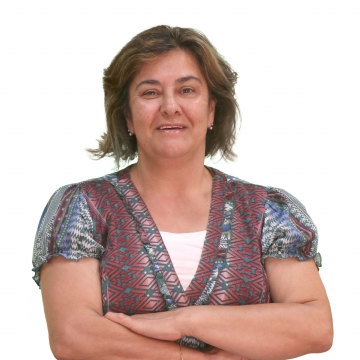
Maria Margarida Rolim Augusto Lima is an Assistant Professor at the Faculty of Science and Technology (Nova University Lisbon) in the Department of Materials Science. Her academic career focuses on ceramic and glass materials research. PhD in Materials Science (Ceramics and Glass), Nova University Lisbon (2003) MSc in Materials Engineering, Nova University Lisbon (1994) BSc in Physical and Materials Engineering, Nova University Lisbon (1989) Her scientific interests span mechanical recycling of electrical/electronic waste , ceramic-based industrial waste recycling , and glass-ceramic composites development. Research emphasizes synthesis techniques, crystallization kinetics, and dielectric properties evaluation. The article titles show consistent focus on borosilicate glass systems (2003-2014), with technical investigations into isothermal/non-isothermal sintering , oxide substitution effects , and microstructural evolution through dilatometry/XRD. Most recent publications (2012-2014) demonstrate continued work on glass-ceramic composites and dielectric behavior .
Professor Kallol Mondal is a distinguished faculty member in the Department of Materials Science and Engineering at the Indian Institute of Technology Kanpur. With a PhD from IIT Kharagpur, he has established himself as an expert in corrosion science, metallic glasses, and advanced steel development. His research focuses on fundamental aspects of material behavior under various environmental conditions, with practical applications in railway infrastructure, high-performance alloys, and nanotechnology. PhD from IIT Kharagpur (2005) Postdoctoral research at NIMS, Japan (2005-2007) Associate Professor at IIT Kanpur (2012-present) Visiting Associate Professor at University of British Columbia, Canada (2013) Professor Mondal's research spans multiple domains of materials science, with particular emphasis on corrosion/oxidation mechanisms, phase transformations, and development of novel metallic alloys. His work combines theoretical thermodynamics with practical applications, resulting in breakthroughs in corrosion-resistant steels, metallic glasses, and nanoporous materials. His laboratory focuses on non-equilibrium processing techniques that enable the creation of materials with exceptional mechanical properties. Analysis of his recent publications reveals a strong focus on corrosion mechanisms in various steel alloys, particularly for railway applications. His work also prominently features research on metallic glasses, nanoporous materials, and advanced ceramic composites. The interdisciplinary nature of his research bridges fundamental materials science with practical engineering applications. P K Kelkar Young Faculty Research Fellowship (2012) Best paper award in CORCON 2010 Best poster award at ADNAN 2013 Recognized among top 20% reviewers for Metallurgical and Materials Transactions A Professor Mondal has successfully mentored numerous PhD and M.Tech students, with research projects spanning corrosion science, metallic glasses, steel development, and nanoporous materials. His Non-equilibrium Processing & Corrosion Laboratory at IIT Kanpur serves as a hub for innovative research in materials degradation and prevention. His collaborations extend internationally, including significant work with researchers at the University of British Columbia.
David Go is the Vice President and Associate Provost for Academic Strategy at the University of Notre Dame, where he also holds the Viola D. Hank Professorship in Aerospace and Mechanical Engineering. He oversees implementation of the University Strategic Framework and manages faculty appointment processes, with administrative oversight of institutes including the Lucy Institute for Data and Society and the Fitzgerald Institute for Real Estate. His research focuses on plasma science, heat transfer, fluid dynamics, and chemical analysis, with significant contributions to plasma-electrochemistry and sustainable chemical synthesis. Education: B.S. (2001) and M.S. (2004) from University of Notre Dame, Ph.D. (2008) from Purdue University His work explores plasma-liquid interfaces, solvated electron dynamics, and plasma-assisted catalysis, particularly for light hydrocarbon conversion. Recent publications highlight advancements in non-aqueous plasma electrolysis, machine learning-enhanced plasma sintering, and interfacial transport phenomena. Awards include the Air Force Young Investigator Award, NSF CAREER award, and multiple honors for teaching and innovation. Current research trends integrate plasma physics with chemical engineering and materials science, focusing on sustainable energy solutions and microscale manufacturing. Scientific recognitions include: Fellow of the American Society of Mechanical Engineers Senior Member of IEEE IEEE Early Achievement Award First-Source Bank Commercialization Award Go has supervised graduate studies and received patents for technologies in plasma-assisted synthesis and microfluidic diagnostics. His leadership roles involve committees addressing academic governance, risk management, and foreign influence in research.
Rainer J. Hebert is a Professor in the Department of Materials Science and Engineering at the University of Connecticut, serving as Director of the Pratt and Whitney Additive Manufacturing Center and Associate Director of the Institute of Materials Science. His research focuses on advancing additive manufacturing technologies with particular emphasis on materials development and process optimization for industrial applications. Education Ph.D., University of Wisconsin-Madison, 2003 Postdoctoral Fellow, University of Wisconsin-Madison, 2003-2005 Post Doctoral Fellow, Research Center Karlsruhe, Germany (now Karlsruhe Institute of Technology), 2003-2005 Research Interests Professor Hebert's research spans multiple areas within materials science and additive manufacturing. His primary focus is on developing new alloys specifically designed for additive manufacturing processes, with particular attention to how microstructures form during rapid solidification and laser processing. He investigates powder characteristics and their effects on the final manufactured products, aiming to improve quality and performance. His work on quasicrystal-reinforced aluminum alloys has shown promising results for high-performance applications, and he has made significant contributions to understanding the fundamental mechanisms of laser powder bed fusion. Hebert's research bridges fundamental materials science with practical industrial applications, particularly in aerospace and high-temperature environments. Publication Trends Analysis of Professor Hebert's recent publications reveals a strong focus on advancing additive manufacturing technologies, particularly laser powder bed fusion. His work spans from fundamental materials science (microstructure formation, phase transformations) to practical applications (alloy design, process optimization). A notable trend is the increasing integration of computational methods with experimental work to predict and optimize material behavior. His research shows a progression from basic microstructure characterization to more complex systems involving multi-material interactions, intelligent manufacturing systems, and the development of specialized alloys resistant to cracking and other defects. The consistent theme across his publications is improving the reliability and performance of additively manufactured components for demanding applications. Awards Materials Science and Engineering Program Teaching Award, 2010-2011 Advising and Grants As Director of the Pratt and Whitney Additive Manufacturing Center, Professor Hebert oversees significant research initiatives funded by both government agencies and industry partners, particularly in aerospace applications. His leadership in the Institute of Materials Science provides opportunities for student research and collaboration across multiple disciplines. His extensive publication record suggests active mentorship of graduate students in materials science and engineering. His research program likely involves multiple PhD and Master's students working on various aspects of additive manufacturing, from fundamental materials science to process development. Laboratories and Teams Professor Hebert directs the Pratt and Whitney Additive Manufacturing Center at UConn, which serves as a hub for collaborative research between academia and industry. The center focuses on advancing metal additive manufacturing technologies, particularly for aerospace applications. He also plays a key leadership role in the Institute of Materials Science, one of UConn's premier research centers. His research teams likely include graduate students, postdoctoral researchers, and industry collaborators working on projects related to powder characterization, laser processing, microstructure analysis, and alloy development. The collaborative nature of his work is evident from the multi-institutional authorship on many of his publications.
Kantesh Balani is a Professor in the Department of Materials Science & Engineering at Indian Institute of Technology Kanpur. His research spans multiple areas of materials science with a focus on advanced materials for biomedical and structural applications. Education: PhD from Florida International University (2007) M.S. from University of Kentucky (2002) M.Tech. from Indian Institute of Technology Madras (2001) B.E. from PSG College of Technology (1999) Research Focus: Professor Balani's research primarily centers on surface engineering, nanomechanics, and the development of advanced biocomposites with antibacterial properties. His work integrates experimental and computational approaches to develop materials for biomedical applications, aerospace alloys, and energy systems. He has made significant contributions to understanding the mechanical behavior of nanocomposites and developing novel processing techniques like spark plasma sintering for bioceramics. Publication Trends: His recent publications demonstrate a strong focus on biocomposite materials, particularly those incorporating silver nanoparticles and carbon nanotubes for antibacterial applications. His work spans from fundamental material characterization to practical biomedical applications, with a consistent emphasis on understanding material interfaces and mechanical properties at the nanoscale. Awards & Recognition: P. K. Kelkar Research Fellowship (2013) TMS Materials Processing & Manufacturing Division Young Leader Professional Development Award (2012) Materials Science and Engineering C Young Researcher Award (2011) INAE Young Engineer Award (2010) NASI Young Scientist Platinum Jubilee Award (2010) Young Metallurgist of the Year award (2010) Research Leadership: Professor Balani leads research efforts in advanced materials processing, particularly focusing on bioceramics and nanocomposites. His lab at IIT Kanpur develops innovative processing techniques for advanced materials with applications in healthcare and aerospace. His research has attracted significant recognition in both national and international materials science communities.
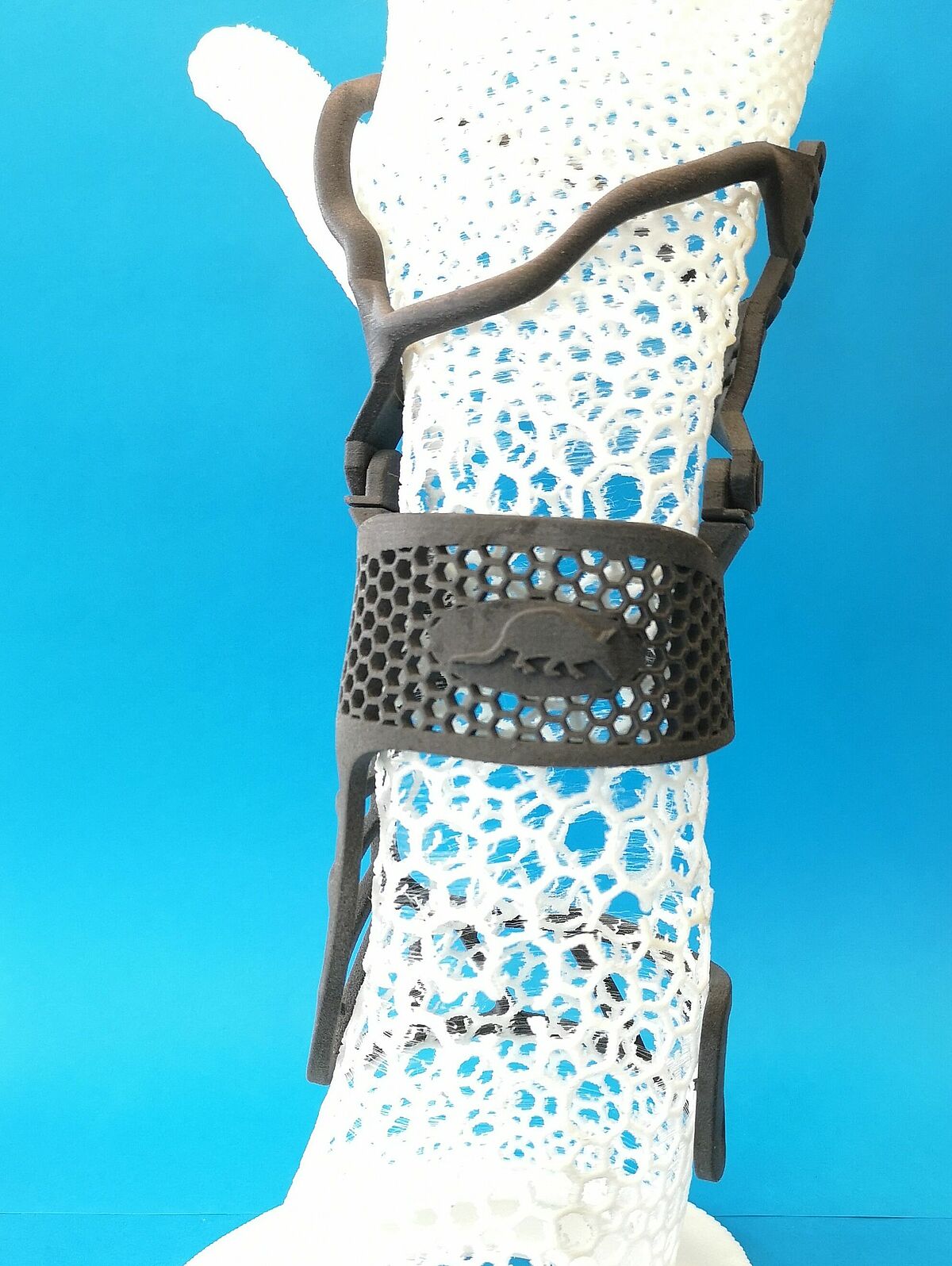
Prof. Dr.-Ing. Mark Vehse is a full-time faculty member and Professor in the Department of Mechanical Engineering at Stralsund University of Applied Sciences. He is actively involved in teaching courses such as CAD and Machine Elements, Systematic Product Development, and Additive Manufacturing. His research focuses on digital product development, additive manufacturing technologies, and their applications in health technology and biomedical engineering. He leads working groups including 'Digital Product Development & Additive Manufacturing' and 'Digital Product Development & Autonomous Robotics Group.' Prof. Vehse's expertise includes advanced 3D CAD systems, hydrogel fabrication for medical applications, and laser-based micro-manufacturing techniques. His laboratories include the CAD pool, additive manufacturing facilities, and a cleanroom technology setup. He is also the university's representative in the Fachbereichtag Maschinenbau e.V. (FBTM eV), emphasizing his role in mechanical engineering academia. His recent publications highlight innovations in additive manufacturing for healthcare, polymer-based orthotic devices, and drug delivery systems using 3D-printed scaffolds. His work bridges mechanical engineering with biomedical applications, focusing on material science, precision manufacturing, and product lifecycle management.
Andrea Argüelles is an Associate Professor in the Department of Engineering Science and Mechanics at Pennsylvania State University (Penn State), part of the College of Engineering. She holds affiliate researcher roles in the IEE Research Themes focusing on Health and the Environment, and Integrated Energy Systems. Her work bridges materials science and mechanical engineering, emphasizing non-destructive evaluation (NDE) techniques like ultrasonics for characterizing additive-manufactured materials and polycrystalline structures. In 2024, she received the NSF CAREER Award for her research contributions. Her research interests include ultrasonic testing of composites and metals, additive manufacturing process-structure-property relationships, and computational modeling of wave propagation in complex materials. Notable projects involve improving inspectability of 3D-printed parts, cryogenic ultrasonic testing of ice matrix composites, and analyzing defects in silicon wafers. She collaborates widely, with recent work published in journals like Communications Materials , Journal of Applied Physics , and Finite Elements in Analysis and Design . Key Themes: Polycrystalline materials, binder jetting, acoustic holography, defect detection. Awards: NSF CAREER Award (2024). Dr. Argüelles is actively involved in engineering education, contributing to initiatives like the ASEM seminar series for doctoral career development. Her research group addresses challenges in materials characterization, with applications in aerospace, energy systems, and semiconductor manufacturing.
Jenn-Ming Yang is a Distinguished Professor in the Department of Materials Science and Engineering at the University of California, Los Angeles (UCLA), holding the Collins Aerospace Term Chair for Excellence. His work focuses on advanced composite materials for aerospace and transportation applications, with significant contributions to high-temperature material systems. Professor Yang's research centers on fundamental problems in processing, microstructure development, and mechanical behavior of high-temperature composites. His investigations target critical applications in aerospace structural systems and ground transportation, with emphasis on material durability, failure mechanisms, and performance under extreme conditions. This work bridges materials science, mechanical engineering, and aerospace engineering through experimental and analytical approaches. His recent publications (2007-2008) reveal a concentrated focus on composite material systems, including titanium-based laminates, carbon nanotube reinforcements, ultra-incompressible transition metal diborides, and ceramic composites. Key research themes involve mechanical property characterization, failure analysis, and microstructure-property relationships, with direct applications to aircraft structures, propulsion systems, and energy storage technologies. Professor Yang's scientific achievements have been recognized through numerous prestigious awards: Scholars Award from National Engineering Research Center for Composite Manufacturing Science & Engineering (1987) Faculty Career Development Award (1989) Presidential Young Investigator Award from the National Science Foundation (1990-1995) Alcoa Foundation Award (1992) Ford Foundation Award (1993) Best Paper Award from the Japan Society of Mechanical Engineers (2007) His research program addresses critical challenges in advanced material systems for next-generation aerospace and transportation applications, with ongoing investigations into novel composite architectures and high-temperature material solutions.
Odile Merdrignac-Conanec is an Associate Professor in the Department of Chemistry at University of Rennes 1's Faculty of Science, affiliated with the Institut des Sciences Chimiques de Rennes (UMR 6226 CNRS). Her career spans over three decades at the university, progressing from Assistant Professor (1991-2000) to current Associate Professor status with qualification for university professorship (CNU 31-33). PhD in Chemistry, University of Rennes 1 (1989) Accreditation to Supervise Research (HDR), Chemistry; Chemical Physics, University of Rennes 1 (2000) Post-Doctoral Fellow, Harwell Lab, AEA Technology (UK) (1990-1991) Her research focuses on advanced materials synthesis and characterization, specializing in ceramics engineering for optical, sensing, and biomedical applications. Key areas include infrared-transparent ceramics (ZnS, La 2 O 2 S), gas sensors using semiconductor oxides, photocatalytic (oxy)nitrides, and biomaterials like bioactive glasses. Her work integrates soft chemistry methods with advanced sintering techniques (HP, HIP, SPS) and in-situ characterization (TPD/MS, DRIFTS). Analysis of her 15 most recent publications reveals strong emphasis on rare-earth doped phosphors for lighting applications, porous biomaterials for tissue engineering, and energy conversion materials including thermoelectrics and CO 2 reduction catalysts. Her optical materials research consistently targets infrared transparency and luminescence efficiency. 2018 Semester for Innovation of Rennes 1 Foundation 2017 Year for business creation of Rennes 1 Foundation 2015 CNRS delegation (50%) 2013 Board Member, French Ceramic Society (GFC) 1990 Chemistry PhD Thesis Prize (Pr P. Gineste Award) She has directed eight PhD theses since 2003 with notable success including the Rennes 1 Foundation Thesis Prize (2017) and French Ceramic Society Thesis Prize (2020). Her research is supported by CNRS collaborations and Rennes 1 Foundation innovation grants. She actively participates in thesis committees at institutions including University of Tübingen, ENSM Saint-Etienne, and IRCER Limoges. Her laboratory work centers on the Institut des Sciences Chimiques de Rennes, utilizing specialized equipment for ceramic synthesis, optical characterization, and biomaterial testing. Current projects include infrared-transparent sulfide ceramics and doped oxysulfides for optical refrigeration.
Manuela Reben serves as a Professor at AGH University of Science and Technology in Kraków, Poland, within the Faculty of Materials Science and Ceramics. Her primary appointment is in the Department of Glass Technology and Amorphous Coatings, with office space in building A-3, room 222. She holds the significant administrative role of Vice-Dean of the Faculty of Cooperation and participates in multiple governance bodies including the Chemical Engineering Discipline Council, Faculty College, University Senate, and Senate Committee on Science. Her research centers on advanced glass systems with specialization in optical materials , radiation shielding composites , and waste glass valorization . Key investigations include structural characterization of rare earth-doped tellurite and phosphate glasses, development of novel compositions for photonic applications, and utilization of industrial glass wastes in sustainable construction materials. Her work bridges fundamental materials science with practical engineering solutions for laser technology, nuclear shielding, and eco-friendly building products. Analysis of her recent publications (2022-2025) reveals dominant research trajectories in three interconnected domains: (1) Engineering phosphate/tellurite glass matrices doped with rare earth ions for broadband optical amplifiers and laser gain media; (2) Developing radiation-shielding glasses with optimized attenuation properties for medical and nuclear applications; (3) Transforming industrial glass wastes into functional construction materials through sintering process optimization. These efforts demonstrate consistent innovation in glass composition design and property tailoring. Scientific awards: No awards documented in available sources. Advising activities and research grants are not specified in current documentation, though her leadership roles suggest significant mentorship responsibilities. Her departmental affiliation indicates active participation in collaborative research teams focused on glass technology and amorphous materials development.