

Professor Phil King leads a research group within the School of Physics and Astronomy at the University of St Andrews, where he is part of the Centre for Designer Quantum Materials. His research focuses on the electronic structure and many-body interactions of quantum materials using electron spectroscopy, particularly angle-resolved photoemission (ARPES), and creating new designer quantum materials through atomic layer-by-layer growth. King's research interests center on quantum materials, with particular emphasis on topological matter, transition-metal oxides, and 2D quantum materials. His group investigates strain and pressure tuning of quantum materials, photoemission spectroscopy of correlated systems, and engineering band structures in 2D conductors. They develop methods to exploit strong electronic interactions in 2D systems to create new functional materials with tunable properties. Their approach combines experimental screening of candidate materials, bottom-up atomic assembly of custom heterostructures, and advanced spectroscopic feedback. Analysis of King's recent publications reveals a strong focus on the electronic structure of quantum materials, particularly transition metal dichalcogenides, delafossite metals, and topological systems. His work frequently examines charge density waves, spin-orbit coupling effects, Van Hove singularities, and quantum phase transitions. A notable trend is the integration of materials synthesis with advanced spectroscopic characterization, enabling precise control over electronic properties through strain engineering, doping, and heterostructure formation. King actively supervises PhD students on projects related to quantum materials, including probing elastic coupling in exotic magnets, angle-resolved photoemission from tailored mesostructures, thermodynamics and spectroscopy, oxide metals, and gate tuning of 2D quantum materials. His research is supported by major funding sources that enable access to cutting-edge equipment and international facilities. The King Group operates advanced experimental facilities including a high-resolution lab-based ARPES system with multiple light sources, and two DCA R450 molecular-beam epitaxy systems optimized for transition-metal oxides and chalcogenides. They are developing the UK's first spin-resolved ARPES capability. The group regularly utilizes major international facilities including Diamond Light Source, Elettra, SOLEIL, and HiSOR synchrotrons, as well as the ARTEMIS facility for time-resolved studies.
جستجوی استاد راهنمای دانشگاهی
برای مسیر پژوهشیتان، استاد راهنما، استاد دانشگاه و پژوهشگر مناسب را پیدا کنید و با آنها ارتباط بگیرید.
نمایش ۳۱-۴۵ از ۵۰۳ استاد راهنما
اطلاعات پروفایلها از صفحات عمومی دانشگاهها گرفته شده و ممکن است بهروز نباشد.

Matthew Jenssen is a Reader in Probability at King's College London and a UKRI Future Leaders Fellow. He holds a BA and MMath from the University of Cambridge (2012–2013) and a PhD from the London School of Economics (supervised by Jozef Skokan and Julia Boettcher). His research focuses on the intersection of combinatorics, statistical physics, and theoretical computer science, particularly on large-scale structure formation in systems with local interactions. Notable contributions include advancements in sphere packing, Ramsey numbers, and random matrix theory. Jenssen has held postdoctoral positions at the University of Oxford and the University of Birmingham before joining King’s in 2023. His research group at King’s explores discrete probability, extremal combinatorics, and algorithms, with applications to statistical physics and high-dimensional geometry. Key achievements include a groundbreaking improvement on sphere packing lower bounds and resolving extremal questions in graph theory. Jenssen’s work often bridges combinatorial theory with computational methods, yielding impactful results in probabilistic combinatorics. Scientific awards include the UKRI Future Leaders Fellowship (2020). His grants include a 2023–2026 project on statistical physics methods in combinatorics and geometry. Jenssen collaborates widely, with notable co-authors including Will Perkins, Jozef Skokan, and Felix Joos. He is actively involved in the Probability Group at King’s and contributes to international conferences and arXiv publications.
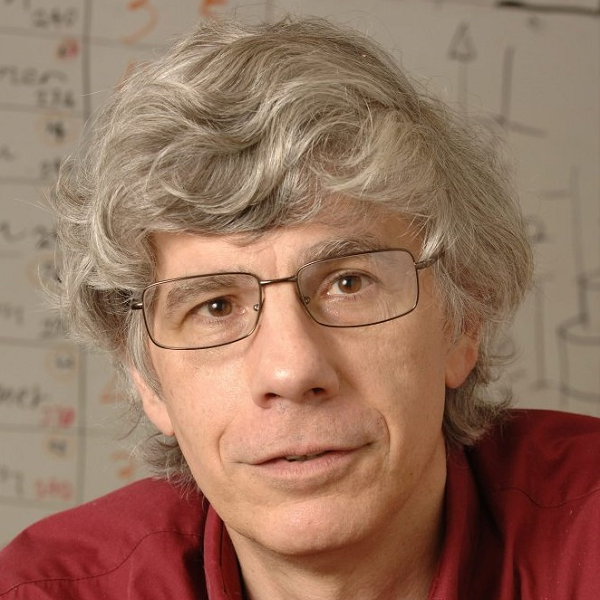
Sidney R. Nagel is the Stein-Freiler Distinguished Service Professor at the University of Chicago, affiliated with the Department of Physics, James Franck Institute, and Enrico Fermi Institute. His research investigates complex phenomena in non-equilibrium systems, including granular flows, droplet dynamics, and jamming transitions. His group explores singularities in fluid coalescence, splashing mechanisms, Leidenfrost effects, and pattern formation in disordered materials. The Nagel group's work connects microscopic interactions to macroscopic behaviors in systems ranging from colloidal glasses to impacting droplets. Major contributions include establishing universal features near jamming transitions, revealing air-dependent splashing mechanisms, and developing scaling theories for viscous-inertial crossovers in fluid dynamics. Recent work examines memory formation in driven disordered systems and pattern selection in fluid instabilities. Honors include the APS Medal for Exceptional Achievement, Buckley Prize, and memberships in the National Academy of Sciences and American Academy of Arts and Sciences.
Professor Charles Elliott of Warwick's Mathematics Institute specializes in the numerical analysis of partial differential equations with applications in biology, materials science, and geometric evolution. His research develops finite element methods for surface PDEs, free boundary problems, and phase transitions, with recent publications on Cahn-Hilliard equations and information propagation models. Honors include the Royal Society Wolfson Research Merit Award, Humboldt Prize, and honorary doctorate from Sussex University. As Editor-in-Chief of the IMA Journal of Numerical Analysis and editor for Interfaces and Free Boundaries, he shapes research dissemination in computational mathematics. Teaching covers topics in PDEs and mathematical modeling. His theoretical work on surface evolution equations informs applications in cell motility studies and biomembrane physics, connecting mathematical rigor with biological and physical phenomena.

Tasso J. Kaper is a Professor and Chair of the Department of Mathematics and Statistics at Boston University. He holds a Ph.D. in Applied Mathematics from the California Institute of Technology (1992). His research focuses on dynamical systems, nonlinear dynamics, reaction-diffusion equations, and mathematical biology. He is a Fellow of both the American Mathematical Society (AMS) and the Society for Industrial and Applied Mathematics (SIAM). He serves as Editor-in-Chief of Nonlinearity (UK Institute of Physics) and has held editorial roles for journals such as the SIAM Journal on Applied Dynamical Systems and Advances in Differential Equations. His work bridges applied mathematics and interdisciplinary fields, including fluid mechanics, climate modeling, and neuronal dynamics. Recent research highlights include studies on bifurcation phenomena, symmetry-breaking rhythms in coupled oscillators, and delayed Hopf bifurcations in reaction-diffusion systems. He has advised over 15 Ph.D. students, many of whom now hold academic and industry positions. Key awards include the AMS and SIAM fellowships, recognizing his contributions to dynamical systems theory and applications. His lab collaborates on topics ranging from glacial cycle modeling to chimera states in oscillator networks.

- Geometry
- Topology
- Tropical Geometry
- +۲ مورد دیگر
Grigory Mikhalkin is a Full Professor at the University of Geneva, where he has been a faculty member since 2008. He is considered one of the founders of Tropical Geometry, a domain of algebraic geometry governed by (max,+)-calculus where geometric objects degenerate to their piecewise-linear limits. He leads the "ALGEBRA AND GEOMETRY" research group at the university. Mikhalkin studied at Leningrad and Michigan State University under the supervision of Oleg Viro and Selman Akbulut. After receiving his PhD in 1993, he completed postdoctoral training at Princeton, Bonn, Toronto, Berkeley, and Harvard (1993-2000). He served as associate and then full Professor at the University of Utah before moving to the University of Toronto, eventually joining the University of Geneva in 2008. Mikhalkin's primary research areas are Geometry and Topology, with a particular focus on Tropical Geometry. His work bridges algebraic geometry with combinatorial structures, exploring how complex geometric objects can be understood through their piecewise-linear tropical counterparts. This approach has proven fruitful in solving problems in enumerative geometry and has connections to mathematical physics through the study of sandpile models and self-organized criticality. His research group actively explores the connections between tropical geometry, symplectic geometry, and real algebraic geometry, organizing regular seminars including the "Séminaire Fables Géométriques." The recent publications of Professor Mikhalkin demonstrate a strong focus on the intersection of tropical geometry with sandpile models and self-organized criticality. His work has evolved to examine tropical aspects of number theory, lattice sums, and even applications to economics through auction theory. A significant portion of his recent research explores the patterns and structures that emerge in sandpile models across various lattices and dimensions, connecting discrete mathematics with continuum limits through tropical techniques. Prize of the St. Petersburg Mathematical Society (1999) Silver Medal of the Mexican Mathematical Society (2011) Canada Research Chair (2004-2009) Friedrich-Wilhelm-Bessel Research Award of the Alexander-von-Humboldt Foundation (2007-2008) European Research Council Advanced Grant (2010-2015) Chair of Fondation Sciences Mathématiques de Paris (2013-2015) Mikhalkin has successfully advised several PhD students to completion, including Kristin Shaw (2011), Lionel Lang (2014), Nikita Kalinin (2015), Mikhail Shkolnikov (2017), and Johannes Josi (2018). His research has been supported by prestigious grants including the ERC Advanced Grant and the Canada Research Chair. He presented his work at the Bourbaki seminar in 2003 and was selected as a Geometry speaker at the International Congress of Mathematicians in 2006, highlighting the significance of his contributions to the field. Professor Mikhalkin leads the "ALGEBRA AND GEOMETRY" research group at the University of Geneva, which includes current members Thomas Blomme, Francesca Carocci, Aloïs Demory, Gurvan Mével, and Antoine Toussaint. The group has a strong track record of postdoctoral fellows and alumni, including notable researchers such as Ivan Bazhov, Johan Bjorklund, Rémi Crétois, and others. They organize several seminars including the "Séminaire Fables Géométriques" and have historical connections to the Battelle Seminar and Tropical working group Seminar.
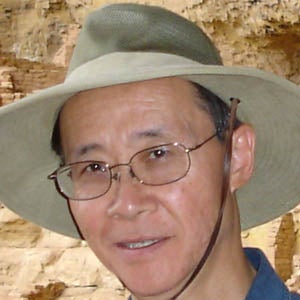
Edison P. Liang is the Andrew Hays Buchanan Professor of Astrophysics at Rice University, where he has served since 1991. Previously, he held positions at Stanford University, Michigan State University, and Lawrence Livermore National Laboratory (LLNL), where he led research groups in plasma physics and astrophysics. His research focuses on relativistic plasma physics, high-energy density physics, laser-plasma interactions, and high-energy astrophysical phenomena. He earned his BA (1967) and PhD (1971) in Physics from UC Berkeley, supported by the UC Science Fellowship and Anthony Scholarship. Key professional milestones include: Recipient of the British SRC Senior Visiting Scientist Fellowship (1974) Co-founder of the High Energy Density Laboratory Astrophysics (HEDLA) conference series Contributor to major NAS and SAUUL reports on High Energy Density Physics Organized over a dozen international astrophysics conferences Current research emphasizes computational modeling of relativistic plasmas, laboratory astrophysics, and antimatter creation using intense lasers. His group collaborates on both theoretical and experimental projects, with active involvement in HEDP applications to fusion, gamma-ray generation, and medical physics. Recent studies include relativistic jet dynamics, magnetic reconnection mechanisms, and shock-driven particle acceleration processes. Awarded over 300 peer-reviewed publications and conference proceedings, Liang is a Fellow of the American Physical Society and holds honorary memberships in Sigma Xi and Phi Beta Kappa. His group advises current graduate students Kyle Perez and Brandon Cage, with notable alumni including Guy Hilburn and Yingchao Lu. Research infrastructure includes advanced computational simulations and collaborations with national labs like LLNL.
Ruth Kramerمشاهده پروفایل
دانشیار
Ruth Kramer is an Associate Professor in the Department of Linguistics at Georgetown University's College of Arts and Sciences. Her research lies at the intersection of syntax and morphology, with a focus on grammatical gender, number, agreement, and syncretism, primarily in Afroasiatic languages such as Amharic, Coptic, and Ancient Egyptian. Institution: Georgetown University School: College of Arts and Sciences Department: Department of Linguistics Rank: Associate Professor Email: rtk8@georgetown.edu Office: Poulton Hall 251 Status: On sabbatical in Fall 2023 Her research interests include theoretical syntax, morphological theory, the syntax-morphology interface, phi-features, clitic doubling, and the morphosyntactic behavior of gender and number. She specializes in Amharic and has made significant contributions to the understanding of gender assignment, plural formation, and agreement patterns in this language. She also conducts research on Ancient Egyptian and Coptic, particularly in word order, relative clauses, and plural morphology. Her publications reflect a strong trend in theoretical and cross-linguistic morphosyntax, especially within the framework of Distributed Morphology. Her work often bridges detailed empirical analysis of understudied languages with broad theoretical implications for syntactic and morphological theory. She has authored a major monograph, The Morphosyntax of Gender (Oxford University Press, 2015), and numerous articles in leading journals such as Natural Language and Linguistic Theory , Linguistic Inquiry , and Journal of Afroasiatic Languages and Linguistics . Ruth Kramer is actively engaged in research collaboration, having co-authored papers with scholars like Mark Baker, Matt Hewett, and Anbessa Teferra. She has presented her work at major conferences and workshops, including NELS, Diachronic Generative Syntax, and the Afranaph Project. She teaches courses in linguistics and has advised students, though specific student names are not listed in the provided texts. She is also involved in academic service, such as contributing chapters to authoritative handbooks like The Oxford Handbook of Determiners and The Cambridge Handbook of Distributed Morphology .
Haotian Wuمشاهده پروفایل
مدرس ارشد
Haotian Wu is a Senior Lecturer in the School of Mathematics and Statistics at The University of Sydney, where he maintains an active research program in geometric analysis. His academic appointments include membership in the Geometry, Topology and Analysis Research Group, and he has been involved in organizing significant mathematical events including the AMSI Summer School 2025 and the Symposium on Geometric Analysis and Non-linear PDEs. Dr. Wu's educational background includes a PhD in Mathematics from The University of Texas at Austin (2013) and dual Bachelor's degrees in Mathematics and Physics from Lafayette College (2007). His research aligns with the University's Faculty of Science Research Strengths in Understanding the Universe, Fundamental Laws of Nature, and Complex Systems. Wu's research focuses on geometric evolution equations, particularly Ricci flow and mean curvature flow. His work investigates singularity formation, stability properties, and asymptotic behavior in these flows, with significant contributions to understanding Type-II singularities. His research bridges pure mathematics and mathematical physics, with applications to general relativity and geometric analysis. He has developed novel analytical techniques for studying nonlinear partial differential equations arising in geometric contexts. Analysis of Wu's publication record shows a consistent trajectory of high-impact research in geometric analysis, with increasing focus on numerical methods for studying geometric flows in recent years. His work demonstrates strong international collaboration, particularly with researchers in the United States, including notable collaborations with Garfinkle, Isenberg, Knopf, and Zhang. The publications reveal a progression from foundational work on Ricci flow to increasingly sophisticated analyses of mean curvature flow and related geometric evolution equations. Australian Research Council (ARC) Discovery Early Career Researcher Award (DECRA) 2018 for 'Singularity Analysis for Ricci Flow and Mean Curvature Flow' Faculty of Science Faculty Startup Scheme 2023 for 'Elliptic and parabolic problems in geometric analysis' Dr. Wu currently supervises research students including Alexander BEDNAREK (working on General Kahler Ricci Flow) and Tiernan CARTWRIGHT (working on Hölder regularity of solutions to degenerate complex Monge–Ampère equations). He has received multiple research grants supporting his work in geometric analysis. Wu has been actively involved in teaching undergraduate mathematics courses including MATH1021 Calculus of One Variable, MATH2061 Linear Mathematics and Vector Calculus, and specialized courses like MATH3968 Differential Geometry. As an active member of the mathematical community, Wu co-organizes significant research events including the AMSI Summer School 2025 and the International Conference on Nonlinear Partial Differential Equations honoring Professor Neil Trudinger's 80th birthday. His research group focuses on geometric analysis problems with connections to mathematical physics and differential geometry.
- Control Systems
- Robotics
- Marine Robotics
- +۳ مورد دیگر
Kristin Y. Pettersen is a Professor at the Department of Technical Cybernetics, Norwegian University of Science and Technology (NTNU), and a Professor II at the Norwegian Defence Research Institute (FFI). She is a co-founder of Eelume AS, a company specializing in underwater robotics solutions. Education: Civil Engineering and PhD in Technical Cybernetics from NTNU Her research focuses on advanced control systems for marine and underwater vehicles, particularly snake robots and autonomous underwater vehicles (AUVs). Key areas include formation control, path following, adaptive guidance algorithms, and safety-critical control in dynamic environments. Recent work explores machine learning integration and energy-shaping techniques for robust locomotion. Publications highlight trends in Model Predictive Control (MPC) , Collision Avoidance , and Task-Priority Operational Space Control for redundant and underactuated systems. Her work bridges theoretical control theory with practical applications in marine robotics, including autonomous inspections and cooperative transport. Labs/Teams: Collaborates with NTNU's Faculty of Information Technology and Electrical Engineering and co-founded Eelume AS, advancing subsea robotic manipulation technologies.

Anne-Laure Dalibard is a Professor at Sorbonne University's Faculty of Science and Engineering, affiliated with the Jacques-Louis Lions Laboratory (UMR CNRS 7598). She also serves as a Junior member of the Institut Universitaire de France (2020-2025) and was previously a part-time professor at the École Normale Supérieure in Paris (2021-2024). Her research focuses on mathematical analysis of fluid mechanics with applications to geophysical and oceanographic phenomena. Education: Student at ENS Ulm (2001-2005) PhD at CEREMADE, Paris-Dauphine University (defended October 8, 2007) Dalibard's research centers on geophysical fluids, boundary layers in fluid mechanics, congestion models, roughness models, scalar conservation laws, and homogenization theory. She specializes in asymptotic analysis of fluid equations relevant to oceanographic models, particularly those involving rotating fluids and boundary layer phenomena. Her work bridges rigorous mathematical analysis with practical applications in environmental fluid dynamics. Her recent publications demonstrate a consistent focus on boundary layer phenomena in fluid mechanics, with particular emphasis on geophysical applications. She has made significant contributions to understanding boundary layers in rotating fluids, congestion models in Navier-Stokes systems, and wave phenomena in stratified fluids. Her mathematical approach typically involves rigorous analysis of partial differential equations with singular perturbations, often using asymptotic methods, homogenization theory, and kinetic formulations. Scientific Awards: Junior member of the Institut Universitaire de France (2020-2025) Principal Investigator for ERC Starting grant BLOC (2015-2020) Leader of ANR BOURGEONS project (2023-2027) Dalibard leads substantial research initiatives including the ANR BOURGEONS project (2023-2027), which involves over 30 researchers, PhD students, and post-docs working on fluid dynamics aspects relevant to geophysical flows. She has supervised several PhD students including Jean Rax and Gabriela Lopez-Ruiz, and mentored post-doctoral researchers such as Frédéric Marbach, Marc Briant, and Matthew Paddick. Her research has been supported by prestigious grants from the European Research Council and the French National Research Agency. She is actively involved with the Jacques-Louis Lions Laboratory at Sorbonne University and collaborates extensively with researchers across France and internationally. Her work often intersects with oceanographic applications, connecting mathematical theory with environmental fluid dynamics problems.
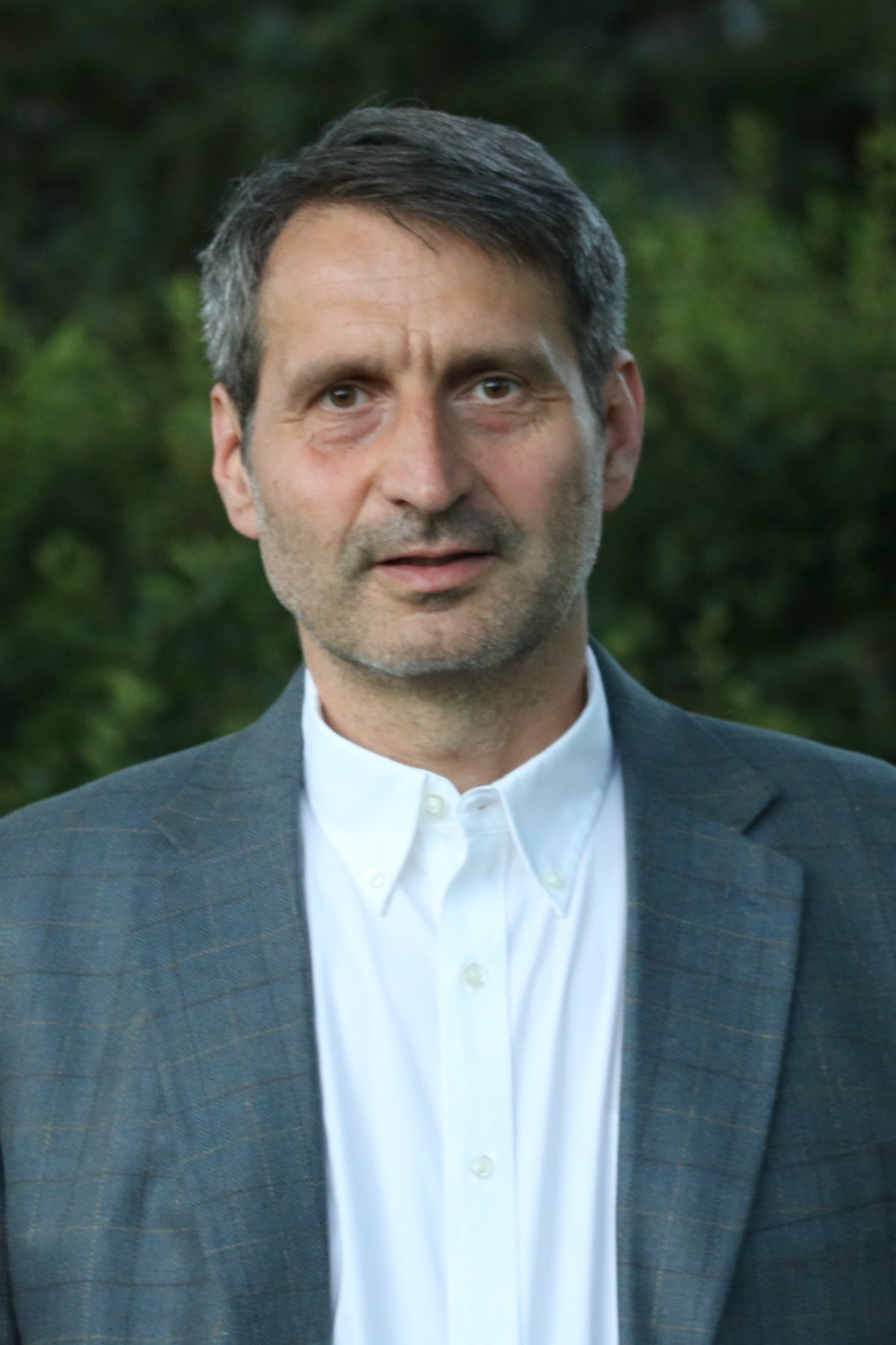
Vladimir Sverak serves as a Distinguished McKnight University Professor in the School of Mathematics at the University of Minnesota, where he maintains an active research program and teaches graduate courses in partial differential equations. His office is located in Vincent Hall 236 (206 Church Street SE, Minneapolis, MN 55455) with contact details including email sverak@umn.edu and phone (612) 625-1899. As of 2020, he continues to instruct courses such as Complex Analysis (Math 5583) and Topics in PDE (Math 8590), demonstrating ongoing academic engagement. Professor Sverak's research centers on fundamental questions in partial differential equations, particularly concerning existence, uniqueness, and singularity formation in fluid dynamics systems. His work focuses extensively on Navier-Stokes and Euler equations, examining behavior in critical function spaces where standard analytical methods often fail. He employs both rigorous mathematical techniques and numerical investigations to explore phenomena like non-uniqueness, blowup scenarios, and scale-invariant solutions, contributing significantly to the theoretical understanding of fluid mechanics. Analysis of his 15 most recent publications (2012-2017) reveals consistent thematic focus on Navier-Stokes equations, with particular attention to borderline spaces, axisymmetric flows, and singularity analysis. His collaborative approach is evident through frequent co-authorships with leading researchers including G. Seregin, H. Jia, and T. Gallay, reflecting the interdisciplinary nature of modern mathematical fluid dynamics research. His scientific recognition includes: Distinguished McKnight University Professor Research support comes from the National Science Foundation (grant DMS 1956092), while his teaching contributions span both foundational and advanced topics. Course materials for offerings like Elementary Partial Differential Equations (Math 5587/5588) and Introduction to Ordinary Differential Equations (Math 5525) remain accessible through university platforms, demonstrating commitment to pedagogical resources. Though student advising details aren't specified, his graduate-level course instruction indicates active mentorship within the mathematics community. Professor Sverak's work continues to advance mathematical fluid dynamics through rigorous analysis of nonlinear PDEs, maintaining strong connections between theoretical developments and physical fluid behavior while contributing to both research and education in mathematical sciences.
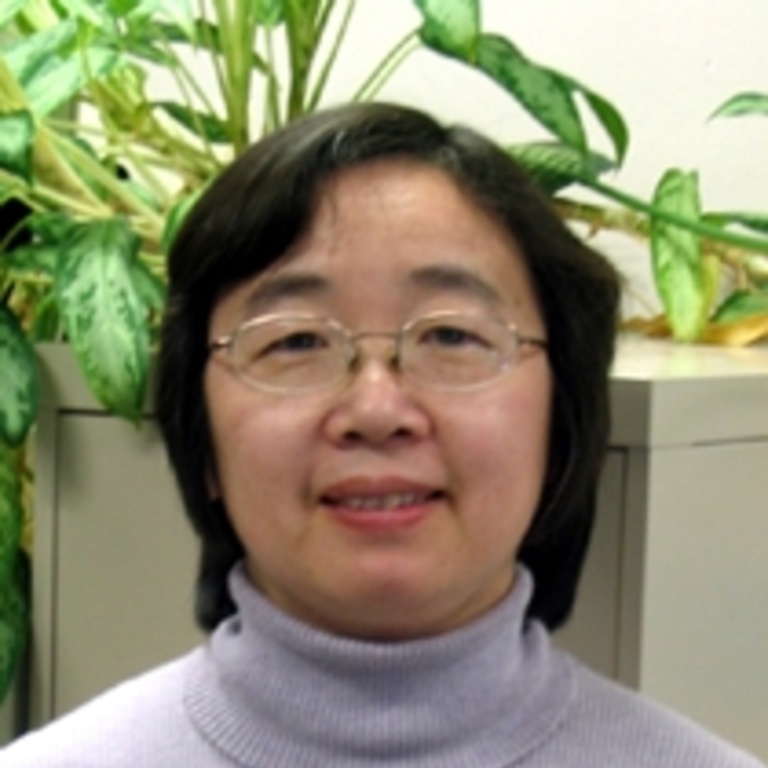
Tong Li is a Professor in the Department of Mathematics at the University of Iowa. His research focuses on nonlinear hyperbolic conservation laws, shock waves, combustion, traffic flow modeling, and bio-mathematics. He holds a PhD from New York University's Courant Institute of Mathematical Sciences. Education: PhD, New York University, Courant Institute of Mathematical Sciences Research Interests: Li's work spans several areas including: Nonlinear hyperbolic conservation laws and their applications in fluid dynamics Mathematical modeling of traffic flow and chemotaxis Analysis of shock waves and combustion processes Partial differential equations and dynamical systems Publications: Recent work includes studies on critical thresholds in chemotaxis models, Riemann solutions in dusty gas dynamics, and global solutions to traffic flow systems.

Marc Roussel is a Professor in the Department of Chemistry and Biochemistry at the University of Lethbridge, affiliated with the Alberta RNA Research and Training Institute. His research focuses on mathematical modeling of biochemical systems, enzyme kinetics, and systems biology. He has authored multiple books, including Foundations of Chemical Kinetics and A Life Scientist's Guide to Physical Chemistry . His work bridges mathematics and biology, emphasizing dynamical systems, delay differential equations, and model reduction techniques. He has received the 2024 Distinguished Teaching Award from the University of Lethbridge. Key research areas include biochemical networks, gene expression dynamics, and metabolic modeling. Roussel collaborates with experimentalists to study complex biological phenomena such as circadian rhythms, somite formation, and enzyme mechanisms. His contributions span theoretical frameworks, computational methods, and interdisciplinary applications in systems biology.

Elena Panteleyمشاهده پروفایل
پژوهشگر
Elena Panteley is a Research Director at the CNRS and a member of the Laboratoire des Signaux et Systèmes (L2S) at CentraleSupélec. She holds a PhD in Applied Mathematics from Saint Petersburg State University (1997) and has extensive experience in research, including roles at the Institute of Problems in Mechanical Engineering, Russian Academy of Sciences (1986–1998). She co-chairs the International Graduate School of Control at the European Embedded Control Institute (EECI-IGSC) and serves as a Book-reviews Editor for Automatica and Associate Editor for IEEE Control Systems Letters . Education: PhD in Applied Mathematics, Saint Petersburg State University, 1997 MSc/BSc in relevant fields (implied by career progression) Research Interests: Focuses on stability and control of nonlinear dynamical systems, networked systems, multi-agent systems, and their applications. Her work emphasizes robust control, consensus algorithms, synchronization, and distributed control strategies for autonomous systems. She explores theoretical frameworks like Lyapunov methods and adaptive control, with practical applications in robotics and communication networks. Publications: Over 100 peer-reviewed articles in top journals like IEEE Transactions on Automatic Control and Automatica . Recent trends include advancements in consensus algorithms for multi-agent systems, synchronization of nonlinear oscillators, and control under communication delays. Awards: No specific awards mentioned, but contributions to control theory and networked systems are widely recognized. Grants/Advising: Leads research on adaptive control, network synchronization, and robotics. Collaborates internationally and advises on projects involving autonomous vehicles and distributed systems. Labs/Teams: Active in L2S and affiliated with CNRS, contributing to teams like MODESTY, COMEDY, and SYCOMORE. Engaged in transverse research on energy, industry automation, and healthy systems.