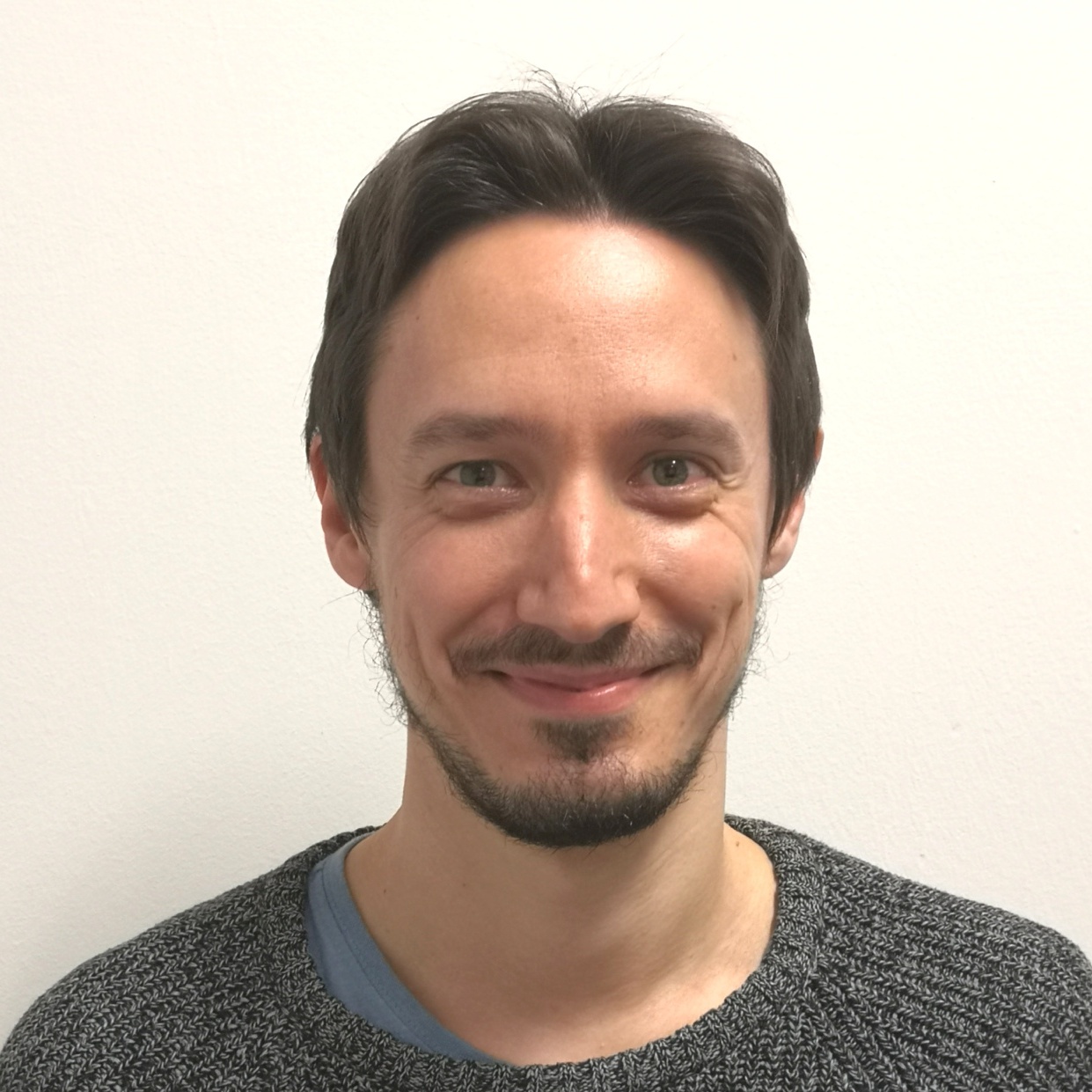
Wei-Ting Chen is a prominent researcher in computer science and artificial intelligence, focusing on image processing, neural networks, and computer vision. With active contributions to IEEE and CVPR venues, their work spans practical applications in haze removal, snow removal, and medical imaging. Key research areas: Image restoration, Diffusion models, Neural radiance fields, Quality assessment Recent publications (2024-2025): Unified restoration models, Video quality analysis, Crowd counting in adverse weather Notable collaborative works include: CVPR 2024: RobustSAM for degraded image segmentation IEEE Access 2024: Low-cost pipelined architecture design Remote Sensing 2021: National PM2.5 estimation using MAIAC data Technical expertise evident in implementations for vehicle re-identification, depth estimation, and electrical motor dynamics modeling.
Aleksandr Malyshev is Professor of Mathematics at the University of Bergen. His research integrates numerical linear algebra, stability theory, optimisation-based control, and image-processing algorithms, yielding a portfolio of more than 60 peer-reviewed articles and conference contributions. Education & affiliations: Professor, Department of Mathematics, University of Bergen, Norway (present) Previous research and teaching engagements in informatics and applied mathematics at the same university Research interests: Malyshev’s core interest is the theoretical and algorithmic analysis of matrix problems arising in stability, control and imaging. He develops numerically reliable tools for assessing the distance to instability of dynamical systems, constructs preconditioners that accelerate optimisation solvers in real-time model predictive control, and designs variational models for 3-D reconstruction and image denoising. His work frequently combines spectral theory of matrix polynomials with practical issues such as high-performance implementation and medical-image quantification. Across the last decade his articles reveal three dominant strands: (i) stability and perturbation of time-delay and periodic systems, (ii) preconditioned iterative solvers for interior-point and MPC formulations, and (iii) variational and learning-based approaches to depth estimation, surface reconstruction and glenoid-bone assessment. These themes are unified by a common mathematical substrate—exploitation of matrix structure to obtain computationally efficient, numerically trustworthy solutions. Scientific awards & recognition: Regular invited speaker at international workshops on numerical linear algebra and control (e.g., SK Godunov conference 2009, IFAC 2018) Funded principal investigator / co-investigator on Research Council of Norway and EU Horizon Europe grants Advising & grants: Malyshev has supervised numerous MSc and PhD candidates in numerical analysis and scientific computing and currently advises graduate researchers on projects ranging from 3-D machine-vision algorithms to Krylov-subspace preconditioning. Recent grant participation includes EU project 101373 (3-D quantification of glenoid bone loss) and the Norwegian Research Council project 262203 on perfusion-flow simulation. Labs & collaboration: He collaborates closely with the Group for Numerical Methods and Applications at UiB, the Visual Computing cluster at the Department of Informatics, and maintains international partnerships with the Universities of Brest, Lübeck, and several US institutions. These joint efforts feed cross-disciplinary projects combining rigorous matrix analysis with real-world applications in biomechanics, process control, and computer vision.
Zihan Zhou is an Assistant Professor at the College of Information Sciences and Technology, Penn State University, specializing in computer vision, machine learning, and 3D reconstruction. His research bridges geometric modeling, image processing, and human-computer interaction, with applications in assistive technology and creative design. Email: zuz22@psu.edu His work focuses on robust face recognition, sparse representation, and vision-language approaches for converting 2D CAD drawings into 3D parametric models. Recent projects include neural rendering for wireframe-to-image translation and data-driven 3D scene modeling. The 15 most recent publications highlight his contributions to end-to-end floorplan generation, depth estimation, trajectory prediction, and structured 3D modeling. These works integrate convolutional neural networks, graph construction, and optimization algorithms. Projects like Building Energy Savings by Tuning Indoor Lighting underscore his interdisciplinary approach, combining computer vision with environmental sustainability.
Manuel Mucientes Molina is a Full Professor at the Research Center on Intelligent Technologies (CiTIUS) within the University of Santiago de Compostela . His research focuses on Artificial Intelligence , particularly in Computer Vision and Machine Learning , with applications in object detection, process mining, and healthcare diagnostics. Research Areas : Machine learning, Computer vision, Process mining, Deep learning, AI for healthcare. Projects : Protonterap-IA (2025), AZOR (2024), RAI4P (2021), eXplica-IA (2018), DronePlan (2014), SoftLearn (2012). Publications highlight advancements in few-shot object detection, small object tracking, and AI-driven conformance checking. Notable collaborations include work on X-ray vision systems and medical mask detection in operating rooms. Awards : Best Student Paper Nomination (2015), Runner-up best industry-oriented paper award (2008). Teaching includes courses on Statistical Learning, Deep Learning, and Automata Theory at the M.Sc. and B.Sc. levels.
Dr. Helia Farhood is an Honorary Senior Research Fellow at the School of Computing, Macquarie University, specializing in Artificial Intelligence, Machine Learning, and Image Processing with applications in educational technology and object recognition. Her academic qualifications include a PhD in Computer Systems and Artificial Intelligence from the University of Technology Sydney (awarded November 2021) and a Master's degree in Computer-AI from Amirkabir University of Technology (Tehran Polytechnic, awarded September 2013). Dr. Farhood's research spans interdisciplinary AI applications, with significant contributions in student outcome prediction using generative adversarial networks, explainable AI through LIME heatmaps, and image-based storytelling systems. Her work integrates machine learning with educational data mining to enhance creativity assessment and learning analytics, while maintaining strong technical focus on 3D reconstruction and object recognition. Analysis of her 16 publications (2020-2025) reveals three dominant research trajectories: (1) AI-driven educational analytics for student performance prediction, (2) advanced image processing techniques for object recognition and 3D reconstruction, and (3) systematic reviews establishing methodological foundations in presentation attack detection and image-based storytelling. Her recent work increasingly emphasizes explainability and ethical considerations in AI deployment. Dr. Farhood has participated in externally funded research projects, including the 2022 project "Estimating the Number of Tyres in Stockpiles" (October-December 2022). No information is available regarding students she has advised. No information is available about specific research laboratories or teams led by Dr. Farhood.
Matteo Poggi is a Tenure-Track Assistant Professor at the University of Bologna, where he teaches courses on Logic Circuits and Computer Architectures. His academic career is deeply rooted in computer vision and 3D perception, with a focus on stereo vision, depth estimation, and SLAM systems. Dr. Poggi earned his MSc and PhD degrees from the University of Bologna in 2014 and 2018 respectively, working on stereo vision under the supervision of Prof. Stefano Mattoccia. His educational background has provided a strong foundation for his current research endeavors in computer vision and 3D scene understanding. Dr. Poggi's research primarily focuses on stereo matching, multi-view stereo, optical flow, single-image depth estimation, online adaptation, federated learning, and neural SLAM. His work bridges the gap between theoretical computer vision and practical applications, with particular emphasis on robustness in real-world scenarios. His recent publications demonstrate a growing interest in 3D Gaussian splatting, neural radiance fields, and environmental monitoring applications like river plastic detection. His scholarly output shows a consistent trajectory of high-impact publications at top computer vision conferences including CVPR, ICCV, and ECCV. The trend in his work reveals an evolution from traditional stereo vision techniques toward more advanced neural representations and applications in environmental monitoring. His research has significant implications for autonomous systems, robotics, and environmental science. Area Chair for CVPR 2026 Associate Editor for IJCV Outstanding Reviewer at CVPR 2025 Dr. Poggi actively collaborates with researchers across the globe, as evidenced by his extensive publication record. His GitHub profile shows active engagement with the research community through open-source implementations of his work. While specific grant information isn't provided in the available texts, his numerous publications in top venues suggest successful funding for his research endeavors. His work appears to be conducted within a vibrant research group at the University of Bologna, with connections to other researchers in the computer vision community as seen through his GitHub followers and collaborators. His research has practical applications in autonomous driving, robotics, and environmental monitoring.