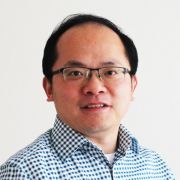
Kai-En Lin is an AR/VR engineer at Apple's Vision Products Group (VPG), with a PhD in Computer Science and Engineering from the University of California, San Diego. His research focuses on novel view synthesis from dynamic scenes and sparse inputs, supported by a Qualcomm FMA fellowship during his graduate studies. PhD: CSE Department, UC San Diego (advised by Prof. Ravi Ramamoorthi) Undergraduate: EE Department, National Taiwan University (advised by Prof. Homer H. Chen) His work intersects computer graphics , neural rendering , and 3D reconstruction , with key contributions in Deep 3D Mask Volumes, NeRF-based view synthesis, and light-transport modeling for portraits. Collaborations include researchers from Google, Meta, and Adobe. His recent publications apply NeRF , diffusion models , and vision transformers to problems such as dynamic scene synthesis and single-image 3D reconstruction. Notable co-authors include Ravi Ramamoorthi, Tsung-Yi Lin, and Lei Xiao. Scientific Awards: Qualcomm FMA fellowship He has contributed to influential papers in venues like ICML , ECCV , ICCV , and IEEE Transactions on Pattern Analysis and Machine Intelligence (PAMI) . These works emphasize neural view synthesis , dynamic scene modeling , and editable 3D content generation .
Professor Po Yang is a distinguished academic at the School of Computer Science , University of Sheffield , where he holds the title of Professor of Pervasive Intelligence . Previously, he led research at Liverpool John Moores University (2015-2019) before joining Sheffield. His educational background spans Wuhan University (BSc), University of Bristol (MSc), and Staffordshire University (PhD). Research Interests include Pervasive and Mobile Intelligence Machine Learning for Healthcare Smart Sensing Systems Data Science Applications in Precision Agriculture Image Analysis for Medical and Industrial Uses Publications (>100 journals, >80 conferences) demonstrate expertise in AI-driven solutions for Parkinson’s disease , Alzheimer’s progression , and agricultural pest management . His work integrates IoT , tensor multi-task learning , and federated learning to address real-world challenges. Grants totaling over £1.1M as Principal Investigator from Innovate UK , BBSRC , EPSRC , and other bodies focus on AI-enabled Sustainable Agriculture Mobile Intelligence for Pest Management Federated Learning Privacy Solutions IoT-based Healthcare Systems Labs & Teams include leadership of the Pervasive Computing Research Group and collaborative projects with institutions like MRC, Worldwide Universities Network, and industrial partners.
Giacomo Boracchi is a researcher at the Polytechnic University of Milan , focusing on machine learning, computer vision, and signal processing. His work spans anomaly detection, change detection in data streams, 3D imaging, and biomedical applications. Key Collaborations : Diego Carrera, Luca Magri, Cesare Alippi Industries : Embedded systems, medical imaging, environmental monitoring Recent research explores adaptive Kalman filtering for battery estimation, zero-shot anomaly detection, and explainable AI for vision-language models. Publications highlight applications in waste sorting, histological data generation, and cardiac monitoring. His technical focus includes convolutional networks, ensemble learning, and domain adaptation. Boracchi's work bridges theoretical advancements with real-world systems in fraud detection, semiconductor manufacturing, and wearable health devices.
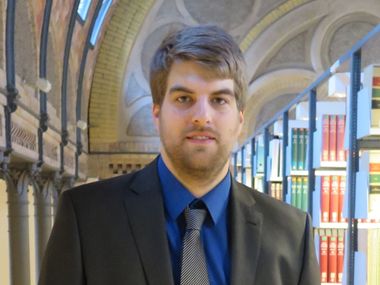
Matthias Springstein is a researcher at the Technical Information Library (TIB), which is affiliated with Leibniz University Hannover. He is part of the Visual Analytics research group within TIB's Research & Development department, focusing on advanced computer vision and multimedia information retrieval techniques. His research interests span multiple areas of artificial intelligence with emphasis on computer vision applications. Springstein specializes in web-supervised learning for visual concepts, incremental learning approaches, and methods to minimize manual labeling efforts for training data. His work bridges theoretical machine learning with practical applications in digital humanities, particularly in art-historical image analysis and film/video studies. His publication record shows a consistent focus on multimodal analysis, with recent work exploring knowledge graphs for image classification, large-scale hierarchical classification of art-historical images, and computational tools for film analysis. The research demonstrates progression from foundational work in image-text relations and depth estimation toward increasingly sophisticated applications in cultural heritage and scholarly media analysis. Notable achievements include receiving the Best Paper Award at the International Conference on Multimedia Retrieval (ICMR) in 2019 for his work on semantic image-text relations. Springstein has developed TIB AV-Analytics, a computational platform for scholarly video analysis that has been presented at multiple major conferences (SIGIR 2023, SCSMI 2024), indicating significant impact in both the information retrieval and film studies communities.
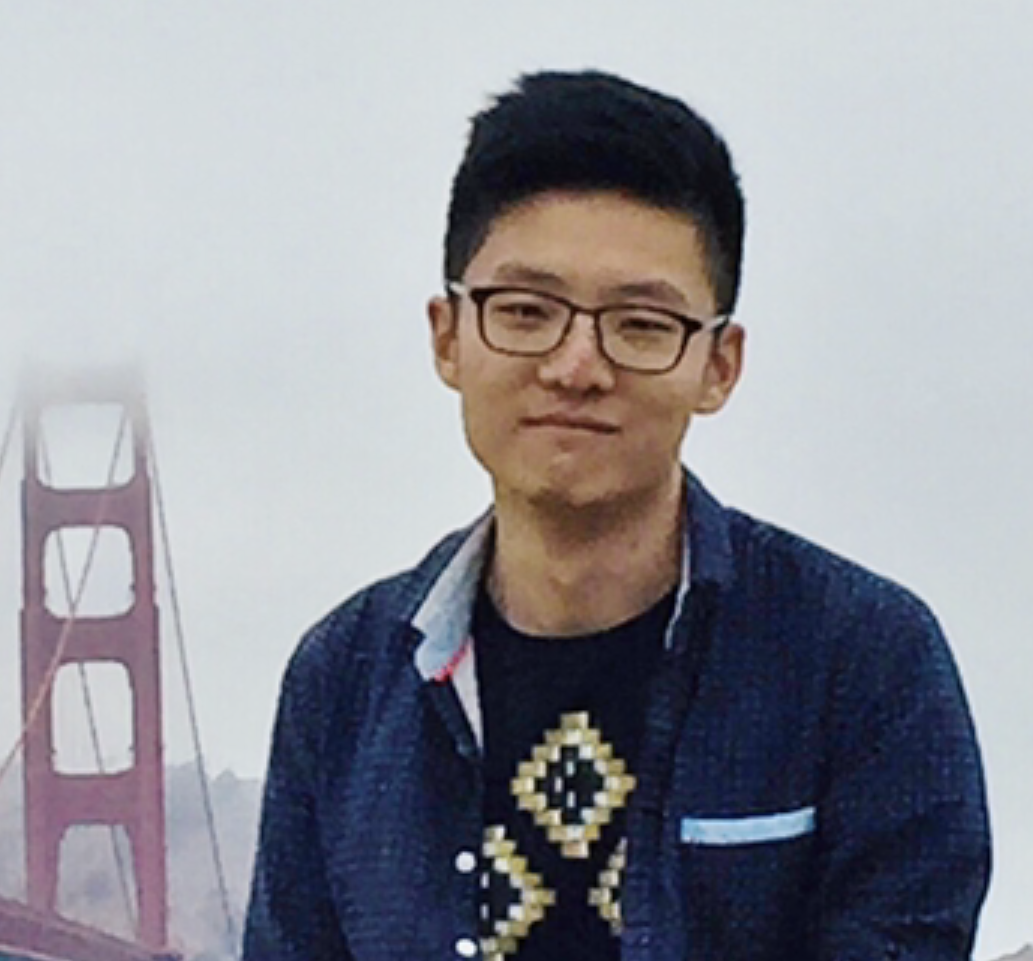
Cheng Lin is an Assistant Professor at the Department of Computer Science and Engineering, Macau University of Science and Technology (MUST). He earned his Ph.D. in Computer Science from the University of Hong Kong (HKU) under Prof. Wenping Wang and completed a visiting research period at the Visual Computing Group, Technical University of Munich (TUM), advised by Prof. Matthias Nießner. His B.Eng. degree from Shandong University focused on geometry and graphics. His research focuses on geometric modeling , 3D vision , shape analysis , and computer graphics , with recent contributions in diffusion models for 3D reconstruction, neural surface modeling , and material-aware generation . He has published extensively in top venues like SIGGRAPH, CVPR, and ECCV. Key trends in his publications include advancing single-view 3D generation , multiview consistency , and neural diffusion techniques for geometric and material reconstruction. Notable works include PDT: Point Distribution Transformation with Diffusion Models (SIGGRAPH 2025) and Wonder3D (CVPR 2024). Scientific Awards : CVPR 2024 Most Influential Papers (Corresponding Author) ICLR 2024 Most Influential Papers (First Author) CGF Top Cited Article 2022-2023 Tencent Excellent Contributor [2022] National Scholarship of China [2013-2015] Cheng Lin co-founded the non-profit research group AnySyn3D and has served as a reviewer for journals like TPAMI, TOG, and TVCG, as well as conferences including SIGGRAPH and CVPR.
Timothy K. Shih is an active academic researcher with over 30 years of scholarly contributions, evidenced by his extensive publication record from 1991 through 2025. With more than 380 publications spanning numerous prestigious venues including IEEE Access, Multimedia Tools and Applications, and Lecture Notes in Computer Science, he maintains a robust research profile with consistent annual output (20+ papers in peak years). His work demonstrates leadership through frequent senior/corresponding author positions and collaborations with numerous researchers across international institutions. Dr. Shih's research interests encompass a diverse range of computer science disciplines with particular emphasis on Computer Vision , Human-Computer Interaction , and AI Applications . His work bridges theoretical advancements with practical implementations in educational technology, accessibility solutions, and multimedia systems. Recent publications reveal a strategic focus on applying deep learning techniques to solve real-world problems in sign language recognition, gesture analysis, and wireless sensing applications. Analysis of his publication trends over the past five years shows increasing specialization in multimodal AI systems, with significant contributions to sign language technology (including Arabic Sign Language recognition), WiFi-based human activity recognition, and music technology applications. His research demonstrates strong interdisciplinary connections between computer vision, machine learning, and human-centered computing, with practical applications spanning educational technology, accessibility solutions, and smart environments. Through his mentorship, Dr. Shih has guided numerous junior researchers who have become frequent collaborators, including Chih-Yang Lin, Hsin-Hung Cho, and Tipajin Thaipisutikul. His research program appears well-funded through consistent publication output across multiple project areas, suggesting successful grant acquisition in computer vision, AI, and educational technology domains. Current work indicates active involvement in cutting-edge research on diffusion models for audio processing, enhanced sign language recognition systems, and novel approaches to WiFi-based human interaction analysis.
Barbara Solenthaler is a Lecturer at the Department of Computer Science, ETH Zurich. Her research focuses on physics-based simulations, facial animation, and machine learning applications in computer graphics.
Dr. Hansung Kim is an Associate Professor in the School of Electronics & Computer Science at the University of Southampton . With over 100 peer-reviewed publications (60+ as first author), he specializes in 3D computer vision, audio-visual machine perception, and immersive virtual reality technologies. School: School of Electronics & Computer Science University: University of Southampton Email: H.Kim@soton.ac.uk Research Focus : Dr. Kim’s work bridges computer vision, machine learning, and audio signal processing to advance real-time immersive VR experiences. His research addresses challenges in joint audio-visual scene understanding, human pose estimation, and depth estimation using omnidirectional cameras. Key applications include entertainment, training, and media production. Scientific Recognition : Best Paper Award & Nomination (2013, 2019) 3rd Prize at AHSC Competition (2020) Teaching Roles : He supervises courses such as COMP6223 Computer Vision , COMP1201 Algorithmics , and COMP6200 MSc Project , emphasizing technical rigor and practical implementation in computer vision and algorithmic design.
Yimin Zhong is an Assistant Professor of Mathematics and Statistics at Auburn University. He holds a Ph.D. from the University of Texas at Austin (2017). His research focuses on applied mathematics, scientific computing, and machine learning, with expertise in inverse problems, radiative transfer, and nonlinear optics. He leads undergraduate research initiatives and collaborates on projects involving biomedical imaging and transport models. Key research areas include PDE learning, neural networks for high-frequency approximation, intrinsic complexity of datasets, and imaging with physical models. Zhong's work bridges theoretical analysis with computational methods, addressing challenges in data-driven modeling and inverse problem uniqueness/stability. He has contributed to fast algorithms for radiative transport and implicit boundary integration techniques for macromolecular electrostatics. His projects span collaborations with industry (e.g., Boeing) and academic networks, emphasizing interdisciplinary applications. Current interests also include graph theory, randomized algorithms, and geometric measure theory. Despite no explicit awards listed, his extensive publication record reflects recognition in computational and applied mathematics fields. Education: Ph.D. in Mathematics, University of Texas at Austin (2017) Advising: Mentored undergraduate research in inverse problems and numerical methods Labs/Teams: Leads Auburn's Undergraduate Research Network in Mathematics Open Problems: Active in transport equation analysis, nonlinear diffusion, and geometric measure theory challenges
Dr. Hang Dai is transitioning to a Full Professor position at Wuhan University after serving as Honorary Research Fellow at the University of Glasgow's School of Computing Science. His research spans computer vision, medical image analysis, and autonomous driving systems. With over 26 publications, he develops deep learning methods for 3D segmentation, object detection, and video enhancement. Research areas include: Advanced 3D semantic segmentation for LiDAR data Semi-supervised medical image analysis Multi-modal fusion for autonomous vehicles Current projects focus on certainty-guided contrastive learning for medical imaging and attention mechanisms for depth super-resolution.
Daan de Geus is a Researcher in the Department of Computer Science at RWTH Aachen University, Faculty of Mathematics, Computer Science and Natural Sciences, focusing on computer vision and machine learning for autonomous systems and image generation. His core research interests include: Computer Vision Autonomous Driving Deep Learning Trajectory Prediction Diffusion Models Recent work demonstrates breakthroughs in trajectory forecasting via decoder-only architectures (DONUT) and ultra-efficient diffusion model fine-tuning, achieving state-of-the-art performance in motion prediction and depth estimation while drastically reducing computational overhead.
Francesco V. Pepe is an Associate Professor in the Department of Physics at the University of Bari Aldo Moro, Italy, where he is affiliated with the Dipartimento Interateneo di Fisica. He leads the Quantum Optical Technologies Laboratory (QuOT Lab) and is the Principal Investigator of the INFN project PICS (Plenoptic Imaging with Correlations), focused on advancing correlation plenoptic microscopy. His research spans quantum imaging, quantum information, and quantum optics, with a strong emphasis on correlation-based imaging techniques and their applications in high-resolution 3D microscopy. PhD in Physics (specific institution and year not specified in text) His research interests lie at the intersection of quantum optics and imaging science, focusing on quantum imaging , correlation-based microscopy , plenoptic imaging , light-field technologies , and quantum information processing . He explores the use of intensity correlations in light to overcome classical limitations in resolution, depth of field, and imaging speed. His work also extends to quantum simulation of many-body systems (e.g., Schwinger model), bound states in the continuum , and light-matter interactions in waveguide QED platforms. The recent articles (2024–2025) reveal a strong trend toward quantum-inspired imaging techniques , particularly correlation plenoptic and hyperspectral imaging, with applications in turbulence-robust and real-time volumetric imaging. There is also a significant focus on quantum simulation of gauge theories using quantum computing platforms, dimensional reduction in field theories , and non-Markovian dynamics in quantum systems. The consistent use of correlation measurements, quantum error mitigation, and GPU-accelerated processing highlights a multidisciplinary approach combining theory, computation, and experimental design. Francesco V. Pepe has supervised Master’s students in Physics and is actively involved in collaborative research projects. While no formal scientific awards are listed in the provided text, his leadership in the INFN PICS project and extensive publication record underscore his prominence in the field. He has also contributed to advancements in quantum decay dynamics , spontaneous emission in dispersive media , and nonexponential decay phenomena , often in collaboration with leading researchers in quantum optics and condensed matter physics. He is associated with the QuOT Lab, which focuses on developing quantum optical technologies for imaging and sensing. The lab engages in both theoretical modeling and experimental implementation, particularly in correlation imaging, plenoptic microscopy, and quantum simulation. The team collaborates widely across Italy and internationally, contributing to projects in quantum 3D imaging, remote sensing, and Earth observation.
Andrzej Skalski serves as a Professor and Deputy Head of the Department of Metrology and Electronics within the Faculty of Electrical Engineering, Automatics, Computer Science and Biomedical Engineering at AGH University of Science and Technology in Kraków. He actively participates in the Biomedical Engineering Discipline Council and maintains his primary workplace in Building B-1, Room 206, with contact via skalski@agh.edu.pl. His research spans Medical Imaging, Computer Vision, and Mixed Reality applications in healthcare, with concentrated expertise in medical image segmentation, surgical navigation systems, and 3D visualization techniques. Recent work demonstrates innovative integration of deep learning for vascular structure analysis, development of cloud-based diagnostic platforms like DECODE, and implementation of extended reality solutions for surgical precision and anatomy education. His scholarship bridges engineering principles with clinical practice to solve complex biomedical challenges. Analysis of his 2024-2026 publications reveals dominant trends in markerless surgical navigation, noninvasive vascular disease management, and educational technology for anatomy instruction. Key thematic clusters include: (1) Deep learning-driven segmentation of vascular and fracture structures in CT/X-ray data, (2) Mixed reality frameworks for surgical guidance and biopsy procedures, and (3) Systematic evaluations of digital versus traditional methods in medical education. These works consistently emphasize clinical applicability and technological innovation. Dr. Skalski leads collaborative initiatives including the DECODE platform for peripheral artery disease management and the PENGWIN 2024 Challenge for pelvic fracture segmentation benchmarking. His leadership in the Biomedical Engineering Discipline Council underscores institutional influence, while his extensive publication record indicates active supervision of graduate researchers despite no explicit student listings in available records. Current projects focus on WebGL-based medical visualization and mixed reality surgical navigation systems.
Valentino Peluso is a Fixed-Term Assistant Professor at the Department of Control and Computer Engineering (DAUIN) of Politecnico di Torino. His research focuses on Edge AI , Electronic Design Automation , Federated Learning , and Low-Power Design , with applications in distributed systems and cyber-physical technologies. Associate Editor at IEEE Transactions on Circuits and Systems II (2025-) Organizer of workshops on smart grids and IoT at IEEE conferences Recipient of Politecnico di Torino's RIMINI SCHOOL 2025 badge for research funding participation His recent work explores homomorphic encryption for secure federated learning, DVFS side-channel attacks in edge inference, and energy-efficient pipeline optimization for embedded systems. Publications span IEEE Transactions, ICECS, ICCD, and VLSI-SoC conferences. Scientific Awards & Roles: RIMINI SCHOOL 2025 Certification Learning to Teach (L2T) badge Editorial contributions to IEEE journals Chair and co-chair roles in hardware/software co-design sessions He contributes to teaching in High-Level Synthesis , Machine Learning for IoT , and Efficient AI Computing at both PhD and MSc levels.
Roman Pflugfelder is a Marie Curie Fellow and active researcher at the Technical University of Munich (TUM), where he is affiliated with the Chair for Computer Vision and Artificial Intelligence in the School of Computation, Information and Technology. He simultaneously holds a postdoc position at the Technion in Israel under Prof. Michael Lindenbaum and serves as a lecturer at TU Wien. Currently on leave from a Scientist position at the AIT Austrian Institute of Technology in Vienna, Pflugfelder focuses on solving occlusion challenges in machine and human vision through his Marie Curie project 'Video De-Occlusion'. His research spans object tracking and detection, motion analysis, object recognition, and visual learning, with strong emphasis on practical applications in video surveillance systems. Pflugfelder has developed notable technologies including traffic monitoring systems based on competitive learning, the CMT tracker using consensus of parts, and indoor localization with non-overlapping security cameras. His work bridges theoretical computer vision with real-world implementation, having been deployed by governmental organizations and companies. Analysis of his recent publications (2022-2025) reveals a consistent focus on multi-object tracking, satellite imagery analysis, and occlusion handling in visual recognition systems. His work shows progression from traditional tracking methods toward more sophisticated deep learning approaches for satellite video analysis and temporal modeling to address occlusion challenges. The publications span top-tier venues including CVPR, ICCV, ECCV, and NeurIPS, demonstrating his standing in the computer vision community. Marie Skłodowska-Curie Fellowship (2022) IEEE/CvF WACV Best Paper Prize (2014) Multiple reviewer awards (2016 - Journal of Image and Vision Computing, 2017 - Journal of Pattern Recognition, 2019 - CVPR) Pflugfelder supervises Master's students at TUM and previously managed a team of six researchers at AIT, coordinating the strategic 'Mobile Vision' program. He co-initiated the VOT challenges and workshop series in 2012, contributing significantly to benchmarking in visual object tracking. His research often involves interdisciplinary collaborations across European institutions and Israel, with strong emphasis on translating theoretical advances into practical surveillance applications. As part of the Dynamic Vision and Learning Group at TUM under Prof. Laura Leal-Taixé, Pflugfelder works within a vibrant research ecosystem focused on cutting-edge computer vision problems. His current project investigates how temporal information in video sequences can overcome limitations of single-image recognition systems, drawing inspiration from cognitive science concepts like visual persistence and anorthoscopic perception.