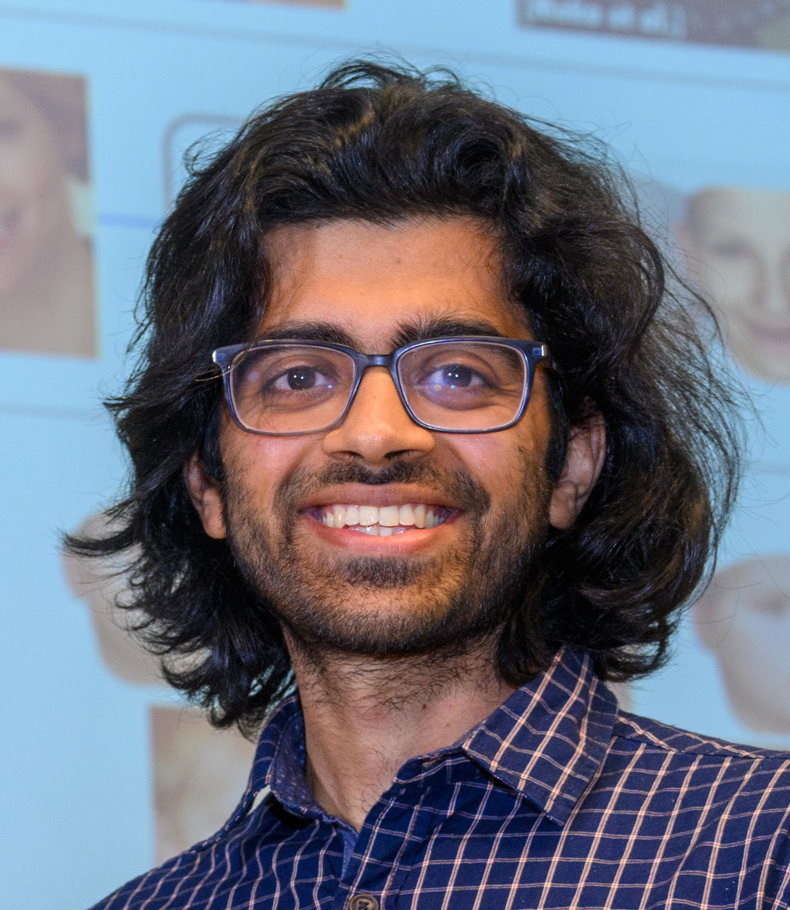
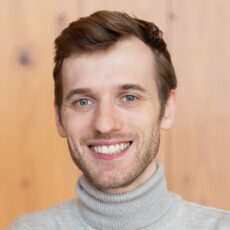
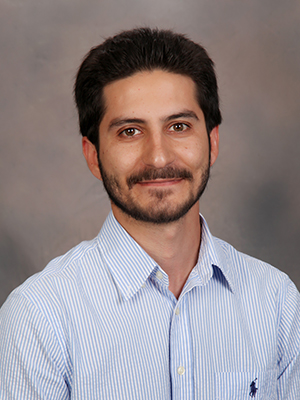
Nick Antipa is an Assistant Professor at the University of California, San Diego, affiliated with the Jacobs School of Engineering and the Department of Electrical and Computer Engineering. His work focuses on computational imaging systems that integrate optics, sensors, and algorithms to enable novel imaging modalities. PhD in Electrical Engineering from UC Berkeley Former optical metrology engineer at Lawrence Livermore National Lab Research interests span computational imaging , lensless camera design , and single-shot high-dimensional optical signal capture . His lab develops systems like DiffuserCam for compressive 3D imaging and Miniscope3D for miniature fluorescence microscopy. Recent publications address differentiable wave optics, high-speed video reconstruction, and marine imaging applications. Awards include Best Paper at ICCP 2016/2019 and Best Demo at ICCP 2017. His lab explores machine learning-driven optical design and differentiable rendering frameworks for end-to-end optimization of imaging systems. Current projects include oceanographic imaging, computational photography, and infrared spectroscopy acceleration.
Curtis Baker is a Senior Scientist at the Research Institute of the McGill University Health Centre (RI-MUHC), Montreal General Hospital site, and a Professor in the Department of Ophthalmology and Visual Sciences at McGill University. His research focuses on understanding human visual perception , particularly low-level neural mechanisms that underpin everyday visual processing of figure-ground and local depth relationships through cues like contrast, texture, and motion . Institutional Affiliation: RI-MUHC, McGill University Academic Rank: Professor His lab employs human psychophysics , electrophysiology , optical imaging , and computational modeling to study how early visual processing detects and utilizes complex cues. Key research areas include receptive field dynamics , second-order boundary perception , and machine learning applications in visual neuroscience. Recent publications highlight his work on convolutional neural networks for receptive field estimation, Y-like neuronal responses in human vision, and texture regularity models using wavelet analysis. Collaborations span computational neuroscience , optical imaging , and depth perception mechanisms. Students and researchers in his lab include graduate students in Integrated Program in Neuroscience , Physiology , and Biomedical Engineering , alongside alumni contributing to neurophysiology and computational biology projects.
Ayush Tewari is an Assistant Professor at the University of Cambridge. Previously, he was a postdoctoral researcher at MIT CSAIL under Bill Freeman, Josh Tenenbaum, and Vincent Sitzmann, and completed his Ph.D. at the Max Planck Institute for Informatics under Christian Theobalt. His research focuses on visual perception, developing methods to infer 3D structured representations from images and videos, aiming to bridge the gap between human perceptual capabilities and machine learning systems. Key research interests include neural rendering, inverse rendering, 3D reconstruction, and generative models. Notable contributions include advancements in Neural Radiance Fields (NeRF), diffusion models for inverse problems, and human-centric perception studies. His work has been published in top venues such as SIGGRAPH, CVPR, ICCV, and NeurIPS. Recent research trends emphasize ambiguity-aware inverse rendering, stochastic inverse problem solving using diffusion models, and integrating forward models for 3D scene inference. His work on Diffusion with Forward Models (NeurIPS 2023) proposes a novel framework for solving inverse problems without direct supervision. Awards: Best Paper Honorable Mention at BMVC 2022 (VoRF: Volumetric Relightable Faces). Labs/Projects: Core contributor to the DFM (Diffusion with Forward Models) project, advancing 3D scene understanding via probabilistic methods.
Dr. Chamith Wijenayake is a Senior Lecturer - Teaching Focused at the School of Electrical Engineering and Computer Science, University of Queensland. He holds a PhD in Electrical and Computer Engineering from the University of Akron (2014) and a BSc (Hons) in Electronic and Telecommunications Engineering from the University of Moratuwa, Sri Lanka (2007). His research focuses on multidimensional signal processing, digital hardware architectures, FPGA-based systems, machine learning accelerators, and engineering education. He has received notable awards, including the 2011 Outstanding Student Research Award and the 2014 IEEE Circuits and Systems Pre-Doctoral Award. Education: BSc (First Class Honours) from University of Moratuwa (2007), PhD from University of Akron (2014). His doctoral work contributed to advancements in signal processing and hardware architectures. Research interests span multidimensional signal processing, FPGA-based system design, and engineering education innovations. He develops low-complexity algorithms for light field processing and multidimensional filters for imaging, sensing, and biomedical applications. His work emphasizes practical implementations in hardware accelerators and educational technologies. Outstanding Student Research Award, University of Akron, 2011 IEEE Circuits and Systems Pre-Doctoral Award, 2014 Teaching and Advising: Focuses on blended learning approaches and project-based instruction in electrical engineering. Prior roles include Lecturer at UNSW Sydney (2015–2019). No explicit student advisee records listed. Grants and collaborations are not detailed in provided texts. Labs/Teams: Involved in multidisciplinary projects integrating signal processing with hardware design, though specific lab affiliations are not specified.
Dr. Min Sun is a Professor in the Department of Educational Policy, Organization and Leadership at the University of Washington's College of Education. Her research focuses on teacher learning, AI/ML integration in education, and policy-driven educational reforms. She leads interdisciplinary teams developing AI tools like the NSF-funded Colleague lesson planning platform and the IES-funded AmplifyGAIN Center. Her work addresses inequities in education through policy analysis and partnerships with K-12 schools and EdTech industries. Dr. Sun holds a Ph.D. in Educational Policy and Measurement from Michigan State University. She teaches courses such as EDLPS 302: Intro to Educational Policy and EDLPS 564: Economics of Education. Her research spans four key areas: AI/ML method development, AI-powered educational tools, data science training programs, and policy research with multi-sector collaborations. Notable grants include a $10 million IES grant for the AmplifyGAIN Center and a $1.5 million NSF grant for AI-driven math lesson planning. Her policy work emphasizes equitable education access and data-driven solutions. She directs the Education Policy Analytics Lab (EPAL) and collaborates with stakeholders to translate research into actionable strategies.
Andrea Calimera is a Full Professor in the Department of Control and Computer Science (DAUIN) at the Polytechnic University of Turin, where he is also a member of the Interdepartmental Center SmartData@PoliTO - Big Data and Data Science Laboratory. He is actively involved in teaching and research, contributing to doctoral programs and undergraduate and graduate courses in computer engineering and data science. Full Professor (L.240), Polytechnic University of Turin Department of Control and Computer Science (DAUIN) Member, SmartData@PoliTO - Big Data and Data Science Laboratory Member, College of Computer, Film and Mechatronics Engineering His research interests center on electronic design automation, energy-efficient electronic systems, and low-power design, with strong connections to artificial intelligence, embedded systems, and IoT. His work bridges hardware and software optimization for intelligent edge devices. The recent publications (2023–2025) reflect a focused trend on federated learning, secure and efficient AI deployment on edge devices, and low-power embedded systems. Topics include robust evaluation in federated learning, resource management under label skew, homomorphic encryption for private tensor operations, pipeline optimization for keyword spotting, and side-channel attacks via DVFS for neural network fingerprinting—highlighting expertise in both performance and security of AI systems on constrained hardware. Andrea Calimera supervises PhD and master's students and leads research projects funded by competitive and commercial grants. He has contributed to national and international patents on low-power depth estimation and single-image signal processing. Scientific Director, SENSEI Project (2017–2019): Energy-efficient machine learning on chip for IoT Scientific Director, Commercial Project (2020–2022): Design tools for AI on energy-efficient embedded mobile devices Supervision of PhD student Erich Malan (ongoing, since 2022) on distributed and federated learning over IoT networks Supervision of Bachelor's student Chen Xie (2020–2024) on synthesis of smart sensors He teaches courses such as High-Level Synthesis (PhD), Synthesis and Optimization of Digital Systems, Machine Learning for IoT, and Efficient Computing for Artificial Intelligence across Computer Engineering and Data Science programs. His research group is EDA - Electronic Design Automation (DAUIN), which focuses on hardware-software co-design for intelligent systems.
Vincent Sitzmann is an Assistant Professor at the Massachusetts Institute of Technology (MIT) in the Department of Electrical Engineering and Computer Science (EECS), where he leads the Scene Representation Group at MIT's Computer Science and Artificial Intelligence Laboratory (CSAIL). His research focuses on building machines that learn to understand and interact with the world autonomously through 'world models' - mental simulators that enable agents to predict environmental outcomes and the consequences of their actions. His educational background includes a PhD from Stanford University under Gordon Wetzstein and a Bachelor's degree from the Technical University of Munich. Sitzmann's research spans computer vision, graphics, and robotics, with pioneering contributions to neural scene representations. He introduced Scene Representation Networks (SRNs) that enable continuous 3D-structure-aware scene modeling from 2D images. His work on implicit neural representations with periodic activation functions has become foundational to the field. Recent research focuses on scaling 3D reconstruction techniques, improving generative models for visual content, and developing methods for robot control through neural Jacobian fields. His approach emphasizes both theoretical rigor and practical applications across multiple domains. His publication record shows a clear progression toward more sophisticated diffusion models applied to video generation, robotics, and 3D reconstruction. The 2025 Nature paper on robot control via Jacobian fields demonstrates his expanding influence beyond traditional computer vision into robotics. His work consistently bridges theoretical advances with practical implementations, as evidenced by the CVPR 2023 Best Paper Runner-Up for pixelSplat, which offers scalable solutions for 3D reconstruction. His notable scientific achievements include: CVPR Best Paper Runner-Up (2023) for 'pixelSplat' Multiple papers with 'Spotlight' or 'Oral' presentations at NeurIPS and CVPR 2023 Amazon Research Award for '2D and 3D Animation via Image-Conditional Generative Flow Models' NeurIPS Outstanding New Directions Honorable Mention (2019) As leader of the Scene Representation Group, Sitzmann mentors researchers working at the intersection of computer vision, graphics, and AI. The group has secured funding from prestigious sources including Amazon Research Awards. Their work has practical applications in virtual reality, robotics, and content creation industries. Sitzmann teaches advanced courses at MIT, including 'Advances in Computer Vision' (6.8300). The Scene Representation Group focuses on developing novel methods for 3D scene understanding and manipulation. Current projects include research on neural radiance fields, diffusion models for 3D content creation, and methods for autonomous scene understanding. The group maintains active collaborations with industry partners and academic institutions to advance visual computing research.
Professor Jian Zhang is a Professor of Statistics at the University of Kent's School of Mathematics, Statistics and Actuarial Science. His research focuses on non-parametric and high-dimensional statistics, bioinformatics, computational biology, statistical genetics, neuroimaging methods, and Bayesian modeling. He has advised students including Jie Li and Tong Wang. His work spans theoretical advancements and applied methodologies across diverse fields such as genomics, neuroimaging, and biomedical data analysis. Publications highlight contributions to Bayesian inference, neuroimaging techniques, and statistical genetics. Notable collaborations include studies on mixture models for genetic association analysis and beamforming methods for functional connectivity. He holds an ORCID iD and is based at Canterbury Campus, University of Kent.
Nima Kalantari is an Assistant Professor in the Department of Computer Science & Engineering at Texas A&M University. He previously held a postdoctoral position at UC San Diego under Ravi Ramamoorthi. His academic journey includes a Ph.D. from UC Santa Barbara (ECE), an M.S. and B.S. from Amirkabir University of Technology (Electrical Engineering). His research focuses on computer graphics, computational photography, rendering, and deep learning, with emphasis on machine learning techniques for image synthesis and material generation. Education: Ph.D., Electrical and Computer Engineering, University of California, Santa Barbara, 2015 M.S., Electrical Engineering, Amirkabir University of Technology, 2009 B.S., Electrical Engineering, Amirkabir University of Technology, 2007 Research Interests: Kalantari's work bridges computer graphics and deep learning, particularly in computational photography, rendering, and view synthesis. Recent projects include 3D relightable face generation, sparse view synthesis with Gaussians, and physics-guided neural networks for fluid dynamics. Awards: 2024 Frontiers of Science Award (SIGGRAPH 2019) TEES Young Faculty Fellow Award (2024) Best Master Thesis Award, IEEE Iran Section (2010) Advising & Labs: Active mentor for 8 current Ph.D./M.S. students and advisor to alumni including Xilong Zhou (Postdoc at MPI for Informatics). His team focuses on projects like PanoDreamer (3D panorama synthesis) and PhotoMat (material generation from flash photos).
Fumio Okura is a professor at Osaka University , specializing in Computer Vision and 3D Reconstruction . His work bridges Photometric Stereo , Neural Rendering , and Medical Imaging , with a focus on cognitive decline prediction and plant modeling . He collaborates extensively with researchers like Hiroaki Santo and Yasuyuki Matsushita . Education: Ph.D. in Computer Science (Osaka University) Research Interests span Computer Vision , Photometric Stereo , 3D Reconstruction , and Biomedical Applications . His recent work includes HoGS for object reconstruction and TreeFormer for botanical structure estimation. Publications trend toward neural rendering , reflectance modeling , and augmented reality . Notable contributions include PPGCN for cognitive detection and MVCPS-NeuS for multi-view photometric stereo. Labs & Collaborations include the Osaka University Computer Vision Lab , working with teams on photometric analysis and medical imaging .
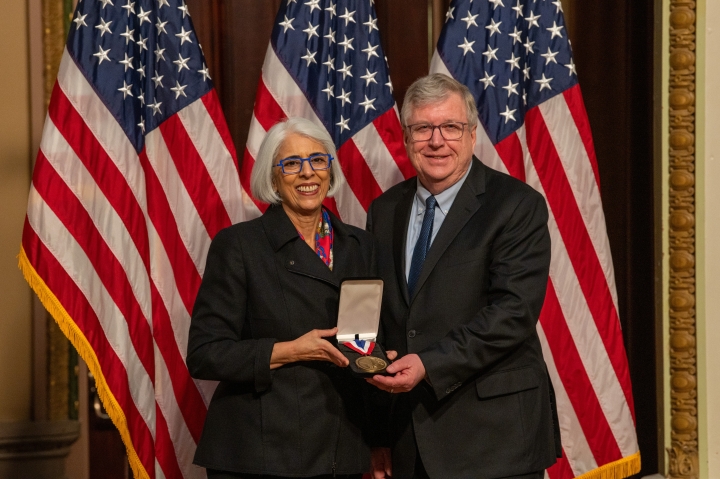
Eric R. Fossum is the John H. Krehbiel Sr. Professor for Emerging Technologies at the Thayer School of Engineering at Dartmouth College. He serves as Vice Provost for Entrepreneurship and Technology Transfer and Director of Dartmouth's PhD Innovation Program. As one of the world's leading experts in solid-state image sensors, he invented the CMOS active pixel sensor technology that revolutionized digital imaging in smartphones, medical devices, and automotive systems. His work has earned him numerous accolades, including the National Medal of Technology and Innovation (2025) and the Queen Elizabeth Prize (2017). His research interests focus on: Solid-state image sensors (CCDs, CMOS active pixel sensors, Quanta Image Sensors) Advanced imaging systems and on-chip processing New applications for image sensors in medicine, security, and space Dr. Fossum's recent publications demonstrate significant advancements in: Photon-counting sensors for low-light applications High-speed imaging for microscopy and radiography Backside-illuminated and sub-diffraction-limit pixel designs Quantum random number generation using sensor technology Infrared spectral extension of CMOS sensors His scientific awards include: National Medal of Technology and Innovation (2025) Queen Elizabeth Prize for Engineering (2017) IEEE Andrew S. Grove Award (2009) Induction into National Inventors Hall of Fame (2011) Emmy Award for Technology & Engineering (2021) Doctor of Science, Honoris Causa from Trinity College (2014) As an entrepreneurial leader, Dr. Fossum has: Co-founded Gigajot Technology with former PhD students Previously led Photobit and Siimpel Corporations Active participant in technology transfer initiatives at Dartmouth Founder and Past President of the International Image Sensor Society
Dan Casas is a Senior Applied Scientist at Amazon in Seattle and an Associate Professor (Profesor Titular) on leave from King Juan Carlos University in Spain. His research spans the intersection of Computer Graphics, Computer Vision, and Machine Learning with a focus on 3D reconstruction, modeling, and animation of virtual humans and clothing. He has authored over 40 high-impact publications in top venues including SIGGRAPH, CVPR, and NeurIPS, and holds 3 international patents. Dr. Casas received his M.Sc. degree (2009) from Universitat Autònoma de Barcelona (Spain), including a research visit at Carnegie Mellon University. He earned his Ph.D. in Computer Graphics (2014) from the University of Surrey (UK), supervised by Prof. Adrian Hilton. He completed postdoctoral research at the University of Southern California's Institute for Creative Technology (2014-2015) and the Max Planck Institute in Saarbrücken (2015-2016). His research interests center on creating realistic virtual humans and digital clothing through advanced techniques in computer vision and machine learning. Casas has pioneered methods for 3D reconstruction of humans and garments from video input, physics-based simulation of soft-tissue deformations, and data-driven approaches to character animation. His work bridges the gap between theoretical computer graphics and practical applications in virtual reality, digital fashion, and immersive communication. Analysis of his recent publications reveals a consistent focus on human digitization, with increasing emphasis on machine learning approaches. His work has evolved from traditional computer graphics techniques toward neural representations and diffusion models, particularly in the areas of 3D garment simulation and human avatar creation. The trend shows growing integration of physics-based modeling with data-driven approaches to achieve both realism and computational efficiency. Marie Skłodowska-Curie Individual Fellowship (2015) FBBVA Leonardo Fellowship (2021) Medal from the Royal Academy of Engineering of Spain for Young Researcher Award (2023) i3 certification (outstanding researcher) from Spanish Ministry of Universities (2022) Winner of 2021 IEEE Retail Digital Transformation Grand Challenge Multiple Outstanding Reviewer Awards at top conferences (CVPR, BMVC, 3DV) Dan Casas has successfully advised multiple PhD students including Suzanne Sorli, Cristian Romero, Raquel Vidaurre, and Igor Santesteban (now at Meta Reality Labs), with several ongoing students including Melania Prieto-Martin, Gonzalo Gómez-Nogales, and Andrés Casado-Elvira. He has secured significant research funding as Principal Investigator, totaling over €1.2 million from Spanish Ministry of Science projects, EU H2020 programs, and industry fellowships including the FBBVA Leonardo Fellowship. His leadership extends to conference organization as Area Chair for ICCV 2023 and General Chair for ACM i3D 2020. Dr. Casas leads research in digital human modeling with applications in virtual reality, fashion technology, and immersive communication. His team develops advanced techniques for creating personalized 3D avatars from minimal input (like smartphone videos), addressing challenges in geometry, appearance, and physical simulation of virtual humans and their clothing.
Bastian Alexander Grossenbacher is a Full Professor of Machine Learning at the University of Fribourg, where he leads the AIDOS Lab within the Department of Informatics, Faculty of Science and Medicine. He holds secondary appointments at the Institute of AI for Health and the Helmholtz Pioneer Campus of Helmholtz Munich. He is also a TUM Junior Fellow and a member of ELLIS and AI-LIFE. He co-directs the Applied Algebraic Topology Research Network (AATRN) and is involved in the Topology, Algebra, and Geometry in Data Science (TAG DS) initiative. His research lies at the intersection of geometry, topology, and machine learning, with a focus on Geometric Deep Learning, Topological Deep Learning, and Topological Data Analysis. He develops novel machine learning methods that use topological and geometric priors to improve model robustness and interpretability, particularly in biomedical applications. His work spans theoretical foundations and practical implementations in areas such as single-cell analysis, medical imaging, and network science. The 15 most recent publications (2023–2025) reveal a strong trend toward integrating algebraic and differential topology into deep learning architectures. Key themes include the use of Euler Characteristic and magnitude transforms, curvature-based analysis of graphs and data, simplicial and manifold-based neural representations, and the application of topological methods to biomedical data. His articles appear in top-tier venues such as Nature Communications, ICML, NeurIPS, ICLR, and IEEE conferences, reflecting both theoretical depth and high-impact applications. ERC Starting Grant Bastian Rieck is actively involved in mentoring and academic leadership. He supervises PhD students and postdoctoral researchers in the AIDOS Lab and is open to new collaborations, particularly with candidates from interdisciplinary backgrounds. He has secured significant research funding, including the ERC Starting Grant, and leads multiple collaborative research initiatives. He emphasizes open science, sharing code, data, and educational materials publicly. He leads the AIDOS Lab, which focuses on advancing machine learning through topological and geometric principles. He is also a co-director of the Applied Algebraic Topology Research Network (AATRN), which hosts a large online seminar series. Additionally, he maintains DONUT, a curated database of non-theoretical applications of topology, and is active in the ELLIS and AI-LIFE networks, fostering international collaboration in AI and health.
Bin Chen is a Lecturer at the School of Computing and Information Systems, University of Melbourne, where he conducts research at the intersection of computer graphics, computational imaging, and human perception. He was previously a postdoctoral researcher at the Max-Planck-Institut für Informatik and a visiting scholar at the University of Cambridge. Research Interests: His work spans Computational Display , focusing on glass-free 3D and VR/AR systems; Perception , studying how humans perceive virtual materials and gloss; and Computational Imaging , developing AI-driven methods for HDR, deblurring, and depth synthesis. He uses both optical hardware and software rendering to enhance visual fidelity. Recent Research Trends: His recent publications emphasize deep learning for image restoration (e.g., deblurring, tone mapping), neural representations for image stacks, and perceptual validation of material rendering. The integration of light field displays and self-supervised learning is a key theme across his recent work. Scientific Awards: CVPR Best Paper Award Finalist (Top 0.4%) – 2022 Service and Mentoring: Bin Chen has served on the Technical Paper Committees for SIGGRAPH, SIGGRAPH Asia, CVPR, and AAAI. He actively mentors PhD students and invites self-motivated candidates to join his research group. He has advised students such as Tao Huang, Lingyan Ruan, Chao Wang, and Jizhou Li. Laboratory and Teams: While no formal lab name is specified, his research group at the University of Melbourne focuses on visual computing, with strong collaborations extending from City University of Hong Kong to Max-Planck-Institut and the University of Cambridge.
Bo Yang is an Assistant Professor in the Department of Computing at The Hong Kong Polytechnic University , leading the Visual Learning and Reasoning (vLAR) Group . His work focuses on machine learning, computer vision, and robotics for 3D scene understanding. D.Phil (University of Oxford, 2020) M.Phil (The University of Hong Kong, 2016) B.Eng (Beijing University of Posts and Telecommunications, 2014) Research spans: 3D Vision : Point cloud understanding, semantic segmentation, neural rendering Machine Learning : Unsupervised/disentangled representation learning Robotics : Scene interaction, autonomous navigation Recent publications analyze dynamic 3D scenes (NeurIPS 2023), infinite scene representations (ICML 2024), and unsupervised object segmentation (NeurIPS 2022). Key contributions include RandLA-Net (CVPR 2020), SpinNet (CVPR 2021), and GRF (ICCV 2021). Current teaching includes: AI and Big Data Computing (Spring 2024-2025) Machine Learning and Data Analytics (Fall 2023-2025) Creative Digital Media Design (Spring 2023-2025)