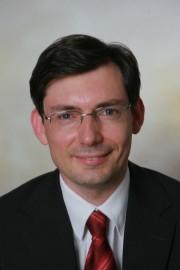
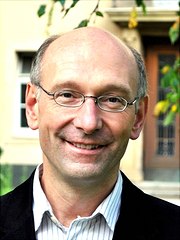
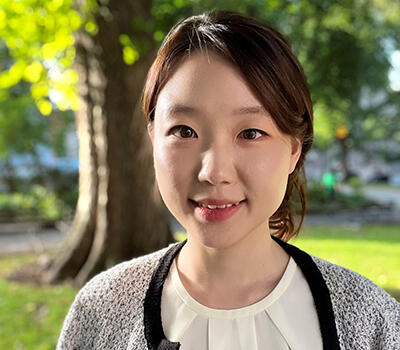
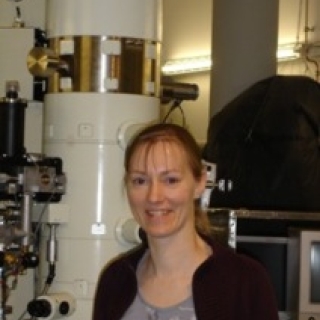
Dr. Barak Ratzker is a researcher at the Max Planck Institute for Sustainable Materials , affiliated with the Microstructure Physics and Alloy Design department. His work focuses on the sustainable synthesis of materials, particularly through hydrogen-based reduction pathways and advanced sintering techniques like spark plasma sintering (SPS) and hot isostatic pressing (HIP). His research spans transparent ceramics, MAX/MXene phases, and alloy design. Key research areas include: Hydrogen reduction of oxides for sustainable metallurgy Pressure-assisted sintering (SPS/HIP) of transparent ceramics Microstructure engineering in refractory materials Development of MXene-based composites for electronics Thermodynamic and kinetic analysis of solid-state reactions His recent publications highlight trends in: Environmentally conscious processing of ferromanganese oxides High-pressure synthesis of MAX phases and MXenes Optimization of optical and mechanical properties in ceramics Dynamic deformation behavior under extreme conditions Biological material interactions (e.g., crusticul-chitin systems)
Aleksandra Radenovic is a Full Professor at École Polytechnique Fédérale de Lausanne (EPFL) holding multiple positions across the institution. She is a Full Professor at the Laboratory of Nanoscale Biology (LBEN) within the School of Engineering (STI), a Full Professor in Teaching at the School of Life Sciences (SV), and a Full Professor in Teaching at the School of Engineering (STI). Additionally, she serves as Co-Director of both the IBI-STI and IBI-SV administrative units, and is a Member of both the STI School direction and SV School direction. Dr. Radenovic received her PhD from the University of Lausanne in 2003, where she worked with Prof. Dietler in the Laboratory of Physics of Living Matter. Prior to that, she studied physics at the University of Zagreb from 1994-1999, and completed her baccalaureate at a Classical gymnasium in 1994. She conducted postdoctoral research at the University of California, Berkeley from 2004-2007 in the group of Prof. Liphardt. Her research focuses on single molecule biophysics, with particular emphasis on developing techniques and methodologies based on optical imaging, biosensing, and single molecule manipulation. Her laboratory works on three major research directions: (i) developing and using nanopores as platforms for molecular sensing and manipulation, particularly solid-state nanopores in glass nanocapillaries and 2D-material membranes; (ii) studying biomolecular function, especially protein and nucleic acid interactions, using force-based manipulation techniques like optical tweezers and Anti-Brownian Electrokinetic traps; and (iii) developing super-resolution optical microscopy based on single molecule localizations for quantitative cellular imaging. Her work bridges physics, engineering, and biology to create innovative tools for understanding molecular processes at the nanoscale. Analysis of her recent publications reveals a strong focus on nanofluidics, 2D materials (particularly MoS 2 and hBN), nanopore sensing, super-resolution microscopy, and the development of novel instrumentation for biophysical applications. Her research demonstrates increasing interdisciplinary collaboration, integrating materials science, nanotechnology, and biological applications to address fundamental questions in molecular biophysics. Dr. Radenovic has received numerous prestigious awards and grants, including: 2021: ERC Advanced Grant 2021: Optica Fellow 2016: CCMX Materials challenge award 2015: SNSF-ERC Consolidator Grant 2010: ERC Starting Grant 2003: SNSF Fellowship She has successfully advised numerous PhD students whose research spans single molecule biophysics, nanofluidics, and optical techniques. Her laboratory, the Laboratory of Nanoscale Biology (LBEN), is well-equipped for advanced biophysical research, with capabilities in nanopore fabrication, optical trapping, super-resolution microscopy, and 2D materials characterization. Dr. Radenovic has secured significant research funding through competitive grants, including multiple ERC grants, which have supported her innovative research program at the intersection of physics, engineering, and biology.
Dr. Raj M. Manglik is a Professor of Mechanical & Materials Engineering and Director of the Thermal-Fluids & Thermal Processing Laboratory at the University of Cincinnati. His research focuses on interfacial phenomena, molecular dynamics, heat transfer enhancement, and thermal systems design. He holds a Ph.D. from Rensselaer Polytechnic Institute, an M.S. from Iowa State University, and a B.Tech. from Indian Institute of Technology Madras. Dr. Manglik has secured over $9.5M in grants, including recent projects on advanced dry-cooling systems, 3D printed ceramic heat exchangers, and thermal energy storage. His work spans experimental and computational studies of heat exchangers, non-Newtonian fluids, and phase-change materials. He has authored numerous peer-reviewed publications and co-edited books such as Principles of Heat Transfer . Awards include the ASME Heat Transfer Memorial Award (2016), ASME James Harry Potter Gold Medal (2018), and multiple university teaching and research accolades. His lab explores topics like boiling heat transfer, drop impact dynamics, and energy-water nexus solutions in power plants.
Rudolf Bratschitsch is a Professor at the Physics Institute of the University of Münster, where he leads an active research group focused on ultrafast phenomena in solid-state nanosystems. His research spans multiple cutting-edge areas of condensed matter physics and nanotechnology with strong connections to international collaborators. His primary research interests include: Ultrafast quantum optics with solid state nanosystems Ultrafast magnetism and THz spectroscopy Ultrafast (magneto-)plasmonics Ultrafast spintronics Two-dimensional materials and transition metal dichalcogenides Spin-wave dynamics and magnonics Bratschitsch's recent publications demonstrate significant contributions to understanding exciton dynamics in 2D materials, spin-wave propagation in magnetic insulators like yttrium iron garnet (YIG), and quantum optical phenomena in hexagonal boron nitride. His work bridges fundamental physics with potential applications in quantum information processing and advanced optical technologies. His group has received substantial funding, including the Collaborative Research Center CRC 1459 'Intelligent Matter' which was extended for four years by the German Science Foundation in December 2024. They have also organized international conferences such as EDISON22 on Electron Dynamics in Semiconductors, Optoelectronics and Nanostructures. Bratschitsch mentors numerous students: PhD Students: Jannis Bensmann, Akhilesh Dubey, Vedhanth Senthiappan Vellaiappan Uthayasurian Master Students: Janne Oskar Becker, Ahmad El Kadri, Pabin Rai, Devika Sivankutty, Richard Sliwka Bachelor Students: Paul Großerhode, Sven Niehues His group has won several awards, including a poster prize for Master's student Janne Becker at the Münster Nanofabrication Facility Day 2024, highlighting the quality of research and training provided.
Dr. Dimitrios Anagnostou is an Associate Professor at Heriot Watt University's School of Engineering & Physical Sciences, affiliated with the Institute of Sensors, Signals & Systems (ISSS). He holds a Marie Skłodowska-Curie Fellowship and leads research in reconfigurable antennas, metamaterials, and biomedical sensing. He earned his PhD from the University of New Mexico (2005), followed by postdoctoral work at Georgia Tech and faculty roles at SDSMT before joining Heriot Watt in 2016. His research focuses on electromagnetic devices for aerospace, defense, and healthcare applications, including reconfigurable antennas, metamaterials, and AI-driven radar systems. He has published 169 papers and received 15+ awards, including the IEEE John D. Kraus Antenna Award and DARPA Young Faculty Award. Dr. Anagnostou serves as an Associate Editor for IEEE Transactions on Antennas and Propagation and actively contributes to conference committees. His lab specializes in antenna arrays, radar sensing, and functional materials like vanadium dioxide (VO₂). He supervises PhD students and supports interdisciplinary projects in sustainable RF electronics and medical imaging.
Prof. Dr. Wolfgang Hillert is a leading physicist at the University of Hamburg , serving as the Bjørn-Wiik Professor for Accelerator Physics since 2016. Affiliated with the Institute of Experimental Physics under the Faculty of Mathematics, Informatics and Natural Sciences, he specializes in Accelerator Physics , Superconducting Accelerator Technology , and Free-Electron Lasers (FEL) . His work focuses on polarized electron beams, SRF cavity optimization, and gravitational wave detection methods. Education: Physics degree from University of Bonn (1987), Promotion in Atmospheric Physics (1992), Habilitation in Physics (2001) Leadership Roles: Head of Accelerator Physics Group (2016–present), Managing Director of Institute of Experimental Physics (2019–2021) Research Trends: His recent work spans superconducting RF cavities for gravitational wave detectors ( 2025 ), resonant slow extraction in electron boosters, and atomic layer deposition of superconducting thin films. Publications highlight advancements in beam dynamics , cryogenic systems , and terahertz generation . Teaching & Outreach: He has lectured on Accelerator Physics since 2002 and engaged in public science communication, including talks on Physics of Music (2005–2021) and teacher training programs at DESY. Labs & Collaborations: Leads the Accelerator Physics Group at DESY, collaborates on projects like XFELO and BGO-OD beamline , and contributes to international schools (CAS) and symposia.
Wolfgang Windl is a Professor in the Department of Materials Science and Engineering at The Ohio State University with a joint appointment in Physics. He co-founded Goniotech LLC and previously worked at Motorola as a Principal Staff Scientist. He holds a doctoral degree in physics from the University of Regensburg and completed postdoctoral research at Los Alamos National Laboratory and Arizona State University. His research specializes in computational materials science, focusing on: Atomistic simulations and density-functional theory Machine learning applications in materials design Semiconductor transport and layered materials (e.g., Dirac semimetals) Atom probe tomography and characterization techniques Analysis of his 15 most recent publications (2023-2025) reveals dominant themes: advanced simulations of field evaporation, topological quantum materials (PtTe 2 , PdTe 2 ), and computational frameworks for materials characterization. His work frequently integrates spectroscopy, tomography, and Bayesian methods to study alloys, 2D materials, and additive manufacturing defects. Awards and Honors Fraunhofer-Bessel Research Award (2006) Four Lumley Research Awards Boyer Award for Teaching Excellence (2015) Faculty Diversity Excellence Award (2020) Two Mars Fontana Best Teacher Awards (2006, 2015) ASEE Best Paper & Diversity Awards (2019) He advises 11+ graduate students (7 alumni, 5 current) and leads the Windl Group research team focused on computational materials modeling. His group develops simulation tools for atomic-scale characterization and collaborates with national laboratories.
Igor Jankovic is an Associate Professor in the Department of Civil, Structural and Environmental Engineering at the University at Buffalo's School of Engineering and Applied Sciences. His research focuses on groundwater flow and contaminant transport in heterogeneous aquifers, with particular emphasis on the impact of aquifer heterogeneity on solute movement and transport modeling. Education: PhD in Civil Engineering, University of Minnesota (1997) MS in Civil Engineering, University of Minnesota (1993) BS in Civil Engineering, University of Split, Croatia (1990) His work addresses critical issues in groundwater hydrology including: Advective transport mechanisms in heterogeneous media Breakthrough curve prediction and analysis Effective hydraulic conductivity modeling Upscaling of flow and transport parameters Application of the Analytic Element Method (AEM) for complex aquifer simulations Comparison of transport models (CTRW, MRMT) in heterogeneous environments Research trends in his publications reveal a focus on: Three-dimensional heterogeneous aquifer modeling Non-Fickian and anomalous transport behavior Impact of spatial variability on contaminant migration Development of numerical algorithms for large-scale groundwater simulations Validation of stochastic transport theories against field experiments (e.g., MADE and Borden aquifers) Interaction between physical and chemical heterogeneity in reactive transport
Sieun Chae is an Assistant Professor in the Department of Electrical Engineering and Computer Science at Oregon State University (OSU), part of the College of Engineering. Her research focuses on the rational design of electronic materials for energy-efficient microelectronics, integrating theoretical and experimental approaches. She holds a B.S. in Materials Science and Engineering from Yonsei University (2015), an M.S. from Seoul National University (2017), and a Ph.D. from the University of Michigan (2022). Prior to her faculty position, she conducted postdoctoral research at Cornell University and worked as a research fellow in South Korea. Her research interests include ultra-wide-band-gap semiconductors, entropy-stabilized oxide memristors for neuromorphic computing, and back-end-of-line compatible semiconductors for 3D integration. Key projects involve developing novel materials for high-power electronics, low-temperature synthesis techniques, and device fabrication to demonstrate state-of-the-art performance. Her group employs first-principles calculations, high-throughput materials informatics, and epitaxial growth methods. Collaborations span computational modeling, materials synthesis, and device engineering to address challenges in power electronics and AI applications. The Chae Lab actively engages undergraduate and graduate students in projects combining theory and experimentation. Publications highlight contributions to semiconductor doping mechanisms, memristor design, and oxide alloy thermodynamics. Advising includes mentoring students in ECE, Materials Science, and Computer Science, with a focus on interdisciplinary research. Lab facilities support thin-film synthesis, materials characterization, and device prototyping.
Ingeborg Schmidt-Krey is an Associate Professor in the Department of Biology at Georgia Institute of Technology. Her research focuses on the structure and function of eukaryotic membrane proteins, which are critical drug targets in biomedical research. She utilizes electron crystallography, cryo-EM, and 2D crystallization techniques to advance structural studies of these proteins. Education: B.S. in Biochemistry from Mississippi State University (1991) Ph.D. in Biophysics and Structural Biology from Karolinska Institute (1999) Research Interests: Ingeborg Schmidt-Krey investigates eukaryotic membrane proteins, particularly their structural determination via electron crystallography. Her work includes developing screening methods for 2D crystallization and improving cryo-EM data collection. Recent articles highlight advancements in nanodisc-reconstitution, lipid-dependent oligomerization studies, and refined sample preparation techniques like the Peel-Blot method. Scientific Awards: German Research Foundation Young Investigator Class of 1969 Teaching Fellow EMBO/EMBL/CERN Women in Science Ambassador EMBO long-term fellow Her laboratory’s efforts are directed toward understanding the biophysics of membrane proteins and their role in diseases such as inflammation and cancer.
Yılmaz Şimşek is a Researcher at Sabancı University's Nanotechnology Research and Application Center (SUNUM) since 2019, specializing in experimental condensed matter physics. Previously, he held postdoctoral positions at Argonne National Laboratory (2016-2019) and Stockholm University (2015), focusing on superconducting materials and device applications. His educational background includes: Ph.D. in Physics, Universität Erlangen-Nürnberg, Germany (2008-2013) M.Sc. in Physics, Izmir Institute of Technology, Turkey (2005-2008) Dr. Şimşek's research centers on Physics-based Materials Science , with emphasis on layered superconductors including cuprates and pnictides. Key investigations involve intrinsic Josephson junctions in Bi-2212 crystals for THz emission, magneto-transport properties of iron-based superconductors like RbEuFe4As4, and development of quantum computing devices. His work bridges fundamental physics with functional electronic applications. Analysis of his five most recent publications (2014-2018) reveals consistent focus on high-temperature superconductors. Major contributions include thick Bi-2212 film growth for THz applications, anisotropic superconductivity in RbEuFe4As4, and carrier injection effects in Josephson junctions. These studies target quantum and THz technologies through advanced materials engineering. No information on student advising or research grants was provided in the source material. At SUNUM, Dr. Şimşek utilizes the center's LEED/BREEAM-certified infrastructure for nanomaterials research, including specialized laboratories for materials synthesis, characterization, and device fabrication supporting his work on superconducting thin films and junction arrays.
Rachel Oliver is a Professor of Materials Science at the University of Cambridge and Director of the Cambridge Centre for Gallium Nitride. Her research focuses on characterisation techniques for gallium nitride materials used in LEDs and laser diodes, with an emphasis on nanostructure engineering and quantum technology. Awarded OBE (2025), Fellow of the Royal Academy of Engineering (FREng) (2021), and Fellow of the Institute of Materials, Minerals and Mining (FIMMM) (2019) Developed atom-probe tomography and scanning capacitance microscopy to study nitride devices Her work on quantum dots and single-photon emitters has advanced quantum crystallography and optoelectronics. Recent publications highlight trends in nitride semiconductors , solar cell efficiency , and quantum device fabrication . Scientific Awards Royal Society University Research Fellowship (2006-2011) Chair in Emerging Technologies (2023) Grants EPSRC grant for semi-polar nitride structures Oliver's lab at the Department of Materials Science and Metallurgy explores nanoscale nitride structures for future devices, while advocating for gender equality in STEM.
Claire Prada is a CNRS Research Director at the Institut Langevin , specializing in laser ultrasound , guided wave propagation , and time-reversal acoustics . Her work bridges fundamental wave physics and applied nondestructive testing. Research Pillars : Zero-group-velocity (ZGV) Lamb modes for material characterization Anisotropic wave propagation and negative refraction phenomena Time-reversal operator decomposition for structural monitoring Passive acoustic defect localization with ambient noise Technological Innovations : Fourier-domain reconstruction algorithms for 3D imaging Single-pixel photoacoustic microscopy Adaptive projection methods for rib-cage ultrasound focusing Wave Physics Discoveries : Documentation of power flux skewing in anisotropic plates Identification of beating resonance patterns in elastic media Experimental validation of negative reflection in chaotic waveguides Medical & Industrial Applications : Quantitative elastography for tissue stiffness measurement Jet engine blade damage detection Cortical bone femoral neck assessment Thin layer thickness measurement via ZGV resonance shifts
Duarte Ananias is a Researcher at CiCECO (University of Aveiro) since June 2009. He holds a Ph.D. in Chemistry (2004) and an Undergraduate Degree in Chemistry (1999), both from the University of Aveiro. His research focuses on lanthanide-based materials, particularly luminescent properties, porous/nanoscale systems, and applications in sensing and nanotechnology. Education : Ph.D. in Chemistry (2004), University of Aveiro Undergraduate Degree in Chemistry (1999), University of Aveiro Experience : Postdoctoral Fellowships at University of Linköping (Sweden) and University of Aveiro (2005–2008) Research Interests : Ananias explores lanthanide ions' unique optical and magnetic properties, developing luminescent materials for applications in thermometry, sensing, and catalysis. His work integrates porous materials (e.g., MOFs, silicates) with nanotechnology, emphasizing structural design and functionalization. Key themes include energy transfer mechanisms, multifunctional materials, and environmental applications. Projects : Development of luminescent nanothermometers and multifunctional MOFs Optimization of lanthanide separation in novel solvents Labs/Teams : Based at CiCECO, he collaborates on interdisciplinary projects involving materials synthesis, characterization, and applications in energy and environmental science.
Jonathan Skelton is a Senior Lecturer in Computational and Theoretical Chemistry at the University of Manchester's School of Chemistry. He holds a Ph.D. in Computational Chemistry from the University of Cambridge (2010–2013) and a B.A. and M.Sc. in Natural Sciences from Trinity College, Cambridge (2006–2010). His research focuses on lattice dynamics and computational modeling of materials, particularly thermoelectrics, to enhance energy efficiency and sustainability. Education Ph.D. in Computational Chemistry, University of Cambridge (2010–2013) M.Sc. and B.A. Natural Sciences, Trinity College, University of Cambridge (2006–2010) Research Interests : Lattice dynamics, density-functional theory (DFT), thermoelectric materials, thermal transport, and computational materials design. His work emphasizes structural dynamics' role in material properties and the development of open-source tools for broader accessibility. Recent Research Trends : Recent publications explore thermoelectric properties of oxides (e.g., LaCoO₃), lanthanide frameworks, and 2D materials. His studies highlight advances in thermal conductivity reduction and phonon engineering for energy applications. Awards & Memberships : Associate Fellow of the UK Higher Education Academy, Member of the Royal Society of Chemistry. Grants & Supervision : Advised multiple PhD theses on topics like actinide systems and functional perovskites. Active in reviewing and conference participation. Labs & Collaborations : Works on open-source software development and collaborates globally on energy materials research.