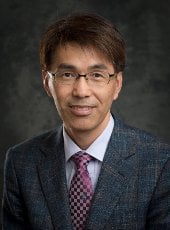
Jim W Evans is a Professor of Physics & Astronomy and Mathematics at Iowa State University, and a Faculty Scientist at the Ames Laboratory (USDOE). His research focuses on non-equilibrium statistical physics and multi-scale modeling of nanoscale systems, including metallic nanoclusters, epitaxial thin films, catalytic surface reactions, and nanoporous materials. Evans holds a B.Sc. (Hons) in Mathematics from the University of Melbourne (1975) and a Ph.D. in Mathematical Physics from the University of Adelaide (1979). He has authored over 360 publications and maintains editorial roles at journals like Nanomaterials and Surface Science . His research interests span: Stability and dynamics of metallic nanocrystals Coarsening mechanisms in epitaxial films Reaction-diffusion systems and non-equilibrium phase transitions Interfacial catalysis and nanoporous transport phenomena Recent work includes: Real-time KMC simulations of nanocrystal intermixing Thermodynamic modeling of intercalated metal systems Statistical mechanics of surface dynamics Honors include APS Fellowship (2002), APS Outstanding Referee (2015), and an h-index of 58 (Google Scholar). He leads DOE-funded projects on exascale software for catalysis modeling and intercalation chemistry in layered materials.
Samuel V. Scarpino is a Professor at Northeastern University , leading as Director of AI + Life Sciences in the Institute for Experiential AI . He holds appointments in the Khoury College of Computer Sciences , Bouvé College of Health Sciences , and the Network Science Institute . Scarpino’s career spans roles at The Rockefeller Foundation, Dharma Platform, and co-founding Global.health , a Google-backed pathogen tracking initiative. Education: PhD in Biology (2013) from The University of Texas at Austin; Omidyar Fellow at the Santa Fe Institute (2013–2016). His research focuses on integrating AI , network science , and epidemiology to address global health challenges. Key areas include disease modeling , wastewater surveillance , and health equity . Recent work explores AI applications for H5N1 pandemic preparedness , scRNA-seq analysis , and social determinants of health . Scarpino’s scientific contributions include over 100 publications in Nature , Science , and PNAS , alongside fellowships from the ISI Foundation (2017), Santa Fe Institute (2020), and Vermont Complex Systems Institute (2021). He mentors PhD students like Wan He and leads interdisciplinary teams at Northeastern’s Roux Institute and Network Science Institute . Grants from the McGovern Foundation and Microsoft Research support his work on AI for public health.
Thomas G. J. Chandler is an Assistant Professor in the Department of Mathematics at the University of North Carolina at Chapel Hill, with his office located in Phillips Hall 396. Prior to joining UNC Chapel Hill, he was a Van Vleck Visiting Assistant Professor in the Department of Mathematics at the University of Wisconsin-Madison. Dr. Chandler completed his MMath and DPhil in the Oxford Centre for Industrial and Applied Mathematics at the Mathematical Institute, University of Oxford. His doctoral research, supervised by Prof. Dominic Vella, explored the mechanics of thin elastic materials and their interaction with soft matter. His postdoctoral research at Wisconsin, supervised by Prof. Saverio Spagnolie, focused on the interaction of anisotropic fluids with soft matter. Dr. Chandler's research focuses on solving physically motivated problems using applied mathematics techniques, particularly asymptotic, numerical, and complex analysis. His primary research areas include fluid dynamics (especially nematic liquid crystals and active matter), solid mechanics (particularly thin elastic materials), and mathematical biology. He investigates how active stresses in anisotropic fluids interact with deformable bodies, how geometry affects the rigidity of thin elastic sheets, and how turgor pressure influences cellular structures in biological systems. His research combines analytical methods, particularly complex variable techniques, with numerical simulations to address problems at the intersection of mathematics, physics, and biology. Dr. Chandler's work has revealed fundamental insights into phenomena such as curvature-induced rigidity in thin elastic materials, the mechanics of pressurized cellular sheets, and the interaction of deformable bodies with active nematic fluids. Dr. Chandler has published extensively in high-impact journals including Physical Review Research, Journal of Fluid Mechanics, SIAM Journal on Applied Mathematics, and Proceedings of the Royal Society A. His research demonstrates a consistent trajectory from fundamental mathematical theory to applications in materials science and biological systems. As an educator, Dr. Chandler teaches a variety of mathematics courses at UNC Chapel Hill. In Fall 2025, he will be teaching Math 383: First Course in Differential Equations. His previous teaching includes courses in Linear Algebra, Differential Equations, Applied Dynamical Systems, and The Theory of Single Variable Calculus. At the University of Oxford, he served as a Class Tutor and Teaching Assistant for graduate-level courses in Fluid Mechanics, Elasticity, and Solid Mechanics.
Brian D. Gerardot is a Professor at the School of Engineering & Physical Sciences , Heriot-Watt University , where he leads the Quantum Photonics Laboratory within the Institute of Photonics and Quantum Sciences. His research focuses on creating ultra-coherent quantum photonic devices that bridge quantum optics, condensed-matter physics, materials science, and nano-optics. BSc in Materials Science from Purdue University (1998) PhD from UC Santa Barbara (2004) His work explores semiconductor quantum dots and defect centers in diamond, utilizing advanced nano-fabrication techniques to design and characterize photonic structures. Research outputs highlight quantum technologies, entangled imaging, exciton dynamics in 2D materials, and coherence in photon emission systems. Scientific Awards include: Chair in Emerging Technologies (Royal Academy of Engineering, 2018) Wolfson Merit Award (Royal Society, 2018) ERC Consolidator Grant (2018) ERC Starting Grant (2013) Personal Research Fellowship (Royal Society of Edinburgh, 2006-2009) University Research Fellowship (Royal Society, 2009-2017) Challenging Engineering award (2011) He manages the NanoFab Disco Saw facility and has secured significant grants for quantum technologies and nanophotonic research, with collaborations spanning international institutions and datasets supporting breakthroughs in exciton-polarons, quantum imaging, and photonic coherence.
Dr. Youngchul Ra is an Associate Professor in the Department of Mechanical and Aerospace Engineering at Michigan Technological University. He holds a PhD from MIT (1999) and degrees from Seoul National University. His expertise includes computational fluid dynamics (CFD), combustion modeling, chemical kinetics, and alternative fuel research. His work focuses on advanced combustion strategies like Gasoline Compression Ignition (GCI), engine CFD code development, and high-performance computing. Education: PhD in Mechanical Engineering, Massachusetts Institute of Technology (1999) Masters and Bachelors in Mechanical Engineering, Seoul National University Research Interests: Developing multi-component fuel models for real-world applications Optimizing six-stroke GCI engines with advanced valve technologies Reducing emissions via combustion control and injection strategies Parallel computing techniques for large-scale engine simulations Recent work emphasizes oxygenated fuels in GCI engines and parametric studies of combustion efficiency. His CFD models are validated against experimental data for accuracy. His research has led to advancements in low-temperature combustion and emission reduction without explicit awards listed. He collaborates on engine design optimization and fuel formulation projects.
Professor Andrew Johnson at the University of Bath is a leading researcher in materials chemistry for energy applications , specializing in precursor design for advanced thin film growth techniques including Chemical Vapour Deposition (CVD) and Atomic Layer Deposition (ALD) . His work spans sustainable technologies, graphene science, and nanoparticle synthesis, with a focus on enabling next-generation electronics and climate solutions. Department of Chemistry, University of Bath Centre for Sustainable Chemical Technologies (CSCT) Institute of Sustainability and Climate Change Collaborations with University of Leeds, University of California Davis, and industry partners like Pragmatic Printing Research Interests: Development of volatile, non-toxic molecular precursors for metals/oxides ALD/CVD of metastable materials (e.g., SnO, α-Fe2O3) Carborane chemistry for early transition metals and lanthanides Surface engineering for automotive lubricant alternatives Photoanodes for solar water splitting Flexible electronics with sustainable materials Collaborations & Grants: Funded by EPSRC and Innovate UK , with projects on low-power flexible electronics and complementary semiconductor systems. Collaborates with physics, chemical engineering, and industry partners for mechanical property testing and device fabrication.
Dr. Daniel Weber is an Assistant Professor in the Department of Chemistry and Chemical Engineering at Chalmers University of Technology, specializing in Energy and Materials. His research focuses on synthesizing novel inorganic layered materials for energy storage/conversion applications, including electrocatalysts and quantum materials. He leads the Daniel Weber Research Group, which combines high-temperature and soft-chemistry synthesis techniques with advanced characterization methods like X-ray diffraction. Dr. Weber earned his PhD from the Max-Planck-Institute for Solid State Research in Stuttgart, followed by postdoctoral work at Ohio State University (USA) and a research associate position at the Karlsruhe Institute of Technology. In September 2023, he established his independent research group at Chalmers, supported by a fellowship from the Wallenberg Initiative for Materials Science for Sustainability. His research interests span layered bulk materials, 2D magnets, water oxidation catalysts, CO₂ utilization systems, and ionic conductors. Recent work emphasizes defect engineering in cathode materials and strain-tuning of magnetic properties in 2D systems. Key achievements include contributions to LiNiO₂ cathode optimization, W-doping strategies, and magnetic behavior analysis in twisted bilayer CrI₃. His publications reflect expertise in materials synthesis, electrochemistry, and quantum phenomena. Dr. Weber collaborates actively on thesis projects and industrial partnerships, offering supervision opportunities at all academic levels. His group's lab facilities include specialized equipment for operando X-ray diffraction and advanced materials characterization.
Dr. Jesus Barrio Hermida is an Imperial College Research Fellow in the Department of Chemical Engineering within the Faculty of Engineering at Imperial College London. His research focuses on designing and synthesizing advanced electrocatalytic materials for sustainable energy applications, particularly single-atom catalysts for energy conversion processes. Barrio Hermida completed his Bachelor of Science in Chemistry (2009-2014) and Master in Nanoscience and Molecular Nanotechnology (2014-2016) at Universidad Autónoma de Madrid. He earned his PhD in Chemistry from Ben-Gurion University of the Negev (2016-2020), followed by a Research Associate position at Imperial College London (2020-2023) before being awarded the prestigious Imperial College Research Fellowship in 2023. His research interests center on electrocatalysis , particularly the development of single-atom catalysts for sustainable energy technologies. His work spans carbon nitride materials , Fe-N-C catalysts for fuel cells, ammonia synthesis , and biomass valorization . Barrio Hermida's group investigates the fundamental mechanisms of electrocatalytic processes while designing novel materials with enhanced performance for practical applications in energy conversion and storage. His publication record shows a strong focus on electrocatalyst design and characterization , with recent work emphasizing single-atom catalysts , fuel cell materials , and sustainable ammonia production . His research bridges fundamental understanding of catalytic mechanisms with practical applications in energy technologies, particularly in replacing precious metal catalysts with earth-abundant alternatives. Barrio Hermida has received several prestigious awards including the Israel Chemical Society Excellent PhD Student Award (2019), Faran Mid Way Negev Scholarship for Outstanding PhD Students (2018), and the Adama award for research excellence (2018). As an Imperial College Research Fellow, he leads an independent research group focused on designing single-atom electrocatalysts for sustainable energy technologies, working within Maria-Magdalena Titirici's research environment while developing his own independent research direction.
David Lewis is the Head of the Department of Materials and Professor of Materials Chemistry at the University of Manchester. His research focuses on energy-generation materials, including inorganic thin films and nanomaterials for applications in thermoelectrics, photocatalysis, and photovoltaics. He leads an internationally collaborative group exploring solution-phase synthesis routes and additive manufacturing techniques. Lewis holds editorial roles at Scientific Reports and Materials Science in Semiconductor Processing . Education: PhD in Chemistry MSc in Chemistry (1st Class Hons), University of Birmingham Research Interests: Lewis’s work centers on designing low-temperature syntheses of nanomaterials using molecular precursors. Key areas include layered and 2D materials (e.g., MoS2, black phosphorus), high-entropy materials, and superhydrophobic nanomaterials. His lab pioneers scalable methods like aerosol-assisted CVD and liquid-phase exfoliation. Grants & Awards: Lewis has secured £3.1M+ in funding, including EPSRC grants for nanofabrication and corrosion-resistant electrocatalysts. He received the IAAM Medal (2021) and FIMMM fellowship. His group hosts students via scholarships like the Presidential Doctoral Scheme. Labs & Teams: His lab collaborates globally on energy materials. Capacity-building initiatives include the Royal Society-funded CaGSUMI project for African solar cell development.
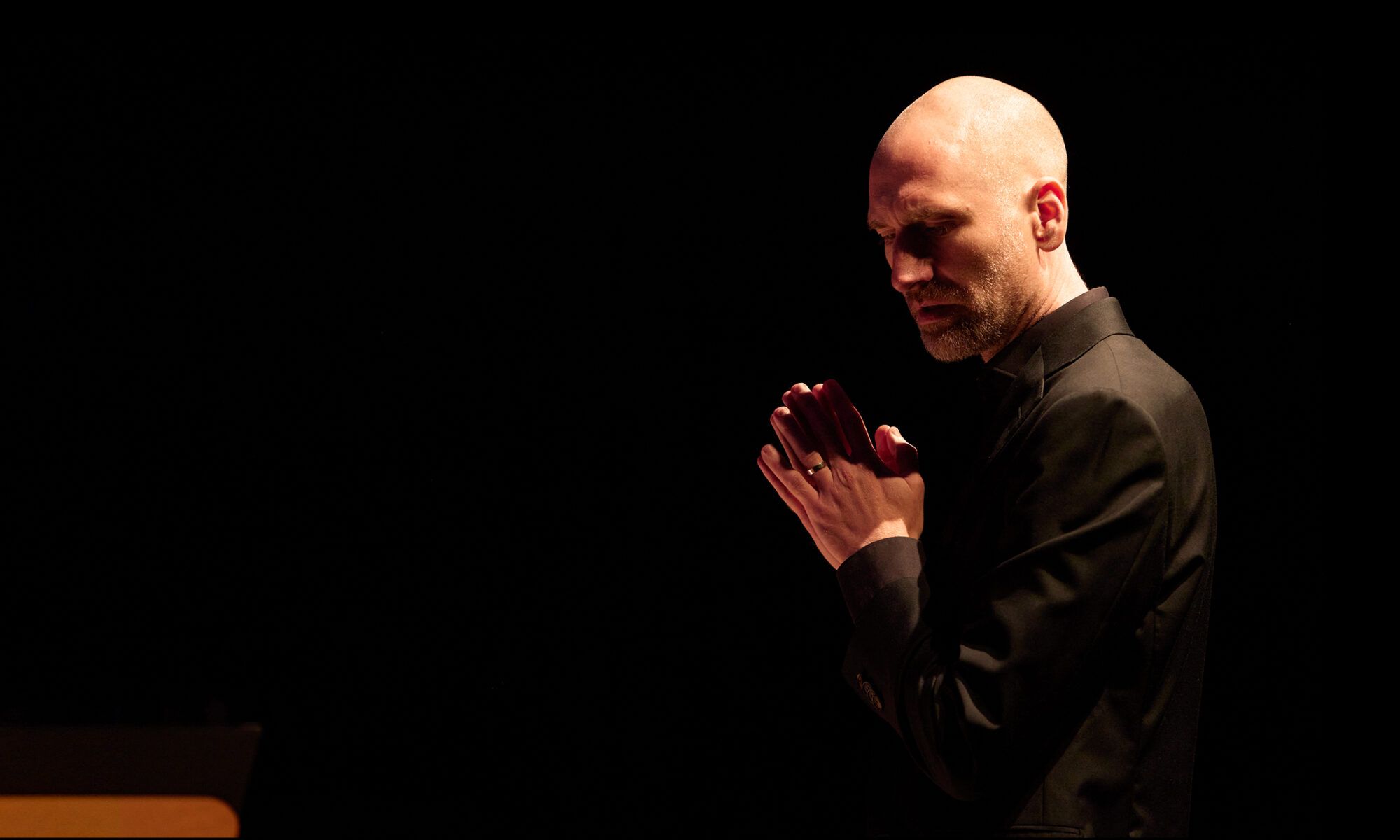
Aaron Cassidy is an American composer and conductor based in Berlin and Hannover. He serves as Professor of Composition and Director of Incontri – Institut für neue Musik at the Hochschule für Musik, Theater und Medien Hannover. His work emphasizes innovative graphical notations prioritizing physical sound production and non-geometrical rhythm theory. Cassidy’s compositions have been performed globally across 29 countries, with 12 commercial recordings on major labels like Kairos and NEOS. As a conductor, he specializes in contemporary and historical repertoire, leading over 100 world premieres with ensembles such as Ensemble Musikfabrik and ELISION. Notable engagements include the Munich Biennale and Melbourne Recital Centre. His recent research includes a 2025 reflection on non-geometrical rhythm and collaborative Erasmus+ residencies in Klagenfurt. Current projects include works for bassoon, violin-piano duet, and ANAM residency with ELISION in Melbourne (2025). Cassidy’s academic focus bridges compositional theory and performance practice. His research explores notation’s role in shaping musical interpretation, with particular attention to rhythm’s non-metric frameworks. Recent works like Reassessing Non-Geometrical Rhythm (2025) synthesize a decade of theoretical development. His teaching integrates experimental techniques and historical context, fostering innovation in Hannover’s new music institute.
Nikita Kavokine serves as Tenure Track Assistant Professor at École Polytechnique Fédérale de Lausanne (EPFL) within the School of Basic Sciences . His dual appointments span the Institute of Chemical Sciences and Engineering (ISIC) and the School of Chemical Sciences and Engineering (SCGC) , where he leads the Quantum Plumbing Lab (LNQ) and contributes to graduate teaching. Based at Building CH A2 398 in Lausanne, he maintains active research and instructional roles across EPFL's chemistry and chemical engineering programs. His research pioneers quantum nanofluidics and nanoscale transport phenomena , focusing on electron-ion coupling mechanisms in confined geometries. Key investigations include quantum friction in water-carbon interfaces, hydroelectric energy conversion through nanochannels, and plasmon-hydron resonances in two-dimensional materials. His work bridges condensed matter physics, electrochemistry, and fluid dynamics to develop fundamental principles for next-generation nanofluidic devices and quantum sensors. Analysis of his 15 most recent publications (2023-2025) reveals three dominant research thrusts: quantum-enhanced energy conversion (evident in hydroelectric drag and electron cooling studies), non-classical ion transport (including ionic Coulomb blockade and interaction confinement), and emergent quantum hydrodynamics (momentum tunneling, collective modes). These publications consistently integrate advanced numerical methods with nanoscale experimental systems, establishing new paradigms for solid-liquid quantum interactions. Kavokine currently supervises three PhD students: Gispert Peter , Lu Hao , and Rigaux Killian David . His teaching portfolio includes graduate courses in Statistical Mechanics for Chemistry and Nanofluidics , emphasizing theoretical frameworks for many-particle systems and nanoscale fluid dynamics. Research funding supports his laboratory's exploration of quantum effects in nanofluidic channels, though specific grant details are not provided in source materials. The Quantum Plumbing Lab (LNQ) operates at the forefront of nanoscale quantum transport research, utilizing advanced nanofabrication and characterization techniques to probe electron-ion coupling phenomena. The lab's interdisciplinary team combines expertise in quantum physics, electrochemistry, and fluid dynamics to investigate fundamental limits of energy conversion and transport at atomic scales, with particular focus on graphene-based systems and angstrom-scale confinement.
Jin Hu is an Associate Professor in the Department of Physics within the College of Arts & Sciences at the University of Arkansas. His research focuses on quantum materials, particularly topological semimetals, low-dimensional materials, and magnetic systems. He maintains active research labs and collaborates with multiple national facilities. Hu received his PhD in Physics from Tulane University in New Orleans and earned his BS in Physics from the University of Science and Technology of China. His educational background has provided a strong foundation for his work in condensed matter physics and quantum materials research. Dr. Hu's research centers on Topological Quantum Materials , where his group investigates Dirac, Weyl, and Majorana fermions in emergent quantum materials including topological insulators and semimetals. His lab also explores Low Dimensional Materials , focusing on novel properties in 2D systems like graphene and transition metal dichalcogenides, with emphasis on topological materials in low dimensions and 2D magnets. Additionally, his group studies Other Quantum Systems including superconductors, frustrated magnetism, and correlated materials. Analysis of his recent publications reveals a strong focus on topological semimetals and quantum transport phenomena. His work frequently examines the interplay between topology, symmetry, magnetism, and electronic correlations. There's a clear progression toward studying more complex quantum materials systems with multiple competing interactions, particularly in 2D van der Waals magnets and magnetic topological semimetals. Dr. Hu's research is supported by multiple major funding agencies including the Department of Energy (DOE), Office of Naval Research (ONR), National Science Foundation (NSF), Air Force Office of Scientific Research (AFOSR), Arkansas Research Alliance (ABI), and the University of Arkansas. His group participates in several major initiatives including the DOE EFRC μ-ATOMS, NSF Research Traineeship on 2D Quantum Materials, and the NSF Quantum Materials Foundry for 2D Quantum Materials and Devices (2D-QMaPs). Dr. Hu actively mentors graduate and undergraduate students, with recent PhD completions including Gokul and Nabi. His lab maintains two research facilities at the University of Arkansas where they synthesize single crystals and characterize their electronic, magnetic, and thermal properties. He also contributes to the Experimental Materials Property Database, making research data accessible to the broader scientific community.
Dr. Callum Atkinson is a Senior Lecturer in Mechanical & Aerospace Engineering at Monash University, specializing in turbulent flow dynamics and experimental fluid mechanics. His research focuses on understanding and controlling turbulent shear flows in pipes, boundary layers, jets, and rocket engines, combining high-fidelity numerical simulations with advanced optical diagnostics like holographic PIV and tomographic techniques. He has developed novel methodologies for 3D velocity and density measurements, contributing to drag reduction studies, heat transfer analysis, and flow control in aerospace and mechanical systems. His work addresses UN Sustainable Development Goals related to energy efficiency and sustainable transport. Current roles include leading collaborative projects on adverse pressure gradient boundary layers and flow mixing, and he actively participates in peer review for journals like Journal of Fluid Mechanics and Physics of Fluids . He supervises PhD students in topics such as hybrid rocket engine optimization and turbulence modeling, leveraging Monash's engineering research infrastructure. Notable contributions include one of the world's largest adverse pressure gradient simulations and pioneering volumetric flow visualization techniques. His experimental toolkit includes laser diagnostics, tomographic PIV, and background-oriented schlieren systems. Recent work has explored superhydrophobic surface drag reduction, thermal jet behavior, and the dynamics of high-speed jet flows. He maintains a strong focus on bridging experimental and computational fluid dynamics to advance fundamental understanding and industrial applications.
Prof. Dr.-Ing. David E. Rival is a full Professor at the Institute of Fluid Mechanics within the Faculty of Mechanical Engineering at Technische Universität Braunschweig. His research spans interdisciplinary domains at the intersection of experimental fluid dynamics, data assimilation, network science, and bio-inspiration, with applications in renewable energy systems and bio-mimetic engineering. Former Associate Professor at Queen’s University, Canada Doctoral work on dragonfly flight aerodynamics at TU Darmstadt Alexander von Humboldt research fellowship recipient (2020) Postdoctoral associate at MIT studying shape morphing in nature Research chair at University of Calgary on atmospheric sensing His work focuses on unsteady flow phenomena, bio-inspired design, and advanced measurement techniques. Key projects include: Co-chairing NATO AVT task group on flow separation International collaborations with AFOSR, NATO, and ONR Development of cost-effective flow-tracking sensors for natural environments Investigations into shear-thinning suspension dynamics and vortex ring behavior Recent publications demonstrate a strong emphasis on: Large-scale particle tracking with natural light and UAVs Machine learning for sparse data reconstruction in fluid flows Soft coastal protection methods and ecohydraulics Advanced sensing techniques for atmospheric and industrial applications Scientific Awards: 2020: Alexander von Humboldt Research Fellowship Notable research achievements include textbook authorship on Biological and Bio-Inspired Fluid Dynamics (Springer) and media features in The Nature of Things (David Suzuki) and Discovery Channel’s Daily Planet .
Professor Geraint Jewell is affiliated with the University of Sheffield , serving as Director of the Rolls-Royce University Technology Centre in Advanced Electrical Machines (since 2006) and Director of the EPSRC Future Electrical Machines Manufacturing Hub (since 2019). He is a graduate of the university (BEng 1988, PhD 1992) and has held academic roles since 1994. EPSRC Advanced Research Fellowship (2000-2005) Royal Society Industry Fellowship at Rolls-Royce (2006-2008) Former Faculty Director of Research and Innovation (2008-2011) Former Head of Department (2013-2019) His research focuses on power-dense electrical machines for aerospace applications , including permanent magnet machines , switched reluctance machines , and linear actuators . He has supervised ~20 PhD students and led collaborations with Rolls-Royce on high-temperature devices (up to 800°C) and aero-engine starter-generators. Recent publications analyze stator insulation thermal degradation , eddy current control in additively manufactured materials , and magnetic loss prediction in silicon steel. His work spans electromagnetic modeling , core loss calculation , and advanced manufacturing techniques for electrical machines. EPSRC Advanced Research Fellowship (2000-2005) Royal Society Industry Fellowship (2006-2008) He has advised PhD students across topics like consequent-pole PM machines , doubly salient SynRMs , and core loss characterization . His Electrical Machines and Drives Research Group explores modular motor design and magnetic material optimization for aerospace and electric vehicles.