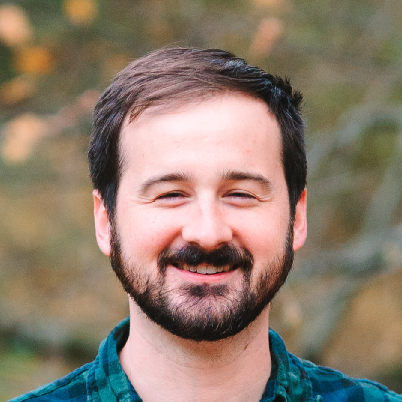
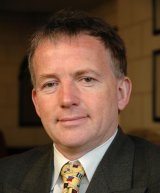
Chris Donahue is an Assistant Professor in the Computer Science Department at Carnegie Mellon University . He also serves as a part-time Research Scientist at Google DeepMind on the Magenta team. His work focuses on leveraging generative AI to enhance human creativity, particularly in music. Education: PhD in Computer Science (UC San Diego), Postdoctoral Scholar (Stanford University) His research spans controllable generative modeling of music and audio , with a focus on real-time interactive systems. Projects like Piano Genie , Beat Sage , and Copilot Arena demonstrate his commitment to real-world deployment. His Generative Creativity Lab (G-CLef) explores AI applications beyond music, including programming and natural language. Recent publications highlight advancements in multimodal music evaluation , real-time adaptation , and AI-driven sound morphing . He co-developed Magenta RealTime , an open-weight real-time music generation model, and MusicFX DJ Mode . Scientific Awards: Best Paper Award (top 1) at NAACL Student Research Workshop 2025 Best Paper Award (top 1% of submissions) at CHI 2025 Best Paper Runner-up at ISMIR 2021 He co-advises PhD students like Wayne Chi (NDSEG Fellow) and mentors Irmak Bukey . His lab receives support from the AIxArts incubator fund at CMU .
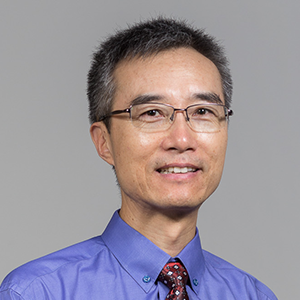
WANG Ye is an Associate Professor in the Department of Computer Science at the School of Computing, National University of Singapore (NUS). He holds a PhD in Information Technology from Tampere University of Technology, Finland, and has been a tenured faculty member at NUS since 2002, following his industry research role at Nokia Research Center. He is the director of the Sound and Music Computing Lab at NUS, leading cutting-edge research in AI-driven music and health technologies. PhD, Information Technology, Tampere University of Technology, Finland (2002) MSc, Telecommunications, Braunschweig University of Technology, Germany (1993) BSc, Telecommunications, South China University of Technology, China (1983) His research is centered on Sound and Music Computing for Human Health and Potential (SMC4HHP) , with a focus on eHealth, eLearning, mobile/wearable computing, and music information retrieval. His work spans AI for stroke rehabilitation, language learning through singing, singing voice synthesis, and automatic music transcription. He has pioneered systems like SLIONS (language learning via karaoke), CocoLyricist (AI co-creation for stroke recovery), and SinTechSVS (expressive singing voice synthesis). The latest articles highlight a strong trend in AI-driven music and health technologies , particularly in controllable lyric generation, singing voice synthesis, automatic pronunciation assessment, and multimodal music transcription. The research increasingly integrates large language models, explainable AI, fairness, and real-world deployment, reflecting a shift from theoretical exploration to practical, human-centered applications in healthcare and education. Dr. Wang has received numerous scientific honors, including: Best Paper Awards at ACM MM, ISMIR, IEEE ISM, and CHI First Prize, Asia Pacific Assistive, Rehabilitative, and Therapeutic Technologies Challenge (2015) Faculty Teaching Excellence Award, NUS School of Computing (2024) Top Paper Award, ACM Multimedia 2022 AI in Medicine Collaborative Grant for CocoLyricist project He has supervised over 11 PhD and 20 MComp students and is currently guiding six PhD candidates. His grants come from MOE, NRF, A*STAR, Nokia, and Smule. He has served as General Chair of ISMIR2017 and TPC Co-Chair of ICOT2017, and is on the editorial boards of IEEE Transactions on Multimedia and Journal of New Music Research. He has also developed and taught the first course on Sound and Music Computing in Singapore. Dr. Wang leads the Sound and Music Computing Lab (SMC Lab) , a multidisciplinary team exploring the synergy of music computing, AI, mobile technology, and cloud systems for health and education. The lab actively collaborates with medical institutions such as NUS Yong Loo Lin School of Medicine, Singapore General Hospital, and Harvard Medical School, and is currently working on projects in AI-supported language learning, stroke rehabilitation, and intelligent music interfaces.
University of Illinois Urbana-ChampaignUnited States
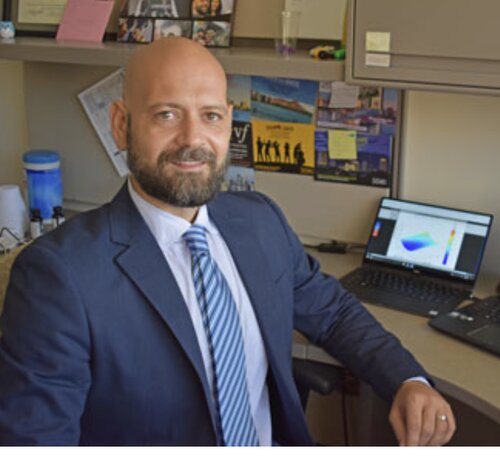
Pasquale Bottalico serves as Associate Professor in the Department of Speech and Hearing Science at the University of Illinois, with dual appointments as Associate Professor at the Center for Latin American and Caribbean Studies and Affiliate Faculty in the School of Music. His unique interdisciplinary profile bridges engineering, music performance, and speech science, reflecting his dual academic training and professional artistry. His educational foundation includes: Bachelor's in Telecommunications Engineering from Univeristà Mediterranea di Reggio Calabria, Italy Concurrent Opera Singing degree from F. Cilea Music Academy, Reggio Calabria Master's in Telecommunications Engineering from Politecnico di Torino, Italy Ph.D. in Metrology specializing in acoustics measurement uncertainty and classroom acoustics Dr. Bottalico's research centers on vocal load quantification and professional voice techniques , with significant contributions to understanding vocal fatigue in teachers and singers. His work spans Speech Intelligibility in educational environments, Room Acoustics for performance and learning spaces, and Musical Acoustics of historical vocal styles. A distinctive thread throughout his research examines how acoustic conditions modulate voice production and perception, increasingly incorporating virtual reality and bone conduction technologies for innovative assessment and intervention approaches. His Colombian vocal health study demonstrates cross-cultural applications of his work. Analysis of his 2023-2025 publications reveals three dominant research trajectories: (1) The impact of noise and dysphonia on children's speech processing in educational settings, using multimodal assessment including EEG; (2) Virtual reality applications for voice production research and therapeutic intervention; (3) Cross-cultural validation of vocal fatigue metrics and development of biofeedback systems. His work consistently bridges engineering precision with clinical applicability, particularly for professional voice users in challenging acoustic environments. No scientific awards were documented in the available information. While specific advising relationships aren't detailed, his research collaborations span international institutions including Colombian and Italian universities, suggesting graduate mentorship in interdisciplinary projects. No grant information was provided, though his systematic reviews and cross-cultural studies imply externally funded research activities. Though no dedicated laboratory is specified, his virtual reality voice studies and acoustic parameter assessments suggest affiliations with audio engineering facilities and voice clinics, likely through the Speech and Hearing Science department's research infrastructure.
Xavier Serra is a Full Professor at the Department of Engineering at Universitat Pompeu Fabra (UPF), Barcelona. He is the founder and director of the Music Technology Group (MTG), and leads the UPF-BMAT Chair on AI and Music. He also coordinates the Master in Sound and Music Computing and serves as President of the Phonos Foundation. His research focuses on audio signal processing, sound and music computing, and computational musicology, emphasizing open science and open innovation. Education: BSc in Biology, University of Barcelona (1981) Master in Music, Florida State University (1983) PhD in Computer Music, Stanford University (1989) Research Interests: Audio Signal Processing Data-Driven and Knowledge-Driven Methodologies Music Information Retrieval Cultural Music Analysis (e.g., Carnatic/Turkish/Andalusian Music) Music Education Technology Notable Projects: CompMusic (ERC Advanced Grant, 2010-2017): Multicultural computational music analysis Open datasets: Freesound, Saraga, FSD50K Technologies: Reactable, Vocaloid, Essentia API Recent Trends in Articles: Focus on AI-driven audio processing (neural fingerprints, generative models), cross-cultural music analysis, and explainable music difficulty estimation. Awards: ERC Advanced Grant (2010) for CompMusic Project. Labs/Teams: Director of MTG, Phonos Foundation, and UPF-BMAT Chair. Active in open-source projects and international collaborations.
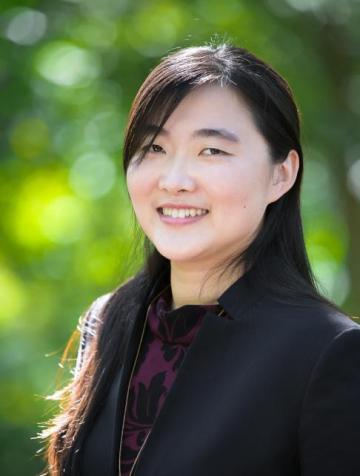
Jianjing Kuang is an Associate Professor of Linguistics at the University of Pennsylvania, affiliated with the School of Arts and Sciences. As Director of the Penn Phonetics Laboratory, they lead research in phonetics, laboratory phonology, and tonal language studies. Kuang holds a Ph.D. from UCLA (2013) and specializes in the interplay between production and perception in speech, particularly focusing on tonal systems, prosody, and cross-linguistic fieldwork. Their work integrates behavioral experiments, corpus studies, and computational modeling to explore phonological contrasts, voice quality, and sound change. Key affiliations include MindCORE and the Center for East Asian Studies. Research interests include multidimensional cues in tone processing, glottal articulations, mapping production-perception relationships, and prosodic sentence processing. Kuang has conducted fieldwork on languages such as Yi, Q’anjob’al, and Mandarin. Their studies address topics like tonal splitting in Yi, cue-changing in Korean stops, and prosodic patterns in Mayan languages. Recent work explores voice quality’s role in pitch perception and prosodic boundary detection. Awards and grants are not explicitly listed, but Kuang’s extensive publications (over 50 peer-reviewed papers) reflect sustained academic impact. They advise graduate students in phonetics and phonology, with active collaborations in computational linguistics and speech technology. The Penn Phonetics Laboratory, under Kuang’s direction, emphasizes interdisciplinary research bridging experimental and theoretical phonetics.
Courtney N. Reed is a Lecturer in Digital Technologies at Loughborough University London, where she joined in November 2023. She maintains a dual role as a visiting research fellow at the Max Planck Institute for Informatics. Her academic journey includes a BMus in Electronic Production and Design from Berklee College of Music (2016), followed by an MSc (2018) and PhD (2023) in Computer Science from Queen Mary University of London. Prior to her current position, she completed postdoctoral research at both the Max Planck Institute for Informatics and King's College London. Bachelor of Music: Electronic Production and Design, Berklee College of Music (2016) Master of Science: Computer Science, Queen Mary University of London (2018) Doctor of Philosophy: Computer Science, Queen Mary University of London (2023) Dr. Reed's research explores the entangled relationships between humans, bodies, instruments, and technology in music interaction, with particular focus on vocal electromyography (VoxEMG) and the vocalist-voice relationship. Her work incorporates feminist and post-human theories to examine sociopolitical contexts within arts technology, aiming to design for creativity while acknowledging individual, messy bodies in artistic practice. She has developed an open-source platform for vocal electromyography to investigate how biosignal feedback changes understanding and perception of the body in vocal performance. Her interdisciplinary approach bridges music technology, human-computer interaction, and embodied interaction studies. Analysis of Dr. Reed's recent publications (2023-2025) reveals a strong thematic focus on embodied interaction in music technology, with particular emphasis on vocal performance, biosignal feedback, and the philosophical underpinnings of digital instrument design. Her work consistently integrates theoretical frameworks like Karen Barad's agential realism with practical applications in digital musical instruments. Key trends include the exploration of ambiguity in data representation, the sociocultural dimensions of timbre in instrument design, and the development of novel methodologies for understanding embodied musical experiences through micro-phenomenology and ethnographic approaches. ACM SIGCHI Outstanding Dissertation Award (2024) for her thesis 'Imagining & Sensing: Understanding and Extending the Vocalist-Voice Relationship Through Biosignal Feedback' Best Newcomer Award at Loughborough University London's Community Awards Celebration (2024) Dr. Reed actively contributes to the academic community through conference organization and leadership roles. She serves as Member-at-Large on the NIME Board, previously chaired papers for NIME 2024, and co-organized the IBM SkillsBuild Sprint at Loughborough London. She has also chaired sessions at the ACM TEI Conference and co-chaired the Student Design Competition. Her collaborative work spans multiple institutions and includes significant contributions to interdisciplinary projects that bridge music, technology, and human experience. She has been instrumental in developing the senSInt research group and the RaveNET wearable network project. Dr. Reed leads the senSInt research group which focuses on sensorimotor interaction in music and performance contexts. The group develops innovative technologies including the VoxEMG platform for vocal electromyography, the Bones anti-corset for vocal performance, and the RaveNET network of wearable biosensing nodes. These projects explore the intersection of biosignals, embodied interaction, and musical expression, creating novel frameworks for understanding how technology mediates human creativity and performance. The group frequently collaborates with musicians, technologists, and theorists to develop and test these systems in real-world performance contexts.
Paavo Alku is a Professor of Speech Communication Technology at Aalto University's Department of Information and Communications Engineering. With academic credentials from Helsinki University of Technology (M.Sc. 1986, Lic.Tech. 1988, Dr.Sc.Tech. 1992), he has held academic positions at Asian Institute of Technology (1993) and University of Turku (1994-1999). Current research focuses on speech production analysis, parametric speech synthesis, and speech-based biomarkers for health monitoring Actively develops machine learning models for voice disorder detection and Parkinson's disease classification Principal investigator for projects including SymptoSonic (2024-2025) and HEART (2020-2024) His recent publications emphasize: Wavelet scattering for neurological speech analysis Fisher vector representations in voice disorder classification Machine learning approaches to vocal intensity categorization Respiratory aerosol emission during speech production Formant tracking through hybrid neural network/LP methods Awarded: IEEE Fellow (2020) Academy Professor (2015-2019) Multiple best student paper awards at ICASSP and Interspeech
Royal Holloway, University of LondonUnited Kingdom
David M Howard is a Professor and Founding Head of the Department of Electronic Engineering at Royal Holloway, University of London. He holds a PhD in Human Communication from UCL and is an Emeritus Professor in Electronic Engineering. His research focuses on human speech/singing voice production, VR/AR applications in acoustics, and the Vocal Tract Organ. He has led major projects like the StoryFutures AHRC initiative. Awards include Fellowship of the Royal Academy of Engineering and Honorary Membership from the Croatian Choral Directors Association. Education: BSc (Eng) in Electronic Engineering from UCL (1977), PhD in Human Communication (1985). Former roles include Head of Department at University of York and roles in engineering institutions. Research interests span vocal tract modeling, forensic audio analysis, and choral singing development. He collaborates internationally on projects like heritage VR storytelling and data science in museums. His work contributes to UN SDG Education goals through advancing accessible technology and arts.
Sten Ternström is a Professor at KTH Royal Institute of Technology's Division of Speech, Music and Hearing. He holds a MScEE (1982), PhD (1989), and has been a Professor since 2003. His research focuses on voice acoustics, particularly singing voice analysis and synthesis, with emphasis on clinical applications. Current interests include addressing voice variability, electroglottography, and audio technologies for music and voice clinics. He has led projects like FP7 EUNISON and SkAT-VG, and is a Fellow of the Acoustical Society of America. Education: All degrees at KTH—MScEE (1982), PhD (1989). Research Interests: Voice acoustics, choir acoustics, voice synthesis, biomedical signal processing. His work combines technical innovation with clinical relevance, e.g., developing FonaDyn software for real-time voice analysis. He explores how vocal fold dynamics influence voice quality and investigates non-invasive methods for voice assessment. Publications: Over 100 peer-reviewed articles, including recent work on WaveNet-based EGG prediction (2025), voice mapping post-thyroidectomy (2024), and pediatric voice analysis (2021). His research spans voice disorders, Parkinson’s disease voice therapy, and choral singing acoustics. Awards: Fellow of the Acoustical Society of America, Guest Editorships, and editorial roles in Acta Acustica. His contributions bridge engineering and clinical practice in voice science. Teaching: Leads courses in music acoustics, sound engineering, and supervises MSc projects on voice clinic software and singing synthesis. Active in outreach for choir acoustics and pedagogy. Labs/Teams: Involved in FonaDyn software development for voice analysis. Collaborates internationally on voice biomechanics and clinical voice measurement.
Lya Meister is a Research Fellow at Tallinn University of Technology's School of Information Technologies, Department of Software Science. She has held this position since 2017, continuing her career from the Institute of Cybernetics at TUT where she served as a Research Fellow (2009–2016) and Extraordinary Research Fellow (2005–2008). Her academic background includes a Doctor's Degree in 2011 (University of Tartu) and a Research Master's Degree in 2005 (Tallinn University). Education: PhD: University of Tartu, 2005–2011 Master's: Tallinn Pedagogical University, Estonian Philology, 2002–2005 Bachelor's: Tallinn Pedagogical University, Russian Philology, 1975–1979 Her research focuses on experimental phonetics, speech corpora analysis, and the acoustic characteristics of speech production. Notable projects include the Improving the intelligibility of sung text (2022–2026) and contributions to the Estonian Elderly Speech Corpus. She has organized major conferences like the Phonetics Symposium 2024 and served on international committees for speech technology initiatives. Her awards include the 2023 School of Information Technologies Paper of the Year and the 2012 Best Paper Award from the Institute of Cybernetics. Her work spans over 68 publications, with recent emphasis on plosive closure duration in singing, vowel-consonant intensity ratios, and developmental phonetic changes in adolescents.
Dr Alexis Kirke is a Senior Research Fellow in Computer Music at the School of Art, Design and Architecture (Faculty of Arts, Humanities and Business) at the University of Plymouth. As a composer-in-residence, he specializes in interdisciplinary research at the intersection of music, computing, and healthcare. His work includes developing adaptive music systems like RadioMe for dementia care, applying quantum computing to music composition, and exploring affective computing through brain-computer interfaces. Teaching roles include associate lecturer positions in modules such as Collaborative Practice (BA Sound and Music Production), Psychology (BA Music), and MRes Computer Music. He has supervised five PhD students as a second supervisor and served as an internal PhD examiner. His research focuses on algorithmic composition, music technology for healthcare, quantum computing applications in music, and multi-agent systems inspired by natural phenomena like humpback whale song evolution. Recent projects include the Plymouth Marine Institute collaboration and the Cloud Chamber performance involving real-time interaction with subatomic particles. Key contributions include innovative systems like RadioMe, which combines adaptive radio with reminder systems for dementia patients, and Q-Muse, a quantum computer music system. His work bridges computational creativity with human-centric applications, emphasizing ethical and accessible technology. Grants & Awards: No specific awards listed, but active in collaborative research projects Lab/Teams: Plymouth Marine Institute, Cloud Chamber Project
Christina L Svec is an Assistant Professor of Music Education at Iowa State University's Department of Music Education. Her work focuses on elementary general music, secondary choral methods, and research methodologies. She holds a PhD from the University of North Texas (2015), an MM from Michigan State University (2009), and a BM from the University of North Texas (2005). Before her academic career, she taught elementary music and directed church choirs in Texas. Her research explores singing voice development, research pedagogy, and the application of rigorous methodological approaches in music education. Notable projects include studies on music teacher preparedness, social-emotional learning in K-12 music education, and the impact of instructional methods on singing ability. During the pandemic, she collaborated on initiatives adapting early childhood music programs to remote formats. Publications appear in Update: Applications of Research in Music Education and Psychology of Music . Her work frequently employs meta-analytic techniques and mixed-methods approaches to address practical challenges in music education. No scientific awards are listed. Her advising and grant activities are not detailed in the provided text. She maintains a focus on bridging research and practice through collaborative initiatives like the Early Childhood Music Collaborative.
Dr. Adam Adler is an Associate Professor at Nipissing University’s Schulich School of Education, part of the Faculty of Education and Professional Studies. He holds a full-time faculty position and contributes to graduate program faculty responsibilities. His research focuses on music education with a particular emphasis on male gender issues, educational psychology, and curriculum policy, alongside choral music and community-based initiatives. Adler’s educational background includes a BMA from the University of Western Ontario, a BEd from the University of New Brunswick, an MME from the University of Illinois at Urbana-Champaign, and a PhD from the University of Toronto. Research Interests: His work examines male participation in music, especially in choral singing, and explores how educational environments shape gendered experiences. He investigates curriculum development for arts education, the role of technology in music pedagogy, and strategies for sustaining choral communities. Adler also addresses broader sociological questions about masculinity in general education and the intersection between educational policy and artistic practice. Publications Trends: Adler’s articles consistently address gender dynamics in music education, with recent works (2012–2024) analyzing male underrepresentation in choral singing and proposing pedagogical solutions. His technological explorations (e.g., 2013’s work on remote conducting) highlight adaptability in teaching methods. Earlier works (2002–2007) establish foundational case studies on boys’ singing experiences and identity formation in teacher training programs. Awards: No scientific awards or fellowships explicitly mentioned in the provided texts. Advising & Grants: While no specific advisees or grant details are listed, Adler has co-authored multiple research papers and served as an editor for significant publications. His role as Artistic Director of Near North Voices underscores his commitment to community music initiatives and practical application of research findings. Dr. Adler’s involvement with university-community choirs demonstrates his dedication to bridging academic research with lived musical experiences, fostering educational environments that value inclusive participation and artistic collaboration.
Cumhur Erkut is an Associate Professor in the Sound and Music Computing group within the Department of Architecture, Design and Media Technology at Aalborg University, Copenhagen, Denmark. With a publication record spanning over two decades from 2000 to present, his research bridges computer science, audio engineering, and creative arts. His primary research interests include Sound Synthesis, Physical Modeling of musical instruments, Virtual Reality Audio, Sonic Interaction Design, and Embodied Interaction. His work demonstrates a consistent focus on the intersection of technology and human experience, particularly in how sound and movement interact in digital environments. His recent publications show a strong shift toward AI-driven audio processing, voice conversion, and differentiable digital signal processing techniques. Dr. Erkut's publication trends reveal an evolution from traditional physical modeling of musical instruments (particularly string instruments like tanbur, clavichord, and guitar) toward more contemporary applications in virtual reality, embodied interaction, and AI-powered audio processing. His work consistently emphasizes real-time performance considerations and human-centered design principles. He has served in significant academic roles, including organizing the 17th International Conference on New Interfaces for Musical Expression (NIME 2017) at Aalborg University, demonstrating his leadership within the international research community. His collaborative network is extensive, with frequent co-authorship with Stefania Serafin, Vesa Välimäki, Antti Jylhä, Rolf Nordahl, and other prominent researchers in the sound and music computing field. These collaborations span multiple institutions across Europe, reflecting the international nature of his research.
Francesc Alías Pujol is a Professor at the Department of Engineering, Ramon Llull University (La Salle Campus Barcelona), where he also serves as Director of Teaching and Research Staff Policies since September 2019 and coordinates the PhD Program in Information Technologies since February 2022. He is a researcher in the Human-Environment Research (HER) group, focusing on speech and acoustic signal processing for natural human-machine interaction. His educational background includes: BSc in Telecommunications Engineering (1997) MSc in Electronics Engineering (1999) PhD in ICT and their application in Management (2006) MBA in Business Administration (2013) University Expert Program in Digital Transformation (2023) Dr. Alías's research primarily focuses on signal processing, with special emphasis on speech and acoustic signal processing to achieve natural interaction between humans, machines, and their environment. His work spans from Text-to-Speech (TTS) synthesis to vocal biomarkers for digital health applications, numerical voice simulation, and environmental acoustics. He has developed expertise in expressive speech analysis and synthesis, sound source identification, and smart city applications through wireless acoustic sensor networks. His publication record shows a consistent trajectory in speech and acoustic processing, with recent work focusing on the impact of global events like the COVID-19 pandemic on urban soundscapes, advanced techniques for glottal source analysis, and the development of algorithms for anomalous noise event detection in smart city applications. His research bridges theoretical signal processing with practical applications in environmental monitoring and human-computer interaction. Dr. Alías has received numerous scientific awards including: 3rd six-year research merit (2018-2023) from AQU Catalunya Most cited paper in Noise Mapping (2021) for his work on COVID-19's impact on urban noise 2nd six-year research merit (2012-2017) from AQU Catalunya Best academic record award for his MBA (2013) Multiple best paper awards from the Spanish Thematic Network on Speech Technology He has led and participated in numerous research projects including DISTRESIA (stress biomarker identification), FEMVoQ (3D voice simulation), SUARAMAP (acoustic monitoring for dementia detection), GENIOVOX (expressive voice generation), and DYNAMAP (dynamic noise mapping). His work has been supported by various funding bodies including the European Commission, Spanish Ministry of Science, and Catalan Government. As coordinator of the PhD Program in Information Technologies and former Director of the Department of Engineering (2014-2021), Dr. Alías plays a significant role in academic leadership at La Salle-URL. His research group focuses on the intersection of speech processing, environmental acoustics, and smart city applications, contributing to both theoretical advancements and practical implementations in these fields.