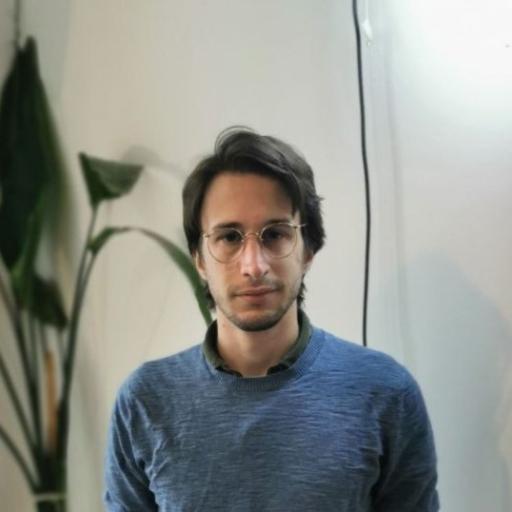
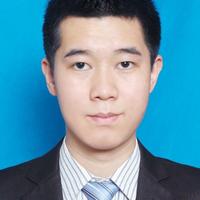
Dr. Tommaso Schettini is an Assistant Professor in the Department of Mechanical, Industrial and Aerospace Engineering at Concordia University. His research focuses on transportation systems optimization, including electric vehicle charger location, metro timetabling, and demand-driven scheduling strategies. He holds an ORCID identifier (0000-0003-2578-1539) and supervises Master's and PhD students in Industrial Engineering. His work integrates operations research techniques like Benders decomposition and metaheuristics to solve real-world transportation and manufacturing challenges. Research Areas: Electric Vehicle Infrastructure Planning, Metro Timetabling Strategies, Integer Programming, Discrete Simulation-based Optimization, and Combinatorial Optimization. Notable contributions include developing pattern-based algorithms for short-turning metro lines and optimizing micro-mobility integration with public transit. His articles span 2016–2024, emphasizing demand-driven approaches in transportation and manufacturing systems.
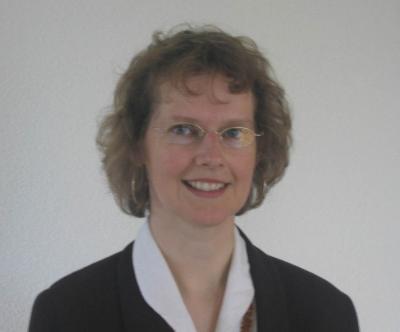
W. Michael Petullo is an Assistant Professor in the Department of Comp Sci & Comp Engineering at the University of Wisconsin-La Crosse. He holds a Ph.D. in Computer Science from the University of Illinois at Chicago, and prior academic degrees from DePaul University and Drake University. Before academia, he served a 20-year career in the Army, including roles teaching in the Department of Electrical Engineering and Computer Science and leading cyber operations software development. His research focuses on software and network security, operating systems, and open-source software development. Education: Ph.D. in Computer Science, University of Illinois at Chicago M.S. in Computer Science, DePaul University B.S. in Computer Science, Drake University Research Interests: His work emphasizes secure operating system design, network security protocols, and open-source tool development. Recent efforts include the Aquinas Learning System for courseware automation and PivotWall for SDN-based information flow control. He also explores user behavior in cybersecurity contexts and educational applications of cyber defense exercises. Teaching: Currently instructs CS120 (Software Design I), CS410/510 (Open Source Development), and CS455/555 (Fundamentals of Information Security). Past courses include operating systems concepts and secure software development. Labs & Projects: Maintains the Aquinas Learning System project and contributes to Ethos operating system research. Active in developing minimal-latency networking solutions and secure kernel interfaces.
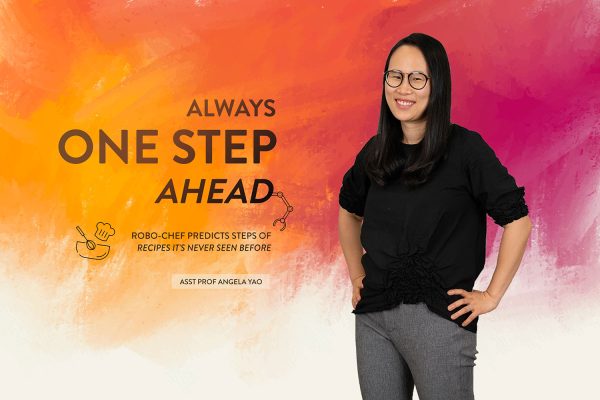
Angela Yao is a Dean's Chair Associate Professor and Assistant Dean of Research at the National University of Singapore's School of Computing, Department of Computer Science. She leads the Computer Vision and Machine Learning Group and specializes in visual perception of people, focusing on both high-level semantics of human actions and lower-level physical modeling. Her research interests span Computer Vision , Machine Learning , and Artificial Intelligence , with specific expertise in human action recognition, 3D human modeling, video understanding, and small data AI. Dr. Yao's work bridges theoretical advances with practical applications, particularly in activity anticipation and human-computer interaction. Dr. Yao's publication trends reveal a strong focus on zero-shot learning for activity anticipation, 3D human modeling, and techniques for working with limited training data. Her research has evolved from foundational work in 3D pose estimation to more recent innovations in diffusion models and cross-modal learning, demonstrating consistent contributions to advancing computer vision capabilities. NRF Fellowship for Artificial Intelligence (2019) German Pattern Recognition (DAGM) Award (2018) Dr. Yao has successfully mentored PhD students including Fadime Sener and secured significant research funding including the NRF Fellowship. Her research group focuses on developing AI systems capable of understanding and anticipating human activities with applications in robotics and human-computer interaction. She teaches CS4243 Computer Vision and Pattern Recognition and leads the Computer Vision and Machine Learning Group at NUS Computing.
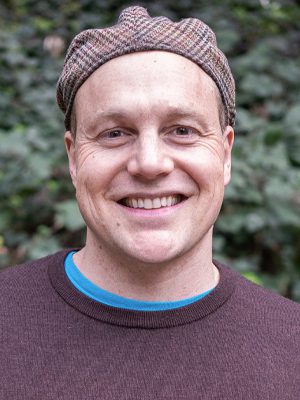
John Marshall is a Professor in the Department of Biostatistics and Epidemiology at the School of Public Health, University of California, Berkeley. His research focuses on using mathematical models to inform novel genetics-based strategies for mosquito control and to support efforts to control and eliminate mosquito-borne diseases such as malaria, dengue, and Zika virus. Dr. Marshall received his PhD in biomathematics from UCLA in 2008, with a dissertation on the use of GM mosquitoes to control malaria transmission. Prior to joining UC Berkeley, he worked on several aspects of this project as a PostDoc at the UCLA Center for Society & Genetics, the Malaria Research and Training Center in Mali, Caltech, and Imperial College London. His research interests include mathematical modeling of infectious diseases, genetics-based strategies for mosquito control, malaria elimination, dengue control, Zika virus control, gene drive systems, and vector control. He has developed the Mosquito Gene Drive Explorer (MGDrivE), a framework for testing gene-drive releases for mosquito-borne diseases control that models inheritance matrices, life-history, and migration across spatial landscapes. Dr. Marshall has secured significant funding for his research, including an $800,000 grant from the Bill & Melinda Gates Foundation in 2021 for genetics-based malaria mosquito control and an NIH grant in 2020 for mosquito movement and control research. He leads the Marshall Lab which collaborates with researchers from Tecnológico de Monterrey and IHME through the Mosquito Networks Taskforce (MoNeT). His recent publications demonstrate interdisciplinary work spanning epidemiology, genetics, computational biology, and vector control, with a focus on gene drive systems, surveillance methods, and cost-effectiveness analyses for malaria elimination. $800,000 grant from the Bill & Melinda Gates Foundation (2021) NIH grant for mosquito movement and control (2020) Dr. Marshall mentors numerous students and researchers including Héctor M. Sánchez C. (lead of MoNeT), Kevin Islas Abud, Luis Rodrigo Careaga Sotomayor, and others working on machine learning applications, network theory, and spatial analysis related to mosquito-borne diseases. He teaches courses PH 252B Modeling the dynamics of infectious disease processes and PH 295 Infectious disease modeling seminar at UC Berkeley.
Professor Evelyn Arizpe is the Solana Professor of Children's Literature (Culture, Literacies, Inclusion & Pedagogy) at the University of Glasgow's School of Education. She leads the Erasmus Mundus Joint Master's Program in Children's Literature, Media and Culture (IMCLMC). Her career spans over 25 years, beginning with research on Mexican children's literature at the Universidad Iberoamericana (Mexico City) and doctoral work on adolescent readers at the University of Cambridge. She co-pioneered research on children’s responses to picturebooks and visual literacy, notably in the classic Children Reading Picturebooks: Interpreting Visual Texts (2003/2016). Her current research focuses on migration, displacement, and intercultural communities, including projects like Visual Journeys and the Salas de Lectura program in Mexico. She has collaborated internationally, particularly in Latin America, Spain, and the U.S., emphasizing bridges between theory and practice in education and culture. She sits on the jury for the Hans Christian Andersen Award (2022, 2024) and chairs global research networks such as the AHRC-GCRF project on children’s literature in crisis contexts. Education: Bachelor's in Literature, Universidad Iberoamericana (Mexico City) PhD in Education, University of Cambridge Research Interests: Children’s literature and literacies, picturebooks, YA literature, reader-response theory, migration studies, intercultural education, and educational peacebuilding in conflict zones like Medellín and Acapulco. Her work spans critical analysis of visual texts, cultural mediation, and policy advocacy for inclusive education. Grants & Collaborations: British Academy GCRF Grant: Educational Peacebuilding in Medellín and Acapulco AHRC-GCRF Network: Children’s Literature in Critical Contexts of Displacement International partnerships with institutions in Mexico, Colombia, Spain, and Vietnam Labs/Teams: Leads the Glasgow-based Children’s Literature Research Group and collaborates with global networks like the Salas de Lectura initiative in Mexico’s Ministry of Culture.
Javier Irizarry is a Professor and Interim Chair in the School of Building Construction at Georgia Tech's College of Design. He also serves as Associate Dean for Academic Affairs and Outreach , overseeing academic programs, diversity initiatives, and recruitment efforts. As Director of the CONECTech Lab, he pioneers research in Construction 4.0 and UAV applications for infrastructure challenges. Education : Ph.D. (Civil Engineering), Purdue University Masters in Engineering Management, Polytechnic University of Puerto Rico B.S. (Civil Engineering), University of Puerto Rico, Mayagüez Research Focus : Irizarry’s work integrates cutting-edge technologies into construction, including Unmanned Aerial Systems (UAS), Reality Capture, Virtual/Augmented Reality, and Human Factors in Robotics. His lab develops frameworks for Construction 4.0 , emphasizing technology-driven solutions for safety and efficiency. Lab & Impact : The CONECTech Lab focuses on Construction 4.0 , advancing drone-based inspection systems, digital twins, and safety analytics. His research has led to over 100 publications, with applications in infrastructure monitoring, safety management, and educational tools. Leadership : As Associate Dean, Irizarry drives academic innovation and outreach, including pre-college programs and diversity strategies. He is a licensed Professional Engineer (PE) and FAA-licensed drone pilot, bridging academia and industry.
Prof. Raoul-Martin Memmesheimer is a Professor at the University of Bonn's Institute of Genetics , contributing to the Transdisciplinary Research Area (TRA) - Life and Health . His research focuses on understanding neural network dynamics across microscopic, mesoscopic, and large-scale phenomena, integrating mathematical approaches with neurophysiological insights. Key interests include the dynamics of precise spiking activity, collective network behavior, and computational principles underlying neural systems. Education & Background : While specific educational details are not listed, his position as a Professor indicates advanced academic qualifications in theoretical neuroscience or related fields. Research Interests : Memmesheimer's work bridges theoretical physics and computational neuroscience, addressing topics like spiking neuron models, learning in neural networks, and the emergence of complex behaviors. His group employs methods from computer science and applied mathematics to study how neural systems perform computations through their dynamic properties. Publications : Recent work explores topics such as gradient descent learning in spiking networks, STDP-based assembly dynamics, and oscillatory phenomena in hippocampal regions. These publications highlight his focus on both foundational theory and applications to biological systems. Awards & Collaborations : While no specific awards are listed, his participation in TRA Life and Health underscores collaborative efforts in transdisciplinary health-related research. His work is supported by the University of Bonn's strong focus on transdisciplinary innovation. Labs & Teams : His research group operates within the Institute of Genetics, leveraging interdisciplinary resources at the University of Bonn to advance theoretical neuroscience and computational biology.
Eamonn O'Neill is a Professor and Head of the Department of Computer Science at the University of Bath. His research focuses on innovative human-technology interaction, including mixed/augmented/virtual reality, and interaction with intelligent systems. His work emphasizes applied science, deriving design principles grounded in theory and empirical testing. He leads the UKRI CDT in Accountable, Responsible and Transparent AI and is affiliated with multiple centers, including the Centre for the Analysis of Motion, Entertainment Research & Applications (CAMERA) and the REal and Virtual Environments Augmentation Labs (REVEAL). His projects span EU-funded initiatives such as EMIL and UNREST, addressing topics like embodied interaction, AI regulation, and social cohesion. Recent research explores emotion recognition in VR exergaming, EEG-based brain-computer interfaces, and regulatory frameworks for AI. His work contributes to UN Sustainable Development Goals related to innovation and infrastructure. Collaborations include academic institutions and industry partners across Europe.
Prof. Rineke Verbrugge is a Professor in Artificial Intelligence at the University of Groningen's Faculty of Science and Engineering, affiliated with the Bernoulli Institute. Her research focuses on computational theory of mind, multi-agent systems, hybrid intelligence, and logical frameworks applied to social networks and legal reasoning. She holds additional roles on the Institute Advisory Board of CWI (Dutch National Research Institute for Mathematics and Computer Science) and several ERC/NWO selection committees. Her work bridges cognitive science and AI, emphasizing human-agent collaboration, belief formation in groups, and ethical AI design. Recent projects include developing computational models for theory of mind in negotiations and scenario-based Bayesian networks for legal evidence analysis. She has authored over 220 publications and supervised multiple PhD candidates in AI and logic. Key research themes include higher-order theory of mind applications, zero-one laws in provability logic, and agent-based policy evaluation for sustainable technologies. Her contributions span conferences like AAMAS, ICAIL, and HHAI, addressing topics from lie detection mechanisms to privacy conflicts in multi-user systems.
Mike Carbonaro is a Professor in the Department of Educational Psychology at the University of Alberta's Faculty of Education. He holds multiple advanced degrees including a Ph.D. (Educational Psychology), M.Sc. (Computing Science), and interdisciplinary credentials in Education. His research focuses on educational technology integration, robotics in K-12 education, computational thinking, and interprofessional health sciences education. He pioneered Canada's first university-level course on LEGO robotics for K-12 and contributed to a major simulation-based healthcare training grant. He co-developed the ScriptEase project and collaborated on GRAND initiatives like BELIEVE and HLTHSIM. Education: Ph.D. Educational Psychology, University of Alberta (1997) M.Sc. Computing Science (AI focus), University of Alberta (1993) B.A. Computer Science, York University (1991) M.Ed. Educational Psychology, University of Alberta (1988) B.Ed. Secondary Biological Sciences, University of Alberta (1984) Research Highlights: Dr. Carbonaro's work bridges technology and education across multiple domains. Key areas include: Blended learning models Health sciences interprofessional training Indigenous education technology integration Computational thinking curriculum development He has led projects integrating robotics and digital games into school curricula, and co-developed the Aboriginal Teacher Education Program (ATEP) with Blue Quills First Nations College. Teaching & Leadership: Coordinator for the Graduate Certificate in Educational Technology Teaches courses like EDCT 400 (Lego Robotics) and EDU 210 (Technology in Education) Developed new blended delivery models university-wide Grants & Collaboration: Over $1M in funded projects, including simulation-based healthcare training and interprofessional education initiatives. Collaborations span computing science, health sciences, and Indigenous education sectors. Future Work: Focus on K-12 computational thinking integration, health sciences simulation development, and technology equity in Indigenous education contexts.
Zhou Zhou is an Assistant Professor (tenure track) in Neuronic Engineering at KTH Royal Institute of Technology's Department of Biomedical Engineering and Health Systems. He is affiliated with the Digital Futures Faculty, a cross-disciplinary research center focusing on digital technologies for societal challenges. His research focuses on neurotrauma prevention, prediction, and protection through computational modeling, machine learning, and biomechanical validation. Dr. Zhou holds a PhD from KTH (2019) and completed postdoctoral training at Stanford University, specializing in sports safety and concussion prevention. His work is supported by VINNOVA, Swedish Research Council, and others. He received the 2025 Göran Gustafsson Prize for young researchers. Research interests include in silico modeling, fluid mechanics, and safety standardization for helmets. Zhou teaches courses such as Biomechanics and Neuronics (HL2035/CH213V) and leads labs in human and animal neurotrauma modeling. He seeks postdoctoral candidates for rat neurotrauma research. Education: PhD in Biomedical Engineering, KTH (2019); Postdoc at Stanford University (Sports Safety) Key Projects: InSilicoHealth ITN, helmet evaluation via virtual testing Labs/Teams: Neuronic Engineering Division, Digital Futures Collaboratory
Brandon Karchewski is an Associate Head (Undergraduate) and Teaching Professor in the Department of Earth, Energy and Environment at the University of Calgary. He earned his PhD in Civil Engineering from McMaster University and teaches courses including Engineering Geology, Computational Methods, and Natural Disasters. His research program focuses on: Computational methods in geophysics and geomechanics Geoscience education innovation Climate change impacts on frozen soils Inverse modeling applications Karchewski has pioneered virtual field experiences and developed open-source tools for modeling climate impacts on permafrost. His educational research examines metaphor use in geoscience communication and field pedagogy. Recent computational work includes Python-based permafrost modeling and stochastic inversion methods for biogeochemical transport. He leads the geophysics field school program emphasizing team-based learning. Award recognition includes: Geoscience Teaching Award (2019) Best Poster Award for teaching innovation research (2018) Team Teaching Excellence award (2016) Multiple teaching assistant awards
Dr. Sabin Tabirca is a Senior Lecturer at the School of Computer Science and Information Technology, University College Cork (UCC). He holds a BSc from Bucharest University and a PhD from Brunel University. His research focuses on Artificial Intelligence, Data Analytics, Algorithmics, Interactive Media, and HCI, with applications in computational cancer modeling, mobile health (mHealth), and parallel computing. He coordinates MPT Activities and is affiliated with the CRR Group and BCRI Centre. Notable awards include UCC's President Award for Innovation in Teaching (2007), IT@Cork Leader Award (2008), and UCC Staff Recognition Award (2013). His teaching includes modules like Parallel and Grid Computing, Mobile Application Design, and Graphics for Interactive Media. Dr. Tabirca has supervised over 70 MSc students and numerous PhD candidates, many of whom now hold academic and industry roles globally. His research includes developing mHealth apps for cystic fibrosis patients, 3D cancer visualization tools, and frameworks for mobile parallel computing. Publications span mHealth design pipelines, cancer prediction models, and mobile gaming for health education. He actively engages in interdisciplinary projects, blending computer science with medical and biological applications.
Dr. John J. Fitzpatrick is a Senior Lecturer in Process & Chemical Engineering at University College Cork (UCC) since 2008. He holds a PhD in Agricultural Engineering (Bioprocess Engineering) from Texas A&M University and has extensive industry experience, including roles at the National Dairy Products Research Centre and University College Dublin. His research focuses on Particle and Powder Technology, Sustainability, and Bioprocess Engineering, with notable contributions to dairy powder breakage mechanisms, sustainable process design, and engineering education reform. Education: PhD, Agricultural Engineering (Texas A&M, 1992) MSc, Food Engineering (University of Massachusetts, 1988) MSc, Teaching & Learning in Higher Education (UCC, 2008) Additional qualifications in Environmental Management and Sustainability. Research Interests: His work spans particle technology (food/dairy powders), sustainable energy systems, bioreactor optimization, and integrating ecological economics into engineering curricula. Recent projects include modeling oxygen transfer in bioreactors and analyzing carbon footprints of energy systems. Dr. Fitzpatrick has secured over €300k in research grants, including EU-funded projects on powder technology and Teagasc-supported studies on infant milk formula. He received the President’s Award for Excellence in Teaching (2006/7) and pioneered sustainability-focused educational initiatives at UCC. His 150+ peer-reviewed publications highlight interdisciplinary approaches to engineering challenges, emphasizing real-world applications and environmental stewardship. Grants & Awards: Walsh Fellowship (2018–2022) EU Research Training Network BIOPOWDERS (2004–2008) Teagasc-funded project on dairy powder breakage (2018–2022) Labs/Teams: Leads the Particle and Powder Science group at UCC, collaborating with industry partners like Teagasc and international universities. Active in curriculum development for sustainable engineering education programs.
Elissa Adame is an Assistant Professor at the Hugh Downs School Of Human Communication, Arizona State University. Her research focuses on healthcare communication, organizational behavior, educational psychology, and sport psychology. She explores how communication dynamics influence compassion in healthcare settings, athlete well-being, leadership development, and adolescent identity formation in sport contexts. Her work employs mixed-methods approaches, including experimental designs and qualitative analyses. Her recent studies investigate barriers to compassion disclosure in workplaces, concussion education efficacy for NCAA athletes, and the role of growth mindsets in educational interventions. She has contributed to understanding ethical dissent in organizations and the impact of strategic communication on perceptions of organizational citizenship. Research emphasizes applied communication solutions in healthcare, education, and sports. Publications span topics from medical training simulations to adolescent gender identity through sport participation.