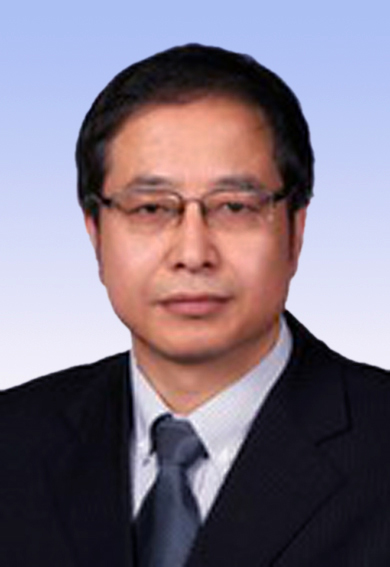
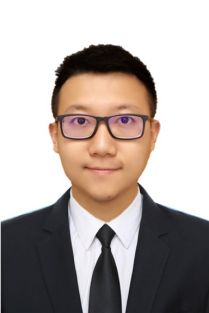
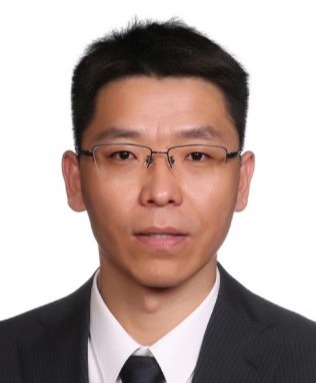
LIN Meng is an Associate Professor at the Department of Mechanical and Energy Engineering , Southern University of Science and Technology (SUSTech) . He holds a Ph.D. in Mechanical Engineering from Swiss Federal Institute of Technology in Lausanne (EPFL) (2018) and has held postdoctoral positions at Caltech's Joint Center for Artificial Photosynthesis (2018-2019). Research Interests include solar thermal/thermochemical/(photo)electrochemical energy conversion devices , CO2 capture and utilization , and multi-scale modeling and simulation . His work focuses on optimizing energy systems through advanced computational models and cross-disciplinary integration of physics. Recent Publications highlight his contributions to solar fuel processing, CO2 conversion technologies, and hybrid electrochemical systems, with articles in Nature Communications , Joule , and Energy & Environmental Science . His research emphasizes scalable solutions for sustainable energy and carbon management. Scientific Awards ASME Graduate Student Award (2018) Outstanding Reviewer of Solar Energy (2018, 2015) Swiss National Science Foundation Postdoc Fellowship (2017) Shanghai Outstanding Master Thesis (2016) Shanghai Jiao Tong University Outstanding Graduate (2013)
Wang Jianmin serves as Professor and Doctoral Supervisor at Tongji University's School of Art and Media, concurrently holding the position of Vice Dean since 2014. With a computer science PhD from Sun Yat-sen University, he bridges engineering and media arts through pioneering research in intelligent communication systems and digital media interfaces. His work focuses on human-centered design for emerging technologies, particularly in automotive and virtual environments. His academic foundation includes: PhD in Engineering (Computer Software and Theory), Sun Yat-sen University (2003) Master's in Computational Mathematics, Sun Yat-sen University (1999) Bachelor's in Computational Mathematics, Nankai University (1996) Professor Wang's research centers on intelligent communication systems and digital media art, with significant contributions to automotive human-machine interfaces (HMI), virtual reality applications, and user experience methodologies. His investigations into driver-robot transparency, augmented reality navigation, and mixed-reality educational platforms demonstrate interdisciplinary innovation connecting computer science, cognitive psychology, and design theory. Current projects explore AI-driven media systems for urban environments and safety-critical interaction frameworks. Analysis of his recent publications reveals a cohesive research trajectory focusing on automotive HMI (40% of output), human-robot interaction (30%), and mixed reality applications (30%). His work consistently emphasizes experimental validation through driving simulators and user studies, yielding practical design guidelines for industry implementation. The interdisciplinary nature spans computer science, cognitive ergonomics, and media studies, with increasing emphasis on AI integration in communication systems. His scientific recognition includes national and provincial awards for innovation in human-computer interaction and educational technology: 2019 China Industry-University-Research Innovation Award for automotive HMI systems 2020 China User Experience Alliance Excellence Award 2012 Guangdong Dingying Science and Technology Award Multiple national/provincial science progress awards (2001-2009) 2020 Tongji University Teaching Achievement Award for curriculum development As an educator, Professor Wang mentors graduate students in national design competitions including the 'Core Cup' Future Automotive HMI Challenge and International User Experience Innovation Competition. His research program is supported by substantial funding from diverse sources: National Grants: National Natural Science Foundation projects on driver behavior modeling and cognitive testing Ministry of Education: 15+产学合作 projects for virtual simulation labs and curriculum development Shanghai Municipal: Publicity Department funding for smart city media research Industry Partnerships: Huawei (intelligent vehicle HMI), SAIC Motor (AR-HUD design), and automotive electronics firms He directs Tongji's Media Experiment and Practice Teaching Center and the All-Media Research Institute, leading teams developing virtual simulation platforms for emergency news reporting, intelligent vehicle interaction testing systems, and mixed reality educational tools. Current initiatives focus on AI-enhanced media art for urban applications and next-generation HMI frameworks for autonomous mobility solutions.
Prof. CHEN Shuming is a Tenured Professor and Doctoral Supervisor at the Department of Electronic and Electrical Engineering , Southern University of Science and Technology (SUSTech) . He has held academic positions since joining SUSTech in 2013 and was promoted to Professor in 2024. Education: PhD in Electronic and Computer Engineering (HKUST, 2012), Master in Optical Engineering (Sun Yat-sen University, 2008), Bachelor in Optoelectronics (South China University of Technology, 2005) Research Focus: Prof. Chen specializes in quantum dot light-emitting diodes (QLEDs) and organic light-emitting diodes (OLEDs) , with expertise in device engineering , device physics , and display/lighting applications . His work includes: Novel device structures (tandem, top-emitting, flexible) Charge transport and exciton dynamics Low-cost fabrication techniques (inkjet printing, laminating) Publication Trends: His recent papers address QLED stability , high-efficiency architectures , and AC-compatible devices , reflecting advancements in quantum dot technology and consumer electronics integration . Scientific Awards: Guangdong Natural Science Award (2024) Shenzhen Youth Science and Technology Award (2017) China Invention Association Innovation Award (2024) International Society for Information Display Outstanding Paper Award (2018) Advising and Grants: Prof. Chen has supervised 6 doctoral students, 5 master's students, and multiple undergraduates. He has led over 10 major projects, including National Natural Science Foundation grants and National Key R&D Program initiatives.
Dr. Li Hailong is a Chair Professor at the School of Environmental Science and Engineering, Southern University of Science and Technology (SUSTech), Shenzhen. He holds a PhD in Hydrogeology from the University of Hong Kong (2003), an MSc (1991) and BSc (1988) in Applied Mathematics from Fudan University. His academic journey includes professorships at China University of Geosciences-Beijing (2009-2020) and Anshan Normal University (1999-2009). Recipient of 2010 NSFC Outstanding Young Scientist Grant 2022 Dayu Water Conservancy Science and Technology Award 2008 Chutian Professorship (Hubei Province's highest academic honor) Dr. Li's research focuses on multi-component, multi-phase subsurface flows in coastal zones and their ecological/environmental effects. His work spans aquifer parameter estimation, ecohydrology, marine groundwater discharge, and computational fluid dynamics. Recent projects involve submarine groundwater discharge (SGD) quantification in Bohai Sea and Jiaozhou Bay using radium/radon isotopes. His publications in top journals like Nature Geoscience , Geochimica et Cosmochimica Acta , and Water Resources Research have been cited 7,072 times (H-index 49). He has led 19 research projects, including 6 NSFC grants and 973 Program subprojects. Dr. Li serves on editorial boards of Advances in Water Resources and Water Science and Engineering , and was Associate Editor for Hydrogeology Journal (2012-2015).
Professor Mou Bozhong is a full Professor and Doctoral Supervisor at the School of Chemistry and Molecular Engineering, East China University of Science and Technology (ECUST) . He serves as Director of the Engineering Research Center for Biorecovery, Ministry of Education and heads the Institute of Applied Chemistry . Recognized as a Foreign Academician of the Russian Academy of Engineering , he also sits on the editorial boards of five leading journals and is a member of key professional committees of the Chinese Chemical Society and Chinese Society of Microbiology. Education & Career Path B.Sc. (1982), Chengdu University of Technology M.Sc. (1989), China Coal Research Institute (Xi’an) – Geodrilling Fluid Chemistry Laboratory Ph.D. (1998), Southwest Petroleum University – Applied Chemistry/Interfacial Chemistry Postdoctoral Research (1998–2000), Ocean University of Qingdao Visiting Scholar, University of Wyoming, USA – Microbial Enhanced Oil Recovery (MEOR) Joined ECUST as Full Professor (January 2001–present) Research Interests Professor Mu’s interdisciplinary research integrates microbiology, interfacial chemistry, and petroleum engineering . He investigates microbial life in extreme reservoir environments , focusing on: Structure and function of biosurfactants and bio-based surfactants Anaerobic biodegradation pathways of petroleum hydrocarbons and associated biomarkers Microbial community dynamics in high-temperature, high-pressure reservoirs CO₂ biotransformation and biofixation by reservoir microorganisms for CCUS applications Microbially influenced corrosion (MIC) and mitigation strategies in oilfield systems Publication & Patent Trends His 200+ SCI-indexed articles and 50+ invention patents (32 authorized) reveal a trajectory from fundamental molecular simulation of lipopeptide surfactants to large-scale field demonstrations of MEOR and CO₂-EOR technologies. Notable themes include in-situ microbial community engineering, metabolic pathway reconstruction via multi-omics, and development of eco-friendly surfactants for enhanced energy recovery . Scientific Awards & Honors Foreign Academician, Russian Academy of Engineering Second Prize, National Science and Technology Progress Award (2010) First Prize, Shanghai Science and Technology Progress Award (2008) First Prize, China Industry-University-Research Cooperation Innovation Achievement Award Baosteel Outstanding Teacher Award National Teaching Achievement Award (Second Prize) Enjoys Special Government Allowance from the State Council Member, 11th & 12th Shanghai CPPCC Teaching & Mentoring Professor Mu delivers core undergraduate courses in Physical Chemistry and graduate courses in Biophysical Chemistry and Energy Biotechnology . He pioneered the nation’s first bilingual Physical Chemistry demonstration course and mentors students in chemistry, microbiology, and bioengineering, actively recruiting Ph.D. and Master’s candidates. Laboratory & Teams His laboratories (Room 225, Laboratory Building 3) house the Engineering Research Center for Microbial Enhanced Oil Recovery , equipped for molecular microbiology, interfacial chemistry, and pilot-scale bioprocess testing. The group collaborates with PetroChina, SINOPEC, and international partners to translate fundamental discoveries into field applications.
Professor LIU Kaijun is a distinguished space plasma physicist currently serving as Professor and Deputy Head of Department at Southern University of Science and Technology (SUSTech) in Shenzhen, China. He previously held academic positions at Auburn University in Alabama, USA, where he was promoted from Assistant Professor (2012) to tenured Associate Professor (2017). His career includes significant research experience at Los Alamos National Laboratory and the Finnish Meteorological Institute following completion of his doctoral studies. 2007: Ph.D. in Space Plasma Physics, Cornell University 2002: M.S. in Space Physics, Peking University 1999: B.S. in Space Physics, Peking University Professor Liu specializes in theoretical and computational space plasma physics, with particular expertise in plasma instabilities and wave-particle interactions in Earth's radiation belts. His work also encompasses pickup ion dynamics in the heliosphere and solar wind-planet interactions. His research employs advanced computational techniques including particle-in-cell simulations and linear stability analysis to understand fundamental plasma processes. Analysis of Professor Liu's publication record from 2015-2018 reveals a consistent focus on electromagnetic wave phenomena in space plasmas, particularly examining Bernstein instabilities, Alfvén-cyclotron waves, and magnetosonic waves. His work demonstrates strong interdisciplinary connections between theoretical plasma physics, computational modeling, and spacecraft observations, with significant contributions to understanding radiation belt dynamics and heliospheric plasma processes. National-level Leading Talent (2019) Professor Liu has established a robust research program with extensive collaborations across international institutions including Los Alamos National Laboratory, NASA missions, and various universities. His work has been supported by research grants enabling advanced computational studies of space plasma phenomena. He advises graduate students in space physics and leads research projects investigating fundamental plasma processes relevant to space weather prediction and heliospheric physics. Professor Liu directs a computational plasma physics research group at SUSTech's Department of Earth and Space Sciences, utilizing high-performance computing resources to simulate complex plasma phenomena in Earth's magnetosphere and the heliosphere. His team collaborates with observational space physics groups to validate theoretical models against spacecraft measurements from missions including Van Allen Probes and THEMIS.
Li Zhongfei is a Chair Professor and Vice Dean of the School of Business at Southern University of Science and Technology (SUSTech). He is a member of the State Council's Discipline Review Group, National Outstanding Young Scientist, National Model Teacher, and recipient of the State Council's Special Government Allowance. His career spans roles as Distinguished Professor at Lingnan College, Executive Dean at Sun Yat-sen University, and leadership positions in academic societies such as the Chinese Society for Systems Engineering. Education : PhD in Management (1997-2000) and Master's in Operations Management (1988-1990) from the Chinese Academy of Sciences, and a Bachelor of Science in Mathematics from Lanzhou University. Research Interests : His work focuses on Technological Finance Green Finance Pension Finance Financial Engineering and Risk Management Insurance and Actuarial Science with applications to financial markets, digital finance, and sustainability. Scientific Trends from his publications include: ESG rating impacts on capital markets Green innovation under carbon pricing Machine learning in cryptocurrency forecasting Robust portfolio optimization under uncertainty Climate risk and policy analysis Post-pandemic economic recovery and systemic risk Scientific Awards : Recipient of the National Teaching Achievement Award, Guangdong Province Philosophy and Social Sciences prizes, Zhong Jiaqing Operations Research Award, and recognition as a Top 2% Scientist (Stanford, 2023). He was honored as a National Model Teacher and 'Top Ten Most Respected Business School Deans in China.' Grants & Projects : Principal investigator in NSFC key projects, including 'Intelligent Investment and Risk Management under Dual Carbon Strategy' and 'Financial Innovation and Risk Management.' His projects address fintech, pension funds, and climate risk. Labs & Teams : Leads advanced research teams in SUSTech's School of Business and collaborates with international institutions like the University of Waterloo and Hong Kong Polytechnic University.
Shunxiang Cao is an Assistant Professor at Tsinghua Shenzhen International Graduate School in China, where he has worked since July 2022. He earned his Ph.D. in Aerospace Engineering from Virginia Tech (United States) between August 2014 and August 2020 and completed his B.S. in Aerospace Engineering at Beihang University (China) from September 2010 to May 2014. Prior to his current role, he served as a Postdoctoral Scholar at the California Institute of Technology (United States) from November 2019 to May 2022. Teaches courses such as Advanced Numerical Analysis, Numerical Methods for PDEs, and Fluid-Structure Interaction simulations. Research Interests include fluid-structure interaction, computational fluid dynamics, shock/bubble dynamics, material failure analysis, embedded-boundary methods, resolvent-based optimization, Kalman inversion, high-intensity focused ultrasound, and digital twin technology. His work focuses on numerical modeling, optimization, and fluid-solid coupling mechanisms in diverse applications like underwater propulsion, energy storage membranes, and medical acoustics. Scientific Awards include the USNCCM16 Conference Award (2021), Graduate Fellowship at Virginia Tech (2014-2015), Merit Undergraduate Student in Beijing (2014), and Singapore Technology Engineering Fellowship (2010-2013).
Xiuhao Deng is an Associate Research Fellow and PhD Supervisor at the Institute of Quantum Science and Engineering, Southern University of Science and Technology (SUSTech), with adjunct positions at Pengcheng Lab and Hefei Lab. He obtained his B.S. in Modern Physics from University of Science and Technology of China (USTC) in 2005, followed by an M.S. in Atomic and Molecular Physics from USTC (2009) and a Ph.D. in Physics from University of California, Merced (2015). Research Interests: Driven quantum systems Quantum control theory and open quantum systems Superconducting and spin qubits Quantum error correction Quantum simulation Quantum computing His work focuses on robust quantum gate engineering, scalable quantum control, and error mitigation in multi-qubit systems. Recent publications emphasize geometric correspondence methods, noise resilience, and hardware optimization. Academic Activities: Organized QIP 2020 (international quantum conference) Reviewer for Phys. Rev. X , Phys. Rev. Lett. , and other journals Transferred to Shenzhen International Quantum Academy in 2025 after tenure at SUSTech
Yury Illarionov is an Associate Professor in the Department of Materials Science and Engineering at Southern University of Science and Technology (SUSTech), Shenzhen, China. He was previously a postdoc researcher at TU Wien's Institute for Microelectronics (2016-2022) and a PhD student at TU Wien and Ioffe Institute (2011-2015). His research focuses on 2D materials for nanoelectronics, optoelectronics, and sensors, with an emphasis on gate insulator development and device reliability. Education: B.Sc. & M.Sc., Technical Physics, Peter the Great St-Petersburg Polytechnic University (2009, 2011) Double M.Sc., Advanced Material Science, Erasmus Mundus FAME Program (2012) Ph.D., Semiconductor Physics, Ioffe Institute (2015) Ph.D., Technical Sciences, TU Wien (2015) His research interests center on: Fabrication of 2D FETs, photodetectors, and sensors with novel insulators (fluorides, native oxides) Advanced device characterization across temperature ranges TCAD modeling for performance and reliability Scalable fabrication techniques compatible with industrial thermal budgets Publications highlight trends in 2D nanoelectronics, oxide trap analysis, and reliability engineering for next-generation devices, spanning journals like Nature Electronics, Nature Communications, ACS Nano, and IEEE Transactions on Electron Devices. Scientific Recognition : IEEE Senior Member (2020) Co-supervisor of multiple PhD awards (2015-2023) Best poster award (ICP2DC4, 2019) Erasmus Mundus scholarship (2010) High school gold medal (2005) Advising includes direct supervision of PhD students like T. Knobloch, with collaborative efforts across international teams. His lab, Laboratory of 2D Optoelectronics and Nanoelectronics (L2DON) , combines academic rigor with industrial partnerships to advance scalable 2D device technologies.
Cao Haishan is an Associate Professor at Tsinghua University, affiliated with the Department of Energy and Power Engineering in the School of Mechanical Engineering. His research focuses on cryogenic cooling systems, high heat flux thermal management, and the physics of amorphous ice formation and phase transitions. He leads a research group supported by the National Natural Science Foundation of China and industry partners including Huawei, Midea, and Lenovo. Ph.D., Mechanical Engineering, University of Twente, 2013 M.Sc., Chemical Engineering, Dalian Institute of Chemical Physics, Chinese Academy of Sciences, 2009 B.Sc., Chemical Engineering, Zhejiang University, 2006 Dr. Cao's research spans three major areas: cryogenic cooling (including micro cryocoolers and sorption systems), high heat flux electronic cooling (especially with non-condensable gases), and the formation and transformation of amorphous water ice. His work combines theoretical modeling, computational simulation, and experimental validation, often at micro and nano scales. He applies principles from thermodynamics, fluid dynamics, and materials science to solve engineering challenges in refrigeration and thermal control. The recent publications reflect a strong trend toward interdisciplinary research, integrating machine learning for heat transfer prediction, computational screening of MOFs for cryogenic switches, and fundamental studies of ice nucleation on various substrates. The articles span journals in physics, engineering, materials, and applied thermal sciences, indicating broad impact across multiple domains. Notable scientific awards include: Gustav and Ingrid Klipping Award (2016) Cryogenics Best Paper Award (2017) Annual Teaching Excellence Award, Tsinghua University (2023) Excellent Supervisor Award, Tsinghua University (2024) Multiple First Prize Advisor awards in national student contests on energy saving Dr. Cao has been principal investigator on several grants, including projects funded by the National Natural Science Foundation of China on amorphous ice lifetime and micro-cryocooling for semiconductor chips. He has also led industry-university collaborations with Huawei, Midea, and Lenovo. He advises graduate students and leads a research team focused on next-generation cooling technologies. He serves on editorial boards for Journal of Refrigeration , Vacuum and Cryogenics , and Energies , and has chaired sessions at major international conferences such as ICEC-ICMC and ACTS. His research group operates within the Institute of Thermophysics at Tsinghua University, leveraging facilities in the Lee Shau Kee Science and Technology Building. The team collaborates with national laboratories and international institutions, particularly maintaining ties with the University of Twente. Current efforts are directed toward ultra-low vibration cooling, efficient separation of non-condensable gases, and extending the stability of amorphous ice for cryobiological applications.
Yiguo Xue is a Professor and PhD Tutor at the Geotechnical and Structural Engineering Center, School of Civil Engineering, Shandong University. He has contributed extensively to tunnel engineering, subsea infrastructure, and slope stability analysis through advanced prediction models and numerical simulations. Research Interests: New tunnel geological condition prediction technologies Subsea tunnel and underground energy storage systems High slope stability evaluation Engineering exploration methods His recent work focuses on tunnel safety, subsea structural mechanics, and AI-driven hazard prediction models. Publications highlight his expertise in rockburst analysis, water inrush risk, and excavation optimization using machine learning and numerical frameworks. Scientific Awards: Recipient of China's Top 100 Most Influential Domestic Academic Paper Award (2008 paper on tunnel geological hazard forecasting) He has secured multiple national invention patents for tunnel monitoring devices (e.g., vibration sensors, collapse prediction systems) and developed specialized software for displacement prediction and rock classification.
Junmin Jiang serves as Associate Professor in the Department of Electronic and Electrical Engineering at Southern University of Science and Technology's College of Engineering since 2022, following promotion from Assistant Professor. He directs a research group focused on cutting-edge analog/power IC design with strong industry partnerships including Texas Instruments, Qualcomm, and Analog Devices. His educational background includes: Ph.D. in Electronic and Computer Engineering (2017), The Hong Kong University of Science and Technology Visiting Scholar (2015-2016), State Key Laboratory of AMSV, University of Macau B.Eng. in Electronic Information Engineering (2011), Zhejiang University Dr. Jiang's research centers on power management IC design with three interconnected thrusts: Power ICs for Specific Applications (e.g., audio/LiDAR drivers), Power ICs for AI systems, and AI-enhanced power IC design. His work achieves breakthroughs in switched-capacitor converters, delivering ultra-high efficiency (>97%), fast transient response ( His 15 most recent publications demonstrate consistent leadership in top venues (ISSCC/JSSC), showing accelerating impact in hybrid converter topologies, parasitic loss reduction, and AI-integrated power management. The trend reveals increasing industrial relevance with 8 U.S. patents and real-world implementations in audio/LiDAR systems. Scientific recognition includes: IEEE SSCS Pre-Doctoral Achievement Award (2017) National Overseas High-level Talent (Youth Project, 2022) SUSTech Outstanding Teaching Award (2024) Shenzhen Industrial Innovation Talent Award (2023) As an advisor, he mentors 8+ students including ISSCC awardees and competition winners. His group actively recruits undergraduates for chip design projects, with students winning top honors in National Electronic Design and Mathematical Modeling competitions. Current teaching includes graduate Nonlinear Circuits and undergraduate Microcomputer Principles. The Jiang Research Group maintains strong industry ties for student placements and collaborates with international institutions in the U.S., EU, and Macau. Lab capabilities focus on full-cycle IC design from simulation to tapeout, with recent 100V-output converters achieving 86.2% efficiency for acoustic applications.
Kuang Xingxing is an Associate Professor at the School of Environmental Science and Engineering, Southern University of Science and Technology . His research focuses on saturated-unsaturated flow, water-gas two-phase flow, solute transport modeling, and groundwater response to climate change. PhD in Hydrogeology (2012) from the University of Hong Kong M.Eng in Hydrology and Water Resources (2008) and B.Eng in Hydrology and Water Resources Engineering (2007) from China University of Geosciences (Beijing) His work improves parameter models for groundwater flow and solute transport, with studies published in leading journals like Water Resources Research and Geophysical Research Letters . He also investigates climate change impacts on Qinghai-Tibet Plateau groundwater systems. Recent publications highlight his contributions to two-phase flow mechanisms in aquifers, solute transport modeling in deltaic systems, and permeability-depth relationships in Earth’s crust. His research integrates laboratory experiments, numerical simulations, and field data. Scientific Awards : AXA Research Fund Post-Doctoral Fellowships (2014) Beijing Outstanding Graduate (2007) China University of Geosciences Outstanding Graduate (2007) SINOPEC Scholarship (2005) National Second Class Scholarship (2004) He serves as Associate Editor of Hydrogeology Journal and reviews for top journals. Teaching includes undergraduate courses in Hydraulics , Hydraulic Experiment , and Introduction to Earth Science .
Yiming Luo is a Research Assistant Professor at the Advanced Institute for Ocean Research , Southern University of Science and Technology (SUSTech), with a Ph.D. in Marine Geology from the Southern China Sea Institute of Oceanology, Chinese Academy of Sciences (2020) and a visiting student experience at the University of Rhode Island (2019–2020). He holds a B.S. in Marine Sciences from Sun Yat-Sen University and an exchange program at National Chung Cheng University , Taiwan. His research focuses on ridge-hotspot interaction , oceanic transform fault tectonics , and geodynamic numerical modeling , with over 15 publications on oceanic crustal evolution, mantle dynamics, and subduction zone processes. Recent work includes 3D geodynamic simulations of oceanic plateau formation and transform fault morphology. He has participated in Mariana Trench , South China Sea , and Makran Trench scientific expeditions. Scientific Awards: Pengcheng Kongque Plan Specially Appointed Talent (Shenzhen) Key Projects: China Postdoctoral Science Foundation (2022M711480, PI) National Natural Science Foundation of China (42406071, Lead PI) Guangdong Provincial Laboratory Talent Team Project (GML2019ZD0205) Research Trends: Subduction zone seismicity Oceanic plateau formation Ridge-hotspot interaction Transform fault morphology 3D geodynamic modeling Crustal thickness analysis