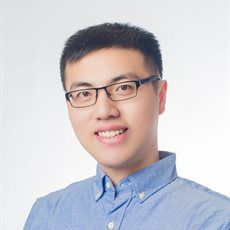
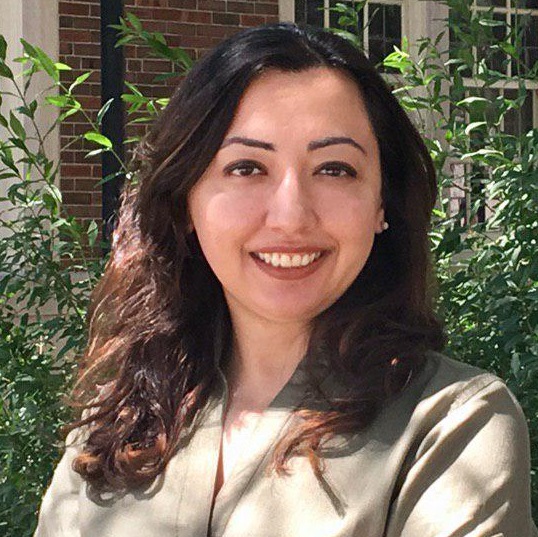
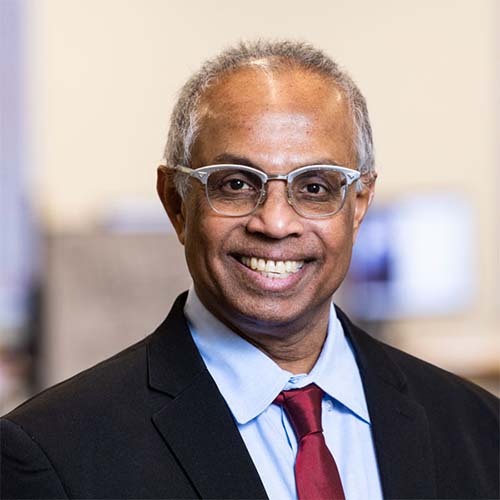
Ziran Wang is an Assistant Professor in the Department of Civil Engineering at Purdue University's College of Engineering, appointed as new faculty in 2022. His research bridges digital twin technologies, autonomous driving systems, and human-machine interaction to advance intelligent transportation solutions. Ph.D. in Mechanical Engineering, University of California, Riverside Prior role: Principal Researcher at Toyota North America His work focuses on creating personalized autonomous driving experiences through machine learning, emphasizing safety and efficiency in real-world applications. Key areas include multimodal large language model integration, federated learning for privacy-preserving data sharing, and cooperative perception frameworks. He develops novel approaches for digital twin-based traffic simulation, medical emergency detection in vehicles, and human behavior modeling in complex urban environments. Analysis of his 2024-2025 publications reveals a dominant trend toward generative AI applications in autonomous driving, particularly for perception-prediction-planning integration and real-world validation. His research increasingly incorporates digital twins for safety-critical testing and explores medical applications through in-vehicle health monitoring systems. Dr. Wang advises graduate students including Wenhui Huang and leads the Purdue Digital Twin Lab, which develops advanced simulation and testing platforms for autonomous systems. His lab maintains strong industry partnerships with Toyota for real-world deployment and validation of research成果.
Serkut Ayvasik is a Researcher at the Chair of Communication Networks at Technical University Munich (TUM). He joined TUM in March 2019 as a research and teaching associate, following his M.Sc. in Communications Engineering (2019) and B.Sc. in Electrical and Electronics Engineering (2016) from Middle East Technical University. His research focuses on: Wireless Network Resource Management for heterogeneous latency-critical 5G applications Channel State Information Prediction using depth images Network Slicing and Quality of Service optimization Machine Learning for proactive network configuration Telemedicine Applications in cross-border communication Key article trends include 5G/6G technology , IoT sustainability , digital twins , and haptic feedback systems . He contributes to IEEE and ACM journals, with recent work on Digiot (2025) and OCTOPUS (2024). Collaborations include researchers like Wolfgang Kellerer (Chair), Edwin Babaians , Alba Jano , and Fidan Mehmeti . His work spans projects such as 6G Future Lab Bavaria , DFG GGI QCDE , and ERC FlexNets .
Prof. Dr.-Ing. Werner Lang serves as Vice President for Sustainable Transformation and holds the Chair of Energy Efficient and Sustainable Design and Building (ENPB) at the Technical University of Munich (TUM), within the TUM School of Engineering and Design. Previously, he was Professor of Sustainable Building and Director of the Center for Sustainable Development at the University of Texas School of Architecture in Austin (2008-2010). Lang also directs the Oskar von Miller Forum and is a partner at Lang Hugger Rampp GmbH Architekten in Munich. Lang's research focuses on developing strategies for buildings with positive environmental footprints through regenerative energy systems, renewable materials, and closed material cycles. His work emphasizes comprehensive life cycle analysis considering ecological, economic, and social aspects. Current research areas include climate-resilient urban neighborhoods, circular economy in construction, and sustainable building materials. The ENPB institute conducts numerous research projects such as Building Climate-Municipal, CircularFTmehrRAUM, and Urban Green Infrastructure. Lang's publications reveal a strong trend toward life cycle assessment, multi-criteria decision-making, and computational approaches for sustainable building design. His recent work integrates machine learning with building performance analysis and focuses on practical implementation of circular economy principles in urban contexts, with increasing emphasis on quantifying environmental benefits of urban green infrastructure. TUM Sustainability Award 2022 Doce et Delecta (Second Prize for Best Teaching), 2019 Bayerischer Energiepreis 2014 International Building Skin Tech Award (2008) Promotionspreis der TUM (2000) Lang leads the Institute of Energy-Efficient and Sustainable Design and Building with numerous research grants including projects like Building.Lab+, NAWAREUM, and ECO+. His team includes researchers working on topics ranging from urban mining to life cycle assessment tools. The institute maintains several products and startups including MoMeBo, Bilanzlabor, and EnergyML that translate research into practical applications for the building industry.
Hisham Zerriffi is an Associate Professor at the University of British Columbia (UBC) in the Department of Forest Resources Management, Faculty of Forestry. He also serves as Associate Dean for Equity, Diversity, and Inclusion. His research intersects technology, energy, and the environment, focusing on rural areas in the Global South. Affiliation: BioProducts Institute Affiliation: Clean Energy Research Centre Affiliation: Institute for Resources, Environment and Sustainability His research examines institutional factors in technology diffusion, household energy choices, and welfare impacts of energy use. Current projects include analyzing forest density's ecological impact, clean cooking transitions in India, and decentralized energy systems. Recent publications address just transitions, biomass energy economics, and policy misalignments in Indigenous communities. He has authored works on climate change mitigation via forest carbon credits and rural electrification strategies. Scientific Award: Ivan Head South/North Research Chair As a PhD supervisor, he has guided Natalie Payer on urban energy poverty in the U.S. He collaborates on interdisciplinary grants and leads the Energy Resources, Development and Environment Lab (ERDELab).
Nils Ole Tippenhauer is a faculty member at the CISPA Helmholtz Center for Information Security , leading the SCy-Phy research group . His academic journey includes an Assistant Professorship at the Singapore University of Technology and Design (SUTD) (2014–2018), a PhD in Computer Science from ETH Zurich (2012), and a Diploma in Computer Engineering from Hamburg University of Technology (2007). He also holds an exchange study year at the University of Waterloo (2004–2005) supported by a DAAD scholarship. Research Interests focus on practical systems security , particularly Security of Cyber-Physical Systems Industrial Control Systems (ICS) and Industrial IoT (IIoT) Physical-Layer Security and Wireless Security Privacy-Preserving Technologies (e.g., DP3T project) Embedded Systems Security Threat Detection & Defenses His work integrates both theoretical and applied approaches, addressing vulnerabilities in critical infrastructures like water systems and power grids. Recent Publications highlight trends in Anomaly detection evasion in industrial networks Microarchitectural side-channel defenses Localization techniques in cellular networks Security analysis of ICS protocols Data-driven vulnerability assessments for robotics Cyber-physical simulation for infrastructure security Scientific Awards include Best paper at DIMVA'23 Distinguished Paper at ACSAC 2022 Best paper at CPSIOTSEC 2022 Best paper at CPSS 2017 K-H Ditze Award for diploma thesis (2007) SG Mark Institution award (2016) Runner-Up at smart energy hackathon (2013) Advising and Grants feature PhD defenses of Daniele Antonioli and Hamid Reza Ghaeini (2022), co-organizing conferences like WiSec and CPSS , and leading projects such as the National Science Experiment (NSE) with 50,000 mobile sensors in Singapore. He also contributed to the DP3T project for privacy-preserving contact tracing. Labs and Teams include the SCy-Phy research group at CISPA and the development of testbeds like SWaT (Secure Water Treatment), WADI (Water Distribution), and EPIC (Electric Power and Industrial Control) at SUTD. These platforms enable hands-on security research in realistic industrial environments.
Jari Holopainen is a Senior Lecturer at the Department of Electronics and Nanoengineering , Aalto University. His work focuses on advanced antenna systems, wireless communication, and RFID technologies, with significant contributions to broadband, tunable, and wearable antenna designs. Current affiliation: Aalto University Academic role: Senior Lecturer Research interests span antenna design for mobile terminals, microwave engineering, and machine learning applications in RF systems. His publications highlight innovations in: Bluetooth antennas for metallic smartwatches and jewelry Wideband and dual-polarized antenna arrays RFID transponders with beam steering Machine learning-driven load optimization 3D-printed and capacitive-coupling antenna structures Wave propagation and scattering analysis Scientific contributions include: 15+ peer-reviewed articles (2025-2020) Collaborations with leading researchers in electromagnetics (e.g., Ville Viikari, Pertti Vainikainen)
Dr. Zaheer Nasar is a Reader in Atmospheric Aerosols at Cranfield University's School of Aerospace, Transport and Manufacturing. His work focuses on real-time bioaerosol characterization, indoor/outdoor air quality dynamics, and environmental health impacts of particulate matter. He leads the NERC-funded Light-Induced Fluorescence sensor project and contributes to the BioAirNet network (NE/V002171/1) as Co-I. Research Interests Physico-chemical and biological characterization of aerosols Spatio-temporal dynamics of particulate matter (PM) and bioaerosols Quantitative microbial risk assessment (QMRA) methodologies Low-cost air quality sensor networks and machine learning calibration Urban green infrastructure effects on air pollution Policy development in Hindu Kush Himalayan air quality Recent publications emphasize machine learning-enhanced sensor calibration (2024 IEEE paper), wastewater plant bioaerosol risks (2024 Water Research), and urban air quality interventions across the UK and Lahore. He has secured over £1.6M in grants from NERC, STFC, and UKRI GCRF, with significant work on BTEX exposure in Nigeria and SARS-CoV-2 risks in wastewater facilities. Scientific Recognition Fellow of the Higher Education Academy (FHEA) Co-investigator in multiple NERC/UKRI projects Active participant in BSI bioaerosol standards committee As an advisor, he mentors five postgraduate researchers including Reece Dillon and Hathaikarn Tathong, with a strong publication record in journals like Environmental Science: Atmospheres , Risk Analysis , and BJPsych Open . His work bridges environmental science, public health, and policy implementation through interdisciplinary research.
Dr. Xiaofeng Qian is an Associate Professor in the Department of Materials Science & Engineering at Texas A&M University, with joint appointments in Physics and Astronomy, and Electrical & Computer Engineering. His research focuses on materials theory , quantum materials design , and high-throughput computational discovery , particularly for 2D materials and energy applications . Educational Background: Ph.D., Nuclear Science and Engineering, Massachusetts Institute of Technology (2008) B.S., Engineering Physics, Tsinghua University (2001) Research spans first-principles electronic structure methods , nonlinear optical responses , and multiscale modeling of electronic, thermal, and ionic transport. Key areas include quantum spin Hall effect , ferroelectric switching , and machine learning for materials prediction . Notable Awards: Dean of Engineering Excellence Award (2024) Engineering Genesis Multidisciplinary Award (2024) AZZ Faculty Fellow (2021) NSF CAREER Award (2018) Manson Benedict Fellowship (2006) Actively recruiting PhD, MS, and UG researchers with backgrounds in physics, materials science, or computational methods. Collaborates extensively on hybrid AI-materials projects and topological device concepts .
Hyosang Lee is an Assistant Professor in the Robotics Section of the Mechanical Engineering Department at Eindhoven University of Technology (TU/e). He holds a PhD from KAIST and has held research positions at the Max Planck Institute and University of Stuttgart. His work focuses on tactile sensing technologies, including artificial skin development, soft robotics, and integration of sensory systems with AI. Bachelor's: Mechanical Engineering, Korea University Master's: Robotics and Mechanical Engineering (double major) PhD: Mechanical Engineering, KAIST (2017) Research interests span tactile sensor design, electrical impedance tomography (EIT), and human-robot interaction. His group emphasizes creating scalable, flexible tactile systems for robots. Recent work includes air pressure sensing for force estimation and biomimetic skin materials. Publications highlight innovations in multi-directional force sensing, soft component technologies, and haptic interfaces for autism therapy. He teaches 'Dynamics and Control of Robotic Systems' and serves on the editorial board of npj Robotics . No formal student advisees are listed, though his lab, the Tactile Sensing and Robotic Skin Group , likely involves graduate researchers. His research contributes to UN Sustainable Development Goals related to health and technology.
Xiaocheng Shang is an Associate Professor in Mathematical Optimisation and Data Science at the University of Birmingham's School of Mathematics. His research focuses on numerical methods for stochastic differential equations, with applications in computational mathematics, statistics, physics, and data science. He is affiliated with the Optimisation and Numerical Analysis Group, Statistics and Data Science Group, and the Institute for Data and AI. Shang holds a PhD in Applied and Computational Mathematics from the University of Edinburgh (2016) and completed postdocs at the University of Edinburgh, Brown University, and ETH Zurich before joining Birmingham in 2019. His academic achievements include fellowships from The Alan Turing Institute, the LMS Emmy Noether Fellowship, and the EUniWell Leadership Fellowship. He has secured funding from EPSRC, the Royal Society, and the Isaac Newton Institute. Shang is actively involved in supervising PhD students and co-organizing research initiatives such as the Data Science and Computational Statistics Seminar. Research interests include structure-preserving integrators, Bayesian sampling techniques, and machine learning applications in dynamical systems. His work bridges numerical analysis, probability theory, and multiscale modeling in materials science. Recent projects involve neural networks for complex dynamical systems and numerical algorithms for deterministic/stochastic systems.
Dr. Dominika Ignasiak is a Researcher affiliated with the Institute of Biomechanics at ETH Zürich. Her work focuses on spinal biomechanics, musculoskeletal modeling, and computational analysis of spinal pathologies. She contributes to understanding the biomechanical implications of surgical interventions, spinal deformities, and age-related changes in spinal alignment and loading. Her research integrates clinical data with advanced musculoskeletal modeling techniques, particularly in predicting postoperative outcomes and assessing spinal load distributions under dynamic conditions. Key areas include spinal stenosis, idiopathic scoliosis, and the biomechanics of spinal fusion surgery. Dr. Ignasiak collaborates on translational studies bridging computational simulations with clinical applications. Her publications emphasize the role of personalized models in optimizing surgical strategies and understanding degenerative spinal conditions. While no formal awards are listed, her contributions to spinal biomechanics research are evident through her active publication record in high-impact journals. Dr. Ignasiak is based at ETH Zürich’s Institute of Biomechanics, where she engages in cutting-edge research and contributes to both academic and clinical advancements in orthopedic biomechanics.
Ye Zhisheng is the Dean’s Chair and Associate Professor in the Department of Industrial Systems Engineering & Management at the National University of Singapore (NUS). His research focuses on reliability engineering, inventory control, emergency response systems, and statistical modeling. He holds a PhD in Industrial and Systems Engineering from NUS, along with a BEng in Material Science and Engineering and a BEco in Economics from Tsinghua University. His work emphasizes practical applications in mission-critical systems, predictive maintenance, and data-driven decision-making. Current research initiatives include optimal maintenance policies for manufacturing systems, degradation analysis of bearings, and federated learning approaches for battery lifecycle prediction. He has pioneered methods for integrating physics-informed neural networks into prognostics and health management (PHM) systems. Key technical contributions span advanced statistical methodologies like sieve estimation for survival data, phase-type distributions modeling, and condition-based maintenance optimization. His interdisciplinary approach bridges operations research, mechanical engineering, and computer science to address complex reliability challenges. Recent projects include resilient consensus-based power grid management and contamination source identification frameworks. Notable collaborations involve developing intelligent cross-domain fault diagnosis systems using transformer networks and advancing the Internet of Federated Things (IoFT) for distributed data analytics. His work has been applied in aerospace, telecommunication infrastructure, and medical emergency response systems.
Zohreh Sharafi is an Assistant Professor of Software Engineering in the Department of Computer and Software Engineering (GIGL) at Polytechnique Montréal. Previously, she served as a Senior Research Fellow in the Department of Electrical and Computer Engineering at the University of Michigan, Ann Arbor, where she worked with Dr. Westley Weimer and was awarded the prestigious NSERC Postdoctoral Fellowship. Prior to her academic career, she worked as a software engineer at Morgan Stanley, contributing to the firm's electronic trading platform and serving as principal architect of SURF, a market data simulator. Her educational background includes a Ph.D. in Computer Engineering from École polytechnique de Montréal under the supervision of Dr. Giuliano Antoniol and Dr. Yann-Gaël Guéhéneuc, a Master of Applied Science in Software Engineering from Concordia University, and a Bachelor of Computer Engineering from the University of Tehran. Dr. Sharafi leads the SENSE Lab, a multidisciplinary software engineering research laboratory focused on understanding problem-solving strategies developers use during software development, with particular attention to human factors such as gender and native language. Her research combines human-centric design with experimental methodologies, investigating cognitive processes involved in software development using biometric measures including eye tracking and neuroimaging. Current active projects include evaluating trustworthiness perceptions of software artifacts and studying the role of creativity in software engineering tasks. She has made significant contributions to understanding how gender influences program comprehension and code review processes. Her publication record demonstrates a strong focus on empirical methods in software engineering, particularly eye tracking and neuroimaging techniques to study developer cognition. Her work spans program comprehension, code review, requirements engineering, and the impact of human factors on software development processes. She has developed methodological frameworks for conducting eye tracking studies in software engineering and has made notable contributions to understanding how visualization techniques affect software development tasks. NSERC Postdoctoral Fellowship NSERC Discovery Grant Program and Launch Supplements (Sep 2024-Sep 2029) IVADO Startup & Operation Fund (Jan 2022-Jan 2023) Scholarship for Doctoral Studies from Fonds de Recherche du Quebec Distinguished Reviewer Awards from IEEE ICPC 2020 and ACM FSE 2024 Dr. Sharafi actively mentors students including Mahta Amini (PhD Candidate, IVADO Scientifique en résidence 2024 Laureate), Cameron Cherif (PhD Candidate), Sara Yabesi (Master's Student), and Anthonia Njoku (Graduate research intern). She serves on numerous conference organizing committees including as Local Arrangement Chair for SANER 2025, Program Co-chair for SEMLA 2024, and as a reviewer for top-tier journals including IEEE Transactions on Software Engineering and ACM Computing Surveys. Her research is supported by multiple grants focused on understanding human factors in software engineering through empirical methods. At Polytechnique Montréal, Dr. Sharafi directs the SENSE Lab which brings together computer scientists, cognitive scientists, and software engineering researchers to investigate the cognitive aspects of software development. The lab employs advanced methodologies including eye tracking, functional near-infrared spectroscopy (fNIRS), and functional magnetic resonance imaging (fMRI) to study how developers comprehend, navigate, and modify software systems. Current projects examine trustworthiness perceptions in code review, the role of creativity in software engineering tasks, and gender differences in software development processes.
Duminda Wijesekera serves as Professor in the Department of Cyber Security Engineering and Department of Computer Science at George Mason University, where he was inaugural chairman of the Cyber Security Engineering Department until December 2022. He concurrently held the position of visiting research scientist at the National Institute of Standards and Technology (NIST) from 2007-2022 and maintains status as a fellow at the Potomac Institute of Policy Studies. He leads the Mason Innovation Laboratory at Mason Square, driving translational research in cyber-physical security. His educational foundation includes: PhD in Computer Science, University of Minnesota (1997) PhD in Mathematical Logic, Cornell University (1990) BSc in Mathematics, University of Colombo Professor Wijesekera's research centers on cyber-physical system security , with pioneering work in Intelligent Transportation Systems spanning trains, aircraft, and connected vehicles. His digital forensics innovations establish frameworks for evidence-based scenario reconstruction and error management, while his formal methods research provides mathematical guarantees for safety-critical systems. Current projects address Next G-based edge services, digital twin vulnerability detection, and healthcare security architectures, consistently bridging theoretical rigor with real-world infrastructure protection. Analysis of his 2022-2025 publications reveals intense focus on autonomous vehicle security (38% of recent output), including traffic signal control optimization, ramming attack countermeasures, and CARLA-based scenario validation. Digital forensics using AI (20%) and secure manufacturing/edge computing (27%) constitute other major thrusts, demonstrating how formal verification and machine learning converge to solve complex cyber-physical security challenges across transportation, energy, and healthcare domains. His scientific recognition includes: CCI Impact Award (2022) for groundbreaking cyber-physical security contributions Fellowship at the Potomac Institute of Policy Studies for cybersecurity policy leadership Professor Wijesekera has secured substantial research funding through: NIST grants for health record security frameworks (2014-2015) US Department of Transportation projects on wireless frequency mapping for high-speed rail (2013-2014) Cyber Security Research Alliance funding for trust architectures in cyber-physical systems (2014) Commonwealth Cyber Initiative awards for autonomous vehicle security and energy-efficient manufacturing His industry partnerships with Honeywell and NIST ensure practical impact of theoretical research. The Mason Innovation Laboratory under his direction serves as an interdisciplinary hub for cyber-physical security, integrating researchers from computer science, electrical engineering, and policy studies to develop deployable solutions for transportation networks, power grids, and critical infrastructure protection.
Dr. Majid Pahlevani is an Assistant Professor at the Department of Electrical and Computer Engineering, Queen's University, affiliated with the Smith School of Engineering. He holds a Ph.D. from Queen's University (2012) and has prior roles as an Assistant Professor at the University of Calgary (2016–2019) and Chief R&D Engineer/VP of Technology at SPARQ Systems, Inc. (2011–2016). His research focuses on power electronics, renewable energy systems, smart grids, and energy storage, with a lab environment emphasizing interdisciplinary collaboration. He has authored over 130 publications, holds 50 U.S. patents, and serves as an Associate Editor for the IEEE Journal of Emerging and Selected Topics in Power Electronics. Education: Ph.D. (2012) – Queen's University; B.Sc./M.Sc. (2002) – Isfahan University of Technology. Research Interests: Power Electronics Technology, Renewable Energy Systems, Micro-Grids, Smart-Grids, Electric Vehicles, Energy Storage Systems, Solar Technology, LED Technology. His lab, ePOWER Lab, engages in industrial projects across these domains, fostering teamwork and cross-disciplinary innovation. Scientific Awards: Includes the Early Research Excellence Award (Alberta), Research Achievement Award (University of Calgary), Teaching Achievement Award, and IEEE Canada's Research Excellence Award. Current Supervision: Postdoctoral Fellows Laleh Saleh Ghadimi, Sergey Dayneko, and Pavel Linkov (2022). He leads the ePOWER Lab, collaborating with industry partners like Freescale Semiconductor and SPARQ Systems. Affiliations: Member of the IEEE Power Electronics Society and the Queen's Centre for Energy and Power Electronics Research.