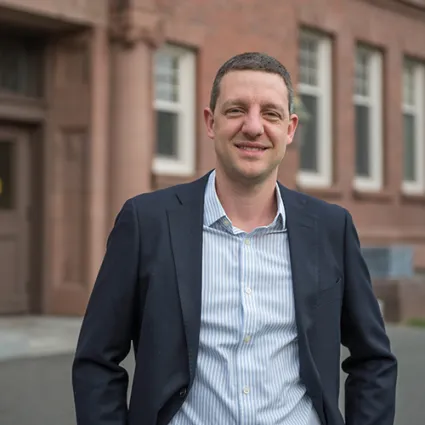
Benjamin S. Baumer is a Professor in the Statistical & Data Sciences program at Smith College , where he has been teaching since 2012. He previously served as the first full-time Statistical Analyst for the New York Mets from 2004 to 2012, pioneering data-driven approaches in baseball operations. Education: Ph.D. in Mathematics, The Graduate Center of the City University of New York (2012) M.A. in Mathematics, University of California, San Diego B.A. in Mathematics, Wesleyan University His research spans multiple domains: Sports Analytics (sabermetrics, player evaluation, game simulation) Data Science Education (curriculum development, reproducible analysis tools) Network Science (graph theory, complex systems) Statistical Computing (R programming, tidyverse workflows) Recent publications highlight: Advancements in reproducible analysis (infer package, 'Fertile' framework) Educational innovations in team-based data science and ethics integration Tools for election data (fec16 package) and collaborative learning (Slack applications) Scientific Recognition: 2016 Contemporary Baseball Analysis Award (SABR) 2019 Waller Education Award (ASA) 2019 Significant Contributor Award (ASA Section on Statistics in Sports) Accredited Professional Statistician™ since 2014 (American Statistical Association) He co-organizes the annual ASA Five College DataFest and contributes to expanding data science pathways for community college students.
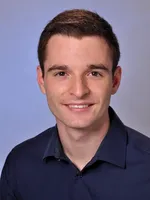
Nikolaj Tatti is a Visiting Professor at Aalto University's Department of Computer Science , affiliated with the Helsinki Institute for Information Technology (HIIT) and the Adj. Prof. Gionis Aris research group . His work focuses on algorithmic analysis of temporal networks and graph theory. Research Interests: Temporal network analysis Graph decomposition and density Segmentation algorithms Pattern discovery in time-series data Interactive data analysis frameworks Publication Trends (2018-2021): Research spans Temporal Networks (dynamic hierarchies, cascade reconstruction), Graph Theory (density, decomposition), and Data Mining (periodic patterns, event detection). Collaborative work with Aris Gionis and Polina Rozenshtein dominates his publications. Technical Collaborations : Works with multidisciplinary teams including researchers from ACM Transactions on Knowledge Discovery and IEEE conferences.
Rina Ibragimova is a Postdoctoral Researcher at Aalto University, affiliated with the DAS Group in the Chemistry and Materials domain. Her research focuses on computational materials science, particularly the development and application of machine learning interatomic potentials for modeling hydrocarbons and MXenes. Her work spans surface functionalization, defect analysis, and electronic properties of 2D materials. Recent publications highlight collaborations with leading researchers in the field, emphasizing experiment-driven atomistic modeling and theoretical studies of MXene stability and structure. Key trends in her research include combining spectroscopic data (XPS) with machine learning for precise structure inference, investigating pH-dependent functionalization in MXenes, and exploring electron beam effects on 2D materials. Her publications appear in high-impact journals like ACS Nano , Nature Communications , and Physical Review B .
Dr. Mihai Teodor Lazarescu is an Associate Professor at the Department of Electronics and Telecommunications (DET), Politecnico di Torino , where he contributes to research and teaching activities. He is also a member of the PolitoBIOMed Lab (Biomedical Engineering Lab) and the Ambient Sensing and Processing research group. Scientific Affiliation: IEEE Member (2019-present) Editorial Roles: Guest Editor for SENSORS, ELECTRONICS, and ACM Transactions on Embedded Computing Systems His research interests focus on hardware acceleration for machine learning algorithms, particularly using FPGAs for data center and embedded applications. He works on high-level synthesis optimization flows, capacitive sensor design for indoor monitoring, and low-power embedded systems . His work intersects Internet of Things , Wireless Sensor Networks , and Machine Learning with applications in human localization, environmental monitoring, and industrial automation. Recent publications demonstrate expertise in neural network optimization , DSP resource sharing , and multi-FPGA allocation . His teaching spans Applied Electronics , Digital Electronic Design , and Embedded Systems Optimization across bachelor's and master's programs in Electronic Engineering and Computer Engineering . Patents: Noise cancellation for single-plate capacitive sensors Capacitive sensor for space change detection Projects: Scientific Manager for Horizon 2020-S2RJU project (2018)
Tianxing He is an Assistant Professor at Tsinghua University's Institute for Interdisciplinary Information Sciences (IIIS), also known as the Yao Class, which he joined in September 2024. He also works part-time at Shanghai Qi Zhi Institute where he recruits for research-oriented positions and video game development roles. His academic journey includes a postdoc at the University of Washington under Yulia Tsvetkov, a PhD at MIT supervised by James Glass, and bachelor's and master's degrees at Shanghai Jiao Tong University in the ACM honored class under Prof. Kai Yu. Dr. He's research spans AI safety and AI-driven simulation with particular focus on large language models. His work examines LLM capabilities in cryptography (AICrypto benchmark), security vulnerabilities (jailbreaking techniques), multi-agent system integrity, and socially impactful applications like vaccine hesitancy simulation (VACSIM framework). He has developed visualization tools like MiniAgents-Pro using Unity for generative agent simulation and created watermarking techniques such as SemStamp and k-SemStamp for detecting machine-generated text. His publication record shows consistent contributions to top-tier conferences including ACL, EMNLP, NeurIPS, and ICLR, with recent work focusing on evaluating LLM capabilities across diverse domains. The research demonstrates sophisticated understanding of both the technical aspects of language models and their broader societal implications, particularly in security and ethical considerations. Scientific Awards: The Best Paper Award at the Efficient Natural Language and Speech Processing Workshop (NeurIPS ENLSP 2022) for "PCFG-based Natural Language Interface Improves Generalization for Controlled Text Generation" Dr. He actively mentors students and recruits research interns, PhD candidates, and post-bachelor researchers. He plans to teach an undergraduate NLP course in Fall 2025 and organizes the IIIS AI Safety Lunch, a monthly gathering in Beijing for those working on AI safety. His recruitment efforts target students interested in LLM social simulation, AI+game development, and AI safety research, emphasizing the need for strong self-motivation and research passion. He leads research initiatives including the IIIS AI Safety Lunch series and has developed multiple visualization and simulation frameworks. His work sits at the intersection of AI safety, language modeling, and practical applications, with team collaborations spanning multiple institutions including MIT, University of Washington, and Shanghai Jiao Tong University.
Ingolf Dittmann is a Full Professor of Finance at the Erasmus School of Economics , with research expertise in Corporate Governance , Executive Compensation , Behavioral Finance , and Corporate Finance . He chairs major NWO-funded research projects, including "Explaining Stock Options in Executive Compensation" (VIDI 2006-2010) and "Inferring Preferences from Managerial Compensation Data" (VICI 2013-2018). Previously, he served as a visiting scholar at the University of California, San Diego . Education: PhD in Finance, Dortmund University Habilitation (Second German Degree), Humboldt-University Berlin Research Interests: Corporate Governance Executive Compensation Behavioral Finance Risk Management Financial Econometrics Game Theory Scientific Awards: NWO VIDI Grant (2006-2010) NWO VICI Grant (2013-2018) Best Paper Awards Advising and Grants: Directed NWO-funded research projects Published in Journal of Finance , Review of Financial Studies , and Journal of Econometrics Labs/Teams: Affiliated with ERIM and the Tinbergen Institute Collaborated with researchers like Ernst Maug, Oliver Spalt, and Dan Zhang
Lukas Bruder, Dr.-Ing., is a researcher affiliated with the Mechanics & High Performance Computing Group at the Technical University of Munich (TUM). His work focuses on biomechanical modeling, uncertainty quantification, and machine learning applications in computational medicine. He has presented research at international conferences including WCCM-ECCOMAS, UNCECOMP, and ECCOMAS Congress, with a particular emphasis on abdominal aortic aneurysm (AAA) rupture risk assessment and inverse problem solutions. Research Interests : Biomechanical Modeling, Uncertainty Quantification, Inverse Problems, Surrogate Modeling, Bayesian Methods, Machine Learning Teaching : Engineering Mechanics I/II Exercises, Research Internships Publications : 10+ peer-reviewed articles on AAA biomechanics, multi-fidelity methods, and AI in vascular medicine Bruder holds a PhD in Mechanical Engineering from TUM (2022) and has served as a research associate since 2017. Prior to this, he completed a Master's degree in Mechanical Engineering at TUM and worked as a visiting researcher at Sandia National Labs. His methodological expertise includes probabilistic frameworks, data-consistent inverse problem solutions, and predictive modeling using clinical data.
Ana Perez Gonzalez is a researcher at the Department of Statistics and Operational Research, Faculty of Business Sciences and Tourism, University of Vigo. She earned her PhD from the University of Santiago de Compostela in 2003, focusing on non-parametric inference for regression models with missing responses. Her research centers on robust statistical methods for missing data, functional regression, and non-parametric estimation. Key collaborations with Wenceslao Gonzalez Manteiga, Graciela Boente, and Ana Bianco Contributions to wild bootstrap calibration, bandwidth selection, and imputation techniques Her work addresses applications in biomedical statistics, climate modeling, and spectrometric studies. Notable methodologies include goodness-of-fit tests for missing data models, principal component-based estimators, and asymptotic variance analysis.
Marija Blagojević is a Full Professor at the Department of Information Technologies within the Faculty of Technical Sciences in Čačak, University of Kragujevac, Serbia. With over fifteen years of experience in teaching and research, she has established herself as a leading academic in Information Technologies and Systems. Her work spans multiple domains including artificial intelligence, machine learning, and educational technologies, contributing significantly to both theoretical advancements and practical applications in these fields. Dr. Blagojević began her academic career at the Technical Faculty in Čačak in October 2007, initially conducting exercises for courses in Informatics Methodology and IT Applications-Practicum. She was appointed as an Assistant in June 2008 and has since advanced to her current position as Full Professor. Throughout her career, she has continuously expanded her expertise through various specialized courses including Oracle Academy courses in database design and programming, machine learning from Stanford University, and certifications in Huawei AI technologies. Her research interests primarily focus on the application of artificial intelligence techniques to solve complex problems across diverse domains. She has made significant contributions to neural network applications, developing models for predicting apricot yields, air pollution levels, and student success in programming courses. Her work in e-learning technologies demonstrates innovative approaches for adaptive course delivery using data mining techniques. She has also pioneered research at the intersection of AI and psychology, exploring concepts like 'Artificial Psychology' and 'PsAIchology'. Analysis of Dr. Blagojević's recent publications reveals a clear trajectory toward interdisciplinary applications of artificial intelligence. Her work increasingly bridges computer science with psychology, healthcare, and environmental science. A notable trend is her focus on explainable AI, ensuring complex machine learning models remain interpretable for end-users. Her research also demonstrates strong commitment to applying technology for social good, particularly in education and rural development contexts, as evidenced by projects like WINnovators Space. Scientific Awards and Recognitions Award from 'dr Milivoje Urošević' foundation for best graduating student in 2006/2007 Four awards from Technical Faculty for excellent academic results each school year Scholarship from Fund for Young Talents Scholarship from University of Kragujevac (as one of 11 best students) Scholarship from Čačak municipality Scholarship from 'Denise Hale' Foundation Award for the best second-place innovative idea from the Union of Engineers and Technicians of Serbia (February 2020) Recognition for the best female scientist with most research results at University of Kragujevac (February 2022) Dr. Blagojević has been actively involved in research supervision and grant-funded projects throughout her career. She has served as a reviewer for three scientific journals and participated in significant research initiatives including 'Development of new information and communication technologies using advanced mathematical methods' (Project III 44006) and 'Application of biomedical engineering in preclinical and clinical practice' (Project 41007). Her international collaboration includes participation in TEMPUS project 544482-TEMPUS-1-2013-1-IT-TEMPUS-JPHES and Erasmus mobility at Alexandru Ioan Cuza University of Iaşi. As a member of the Computer Science Laboratory at the Faculty of Technical Sciences, Dr. Blagojević contributes to a collaborative research environment focused on advancing information technologies. Her interdisciplinary approach connects computer science with psychology, healthcare, and environmental science, demonstrating how technology can address complex real-world challenges while enhancing educational outcomes and community development.
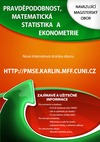
Assoc. Prof. Marek Omelka is a faculty member at the Department of Probability and Mathematical Statistics , Faculty of Mathematics and Physics, Charles University in Prague. His research focuses on copula models, dependence modeling, and nonparametric statistical methods with applications in multivariate analysis, permutation tests, and conditional copula structures. Current teaching: NMST424 Mathematical Statistics 3 and JEM019 Statistical Methods for Data Analysis Research interests: Asymptotic statistics, copula estimation, permutation methods, multivariate association, and functional data depth His recent publications analyze copula parameter estimation, covariate effects in conditional models, and multivariate tail coefficients, with implementations in R. The PMSE program he guarantees connects theoretical statistics with real-world applications in data science, finance, and medical studies.
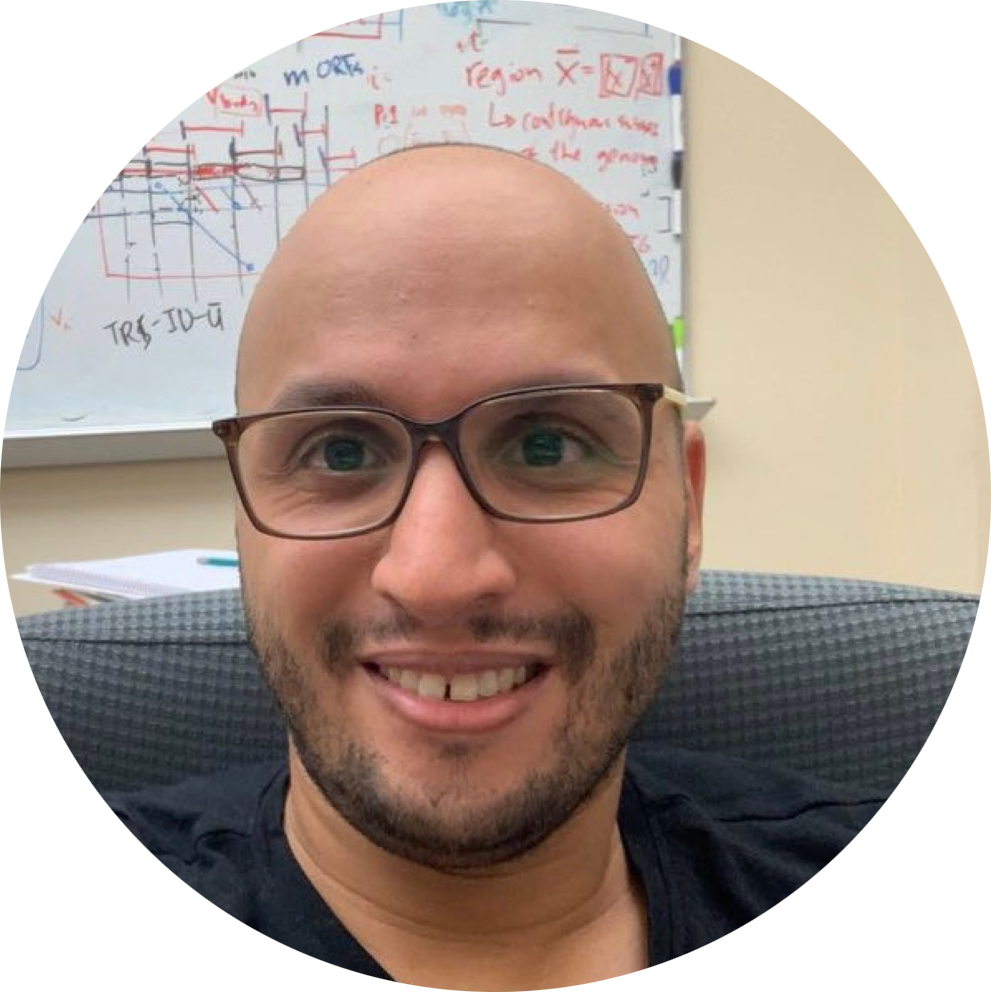
Josh Speagle is an Assistant Professor jointly appointed in the Department of Astronomy & Astrophysics and the Department of Statistical Sciences at the University of Toronto. He maintains strong affiliations with the Dunlap Institute for Astronomy & Astrophysics, which forms part of Canada's leading concentration of astronomers at the University of Toronto. Dr. Speagle received his Ph.D. from Harvard University in 2020, establishing a foundation for his interdisciplinary career at the intersection of astronomy and statistics. His educational background bridges these two critical fields for modern data-intensive astronomy. His research focuses on astrostatistics and data science with multi-wavelength, large-area surveys, with specific interests in Galactic structure and dynamics; stars and stellar populations; dust and the interstellar medium; galaxy formation and evolution; scalable inference; and Monte Carlo sampling. Dr. Speagle combines astronomy, statistics, and computer science to analyze billions of stars and galaxies from wide-field imaging and spectroscopic surveys to better understand how galaxies like the Milky Way form, behave, and evolve over time. His recent publications demonstrate a strong emphasis on developing and applying advanced statistical methods to astronomical problems, particularly simulation-based inference, Bayesian methodology, 3D dust mapping, and stellar population analysis. His work frequently leverages major astronomical datasets from Gaia, DESI Legacy Imaging Surveys, and the James Webb Space Telescope. Banting-Dunlap Postdoctoral Fellowship Dr. Speagle collaborates extensively with researchers across the University of Toronto's three campuses and internationally. His work has significant implications for understanding galactic evolution and developing statistical frameworks for astronomical data analysis. He contributes to the vibrant research environment at the Dunlap Institute, which includes over 50 faculty, postdocs, students, and staff dedicated to innovative technology, groundbreaking research, and world-class training in astronomy. As a member of the Dunlap Institute community, Dr. Speagle participates in research spanning optical, infrared and radio instrumentation; Dark Energy studies; large-scale structure; the Cosmic Microwave Background; the interstellar medium; galaxy evolution; cosmic magnetism; and time-domain science.
Dr. Trevor Vickey is a Reader in Particle Physics and Astrophysics at the School of Mathematical and Physical Sciences, University of Sheffield. He is an active researcher working with the ATLAS collaboration at CERN's Large Hadron Collider, focusing on precision measurements of the Higgs boson and searches for physics beyond the Standard Model. His research interests span multiple areas of high energy physics, including Higgs boson properties, searches for Beyond Standard Model Higgs bosons, investigations of new physics in tau lepton final states (including graviton, third-generation leptoquarks, Z' bosons, and supersymmetry), top quark properties, tau lepton identification techniques, and silicon detector technology. His work leverages the full capabilities of the ATLAS detector to probe fundamental questions in particle physics. Dr. Vickey's publication record shows consistent productivity with numerous high-impact papers in leading journals including Journal of High Energy Physics, Physics Letters B, and Physical Review D. His recent work (2023-2025) demonstrates expertise across multiple frontiers of particle physics, from precision Higgs measurements to exotic searches for new particles. The publications reveal a strong focus on analyzing data from LHC Run 2 and early Run 3, with particular emphasis on Higgs physics, top quark physics, and searches for new phenomena. As a member of the ATLAS collaboration, Dr. Vickey contributes to one of the largest scientific collaborations in history, working alongside thousands of researchers worldwide. His position at the University of Sheffield places him within a strong UK particle physics community that has made significant contributions to the ATLAS experiment since its inception.
Mohammed El-Kebir is an Associate Professor in the Department of Computer Science at the University of Illinois at Urbana-Champaign (UIUC) , with affiliate appointments in Electrical & Computer Engineering, the Institute of Genomic Biology, and the National Center for Supercomputing Applications. His research focuses on combinatorial optimization algorithms for fundamental challenges in cancer genomics and computational biology , particularly tumor phylogenetics , single-cell sequencing data analysis , and metastasis migration history modeling . PhD in Computer Science, Centrum Wiskunde & Informatica (Netherlands) and VU University Amsterdam (2015) Postdoctoral training at Brown University and Princeton University (2014-2017) El-Kebir's work addresses intra-tumor heterogeneity by developing mathematical models to reconstruct evolutionary trees of cancer mutations from mixed sequencing data. His lab has pioneered methods like SPhyR and MACHINA for phylogeny inference under data limitations, and PhyDOSE for optimizing single-cell sequencing experiments. His research bridges computational challenges with clinical implications for personalized medicine and therapy resistance prediction . Key contributions include: Theoretical foundations for cancer phylogenetic problems (hardness proofs, algorithm design) Single-cell sequencing algorithms accounting for data sparsity and errors Migration graph frameworks for metastasis analysis Interactive tools like ClonArch and CNAViz for tumor data visualization El-Kebir has received multiple accolades including the NSF CAREER Award (2021) and CRII Award (2019) . His group has produced 15+ peer-reviewed publications since 2020, with student collaborators securing prestigious fellowships like the NSF GRFP . He actively contributes to conference program committees (RECOMB, ISMB, WABI) and teaches graduate-level courses in Bioinformatics and Computational Cancer Genomics .
Carolyn L Beck is a Professor in the Department of Industrial and Enterprise Systems Engineering at the University of Illinois at Urbana-Champaign . She holds affiliations with multiple departments, including Electrical and Computer Engineering (since 2014) and Mechanical Science and Engineering (since 1999). Beck is also a Research Professor at the Coordinated Science Laboratory (since 2019) and has served as Associate Head for Undergraduate Programs since 2020. Education : Ph.D. in Electrical Engineering from California Institute of Technology M.S. in Electrical & Computer Engineering from Carnegie Mellon University B.S. in Electrical & Computer Engineering with a Physics minor from California State Polytechnic University Research Interests focus on control and optimization , epidemic processes over networks , network inference , and dynamic network data clustering . Her work spans mathematical systems theory to real-world applications in bioengineering and smart grid optimization . Article Trends show a progression from system identification and network inference to complex epidemic modeling over time-varying networks and grid optimization. Recent works emphasize finite-sample analysis , distributed subgradient methods , and multi-layer contagion dynamics , reflecting her expertise in control theory and network science . Scientific Awards : IEEE Fellow (2023) Arthur Davis Faculty Scholar Award (2016) ONR Young Investigator Award (2001-2004) NSF CAREER Award (1998-2003) ORAU Junior Faculty Award (1997) Alcoa Foundation Award (1997) Advising and Grants include mentoring former PhD students like Puneet Sharma (AIMBE Fellow) and Philip Pare' (Purdue ECE) . Her research has been funded by the NSF , ONR , and IEEE , with a $500,000 grant for wind turbine efficiency. Labs and Teams : Beck is affiliated with the Coordinated Science Laboratory and collaborates with interdisciplinary teams in bioengineering , network control , and grid optimization . She also contributes to IEEE as a Guest Editor and Associate Editor .
Dr. Corinna Elsenbroich is a Senior Lecturer in Computational Modelling in Public Health at the University of Glasgow, affiliated with the MRC/CSO Social and Public Health Sciences Unit. She co-directs the System Science In Public Health and health Economics Research (SIPHER) consortium and serves as a co-investigator for the Centre for Evaluation of Complexity Across the Nexus (CECAN). Specializes in complexity social science and agent-based modelling Focuses on combining computational, case-based, and participatory methods for policy design Active in systems-informed health impact assessment and climate policy analysis Her research explores: Ontology and epistemology of computational models Dynamic social networks in juvenile delinquency Neighbourhood effects on extortion racketeering Collective reasoning in social dilemmas Interdisciplinary method integration Health inequality mitigation through systems approaches Recent work includes modeling housing market shocks (2024), systems science applications to climate policy (2025), and educational mental health interventions (2024). She leads the HealthMod cluster (2024-2028) and contributes to UK-wide systems science initiatives. Scientific recognition includes: NCRM Placement Fellowship (2017) Editorial board member for Journal of Artificial Societies and Social Simulation (2015-ongoing) Management Committee, European Social Simulation Association (2020-2022) Teaching includes complexity social science, agent-based modelling, and interdisciplinary research methods. She has contributed to policy toolkits like CECAN's Evaluation and Policy Practice Notes.