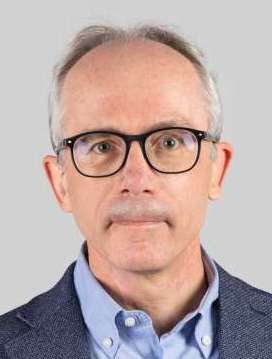
Prof. Christian Holz is an Associate Professor at the Department of Computer Science and Deputy Head of the Institute of Intelligent Interactive Systems at ETH Zürich. His work focuses on advancing human-computer interaction through innovations in wearable technologies, mixed reality systems, and sensor-driven applications. Key research areas include motion capture, physiological signal processing, and adaptive user interfaces. Holz leads the SIPLab (siplab.ethz.ch), producing influential work at the intersection of computer science and biomedical engineering. His research explores cutting-edge topics such as egocentric vision systems, wearable health monitoring devices, and VR/AR applications. Recent studies investigate cybersickness detection via EEG, heart rate estimation from eye-tracking cameras, and scalable motion capture using inertial/UWB sensors. Holz's work emphasizes practical applications in healthcare, education, and human-centered computing. Publications reflect a strong focus on interdisciplinary solutions, combining machine learning with sensor data analysis. Notable contributions include the EgoSim multi-view simulator, WildPPG biomedical dataset, and MiBOT cardiovascular modulation device. His research bridges theoretical advancements with real-world usability in domains like emergency response training, chronic disease monitoring, and immersive education.
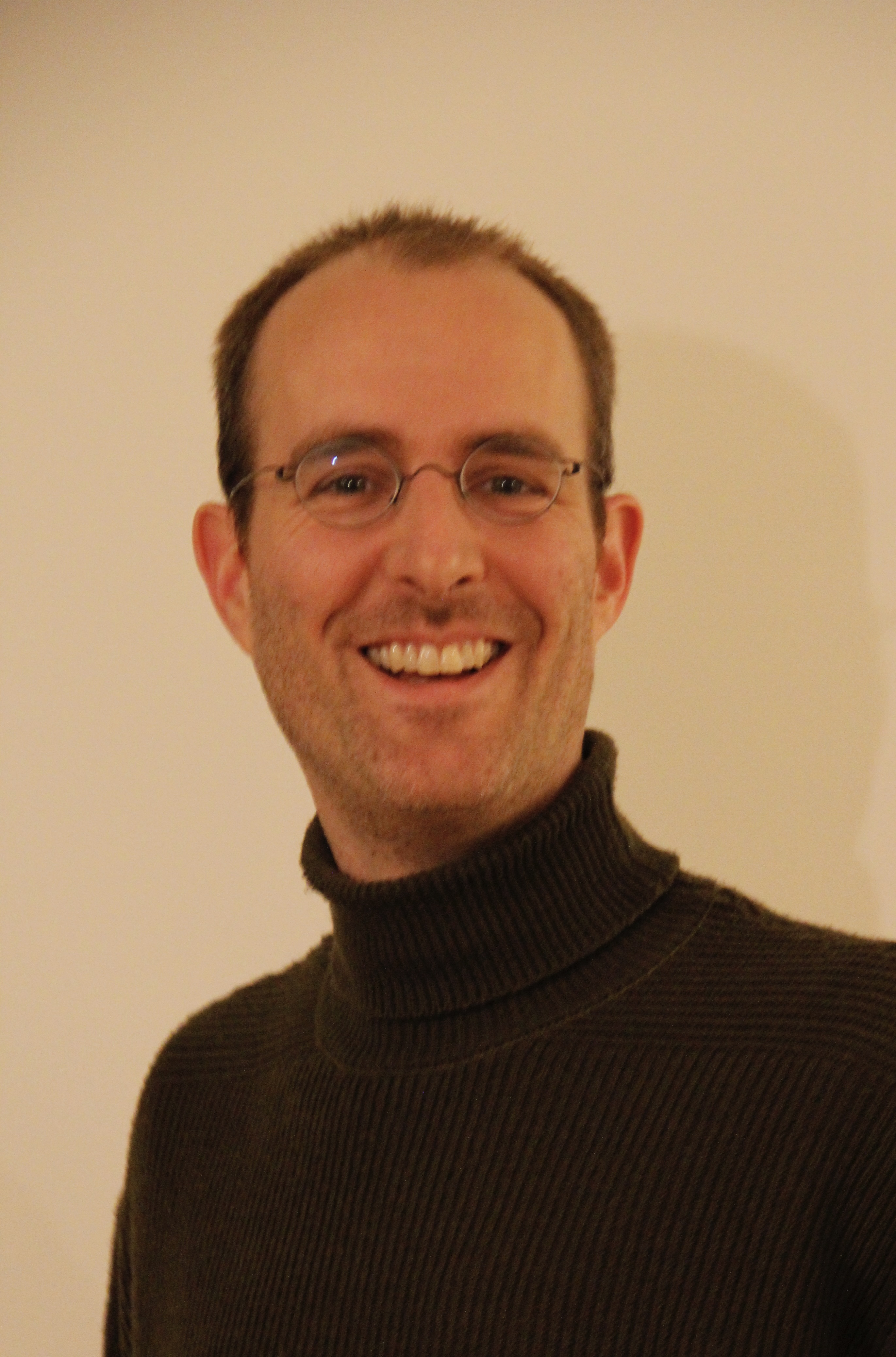
April Yi Wang is a tenure-track Assistant Professor in the Department of Computer Science at ETH Zürich, where she directs the Programming, Education, and Computer-Human Interaction Lab (PEACH Lab). She is a core faculty member at the Institute for Intelligent Interactive Systems and associated with the ETH AI Center. Wang is also an active member of ETH HCI and Swiss CHI communities, contributing significantly to human-computer interaction and educational technology research. Dr. Wang's educational background includes: Ph.D. in Information Science from University of Michigan (2023), advised by Steve Oney and Christopher Brooks M.Sc. in Computer Science from Simon Fraser University (2018), advised by Parmit Chilana B.Eng in Computer Science from Zhejiang University (2016) Dr. Wang's research focuses on human-centered approaches to programming and data science. Her work reimagines programming as a form of literature that communicates with both machines and people, exploring creative representations like text, shapes, animations, and everyday objects. She investigates how to make programming more natural and intuitive through literate programming environments, with applications in professional and educational contexts. Her research spans human-computer interaction, educational technology, and AI-assisted programming tools. Analysis of Dr. Wang's recent publications reveals a strong focus on AI-enhanced educational tools, particularly for programming and data literacy. Her work increasingly integrates large language models to scaffold learning while maintaining user agency. There's a clear trajectory toward developing situated learning approaches that connect abstract concepts to real-world contexts through augmented reality and tangible interfaces. Her research bridges HCI, education, and AI to create more accessible and engaging technical learning experiences. Dr. Wang has received numerous prestigious awards including: 2023 Gary M. Olson Award and Honourable Mention Award at ACM CHI 2022 Rising Stars in EECS and Heidelberg Laureate Forum Young Researcher 2020 Best Short Paper Award at IEEE VL/HCC and Honourable Mention at ACM CHI 2019 Best Paper Award at ACM CSCW Dr. Wang actively mentors students through thesis projects at ETH Zürich, supervising numerous bachelor's and master's students on topics ranging from AI-assisted programming to data literacy tools. Her lab, PEACH Lab, has secured funding including the recent innovedum funding for the Coducate project. She serves on program committees for major conferences including CHI and UIST, and regularly reviews for top HCI and education journals. The PEACH Lab, directed by Dr. Wang, focuses on creating expressive, intelligent, and human-centered systems that make technical topics more accessible. The lab explores textual, visual, and embodied representations for programming, with emphasis on enhancing communication, collaboration, and learning. Current research directions include balancing automation with user agency, supporting diverse learning needs, and developing tools for interdisciplinary technical communication.
Prof. Jean-Philippe Thiran is a Full Professor at École Polytechnique Fédérale de Lausanne (EPFL), where he serves as Director of the Signal Processing Laboratory (LTS5) and Director of the Institute of Electrical and Micro Engineering. He also maintains a part-time Associate Professor position with the Department of Radiology of the University Hospital Center (CHUV) and University of Lausanne (UNIL). Born in Namur, Belgium in 1970, he received his Electrical Engineering degree and PhD from the Université catholique de Louvain (UCL), Belgium, in 1993 and 1997 respectively. He joined EPFL in 1998 and has established himself as a leading researcher in computational imaging. His research focuses on computational imaging , with significant contributions to medical image analysis (particularly diffusion MRI, ultrasound imaging, and digital pathology) and computer vision . His recent work integrates advanced modeling, simulation, and machine learning techniques to extract microscopic tissue information from macroscopic MRI signals. This approach combines hyper-realistic synthetic tissue models, advanced Monte-Carlo simulations, and ML-based estimation techniques for brain microstructure analysis with potential applications to other tissues. Senior Member of IEEE Fellow of the European Association for Signal Processing (EURASIP) Prof. Thiran has authored or co-authored 1 book, 9 book chapters, 250 journal papers and over 270 peer-reviewed conference papers, and holds 12 international patents. He previously served as Co-Editor-in-Chief of the Signal Processing journal (2001-2005) and associate editor of IEEE Transactions on Image Processing. He has chaired major conferences including EUSIPCO 2008 and IEEE ICIP 2015. His laboratory at EPFL brings together interdisciplinary researchers to develop innovative imaging techniques that bridge macroscopic measurements and microscopic tissue properties, with significant potential for medical diagnostics and treatment planning applications.
Verena Zimmermann serves as Assistant Professor (Tenure Track) for Security, Privacy and Society at ETH Zurich within the Department of Humanities, Social and Political Sciences. She leads the Security, Privacy and Society research group, focusing on human-centered approaches to safety, IT security, and privacy challenges in emerging technologies. Her academic foundation includes a PhD in Usable Security from TU Darmstadt, where her dissertation From the Quest to Replace Passwords towards Supporting Secure and Usable Password Creation earned dual awards from the German Association for Data Protection and Data Security (GDD) and the Ernst-Ludwigs-Hochschulgesellschaft. Zimmermann's research pioneers the shift from viewing humans as security vulnerabilities to recognizing them as integral solutions. Her work spans password security, phishing interventions, smart home privacy, and cybersecurity education, consistently applying human factors principles to design systems that align with natural user behavior. Current projects explore emotional dimensions of security engagement, quantum governance frameworks, and LLM-related privacy concerns through interdisciplinary lenses combining computer science, psychology, and safety science. Recent publications reveal strong thematic trends toward understanding user motivations in security behavior, developing personalized training through augmented reality and adaptive systems, and translating safety science principles to cybersecurity incident management. Her work increasingly addresses societal implications of emerging technologies like quantum computing and generative AI. Her distinguished recognitions include: GDD Dissertation Award for Usable Security research Ernst-Ludwigs-Hochschulgesellschaft Dissertation Award IANUS Award (2nd place) for Moving from a 'Human-as-Problem' to a 'Human-as-Solution' Cybersecurity Mindset Zimmermann actively mentors through ETH's Human-Centered Security and Privacy Lab while collaborating internationally with institutions including ATHENE (German National Center for Applied Cybersecurity), Abertay University's Cybersecurity Division, and the Safety Science Innovation Lab. Her research receives support from Swiss and European funding bodies focused on privacy-preserving technologies and organizational security behavior. At ETH Zurich, she directs the Security, Privacy and Society group which employs design thinking, LEGO Serious Play, and mixed-methods research to tackle real-world security challenges. The team partners with industry stakeholders to develop practical solutions for phishing resistance, smart home privacy, and cybersecurity education while maintaining strong ties to the Research Training Group 2050 Privacy and Trust for Mobile Users.
Babak Falsafi is a Full Professor at the School of Computer and Communication Sciences (IC) at EPFL, leading the Parallel Systems Architecture Laboratory (PARSA). He is a renowned expert in computer architecture, datacenter systems, and cloud-native server design. His research focuses on post-Moore era computing, emphasizing heterogeneous architectures, energy efficiency, and scalable IT infrastructure. Falsafi is the founder of EcoCloud, an EC-sponsored industrial-academic consortium investigating sustainable information technology. He holds ACM and IEEE fellowships, a Sloan Research Fellowship, and has contributed to major projects like Optimus Prime (data transformation acceleration), AstriFlash (flash-based online service systems), and Midgard (virtual memory re-design). His work spans hardware-software co-design, memory systems, and security. Falsafi advises numerous PhD students and collaborates with industry partners such as Google and Cavium. Key achievements include pioneering scalable multiprocessor architectures, snoop filters in IBM BlueGene, and spatial memory streaming in ARM cores. His lab develops open-source tools like QFlex for server simulation. He frequently presents at top conferences (HPCA, ISCA, MICRO) and chairs workshops on post-Moore infrastructure. Teaching roles include leading courses in computer architecture and parallel systems across multiple EPFL departments (SIN, EDIC, SSC, SMA). His work addresses datacenter challenges like the 'data tax' and mitigating latency through specialized accelerators.
Elliott Ash is an Associate Professor of Law, Economics, and Data Science at ETH Zurich's Center for Law & Economics. He holds a Ph.D. in Economics and J.D. from Columbia University, a B.A. in Economics, Government, and Philosophy from the University of Texas at Austin, and an LL.M. in International Criminal Law from the University of Amsterdam. His research focuses on empirical legal studies using econometrics, NLP, and ML, examining topics like judicial behavior, legislative impact, and AI-driven governance. He has been funded by the ERC, Swiss NSF, and others. Research Interests: Elliott explores automation of legal decisions, text-as-data analysis in law, and the intersection of AI with legal systems. He develops tools like BallotBot and LePaRD to enhance legal transparency and public understanding. His work bridges law, economics, and computer science, with publications in top journals like the American Economic Journal and Review of Economics and Statistics . Teaching: Courses include Building a Robot Judge , Natural Language Processing for Law , and Big Data for Public Policy . He co-organizes the Zurich Workshop in AI+Economics and Monash-Warwick-Zurich Text-as-Data Workshops. Awards: European Research Council Starting Grant, Swiss National Science Foundation Grant, and multiple grants from U.S. and Swiss institutions. His work has been featured in NPR , VoxEU , and Georgetown Law Journal . Labs/Teams: Leads the Swiss AI Initiative's Human-AI Alignment team, collaborates with the CEPR on Political Economy research, and serves as an Economic Journal Associate Editor.
Lorin Schöni is a PhD candidate at ETH Zürich, actively contributing to the Security, Privacy and Society research group since October 2022. Concurrently, he serves as a Lecturer at the Department of Humanities, Social and Political Sciences, where he teaches the course Focus on the Human: Human-Centered Security and Privacy Lab (Autumn Semester 2025, Unit 851-0391-00L). His research focuses on human-centered approaches to cybersecurity , particularly through three key domains: Human-Computer Interaction - Investigating design decisions that influence user behavior in digital security contexts Extended Reality Applications - Developing immersive training systems for phishing prevention Usability Engineering - Creating intuitive security interfaces with explainable AI components Recent publications highlight his work at the intersection of autonomous motivation theory and personalized cybersecurity training , with notable presentations at top venues including CHI 2025 and SOUPS 2024. His research aims to transform security from a restrictive framework into a collaborative partnership between users and digital systems, as emphasized in his award-winning work on human-centered cybersecurity.
Matthieu Cord is a Professor at Sorbonne University and Scientific Director of valeo.ai, leading research in computer vision, deep learning, and computational cooking. He heads the MLIA team at ISIR Lab, focusing on multimodal models, transformers, and efficient architectures. Research areas include computer vision, large language models with vision, and AI-driven food analytics. Key projects: VISA-DEEP AI chair, Foundation VaViM models, and SmolVLA collaboration with Hugging Face. His recent work examines scalable multimodal models , trajectory prediction , and diffusion-based segmentation , with studies on in-context learning and biased shortcut learning in visual question answering. Articles highlight DeiT variants , fishr for OoD generalization , and STEEX for counterfactual explanations . Scientific awards include IUF Honorary Membership (2009), BMVC 2017 Best Paper, and ICIP 2018 Best Paper. As an advisor, he supervised PhD theses on topics like GAN editing , semantic segmentation , and multimodal retrieval . Current roles involve mentoring the 'Research Band' at MLIA and leading EU-funded initiatives like SCAPE. His work bridges theoretical AI exploration with practical applications in autonomous driving and food technology.
Paolo Tonella is a Full Professor and Director of the Software Institute at the Faculty of Informatics, Università della Svizzera italiana (USI) in Lugano, Switzerland. He also holds an Honorary Professorship at University College London (UK) and previously led the Software Engineering group at Fondazione Bruno Kessler (Italy). His research focuses on software testing, analysis, and AI-driven systems. He has authored over 200 peer-reviewed papers and 100 journal articles, with an H-index of 72. He teaches courses in Data and Software Engineering and Informatics, including Information Modeling, Probability & Statistics, and Knowledge Search. Key contributions include foundational work on web application testing (ICSE MIP award), evolutionary testing techniques (eToc/EvoSuite tools), and reverse engineering of object-oriented systems. He led the ERC-funded PRECRIME project on anticipatory testing. His recent work addresses AI dependability, autonomous systems testing, and deep learning fault analysis. Scientific awards include the ICSE MIP Award (2001) and ERC Advanced Grant (2018). He has served on editorial boards for major journals like IEEE Transactions on Software Engineering and ACM TOSEM. Current roles include leadership in the Software Institute and organizing the SIESTA summer school.
Thomas Demeester is an Associate Professor at the Internet Technology and Data Science Lab (IDLab), Ghent University - imec, Belgium. Appointed as Assistant Professor in 2019, he leads an AI research group focused on health applications and drug design, co-directing the Text-to-Knowledge research cluster with Prof. Chris Develder. His educational background includes: M.Sc. in Electrical Engineering from Ghent University (2005), completed with thesis work at ETH Zurich Ph.D. in Computational Electromagnetics from Ghent University (2009), funded by Research Foundation - Flanders (FWO) Demeester's research spans artificial intelligence with emphasis on deep learning and neuro-symbolic methods. Current tracks include energy-based models (Hopfield Networks, Deep Equilibrium Models), diffusion models for drug design, and clinical reasoning systems. His work bridges NLP, healthcare informatics, and generative AI with strong industry partnerships. Recent publications (2023-2025) reveal strategic expansion from NLP into health-centric AI: BioLORD biomedical encoders (2023), synthetic medical data frameworks (UAI/NeurIPS 2024), and novel diffusion model guidance (ICLR 2025). This evolution demonstrates convergence of generative modeling, clinical data analysis, and protein design. He actively mentors 24 PhD students across diverse AI domains: Current Research: Conversational agents, emotion analysis, clinical reasoning, antibody design, and diffusion model optimization Recent Graduates: Interpretable language models, biomedical semantics, task-oriented dialogue, and social media knowledge extraction Research is supported by imec funding and collaborations with Flemish biotech companies, building on his post-doctoral experience securing media-sector projects. Within IDLab, he co-leads the Text-to-Knowledge cluster driving NLP innovations for healthcare, legal, and economic applications.
Professor Stefan Goedecker is a distinguished faculty member in the Department of Physics at the University of Basel, Faculty of Science. He holds the position of Professor of Computational Physics and leads an active research group focused on developing advanced computational methods for materials science and quantum physics. Dr. Goedecker received his physics education at the Technical University Munich and the College of William and Mary, followed by a Ph.D. from EPFL Lausanne. His postdoctoral training included positions at Cornell University and the Max-Planck Institute in Stuttgart. In 2003, he was appointed Professor of Computational Physics at the University of Basel, where he has established himself as a leading researcher in computational methods development. His research interests center on computational physics with emphasis on electronic structure calculations, atomistic simulations, and the development of novel algorithms for materials science applications. His work has strong interdisciplinary connections spanning physics, mathematics, material sciences, chemistry, and computer science. Current research directions include machine learning applications in catalysis, fourth-generation neural network potentials for molecular chemistry, and methods for quantifying material synthesizability. Analysis of his recent publications reveals a strong focus on advancing computational methods for electronic structure calculations, with particular emphasis on machine learning potentials, molecular dynamics optimization, and accurate modeling of material properties. His work bridges theoretical physics with practical applications in materials science and nanotechnology, with increasing integration of artificial intelligence techniques into traditional computational physics frameworks. Machine learning for Catalysis (Ongoing) Fourth-Generation Neural Network Potentials for Molecular Chemistry (Completed) Towards Quantifying the Synthesizability of Materials (Completed) Professor Goedecker's research group operates within the Department of Physics at the University of Basel, which is part of the NCCR SPIN initiative focused on silicon-based quantum computing development. The department hosts over 20 research groups with more than 180 teaching staff members, creating a vibrant research environment for computational physics and quantum technologies.
Dr. Xiao Zhou is a Research Fellow affiliated with the Professorship for Consumer Behavior at ETH Zurich. His current position began in 2021. Prior to this, he conducted postdoctoral research at the University of Reading (2020-2021) and completed his PhD in Consumer Behavior at the University of Copenhagen (2015-2019). His research focuses on advancing consumer behavior studies through interdisciplinary approaches, combining insights from marketing, behavioral economics, and human motion analysis. Zhou’s work emphasizes understanding decision-making processes and their applications in real-world contexts. Education history includes a PhD in Consumer Behavior from the University of Copenhagen (2015-2019), followed by postdoctoral training at the University of Reading (2020-2021). His academic trajectory reflects a strong foundation in both theoretical and applied research. His research interests span consumer behavior, marketing research methodologies, and behavioral economics. Notably, his recent publications explore cutting-edge technologies in motion capture and computer vision, including real-time human motion tracking and generative models for 3D reconstruction. This reflects a unique intersection of consumer behavior studies with technical advancements in computational methods. Zhou’s research outputs demonstrate expertise in areas such as inertial sensor-based motion analysis, physics-aware tracking systems, and hierarchical modeling techniques. His contributions highlight innovative solutions for challenges in human pose estimation and 3D reconstruction. He is currently based at ETH Zurich’s Department of Consumer Behavior, contributing to both academic research and potential industrial applications of his work.
Siyu Tang is an Assistant Professor in the Department of Computer Science at ETH Zürich, where she leads the Computer Vision and Learning Group (VLG) at the Institute of Visual Computing. Her research focuses on computational models for human perception and digitalization through computer vision and machine learning. Her educational background includes: PhD in Computer Science, Max Planck Institute for Informatics (2017), supervised by Prof. Bernt Schiele Master of Science in Media Informatics, RWTH Aachen University Bachelor of Science in Computer Science, Zhejiang University, China Dr. Tang specializes in human-centric computer vision, developing statistical models for motion analysis, pose estimation, and digital human creation. Her work integrates machine learning with optimization techniques to enable machines to interpret human activities from visual data, with applications spanning virtual reality, healthcare, and human-computer interaction. Key research thrusts include generative models for content creation, egocentric vision, and human motion synthesis. Her recent publications (2024-2025) demonstrate intense focus on 3D human modeling and neural rendering, with Gaussian splatting emerging as a dominant technique for efficient avatar creation and scene reconstruction. Significant themes include text-driven motion synthesis using diffusion models, relightable avatars, surgical training applications, and egocentric multimodal pretraining. This work bridges computer vision, graphics, and machine learning to advance human digitalization. No scientific awards were mentioned in the provided text. Dr. Tang leads the VLG research group at ETH Zürich, mentoring PhD and Master's students in human-centric AI. She previously secured an early career research grant from the Max Planck Institute for Intelligent Systems to establish her independent research program. Her group actively pursues funding for projects in human motion analysis, 3D reconstruction, and generative modeling, with strong industry and clinical collaborations. The Computer Vision and Learning Group (VLG) operates within ETH's Institute of Visual Computing, maintaining dedicated facilities for motion capture, 3D scanning, and high-performance computing. The team collaborates internationally with institutions like the Max Planck Society and focuses on scalable solutions for real-world human digitalization challenges, including surgical training systems and immersive virtual environments.
Jian Peng is an Assistant Professor in the Department of Computer Science at the University of Illinois at Urbana-Champaign. His research focuses on computational biology, machine learning, and their applications to protein structure prediction, drug design, and molecular modeling. He has contributed to advancements in antibody engineering, protein-ligand docking, and generative models for biological systems. Key research areas include: Machine Learning for Molecular Modeling Protein Structure Prediction Antibody and Peptide Design Genomics and Single-Cell Analysis Structure-Based Drug Discovery His work emphasizes integrating deep learning techniques with biological datasets to address challenges in precision medicine, drug development, and systems biology. Notable achievements include developing the FastFold system to accelerate AlphaFold training and pioneering flow-based methods for antibody design. Awards include the Overton Prize (2020), recognizing contributions to computational biology. His research has been published in top journals and conferences, spanning topics from protein mutation prediction to geodesic-based immune complex modeling.
Prof. Dr. Soeren Lienkamp is an Assistant Professor at the Institute of Anatomy , Faculty of Medicine , University of Zurich . His work bridges digital education and genetic research , focusing on enhancing medical teaching through innovative formats. Research Interests : Genetics, developmental biology, kidney disease modeling, CRISPR applications, digital medical education, and advanced microscopy. Methodologies : Combines Xenopus tropicalis models, deep learning , and bioengineering to study genetic kidney disorders and improve diagnostic tools. Publication Trends : His recent articles highlight predictable genome editing , 3D imaging technologies , and mechanistic insights into kidney and eye development. Earlier works focus on ciliary function , Wnt signaling , and metabolic stress in renal cells.