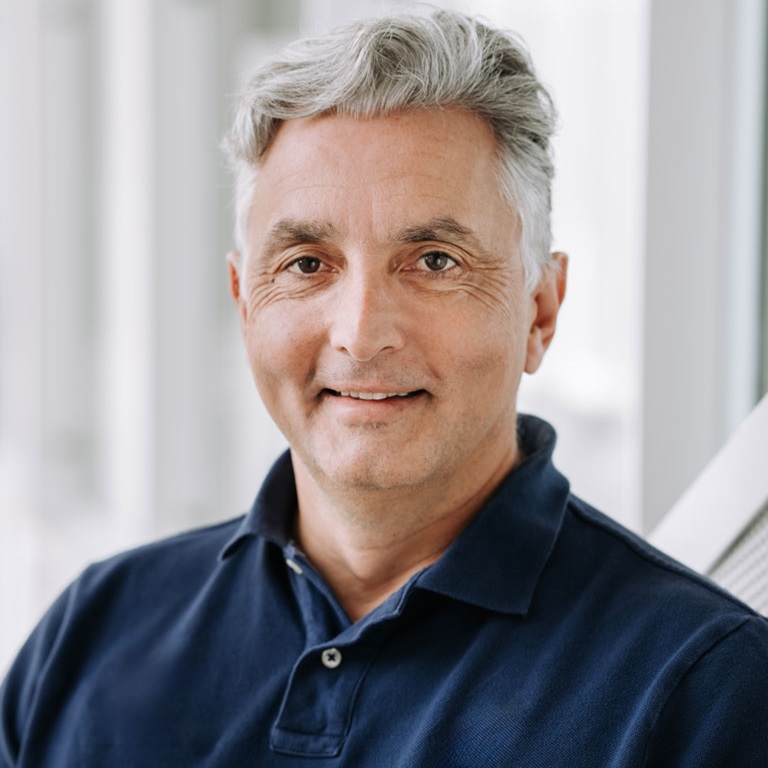
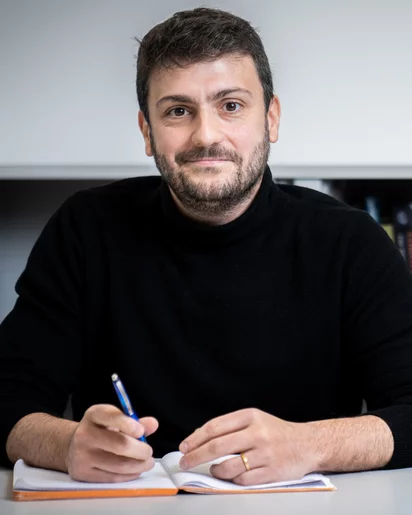
David Wentzlaff is a Professor of Electrical and Computer Engineering at Princeton University, with associated faculty roles in Computer Science and the High Meadows Environmental Institute (HMEI). He leads research in computing architecture, green computing, and sustainable system design. As Director of Undergraduate Studies, he shapes educational programs in his field. Education: Ph.D., Electrical Engineering, MIT (2012) M.S., Electrical Engineering and Computer Science, MIT (2002) B.S., Electrical Engineering, University of Illinois at Urbana-Champaign (2000) Research Focus: Future Computing Systems: Designing manycore architectures, cloud computing infrastructure, and chiplet-based systems for exascale computing. Sustainability: Developing energy-efficient hardware, recyclable computing systems, and eco-friendly decommissioning strategies. Hardware-Software Co-Design: Exploring FPGA integration, in-memory computing, and parallel processing frameworks. Advising & Grants: Advises 8 current graduate students, focusing on topics like chiplet design, neural acceleration, and sustainable computing. Recipient of NSF grants for projects like OpenPiton (open-source manycore research platform) and CAREER awards for energy-efficient architectures. Labs & Collaborations: Leads the Wentzlaff Research Group at Princeton. Develops open-source frameworks like PRGA (FPGA prototyping) and OpenPiton (manycore processor).
Kevin Moberly is an Associate Professor in the Department of English at Old Dominion University (ODU), affiliated with the College of Arts & Letters. He holds a Ph.D. in English from the University of Louisiana at Lafayette (2005), an M.A. in Creative Writing (2000), and a B.A. in English from Berry College (1995). His research focuses on medievalism, digital humanities, and computer game studies, with notable grants including a 2011 College of Arts & Letters Summer Research Fellowship ($6,000) and a 2015 Center for Learning and Teaching Faculty Innovator Grant ($3,000). Moberly’s work bridges medieval scholarship and modern digital media, addressing themes like fan culture, corporate revisionism, and virtual economies. His publications span journals such as Studies in Medievalism , Computers and Composition , and Eludamos , alongside book chapters on game studies and technical communication. He has received numerous teaching awards, including the 2010 Shining Star Teaching Award and recognition for co-organizing the 2007 Computers and Writing Online Conference. His research interests include the intersection of medieval narratives with contemporary cultural phenomena, digital pedagogies, and the rhetoric of free speech in online spaces. Moberly has contributed to initiatives like the Examining the Evolution of Gaming anthology and co-authored studies on modding in technical classrooms. His work often critiques societal structures through interdisciplinary lenses, blending literary analysis with digital media theory.
Thierry Warin is a Full Professor of Data Science for International Business at HEC Montréal, directing the Department of International Business. He holds the Professorship in Data Science for International Business and is a Principal Investigator at CIRANO, leading the World Economy theme. His roles include affiliations with Harvard Business School’s Microeconomics of Competitiveness program and the International Trade and Finance Association presidency (2020-2022). Education: PhD from ESSEC Business School (France, 2000). Professional development includes the Harvard Business Analytics Program (2018-2020) and GIS training at Harvard. Research Interests: Data science applications in global economic transformations, including network theory, natural language processing, and computational methods. Focus areas: algorithmic collusion, platform economies, and metadata-driven analyses. He develops open-source tools like the statcanR package and advocates for reproducible research. Articles Trends: Recent work explores AI regulation, algorithmic competition, climate transition plans, and central bank speech analysis. Methodologies span structural topic modeling, social media analytics, and entropy-based frameworks. Awards: Honored with the Highly Commended Paper Award (2017-2018) and Emerald Literati Award (2018) for reverse innovation research. Recognized for contributions to computational social science and regulatory frameworks. Advising & Grants: Supervised 16 master’s projects since 2019, focusing on data science applications in global business challenges. Active in interdisciplinary initiatives like the St. Lawrence–Great Lakes corridor data hub. Labs & Philanthropy: Founded quantum simulations and leads Ed’Haîti , an NGO addressing education in Haiti. Collaborates on Science des données au féminin en Afrique , empowering 200 African women with data science skills.
Dr. Pascale Biron is a Professor in the Department of Geography, Planning and Environment at Concordia University, Montreal. Her research focuses on river dynamics, stream restoration, flood modeling, and climate change impacts. She has been at Concordia since 1998 and holds professional affiliations with key organizations like the Canadian Geomorphology Research Group and the American Geophysical Union. Education: PhD from Université de Montréal and Leeds University (fluvial geomorphology) Research Interests Her work integrates fluvial geomorphology, computational fluid dynamics, and societal aspects of river management. Key themes include: River restoration for fish habitat Floodplain modeling using LiDAR Climate adaptation strategies Socio-hydrological dimensions of restoration Hydrodynamic processes at river confluences Recent Research Trends Recent publications emphasize global salmonid habitat analysis, machine learning for fluvial hazard detection, and the socio-environmental impacts of urban flooding. Her work bridges technical hydrology with policy-relevant solutions for sustainable water management. Grants & Advising Supervises over 15 graduate students (PhD/MSc) in topics ranging from flood modeling to bioengineering. Active in collaborative projects like the 'Freedom Space for Rivers' initiative and large-scale floodplain mapping. Labs & Teams Member of GRIL (Limnology Research Group) and RIISQ (Quebec Flood Network), contributing to interdisciplinary water security research.
Mark D. Gross is a Professor of Computer Science and Director of the ATLAS Institute at the University of Colorado Boulder. His research focuses on modular robotics, tangible interaction design, digital fabrication, and computational design. He co-founded Modular Robotics and Blank Slate Systems, leveraging his expertise in educational technology and maker culture. Education: PhD in Design Theory & Methods from MIT. Academic history includes roles at Carnegie Mellon University and University of Washington Seattle. His work spans architecture, robotics, and human-computer interaction. Research Interests: Modular robotics and computationally enhanced construction kits Tangible interaction and e-textiles Shape-changing interfaces and swarm robotics Sketch-based interaction and digital fabrication Publications highlight advancements in collaborative AR systems, shape-changing interfaces (e.g., LiftTiles, ShapeBots), and accessible technologies like FluxMarker. His work bridges computational tools and creative design processes. Advising: Guided students such as Ryo Suzuki (PhD '20). Entrepreneurial ventures include companies spun off from research. Labs/Teams: Leads projects at the ATLAS Institute, emphasizing interdisciplinary collaboration in robotics, design, and human-centered computing.
Dr. Daphné Chopard is a Researcher affiliated with the Professorship for Medical Data Science at ETH Zürich. Her work focuses on advancing medical data science through machine learning, clinical informatics, and multimodal learning applications in healthcare. She specializes in areas such as time-series analysis in critical care, generative models for medical data, and natural language processing for clinical texts. Her research emphasizes improving healthcare outcomes through innovative data-driven approaches, including projects like the SwissPedHealth pediatric data network and foundational work on multimodal variational autoencoders. Dr. Chopard’s contributions span clinical decision support systems, adverse event detection in trials, and acronym disambiguation in medical narratives. Her recent projects include studies on ventilation protocols in pediatric critical care and weakly-supervised learning applied to medical imaging datasets like MIMIC-CXR. She collaborates on initiatives to enhance representation learning in multimodal healthcare contexts, reflecting her commitment to bridging AI advancements with practical clinical applications.
Goran Avlijaš is a researcher affiliated with Singidunum University in Belgrade, specializing in project management, operations research, and retail logistics. He holds a Doctorate in Engineering Management (2011–2016) from Singidunum University, a Master’s in Project Management (2008–2009) from the Faculty of Organizational Sciences, and a Bachelor’s in Management (2003–2007) from the same institution. His research focuses on optimizing project schedules through methods like Earned Value Management and Monte Carlo Simulation, analyzing supply chain efficiency, and exploring gig economy impacts on well-being in Balkan countries. Key research areas include: Project Management Innovation: Developing risk analysis tools (e.g., Event Chain Methodology) and applying earned value metrics to construction projects. Retail Operations: Investigating automated replenishment systems and inventory management challenges in retail environments. Social-Economic Dynamics: Studying gig economy effects on workforce well-being and regulatory impacts on entrepreneurship. His work spans 30+ peer-reviewed articles and conference papers, including contributions to Management , Sustainability , and Frontiers in Psychology . He co-authored textbooks like Project Management and Entrepreneurship for Singidunum University’s curriculum. Active in academic events such as Sinteza and FINIZ conferences, he bridges theoretical research with practical industry applications.
Zelalem Negeri is an Assistant Professor in the Department of Statistics and Actuarial Science at the University of Waterloo, affiliated with the Faculty of Mathematics. His work focuses on statistical methods for diagnostic test accuracy, depression screening tools, and meta-analytic techniques. He collaborates with groups like DEPRESSD (Depression Screening Data) to improve mental health assessment methodologies. Research interests include robust meta-analysis models for accommodating outliers, optimal cutoff determination for screening tools (e.g., PHQ-9, EPDS), and evaluating diagnostic accuracy across diverse populations. His studies often use individual participant data (IPD) to enhance precision in estimating depression prevalence and screening tool performance. Recent work emphasizes validating shortened screening tools (e.g., EPDS-Dep-5) and comparing depression assessment methods across modes (e.g., self-administered vs. clinician-administered). He also investigates pandemic-related mental health impacts in populations with systemic sclerosis and explores statistical methods to mitigate biases in data-driven cutoff selection. No scientific awards are explicitly mentioned. His contributions span collaborations with interdisciplinary teams, including the Scleroderma Patient-centered Intervention Network (SPIN), and involve developing robust statistical frameworks to address variability in diagnostic studies.
Asst. Prof. Dr. Emre Doğan serves as the Head of the Radio, Television and Cinema Department at Istanbul Gelişim University's Faculty of Fine Arts. His research focuses on film theory, postmodernism, and the intersection of cinema with scientific and philosophical concepts. He has published extensively on directors like Christopher Nolan, David Fincher, and Terrence Malick, analyzing themes of modernity, postmodernity, and narrative innovation. Academic Roles: Department Head, Radio, Television and Cinema Research Themes: Postmodern cinema, science fiction narratives, ideological film criticism, and temporal storytelling His recent work includes analyzing Nolan’s Tenet through modernity/postmodernity duality and exploring David Fincher’s use of simulation theory. He employs interdisciplinary approaches, combining sociology, philosophy, and film history in his analyses. Publications span topics like hybrid narratives in cinema history, comparative studies of political films, and the philosophical underpinnings of science fiction. His contributions reflect a deep engagement with both classical and contemporary cinematic practices.
Paul D. Miller, known professionally as DJ Spooky, That Subliminal Kid, is a Professor of Music and Mediated Art at The European Graduate School (EGS). Based in New York City, he is an experimental electronic and hip-hop musician, conceptual artist, and writer whose work spans music production, film, multimedia installations, and critical theory. He has released over a dozen albums pioneering 'illbient' and trip hop genres, authored influential books including Rhythm Science and Sound Unbound , and exhibited internationally at venues like the Venice Biennale and Andy Warhol Museum. Education: Bowdoin College: Studied philosophy and French literature; thesis on Richard Wagner's Gesamtkunstwerk as precursor to new media. Research Interests: Miller's work centers on remix culture as a postmodern methodology, exploring intersections of sound, image, and technology. His theoretical framework positions the DJ as a 'post-subjective auteur' who creates meaning through layered connections across time, culture, and media. Key projects include Rebirth of a Nation (reworking D.W. Griffith's film to address racial history) and Terra Nova (Antarctica sound recordings addressing climate change), demonstrating his focus on historical reinterpretation and environmental crisis through digital media. Publications: His 14 scholarly articles (2001-2009) analyze remix as cultural practice across domains from album art history ( The Inner Sleeve ) to Baudrillard's philosophy ( Baudrillard: A Remembrance ). The corpus reveals consistent investigation into how sampling, digital layering, and media archaeology reshape narrative, memory, and cultural identity in the information age. Awards: No scientific awards or fellowships were documented in the source text. Advising and Grants: The source text provides no information regarding students supervised, academic advising, or research grants administered by Miller. Labs and Teams: Miller operates through project-based collaborations rather than fixed labs, forming temporary collectives with institutions like the American Museum of Natural History (for Terra Nova ) and artists including Yoko Ono, Ryuichi Sakamoto, and choreographer Francesca Harper. His 'Unfinished Stories' project with Pulitzer-winning critic Margo Jefferson exemplifies his interdisciplinary approach bridging dance, music, and social commentary.
Dr. Eylem Asmatulu is an Associate Professor in the Department of Mechanical Engineering at Wichita State University (WSU), part of the College of Engineering. She joined WSU as an educator in 2015, became an Assistant Professor in 2017, and was promoted to her current rank in 2023. Previously, she worked in Environmental Health and Safety at WSU. She currently advises three PhD, three MS, and two BS students, having graduated 13 students since 2015. Her research focuses on recycling and reuse of materials, composite materials engineering, nanotechnology safety, and sustainable manufacturing. She has secured over $1.7 million in grants, published 131+ articles (h-index 26), and contributed to fields like thermal energy storage, biomedical nanomaterials, and aerospace material science. Her work emphasizes interdisciplinary approaches, combining machine learning for material property prediction and addressing safety concerns in nanotechnology across industries. Key projects include flame-retardant composites, biogas production optimization, and superhydrophobic nanofiber applications for water treatment. She actively promotes sustainability through recycling innovation and lean manufacturing practices in aerospace. Dr. Asmatulu’s research has been cited over 2,870 times. Her contributions span academia and industry, with a focus on translating innovations into practical solutions for environmental and industrial challenges.
Niall Winters is a Visiting Fellow at the University of Oxford's Department of Education, previously serving as Professor of Education and Technology and an Official Fellow. His research focuses on socially-just technology innovations, particularly in healthcare and education, supported by over €7 million in funding. He holds a PhD in Computer Science from Trinity College Dublin. Key roles include co-convenor of the Critical Digital Education Research Group, director of the MSc Education (Digital and Social Change), and mentor to Kellogg students. Prior to Oxford, he was a Reader in Learning Technologies at UCL Institute of Education and Deputy Head of the Department of Culture, Communication and Media. His research integrates global health challenges with digital solutions, emphasizing community health workers' training in low-resource settings. Collaborations include the Global Centre on Healthcare and Urbanisation at Kellogg and projects with UNESCO, WHO, and the NHS. He has held fellowships at institutions like Sciences Po and MIT Media Lab Europe. Publications span mobile health technologies, gamification in medical education, and policy frameworks for digital equity. His work bridges theory and practice, advocating for ethical technology design that addresses systemic inequalities in education and healthcare systems.
Dr. Attila Balázs is a Senior Researcher and Lecturer at ETH Zurich's Institute of Geophysics, affiliated with the Department of Earth and Planetary Sciences. His research integrates numerical modeling with geological data to investigate tectonic-surface process interactions, focusing on orogen-basin systems and continental deformation. Key contributions include studies on back-arc basins, transform faults, and the Tibetan Plateau's uplift mechanisms. He holds the 2020 Flinn-Hart Award and an ETH Zurich Postdoctoral Fellowship. His work emphasizes geodynamic processes such as mantle delamination, slab dynamics, and crustal deformation patterns. Balázs collaborates with the Geophysical Fluid Dynamics Group and maintains an active research portfolio spanning field observations, seismic analysis, and 3D numerical simulations. Research Foci: Tectonic modeling, basin evolution, mantle dynamics, and crustal rheology Key Regions: Pannonian Basin, Tibetan Plateau, Adriatic Sea, Himalayas His articles highlight interdisciplinary approaches to understanding continental and oceanic tectonics, with recent emphasis on transform fault mechanics, triple junction dynamics, and the interplay between tectonics and climate.
Dr. William Merrin is an Associate Professor in Media Studies at Swansea University's School of Culture and Communication, within the Faculty of Humanities and Social Sciences. He is also a co-founder of the Journal of Digital War and serves on the editorial board of The International Journal of Baudrillard Studies . His research focuses on media theory, digital media, digital warfare, media history, and media law. Early work on Jean Baudrillard's media theory led to publications like Baudrillard and the Media (2005) and the edited volume Jean Baudrillard: Fatal Theories (2008). Later contributions include pioneering work on 'Media Studies 2.0' (2014) and digital warfare, culminating in Digital War: A Critical Introduction (2018). He co-founded the Journal of Digital War with Andrew Hoskins to explore modern conflicts' digital dimensions. Key publications include Media Studies 2.0 (2014) and Digital War (2018), alongside contributions to journals like Digital War and Critical Studies on Terrorism . Dr. Merrin supervises PhD candidates in topics such as digital literacy education and corporate surveillance, though specific student names are not listed here. His work has been supported by research grants, though details are not provided in the text. He actively contributes to academic discourse through the Journal of Digital War and editorial roles, addressing contemporary issues like social media’s role in conflict, digital authoritarianism, and pandemic-era warfare dynamics.
Dr. Imad El Haddad serves as Group Head of the Molecular Cluster and Particle Processes group at the Laboratory of Atmospheric Chemistry (LAC), part of the Center for Energy and Environmental Sciences at Paul Scherrer Institute (PSI), Switzerland, since 2018. Previously, he held positions as Tenured Scientist and Deputy Head (2018-2019), Senior Scientist in the Smog Chamber group (2015-2018), and Postdoctoral Fellow (2011-2015) at PSI. His research aims to quantify how anthropogenic emissions alter atmospheric pollutant composition and impact Earth's climate and public health through molecular-level analysis using advanced mass spectrometry techniques. His academic background includes: Ph.D. in Atmospheric Chemistry, University of Provence, Marseille (2007-2011) Master's in Environmental Sciences (with distinction, rank 1/9), University of Provence (2006-2007) Master's in General Chemistry (with distinction, rank 1/10), Saint-Joseph University of Beirut (2005-2006) Bachelor of Science in Chemistry (with distinction, rank 1/14), Saint-Joseph University of Beirut (2002-2005) El Haddad's work centers on molecular fingerprinting of atmospheric aerosols , utilizing mass spectrometry (GC/MS, HPLC/APCI-MS2, HPLC/ESI-MS2) to identify primary and secondary molecular markers. He conducts smog chamber experiments to characterize emissions from wood burning, traffic, and cooking processes, determining secondary organic aerosol potential and oxidation state evolution. His group also studies in-cloud aqueous-phase aging and collaborates with global modelers to link aerosol composition to climate forcing and health outcomes like oxidative stress. Recent publications (2025-2024) reveal three dominant trends: (1) rigorous molecular-scale analysis of secondary aerosol formation under varying humidity/temperature, (2) source apportionment breakthroughs in diverse regions (India, Europe, Arctic) using 14C and AMS data, and (3) quantification of health-relevant aerosol properties such as oxidative potential through DTT assays. High-resolution mass spectrometry is a consistent methodological thread across these studies. His scientific awards include: MENRT research fellowship from French ministry of research (2007-2010) Excellence Scholarship (top 1% student, University of Saint Joseph, 2005) Distinction Prize (best student, University of Saint Joseph, 2005) As Group Head, El Haddad oversees the Molecular Cluster and Particle Processes group's research direction and mentorship of junior scientists. While specific grant details are absent from the text, his leadership in multi-institutional publications (e.g., CERN CLOUD, iCUPE) implies active grant management and international collaboration. The group's work bridges laboratory simulations, field deployments, and health/climate modeling to address air pollution complexities. The Molecular Cluster and Particle Processes group develops cutting-edge online/offline mass spectrometers for 1 Hz-resolution atmospheric analysis. They deploy instruments in laboratory smog chamber experiments and global field studies, focusing on molecular marker identification, emission source characterization, and aging process quantification. Collaborations with biochemists and climate modelers extend their impact beyond pure aerosol physics into health risk assessment and policy-relevant climate science.