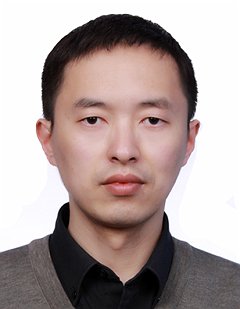
Xinyu Feng is a Professor at the Department of Computer Science and Technology , Nanjing University , and collaborates with Huawei . His work focuses on programming languages and formal methods , particularly concurrent system software verification , separation logic , and certified compilation . His research has produced influential contributions in verifying low-level system software with hardware interrupts, preemptive threads, and concurrent data structures. Notable publications include work on progress guarantees for concurrent objects modular verification of synchronization primitives parameterized memory models . In professional activities, he has served on program committees for major conferences like PLDI'21 , POPL'18 , and CAV'16 . He received a Distinguished Paper Award at PLDI'19 .
Manuel Antonio Burgos Olmos is a Professor specializing in Computational Fluid Dynamics (CFD) applied to nasal airway function and surgical optimization. His interdisciplinary work bridges biomedical engineering, oto-rhino-laryngology, and anthropology, with significant contributions to virtual surgery tools like DigBody®, MeComLand®, and Noseland® for objective airflow analysis and surgical planning. His research focuses on nasal airflow simulation across diverse contexts: human climate adaptation studies in anthropology, veterinary applications for big cats (e.g., lions using Flowgy software), and clinical conditions including empty nose syndrome and nasoseptal perforations. Key interests include 3D modeling of nasal cavities, vorticity analysis, and reducing surgical outcome variability through computational approaches. Analysis of his 46 publications (1998-2025) reveals a consistent trajectory toward integrated computational modeling, with recent work (2016-2025) emphasizing cross-species comparisons (humans/chimpanzees), sexual dimorphism in airways, and clinical-veterinary translational applications. His publications in high-impact journals demonstrate methodological innovation in CFD-based surgical prediction and anthropological morphology assessment.
María del Mar García Alcaraz serves as Assistant Professor at the Polytechnic University of Cartagena's School of Engineering, specializing in hydrogeological systems and sustainable resource management. Her work bridges theoretical research with practical applications in water-scarce regions and urban environments. Her research portfolio demonstrates deep expertise in groundwater dynamics, geothermal energy systems, and GIS-based environmental modeling. Key contributions include pioneering methodologies for ecosystem services assessment in aquifer management, innovative approaches to shallow geothermal resource mapping in metropolitan areas like Buenos Aires, and advanced tools for hydrogeological data analysis. Her interdisciplinary work integrates hydrogeology, environmental science, and engineering principles to address critical challenges in water security and renewable energy. Publication trends reveal consistent focus on sustainable resource management, with increasing emphasis on urban applications since 2020. Her work combines field studies in Argentina and Spain with computational modeling, producing practical frameworks for groundwater-dependent ecosystem conservation and metropolitan-scale geothermal energy planning. Recent publications highlight growing integration of ecosystem services concepts into hydrogeological practice. While no specific awards are documented in the provided text, her extensive publication record in high-impact journals including Hydrology , Renewable Energy , and Science of the Total Environment demonstrates significant scholarly contribution. Her research has generated multiple software tools and methodologies adopted in professional practice, particularly the TI-GER method for geothermal management. Dr. García Alcaraz actively mentors students through thesis supervision and curriculum development initiatives, notably creating relational maps for EICIM degree programs. Her collaborative research spans international institutions, particularly in Argentina, addressing transboundary water challenges. Current projects focus on groundwater recharge mechanisms in irrigated agriculture and thermal impact assessment of urban geothermal systems, positioning her at the forefront of sustainable water-energy nexus research.
Francisco López Castejón serves as an Assistant Professor at the Polytechnic University of Cartagena in Spain. His academic work centers on the intersection of marine robotics, coastal hydrodynamics, and environmental conservation, with a particular focus on the Mar Menor coastal lagoon in the Mediterranean region. Dr. López Castejón's research spans the development of advanced algorithms for marine robotics, including autonomous underwater vehicles and multi-robot coordination for ocean exploration. He conducts extensive studies on the hydrodynamics of coastal lagoons, especially the Mar Menor, and examines the effects of extreme climate phenomena like Dana events on underwater environments and cultural heritage. His interdisciplinary approach also extends to maritime archaeology, where he analyzes historical coastal dynamics and ancient harbor systems. Analysis of his publication record from 2016 to 2025 reveals a consistent focus on the Mar Menor lagoon, with numerous studies on hydrodynamic modeling, flood event impacts, and wave behavior. He increasingly integrates robotic systems for environmental monitoring and exploration, demonstrating a trend toward technological innovation in ocean science. His work bridges engineering, environmental science, and archaeology, contributing to both theoretical advances and practical conservation efforts. While specific student names are not provided in the available information, his research is supported by collaborative projects such as the Aladroque project, which investigates climate event impacts on underwater cultural heritage near Cartagena's port. This indicates active grant-funded research and potential advising of graduate students within these initiatives.
Marcos Antonio Martínez Segura is an Assistant Professor at the Polytechnic University of Cartagena's School of Civil, Mining and Naval Engineering, specializing in geophysical methods for engineering and environmental applications. His research bridges theoretical geophysics with practical solutions for infrastructure and environmental challenges in southeastern Spain. His primary research interests include Geophysics, Engineering Geology, and Geotechnical Engineering, with specific expertise in Electrical Resistivity Tomography (ERT), Multichannel Analysis of Surface Waves (MASW), Ground-Penetrating Radar (GPR), and UAV photogrammetry. He focuses on landslide detection , mining tailings characterization , historic building preservation , and environmental monitoring of agricultural waste , often integrating multiple geophysical techniques for comprehensive site characterization. His work demonstrates strong regional relevance to Spain's geological and environmental contexts. Analysis of his recent publications (2023-2025) reveals a dominant trend toward Python-based software development for geophysical data processing, particularly for ERT applications in hazard detection. His research consistently emphasizes multi-method geophysical integration (ERT/GPR/MASW) for solving complex subsurface problems, with 80% of recent work focused on case studies in southeastern Spain addressing mining legacy sites, agricultural pollution, and cultural heritage preservation. Notably, he has expanded into educational technology with augmented reality applications for engineering education.
Guilhem Jaber is an Associate Professor at University of Nantes , affiliated with the Gallinette team in the LS2N research laboratory . His work focuses on operational game semantics, contextual equivalence, and formal verification of higher-order programs with computational effects. Research Grants RECIPROG (2021-2025): ANR PRC Project, local coordinator CAVOC (2021-2025): Inria-Nomadic Labs agreement, project investigator CANofGAS (2022-2025): Inria Exploratory Action, co-investigator Scientific Awards Distinguished Paper Award at ICFP'21 Supervision Axel Kerinec: Postdoc on CANofGAS project Hamza Jaafar: PhD on CAVOC project Peio Borthelle: PhD co-advised with Beniamino Accattoli His research bridges game semantics with operational techniques, particularly for algebraic effects, parametric polymorphism, and separation logic. He actively participates in program committees for POPL, GALOP, and HOPE workshops.
Alexandra Silva is a Professor of Computer Science in the Department of Computer Science at Cornell University's College of Engineering. She joined Cornell as faculty in 2021 after previously serving as a Royal Society Wolfson Fellow and Professor of Algebra, Semantics, and Computation at University College London. Her research spans programming languages, formal verification, and theoretical computer science, with particular focus on Kleene Algebra with Tests (KAT), probabilistic programming, and automata theory. She has held numerous leadership roles in major programming languages conferences including POPL, PLDI, and ICFP. Dr. Silva completed her PhD at Centrum Wiskunde & Informatica (CWI) in Amsterdam under the supervision of Jan Rutten and Marcello Bonsangue, with her thesis entitled "Kleene coalgebra" defended in December 2010. Prior to her PhD, she was an undergraduate student at University of Minho in Portugal, where she completed a 5-year Mathematics and Computer Science degree in May 2006. Her research focuses on the modular development of specification languages and algorithms for models of computations, often from the unifying perspective offered by coalgebra. She has made significant contributions to Kleene Algebra with Tests, probabilistic programming semantics, network verification, and automata learning. Her work bridges theoretical foundations with practical verification tools, particularly in the domain of Software-Defined Networking where her NetKAT framework has gained significant attention. Analysis of her recent publications reveals a strong trend toward unifying frameworks for program verification, particularly through her development of Outcome Logic which provides foundations for both correctness and incorrectness reasoning. Her work increasingly integrates probabilistic and concurrent aspects of programming languages, with applications to network verification and security. The NetKAT ecosystem remains a central theme, with extensions to infinite state verification, symbolic execution, and learning-based approaches. Distinguished paper award for Guarded Kleene algebra with tests: verification of uninterpreted programs in nearly linear time (POPL 2020) Dr. Silva advises a large research group with numerous PhD students, postdocs, and undergraduate researchers. Her group has produced significant work in programming languages theory, verification, and applications to networking. She has secured substantial research funding through various grants that support her work on formal methods for network verification and probabilistic programming. Her mentoring approach emphasizes both theoretical depth and practical impact, with many of her students moving to prestigious academic and industry positions. Her research group, spanning both Cornell University and University College London, focuses on developing theoretical foundations for programming languages with practical applications in network verification, probabilistic systems, and program analysis. The group maintains active collaborations with researchers at CWI, University of Oxford, and other leading institutions in programming languages and formal methods.
Bernd Finkbeiner is a Professor of Computer Science at Saarland University and a faculty member at the CISPA Helmholtz Center for Information Security . He leads the Reactive Systems Group, which merged with CISPA in 2020, focusing on formal methods for ensuring system safety and security. University: Saarland University Research Institution: CISPA Helmholtz Center for Information Security His research spans synthesis, verification, and monitoring of reactive systems , with applications to program repair, static/dynamic analysis, and security guarantees . Recent work includes coinductive proofs for hyperliveness, asynchronous hyperproperty verification, and symbolic execution for bug detection. Key trends in his publications include: Hyperliveness and fairness in reactive systems Symbolic execution for hyperbug identification Integration of synthesis and verification techniques Formal guarantees for cybersecurity and software reliability He contributes to academic communities through committee roles at conferences like POPL, ICFP, SPLASH, and VMCAI.
Luis Carlos Pardo Soto is an Associate Professor in the Department of Physics at the Escola d'Enginyeria de Barcelona Est (EEBE), Universitat Politècnica de Catalunya (UPC). He is a core member of the Group of Characterization of Materials (GCM), the Multiscale Science and Engineering Research Center (CCEM), and the Phase Transitions, Polymorphism, Glasses and Dynamics of Metastability (PTP-GlaDyM) research group. His research focuses on disordered systems including molecular liquids, plastic crystal phases, and their glassy states. He investigates the structural and dynamic properties of these systems using experimental techniques such as neutron and X-ray diffraction, dielectric spectroscopy, and high-pressure devices, complemented by molecular dynamics simulations using GROMACS. His work particularly examines water structure and its interactions with biologically relevant molecules. Pardo Soto has developed specialized software tools including ANGULA for orientational order analysis in disordered systems and FABADA for Bayesian analysis of experimental data. His research outputs include numerous indexed journal articles, book chapters, and conference presentations, with significant contributions in the fields of glass formation, molecular dynamics, and disordered materials characterization. He is actively involved in scientific outreach through FISIDABO VISIONS (STEAM-FORUM and STEAM-ANELLA initiatives) and maintains a YouTube channel for disseminating scientific content. His teaching responsibilities focus on disordered systems and related physics concepts.
Maria-Cristina Marinescu serves as a Lecturer in the Department of Mathematics and Data Analytics at IQS School of Management. With a strong foundation in computational methods and data analysis, she contributes significantly to both teaching and research within the institution. Her academic profile demonstrates consistent scholarly activity with 44 documented scientific production items spanning over two decades. Dr. Marinescu's research interests center on Machine Learning, Data Analytics, and Artificial Intelligence, with notable applications in epidemic modeling, wireless sensor networks, and programming models. Her work bridges theoretical computer science with practical applications addressing real-world challenges in public health, digital well-being, and medical diagnostics. The fingerprint analysis of her work shows strong emphasis on Machine Learning (100%), Learning Systems (100%), and Transportation Models (100%), with substantial contributions to Programming Models (84%) and Wireless Sensor Networks (77%). Her recent publications reveal a trend toward interdisciplinary research that combines computational methods with societal challenges. She has made significant contributions to epidemic modeling during the COVID-19 pandemic, developing methods for accurate incidence rate estimation in Spain and analyzing information gains from multiple epidemic model outputs. Additionally, her work extends to medical applications including research on ocular ischemia and glaucoma, as well as innovative approaches to automated metadata annotation using machine learning techniques. Dr. Marinescu actively leads and participates in multiple research projects including Uncovering patterns of unconscious reactions to fake content (as Principal Investigator), MobilePressure (focused on reducing children's smartphone exposure), and ADAMIQS: Applied Data Analytics and Modelling IQS . These projects demonstrate her commitment to addressing contemporary issues through data-driven approaches while mentoring students and collaborating with interdisciplinary research teams.
María Belén Pérez Lancho is a Full Professor in the Department of Computer Science and Automation at the University of Salamanca, Spain. With over 25 years of academic experience since completing her PhD in 1995, she maintains active affiliations with multiple research groups including BISITE (Bioinformatics, Intelligent Computing Systems and Educational Technology), CaUSAL (Academic Culture, Heritage and Social Memory), and Process Supervision and Control. Dr. Pérez Lancho earned her doctoral degree from the University of Salamanca with her thesis "Integrated process control system: a practical approach" supervised by Dr. Eladio Sanz García. Her academic foundation in systems engineering and automation has evolved into diverse research applications across multiple domains. Her research program demonstrates remarkable breadth while maintaining technical coherence. She has pioneered context-aware multiagent systems for home care environments, developing architectures like HoCa and HoCCAC that monitor patients and optimize task scheduling. In environmental science, she created hybrid intelligent systems for forest fire prediction using Case-Based Reasoning with topology-preserving algorithms. More recently, she has addressed cybersecurity challenges in educational technology through two-factor authentication systems. Her work consistently bridges theoretical computer science with practical implementations in real-world settings. Analysis of her publication trajectory reveals a consistent focus on adaptive intelligent systems that respond to environmental changes. Her earliest work established foundations in systems engineering, which evolved into sophisticated multi-agent applications across healthcare, environmental monitoring, and security domains. The most recent publications continue this trajectory while addressing contemporary challenges in educational technology security. Dr. Pérez Lancho maintains extensive collaborative relationships, particularly with Juan M. Corchado at the University of Salamanca, as evidenced by numerous co-authored publications. Her research has been implemented in actual home care environments and environmental monitoring systems, demonstrating the practical impact of her work. Her research infrastructure includes: BISITE group focusing on intelligent computing systems and educational technology CaUSAL group examining academic culture and heritage Process Supervision and Control group applying her foundational work to industrial contexts These affiliations support her interdisciplinary approach to solving complex problems through computational methods.