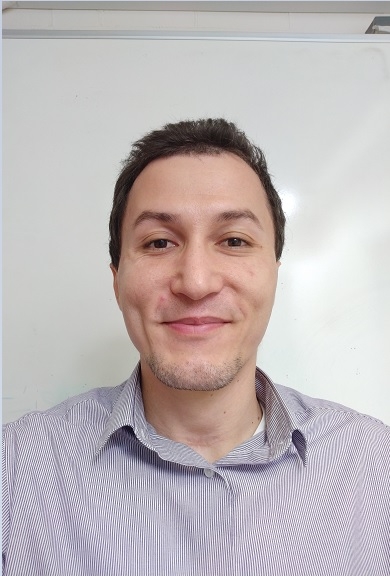
Jonas Bylander is a Professor at Chalmers University of Technology in the Department of Microtechnology and Nanoscience, specifically within the Quantum Technology division. He leads a research group focused on developing quantum computers using superconducting circuits.
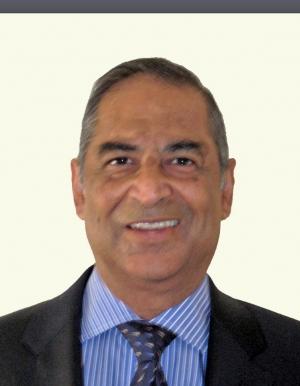
Lakshmi N Sankar serves as Regents Professor and Sikorsky Professor in the Guggenheim School of Aerospace Engineering at Georgia Institute of Technology, where he directs the Computational Fluid Dynamics Laboratory and teaches aerodynamics, helicopter theory, and wind energy courses. His research program spans unsteady viscous flow modeling for aircraft, helicopters, and wind turbines since joining the faculty in 1982 after industry experience at Lockheed Martin. Education: Ph.D., Aerospace Engineering, Georgia Institute of Technology, 1977 MSAE, Aerospace Engineering, Georgia Institute of Technology, 1975 B. Tech., Aeronautical Engineering, Indian Institute of Technology, Madras, India, 1973 Research Focus: Professor Sankar's work centers on Computational Fluid Dynamics for rotorcraft aerodynamics and wind energy systems , with significant contributions to icing phenomena and unsteady flow modeling . His recent publications reveal intensifying focus on adverse weather effects (rain/icing), eVTOL conversion challenges, and high-fidelity hybrid modeling techniques for rotorcraft performance prediction. Publication Trends: Analysis of his 2022-2025 publications shows dominant themes in rotorcraft icing (35%), weather impact studies (25%), and advanced CFD methodologies (20%), with growing interest in drone applications and mathematical aspects of fluid dynamics. His work consistently bridges theoretical mathematics with practical aerospace engineering challenges. Scientific Recognition: AIAA Fellow and AHS Technical Fellow NASA Group Achievement Award (2007) and Space Act Software Release Award (2003) Multiple Sigma Gamma Tau Teaching Awards (2005-2015) Dean George C. Griffin Faculty of the Year (2014-2015) Sikorsky Professorship (2018-Present) Mentorship and Collaboration: As recipient of Georgia Tech's Graduate Research Assistant Development Award, he has cultivated extensive student mentorship. His research integrates with the Vertical Lift Research Center of Excellence and Center for 21st Century Universities, securing major industry and NASA funding for rotorcraft innovation. Current projects include physics-based modeling of ice accretion and eVTOL retrofit feasibility studies. Research Infrastructure: The Computational Fluid Dynamics Laboratory serves as his primary research hub, complemented by collaborations through the Vertical Lift Research Center of Excellence where his team develops next-generation modeling tools for military and civilian rotorcraft applications under federal funding programs.
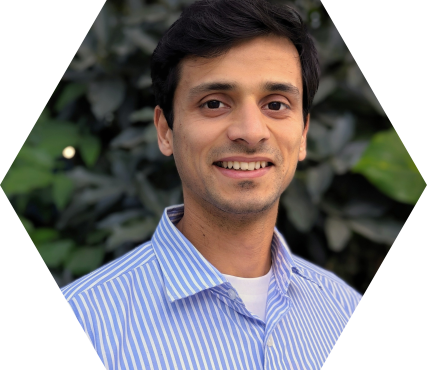
Karthik Menon serves as an Assistant Professor with a joint appointment in the Woodruff School at Georgia Institute of Technology and the Coulter Department of Biomedical Engineering. His research integrates fluid mechanics, computational modeling, and data-driven methodologies to address critical challenges in healthcare, renewable energy, and bio-inspired engineering systems. His academic credentials include: Ph.D. in Mechanical Engineering, Johns Hopkins University (2021) M.S. in Mechanical Engineering, Johns Hopkins University (2019) B.E. in Mechanical Engineering, Birla Institute of Technology and Science, Pilani, India (2015) Menon's research program centers on three interconnected domains: cardiovascular flows for personalized treatment of heart disease, fluid-structure interactions in biological systems like heart valves and bio-mimetic robots, and vortex-dominated flows for renewable energy applications. His approach combines high-fidelity computational modeling with machine learning to uncover fundamental physics and develop clinical solutions, such as cardiovascular digital twins for non-invasive risk assessment. Current projects focus on patient-specific hemodynamics using CT imaging and uncertainty quantification to improve surgical planning. Analysis of his 15 most recent publications (2023-2025) reveals a dominant focus on advancing multi-fidelity computational frameworks for cardiovascular applications. Key trends include Bayesian uncertainty quantification, zero-dimensional solver development, and integration of clinical imaging data to create predictive digital twins. His work bridges fluid dynamics with clinical cardiology, targeting improved outcomes in coronary artery disease and Kawasaki-related complications through physics-informed machine learning. Menon's scholarly contributions have been recognized through competitive awards: WCCM-PANACM 2024 Travel Award, U.S. Association for Computational Mechanics (2024) Future Faculty Symposium Travel Award, Society of Engineering Science Conference (2023) Mark O. Robbins Prize in High-performance Computing, Johns Hopkins University (2021) Corrsin-Kovasznay Outstanding Paper Award, Johns Hopkins University (2020) Prosperetti Travel Award, Johns Hopkins University (2017) Mechanical Engineering Departmental Fellowship, Johns Hopkins University (2016) As principal investigator of the ComBiNE Fluid Dynamics Lab, Menon mentors graduate students in developing computational tools for fluid-structure interaction problems. His collaborative projects with cardiologists at Stanford and Emory hospitals translate engineering principles into clinical applications for cardiovascular disease management. Current grant activities focus on NSF and NIH-funded initiatives for uncertainty-aware cardiovascular modeling and bio-inspired flow energy harvesting. The ComBiNE Fluid Dynamics Lab operates as an interdisciplinary hub where engineers, clinicians, and data scientists collaborate on fluid mechanics challenges. Current lab initiatives include developing real-time hemodynamic simulators for surgical planning, creating reduced-order models for cardiac device optimization, and investigating vortex dynamics in fish schooling for underwater vehicle design. The lab maintains strong partnerships with Children's Healthcare of Atlanta and the Parker H. Petit Institute for Bioengineering and Bioscience.
Yiming Yang is a Professor at the Language Technologies Institute and Machine Learning Department within the School of Computer Science at Carnegie Mellon University , where he has held faculty positions since 2003. His research spans foundational and applied aspects of machine learning , artificial intelligence , and scientific computing . Professor, Carnegie Mellon University (2003–Present) Associate Professor, Carnegie Mellon University (1996–2003) Yang's research focuses on LLM-based problem-solving agents , combinatorial optimization , and scalable oversight frameworks . His work explores diffusion models, Langevin dynamics, and Fourier neural operators for NP-hard problems, while advancing reinforcement learning techniques for self-play supervision and principle-driven fine-tuning of large language models. Recent publications highlight his contributions to code synthesis , PDE solving , and multi-agent reinforcement learning . Key methodologies include demonstration-guided control, retrieval-augmented reasoning, and test-time scaling laws. His team has developed frameworks like FEEDER for efficient in-context learning and μTransfer-FNO for zero-shot hyperparameter transfer in PDE solvers. Notable scientific achievements include: Best Student Paper Runner Up (2013) Best Theoretical Paper Award (1994) Best Theoretical Paper Award (1993) Yang has mentored over 20 PhD students and postdocs, including Shengyu Feng , Zhiqing Sun , and Aman Madaan , across domains like graph learning , extreme multi-label classification , and language model alignment .
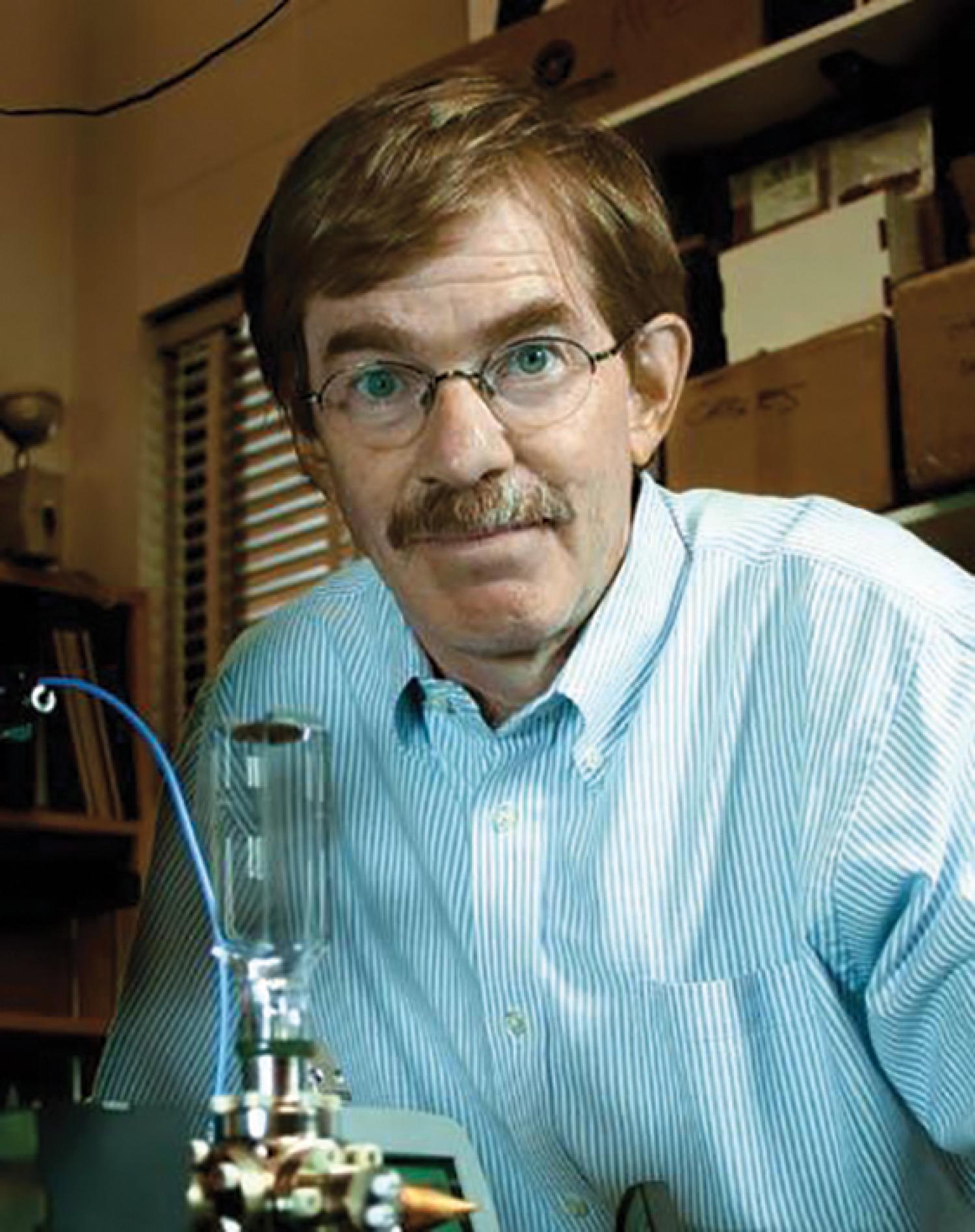
Dana Z. Anderson is a Professor and Fellow at JILA at the University of Colorado Boulder, holding the Glen Murphy Endowed Chair in the Department of Physics within the College of Engineering and Applied Science (CEAS) . His research focuses on nonlinear optics , atom optics , and optical precision measurements . Key projects include advancing atomtronics (quantum analogs of electronic systems), neutral atom quantum computing , and ultracold atom gyroscopes . He leads the Anderson Optical Physics (AOPy) group , pioneering applications like shaken lattice interferometry for space navigation and quantum sensor development . Anderson's work bridges fundamental physics and applied technologies. His group develops window atom chip technology for ultracold atom manipulation and in-situ imaging systems . Collaborations include NASA's Cold Atom Laboratory (CAL) mission for microgravity experiments on the International Space Station (ISS). Notable contributions include demonstrating matterwave transistor oscillators and optical lattice-based quantum devices . His research has been recognized in high-impact journals like Physical Review Letters and Review of Modern Physics . He actively engages in public outreach and industry partnerships , serving as Chief Strategy Officer at ColdQuanta, a quantum tech startup spun from his lab's innovations.
Steven Meikle is a Professor of Medical Imaging Physics and Head of the Imaging Physics Laboratory at the Brain and Mind Centre, University of Sydney. He also serves as Deputy Director (Preclinical) of Sydney Imaging and Deputy Director of the National Imaging Facility's Sydney node. His expertise spans advanced imaging technologies, with a focus on PET/SPECT instrumentation and molecular imaging. He holds a B.App.Sc.(Hons) from the University of Technology Sydney and a PhD from the University of New South Wales. Research focuses include developing novel PET systems like Open-field PET (for freely moving rodents) and Total Body PET, which enhance imaging sensitivity and enable real-time behavioral studies alongside brain function analysis. Collaborations include Tsinghua University (China) and UC Davis (USA). He leads projects on motion correction, quantitative imaging, and AI-driven analysis. Key achievements include over 180 peer-reviewed publications, editorial roles in Physics in Medicine and Biology , and leadership in professional societies. Awards include IEEE Senior Membership and Australian Institute of Physics Fellowship. Current student projects explore Total Body PET applications, motion correction, and radiopharmaceutical evaluation. Teaching roles include medical physics courses in diagnostic radiography and medical physics programs. He advises on imaging ethics, facility implementation, and translational research bridging basic science and clinical applications.
Dr. Umberto Montanaro is a Senior Lecturer in Autonomous Systems and Control Engineering at the University of Surrey's School of Mechanical Engineering Sciences, within the Centre for Automotive Engineering. He holds PhDs in Control Engineering (2009) and Mechanical Engineering (2016) from the University of Naples Federico II, Italy. His research focuses on adaptive control algorithms for automotive and mechatronic systems, including vehicle platooning, autonomous driving, and nonlinear control strategies. He has authored over 60 peer-reviewed publications and led projects like the Innovate UK-funded GPR for Localisation (2018–2019) and the EPSRC/JLR-funded CARMA initiative (2016–2021). His work spans control of multiagent systems, optimal control, and enhanced model reference adaptive control (MRAC) applications. Dr. Montanaro has supervised multiple PhD and MEng students, including co-supervision of Shilp Dixit's research on autonomous overtaking. Research Interests: Adaptive Control, Autonomous Vehicles, Vehicle Platooning, Nonlinear Systems, Model Reference Adaptive Control Grants: CARMA (EPSRC/JLR), GPR Localisation (Innovate UK) Teaching: Control and Dynamics (ENG3611), Engine Speed Control labs Labs/Teams: Active in automotive control systems and connected autonomous vehicle research
Andrew Lan is an Associate Professor in the College of Information and Computer Sciences at the University of Massachusetts Amherst, where he also serves as the CS Undergraduate Program Director. He was granted tenure by the UMass Board of Trustees in June 2025 and is currently on leave through Spring 2026. His research focuses on developing human-in-the-loop machine learning methods to enable scalable, effective, and personalized learning experiences in education. Dr. Lan received his BS in Physics and Mathematics from the Hong Kong University of Science and Technology, followed by his MS (2014) and PhD (2016) in Electrical and Computer Engineering from Rice University. He completed postdoctoral research at Rice University (2016) and Princeton University's EDGE Lab (2017-2018). His research spans artificial intelligence for education, with particular expertise in educational data mining, knowledge tracing, personalized learning systems, and human-AI collaboration in educational contexts. Dr. Lan's work leverages massive and multimodal learner and content data collected from both traditional classrooms and online learning platforms to develop systems that deliver high-quality, affordable, and personalized learning experiences. He has made significant contributions to areas including computerized adaptive testing, math word problem generation, student affect detection, and automated grading systems. His recent work increasingly focuses on leveraging large language models for educational applications while maintaining rigorous scientific validation of these approaches. Best Student Paper Award at the 2024 AIED Conference (with Alexander Scarlatos) Best Paper Nominee at LAK 2021 Best Student Paper Award at IEEE Big Data 2020 NAEP Math Automated Scoring Challenge Grand Prize Winner Dr. Lan actively mentors graduate students and postdoctoral researchers, with several of his advisees receiving recognition for their work. He has secured substantial funding from the National Science Foundation, including a $90M grant for the SafeInsights project, a secure cyberinfrastructure for educational research. His research group collaborates with institutions including Worcester Polytechnic Institute, University of Pennsylvania, and Rice University. He teaches undergraduate and graduate courses including COMPSCI 240 (Reasoning under Uncertainty) and COMPSCI 590OP (Applied Numerical Optimization), with a focus on the practical application of theoretical concepts in machine learning and artificial intelligence. His educational philosophy emphasizes bridging the gap between theoretical foundations and real-world implementation in educational technology.
Claudia Plant is a Professor in the Faculty of Computer Science , leading the Research Group Data Mining and Machine Learning . Her research focuses on clustering algorithms, data mining, and machine learning applications in areas like biomedical data, wind energy, and causality inference. She has contributed to projects such as Knowledge-infused Deep Learning for Natural Language Processing (2020–2028) and Hybrid Computational Sciences (2021–2021). Plant has authored over 160 publications, with recent work emphasizing deep learning, anomaly detection, and GPU-optimized algorithms. She actively engages in academic activities, including talks on clustering methods and interdisciplinary projects like Governing Algorithms: The Politics of Data and Decision-Making . Her research interests span clustering algorithms , graph neural networks , causality discovery , and ethical digital transformation . Notable projects include causal analysis of wind farm dynamics and AI-enhanced education tools. Plant’s work bridges computational methods with societal challenges, such as empowering marginalized communities through ethical technology adoption.
Theo Hofman is an Associate Professor and Program Director in the Mechanical Engineering Department at Eindhoven University of Technology (TU/e). He specializes in integrated design methods for complex engineering systems, focusing on powertrain systems for automotive, maritime, and aerospace applications. His work emphasizes computational design synthesis, machine learning, and model-based optimization. Education: Hofman holds an MSc (1999) and PhD (2007) in Mechanical Engineering from TU/e. He has held roles at Thales Cryogenics and Drivetrain Innovations before joining TU/e. He also served as an Invited Professor at ETH Zurich and Université Polytechnique Hauts-de-France. Research Interests: His research spans hybrid electric vehicles, powertrain design, energy management systems, and sustainable transportation. Key areas include automated design tools, thermal management, and co-design of plant and control systems. Applications include electric trucks, ships, and aircraft. Articles Trends: His recent publications (2021–2025) emphasize electric vehicle infrastructure optimization, battery systems, and control strategies. Key themes include energy efficiency, thermal management, and co-design methodologies for automotive and mobility systems. Scientific Awards: IEEE VPPC 2024 Best Paper Award. Advising & Grants: He has supervised over 104 MSc, 14 PDEng, and 10 PhD students. Active projects include the 'Green Transport Delta' initiative (2021–2024) and Bosch Transmission collaborations. His courses include 'Electric and Hybrid Vehicle Powertrain Design' and 'Automotive Systems Engineering Project.' Labs/Teams: He leads the Group Hofman and collaborates with the MEGEVH (France) and TU/e’s EAISI Mobility initiative. His work contributes to UN Sustainable Development Goals related to affordable and clean energy, industry innovation, and climate action.
Jian Peng is an Assistant Professor in the Department of Computer Science at the University of Illinois at Urbana-Champaign. His research focuses on computational biology, machine learning, and their applications to protein structure prediction, drug design, and molecular modeling. He has contributed to advancements in antibody engineering, protein-ligand docking, and generative models for biological systems. Key research areas include: Machine Learning for Molecular Modeling Protein Structure Prediction Antibody and Peptide Design Genomics and Single-Cell Analysis Structure-Based Drug Discovery His work emphasizes integrating deep learning techniques with biological datasets to address challenges in precision medicine, drug development, and systems biology. Notable achievements include developing the FastFold system to accelerate AlphaFold training and pioneering flow-based methods for antibody design. Awards include the Overton Prize (2020), recognizing contributions to computational biology. His research has been published in top journals and conferences, spanning topics from protein mutation prediction to geodesic-based immune complex modeling.
Luca Demetrio is an Assistant Professor at the University of Genoa, Italy, specializing in adversarial machine learning and cybersecurity. Previously, he was a Post-doctoral Researcher at the PRA Lab within the Department of Electrical and Electronic Engineering at the University of Cagliari. He holds bachelor's (2015), master's (2017), and Ph.D. (2021) degrees from the University of Genova, with his doctoral thesis focusing on formalizing evasion attacks against security detectors. His research emphasizes enhancing the robustness of machine learning models against adversarial attacks, particularly targeting malware detectors, SQL injection defenses, and Windows security systems. He leads the development of SecML Malware, a Python library for generating adversarial Windows malware, and contributes to the SecML framework. His work has been published in top-tier journals like ACM TOPS and IEEE TIFS. Key research interests include adversarial example generation, malware analysis, and cybersecurity defense mechanisms. He has explored query-efficient attacks on phishing detectors, certified adversarial robustness via randomized smoothing, and robust synthetic data-driven threat detection. His recent studies (2023–2025) address challenges in hardening machine learning models against evasion attacks, adversarial SQL injection countermeasures, and securing autonomous driving systems from adversarial reinforcement learning attacks.
Liu Lili is a Lecturer (Educator Track) in the Department of Computer Science at the School of Computing, National University of Singapore. She holds a Ph.D. from Nanyang Technological University and a Master's in Computer Science from Shanghai University. Prior to NUS, she served as a Senior Research Scientist at Singapore Polytechnic and a Scientist at A*STAR's Institute of High-Performance Computing. Her research focuses on Machine Learning, Computer Vision, and Multi-modal Learning, with applications in FinTech, Social Media Analysis, and Algorithms & Theory. Notable projects include AI-driven coating inspection systems for marine assets and behavioral competency assessment tools for navigational safety. She has contributed to robotics for construction quality assessment and interactive virtual environments for rehabilitation. Liu's publications span AI applications in finance, robotics, and material science, reflecting her expertise in bridging theoretical computer science with practical industrial solutions. Her work emphasizes automation, anomaly detection, and multi-modal data integration.
Meltem ŞENOL BALABAN is an Associate Professor in the Department of City and Regional Planning at Middle East Technical University (METU), Ankara, Turkey. She holds a dual PhD in City and Regional Planning (METU, 2009) and Urban Engineering (University of Tokyo, 2012). Her academic career includes roles as Director of METU Disaster Management Implementation and Research Center (since 2018), Minor Program Coordinator, and Board Member of the Applied Ethic Research Center. She specializes in disaster risk management, urban resilience planning, GIS-based modeling for evacuation/shelter optimization, and climate change adaptation in urban contexts. Her research focuses on flood risk mitigation in riverine cities, institutional frameworks for cultural heritage protection (e.g., UNESCO sites), and earthquake resilience strategies. Notable projects include developing Turkey's provincial risk reduction guidelines, a climate change risk assessment framework (CRAFT) for cultural heritage, and international cooperation initiatives like the UK-funded CRAFT and NET projects. She has authored over 40 peer-reviewed publications and supervised 10+ theses. Key contributions include GIS-based evacuation models for Istanbul, comparative studies of UK/Japan/Turkey disaster policies, and post-disaster resilience assessments. Awards include JICA Scholarship (2009-2012), ProVention Research Grant (2007-2008), and multiple international recognitions for her work on urban risk reduction. Her teaching portfolio includes courses on GIS in planning, disaster management principles, and urban resilience strategies.
Khaled Giasin is a Senior Lecturer in Mechanical Engineering at the University of Portsmouth, part of the School of Electrical and Mechanical Engineering and affiliated with the Portsmouth Centre for Advanced Materials and Manufacturing. He joined the university in 2019, bringing expertise in machining aerospace materials through experimental and numerical techniques. Prior to this, he worked at Cardiff University on the ASTUTE2020 project, focusing on applied research for advanced manufacturing challenges in Wales. His research interests span machining of metals, composites, and fiber metal laminates, finite element modeling of machining processes, and additive manufacturing of metallic alloys. He collaborates internationally with institutions in France, Turkey, China, and Australia, emphasizing industry-academia partnerships. Dr. Giasin currently supervises PhD projects on topics such as GLARE fiber metal laminate machining and ultrasonic-assisted drilling, reflecting his focus on advanced materials and manufacturing solutions. He teaches modules including Engineering Materials and Design, Advanced Materials, and Metrology. Over 137 research outputs highlight his contributions to machining methodologies, material characterization, and sustainable manufacturing techniques. His work bridges theoretical modeling and industrial applications, addressing challenges in aerospace and advanced manufacturing sectors.