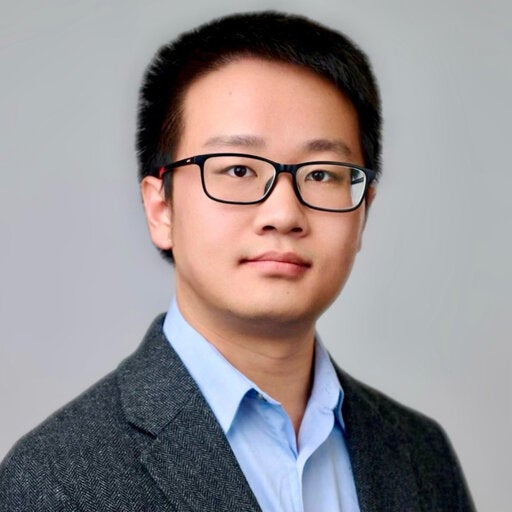
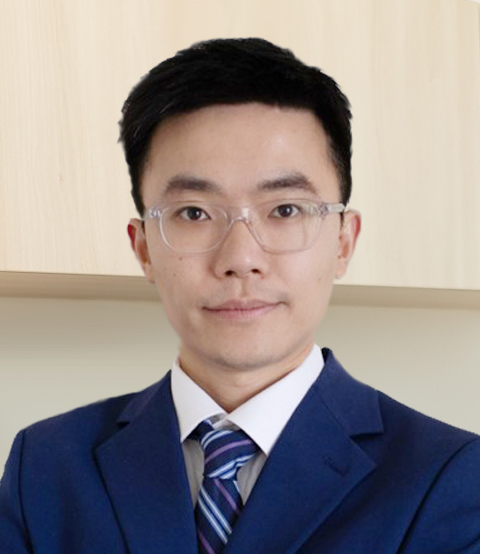
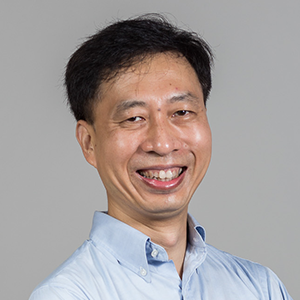
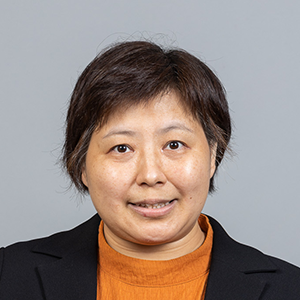
Dr. Peichen Zhong is an Assistant Professor in the Department of Materials Science and Engineering at the National University of Singapore (NUS). He leads the Applied Machine Learning and Materials Modeling (AM³) Group, focused on advancing computational methods for clean energy technologies. His research integrates machine learning with atomistic simulations to tackle challenges in battery materials, disordered materials, and sustainable energy systems. Education: B.S. in Physics from University of Science and Technology of China (2018); Ph.D. in Materials Science from UC Berkeley (2023, advised by Prof. Gerbrand Ceder); Postdoctoral training at Lawrence Berkeley National Lab and BIDMaP, co-advised by Persson, Cheng, and Krishnapriyan. Research Interests: Computational modeling of battery cathodes/electrolytes, AI-driven interatomic potentials, statistical mechanics in disordered materials, and generative models for scientific discovery. Key areas include Li/Na-ion batteries, solid-state reactions, and sustainable energy materials. Awards: BIDMaP Emerging Scholar Fellowship (UC Berkeley CDSS, 202?), 2023 Rising Stars in Materials Science (CMU/MIT/Stanford). Labs/Teams: The AM³ Group at NUS MSE focuses on interdisciplinary research combining theory, computation, and AI4Science. Current openings include PhD students and postdoctoral researchers.
CHAN Mun Choon is a Professor at the School of Computing, National University of Singapore (NUS) , where he directs the NUS-NCS Joint Laboratory for Cyber Security . He previously worked at Bell Labs (1997-2003) and holds a PhD from Columbia University (1997). His research spans systems and networking with specific interests in mobile computing, software-defined networking, and cyber-physical systems . PhD, Electrical Engineering (1997), Columbia University M.Phil., Electrical Engineering (1993), Columbia University MS, Electrical Engineering (1993), Columbia University BS, Computer & Electrical Engineering (1990), Purdue University His recent work focuses on 5G network architecture , data center fault debugging , and energy-efficient mobile sensing . He has published over 100 papers and holds 7 US patents , including cache-based compaction techniques with 210+ citations. His projects include fronthaul slicing for 5G, network-wide packet history frameworks, and participatory indoor localization. Scientific recognition includes: Best Paper Awards: IEEE ICNP 2019, ACM SOSR 2019, ICDCN 2016 Best Demo: IPSN 2016 Distinguished Member, INFOCOM TPC (2016, 2020, 2021) He serves as Vice-Dean, Graduate Studies and Vice-Dean, Academic Affairs at NUS Computing, and has graduated 21 PhD students . His lab develops solutions for network security , latency-sensitive applications , and mobile sensing .
Dr. ONG Ghim Ping Raymond is an Associate Professor and Deputy Head (Research) at the Department of Civil and Environmental Engineering, National University of Singapore (NUS). He concurrently serves as Director (Operations) at the Coastal Protection and Flood Resilience Institute (CFI) Singapore. His expertise spans sustainable pavements, multimodal transport infrastructure, and urban mobility systems. Dr. Ong holds a B.Eng (Civil) with First Class Honours and a PhD from NUS, followed by postdoctoral research at Purdue University. He has authored/co-authored over 85 peer-reviewed journal articles and 120 conference papers. His research focuses on circular economy applications in infrastructure, car-lite urban design, and mega-projects like Tuas Port and Changi Airport expansions. Dr. Ong actively engages in policy advisory roles, serving on international committees for ASCE, ASTM, and EASTS. He has received prestigious awards including the Alfred Noble Prize (ASCE) and Takeuchi Yoshio Award (OCDI). His teaching accolades include multiple NUS Faculty of Engineering commendations. He advises on critical infrastructure projects for agencies like Changi Airport Group and Defence Science and Technology Agency. Dr. Ong frequently contributes to public discourse on transport and urban planning via media interviews and policy consultations.
Anand Bhojan is an Associate Professor (Educator Track) at the Department of Computer Science, School of Computing, National University of Singapore (NUS). He is a member of the Communication and Internet Research Lab and serves on the Graduate Studies Committee. Dr. Bhojan is also the founder of Anuflora Systems and Virtual and Augmented Reality Labs (www.varlabs.org), and serves as Associate Editor of Computers and Electrical Engineering Journal, Elsevier, and Vice President of International Researchers Club, Singapore. Dr. Bhojan earned his Ph.D. in Computer Science & Engineering from NUS in 2011, where his thesis was nominated for the Best PhD Thesis Award. He also holds a Professional Master's in Computer Applications from Bharathidasan University (1999), a Bachelor's degree in Computing with Gold Medal (University topper) from Bharathiar University (1994), and a Postgraduate Certificate in Teaching Higher Education from University of Sheffield, UK (2003). His research spans multiple domains including Distributed Computing and Wireless Networks (IoT, Security, Blockchain), Artificial Intelligence (Generative AI, FinTech), and Entertainment Computing with focus on Games, VR/AR/Metaverse technologies. Dr. Bhojan leads the Metaverse Foundry research group which focuses on content generation for games & XR simulations across multiple domains including entertainment, healthcare, and architecture, while also experimenting with innovative teaching methods for entertainment media technologies. Dr. Bhojan's recent research has pioneered hybrid rendering techniques that strategically combine ray tracing and rasterization to create more realistic video game graphics without compromising performance. His work addresses critical challenges in real-time rendering, particularly in depth of field and motion blur effects, with the goal of making Hollywood-quality graphics accessible on a wider range of hardware. Earlier work focused on energy efficiency in mobile gaming, including power management techniques and latency optimization for cloud gaming. Among his notable achievements: 2012 Nominated for Best PhD Thesis Award (Wang Gungwu Medal & Prize), NUS 2011 Dean's Graduate Research Achievement Award (PhD), SoC, NUS 2006 Best R&D Project award from TOTE Board, Singapore 1995 Gold medal for first Rank (out of 4000) in Computing, Bharathiar University Dr. Bhojan has served as Organizing Chair and Program Chair for multiple international conferences and has delivered keynote talks at IEEE/ACM International Conferences. He teaches courses including Computer Networks Practice, Game Development, Interaction Design for Virtual and Augmented Reality, and Game Development Project. He leads the Metaverse Foundry research group and the Virtual and Augmented Reality Labs, where undergraduate and graduate students have won multiple research and innovation awards. His research bridges entertainment, education, and emerging technologies with practical applications in making immersive experiences more accessible across different hardware capabilities while maintaining energy efficiency.
Dr. Geng Guoqing is an Assistant Professor in the Department of Civil and Environmental Engineering at the National University of Singapore (NUS). He holds concurrent roles as East Asian Regional Convener for RILEM and board member of ACI-Singapore Chapter. His research focuses on sustainable construction materials, particularly durability, microstructural characterization, and waste material utilization. Geng earned his PhD from UC Berkeley (2017), followed by postdoctoral research at the Paul Scherrer Institute (Switzerland). He has authored over 50 papers and leads multiple projects funded by Singapore’s Ministry of Education, Energy Center, and National Research Foundation. Education: Bachelor of Engineering, Southeast University, China (2010) Master of Science, UC Berkeley, USA (2013) PhD, UC Berkeley, USA (2017) Research interests center on sustainable construction materials, multi-scale characterization, and material durability . Key themes include recycling low-grade materials, mitigating degradation in concrete, and developing high-performance binders like LC3. His work employs advanced techniques like molecular modeling, X-ray diffraction, and NMR. Recent articles explore hydration kinetics, CSH matrix mechanics, and waste clay applications. Awards include the 2023 RILEM Medal and multiple teaching excellence recognitions. Current projects address CO 2 absorption, sustainable cement blends, and resilient façade materials. Professional service includes editorial roles at Cleaner Materials and Frontiers in Materials , plus organizing the 2022 EASEC Conference. His lab focuses on bridging microstructural insights with macro-scale material performance.
Assoc Prof Ng Teng Yong is an Associate Professor at the School of Mechanical & Aerospace Engineering (NTU), specializing in numerical modeling and simulation. With a background as Research Manager at A*STAR Institute of High Performance Computing, his work spans materials science, nanotechnology, and aerospace engineering. Current focus on graphene-based desalination membranes Expertise in molecular dynamics simulations Investigates nanoscale fluid mechanics and structural dynamics Recent publications highlight advancements in energy-efficient electrodialysis, smart robotics, and nonlinear vibration analysis. His interdisciplinary approach integrates computational methods with experimental validation in additive manufacturing and soft material mechanics.
ONG Soh Khim is a Professor in the Department of Mechanical Engineering at the National University of Singapore (NUS) and a member of the NUS Graduate School. She is a Fellow of CIRP (International Academy for Production Engineering), the first Asian and fourth female Fellow globally. Her research focuses on augmented reality (AR) and digital twins in manufacturing, with applications in assistive technology and sustainable design. She has authored/co-edited 6 books, over 300 journal/conference papers, and holds an H-index of 66 (Google Scholar) and 52 (Scopus). She has held leadership roles, including serving as a Nominated Member of the Singapore Parliament (2005–2006) and on multiple NUS governance boards. Her honors include the Singapore Youth Award (2004), M. Eugene Merchant Award (2004), and the 2021 Long Service Medal. She advocates for gender diversity in STEM, leading initiatives like the Girls2Pioneers program. Her current roles include Senior Principal Investigator at NUS Research Institutes in Suzhou and Guangzhou, and Visiting Professorships at Chinese universities.
Prof Aaron Thean is the Deputy President (Academic Affairs) and Provost at the National University of Singapore (NUS). Formerly, he served as Dean of the College of Design and Engineering at NUS and held senior roles at IMEC (Belgium) as Vice President of Logic Technologies and Director of Logic Devices Research. His expertise spans advanced semiconductor device technologies, including FinFETs, nanowire FETs, III-V/Ge channels, and emerging beyond-CMOS architectures. He holds degrees from the University of Illinois Urbana-Champaign (B.Sc., M.Sc., Ph.D. in Electrical Engineering) and has published over 300 papers with 50+ patents. His awards include the Gregory Stillman Award (2001) and Compound Semiconductor Innovation Award (2014). Research interests focus on semiconductor innovation, device-process co-optimization (DTCO), and monolithic 3D integration. Notable contributions include industry-first Gate-First HKMG technologies, advanced strained silicon platforms, and neuromorphic computing hardware. His work bridges academia and industry through collaborations with Qualcomm, IBM, and foundry partners. Current initiatives emphasize energy-efficient computing and wearable sensor systems. Prof Thean’s leadership spans NUS-wide academic strategy and global research partnerships. His technical legacy includes foundational advancements in transistor scaling, low-power CMOS design, and AI-driven failure analysis methodologies.
Dr. Bimlesh Wadhwa is an Associate Professor in the Department of Computer Science at the National University of Singapore (NUS) and serves as Assistant Dean for Student Life at Tembusu College. She holds dual affiliations as a Residential Fellow at Tembusu College and an active member of the School of Computing's academic community. Her work bridges software engineering, human-computer interaction (HCI), and computing education. Dr. Wadhwa's research focuses on gender issues in HCI, software design quality, and digital well-being. She has pioneered initiatives like the Code for Community program to bring computing education to underserved groups. Her pedagogical contributions include developing courses on object-oriented design, software engineering principles, and interaction design. She actively engages with professional communities through roles such as Faculty Representative at the Singapore Computer Society Student Chapter and advisor to the Computing Club at NUS. Her recent work addresses pressing societal challenges like technology-facilitated sexual violence and integrates AI into educational contexts. She has organized major competitions including CodeXtreme and the Singapore Science and Engineering Fair, fostering innovation among students. Her interdisciplinary collaborations span healthcare applications, smart city technologies, and educational equity initiatives. Dr. Wadhwa’s scholarly contributions include over 80 publications in top venues such as FSE, CHI, and IEEE conferences. She has co-edited book chapters for Springer and Wiley on HCI and informatics, reflecting her commitment to advancing both technical and societal dimensions of computing. In addition to her academic roles, she leads MakerLab initiatives and contributes to national educational policies on computational thinking. Her work emphasizes bridging academia-industry gaps through projects like the GEAR mobile game-assisted rehabilitation system and cloud service brokerage frameworks.
Asst. Prof. OU Pengfei is an Assistant Professor and NUS Presidential Young Professor in the Department of Chemistry at the National University of Singapore, Faculty of Science. He leads the AI for Chemistry (AI4Chem) research group, focusing on computational catalysis, machine learning, and materials science. Previously, he was a Research Associate at Northwestern University and a Postdoctoral Fellow at the University of Toronto under Prof. Edward H. Sargent, and earned his Ph.D. from McGill University. Education: Ph.D., McGill University, 2020 M.Eng., Central South University, 2015 B.Eng., Central South University, 2012 Research interests include catalyst design for electrochemical reactions using ab initio DFT, molecular dynamics simulations, and AI-driven methods. He develops dynamic simulations of chemical processes under reaction conditions and machine learning tools for accelerated catalyst discovery. His work addresses challenges in energy and environmental applications such as CO2 reduction and hydrogen evolution. Notable awards include the NUS Presidential Young Professorship (2024), Climate Positive Energy Postdoctoral Fellowship (2021), and Chinese Government Award for Outstanding Self-Financed Students Abroad (2020). Labs/Teams: The AI4Chem group integrates theory-guided and data-driven approaches to advance computational catalysis, with three core research directions: (1) reaction mechanism exploration and catalyst optimization, (2) dynamic structure-performance relationships under reaction conditions, and (3) machine learning algorithms for high-throughput screening.
Ye Zhisheng is the Dean’s Chair and Associate Professor in the Department of Industrial Systems Engineering & Management at the National University of Singapore (NUS). His research focuses on reliability engineering, inventory control, emergency response systems, and statistical modeling. He holds a PhD in Industrial and Systems Engineering from NUS, along with a BEng in Material Science and Engineering and a BEco in Economics from Tsinghua University. His work emphasizes practical applications in mission-critical systems, predictive maintenance, and data-driven decision-making. Current research initiatives include optimal maintenance policies for manufacturing systems, degradation analysis of bearings, and federated learning approaches for battery lifecycle prediction. He has pioneered methods for integrating physics-informed neural networks into prognostics and health management (PHM) systems. Key technical contributions span advanced statistical methodologies like sieve estimation for survival data, phase-type distributions modeling, and condition-based maintenance optimization. His interdisciplinary approach bridges operations research, mechanical engineering, and computer science to address complex reliability challenges. Recent projects include resilient consensus-based power grid management and contamination source identification frameworks. Notable collaborations involve developing intelligent cross-domain fault diagnosis systems using transformer networks and advancing the Internet of Federated Things (IoFT) for distributed data analytics. His work has been applied in aerospace, telecommunication infrastructure, and medical emergency response systems.
David Hsu is Provost's Chair Professor in the Department of Computer Science at the National University of Singapore (NUS) School of Computing, where he founded and directs the NUS Artificial Intelligence Laboratory (NUSAIL) and leads the Smart Systems Institute. His academic leadership includes chairing major conferences such as Robotics: Science & Systems (2015) and IEEE ICRA (2016), alongside editorial roles in IEEE Transactions on Robotics and the Journal of Artificial Intelligence Research. He earned a B.Sc. in Computer Science & Mathematics from the University of British Columbia and a Ph.D. in Computer Science from Stanford University. His research spans robotics, AI, and computational biology, with recent focus on robot planning under uncertainty and human-robot collaboration. Current work integrates machine learning with decision-theoretic planning to enable robust human-robot co-existence in unstructured environments. Analysis of his 2023-2025 publications reveals dominant trends in deformable object manipulation (e.g., clothes handling via semantic keypoints), open-world navigation using scene graphs, and LLM-driven multi-agent reasoning for complex tasks. Key innovations include perspective-aware visual grounding for human-centric interaction and functional object arrangement through compositional generative models, reflecting a strong emphasis on real-world applicability. His scientific contributions have earned prestigious recognition: IJCAI-JAIR Best Paper Prize (2022) for foundational AI research Robotics: Science & Systems Test of Time Award (2021) IEEE Fellowship (2018) for contributions to robotic planning RSS Best Systems Paper Award (2017) RoboCup Best Paper Award at IROS (2015) Humanitarian Robotics Award at ICRA (2015) As director of the Adaptive Computing Laboratory, Hsu drives research on fundamental computational frameworks for human-robot interaction. The lab's work on uncertainty-aware decision-making has secured significant research funding through grants from Singapore's National Research Foundation and industry partnerships with robotics firms. While specific student names aren't publicized, his leadership in the NUSAIL indicates extensive mentorship of doctoral candidates in AI and robotics.
Liu Lili is a Lecturer (Educator Track) in the Department of Computer Science at the School of Computing, National University of Singapore. She holds a Ph.D. from Nanyang Technological University and a Master's in Computer Science from Shanghai University. Prior to NUS, she served as a Senior Research Scientist at Singapore Polytechnic and a Scientist at A*STAR's Institute of High-Performance Computing. Her research focuses on Machine Learning, Computer Vision, and Multi-modal Learning, with applications in FinTech, Social Media Analysis, and Algorithms & Theory. Notable projects include AI-driven coating inspection systems for marine assets and behavioral competency assessment tools for navigational safety. She has contributed to robotics for construction quality assessment and interactive virtual environments for rehabilitation. Liu's publications span AI applications in finance, robotics, and material science, reflecting her expertise in bridging theoretical computer science with practical industrial solutions. Her work emphasizes automation, anomaly detection, and multi-modal data integration.
Alec Morton is an Associate Professor (Practice) at the National University of Singapore (NUS) Saw Swee Hock School of Public Health and concurrently holds a Professor of Management Science position at the University of Strathclyde in Glasgow, UK. His career spans multidisciplinary roles across engineering, social science, business, and public health, focusing on evidence-based decision-making in healthcare. Education: PhD in Management Science (University of Strathclyde, 2000), MSc in Operational Research (University of Strathclyde, 1997), BSc in Mathematics and Philosophy (University of Manchester, 1995) Morton’s research integrates decision analysis , health economics , and operations research to address critical questions in health technology assessment , priority-setting in healthcare , and global health governance . His work on antimicrobial resistance, antibiotic reimbursement models, and health system strengthening has influenced international policy frameworks. His recent publications explore economic evaluations for global health challenges, including antimicrobial resistance , assisted dying policies , and health system equity . He is a Fellow of the Royal Society of Public Health and serves as Departmental Editor of Healthcare Management Science . Morton has held advisory roles for organizations such as the UK National Audit Office , NICE , GAVI , and the WHO Global Malaria Programme , with research funded by entities like the Health Foundation and UK Medical Research Council .
Lizi Liao is an Assistant Professor at the School of Computing and Information Systems , Singapore Management University (SMU) , specializing in Artificial Intelligence and Conversational AI . Her research bridges Machine Learning , Natural Language Processing , and Multimodal Systems , focusing on proactive dialogue systems, multimodal conversational search, and task-oriented interactions. Education : PhD in Computer Science (2019) from the National University of Singapore (NUS) , advised by Professor Tat-Seng Chua . Research Interests center on principles of human conversational understanding and machine implementation, particularly in proactive conversational agents , multimodal dialogue systems , and target-driven conversation planning . Key applications include emotional support systems , intelligent shopping assistants , and learning companions . Recent Publications (2024-2025) highlight her work on LLM-based proactive dialogue , multimodal emotion recognition , and dynamic graph modeling , often integrating NLP , Multimedia , and Knowledge Graphs . Collaborative projects with her CoAgent Lab team emphasize human-AI interaction and ethical response generation . Scientific Awards : Google South Asia & Southeast Asia Research Award 2023 Lee Kong Chian Fellow Teaching includes Visual Analytics for Business Intelligence (undergraduate) and Text Analytics and Application (graduate). She also serves as Associate Editor for TOIS and TOMM , and organizes tutorials at ACL , SIGIR , and WSDM .