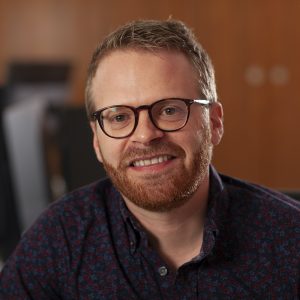
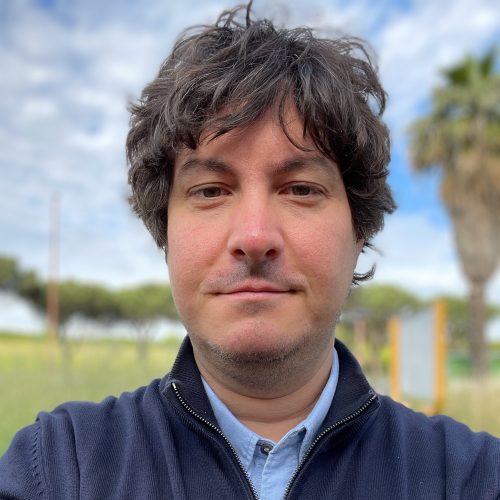
Daniel Stilck França is an Associate Professor at the Department of Mathematical Sciences within the Faculty of Natural and Life Sciences at the University of Copenhagen . He is affiliated with the QMATH Centre for Quantum Mathematics and related research networks. His research focuses on quantum information and computation , particularly on noise characterization in quantum systems, its impact on computational tasks, and quantum-inspired convex optimization algorithms. Recent work explores tensor networks and quantum error mitigation limitations. Key publications (2023-2025) address topics like Pauli channel estimation, Hamiltonian parameter learning, and quantum simulator scalability. His work has been featured in Nature Communications , Nature Physics , and ACM/IEEE conferences.
Francisco Camara Pereira is a Professor and Head of Section at the Department of Technology, Management and Economics at the Technical University of Denmark (DTU). His research focuses on Intelligent Transportation Systems, Machine Learning, and Data-Driven Decision-Making in transportation contexts. He actively contributes to advancing transportation science through interdisciplinary approaches combining simulation, optimization, and AI techniques. His work addresses challenges in public transport analysis, charging infrastructure planning, and multimodal demand prediction. Recent projects include developing graph-based optimization methods for electric vehicle networks and causal discovery frameworks for transportation systems. He supervises multiple PhD students in areas like federated learning for cyclist safety, causal graph neural networks, and socially aware AI models. Key contributions include publications on smart card data analysis for travel surveys, stochastic infrastructure expansion models, and transfer learning for bike-share systems. His research aligns with UN Sustainable Development Goals related to sustainable cities and innovation. Dr. Pereira collaborates internationally on transportation policy and infrastructure projects. His lab focuses on translating theoretical advancements into practical solutions for urban mobility challenges.
John Dalsgaard Sørensen is a Professor and Head of Research Group at the Department of the Built Environment, Aalborg University, within the Faculty of Engineering and Science. He leads the Risk, Resilience, Safety, and Sustainability of Systems Research Group and is affiliated with the Danish Centre for Risk and Safety Management. His research focuses on structural safety, wind turbine reliability, probabilistic design, and risk assessment of infrastructure systems. He has supervised 13 PhD students and contributed to over 600 publications. Key research areas include wind turbine structural integrity, fatigue analysis of offshore and onshore structures, probabilistic design standards (e.g., Eurocodes), and risk-based decision-making for infrastructure. He leads projects like Windscanner (remote sensing for wind measurements) and MANTIS (cyber-physical maintenance systems). Collaborations span academia and industry, addressing challenges in energy systems, civil infrastructure, and safety engineering. His work emphasizes practical applications of advanced modeling techniques, such as Bayesian networks and stochastic simulations, to enhance reliability and reduce operational costs. He is actively involved in standardization efforts for structural design and serves on boards like Energi- og MiljøData Fonden. Recent activities include presenting at international conferences and advising on media debates related to structural safety.
Andrea Burattin is an Associate Professor at the Department of Applied Mathematics and Computer Science, Technical University of Denmark. His work bridges formal methods and practical process analysis, focusing on process mining, business process management, and hybrid modeling techniques. He actively contributes to research in healthcare process optimization, streaming data analysis, and system verification through Petri nets and CCS transformations. UN Sustainable Development Goals: Poverty eradication, environmental protection, and prosperity for all (via process optimization) Active projects: Immersive Process Mining (2024-2027), Usability and Understandability of Hybrid Process Models (2018-2021) His research explores large language model integration with process mining, proposing frameworks like Tiramisù for multi-faceted process visualization and PN2CCS for formal model translation. Recent work emphasizes real-time monitoring, conformance checking, and IoT-driven process analytics. Key trends in his publications include: 1) Streaming process mining pipelines (2022-2025); 2) LLM-plan generation frameworks (2024); 3) Formal verification techniques (Petri nets, CCS); 4) Healthcare process modeling (2019-2023); 5) Behavioral pattern analysis in process compliance. Scientific Awards Best Demo Award (2022, 2016) Best Process Mining Dissertation Award (2014) Best Workshop Paper (EDBA and PODS4H, 2023) As advisor, he supervises PhD projects on process mining and hybrid modeling. His editorial roles include Information Systems reviewer (2024-2025) and past editor for Engineering Applications of AI (2022-2023). Collaborations span Denmark, Italy, and the Netherlands.
Sebastian Risi is a Professor at the IT University of Copenhagen , where he directs the Creative AI Lab and co-directs the Robotics, Evolution and Art Lab (REAL) . His work bridges computational evolution, deep learning, and collective intelligence for applications in robotics, art, and video game design. His research focuses on self-organizing AI systems that grow or assemble through local interactions, inspired by biological development. Key areas include neuroevolution , neural cellular automata , and generative modeling , with applications in adaptive robotics, game content creation, and damage-resilient AI. Recent publications highlight trends in self-assembling neural architectures (NDPs) and 3D functional machine generation (Minecraft experiments). Awards include ERC Consolidator Grant (2022), Best Paper at FDG’21 , and Google Faculty Award (2019). Scientific Awards : ERC Consolidator Grant (GROW-AI), Best Paper FDG’21, Runner-Up IEEE Games’20, GECCO 2017 Competition Winner, Sapere Aude Grant, Amazon/Google Faculty Awards He advises on projects like GROW-AI (EU-funded), AI-TESTER (game testing), and C2SIM (military systems). Media coverage includes Science , Wired , and Popular Science .
Zhiru Sun is an Associate Professor at the University of Southern Denmark, affiliated with the Department of Design, Media and Educational Science. Their research focuses on the intersection of education, humanities, and data science, with expertise in Learning Analytics (LA), Digital Humanities (DH), and AI applications in education and humanities. Sun holds a Ph.D. in Educational Technology from The Ohio State University (2011–2015), alongside advanced degrees in Applied Statistics and Cultural Foundations of Technology. Key research interests include student motivation and performance analysis, historical data mining in DH, and human-centered AI in education. They have received notable awards such as the Outstanding Proposal Award (2021) and the Loadman Outstanding Dissertation Award (2016). Sun leads projects like 'Empowering Humanities Education with Deep Learning' and 'Flipped Classroom Design for Self-Regulation.' Their work spans collaborative learning algorithms, flipped classroom efficacy, and generative AI policy analysis in education. Educations: Ph.D. in Educational Technology, M.Sc. in Applied Statistics, and M.Sc. in Cultural Foundations (all from The Ohio State University) Key Projects: FREI: The Danish Family Revolution, DH Visualization Tools Teaching: Courses include Digital Humanities, Data Science, and Web-mediated Communication Recent publications address learner empowerment in online environments, negotiation skills in collaborative games, and group formation algorithms for optimal learning outcomes.
Anker Degn Jensen is a Professor in the Department of Chemical and Biochemical Engineering at the Technical University of Denmark (DTU), where he is affiliated with the CHEC Research Centre. His research spans chemical reaction engineering, catalysis, and particle technology with applications in energy and sustainability. His research interests include chemical reaction engineering , catalysis , combustion , gasification of solid fuels , flue gas cleaning (especially NOx and Hg removal), production of liquid fuels , and fluidized bed processes for coating and agglomeration in white biotechnology. His work significantly contributes to UN Sustainable Development Goals related to clean energy and climate action. The recent publications highlight a strong trend in bio-oil upgrading , ammonia synthesis , plasma-assisted methane conversion , and adsorption modeling . These works reflect a deep engagement with sustainable fuel production, catalytic process optimization, and fundamental surface reaction mechanisms. Conversion of Furfural as a Bio-Oil Model Compound An Adsorption Isotherm That Includes Interactions Plasma-Assisted Non-Oxidative Coupling of Methane Optimisation of a Haber-Bosch Synthesis Loop Production of Phenolic Compounds from Argan Shell Waste Anker Degn Jensen is actively supervising multiple PhD students and leading research projects in hydrogen production, CO2 and H2O electrochemical reduction, bio-oil hydrotreating, and catalytic upgrading of biomass. He is involved in over 100 projects, including active grants on Conversion of hydrocarbons to hydrogen , Modeling electrochemical CO2 reduction , and Catalytic upgrading of pyrolysis oil . He is associated with the CHEC Research Centre at DTU, a hub for chemical engineering and catalysis research. His team collaborates on advanced reactor designs and catalytic processes for renewable fuels and chemicals.
Philip Loldrup Fosbøl is an Associate Professor in the Department of Chemical and Biochemical Engineering at the Technical University of Denmark (DTU), College of Engineering. He is actively affiliated with CERE – Center for Energy Resources Engineering, where he conducts research on CO 2 capture, storage, transport, and utilization. His work integrates thermodynamic modeling, process simulation, and pilot-scale experimentation to address challenges in carbon management and sustainable energy systems. His research interests include: Carbon Dioxide Capture and Storage (CCS) Thermodynamics and Phase Equilibrium of Electrolyte Solutions Process Design, Simulation, and Optimization CO 2 Corrosion in Energy Systems Biogas Upgrading and Cleaning CO 2 Utilization and Conversion Development of Predictive Thermodynamic Models Mobile and Large-Scale Pilot Facilities for CO 2 Capture His recent publications (2025) highlight a strong focus on biogas upgrading, solvent degradation in industrial CO 2 capture, thermophysical property measurements, and novel electrochemical separation methods. These works reflect a consistent trend toward energy-efficient, scalable, and industrially applicable solutions for decarbonization, particularly in flue gas and biogas treatment. Scientific awards received: Top PhD Thesis of the Year (2008) He actively supervises multiple PhD students and leads research projects funded by industrial partners such as Ørsted, Shell, Equinor, and Novozymes, as well as EU initiatives including CASTOR, iCap, and OCTAVIUS. His work contributes to UN Sustainable Development Goals related to climate action and affordable, clean energy. He is involved in laboratory research on thermodynamic equilibrium (VLE, SLE), heat capacity, corrosion mechanisms, and core flooding for CO 2 storage. His team develops experimental methods and operates pilot facilities for CO 2 capture and biogas cleaning, often in collaboration with key researchers like Kaj Thomsen, Nicolas von Solms, and Georgios Kontogeorgis.
Teresa Hirzle is a Tenure Track Assistant Professor at the Department of Computer Science , University of Copenhagen , specializing in Human-Centred Computing . Her research focuses on Human-Computer Interaction (HCI) , Virtual Reality (VR) , Extended Reality (XR) , and Gaze-Based Interaction . Research Interests: Designing interaction techniques for immersive environments Eye movement analysis for educational applications Addressing digital eye strain in interactive systems Evaluating user experience in VR/AR Recent Research Trends: Her recent publications examine AI representation in VR co-creation, VR sickness in locomotion, eye strain in gaze-driven systems, and hybrid applications of comics/AR. She also explores pedagogical implications of eye tracking in remote learning. Contact: Email: tehi@di.ku.dk Office: Sigurdsgade 41, 2200 København N.
Navid Bayati is an Associate Professor at the University of Southern Denmark, affiliated with the Institute of Mechanical and Electrical Engineering and the Centre for Industrial Electronics. He leads the Control and Protection of Smart Grids (CAP-SG) group and focuses on renewable/hybrid power systems, microgrid protection, and grid code compliance. Education: Ph.D. in Power Systems & Microgrid Protection (2020, Aalborg University); M.Sc. in Power Systems (2017, Amirkabir University of Technology) His research spans renewable energy integration , transient analysis , grid interconnection , and digital twin applications . Recent work includes machine learning for carbon emission prediction, fault localization in DC microgrids, and supercapacitor resilience in hybrid systems. Collaborations include projects like IEA Wind Task 50 and RePoSys , addressing grid renovation, life cycle assessment, and digital twin resilience. His teaching portfolio covers power electronics , energy management , and microgrid control .
Pooya Davari is a Professor and Head of the Section for Applied Power Electronic Systems at Aalborg University , Denmark. He leads the EMI/EMC in Power Electronics Research Group and serves as Vice Chair of the Energy Efficiency Mission. His research focuses on electromagnetic interference (EMI) and harmonic mitigation in power electronic systems, with over 200 publications and significant contributions to renewable energy integration. Education: B.Sc. and M.Sc. in Electronic Engineering (2004, 2008), Ph.D. in Power Electronics from Queensland University of Technology (2013) Prior Roles: Lecturer at QUT (2013–2014), Postdoc at AAU (2014) Research Interests: Harmonic and EMI analysis in grid-tied converters High power density converter design Signal processing for converter modeling Reliability of power electronic systems Article Trends: Recent work emphasizes EMI/EMC in renewable energy systems, wide bandgap semiconductors (SiC/GaN), and reliability modeling for EVs and hydrogen production via electrolysis. Sub-fields include converter topologies, grid integration challenges, and AI-driven diagnostics. Scientific Awards: Equinor 2022 Prize (Denmark’s oldest engineering award) IEEE EMC Society Young Professional Award (2020) World’s Top 2% Highly Cited Scientist (Stanford, 2021–2025) Multiple best paper awards (IEEE, Applied Sciences, etc.) Grants & Editorial Roles: Recipient of grants from Innovation Fund Denmark (Supra-EMC project), Horizon Europe (SOLARIS), and industry partnerships. Serves as Area Editor for IEEE Transactions on Transportation Electrification , Associate Editor for IEEE Transactions on Power Electronics , and Editor-in-Chief of Circuit World Journal (2020–2025). Labs & Standards: Coordinator of the EMC Laboratory at Aalborg University. Member of IEC standardization Working Groups 6 and 8 (TC77A), focusing on EMC strategies for power grids.
Giulio Cimini is Associate Professor of Theoretical Physics in the Department of Physics at the University of Rome Tor Vergata and a Research Associate at the 'Enrico Fermi' Research Center. He is a statistical physicist with a strong interdisciplinary focus on complex networks and their applications in socio-economic systems. His research interests include: Statistical Physics of Complex Networks Reconstruction and Validation of Economic Networks Social Network Interactions and Financial Markets Systemic Risk and Financial Contagion Scientific Success, Fitness, and Complexity Adaptive Social Recommendation Codon Usage Bias and Protein Interaction Networks His recent publications reveal a strong trend in applying statistical physics to real-world networks, particularly in finance and social systems. Key themes include the modeling of systemic risk in supply chains and financial networks, the dynamics of collective action on platforms like Reddit (e.g., the GameStop short squeeze), and the development of network reconstruction methods using maximum entropy and optimal transport frameworks. His work often combines empirical analysis with theoretical modeling. Scientific awards and recognitions include: Associate Editor, Frontiers in Physics – Interdisciplinary Physics Board Member, Network Science Society Member, Council of the Complex Systems Society Steering Committee, CCS/Italy He has advised or collaborated with numerous researchers, particularly in projects related to economic networks and complex systems. His work has been supported by Italian national grants such as PRIN and PNRR. He leads or co-leads research projects including RENet and C2T. His research is conducted within interdisciplinary teams involving physicists, economists, and computer scientists, often in collaboration with institutions like ISC-CNR, IMT Lucca, and the Network Science community.
Bo Markussen is a Professor at the University of Copenhagen within the Department of Mathematical Sciences . He is also a member of the Data Science Laboratory , where he contributes to statistical methodology and interdisciplinary collaborations. His academic journey began with a Cand.Scient (MSc) and PhD in Statistics from the University of Copenhagen, awarded in 1998 and 2002 respectively. 2012–present: Professor, Department of Mathematical Sciences, University of Copenhagen 2009–2012: Associate Professor, Department of Basic Sciences and Environment, University of Copenhagen 2006–2009: Assistant Professor, Department of Basic Sciences and Environment, University of Copenhagen Bo Markussen's research focuses on applied statistics , particularly in functional data analysis and multiple testing corrections in genetics . His work spans diverse domains including environmental science, agriculture, and public health. Recent research output highlights applications in Arctic climate data analysis, fire risk modeling, plant stress phenotyping, and nutritional biomarker prediction. His recent publications demonstrate a strong trend toward machine learning integration with statistical modeling , addressing challenges in high-dimensional data analysis and environmental risk assessment. Collaborations span institutions in Denmark and internationally, reflecting his engagement in pan-Arctic climate studies and tropical agricultural research. 2018–present: Associate Editor, Scandinavian Journal of Statistics 2017–2019: Chair, Danish Society for Theoretical Statistics 2015–2017: Board Member, Danish Society for Theoretical Statistics As a central figure in the Data Science Laboratory , Markussen leads statistical consultancy initiatives and contributes to methodological advancements. His expertise bridges theoretical statistics with real-world applications, particularly in handling complex datasets across biological and environmental domains.
Arash Nemati is an Assistant Professor at the Department of Energy Conversion and Storage, Technical University of Denmark (DTU). His research focuses on sustainable energy technologies, particularly solid oxide fuel cells, ammonia-fueled systems, and multiphysics modeling of energy conversion processes. He leads and participates in EU-funded projects such as RESCUE and X-SEED, aiming to advance renewable energy storage and green hydrogen production. His work addresses challenges in electrochemical systems, including durability, efficiency, and integration of renewable energy sources. He has received notable recognition, including a Highly-cited Paper award (Web of Science, 2022) and the DAAD Green Hydrogen Research Tour Scholarship (2024). Nemati actively supervises PhD students in areas like co-electrolysis and solid oxide electrolysis cell modeling. His expertise spans thermochemical processes, numerical simulations, and techno-economic evaluations of energy systems. Key projects include developing ammonia-driven reversible solid oxide cells for grid storage and optimizing pyrolysis-electrolysis systems for methanol and char production. His research aligns with UN Sustainable Development Goals, emphasizing clean energy and climate action.
Jens Honore Walther is a Professor in the Department of Civil and Mechanical Engineering at the Technical University of Denmark (DTU). His research focuses on fluid mechanics, coastal and maritime engineering, and computational fluid dynamics (CFD). He leads projects on wave energy converters, multiphase flow systems, and thermal energy applications. His work contributes to sustainable development goals related to clean energy and climate action. External Roles: Research associate at ETH Zurich (2003–present) Postdoctoral fellow at ETH Zurich (2000–2003) Project manager at Danish Maritime Institute (1996–1997) Research scientist at Danish Meteorological Institute (1994–1996) Research Interests: Walther’s expertise spans CFD modeling, granular flow dynamics, and nanofluidics. His recent projects include optimizing wave energy converters, analyzing gap resonances in marine structures, and developing multiphase ejector geometries for heat pumps. His work integrates high-performance computing and experimental validation to address challenges in marine engineering and energy systems. Advising & Projects: He supervises PhD students in areas such as elite sport aerodynamics, gas lubrication, and alternative fuel combustion. Notable projects include: Elite sport aerodynamics (2024–2026) Alternative fuel injection in marine engines (2023–2026) Multi-physical gas bearing modeling (2024–2027) Labs & Collaborations: Walther collaborates with institutions like ETH Zurich and engages in experimental facilities at DTU. His group focuses on advanced CFD simulations and fluid-structure interaction studies.