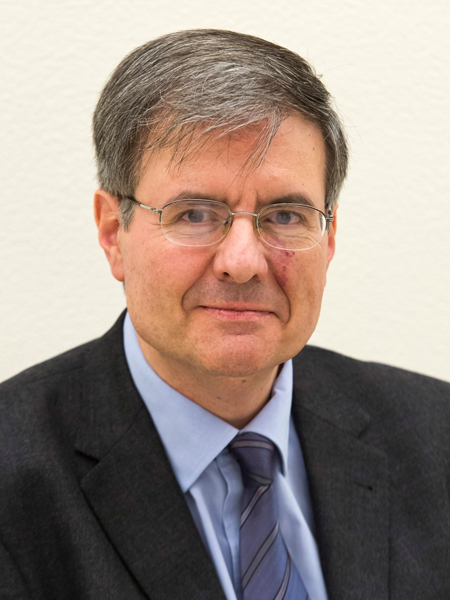
Edgar Weippl is a Professor at the Faculty of Computer Science, University of Vienna, where he serves as Vice Dean and Head of the Research Group Security and Privacy. His work spans cybersecurity, blockchain, and machine learning, with teaching roles in information security and software security courses. Current Positions: Vice Dean (Faculty of Computer Science), Head (Security and Privacy Research Group), Deputy Head (Neuroinformatics & Knowledge Engineering Groups) Research Interests: Cybersecurity, blockchain, IoT security, code obfuscation, privacy technologies, reinforcement learning, and socio-technical systems security Selected Publications: Focus on blockchain privacy, VoWiFi security, code obfuscation, and reinforcement learning applications
Ares Rosakis is the Theodore von Kármán Professor of Aeronautics and Mechanical Engineering at the California Institute of Technology (Caltech). He has served as Chair of the Division of Engineering and Applied Science (2009–2015) and Director of the Graduate Aeronautical Laboratories (GALCIT) (2004–2009). Rosakis holds visiting professorships at Nanyang Technological University (2018–2023) and Northwestern University (2018). Education : B.A. and M.A. in Engineering Science (Oxford, 1978); Sc.M. and Ph.D. in Engineering (Solid Mechanics, Brown University, 1980–1982) Academic Career : Caltech faculty since 1982 (Assistant, 1982; Associate, 1988; Full Professor, 1993) As a world-leading expert in dynamic failure mechanics of solid materials, Rosakis has pioneered research in dynamic ductile failure of metals, intersonic/supershear ruptures in composites and earthquakes, and Coherent Gradient Sensing (CGS) interferometry . His work spans experimental mechanics, solid mechanics, geophysics, and thin film stress measurement. His 15 most recent articles (2010–2014) focus on dynamic shear ruptures , fault mechanics , brittle failure , high-strain-rate deformation , and laboratory earthquake simulations , reflecting his cross-disciplinary expertise in materials science, geophysics, and mechanics. Scientific Awards & Recognitions Foreign Member of the Royal Society (2024) Two Honorary Doctorates (2023) U.S. National Academy of Engineering (2011) NASA Group Achievement Award (2009) Timoshenko Medal (2018) Multiple SEM and ASME awards (1989–2013) Research Leadership includes directing GALCIT and developing advanced optical and infrared diagnostic methods for real-time crack propagation and temperature measurement. His work bridges fundamental mechanics with applied material failure analysis , influencing aerospace, seismology, and nanotechnology.
Katrin Rabitsch is an Associate Professor of Economics at Vienna University of Economics and Business (WU Vienna), affiliated with the Department of Economics. Her research focuses on International Macroeconomics/Finance, Quantitative Macroeconomics, Business Cycles, and Monetary Economics. She has published extensively in top journals like European Economic Review , Journal of International Economics , and Macroeconomic Dynamics . Her work explores topics such as monetary policy transmission channels, fiscal multipliers, macroprudential policies, and asset pricing dynamics. Notable recent contributions include analyzing nonlinear inflation dynamics, firm entry costs in asset pricing, and agent-based economic forecasting models. Rabitsch also engages in policy-oriented research, examining the effects of borrower heterogeneity on financial stability and the role of imperfect information in monetary policy design. Her teaching and research are supported by affiliations with institutions like the Department of Economics at WU Vienna. Rabitsch’s methodologies often involve advanced DSGE modeling, VAR analysis, and computational simulations to address complex macroeconomic questions.
Dr. Ajay V. Singh is an Associate Professor in the Department of Aerospace Engineering at the Indian Institute of Technology Kanpur, India. He leads the Combustion and Propulsion Laboratory and has established himself as a leading researcher in combustion science and propulsion technology in India. His work on detonation physics has positioned IIT Kanpur at the forefront of this field with the unveiling of "India's First Detonation Tube Research Facility". Dr. Singh's educational background includes: PhD in Mechanical Engineering from University of Maryland, College Park (2015) M.Tech in Aerospace Engineering from Indian Institute of Technology Kanpur (2008) B.Tech in Mechanical Engineering from U.P. Technical University, Lucknow (2006) His research spans fundamental and applied aspects of combustion science with particular focus on high-speed propulsion systems, detonation cycle engines, gas turbine combustion, soot formation and oxidation, flame-synthesized functional nanoparticles, and fire dynamics. His innovative work bridges theoretical understanding with practical applications in aerospace propulsion, energy systems, and fire safety engineering. The media has widely covered his research, with features in India Today, Times of India, Hindustan Times, and Republic Bharat. Dr. Singh's publication record shows a clear trend toward increasingly sophisticated detonation research and fire dynamics studies, with recent work focusing on turbulent wind-driven flames, detonation inhibition mechanisms, and alternative fuel combustion. His articles consistently address challenges in high-speed propulsion and fire safety, demonstrating both theoretical depth and practical relevance. His scientific contributions have been recognized with numerous prestigious awards including the Distinguished Paper Award from the Combustion Institute (the only faculty member in India to receive this honor), a nomination for the Silver Combustion Medal, multiple Best Paper Awards, and the Exemplary Performance in Teaching Award. As an educator and mentor, Dr. Singh has guided numerous PhD and Master's students through their research. His Combustion and Propulsion Laboratory is supported by multiple research grants from agencies including ISRO, ARDB, SERB, and ANRF. He has developed specialized courses including "Explosion and Detonation Physics," which is the first of its kind at IIT Kanpur. Dr. Singh's laboratory serves as a hub for cutting-edge research in combustion science, featuring India's first Detonation Tube Research Facility and advanced experimental setups for studying flame dynamics, soot formation, and detonation physics. His international collaborations include institutions such as Stanford University, University of Maryland, Peking University, and Beijing Institute of Technology.
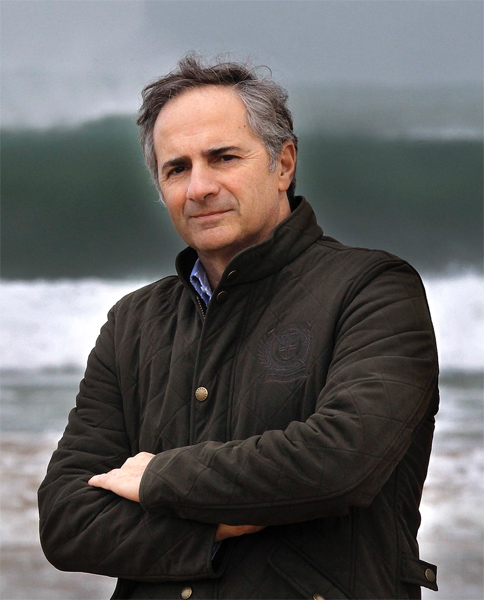
Iñigo J. Losada is a Full Professor at the School of Civil Engineering, University of Cantabria, and Research Director at the Environmental Hydraulics Institute (IHCantabria). He co-founded the Cantabria-Cornell Engineering Exchange Program and serves as Scientific Director of the Cantabria Coastal and Ocean Wave Basin. His work focuses on coastal dynamics, climate change adaptation, and ocean renewable energy. Coordinating Lead Author for IPCC reports (2014-2019) Editor-in-Chief of Coastal Engineering Ranked 2nd in Ocean Engineering citations (1992-2019) His research emphasizes: Coastal protection using green and grey solutions Wave interaction modeling with coastal features Climate change risk assessment and adaptation Wind and wave energy conversion systems Recent publications analyze global wave power variability, coral reef flood protection benefits, and nature-based coastal defenses. His work bridges experimental facilities (Cantabria Coastal Basin) with policy impact across 25+ countries. Scientific Awards King Jaime I Award (2018) John G. Moffat-Frank E. Nichol Award (2017) Navy Medal of Merit (2017) Member of Spanish Royal Academy of Engineering Losada has led over 25 EU/national projects, >80 technology transfer initiatives, and supervised 23 PhD students, shaping coastal protection policies and ocean energy development in Europe. His experimental infrastructure ranks 6th globally in Ocean Engineering (Shanghai Ranking, 2017).
Prof. Joachim Schöberl is a faculty member at TU Wien's Faculty of Mathematics and Geoinformation, leading the Scientific Computing and Modelling research group. His academic career includes roles as a university professor (Univ.Prof.) with engineering and technical doctorates (Dipl.-Ing., Dr.techn.). Research focuses on advanced numerical methods, including finite element methods, computational fluid dynamics, and partial differential equations. He has pioneered high-order schemes for fluid-structure interaction, shell mechanics, and electromagnetic simulations. Notable contributions include the NGSolve finite element library and innovative approaches to curvature approximation in discrete geometry. Recent work emphasizes nonlinear elasticity modeling, fractional diffusion problems, and shape optimization for biomembranes. His team collaborates on projects like metascreen upscaling, micromorphic continuum models, and eddy current simulations in laminated materials. Prof. Schöberl advises PhD students researching mixed finite element methods, fractional operators, and computational mechanics. His lab develops open-source tools for high-performance scientific computing.
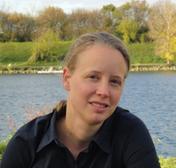
Christine Stumpp is a Professor at the Institute of Soil Physics and Rural Water Management , affiliated with the University of Natural Resources and Life Sciences Vienna (BOKU) . Her work integrates hydrology , soil physics , and stable isotope analysis to address critical issues in groundwater recharge , climate change impacts on water systems , and microplastic transport in soils .
Martin Bicher is a PostDoc Researcher at TU Wien, affiliated with the Department of Data Science under the Faculty of Informatics. He specializes in agent-based simulation, epidemiological modeling, and decision support systems for public health crises. His work focuses on optimizing resource allocation, vaccination strategies, and policy evaluation during pandemics. He teaches courses such as Modeling and Simulation (194.076), Modelling and Simulation in Health Technology Assessment (194.094), and Advanced Modeling and Simulation (194.056). His research is supported by projects like DynOptTestControl (2022–2026) and KLIPHA-COVID19 (2020–2021). Key research interests include agent-based modeling frameworks, integration of machine learning into simulation systems, and multi-criteria decision support for public health interventions. His publications analyze pandemic response strategies, vaccination prioritization, and the impact of environmental factors on disease spread. Recent work includes developing mathematical models for equitable disease testing, simulating vaccination strategies under supply uncertainties, and evaluating contact-tracing policies. He collaborates with interdisciplinary teams to address challenges in healthcare resource optimization and policy design. Advising two students, Bicher has mentored theses on railway simulation and delay modeling. His contributions to pandemic decision support have been featured in high-impact journals like Omega and PLoS ONE.
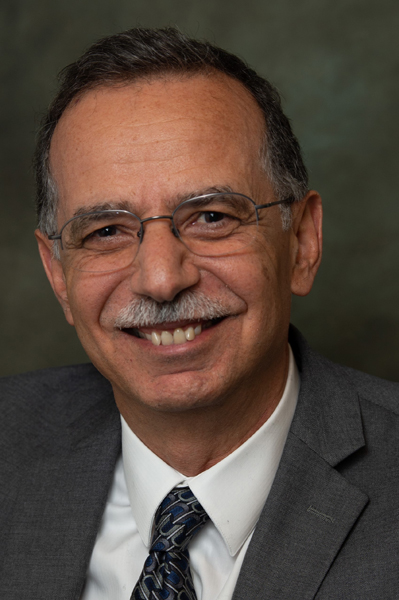
Mostafa Ammar is a Regents' Professor and Interim Chair of the School of Computer Science at the Georgia Institute of Technology. He has held leadership roles including Associate Chair (2006–2012) and has been a faculty member since 1985. His research focuses on network architectures, protocols, and services, with contributions to mobile cloud computing, network virtualization, and disruption-tolerant networks. He has advised 39 Ph.D. students and secured funding from agencies like NSF, DARPA, and industry partners such as Cisco and IBM. Education : S.B. and S.M. from MIT, Ph.D. from the University of Waterloo. Research Interests : Network architectures, mobile cloud computing, overlay networks, video streaming, and network simulation. His work bridges theoretical advancements with practical implementations, emphasizing scalable and efficient network solutions. Publications : Over 214 publications with a focus on network virtualization, mobile edge computing, and distributed systems. Recent work explores encrypted traffic analysis and femto-cloud resource sharing. Awards : ACM/IEEE Fellowships (2002–2003), Best Paper Awards (2012, 2018), and multiple teaching excellence recognitions. Service : Editor-in-Chief of IEEE/ACM Transactions on Networking (1999–2003), conference co-chair roles, and steering committee memberships. Advising & Grants : Mentored 39 Ph.D. students and secured multi-million-dollar grants. His research has influenced industry standards and academic curricula. Labs/Teams : Active in Georgia Tech’s networking research groups, contributing to open-source network simulators and collaborative projects with global institutions.
Marie Farge is a distinguished French mathematician and physicist currently serving as Directrice de Recherche 1ère classe at the French National Center for Scientific Research (CNRS) since 2008. She maintains strong affiliations with École Normale Supérieure in Paris where she has been based since 1981, and teaches at multiple institutions including Institut des Etudes Politiques (IEP) in Paris since 2011. Her extensive academic career includes visiting positions at prestigious institutions worldwide including Cambridge University, Harvard University, and the Max Planck Institute. Dr. Farge's research focuses on the intersection of mathematics and physics, with particular emphasis on wavelets , turbulence , and computational fluid dynamics . Her pioneering work has established wavelet analysis as a fundamental tool for studying turbulent flows and extracting coherent structures. She has developed the Coherent Vortex Simulation (CVS) method, which has become influential in turbulence modeling. Her research spans theoretical mathematics, numerical methods, and practical applications in fluid dynamics and plasma physics. Analysis of her publication record reveals a consistent focus on applying wavelet transforms to fluid dynamics problems, with increasing sophistication in handling three-dimensional turbulence and plasma phenomena. Her work demonstrates a progression from theoretical foundations of wavelet analysis to practical computational methods for complex fluid systems. The interdisciplinary nature of her research bridges mathematics, physics, and engineering applications. Prix Poncelet from the French Academy of Sciences (1993) American Physical Society Gallery of Fluid Motion award (1990) Seymour Cray Award for Scientific Computing (1988) Ministry of Foreign Affairs of Japan Award (1985) Fulbright Fellowship at Harvard University (1981) ESRO Award (1971) Elected member of Academia Europaea (2005) Grand Prix du CNRS 'La Recherche en Action' (1989) As an educator, Dr. Farge has taught extensively across France and internationally at institutions including Stanford University, Cambridge University, and numerous European and Asian universities. She has served on the editorial boards of major journals including the Journal of Applied and Computational Harmonic Analysis since 1993 and has been active in the Ethics Committee of CNRS since 2007. Her teaching spans wavelet theory, computational physics, turbulence, and signal processing, reflecting the breadth of her expertise. Dr. Farge maintains active research collaborations worldwide, evidenced by her numerous visiting positions at leading research centers including the Center for Turbulence Research at Stanford University, the Newton Institute in Cambridge, and the Institute for Advanced Study in Princeton. Her work continues to influence both theoretical developments in wavelet analysis and practical applications in fluid dynamics and related fields.
Angel Rubio is a distinguished Professor of Physics at the University of Hamburg and holds concurrent roles as Director of the Max Planck Institute for the Structure and Dynamics of Matter, and Distinguished Professor at the University of the Basque Country (UPV/EHU). He leads the Wolfgang Pauli Centre and the Nano-bio Spectroscopy group. His academic journey includes Full Professorships at UPV/EHU (2001–2014) and positions at the Simons Foundation’s Flatiron Institute, UC Berkeley, and the Fritz Haber Institute. Rubio is a global leader in computational quantum physics, particularly in TDDFT and nanomaterials. Education : Ph.D. in Physics, University of Valladolid, 1991 (Summa Cum Laude) B.S. in Physics, University of Valladolid, 1988 (Summa Cum Laude) Research Focus : Rubio’s work centers on electronic structure methods, time-resolved spectroscopy, and quantum many-body theory. He pioneered the open-source octopus code for ab initio simulations, widely used globally. His contributions span nanocapillarity, nanoplasmonics, and strong light-matter interactions, with applications in novel materials and energy systems. Grants & Leadership : Holder of two ERC Advanced Grants (DYNamo and QSpec-NewMat), Rubio directs the European Theoretical Spectroscopy Facility (ETSF). His research has garnered over 28,000 citations (H-index 82) and 65 papers with >100 citations. He is a vocal advocate for computational physics, organizing >50 international workshops and advising major institutes like the Psi-k Network. Recognition : Top 0.3% in the American Physical Society’s Author Rank Honor Prize for Best Ph.D. Thesis (1992) Member of multiple national academies and advisory boards
Manuel Arellano is Professor of Economics at the Center for Monetary and Financial Studies (CEMFI) in Madrid since 1991, with prior appointments at the University of Oxford (1985-89) and London School of Economics (1989-91). A leading econometrician specializing in panel data analysis, his work bridges theoretical econometrics and labor economics applications. He earned his undergraduate degree from the University of Barcelona and Ph.D. from the London School of Economics. Arellano's research focuses on econometric methodology for panel data, particularly dynamic models with heterogeneity. His seminal book Panel Data Econometrics (2003) established foundational frameworks for nonlinear and dynamic panel estimation. Current work extends to distributional analysis of random coefficients and robust inference under uncertainty, maintaining consistent emphasis on labor market applications like unemployment duration and policy evaluation. His publication history reveals a 30-year trajectory advancing panel data econometrics, evolving from specification testing (1987-1995) to sophisticated dynamic and nonlinear models (2003-2014), with persistent focus on practical implementation and labor economics applications. Major honors include: President of the Econometric Society (2014) Foreign Honorary Member of the American Academy of Arts and Sciences (2014) Rey Jaime I Prize in Economics (2012) ISI Highly Cited Researcher status (2010) Fellow of the Econometric Society (2002) No information on student advising or research grants appears in the source materials. Similarly, details about research laboratories or collaborative teams are not documented in the provided texts.
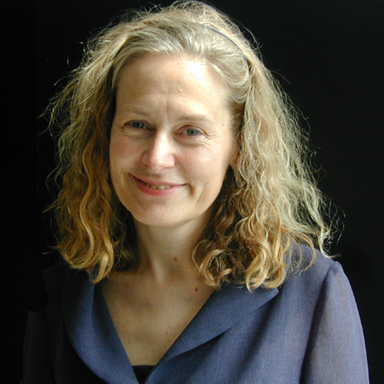
Barbara Kaltenbacher is a Professor at the Institute of Mathematics, University of Klagenfurt. She serves as Deputy Head of the Institute and is actively involved in academic governance through roles in curricular commissions for Information Technology and Mathematics. Her research focuses on nonlinear acoustics , inverse problems , and partial differential equations , particularly in modeling wave propagation and parameter identification. Her work spans theoretical and applied domains, including Acoustic nonlinearity parameter tomography Fractional regularization techniques Optimization of imaging and ultrasound models Well-posedness of nonlinear PDEs Her recent publications address advanced mathematical challenges in nonlinear acoustics and inverse problems, with applications in medical imaging and materials science. She contributes to academic leadership through committee memberships and maintains active research collaborations across disciplines.
Dr. Nikolina Ban is an Assistant Professor at the Department of Atmospheric and Cryospheric Sciences (ACINN) at the University of Innsbruck, Austria. Her research focuses on high-resolution climate modeling, convection-permitting models, and mountain climate dynamics. She leads projects such as 'Mountain Climate at the Kilometre-Scale Resolution' and collaborates with international teams like TEAMx-UIBK and the CORDEX-FPSCONV-Team. Key areas include extreme rainfall projections, hail/lightning diagnostics, and the impact of climate change on Alpine regions. Expertise: Regional climate modeling, convection-permitting approaches, mountain climate variability. Key Projects: Third Pole climate simulations, Alpine hydrological studies, and national climate scenario development in Austria. Her work addresses challenges in resolving fine-scale climate processes over complex terrains. Recent studies emphasize improving projections of precipitation extremes and understanding model uncertainties. Collaborations span institutions globally, including the Swiss Federal Institute of Technology (ETH Zurich) and the University of California, Los Angeles (UCLA). Publications highlight advancements in ensemble-based climate simulations and the added value of kilometer-scale models for capturing temperature and wind patterns in alpine regions. Ongoing research includes evaluating dynamical downscaling techniques for reliable regional climate change assessments.
Prof. Karl Kunisch is the Scientific Director at RICAM (Johann Radon Institute for Computational and Applied Mathematics) and a Full Professor of Mathematics at the University of Graz, Austria. He has held academic positions worldwide, including visiting roles at Brown University, INRIA, and Technical University Berlin. His research focuses on Optimization and Optimal Control, Partial Differential Equations (PDEs), Inverse Problems, and their applications in mathematical imaging, medicine, and computational science. Education: 1975: Diploma Degree, Technical University of Graz, Austria 1975: Master Degree, Northwestern University, Evanston, Illinois, USA 1978: Ph.D. Degree, Technical University of Graz 1980: Habilitation, Technical University of Graz Research Interests: Prof. Kunisch’s work spans theoretical and applied aspects of optimal control, including stabilization of PDEs, infinite horizon control problems, and feedback design. He explores numerical methods for PDE-constrained optimization and their applications in medical imaging, cardiac electrophysiology, and machine learning. His projects also address shape optimization and mathematical models for fluid dynamics and quantum systems. Publications Trends: His recent articles emphasize feedback stabilization for nonlinear systems, sparse control approaches, and the intersection of optimal control with machine learning. Key themes include robust algorithms for uncertainty handling, efficient numerical methods for high-dimensional problems, and applications in biomedical engineering. Awards: Pro Scientia-Scholarship (1974–1977) Research Award of Theodor-Körner-Fonds (1979) Fulbright Travel Scholarship (1979/80, 1985) Max Kade Scholarship (1982–83) Japanese Society for the Promotion of Science Fellowship (1990) Christian Doppler Laboratory Fellowship (1992) Advising & Grants: Prof. Kunisch leads the Optimization and Optimal Control research group at RICAM and has directed projects on mathematical data science and inverse problems. His work involves collaborations with institutions globally and has been supported by grants from NASA, the European Union, and national funding bodies. He has advised numerous researchers, though specific student names are not listed here. Labs/Teams: Group Leader of the Group "Optimization and Optimal Control" at RICAM since 2004, contributing to interdisciplinary research in computational mathematics and its applications.