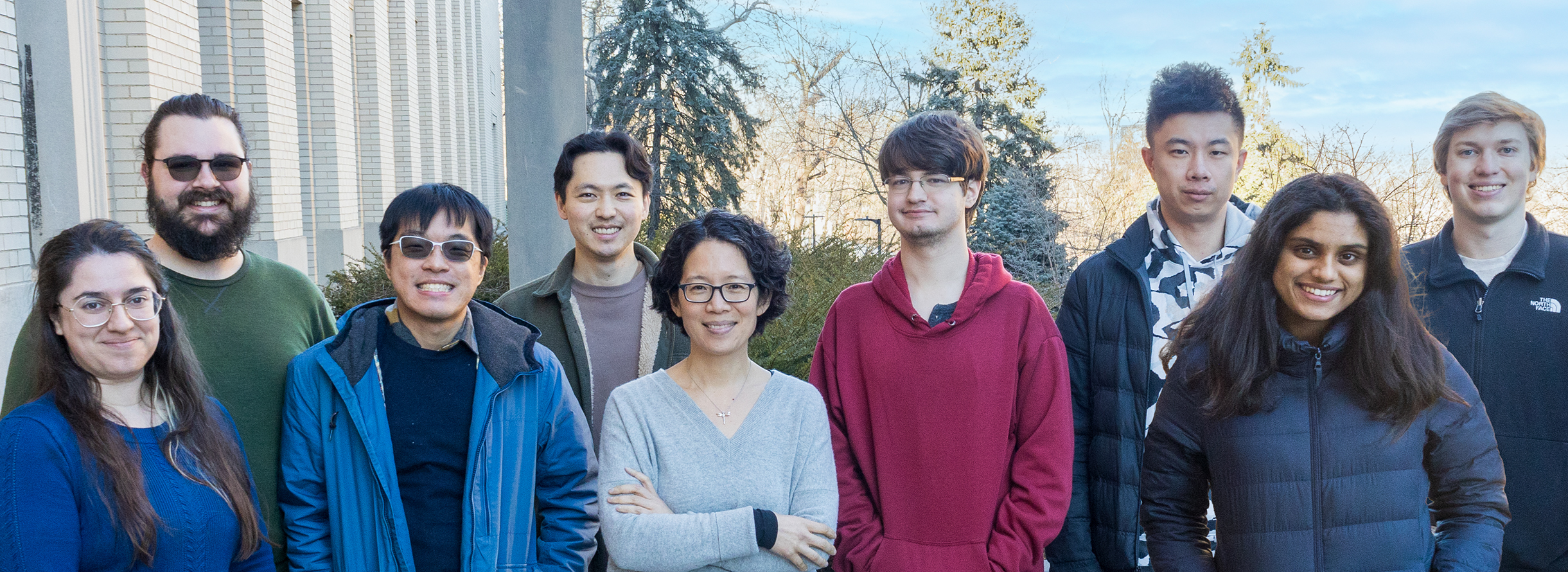
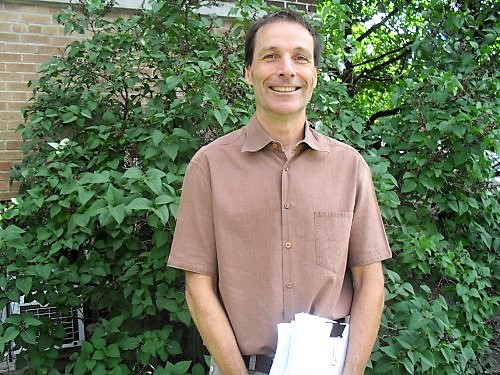
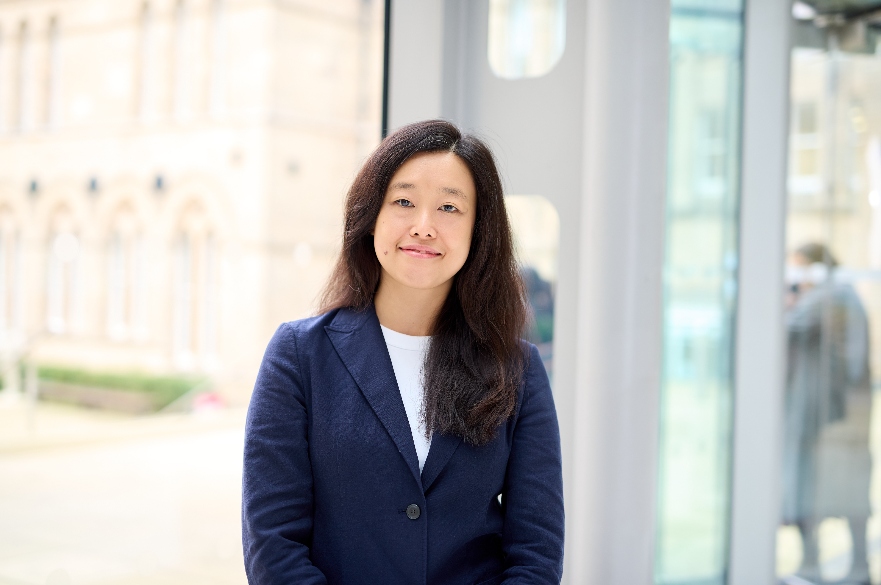
Ed Chien is an Assistant Professor at Boston University's Department of Computer Science within the College of Arts & Sciences. He specializes in applying differential geometry and topology to graphics, computational engineering, and machine learning. Previously, he was a postdoctoral researcher at MIT's CSAIL and Bar-Ilan University. His work focuses on mathematically rigorous solutions to problems in geometric data processing and optimal transport. Education PhD in Mathematics, Rutgers University (2015) A.B. in Mathematics & Physics, Dartmouth College (2009) Research Highlights Dr. Chien's research includes fundamental studies on hexahedral mesh topology for Finite Element Modeling, optimal transport applications in machine learning, and singularity-free geometric algorithms. His work bridges theoretical mathematics with computational tools for engineering and graphics. Publications span top venues like NeurIPS, Eurographics, and SIGGRAPH, reflecting contributions to geometry processing and machine learning intersections. Program committee roles include Eurographics SGP (2019) and AAAI (2020). Awards & Recognition No specific awards listed, but notable service includes program committee memberships and peer-reviewed contributions to leading conferences. Grants & Advising Active in mentoring through academic positions but no explicit grant details provided. Research focuses on advancing geometric algorithms and optimal transport methodologies.
Lillian T. Chong is a Professor in the Department of Chemistry at the University of Pittsburgh, affiliated with the Kenneth P. Dietrich School of Arts and Sciences. She leads the Chong Lab, focusing on computational biophysics and biomolecular simulations. Her research emphasizes developing advanced simulation methods like weighted ensemble (WESTPA) for studying rare events in biomolecules, such as protein folding, binding pathways, and conformational switches. Research Interests: - Development of weighted ensemble algorithms for long-timescale simulations - Protein-protein binding kinetics and unbinding pathways - Design of switchable proteins with enhanced dynamic properties - Integration of experimental data (e.g., NMR, EPR) with simulations Recent Article Trends: Recent work explores ligand unbinding mechanisms, glycan-mediated spike protein dynamics, and force field validation. The lab’s methods are applied to drug discovery, viral entry mechanisms, and enzyme catalysis. Awards & Honors: Gordon Bell Special Prize for HPC-Based COVID-19 Research (2020) NSF CAREER Award (2009-2014) Bellet Teaching Excellence Award (2017) Advising & Grants: Advised students including Darian Yang (PhD 2023) and Jeremy Leung (PhD 2023). Funded by NSF and industry grants, including work on SARS-CoV-2 spike protein dynamics and force field development. Labs & Teams: The Chong Lab collaborates with groups at CMU and NIH, developing open-source tools like WESTPA and LPATH . Research spans Pittsburgh’s computational biophysics community, with interdisciplinary projects in drug design and protein engineering.
Michael C. Desch is the Packey J. Dee Professor of Political Science and the Brian and Jeannelle Brady Family Director of the Notre Dame International Security Center at the University of Notre Dame. He previously served as Chair of the Department of Political Science, founding Director of the Scowcroft Institute of International Affairs at Texas A&M University, and held roles in U.S. government agencies including the State Department and Congressional Research Service. Desch holds a B.A. (Honors) in Political Science from Marquette University (1982), an A.M. in International Relations (1984), and a Ph.D. in Political Science (1988) from the University of Chicago. His research focuses on international security, U.S. foreign policy, and civil-military relations, with notable works including Power and Military Effectiveness (2008) and Cult of the Irrelevant (2018). He critiques the disconnect between academic research and policy-making, emphasizing the need for relevance in social science. His articles address topics like U.S.-China relations, nuclear strategy, and the academic-policy divide. He has spoken at numerous conferences, including the American Political Science Association and the Atlantic Council, and has appeared on media outlets such as CNBC and Al Jazeera. Key Contributions: Over 100 scholarly articles, four authored books, and co-edited volumes on security studies and policy. Grants & Funding: Supported by institutions like the Carnegie Corporation and the Minerva Initiative. Labs/Teams: Leads the Notre Dame International Security Center, fostering interdisciplinary research on global security challenges.
Dr. Alfred Kume is a Senior Lecturer in Statistics at the University of Kent, affiliated with the School of Mathematics, Statistics and Actuarial Science. He has held this position since 2004 and has been involved in examining processes for the Institute of Actuaries. His research focuses on shape analysis, directional statistics, image analysis, and stochastic geometry. Kume obtained his PhD and postdoctoral training at the University of Nottingham after working as an actuary. He has supervised students including Theodoros Gkolias and Justyn Campbell-White. His work spans statistical methodology applied to astronomy (e.g., stellar light observations, HII regions) and computational statistics (e.g., holonomic gradient methods, clustering algorithms). His publications reflect expertise in probability distributions, algorithm development, and interdisciplinary applications. His office is located in Cornwallis South, Canterbury Campus. Research interests emphasize statistical techniques for shape and directional data, with applications in astronomy and biology. Key contributions include saddlepoint approximations for normalizing constants and statistical clustering methods. His work bridges theoretical statistics with practical problems in astrophysics and actuarial science. Publications highlight trends in statistical methodology (e.g., Bingham/Fisher-Bingham distributions), computational algorithms, and interdisciplinary collaborations. While no specific awards are listed, his extensive publication record and academic roles reflect scholarly recognition. Advising focuses on statistical shape analysis and Bayesian methods, with grants possibly tied to collaborative projects. He is part of research teams analyzing molecular clouds and astronomical phenomena. His lab or team activities are integral to interdisciplinary projects, though specific lab names are not mentioned.
Mohsen Pourahmadi is a Professor in the Department of Statistics at Texas A&M University, part of the College of Arts & Sciences. His research focuses on developing methodologies for modeling covariance matrices in multivariate and time series data, with applications to financial analysis, longitudinal studies, neuroeconomics, and high-dimensional data. Key tools include graphical lasso algorithms, Cholesky decomposition, and Bayesian approaches. He emphasizes extending generalized linear models (GLM) to covariance matrix estimation, leveraging prediction theory and stochastic processes. Education details are not explicitly provided in the text. His work spans theoretical advancements in covariance estimation, such as sparse VAR models, nonstationary process analysis, and regularized multivariate regression. He has contributed to applications like detecting cyber attacks on infrastructure systems and analyzing breast cancer data through Bayesian networks. Research interests include time series graphical models, antedependence models for longitudinal data, and regularization techniques for high-dimensional covariance matrices. His recent work explores fused-lasso penalties, Bayesian correlation matrix estimation, and stationary subspace analysis. Pourahmadi has authored numerous articles on topics ranging from multivariate volatility modeling to nonparametric covariance estimation, emphasizing both computational efficiency and theoretical rigor.
Joshua Loftus is a Professor of Statistics and Data Science at the London School of Economics (LSE), Department of Statistics. His research focuses on improving data science practices to reduce bias and enhance fairness in algorithms, particularly addressing social harms and scientific reproducibility. He develops methods for statistical inference post-model selection and uses causality to analyze algorithm fairness and interpretability. His work bridges high-dimensional statistics, causal inference, and ethical AI, with a strong emphasis on practical applications using R in data science education. Before joining LSE, Loftus earned his PhD in Statistics at Stanford University, served as a Research Fellow at the Alan Turing Institute (affiliated with the University of Cambridge), and was an Assistant Professor at New York University (2017–2020). His research interests extend to the societal implications of technology, advocating for systems that prioritize human values over technical efficiency. Key research themes include counterfactual fairness, causal reasoning in algorithmic systems, and disaggregated interventions to reduce inequality. His recent work explores temporal aspects of fairness, model-agnostic auditing, and the integration of ethical frameworks into machine learning pipelines. While no scientific awards are explicitly listed, his contributions to foundational AI ethics and statistical methodology are widely recognized in academic circles. Advising and grant details are not provided in the source text, but his leadership in interdisciplinary research collaborations, such as the Turing Institute affiliation, highlights active engagement in research networks. Loftus is part of the LSE’s vibrant data science community, contributing to both theoretical advancements and applied solutions for equitable technology deployment.
Joachim Krueger is a Professor of Cognitive and Psychological Sciences at Brown University. He holds editorial roles at the Personality and Social Psychology Review and the American Journal of Psychology . His research focuses on social judgment, decision-making, and the intersection of cognitive psychology with behavioral economics and organizational behavior. Key themes include self-perception, intergroup relations, free will belief paradoxes, and the volunteer’s dilemma. Dr. Krueger earned his Ph.D. from the University of Oregon (1988) and completed postdoctoral research at the Max Planck Institute in Berlin before joining Brown in 1991. He teaches courses on psychology in business, happiness philosophy, and behavioral decision sciences. His work critiques positivist methodologies while exploring creativity, leadership, and the replication crisis in psychological research. He is a Fellow of the Association for Psychological Science, Society for Experimental Social Psychology, and Eastern Psychological Association. His writings include books on social judgment, rationality, and happiness, alongside a Psychology Today blog. Krueger collaborates across disciplines, emphasizing pragmatic approaches to understanding human social behavior.
Yves Bourgault is a Full Professor in the Department of Mathematics and Statistics at the University of Ottawa. He holds a MSc and PhD from Laval University. His research focuses on computational fluid dynamics, numerical methods, finite element techniques, and continuum mechanics modeling, with applications in cardiac electrophysiology and ecological systems. Dr. Bourgault has supervised several graduate students, including Edward Boey (co-supervised), Sana Keita, Saint-Cyr Koyagurebo-Ime, and Kak Choon Loy. His work integrates advanced numerical techniques to address complex problems in biomedical engineering, environmental science, and mathematical physics. Key methodologies include finite element methods, deferred correction schemes, and anisotropic mesh adaptation. His research group is part of the Applied Mathematics division at the University of Ottawa, emphasizing interdisciplinary applications. Recent work explores climate change impacts on ecological systems, cardiac tissue modeling using high-resolution MRI data, and robust numerical methods for reaction-diffusion equations. Publications span topics such as bidomain models for cardiac electrophysiology, fluid-structure interaction in heart mechanics, and mathematical modeling of fuel cells. His contributions bridge theoretical numerical analysis with real-world biomedical and environmental challenges.
Maria Papathoma-Köhle is an Associate Professor at the Institute of Alpine Natural Hazards , University of Natural Resources and Life Sciences, Vienna. She holds a PhD in Tsunami Vulnerability Assessment from Coventry University (UK) and has held roles as Academic Coordinator of the MSc 'Risk Prevention and Disaster Management' at University of Vienna. Her research focuses on natural hazard vulnerability , particularly wildfire and flood risks in alpine regions, with methodological expertise in indicator-based vulnerability assessment and physical vulnerability indices . Education: PhD in Natural Hazards (Coventry University, UK) MSc in Environmental Management (University of Durham, UK) Geology Degree (University of Athens, Greece) Research: Specializes in wildfire vulnerability indices, flood risk modeling, and climate change adaptation frameworks. Developed the Physical Vulnerability Index (PVI) for buildings and contributed to EU-funded projects like FLOODLABEL and EXTEND. Awards: Elise Richter Scholarship (2016) Back to Research Grant (2012) Young European Scientist Award (2002) Projects: Led FWF-funded research on physical vulnerability indicators and collaborated on EU programs for wildfire preparedness. Current work includes climate change adaptation tools for Austrian infrastructure. Advising: Supervised 6 Master's/PhD students on wildfire and flood vulnerability topics. Publications: Over 106 peer-reviewed works; recent articles focus on wildfire indices, IPCC risk diagrams, and dynamic flooding assessment.
Jean-François Godbout is a Professor in the Department of Political Science at the Université de Montréal and an Associate Academic Member of Mila - the Quebec AI Institute. He directs the undergraduate program in Big Data Analytics in Social Sciences and Humanities at UdeM and conducts interdisciplinary research through the Complex Data Lab. Affiliated with IVADO (AI Consortium) Member of CÉRIUM (International Research Centre) and CECD (Democratic Citizenship Centre) His research focuses on: Data Science applications in political institutions AI Safety and generative AI's impact on political attitudes Misinformation Mitigation through large language models Comparative Political Development in Canadian and Lower Canada contexts Legislative Institutions and voting records analysis Political Polarization in online societies Recent publications analyze social media disinformation, AI persuasion on harmful topics, and education-focused text simplification. His articles frequently combine graph mining , machine learning , and political science methodologies. Scientific collaborations include: Mila researchers (Andreea Musulan, Maximilian Puelma Touzel) IVADO data science initiatives McGill University interdisciplinary projects He supervises students in: Political science (Julien Robin, Matthew Taylor) Artificial Intelligence (Kellin Pelrine, Camille Thibault) Computational social science applications
Daniel A Levinthal is the Reginald H. Jones Professor of Corporate Strategy and Professor of Management at the Wharton School, University of Pennsylvania. With extensive publications on organizational adaptation and industry evolution in technological contexts, he serves as Editor-in-Chief for Strategy Science and Organization Science. Research Interests Industry evolution Organizational learning Technological competition His 2024 research examines organizational search strategies, showing how cautious exploitation combines slow belief updating with strong explicit exploitation for effective adaptation. Recent work explores how political coalitions drive organizational change, with hierarchical belief influence structures proving more effective than flat designs in certain environments. Earlier studies developed the "Mendelian executive" framework and advanced Carnegie School decision-making theory. Scientific Awards Fellow of Strategic Management Society Fellow of Academy of Management Distinguished Scholar Awards (3 divisions) Irwin Award as Distinguished Educator 4 Honorary Doctorates Levinthal teaches advanced strategy courses (MGMT9000, MGMT9150) and graduate enterprise management (MGMT6110). His research has established foundational insights about organizational capabilities, knowledge aggregation, and strategic inertia.
Dr. Elaine Chen serves as Senior Lecturer in Business Analytics and Course Leader for the MSc Business Analytics and Artificial Intelligence at Nottingham Business School, Nottingham Trent University. Her teaching emphasizes practical applications of data and AI technologies for business decision-making, with dedicated focus on accessibility for diverse student backgrounds across technical and strategic domains. Her academic credentials include: PhD in Computing Science MSc in Business Information Technology Postgraduate Certificate in Academic Practice BTech (Hons) in Business Information Systems Chen's research bridges educational and business contexts through data-AI integration: Generative AI adoption in higher education, particularly for neurodivergent/disabled students Human-AI collaboration frameworks in organizational settings SME applications for AI-driven efficiency and competitiveness Workforce analytics and talent management systems Her work consistently connects technical AI capabilities with real-world implementation challenges. Publication analysis (2023-2025) reveals accelerating focus on generative AI's educational impact and business strategy integration, evolving from her foundational work in social recommender systems (2014-2020) which established methodologies now applied to contemporary AI challenges in business contexts. Her professional recognition includes: Senior Fellow of the Higher Education Academy (HEA) Chen actively supervises PhD candidates in AI education, human-AI collaboration, and workforce analytics domains. Her pedagogy leadership includes designing accredited business analytics curricula and securing teaching innovation projects with documented outcomes in student engagement metrics. Prior industry experience as an automation engineer at Intel informs her practical approach to AI implementation. Current initiatives focus on generative AI ethics frameworks and longitudinal SME adoption studies, extending her established research trajectory into emerging business technology challenges.
Giorgio Fagiolo is a Full Professor of Economics at Sant'Anna School of Advanced Studies. His work spans agent-based computational economics, economic networks, and macroeconomic policy analysis. University: Sant'Anna School of Advanced Studies (Scuola Superiore Sant'Anna) Department: Economics Email: giorgio.fagiolo@sssup.it Research interests focus on agent-based modeling , macroeconomic instability , and climate-economy interactions . He develops computational models to study industrial dynamics, financial integration, and policy design in complex systems. Key themes: Endogenous growth cycles, R&D network stability, and green transition policies. Methodological emphasis: Empirical validation of agent-based models and nonlinear economic dynamics. Scientific awards include collaboration with leading institutions like ETH Zurich, Columbia University, and OFCE Sciences Po. His publications appear in journals such as Journal of Economic Dynamics and Control and Ecological Economics .
Christian Erik Kampmann is an Associate Professor at the Department of Strategy and Innovation, Copenhagen Business School. He holds a Ph.D. in Management from MIT and an engineering background from DTU, bridging technical rigor with socio-economic research. Education: MIT (Ph.D. in Management), DTU (Engineering) Research Interests focus on system dynamics as applied to sustainable energy transitions, electric mobility, and green urban mobility. His methodological work enhances structural dominance analysis and eigenvalue techniques for complex system modeling. Recent publications address feedback loop gains, market misperceptions of feedback, and comprehensive analytical approaches for policy modeling, reflecting his interdisciplinary focus on sustainability challenges. Teaching includes courses on system dynamics, sustainable business strategy, and quantitative business research, with supervision of theses on electric mobility and product-service sustainability. External engagements involve board membership (Magasin du Nord, 2018-2020) and computer modeling consultancy (Zerolytics, Whitebox).
Prof. Dr. Ulrich Kleinekathöfer is a Full Professor of Theoretical Physics at Constructor University (formerly Jacobs University Bremen) in the School of Science. His research focuses on computational physics and biophysics, particularly on light-harvesting complexes, membrane transport, and quantum dynamics in biological systems. He leads the Computational Physics and Biophysics research group and coordinates the MSCA Doctoral Training Network "PhotoCaM". His educational background includes: PhD from Max-Planck-Institut für Strömungsforschung, Göttingen (1996) Diploma in Physics from Universität Göttingen (1993) Habilitation in Physics from Technische Universität Chemnitz (2002) Prof. Kleinekathöfer's research spans multiple areas of computational biophysics and theoretical physics. His primary interests include excitation energy transfer in light-harvesting complexes , molecular transport through membrane channels and nanopores , and quantum dynamics in open systems . His group develops and applies advanced computational methods including molecular dynamics simulations, quantum chemistry calculations, and machine learning approaches to study these phenomena. A significant portion of his work focuses on photosynthetic systems, particularly how energy is transferred and converted in natural light-harvesting complexes, with implications for renewable energy technologies. His recent publications demonstrate a strong trend toward integrating machine learning with traditional computational methods, particularly in the fields of quantum chemistry and molecular dynamics. There's a clear focus on multifidelity approaches that balance computational efficiency with accuracy. His work spans from fundamental quantum dynamics to applied research on antibiotic transport mechanisms, showing remarkable breadth while maintaining depth in computational methodology development. His notable recognition includes: Tan Chin Tuan Exchange Fellowship, NTU Singapore (2019) Prof. Kleinekathöfer has supervised numerous PhD students and postdoctoral researchers, with a current group comprising several PhD candidates and research associates. His research is supported by multiple funding sources including the Deutsche Forschungsgemeinschaft (DFG), European Union through MSCA Doctoral Network PhotoCaM, and previously through the Innovative Medicines Initiative "Translocation" and Marie Curie Training Program "Translocation". His collaborative network spans internationally, with partnerships at institutions in Germany, USA, Greece, and Switzerland. The Computational Physics and Biophysics Group operates within Constructor University's research infrastructure, utilizing high-performance computing resources for their simulations. The group maintains active collaborations with experimental groups to validate and inform their computational models, creating a strong interdisciplinary research environment focused on understanding fundamental biophysical processes at the molecular level.