Dr Luke Pearson is an Associate Professor at University College London's Bartlett School of Architecture and Co-Director of the Cinematic and Videogame Architecture MArch programme. He founded the Videogame Urbanism studio and co-founded the You+Pea design research practice with Sandra Youkhana. His work focuses on the intersection of architecture, game design, and media studies. Current roles: Associate Professor, Co-Director of Cinematic and Videogame Architecture MArch, Chair of undergraduate Board of Examiners Teaching experience: Expanded design studio scopes since 2009, coordinated Videogame Urbanism studio since 2016, and led international workshops Research explores how videogame technologies can transform architectural design through participatory and speculative approaches. His work bridges architectural history with contemporary virtual world-building practices, examining media representation and digital design methodologies. Recent publications and exhibitions demonstrate expertise in game engine culture, digital spatial protocols, and interactive environments. Luke's collaborative projects with You+Pea have been exhibited internationally at venues including the Royal Institute of British Architects and EGX games expo. RIBA Eyeline Competition Winner (2016, 2013) Multiple Royal Academy Summer Exhibition selections UCL Graduate Research Scholarship Leverhulme Trust Bursary
Ioannis Stamelos is a Professor of Software Engineering at the School of Informatics, Aristotle University of Thessaloniki (since 2015, research/teaching staff since 1997). He serves as Director of the Postgraduate Master Course in Interactive Hardware & Software Technologies. Major Research Areas: Open Source Software, Software Effort/Quality Estimation, Agile Methods, Enterprise Information Systems Key Projects: Deep Blue/AUTH Research Hub (2018-2022), BlockAdemic (blockchain-based micro-credentials), European Commission Open Source Policy Studies Research Trends from recent publications include: Process mining in library information systems Reusability metrics for software assets Bayesian networks in software project management Impact of design patterns on gaming software defects Technical debt assessment via structural metrics Blockchain applications in supply chain management Scientific Awards: Best Paper Award at IEEE DEST’09 Best Student Paper Award at ICSR 2012 Best Paper Award at QUATIC2012 Education & Leadership: PhD in Computer Science (1988), Diploma in Electrical Engineering (1983). Led numerous EU-funded projects (IST, ERASMUS, FP7) and national initiatives (ΓΓΕΤ, ΕΠΕΑΕΚ). Supervised PhD/MSc students in software reuse, OSS quality, and agile practices.
Stephen J Guy is an Associate Professor in the Department of Computer Science and Engineering at the University of Minnesota's College of Science and Engineering. His research focuses on robotics, multi-agent systems, and human-computer interaction with applications in biomedical engineering and digital entertainment. University of Minnesota, College of Science and Engineering Department of Computer Science and Engineering Active research in multi-agent navigation and biomedical applications Dr. Guy's work spans robotics and computer science, with particular emphasis on multi-agent navigation , crowd simulation , and path planning . His research also extends into biomedical applications such as motion analysis for developmental disorders and digital game design for interactive entertainment. Recent publications demonstrate expertise in motion tracking and behavioral analysis. His work on augmented reality games (2024) and multi-agent coordination (2020) represent key contributions to human-computer interaction and autonomous robotics. No specific scientific awards were identified in the scraped data. Dr. Guy collaborates across disciplines including biomedical engineering (e.g., Tourette Syndrome research) and retail analytics (trajectory pattern analysis with Tesco PLC). He serves as Principal Investigator for multiple NSF-funded projects related to robotics and human well-being.
Torbjörn Svensson is an Assistant Professor in Media, Aesthetics and Narrative at the Department of Information Technology, School of Informatics, University of Skövde. He is a member of the GAME (Games Art Media Experience) research group and works primarily with Media, Aesthetics and Narrative subjects within the Bachelor's and Master's programs for Computer Game Development. His academic journey culminated in February 2024 with the successful defense of his doctoral thesis "From Games to News: Creating an Engagement Model for Digital Local News," which represents a significant contribution to understanding how game engagement principles can be applied to digital journalism. Dr. Svensson holds a PhD in Information Technology from the University of Skövde (2024), a Master's degree in Film Studies from Lund University (2006) with thesis "The Big Lebowski: The Story, the Narration and the Narrator," and a Bachelor's degree in Film Studies from the University of Skövde (1994) with thesis "Machine Man – Creation and Creations in Film." His educational background bridges film theory, narrative structures, and digital media technologies. Dr. Svensson's research focuses on the intersection of game studies, digital media, and narrative theory. He specializes in applying game engagement principles to digital news contexts, exploring how interactive narratives can enhance user engagement with local journalism. His work investigates the transfer of psychological engagement mechanisms from computer games to digital news platforms, with particular attention to Self Determination Theory. He has developed a novel engagement model for digital local news that moves beyond traditional gamification approaches, examining how digital maturity of features ranges from substitution through modification to disruption. His research also encompasses VR/AR storytelling, pervasive gaming for cultural heritage, and the design of interactive news experiences. Dr. Svensson's publications reveal a clear trajectory from game studies toward innovative applications in digital journalism. Starting with cultural heritage games like "The Mystery of Elin" (2014), his work evolved to examine user engagement in interactive narratives (2017), then progressed to VR/AR storytelling applications (2018-2019), culminating in his comprehensive engagement model for digital local news (2024). His research consistently applies game engagement principles to non-game contexts, but with increasing sophistication - moving from direct game implementations to abstracted engagement mechanisms. The interdisciplinary nature of his work bridges computer science, media studies, psychology, and journalism, with a particular focus on how digital technologies can transform traditional media consumption patterns. While specific awards aren't detailed in the available information, Dr. Svensson's research has been presented at prestigious international conferences including ICIDS (Interactive Digital Storytelling), DiGRA (Digital Games Research Association), and POCG (Philosophy of Computer Games). His work has been featured at events like the Digital Media Europe conference in Copenhagen. Dr. Svensson has served as program coordinator for Computer Game Development Game Writing (2012-December 2015) alongside Marcus Toftedahl. He has supervised student projects and research within game development and digital media. His Level Up project (August 2015-February 2020) investigated how gamification and game technology could increase news consumption among young citizens (16-39 years old). He has also led the development and maintenance of the Game Demonstrator at the University of Skövde, which showcases student games and program information in the Portalen building entrance hall. Dr. Svensson is an active member of the GAME (Games Art Media Experience) research group at the University of Skövde. He has collaborated extensively with colleagues including Katrin Dannberg, Ulf Wilhelmsson, Mikael Lebram, and Anette Andersson from the Department of Game Development/Department of Information Technology, as well as Anna Vibrandt and Cecilia Renström from AMK (Department of Marketing and Communication) on projects like the Game Demonstrator. His interdisciplinary collaborations extend to researchers like Lissa Holloway-Attaway (his PhD supervisor) and Etienne Beroldy on VR/AR storytelling projects.
Minwoo Ahn is a Postdoctoral Research Associate with Climate Assessment for the Southwest and the College of Architecture, Planning & Landscape Architecture at the University of Arizona. His academic journey includes a PhD in Government and Public Policy from the University of Arizona with a focus on collaborative governance and water management, followed by a postdoctoral position at Arizona State University's Center for Behavior, Institutions, and the Environment. His research interests span environmental policy, water policy, climate behavior, and heat governance. As a core member of the Heat Resilience Initiative, he examines heat equity issues including public health impacts of extreme heat and develops frameworks to manage and mitigate these impacts. His methodological approach combines game experiments, survey experiments, text analysis, and interview techniques to address complex environmental challenges. American and Korean comparative perspectives deeply inform his work on public administration and government trust. His recent publications reveal a strong focus on collaborative governance systems, climate resilience strategies, and the social dimensions of environmental policy. His research demonstrates increasing attention to extreme heat governance, with multiple 2024-2025 publications addressing heat health disparities and resilience frameworks. His scholarly contributions appear in policy-oriented journals including International Journal of the Commons, Ecology and Society, Humanities and Social Science Communications, Public Management Review, and Journal of Political Science Education. As an active public intellectual, Ahn maintains a Substack presence where he discusses climate policy, administrative theory, and comparative governance approaches. His recent posts (as of April 2025) address heat governance challenges, reflections on public administration, and the importance of visible public services in building government trust.
Gordana Medunić is a Full Professor at the Department of Geology, Faculty of Science, University of Zagreb. She actively teaches courses across undergraduate, graduate, and doctoral programs, including topics in geochemical methods, environmental geology, and sediment analysis. Her research focuses on environmental geochemistry, particularly the impacts of coal mining and industrial activities on soil and water systems. Key areas include pollutant mobility, biogeochemical remediation, and trace element interactions in ecosystems. Geochemical Processes in Sedimentary Rocks Environmental Pollution Assessment Biogeochemical Remediation Techniques Rare Earth Element Distribution Recent publications highlight her work on coal sludge contamination, methane production from biomass, and selenium bioremediation. These studies employ geochemical analysis, microbial communities, and synthetic materials for environmental recovery. Her projects include collaborations on global sustainability initiatives like the Phosphorus Negotiation Game (P-Game) and fieldwork in Raša Bay, North Adriatic. She contributes to understanding long-term effects of industrial waste on ecosystems and developing remediation strategies. Teaching roles involve courses such as Geochemical Methods of Environmental Investigation and Geological Aspects of Waste Management , emphasizing practical applications in environmental protection and resource management.
Dr. Beat Suter is a Senior Lecturer for Game Design at the Zurich University of the Arts (ZHdK) , where he has co-developed educational programs and founded the GameLab ZHdK. He holds a Dr. Phil. from the University of Zurich and has previously taught at the Merz Academy Stuttgart (2006–2014). His interdisciplinary work bridges game design, digital humanities, and electronic literature, with a focus on narrative mechanics, game preservation, and Swiss game culture. Education: Dr. Phil. (2000) – University of Zurich Lic. Phil. I (1987) – University of Zurich PALC Certificate – University of California San Diego Studies in German Literature, Linguistics, and Art History – University of Zurich and University of California His research explores intersections between game studies , digital archiving , and interactive narration , with recent publications analyzing Swiss youth culture in games, historical game packaging, and archiving digital interactive media. He co-authored the Narrative Mechanics (2021) and Games and Rules (2018) anthologies, emphasizing rule-based design and storytelling frameworks. From 2023, his 15 most recent articles (2023–2025) trace trends in game history , Swiss game design , and digital preservation , often published via the Confoederatio Ludens blog. These works highlight his focus on documenting marginalized game practices and cultural contexts. As founder of the art group AND-OR and co-director of the GameZ & RuleZ conference, Suter actively shapes interdisciplinary dialogues. He reviews for national research funds in Austria, Germany, and Switzerland and has curated exhibitions like RuleZ for the Magic Circle and Forgotten Game Mechanics , blending academic rigor with creative practice.
Yafeng Yin is Professor of Civil and Environmental Engineering and Professor of Industrial and Operations Engineering at the University of Michigan, College of Engineering, where he serves as Donald Malloure Department Chair of Civil and Environmental Engineering and holds the Donald Cleveland Collegiate Professorship in Engineering. His educational background includes: PhD in Civil Engineering from University of Tokyo (2002) ME in Civil Engineering from Tsinghua University (1996) BE in Environmental Engineering from Tsinghua University (1994) BE in Structural Engineering from Tsinghua University (1994) Dr. Yin's research centers on developing sustainable and economically efficient transportation systems through analysis, modeling, design, and optimization. He investigates how emerging technologies—including connected/automated vehicles, electric vehicles, drones, and mobile sensing—impact transportation demand and supply. His work extends to interdependencies between transportation, power, and communications networks in urban infrastructure systems. Key focus areas include mobility services, ride-sourcing markets, traffic management, and integration of artificial intelligence in transportation. His recent publications (2023-2025) demonstrate a pronounced shift toward leveraging large language models and agent-based frameworks for transportation analysis, with significant emphasis on on-demand mobility services (ride-sourcing, food delivery), traffic control with connected vehicles, and economic implications of emerging technologies. The research spans theoretical foundations in game theory and optimization to practical applications in urban settings. As director of the Lab for Innovative Mobility Systems, Dr. Yin leads interdisciplinary research developing solutions that enhance transportation efficiency, reliability, safety, and service diversity through technological integration. His work bridges theoretical modeling with real-world implementation challenges in evolving transportation ecosystems.
Dr. Gul N. Khan is a Professor in the Department of Electrical, Computer and Biomedical Engineering at Toronto Metropolitan University (formerly Ryerson University). He has held academic positions at the University of Saskatchewan, Nanyang Technological University, RMIT University, and Quaid-i-Azam University. His career spans over three decades with a focus on embedded systems , network-on-chip (NoC) , and heterogeneous computing . Education: Ph.D. (Imperial College, 1989), M.Sc. (Syracuse University, 1982), B.Sc. (UET Lahore, 1979) Dr. Khan’s research interests include hardware-software co-design , CPU-GPU systems , fault-tolerant computing , and smart RFID systems . His work has led to over 125 refereed publications and three US patents. His recent publications highlight advancements in GPU auto-tuning , NoC synthesis , and digital time interpolators . Despite being listed in a Google Scholar block with unrelated public health topics, these appear to be errors, as his core expertise remains in computer engineering. Dr. Khan has supervised numerous graduate projects in embedded systems and SoC design . He served as Program Director for Computer Engineering from 2004–2015 and leads the Microsystems Research Lab at Toronto Metropolitan University.
Hamza Bashandy is an Assistant Professor at Carleton University's School of Information Technology , Faculty of Engineering and Design. He holds a PhD in Architecture and Urban Planning from the University of Liège, Belgium, funded by the Belgian National Fund for Scientific Research (FNRS). His work bridges urban issues with playful simulations through critical interaction design. PhD in Architecture & Urban Planning (University of Liège) Teaches Interactive & Multimedia Design undergrad and Digital Media grad programs SSHRC-funded research on crowd behavior datafication Active PhD/M.A.Sc. recruitment for co-design projects His research explores playful interventions in participatory urban design and social movement simulations , particularly focusing on: Datafication of crowd behavior Agent-based modeling in games Digital environments for political protests Geospatial data integration in game design Platform studies of protest-themed games Recent projects include: The Crowd Problem in Videogames (SSHRC-funded) Dis-Play Lab for Ludic Design and Spatial Play Simulation CTRL ALT RESIST exhibition participation (2025) Notable awards: Civil Society Scholar , Open Society Foundations (2021) FDG 2025 Honorable Mention in Game Design Track He actively mentors graduate students through: M.A.Sc. & PhD positions in Co-Design and Interactive Urban Play Research Assistant opportunities
Raiford Guins is Professor and Director of Cinema and Media Studies at Indiana University's Media School, with an additional appointment as Adjunct Professor in the Luddy School of Informatics, Computing, and Engineering. His interdisciplinary scholarship bridges design history, game studies, and material culture studies. His research interests include: Design History & Culture Industrial Design & Graphic Design Game History & Preservation Life Histories of Objects & Material Culture History & Philosophy of Technology Cultural History & Museums Guins approaches technological artifacts through multiple disciplinary lenses, examining their material lives and cultural significance. His work demonstrates a consistent trajectory from early explorations of media control to contemporary investigations of game history and material culture. His publications reveal deep engagement with how objects circulate through culture and acquire meaning over time. Notable achievements: Named IU Presidential Arts and Humanities Fellow Co-editor of the MIT Press Game Histories Book Series with Henry Lowood Guins maintains an active research agenda with several current projects including 'King PONG: How Atari Bounced Across Markets to Make Millions' (expected Spring 2026) and 'Museum Games: Journeys Across the Globe in Search of Playable Media.' His writings appear in journals including American Journal of Play, Cabinet, Design Issues, Game Studies, and Journal of Design History.
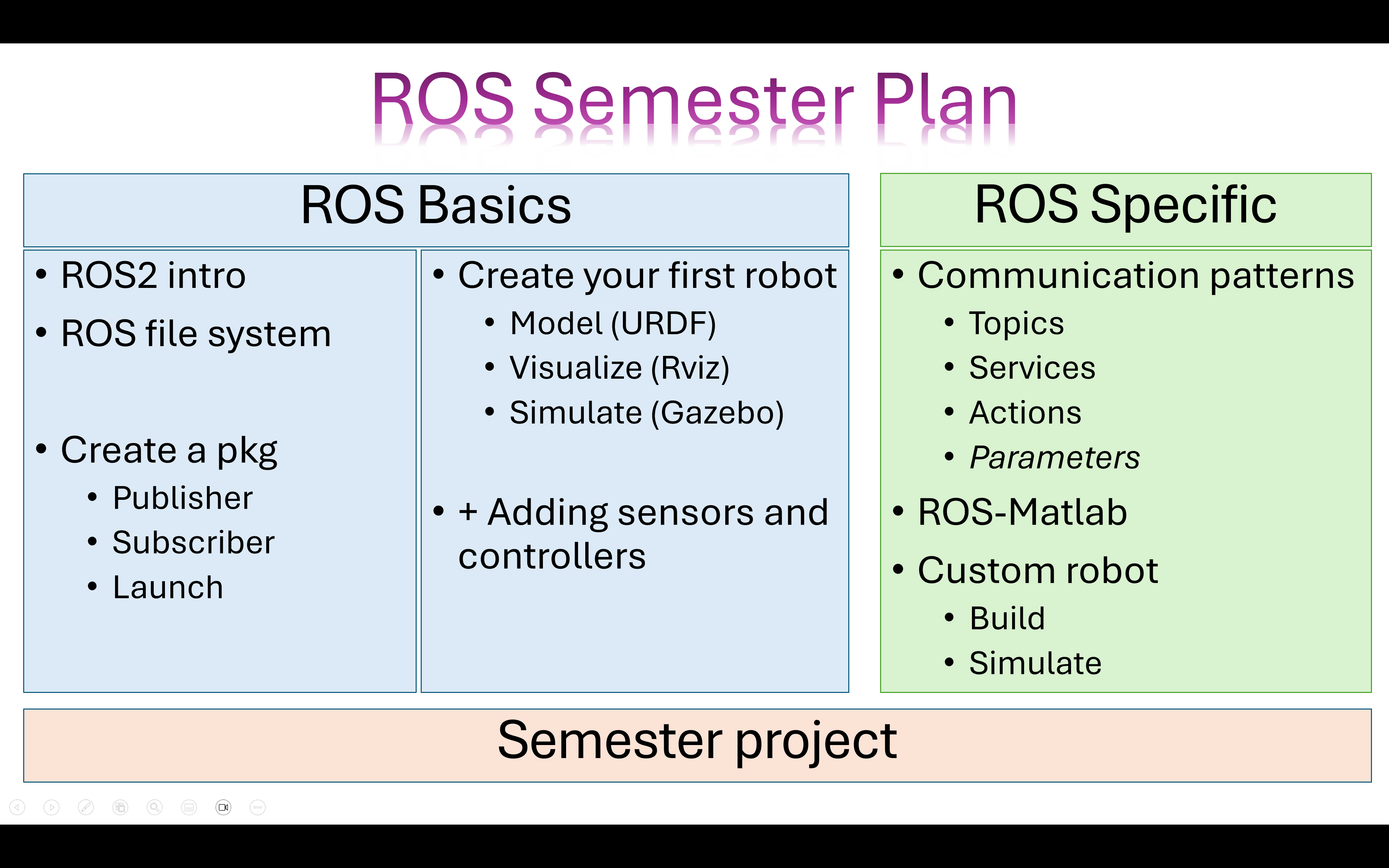
Gizem Ates Venås is an Associate Professor in the Department of Computer Science, Electrical Engineering and Mathematical Sciences at Western Norway University of Applied Sciences. She leads research in Human-Robot Interaction (HRI), focusing on intuitive human-robot cooperation through inertial measurement units (IMUs), gamified training systems, and teleoperation. Her work emphasizes safety and natural interaction in collaborative robotics applications. Education: Bachelor's in Electronics and Communication Engineering (2010-2015), Izmir Institute of Technology Master's in Mechanical Engineering (2015-2018), Izmir Institute of Technology PhD in Computer Science (Software Engineering, Sensor Networks) (2018-2023), Western Norway University of Applied Sciences Research interests include: IMU-based motion estimation for cooperative manipulation Design of gamified training systems to improve HRI proficiency Medical robotics applications in teleoperated surgical systems Sensor fusion and real-time data processing for collaborative robots Teaching focuses on robotics fundamentals: ROS programming, embedded systems (Arduino), and robot control Courses: ELE306 Robotics, DAT160 Intelligent Robots, ADA526 Applied Robot Prototyping Labs/Teams: Core member of HVL Robotics Lab, developing open-source robotics education materials and simulation tools.
Chris J. GauthierDickey is an Associate Professor and Chair of the Department of Computer Science at the University of Denver's Ritchie School of Engineering and Computer Science. He also serves as Director of Game Development Programs and is a member of the Colorado Research Institute for Security and Privacy. His research focuses on peer-to-peer networking, secure consistency, and multiplayer game systems. He holds a PhD (2007) and B.S. (2001) in Computer Science from the University of Oregon, supported by an NSF Graduate Research Fellowship (2002-2005). Key research areas include: Peer-to-peer architecture for games and voice communication Networked virtual environments Distributed simulation systems Game development pedagogy He has received grants totaling over $700k, including leadership in IA workforce development initiatives. Courses taught span graduate/undergraduate levels in networking, security, and game programming. Notable publications include work on multiplayer game measurement (NetGames 2010), peer-to-peer voice protocols (VRST 2009), and distributed stream processing frameworks (NPC 2010).
Giulia Di Nunno is a Professor in the Department of Mathematics at the University of Oslo, specializing in stochastic analysis and its applications to finance and risk management. She also holds an adjunct professorship at the Norwegian School of Economics (NHH). Her research focuses on stochastic calculus, control theory, financial modeling, and energy finance, with a particular interest in dynamic risk measures. She has led major projects like the STORM initiative on time-space risk models and is involved in interdisciplinary research on sustainability and energy markets. Di Nunno has served as President of the Scientific Council of CIMPA and is an associate editor for several prestigious journals, including Finance and Stochastics and Stochastics . Her work bridges theoretical advancements with practical applications in finance and energy sectors. Education: PhD in Mathematical Statistics (University of Pavia, 2003), Degree in Mathematics (University of Milan, 1998). Research Groups: Risk and Stochastics, STORE (completed). Key Projects: SURE-AI (AI-driven risk modeling), Unruly Sustainability (interdisciplinary research), STORM (ToppForsk project). Editorial Roles: Associate Editor for Finance and Stochastics , DEAF , FMF , and others. Her publications emphasize stochastic processes, volatility modeling, and risk measurement, with recent contributions on time-changed dynamics and applications to energy finance. She actively contributes to the international academic community through research networks like AMaMeF and ModSimFIE.
Dr. Charlotte Gerritsen is an Associate Professor in Artificial Intelligence at the Faculty of Science, Vrije Universiteit Amsterdam (VU), and an affiliated member of the Network Institute. Her research focuses on agent-based modeling of social and emotional dynamics, emotion contagion in virtual environments, and applications of AI in crowd management, mental health, and criminology. She has published extensively on topics such as sentiment analysis, gamification, and the ethical implications of AI in public safety. Her work integrates computational methods with social science theories, addressing challenges like real-time violence detection, avatar-mediated emotion recognition, and serious gaming for resilience training. She has supervised 5 PhD theses and teaches courses on AI and Law, Artificial Intelligence, and Socially Aware Computing. Her research project, 'Integrating sentiment analysis in real-time crowd management,' highlights her commitment to bridging technology with societal needs. Education: PhD in Artificial Intelligence (implied by title 'dr.') Affiliations: Faculty of Science, Network Institute Key Research Areas: Emotion Contagion, Agent-Based Modeling, Crowd Behavior, Gamification Her articles analyze topics like emotion contagion in crowds, AI-driven crowd control, and virtual training systems. While no specific awards are listed, her prolific publication record underscores her academic impact. She advises students on criminological and computational social science projects and collaborates internationally in criminology, healthcare, and AI ethics.