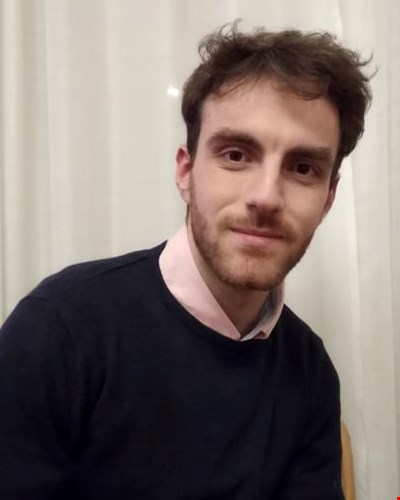
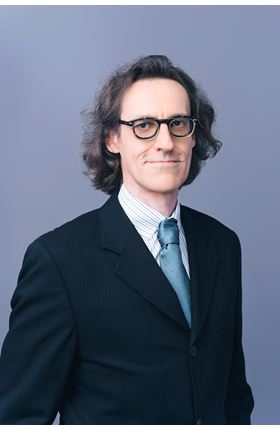
Patrik Voštinár is an Assistant Professor at the Department of Computer Science , Faculty of Natural Sciences , Matej Bel University . Holding a PhD in Applied Computer Science from the same university (2014-2017), he teaches courses in Programming , Discrete Mathematics , Web Technologies , and Android Programming . As department head and study advisor, he actively shapes academic programs and student experiences. Matej Bel University (2017-present) Department of Computer Science Faculty of Natural Sciences His research focuses on computer science education and educational technology , with particular emphasis on: VR/AR applications in teaching Game-based learning environments Microcontroller programming pedagogy Mobile application development education Physical computing tools for K-12 Adaptive learning interfaces His work with MakeCode , micro:bit , and EEG-controlled games demonstrates innovative approaches to programming education. He has received multiple eLearning competition awards for educational courseware development. Heart on the palm (Project of the year 2019) 2nd price in eLearning competition (2023) for Discrete Mathematics course Price of České společnosti pro systémovou integraci (2023) for Web Technologies 1st price in eLearning competition (2023) for Geometry Didactics Voštinár actively contributes to academic communities through: Membership in DIDINFO conference program (since 2017) Editorial Board member of Elementary Mathematics Education Journal Organizing workshops for primary/secondary students Popularizing informatics through extracurricular programs
Professor Matthew Rockloff is a leading figure in gambling and behavioral addiction research at CQUniversity Australia , affiliated with the School of Health, Medical and Applied Sciences . He holds a Ph.D. in Psychology from Florida Atlantic University (1995-1999) and an MS in Economics from Texas A&M University (1992-1994). As Head of the Experimental Gambling Research Laboratory , he has pioneered studies on gambling-related harm, electronic gaming machines (EGMs), and adolescent gambling behaviors. Education: PhD in Psychology (Florida Atlantic University, 1999) MS in Economics (Texas A&M University, 1994) BA in Economics (University of California, SC, 1989) His research spans gambling harm measurement , public health impacts , and behavioral interventions . Recent publications focus on simulated gambling, smartphone betting, and harm-reduction strategies. He has received prestigious awards, including the 2017 Ig Nobel Prize for experiments linking crocodile interaction to gambling risk-taking. Key achievements include securing over $5.5 million in grants for the Collaborative Research Network and founding the Queensland Centre for Social Science Innovation node at CQUniversity. He has supervised numerous research initiatives and developed tools like the Short Gambling Harm Screen to assess gambling impacts. Scientific Awards: 2017 Ig Nobel Prize in Economics 2014-2013 Top 15 UniJobs Lecturers of the Year 2012-2008 CQUniversity and Bundaberg Campus Awards 1998-1999 Aurel B. Newell Fellow and Jack Walker Scholar Professor Rockloff has taught courses in Social Psychology , Biological Foundations of Psychology , and Research Methods . He leads large-scale population surveys and collaborates with institutions like the Queensland Centre for Social Science Innovation and Centre for Social Science Research .
Prof. Dr.-Ing. Timo Nuyken is affiliated with the Technical University of Central Hesse , where he serves in the Department of Business Administration and Economics . His contact information includes the email timo.nuyken@wi.thm.de and phone number +49 6031 604 3573. Office hours are available by appointment at location A2.1.21 (Wilhelm-Leuschner-Str. 13, 61169 Friedberg). Expertise: Production Management Lean Management Business Simulation Games Lifecycle-Oriented Production Management He contributes to courses such as "Lean Management" and "Business Simulation Game" via Moodle courses , with additional resources including an introductory video and the UPS Laboratory page for practical applications.
Nick Droutsas is a PhD Student and Lecturer in the Department of Computer Science at Brunel University London within the College of Engineering, Design and Physical Sciences. He teaches Interactive Learning Skills and Communication (NV0600/NV1600) and ICT Skills (NG0601) at Brunel University London Pathway College while contributing to undergraduate/postgraduate Computer Science modules including Human Computer Interaction and Digital Design Methodologies. His educational background includes: MA in Game Design (120 credits) from Uppsala University with Master’s Thesis: Gamers with the Purpose of Language Resource Acquisition: Personas and Scenarios for the players of Language Resourcing Games-With-A-Purpose (Pass with distinction) BSc (Hons) in Informatics and Computer Engineering (240 credits) from University of West Attica with Bachelor’s Dissertation: Alternative Approaches and Tools in Automatic Morphological Processing for Morphologically Rich Languages (10.00/10.00) His research centers on Purposeful Game Solutions for constructing linguistic resources to enhance web accessibility, spanning Game Design, HCI, NLP, and Digital Media Accessibility. Current projects include Simul8 (accessibility simulation tool), Healthy Ageing Practices Serious Games, and Physiological Evaluation in Virtual Environments/360 Video. As a Research Assistant, he contributes to interdisciplinary projects bridging game design, accessibility engineering, and physiological response analysis in immersive media applications.
Johan F. Hoorn is an Interfaculty Full Professor at The Hong Kong Polytechnic University, jointly affiliated with the School of Design and the Department of Computing. He is also the Associate Director of PolyU Academy for Interdisciplinary Research and Research Institute for Quantum Technology. PhD in General Literature and Computer Science Recipient of multiple national and international awards Active in RGC Theme-based Research Scheme (2025-2029) Research interests span social robotics, affective computing, quantum cognition, and the observer effect. His work focuses on integrating AI with human psychology to address mental health challenges and enhance creativity. Recent articles highlight trends in human-robot empathy, quantum probability applications, and AI-assisted artistic innovation. Key subfields include emotional bonding, media inequality, real-time cinematic design, and moral reasoning in robots. Scientific awards include the Huibregtsen Prize (2020), Eureka Award (2015), and Pilot Science Appreciated Award (2021). He was also recognized with a Burgen Scholarship (2001) and Lorentz Fellowship (2010-2011). He leads projects like Negative-mood reduction among HK youth with robot PAL (HK$3M grant) and SELEMCA (M€4.6 grant). His work has been exhibited at leading museums, including the Victoria & Albert Museum (2024).
Fernanda dos Santos serves as Assistant Professor in the Department of Professional Nursing and Allied Health at MacEwan University, holding a PhD in Nursing Science from the University of São Paulo (Brazil) and prior faculty appointments at both the University of São Paulo and University of Alberta (2016-2017). Her academic foundation includes: Bachelor of Nursing (2002) and Doctor in Science (Nursing) (2010) from Ribeirão Preto College of Nursing, University of São Paulo Specialization in Nursing Education Research with focus on didactics and teaching planning for health disciplines Research expertise centers on transformative educational approaches: Student-centered pedagogical cycle implementation Integration of serious games and clinical simulation Formative/integrative assessment methodologies Technology-enhanced learning environments Fernanda leads the internationally recognized community initiative "Teaching Community to Avoid Baby's Gagging", demonstrating practical application of community-engaged learning principles. Her work bridges academic theory with real-world healthcare education through non-traditional learning strategies developed during her cross-institutional career spanning Brazil and Canada.
Aurelio Ureña Espa is a Professor at the University of Granada, affiliated with the Faculty of Sports Sciences and the Department of Physical Education and Sports. His work focuses on volleyball training, biomechanics, and athletic performance. Specializes in volleyball systems, training load monitoring, and technical-tactical analysis Develops methodologies for youth volleyball and dual career development Researches injury prevention, kinematic analysis, and game dynamics Recent publications examine systemic game components in volleyball, workload monitoring, and adaptations in junior matches. He also investigates emotional regulation, academic demands in student-athletes, and digital learning platforms for sports education. His work spans biomechanical studies on jump landings, setter action ranges, and tactical indicators in elite volleyball teams. Teaching activities include tutoring at the University of Granada, with schedules detailed for both semesters. No explicit scientific awards or student advising lists are mentioned in the provided texts.
Jonas L. Juul is an Assistant Professor in the Computer Science Department at the IT University of Copenhagen . With a background in network science and complex systems, he employs statistical methods, mathematical modeling, and computer simulations to study social networks, spreading processes, and human behavior. Focus areas include: information diffusion in social networks Disease spread mitigation in human populations Interdisciplinary collaboration with medical doctors, economists, and computer scientists Recent research highlights include improving statistical models for pandemic forecasting through the InForM project funded by the Novo Nordisk Foundation , and groundbreaking work on contact tracing optimization and information cascade dynamics. Notable recognitions: 2025 H.C. Ørsted Research Talent Prize 2024 Novo Nordisk Foundation Data Science Emerging Investigator Grant 2025 Young Academy membership He has contributed to mathematical modeling efforts during Denmark's COVID-19 reopening in 2020 and maintains active collaborations with institutions including Cornell University , Technical University of Denmark , and Niels Bohr Institute .
Eric Klopfer is a Professor and Director of the Scheller Teacher Education Program and The Education Arcade at the Massachusetts Institute of Technology , affiliated with the Comparative Media Studies/Writing department under the School of Humanities, Arts, and Social Sciences. He also serves as a co-faculty director for MIT’s J-WEL World Education Lab , focusing on educational innovation and technology. His research utilizes Design-Based Research to explore the educational technology ecosystem, emphasizing computer games, simulations, augmented reality (AR), virtual reality (VR), and mobile platforms for STEM education . His lab has developed impactful tools like the MMO The Radix Endeavor , StarLogo Nova , and Taleblazer , alongside massive open online courses reaching hundreds of thousands of learners. Klopfer co-founded the non-profit Learning Games Network and authored influential books including Augmented Learning and Resonant Games . He received the Education Award from the American Institute of Biological Sciences in 2008 and has pioneered early augmented reality experiments in education, such as the Environmental Detectives game at MIT.
Lawrence Susskind is the Ford Professor of Urban Studies and Environmental Planning at the Massachusetts Institute of Technology (MIT), Department of Urban Studies and Planning (DUSP). He serves as Vice Chair of the Program on Negotiation at Harvard Law School, Director of the Science Impact Collaborative at MIT, and MIT Director of the MIT-UTM Malaysia Sustainable Cities Program. He is also the Founder and Chief Knowledge Officer of the Consensus Building Institute, a non-profit mediation and collaborative decision-making organization. Professor Susskind's research spans environmental planning, negotiation and dispute resolution, climate change adaptation, and urban infrastructure. His work focuses on collaborative approaches to complex public disputes, particularly in environmental and urban contexts. He has developed innovative methods for public engagement in climate adaptation planning, renewable energy facility siting, and cybersecurity for critical urban infrastructure. His research emphasizes the Mutual Gains Approach to negotiation, which seeks solutions where all stakeholders benefit. Susskind has pioneered the use of role-play simulations in teaching negotiation and problem-solving skills, creating more than 60 simulations used worldwide. His recent work examines municipal cybersecurity vulnerabilities, the water shut-off crisis in older American cities, transboundary water diplomacy, and overcoming opposition to renewable energy facilities. His publications reveal consistent themes of collaborative problem-solving, adaptive management, and building public capacity to address complex environmental challenges. Planning Educator of the Year award (2005) from Association of Collegiate Schools of Planning Global Environmental Award (2007) from International Association for Impact Assessment Professor Susskind has supervised more than 70 PhD dissertations and 100 Master's theses at MIT and Harvard. Through MIT and the Program on Negotiation, he has developed numerous online courses on negotiation, cybersecurity, and climate adaptation. He has also created the Climate Change Game and other simulation tools to build public support for adaptation planning. His work with the Consensus Building Institute applies collaborative approaches to real-world disputes in environmental planning, energy development, and urban infrastructure.
Dr. Melanie Fritsch is a Junior Professor at Heinrich-Heine-Universität Düsseldorf since October 2020, specializing in Media Cultural Studies with a focus on Game Studies and related fields. Her career spans roles as a PR & Communications Manager in the gaming industry, lecturer at Humboldt-Universität zu Berlin, and research assistant at Universität Bayreuth and Leipzig. Education: Theaterwissenschaft, Musikwissenschaft, and Neuere Deutsche Literatur at Freie Universität Berlin, Humboldt-Universität zu Berlin, and Sapienza Università di Roma (2000–2008) Doctorate: 2018 at Universität Bayreuth with dissertation 'Performing Bytes. Musikperformances der Computerspielkultur' Current Research: Ludomusicology, performance theory, fan studies, environmental narratives in games Melanie’s research bridges game studies, digital humanities, and musicology, emphasizing games as performative cultural practices. Her work explores intersections of music and gameplay, fan engagement dynamics, and liveness in digital spaces. Key publication trends include: Game music analysis (e.g., 'The Cambridge Companion to Video Game Music') Performance theory in gaming ('Live Performance Games') Environmental narratives in virtual worlds Historical game music studies (1980s Japanese game music) Interdisciplinary methodologies combining musicology and game design She has contributed to major conferences and symposia, including keynote presentations at Universidad de Chile and Kunstuniversität Graz. Her editorial work includes co-editing the peer-reviewed series 'Studies in Game Sound and Music'.
Mark Edward Borsuk is the James L. and Elizabeth M. Vincent Professor in the Department of Civil and Environmental Engineering at Duke University’s Pratt School of Engineering. He leads the Borsuk Lab, which specializes in interdisciplinary modeling of coupled social, environmental, and technical systems. His research spans climate change, ecosystem services, water resources, land use, and environmental health, using advanced methods such as Bayesian networks, agent-based modeling, game theory, and risk analysis. He co-directs the Center on Risk within Duke’s Science & Society Initiative and is an Associate of the Duke Initiative for Science & Society. B.S.E. in Civil Engineering and Operations Research, Princeton University, 1995 M.S. in Statistics and Decision Sciences, Duke University, 2001 Ph.D. in Environmental Science and Policy, Duke University, 2001 Postdoctoral Training, EAWAG (Swiss Federal Institute for Aquatic Science and Technology), Systems Analysis, Integrated Assessment, and Modelling (SIAM) Dr. Borsuk’s research focuses on integrating scientific data across disciplines to support decision-making under uncertainty. He is a leading expert in Bayesian network modeling applied to environmental and human health regulation. His work combines risk analysis, game theory, and agent-based modeling to assess climate change and environmental policy. He has developed novel frameworks for valuing ecosystem services, modeling landowner behavior, and assessing geoengineering risks. His lab emphasizes interdisciplinary collaboration, stakeholder engagement, and quantitative decision support. His recent publications reflect a strong trend toward integrating machine learning, causal inference, and spatial modeling into environmental assessment. Topics include solar radiation modification governance, land-use policy forecasting, invasive species impacts, and urban green space valuation. His work increasingly leverages big data (e.g., Zillow, remote sensing) and probabilistic programming to enhance model transparency and predictive accuracy. Chauncey Starr Distinguished Young Risk Analyst Award, Society for Risk Analysis, 2013 Early Career Research Excellence Award, International Environmental Modelling and Software Society, 2008 Earl I. Brown Outstanding Civil Engineering Faculty Award, Duke University, 2018 Best Paper, Integrated Environmental Assessment and Management Journal, 2012 Excellence in Mentoring Award, Dartmouth College Postdoctoral Association, 2010 Best Paper in Integrated Modelling, Environmental Modelling & Software Journal, 2008 Dr. Borsuk has been a principal investigator on grants from NSF, EPA, NIH, NIEHS, and USFS. He mentors a diverse group of graduate students and postdoctoral fellows, including Kim Bourne, Jon Holt, Chris Krapu, and Ryan Calder. He teaches courses such as Risk and Resilience Engineering, Engineering Economics, and Independent Study in Civil and Environmental Engineering. He is actively involved in advising and curriculum development through the Bass Connections Energy & Environment Research Team. He leads the Borsuk Lab, a dynamic research group focused on systems, risk, and decision analysis. The lab is a key contributor to the Bridge Collaborative—a partnership between Duke, The Nature Conservancy, IFPRI, and PATH—where it develops quantitative models to support cross-sectoral decision-making. The lab also investigates landowner decision-making in New England forests and the governance of solar geoengineering, using agent-based and deliberative modeling approaches.
Youssef Allami is an Assistant Professor in the Department of Psychology at Laval University's Faculty of Social Sciences. He maintains affiliations with the Research Group on Psychosocial Maladjustment in Children and the Center for Studies and Interventions in Mental Health, operating from his office in the Félix-Antoine-Savard Pavilion. His research centers on addiction psychology with specialized focus on gambling disorders and substance use, examining clinical pathways, harm mechanisms, and intervention efficacy. Key interests include the psychopathology of behavioral addictions, mental health implications of gambling migration to online platforms, and validation of harm measurement tools across diverse populations. His work integrates longitudinal designs with meta-analytic approaches to identify risk and remission factors. Analysis of his 12 recent publications (2021-2025) reveals dominant trends in problem gambling research (75% of output), cannabis legalization impacts (15%), and methodological innovations in harm measurement (10%). His work consistently employs multi-national collaborations and emphasizes real-world applications for responsible gambling frameworks and clinical interventions. Dr. Allami currently leads a SSHRC-funded project (2025-2027) investigating attachment theory and early maladaptive schemas in addiction pathways, building on previous FRQSC support for data analysis in mental health research. His grant portfolio demonstrates sustained focus on addiction mechanisms and evidence-based harm reduction strategies. He actively contributes to interdisciplinary mental health research through the Research Group on Psychosocial Maladjustment in Children and the Center for Studies and Interventions in Mental Health, with recent work exploring virtual patient simulations for substance use disorder training and structural gambling platform risks.
Ryen W. White is a Partner Research Director and Deputy Lab Director at Microsoft Research in Redmond, leading the LEAP research area (Language, Learning, Audio, Privacy) and engineering organizations. He holds an Affiliate Professor position at the University of Washington , where he contributes to academic research while maintaining his industry leadership. Research focuses: Information Retrieval, Human-Computer Interaction, Computational Health Key projects: AutoGen multi-agent systems, WHAM for gameplay ideation, action engine frameworks His work emphasizes user-centered search systems , privacy-preserving personalization , and advanced interaction paradigms . Recent publications analyze long-term behavioral modeling, decision biases in search, and next-generation search interfaces, spanning subfields like implicit feedback mechanisms , task completion algorithms , and generative AI applications . Scientific honors include: ACM Fellow (2021) Tony Kent Strix Award (2022) ASIST Best Information Science Book Award (2017) SIGIR Test of Time Awards (2010, 2022) BCS Distinguished Dissertation Award (2005) As Workshop Chair for HCIR series and Program Chair for SIGIR 2017, he has shaped research agendas through community-building initiatives. His book Interactions with Search Systems established foundational principles for exploratory search interfaces and privacy-aware information access .
Dr. Lauren E. Gillespie is an Assistant Professor in the Department of Geospatial Data Sciences at the University of Michigan, specializing in AI-integrated approaches for large-scale ecosystem monitoring. With a background in computer science and biology, her research focuses on developing foundation models to analyze noisy environmental data from remote sensing and citizen science platforms, aiming to enhance ecological forecasting under rapid climate change. PhD : Computer Science, Stanford University BS : Computer Science & Chemistry, Southwestern University Her work bridges machine learning , global ecology , and remote sensing , with recent publications on biodiversity mapping using deep learning, domain adaptation in citizen science datasets, and genetic diversity loss in the Anthropocene. She actively explores ethical frameworks for scalable environmental AI applications. Key scientific awards include the Best Paper Award at AAAI 2025, Fulbright Program support (2024), and NSF Graduate Research Fellowship (2019). Her projects have received grants such as the Climate Change AI Innovation Grant for ForestBench (2022) and the Ethics, Society and Technology Hub grant for Scenes from the Anthropocene (2022).