PD Dr. Kaspar Riesen is the Head of the Pattern Recognition Group at the Institute of Computer Science, University of Bern. His research focuses on graph-based methods for pattern recognition, with applications in document analysis, environmental modeling, and healthcare. Key interests include graph matching, neural networks, and spatio-temporal modeling. His work spans structural pattern recognition, graph embeddings, and keyword spotting in historical documents. Recent projects involve river network analysis using graph regression and hypoglycemia prediction via LSTM-GNN hybrid models. Publications emphasize graph theory advancements, such as normalized graph compression and geometric similarity learning. Collaborations include developing specialized algorithms for automated error detection and improving decision-making in simulated sports. Labs/Teams: Pattern Recognition Group (PRG) at the University of Bern.
Lon S. Schneider, MD, MS is Professor of Psychiatry & the Behavioral Sciences at the Keck School of Medicine of the University of Southern California, where he holds the Della Martin Chair in Psychiatry and Neuroscience. He directs the USC California Alzheimer's Disease Center (funded by the California Department of Health Services), the Geriatric Studies Center, and co-directs the clinical core of the USC NIA Alzheimer's Disease Research Center. Dr. Schneider's research focuses on treatment development with novel metabolic and neuroregenerative compounds, outcomes assessment, and approaches to modeling, clinical trials methods and simulations, and in silico screening of medications for slowing Alzheimer's disease. His work spans Alzheimer's disease therapeutics, clinical trial methodology, neuropsychopharmacology, dementia prevention, and neurodegenerative biomarkers. His recent publications demonstrate expertise in amyloid and tau biomarkers, clinical trial design, agitation management in dementia, and cross-cultural studies of cognitive decline. Dr. Schneider serves as an associate editor or editorial board member for several publications and is a member of The Lancet Commission on dementia prevention, intervention, and care. His research has significantly influenced clinical practice and trial design in Alzheimer's disease. Woodward/White, Inc.: The Best Doctors in America, 1992-2009 Fellow of the American College of Neuropsychopharmacology Distinguished Life Fellow of the American Psychiatric Association Dr. Schneider has mentored numerous researchers and clinicians in the field of geriatric psychiatry and Alzheimer's disease research. His work on the CitAD trial examining citalopram for agitation in Alzheimer's dementia represents one of the largest studies of its kind. He has contributed significantly to understanding the relationship between neuropsychiatric symptoms and functional decline in dementia, as well as developing novel measures for Alzheimer's disease prevention trials. His laboratory and clinical research programs focus on identifying biomarkers of disease progression, developing novel therapeutic approaches for Alzheimer's disease, and improving clinical trial methodology for neurodegenerative disorders. Dr. Schneider collaborates extensively with researchers across USC and internationally on multi-center clinical trials and observational studies of dementia.
Zhong-Lin Lu is a Distinguished Professor of Psychology and Social and Behavioral Science at The Ohio State University, holding concurrent appointments in Optometry and the Translational Data Analytics Institute. He directs the Center for Cognitive and Brain Sciences and the Center for Cognitive and Behavioral Brain Imaging. Previously, he held the William M. Keck Chair in Cognitive Neuroscience at the University of Southern California. He earned his Ph.D. in Physics from New York University (1992), following an M.S. (1991) and B.S. in Theoretical Physics from the University of Science and Technology of China (1989). His research bridges computational neuroscience, vision science, and cognitive psychology, focusing on visual perception, attention, perceptual learning, and functional brain imaging. Key methods include fMRI, EEG, and hierarchical Bayesian modeling. His work addresses clinical applications in amblyopia, myopia, and glaucoma, alongside foundational studies on decision-making and neural plasticity. He has developed novel techniques like the quantitative Contrast Sensitivity Function (qCSF) and quasiconformal mapping for retinotopic brain mapping. His labs emphasize translational research linking computational models to real-world applications. Awards: APS Fellow (2007), Society of Experimental Psychologists Early Investigator Award (2003) Leadership: Directed USC's Dornsife Cognitive Neuroscience Imaging Center (2004–2011) Interdisciplinary roles: Co-Director of OSU's Humanities/Cognitive Sciences Summer Institute Current research explores visual processing across lifespan, neural mechanisms of perceptual learning, and optimizing fMRI data through advanced computational methods. His work integrates basic science with clinical and applied domains, influencing driver safety, vision correction, and neurotechnology development.
Dr. Adel Abdelnaby is an Associate Professor in the Department of Civil, Construction, and Environmental Engineering at The University of Memphis College of Engineering. He holds a Ph.D. from the University of Illinois at Urbana-Champaign (2012) and has been on the faculty since fall 2012. Dr. Abdelnaby is a licensed Professional Engineer (P.E.) in multiple states and a licensed Structural Engineer (S.E.) in Illinois. His research interests span structural dynamics, earthquake engineering, structural health monitoring, life-cycle analysis of structures, application of innovative materials, and nonlinear finite element methods. He specializes in analyzing structures subjected to multiple hazards and developing methods for structural assessment and improvement. Dr. Abdelnaby's publications reveal a strong focus on earthquake engineering, particularly the effects of multiple earthquakes on reinforced concrete structures. His work includes fragility analysis, hybrid simulation techniques, and vulnerability assessment of bridges and buildings. He has established the Multi-Axial Testing and Simulation (MAT-SIM) Facility at the University of Memphis for advanced structural testing. Engaged Learning Fellowship for redesigning undergraduate steel design courses American Institute of Steel Construction Educator Workshop participant Dr. Abdelnaby has advised numerous graduate students on topics including semi-rigid steel connections, multiple earthquake effects, fragility analysis, and structural health monitoring. He directs the MAT-SIM facility, which includes sophisticated equipment for structural testing under complex loading conditions. His professional affiliations include ASCE, AISC, ACI, EERI, and ASEE, and he serves as a reviewer for several structural engineering journals.
Wout Weijtjens is a Research Fellow at Vrije Universiteit Brussel, affiliated with the Acoustics & Vibration Research Group in Applied Mechanics. His research focuses on structural health monitoring (SHM) of offshore wind turbines, fatigue analysis, and vibration-based damage detection using advanced signal processing and machine learning techniques. Current projects include FIRMEST (fatigue assessment of offshore wind turbine substructures) and FOOS (Forced Oscillations in turbines). His research interests span: Operational modal analysis for offshore structures Machine learning applications in SHM Fatigue life prediction under environmental variability Sensor networks for infrastructure monitoring Wind turbine dynamics under harsh conditions Recent publications demonstrate a consistent focus on developing predictive maintenance frameworks through multivariate sensor data analysis, uncertainty quantification in SHM systems, and validation of computational models against full-scale field measurements. Article trends emphasize machine learning integration with physical models for improved fatigue life assessment. Awards and recognitions include: Best Paper Award (2nd place, 2022) Poster Award (2017) Solvay Award (2015) As principal investigator on multiple grants including VLADBC7 and VLADBC9 projects, he supervises PhD candidates in vibration-based SHM and leads experimental validation at OWI-Lab's Large Climate Chamber. His team develops IoT monitoring solutions for civil infrastructure through the SMART TOWERS initiative.
William Hurley is a Senior Lecturer at Nottingham School of Art & Design, Nottingham Trent University, specializing in Fashion, Knitwear and Textile Design. With over 18 years of experience in education and research, he focuses on industrial knit technology and its creative applications in novel textile development. His primary research interest lies at the intersection of technology innovation and creative design processes, particularly in fashion weft knitting. He explores novel applications through seamless knitting, 3D knitted structures, and electro-active textiles for medical and communication purposes. His work bridges traditional fashion design with cutting-edge technological advancements, emphasizing how technological innovation drives creative exploration in textile development. Recent publications (2025-2013) reveal consistent focus on textile-based sensors, antenna materials, and moisture management in knitted textiles. Key themes include optical and electrical sensing for health monitoring, space antenna applications, compression garments, and environmental effects on textile performance. This output demonstrates deep expertise in smart textiles and industrial knitting, with strong emphasis on practical applications in healthcare, aerospace, and wearable technology. No major scientific awards are documented in the available records. He has secured significant funding from Innovate UK, Horizon 2020, and the European Space Agency for projects including patient-customized compression sleeves for lymphoedema treatment, active simulator cockpit enhancement, and space antenna surface materials. While specific PhD students aren't listed, his role as Senior Lecturer involves supervising undergraduate students in knitwear design and research projects within the BA (Hons) Fashion Knitwear Design program. He is an active member of the Advanced Textiles Research Group (ATRG), which develops innovative textile applications across medical, communication, and aerospace domains. His work includes commercialized outcomes like Nike's Flyknit technology and SmartLife Technology Ltd's knitted transducers.
Aftab Ahmad is a Professor in the Department of Computer Science at the City University of New York (CUNY), specializing in cybersecurity and machine learning applications. He holds a Doctor of Science from George Washington University. His research focuses on developing machine learning algorithms for cyber threat intelligence (CTI) and public health prediction, along with designing secure generative deep learning models resistant to reverse-engineering. Key research areas include: Cybersecurity frameworks and privacy-preserving architectures Generative adversarial networks (GANs) with embedded security features Biomedical signal analysis and human body channel modeling Secure wireless protocols for critical infrastructure His publication trends emphasize: Privacy metrics and data protection mechanisms Smart grid and IoT security Neuroscience-inspired machine learning models Wireless network vulnerability assessments No scientific awards or grants were explicitly mentioned in the provided texts. He teaches advanced courses in computer security and network forensics at undergraduate and graduate levels. No advising relationships or lab affiliations were detailed in the available information.
Prof. Dr.-Ing. André Jakob is a faculty member at Berlin University of Technology , affiliated with the Department VII - Electrical Engineering - Mechatronics - Optometry. His academic role spans teaching and research in digital signal processing, audio technology, and acoustics. Digital Signal Processing Audio Technology Acoustics Active Noise Control His research focuses on active noise control , simulation of moving sound sources , and audio signal processing , with applications in robotics, building acoustics, and medical devices. Publications include advancements in anti-noise window systems , sound source localization , and acoustic measurement techniques . His recent work explores real-time auralization for educational robotics and nonlinear acoustic modeling with neural networks. The 15 most recent articles demonstrate a consistent focus on acoustic simulation , active control systems , and sound propagation modeling , with conference contributions at DAGA, NAG-DAGA, and international acoustics events. Topics range from dental drill noise reduction to active sound design in musical instruments , reflecting interdisciplinary applications. He supervises numerous Master's and Bachelor's theses in areas like real-time signal processing, deep learning for sound recognition, and virtual acoustics. His lab at TU Berlin explores multi-loudspeaker systems , acoustic beamforming , and active noise cancellation for both industrial and consumer applications.
Alexander Brown is a Lecturer in the Department of Mechanical Engineering at Lafayette College, specializing in dynamic systems and controls. His research bridges robotics, vehicle dynamics, and bio-inspired modeling, with a focus on human-robot and animal-robot interactions. B.S., Pennsylvania State University (2008) M.S., Pennsylvania State University (2012) Ph.D., Pennsylvania State University (2013) Research interests include robotics, vehicle dynamics, and mathematical modeling of physical systems. His work explores interactions between robots, vehicles, humans, and animals, with applications in autonomous driving and ethorobotics. Alexander's recent publications highlight trends in fish-robot interaction studies, autonomous vehicle safety, and simulation platforms like Webots. He emphasizes interdisciplinary collaboration and hands-on student engagement in his research and teaching. Outside academia, he builds and restores motorcycles, surfs in Monmouth County, N.J., and plays music with his band 'Imposters In Rome'.
Trent Gaugler is an Associate Professor of Mathematics at Lafayette College, specializing in applied and computational statistics. He emphasizes collaborative research across disciplines and integrates simulation-based methods into his teaching. His work focuses on leveraging computational tools to address complex data analysis challenges. Gaugler holds a Ph.D. from Pennsylvania State University and a B.S. from Bucknell University. Education: Ph.D., Mathematics, Pennsylvania State University B.S., Mathematics, Bucknell University Research Interests: Gaugler’s work bridges statistical theory and real-world applications, particularly in interdisciplinary collaborations. He develops computational methods to analyze complex data sets, emphasizing practical solutions for fields like health sciences, environmental studies, and social sciences. His teaching philosophy emphasizes hands-on learning with real-world data, fostering student confidence and analytical skills. Recent Research Trends: His articles reflect a focus on interdisciplinary applications of statistics, including health outcomes, community response to environmental factors (e.g., noise pollution), and generational workforce dynamics. He frequently employs randomized controlled trials and longitudinal studies to assess interventions and social phenomena. Community Engagement: Gaugler collaborates with local nonprofits like the United Way and Easton Area Neighborhood Center, applying statistical methods to address community challenges such as education equity and health disparities. He mentors students in applied projects, enhancing their practical research skills. Labs/Teams: His collaborations span Lafayette College’s departments and external organizations, highlighting his commitment to bridging academic expertise with real-world impact.
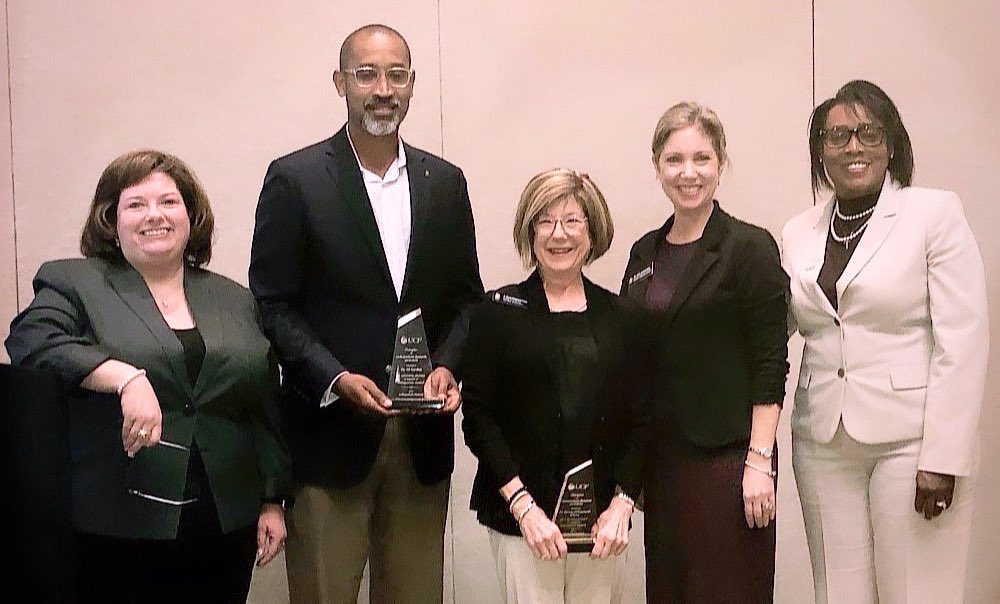
Ali P. Gordon is an Associate Professor of Mechanical and Aerospace Engineering at the University of Central Florida (UCF) and serves as Associate Dean of the College of Engineering and Computer Science (CECS). He holds a Ph.D. in Mechanical Engineering from Georgia Tech and specializes in continuum-level material modeling under complex operating conditions. His research focuses on creep rupture, thermomechanical fatigue, and additive manufacturing, funded by NSF, ONR, and AFRL. He has authored/co-authored over 100 articles and received prestigious awards like the Orr and Widera Awards for ASME best papers. Dr. Gordon is deeply committed to undergraduate research mentorship, leading the Mechanics of Materials Research Group which has produced over 30 journal articles co-authored by undergraduates. He has mentored at least 10 undergraduates per semester and chairs the most Honors in the Major thesis committees in CECS. He co-leads NSF-funded REU Sites in hypersonics and hosts faculty-embedded study abroad programs in Brazil. His teaching accolades include UCF’s highest teaching honor twice and recognition as a Champion of Undergraduate Research. Key research areas span material behavior under extreme conditions, constitutive modeling, and life prediction methodologies. His work bridges academia and industry, with collaborations at Siemens Energy and Wright-Patterson Air Force Base. Active in ASME, he advises UCF’s NSBE chapter and contributes to educational initiatives like the HYPER REU program fostering next-generation aerospace engineers.
Dr. Mohamed Soliman is the William C. Miller Endowed Professor at the University of Houston’s Cullen College of Engineering, Department of Petroleum Engineering. He holds a Ph.D. in Petroleum Engineering from Stanford University, complemented by an M.S. and B.S. from Stanford and Cairo University respectively. His research focuses on hydraulic fracturing of unconventional reservoirs, waterless fracturing using shock waves, and advanced numerical simulation techniques. He has authored over 250 technical papers and holds 35 patents, with notable works on shale gas transport, dead oil viscosity modeling, and plasma stimulation technologies. Dr. Soliman is a Distinguished Member of the Society of Petroleum Engineers (SPE) and a Fellow of the National Academy of Inventors. He has received the Gulf Coast 2020 Distinguished Achievement Award for Petroleum Engineering Research. His work bridges theoretical models with practical applications, such as the development of machine learning tools for reservoir analysis and innovative methods for fracture closure detection using wavelet transforms. His teaching spans core petroleum engineering courses including PETR 1111 (Introduction to Petroleum Engineering), advanced production operations (PETR 6372), and well completion stimulation (PETR 5397). He actively mentors graduate students, with current advisees Ibrahim Eltaleb, M. Awad, and Fatmir Likframa. His research group collaborates on projects funded by industry and government agencies, focusing on topics like microwave-assisted heavy oil recovery and geothermal reservoir characterization. Dr. Soliman’s lab develops cutting-edge tools for analyzing fracturing pressure data and interwell connectivity through signal processing. Key collaborations involve experimental validation with institutions like the University of Houston’s Advanced Energy Research Laboratory. His recent work emphasizes sustainable energy solutions, including critiques of carbon capture limitations and innovative plasma-based stimulation techniques to enhance reservoir permeability without water use.
Peter Behrensdorff Poulsen serves as Solar Photovoltaic Systems Group Leader at the Department of Electrical and Photonics Engineering, Technical University of Denmark (DTU). His work spans photovoltaic research, solar-powered lighting systems, and drone-based inspection technologies within DTU's College of Engineering. His research focuses on Solar Cell Engineering , Photovoltaic Modules , and Drone Applications for renewable energy systems. Key areas include bifacial photovoltaics, electroluminescence imaging diagnostics, building-integrated photovoltaics, and ultra-efficient solar-powered lighting solutions. His work significantly contributes to UN Sustainable Development Goals related to affordable clean energy and sustainable cities. Recent publications reveal strong trends in AI-driven PV diagnostics , bifacial module performance in northern climates, and dark-sky compatible lighting systems . His research bridges fundamental photovoltaic science with practical applications in urban infrastructure and environmental sustainability. Best Poster Award at 44th IEEE Photovoltaic Specialists Conference Best Poster Award at 48th IEEE Photovoltaic Specialists Conference Characterizing the Performance of Daylight Filters for Electroluminescence Imaging Poster Award at 35th European Photovoltaic Solar Energy Conference Poster Prize at Sustain 2017 Poulsen leads multiple research grants including the Ultra-efficient Dark Sky-compatible Solar-powered Outdoor Lighting project (2024-2026) and previously managed the DronEL project (2017-2019) for drone-based PV inspection. His work connects photovoltaic engineering with practical lighting applications through the Lighting Color and Radiation Laboratory. He actively collaborates with industry partners on building-integrated photovoltaics and solar-powered infrastructure solutions, with notable projects including the Plateau Sun Hub public charging stations and Black Si BIPV panel development.
Amanda Gibney is an Associate Professor and Head of School in the School of Civil Engineering at University College Dublin (UCD). She holds a 1st Class Honours BE (UCD, 1985), a MSc (City University London, 1990), and a PhD (UCD, 2002) focused on asphaltic materials. Her career spans academic and industry roles, including leadership in teaching and research. She has received prestigious awards, including the National Teaching Excellence Award (2009) and UCD Fellowship in Teaching & Academic Development (2007). Research focuses on bituminous materials, pavement engineering, and innovative teaching methodologies. Key contributions include studies on recycled asphalt, cold-mix materials, and fatigue resistance in pavements. She has secured significant research funding, including grants from CEDR, NRA, and Enterprise Ireland. Teaching leadership includes roles as Vice Principal for Teaching & Learning (2008–2019) and coordination of modules like Highway Engineering and Innovation Leadership. Professional activities include committee roles with the Royal Town Planning Institute and NSAI Roads Standards Committee.
Norman R. Swanson is a Distinguished Professor and James Cullen Chair in Economics at Rutgers University. He holds a PhD from the University of California, San Diego, and a degree from the University of Waterloo. Primary Affiliations: Department of Economics, Rutgers University Previous Positions: Pennsylvania State University, Texas A&M University, Purdue University, IBM Canada His research focuses on financial econometrics , forecasting , machine learning and big data , and time series analysis . He has published over 100 peer-reviewed articles and served as editor for journals like the Journal of Econometrics and Journal of Business and Economic Statistics . His work often bridges theoretical econometrics with practical applications in finance and macroeconomics, emphasizing robustness and predictive accuracy. The articles listed reflect his expertise in volatility modeling , jump detection , data reduction , and forecasting methodology . Key trends include the use of shrinkage methods, factor models, and simulation-based testing in high-frequency financial and macroeconomic contexts. Scientific Awards: Fellow of the Journal of Econometrics Fellow of the International Association of Applied Econometrics He has acted as a visiting scholar at institutions like the University of Maryland and the Federal Reserve Bank of Philadelphia. His consulting work spans firms such as Union Bank of Switzerland and DFA Capital Management, with expertise as a legal expert witness in financial services cases.