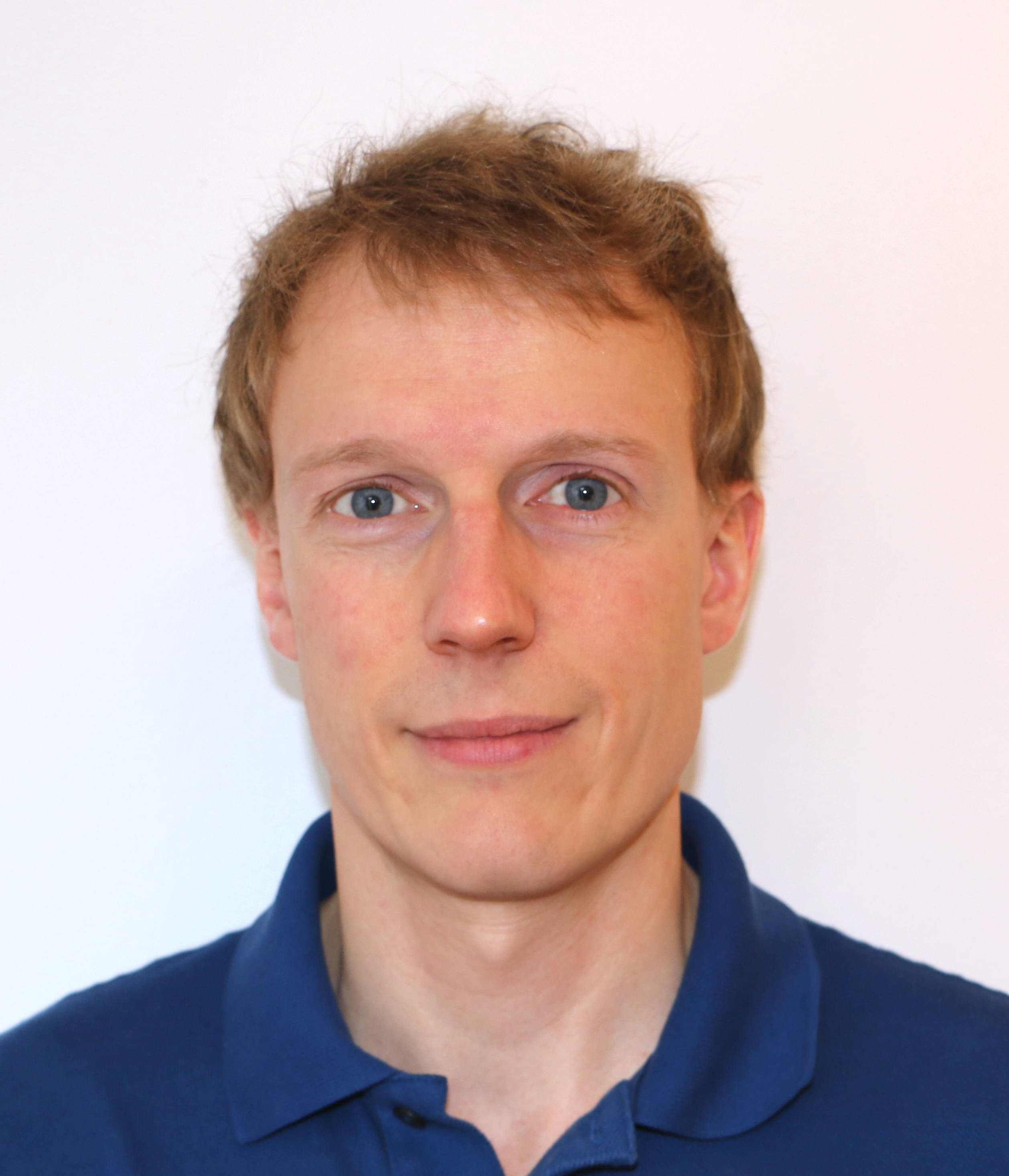
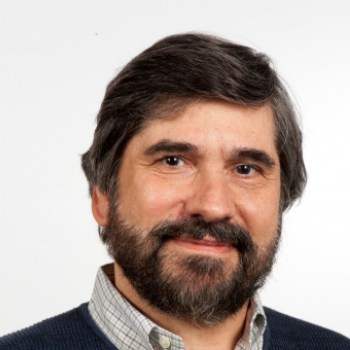
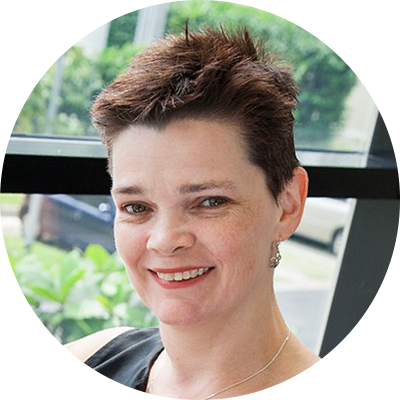
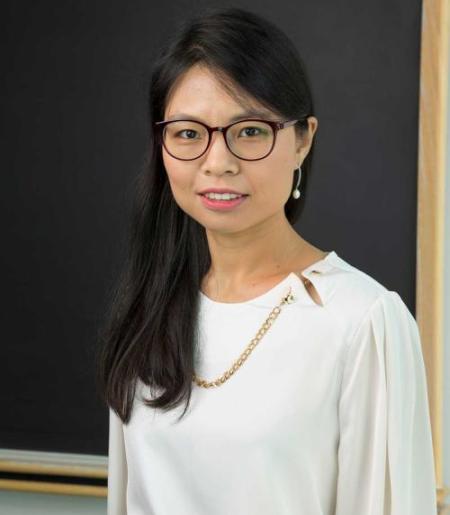
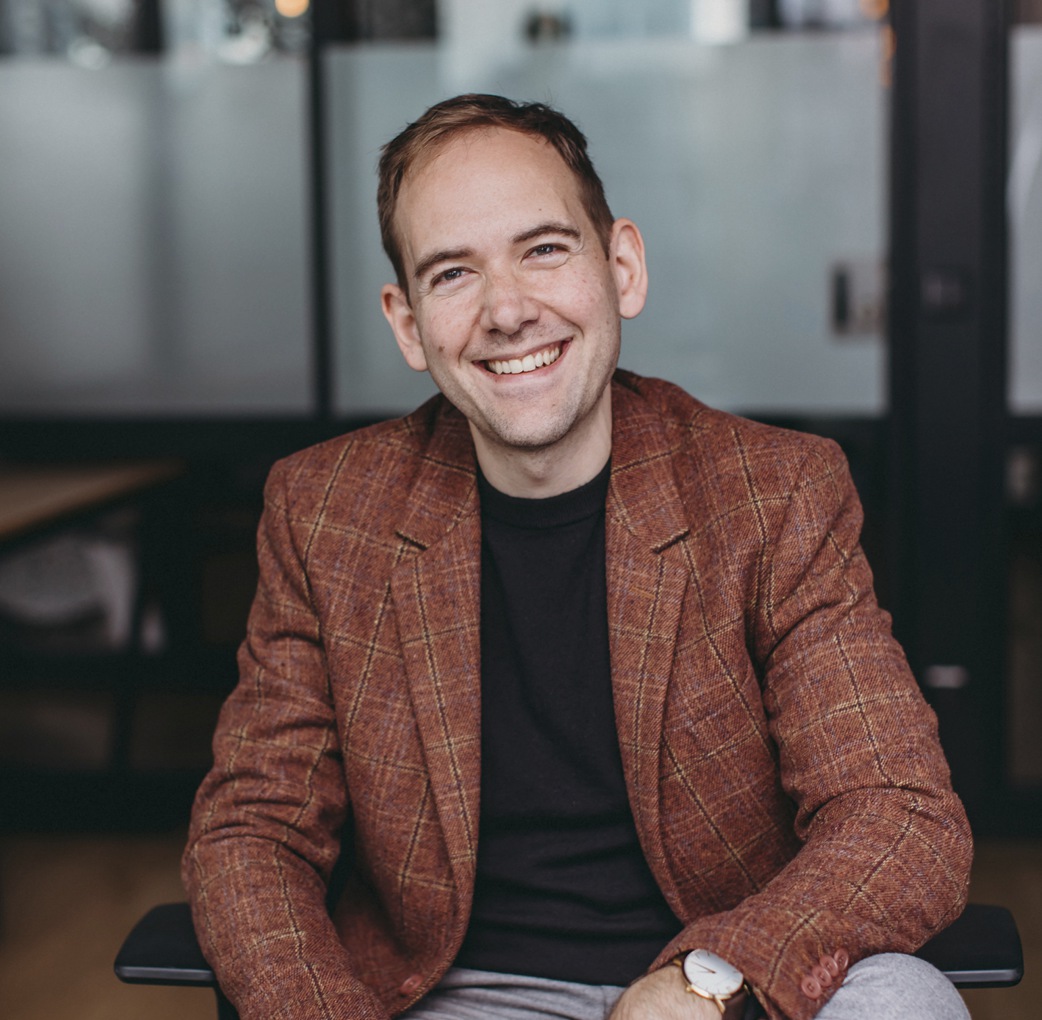
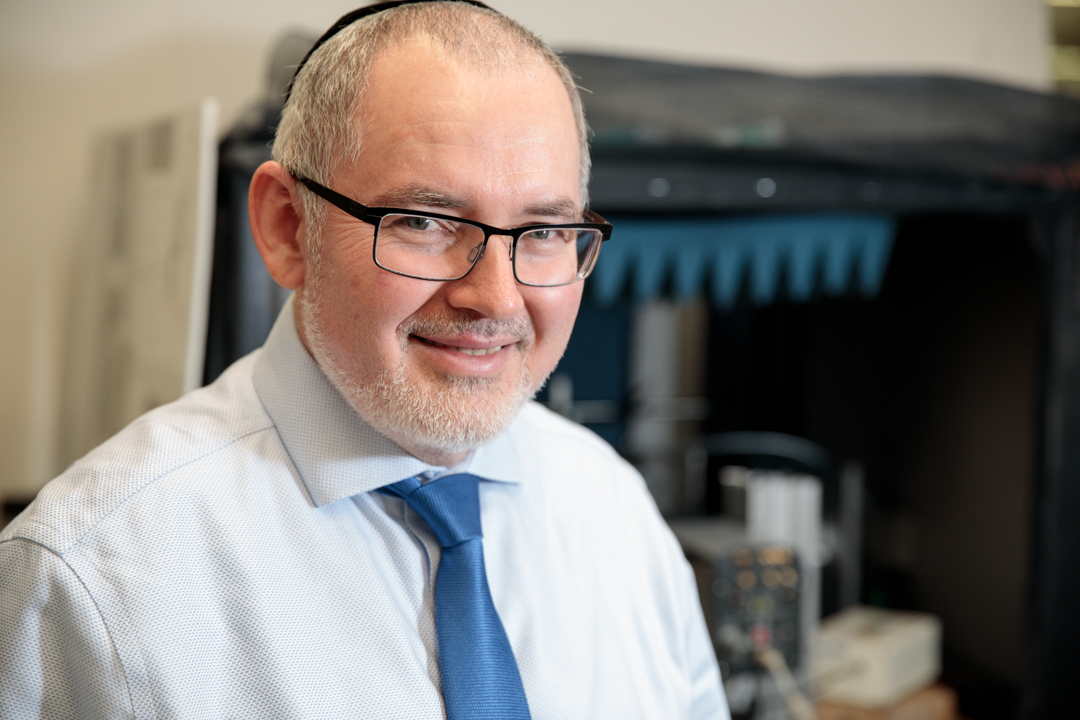
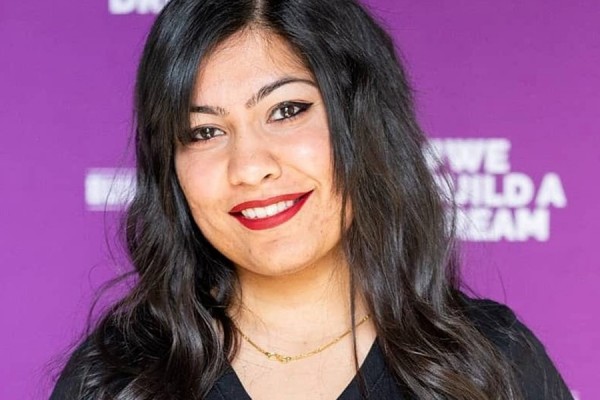
Dr. Andrea Bastoni is a Postdoctoral Researcher and Research Fellow at the Chair of Cyber-Physical Systems in Production Engineering at Technical University of Munich (TUM), Faculty of Mechanical Engineering. He is also the CTO and co-founder of Minerva Systems , developing operating system solutions for AI-ready embedded applications. His expertise spans real-time operating systems, cyber-physical systems, and predictable system design for heterogeneous platforms. His research focuses on enhancing predictability of memory hierarchies in complex SoCs through techniques like memory bandwidth regulation and cache partitioning. This work has industrial applications in safety-critical domains such as avionics and railways, where he contributes to certifiable hypervisors and operating systems. As former Software Architect of the PikeOS hypervisor at SYSGO GmbH (2012-2020), he specialized in DO-178C, IEC 61508, and EN 50128 standards. His academic background includes a Ph.D. in Computer Engineering from the University of Rome Tor Vergata (2007-2011), where he developed LITMUS^RT as part of UNC's Real-Time Systems Group during a visiting researcher period (2009-2010). His publications reflect ongoing work on Multicore Real-Time Scheduling , Mixed-Criticality Task Isolation, and Arm DynamIQ shared unit analysis. He actively participates in program committees for conferences like RTSS, DSN, and DATE.
Christos G. Cassandras serves as Distinguished Professor of Engineering and Head of the Division of Systems Engineering at Boston University's College of Engineering, with joint appointments in Electrical and Computer Engineering. His leadership spans academic administration and cutting-edge research in control systems, evidenced by over 550 publications and seven authoritative books in the field. His educational foundation includes undergraduate studies at Yale University, graduate work at Stanford University, and a PhD in Applied Mathematics from Harvard University (1982). This multidisciplinary background underpins his research approach. Dr. Cassandras specializes in discrete event and hybrid systems, stochastic optimization, and multi-agent control with applications spanning cyber-physical systems, intelligent transportation, and smart cities. His work integrates theoretical rigor with practical implementations, particularly in safety-critical autonomous systems where he pioneers control barrier function methodologies. Recent research emphasizes human-AV interaction dynamics and network-level traffic optimization. Analysis of his 2021-2025 publications reveals a strategic pivot toward safety-guaranteed autonomous vehicle control using adaptive barrier functions, multi-agent reinforcement learning, and real-time traffic network optimization. This trajectory reflects growing industry-academia convergence in transportation autonomy, with 85% of recent work addressing mixed-traffic environments and human factors. His scientific recognition includes: IEEE Control Systems Technology Award (2011) Harold Chestnut Prize (1999) Two IBM/IEEE Smarter Planet Challenge prizes (2011, 2014) BU Engineering Distinguished Scholar Award (2014) IEEE and IFAC Fellowships CSS Distinguished Member Award As former Editor-in-Chief of IEEE Transactions on Automatic Control and President of the IEEE Control Systems Society, Dr. Cassandras has shaped global research directions. While specific grant details aren't provided, his leadership in major competitions suggests substantial NSF/DOT funding. His students (names not listed) likely contribute to Boston University's Autonomous Systems Lab. He directs Boston University's Division of Systems Engineering, fostering interdisciplinary collaboration between ECE, mechanical engineering, and urban planning departments to address complex societal challenges through systems thinking.
Roberto Martinez-Maldonado is an Associate Professor in the Department of Human Centred Computing at Monash University's Faculty of Information Technology. He holds a PhD in Human-Computer Interaction and Educational Data Mining from the University of Sydney. His research focuses on Learning Analytics, Artificial Intelligence in Education, and Collaborative Learning, with applications in healthcare and classroom settings. Prior to Monash, he worked at the Connected Intelligence Centre (CIC) and as a lecturer at the University of Technology, Sydney. His academic journey includes a Master's in Information Technology from Universidad Tecmilenio and a Bachelor's in Computer Systems Engineering from Instituto Tecnológico de Mérida. Key research projects include developing analytics dashboards for healthcare simulations, teamwork analytics for professional education, and AI-driven tools for reflective practice. His innovations include the HuCETA framework and the Data Storytelling editor, which enhance educational data visualization and teacher-student interaction. He has received multiple awards, including the 2022 Best Student Paper and 2020 Best Paper Award. His work contributes to UN Sustainable Development Goals related to quality education. He supervises PhD students in Multimodal Teamwork and Classroom Analytics. Roberto is actively involved in academic conferences, serving on program committees for LAK and AIED. Media engagements include ABC Radio interviews discussing classroom design and AI in education.
Dr Tanya Tierney serves as Assistant Dean, Clinical Communication at the Lee Kong Chian School of Medicine, Nanyang Technological University. She is a资深 medical educator specializing in patient-centered communication and simulation-based teaching methodologies. Previously, she held roles at Imperial College London, including Course Leader for Clinical Communication and Head of Year for Graduate Entry Medicine students. Her expertise includes simulated patient (SP) training, curriculum development, and student welfare initiatives. Dr Tierney holds a PhD in Neuroendocrinology from the National Institute for Medical Research (1998) and transitioned to medical education research in 2004. Her work focuses on simulation-based learning, ethnographic approaches to non-technical skills development, and stress management in healthcare settings. Key contributions include developing assessment tools like the Imperial Stress Assessment Tool (ISAT) and advancing hybrid simulation methodologies. Her research portfolio spans over two decades, with recent emphasis on empathy development in healthcare professionals, global perspectives on equity in medical education, and optimizing simulated participant programs. She has authored numerous studies on clinical communication, surgical training, and interprofessional collaboration.
Yuning Jiang is a Visiting Professor at the École Polytechnique Fédérale de Lausanne (EPFL), affiliated with the Automatic Control Laboratory (LA3) within the School of Engineering (STI). He teaches the doctoral course Optimal Control for Dynamic Systems and contributes to research in distributed optimization, model predictive control (MPC), and smart grid technologies. His work bridges theoretical advancements in control systems with practical applications in power networks and autonomous systems. Current research emphasizes scalable solutions for AC optimal power flow, real-time MPC for embedded systems, and robust optimization under uncertainty. His research interests span Optimal Control , Power Systems , Smart Grids , and Federated Learning . Notable contributions include distributed algorithms for large-scale power systems and privacy-preserving co-simulation frameworks. Recent publications focus on microservice deployment in satellite-terrestrial networks and real-time pricing mechanisms for vehicle-to-grid (V2G) integration. Yuning holds a position in the EDEE-ENS unit under EPFL’s Academic Affairs division (VPA-AVP-DLE), reflecting his role in academic administration and teaching infrastructure. His lab, the Automatic Control Laboratory, focuses on cutting-edge research in control theory and its interdisciplinary applications.
Professor Washington Yotto Ochieng serves as Head of the Department of Civil and Environmental Engineering and Chair Professor in Positioning and Navigation Systems at Imperial College London. He directs the Centre for Active Resilience and Security (CARS) and maintains key affiliations with the Centre for Systems Engineering and Innovation, Centre for Transport Engineering and Modelling, Institute for Molecular Science and Engineering, and Space Lab. His extensive advisory roles include the Science Museum Group Board of Trustees, Royal Institute of Navigation Presidency, and Royal Academy of Engineering Africa Steering Committee. His educational background includes a BSc (First Class) in Engineering from the University of Nairobi and MSc (Distinction) and PhD in Civil Engineering from the University of Nottingham. He received an honorary DSc from Technical University of Kenya in 2023. Ochieng's research pioneers critical infrastructure resilience, user-centric mobility, and positioning/navigation/timing (PNT) systems. He has designed satellite navigation systems (including Europe's EGNOS and GALILEO) for multi-domain applications and advanced Air Traffic Management and Intelligent Transport Systems. His work integrates geomatics, transportation engineering, and sustainable mobility to solve global urban infrastructure challenges, with recent emphasis on decarbonization and AI-driven solutions. His 2024-2025 publications reveal strong trends in sustainable transportation decarbonization, AI-optimized traffic management, and resilient urban positioning systems. Research focuses on hydrogen fuel cell trains, carbon-efficient aviation, and deep reinforcement learning applications for emission reduction, demonstrating interdisciplinary integration of engineering, environmental science, and artificial intelligence to address climate challenges. Fellow of the Royal Academy of Engineering (2013) Harold Spencer-Jones Gold Medal from Royal Institute of Navigation (2019) Doctor of Science (honoris causa) from Technical University of Kenya (2023) Elder of the Order of the Burning Spear (EBS) from Kenya (2023) Commander of the Order of the British Empire (CBE) (2024) Ochieng provides strategic guidance to UK Government bodies (Government Office for Science, Department for Transport, FCDO), European Parliament, and European Court of Auditors. His advisory work shaped the Blackett Review on Satellite-derived Time/Position, UK Space Strategy, and Future of Mobility report. He chairs the Science Museum London Advisory Board and leads FCDO's Sustainable Urban Economic Development program in Africa, with significant grant influence through UK National Physical Laboratory and Department for International Development. He directs the Centre for Active Resilience and Security (CARS) and leads Space Lab initiatives, focusing on mission-critical PNT systems and infrastructure resilience. His teams collaborate with international consortia including RTCM Special Committee 134 and US Institute of Navigation, developing next-generation navigation solutions for safety-critical applications across transport, aviation, and urban environments.
Yunan Yang is the Goenka Family Assistant Professor in Mathematics at Cornell University, within the Department of Mathematics, College of Arts and Sciences. He holds a Ph.D. from the University of Texas at Austin (2018), supervised by Prof. Björn Engquist. Previously, he was a Courant Instructor at NYU (2018–2021), Simons-Berkeley Research Fellow (2021), and Advanced Fellow at ETH Zürich (2022–2023). His research focuses on computational mathematics, including inverse problems, optimal transport, machine learning, and nonconvex optimization. Notable contributions include applications of optimal transport to seismic inversion and PDE-constrained optimization. He has advised numerous students, including undergraduates and Ph.D. candidates at Cornell and other institutions. Yang teaches courses such as MATH 6220 (Applied Functional Analysis) and has published extensively in journals like SIAM Journal on Scientific Computing and Communications on Pure and Applied Mathematics. His work bridges theoretical foundations with practical applications in geophysics and computational science.
Professor Yanghua Wang is a leading academic in Geophysics at Imperial College London's Faculty of Engineering. He serves as Principal of the Resource Geophysics Academy and Director of the Centre for Reservoir Geophysics. His career spans over four decades, with roles including Research Manager at Robertson Research and a PhD from Imperial College London (1995–1997). He holds prestigious awards such as Fellow of the Royal Academy of Engineering (2021) and membership in the Chinese Academy of Engineering (2023). Education highlights include a BSc (1983) and MSc (1994) in Geophysics, followed by a PhD in Geophysics (1997). His research focuses on seismic inversion, reservoir geophysics, and time-frequency analysis, with notable monographs on seismic inversion and signal processing. He leads interdisciplinary projects combining machine learning with geophysical modeling, addressing challenges in reservoir characterization and seismic data processing. Research interests emphasize geophysical inversion techniques, anisotropic media analysis, and applications in energy exploration. He has pioneered methods like the W transform for seismic signal analysis and contributed to advancements in physics-informed neural networks. His work bridges theoretical geophysics with practical reservoir engineering solutions. Prof. Wang’s lab, the Resource Geophysics Academy, focuses on innovative geophysical methodologies for subsurface characterization. His recent projects include AI-driven data assimilation for large-scale systems and high-resolution seismic imaging techniques. Collaborations span academia and industry, addressing global energy and resource challenges.
Marc GENDRON-BELLEMARE is an Associate Professor at the Department of Computer Science and Operations Research, Faculty of Arts and Sciences, Université de Montréal. He is also a Chief Scientific Officer at Reliant AI, Adjunct Professor at McGill University, Canada CIFAR AI Chair at Mila, and Associate Fellow at CIFAR LMB Program. His research focuses on reinforcement learning, deep learning, and generative models, with notable contributions to the Atari 2600 benchmark and applications in robotics and stratospheric balloon navigation. He has advised multiple PhD and MSc students, including Pierluca D'Oro and Rishabh Agarwal. Education: PhD from University of Alberta under Michael Bowling and Joel Veness. Notable collaborations include work at Google Brain and DeepMind. Research Interests: Reinforcement Learning, Deep Learning, Probabilistic Models, Online Learning, Generative Models, and Information Theory. Awards: Best Paper Awards at NeurIPS 2021, ICLR 2020, and ICML Exploration Workshop 2019. His work on stratospheric balloon navigation using RL was published in Nature (2020). Grants and Labs: Core member of Mila, involved in projects like the Dopamine research framework and the Arcade Learning Environment (ALE). Active in open-source contributions and industry partnerships through Reliant AI.
Juan Francisco Jiménez-Alcázar is a Professor at the Universidad de Murcia, affiliated with the Department of Prehistory, Archaeology, Ancient History, Medieval History and Historiographic Sciences and Techniques within the Faculty of Arts and Humanities. His research focuses on Medieval History, Digital Humanities, and the intersection of history with video games and digital media. He holds a Doctorate from the Universidad de Murcia (1993) with a thesis on 'Espacio, poder y sociedad en Lorca (1460-1521)'. His work explores historical representation in modern media, particularly analyzing how video games depict medieval soundscapes, warfare, and cultural frontiers. Key themes include the study of linguistic diversity in medieval Spain, governance structures in frontier regions like Murcia, and the impact of historical epidemics such as the 1507-08 plague in Murcia. Recent publications include books on Digital Humanities and video games (2020), medieval warfare simulations, and interdisciplinary studies on migration and historical identity. He collaborates with institutions like CONICET and the CNR in Italy, and his research contributes to both academic and public understanding of medieval history through digital tools and cultural analysis.
Dongwook Kim is affiliated with the Korea Advanced Institute of Science & Technology (KAIST) as a faculty member in the Department of Business and Technology Management under the College of Business. His research spans multiple domains including machine learning, robotics, signal processing, and biomedical engineering. Key contributions in Computer Vision (CNN-based semantic segmentation, 3D point cloud analysis) Significant work in Hardware Design (energy-efficient processors, neuromorphic computing) Interdisciplinary expertise in Medical Imaging (bone age assessment, retinal biomarkers) and Cybersecurity (attack detection, network analytics) Publications since 2015 demonstrate sustained innovation in AI applications , Signal Processing , and Smart City Governance . His work often integrates theoretical advances with practical implementations in real-world systems. No scientific awards or student mentorship details are explicitly documented in the provided records.
Professor Michael Keidar holds the A. James Clark Professorship at the George Washington University (GW) , School of Engineering and Applied Science, within the Mechanical and Aerospace Engineering department. He leads the Micropropulsion and Nanotechnology Lab , pioneering research in plasma medicine, micropropulsion systems, and plasma nanoscience. His lab collaborates with industry partners like Vector (licensed plasma thruster technology) and US Patent Innovations, LLC (a $5.3M grant for cold plasma cancer therapy). Key research areas include: Cold plasma applications in biomedical treatment Microthrusters for nanosatellites Synthesis of graphene and carbon nanotubes Multi-scale plasma simulations Scientific accolades include the 2017 Ronald C. Davidson Award and AIAA Engineer of the Year (2016-2017), alongside leadership in interdisciplinary projects with GW’s Global Food Institute .
Dr. Ben Mills is a Principal Research Fellow at the University of Southampton. His research focuses on the integration of deep learning with laser technologies, including applications in environmental monitoring, materials science, and biomedical imaging. He is a core member of the Smart Lasers and Special Fibres research group and leads projects such as Hearing Light and Lasers that Learn , funded by the EPSRC. His work spans laser beam shaping, material transfer, and diagnostic techniques using AI-driven photonics. Research Interests: Laser-material interactions Deep learning for optical systems Environmental sensing via lasers Biophotonics applications Additive/subtractive manufacturing Publications (2023–2025) highlight innovations in laser cleaning, beam optimization, and pollen imaging using low-cost hardware. His work bridges fundamental optics with applied machine learning solutions. External Contributions: Speaker at international conferences on AI in photonics (2019–2021) Keynote on predictive laser materials processing (2019) Presenter at invited sessions on particle sensing via deep learning (2020) Current Supervision: PhD students Luke Burke (Physics), Fedor Chernikov (ORC), and Yuchen Liu (ORC) work on laser beam control and environmental applications.
Auezhan Amanov is an Associate Professor at the Faculty of Engineering and Natural Sciences, Tampere University, specializing in the Engineering Materials Science (EMS) department. His research focuses on tribology, surface engineering, and advanced materials processing. He leads the 'Tribology and Surface Modification' research group, aiming to enhance machine element performance through surface treatments and manufacturing innovations. Dr. Amanov is an active member of international tribology societies (STLE, JAST, KTS), chairing the 'Surface Engineering' committee at STLE. His work emphasizes improving wear resistance, fatigue life, and tribological performance of materials like titanium alloys, high-entropy alloys, and thermal spray coatings. His research integrates additive manufacturing, laser-based processes, and severe plastic deformation techniques to optimize material properties. Key contributions include studies on ultrasonic nanocrystal surface modification (UNSM) for enhancing mechanical and tribological characteristics. Collaborations with industries and academic institutions globally drive his mission to translate research into practical solutions for manufacturing efficiency and sustainable development. Dr. Amanov holds an h-index of 34 (Google Scholar) and has authored numerous peer-reviewed articles on materials science and tribology advancements. Teaching responsibilities include tribology and fatigue-related courses, reflecting his expertise in both academic and applied engineering domains. His vision includes advancing circular economy practices through bearing restoration technologies and improving 'Made in Finland' manufacturing competitiveness through material science innovations.
Ikjot Saini is a Professor at the University of Windsor’s Faculty of Engineering, co-leading the SHIELD Automotive Cybersecurity Centre of Excellence, Canada’s first organization addressing threats in connected transportation. Her research focuses on automotive cybersecurity, vehicular networks, and privacy-preserving technologies. She has supervised doctoral students Shiva Nejati and Kunj Dhonde, and contributed to courses in the University’s Continuing Education program, specializing in cybersecurity education for professionals. Her work includes pioneering studies on blockchain-based security for connected autonomous vehicles (CAVs), machine learning-driven intrusion detection systems, and privacy-enhancing mechanisms like pseudonym-changing strategies. She has been recognized with the K.W. Michael Siu Award from the APMA Institute for Automotive Cybersecurity (2020). Saini’s research bridges theoretical advancements with real-world applications, ensuring vehicles and infrastructure remain secure against evolving cyber threats. Her contributions span academic publications, industry partnerships, and policy recommendations, positioning her as a leader in vehicular cybersecurity. Ongoing projects emphasize eco-efficiency in cybersecurity solutions and adversarial modeling for privacy evaluation.