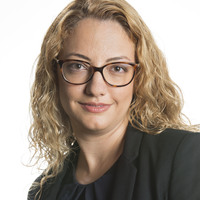
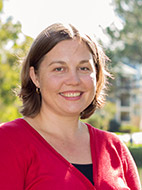
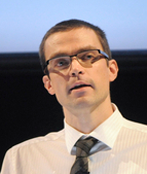
Dr. Leila Moslemi Naeni is a Senior Lecturer at the University of Technology Sydney (UTS), School of Built Environment, with a dual appointment in the Faculty of Design, Architecture and Building. She previously served as a Lecturer at UTS (2016-2018) and Sessional Lecturer at Curtin University (2015-2016). PhD in Computer Science (University of Newcastle, 2017) MSc in Industrial Engineering (Sharif University of Technology, 2007) BSc in Industrial Engineering (Iran University of Science and Technology, 2004) Her research focuses on project management under uncertainty, integrating fuzzy systems and mathematical modeling with applications in construction, ESG reporting, and disruptive technologies. She developed innovative methods for statistical control charts in project monitoring and leads research on leveraging blockchain and digital tools for sustainable infrastructure. Recent publications highlight her work on resource-constrained scheduling algorithms, ESG integration in megaprojects, and gamification in project management education. She serves as Review Editor for Frontiers in Environmental Science and on the Editorial Board of Smart and Sustainable Built Environment . 2016 PMI NSW Research Award 2022 Walt Lipke Award 2013 FEBE Postgraduate Research Prize As an active research mentor, she supervises PhD students in machine learning applications, disaster management technologies, and social infrastructure investments. Her teaching emphasizes simulation-based learning, collaborating with Oulo University (Finland) to quantify educational value.
Assoc Prof Jason Skues is an Associate Professor in the School of Health Sciences at Swinburne University of Technology, where he contributes significantly to research, teaching, and PhD supervision. His work focuses on mental health, identity development, cultural intelligence, and psychological wellbeing across diverse populations including university students, prisoners, vocational trainees, and emerging adults. University: Swinburne University of Technology School: School of Health Sciences Academic Rank: Associate Professor Email: jskues@swin.edu.au His research interests span applied and developmental psychology, social and personality psychology, and clinical and health psychology. He investigates mental health literacy, cyberbullying, identity processes, and the psychological impact of educational and vocational experiences. His work often employs qualitative and mixed methods to explore complex human behaviors and interventions. The most recent publications show a strong trend toward mental health in educational and vocational contexts, prison mental health, cultural intelligence development through international exchange, and cyberbullying in emerging adults. His research consistently addresses real-world applications, aiming to improve training, policy, and psychological support systems. Office of Learning and Teaching (OLT) Citation (2012) Jason Skues supervises a wide range of PhD projects, particularly in identity development, mental health interventions, cyberbullying, and educational psychology. He has secured multiple competitive research grants from bodies including the Department of Justice, Department of Defence, and St. John's University, supporting studies on sleep problems, smoke-free prisons, and human-machine interface technologies. His collaborative network includes researchers across psychology, nursing, education, and forensic science. He leads and contributes to research teams focused on mental health in higher education, justice care, and vocational training. His work with simulated persons in nursing education and prison-based mental health programs highlights his commitment to innovative, evidence-based interventions.
Dr. Tim Lynar serves as a Senior Lecturer at the University of New South Wales Canberra within the School of Systems & Computing. With a strong background in both academic research and industry practice, he has established himself as a leading figure in cyber security and computer science. His work bridges theoretical research with practical applications, focusing on innovative solutions for complex computing challenges across multiple domains including IoT security, machine learning applications in cyber defense, and high-performance distributed systems. Dr. Lynar's research interests span a wide spectrum of cyber security applications, with particular emphasis on the application of machine learning techniques to security challenges and the innovative use of epidemiological approaches to understand and combat cyber threats. His work in modeling & simulation, statistical & data analysis, network & systems administration, and high-performance distributed computing demonstrates his commitment to developing comprehensive security frameworks that address evolving threats in digital environments. The interdisciplinary nature of his research connects computer science with biological modeling approaches, creating novel methodologies for understanding security vulnerabilities. Analysis of Dr. Lynar's recent publications reveals a strong trend toward applying advanced machine learning techniques to cyber security challenges, particularly in IoT environments. His work increasingly integrates epidemiological models with security frameworks, creating a unique approach to threat detection and mitigation. The research spans practical applications in network security, drone systems, and AI security, demonstrating both theoretical depth and real-world applicability. A notable pattern is the consistent application of cutting-edge deep learning architectures like Vision Transformers and Variational Autoencoders to solve specific security problems across diverse domains. IBM Master Inventor (2016) Multiple IBM Innovation Awards (2011-2018) Client Value Outstanding Technical Achievement Awards (2015-2016) High Value Patent Awards (2014-2016) Best Article Award – International Journal of Information Systems & Social Change (2010) Multiple research scholarships from 2007-2010 Dr. Lynar's extensive patent portfolio demonstrates significant industry impact, with numerous issued US patents spanning diverse applications from energy efficient supercomputing to vehicle collision avoidance and drone-based microbial analysis. His research has attracted substantial industry collaboration, particularly with IBM, where he received multiple prestigious awards including the IBM Master Inventor designation. The practical applications of his work are evident in the wide range of patented technologies addressing real-world security and optimization challenges across multiple industries. Dr. Lynar's work spans multiple research domains simultaneously, with active projects in cyber security, drone systems, AI safety, and maritime traffic analysis. His research methodology consistently combines theoretical modeling with practical implementation, often leveraging simulation environments to test and validate approaches before real-world deployment. The interdisciplinary nature of his work creates connections between traditionally separate fields, enabling innovative solutions to complex problems.
Dr Zhe Wang is a Senior Lecturer at the School of Information and Communication Technology, Griffith University, focusing on artificial intelligence, knowledge graphs, and semantic technologies. He earned his PhD in Computer Science from Griffith University (2011) and previously worked as a Research Fellow at the University of Oxford (2011-2013) on ontology-based systems. Research: Specializes in knowledge graph construction, rule mining for explainable AI, and integrating machine learning with logical reasoning. Led development of the scalable RLvLR rule-mining system and contributed to the HermiT ontology reasoner. Teaching: Instructs undergraduate and postgraduate courses including Introduction to Artificial Intelligence, Secure Development Operations, and Software Engineering Fundamentals. Grants: Funded by Australia's Economic Accelerator Ignite Grant (2025) for AI-driven marine life survey systems and Office of National Intelligence projects (2021-2022). Publications: Active in top venues like AAAI, ICASSP, and ISWC, with recent work on temporal knowledge graph reasoning, auction design algorithms, and neurosymbolic AI systems.
Professor Natalie Ciccone is a Professor in Speech Pathology at Edith Cowan University's School of Medical and Health Sciences. She joined ECU in 2009 after working in Speech Pathology programs at Curtin University since 1999. Professor Ciccone is currently involved in two NHMRC-funded projects: a multi-centre randomized control trial of very early intervention for people with aphasia after stroke and an exploration into communication disorders after stroke and traumatic brain injury in Aboriginal peoples in Western Australia. Her educational background includes a Doctor of Philosophy in Human Communication Science from Curtin University of Technology (2003) and a Bachelor of Science in Speech & Hearing Science from the same institution (1996). Professor Ciccone's research focuses on neurogenic communication disorders, particularly aphasia intervention, clinical decision making, communication difficulties after stroke in Aboriginal Australians, and the use of discourse in the analysis and treatment of aphasia. Her work bridges clinical practice with culturally responsive care, emphasizing the importance of understanding communication disorders within specific cultural contexts, particularly for Aboriginal populations. Analysis of her recent publications reveals a strong emphasis on culturally responsive rehabilitation for Aboriginal Australians with brain injuries, early intervention for aphasia after stroke, treatment fidelity in clinical trials, and innovative educational approaches in speech pathology. Her work shows a consistent trajectory toward addressing health disparities and developing culturally safe rehabilitation practices. Member of the Editorial Committee for the Journal of Clinical Practice in Speech Language Pathology Active participant in national and international speech pathology and allied health conferences Professor Ciccone has supervised numerous research students, including PhD candidates and Master's students, with projects focusing on aphasia rehabilitation, simulation-based learning, and culturally responsive care. Her research projects have secured substantial funding from organizations including the National Health and Medical Research Council, Department of Health WA, and the Perron Institute for Neurological and Translational Science. She has led projects totaling over $8 million in research funding, with current projects focusing on AI-driven virtual character simulation for aggression de-escalation training and enhancing rehabilitation services for Aboriginal Australians after brain injury. Professor Ciccone maintains active clinical connections, having worked as a speech pathologist in acute and rehabilitation hospital settings as well as community-based clinics in Perth and Darwin, primarily working with patients with communication and swallowing difficulties following stroke and head injury.
Dr. Shuvo Bakar is a Senior Lecturer in the Sydney School of Public Health at the University of Sydney, within the Faculty of Medicine and Health. He holds a PhD in Statistics from the University of Southampton, UK, and has prior experience as an Assistant Professor at Yale University, Lecturer at the Australian National University, and Scientist at Data61 (CSIRO). His research focuses on statistical methods applied to public health challenges, including Bayesian hierarchical modeling, machine learning, spatio-temporal analysis, and their applications in epidemiology, clinical trials, and environmental health. Dr. Bakar's research interests span statistical methodologies such as Bayesian adaptive designs, small area estimation, and spatial risk modeling, alongside applications in child health, infectious diseases, and extreme weather impacts on health. He is an active member of academic communities, including the Royal Statistical Society (RSS Fellow), Statistical Society of Australia, and the Australian Trials Methodology Research Network. His work also involves collaborations on grants totaling millions in funding, addressing topics like climate change impacts on health inequity and cardiovascular disease prevention in remote regions. Education: PhD in Statistics (University of Southampton, UK) Key Research Themes: Obesity, Diabetes, Cardiovascular Disease; Reproductive, Maternal & Child Health Grants/Projects: Includes NHMRC-funded trials on respiratory infections in First Nations children and MRFF grants for cardiovascular risk reduction in regional Australia. Dr. Bakar's contributions extend to editorial roles for Nature Scientific Reports and Discover Public Health , and his research has been published in journals like PloS One , Climatic Change , and Journal of the Royal Statistical Society .
Professor Alistair McEwan, affiliated with the University of Sydney's School of Biomedical Engineering, specializes in biomedical devices and instrumentation for neurological and cardiovascular diagnostics. As the Cerebral Palsy Chair of Technology and Engineering and Associate Head (External Engagement), he focuses on low-cost medical solutions for resource-limited settings, including neonatal care and stroke detection. His research bridges biophysics and clinical translation, with applications in electrical impedance tomography, wearable sensors, and neuroprosthetics. PhD from University of Oxford Member of the Sydney Nano Institute, Brain and Mind Centre, and Charles Perkins Centre His work explores how tissue electrical properties can enhance understanding of neural signaling and implant design. Clinical collaborators include the Bill & Melinda Gates Foundation for newborn nutrition monitoring. Recent projects involve AI-assisted critical care modeling, bionic devices for stress measurement, and adaptive control systems for neonatal resuscitation equipment.
Dr. Kaie Maennel is a Lecturer at the School of Computer and Mathematical Sciences, part of the Faculty of Sciences, Engineering and Technology at the University of Adelaide. Her research focuses on Human Aspects of Cyber Security, including Cyber Awareness and Hygiene, Serious Games (Cyber Defence Exercises), and Learning Analytics in Cyber Training. She also investigates Usable Security, Information Security Culture, and Cybersecurity Risk Management. With over 20 years of corporate experience in Audit and Assurance at Deloitte, she holds professional certifications: ACCA, CIA, and Estonian CPA. Her research interests emphasize bridging cybersecurity education with practical applications, leveraging experiential learning and advanced analytics. She actively participates in high-profile cybersecurity initiatives like the NATO CCDCOE’s Locked Shields workshop, contributing to exercise design and assessment frameworks. Dr. Maennel is eligible to supervise Masters and PhD students as a Co-Supervisor, focusing on cybersecurity education, exercise methodologies, and human-centric security strategies. She prioritizes interdisciplinary approaches and real-world impact through collaborations with industry and academic partners. Her work spans cyber defense exercise ontology development, cultural adaptation of cybersecurity programs, and leveraging behavioral genetics insights. Recent trends in her publications highlight the integration of AI into cybersecurity training and the critical role of human factors in mitigating cyber risks.
Professor Craig Wheeler is a distinguished academic in the School of Engineering at the University of Newcastle, specializing in Mechanical Engineering with a focus on bulk solids handling and belt conveyor technology. As Associate Director of the Centre for Bulk Solids and Particulate Technologies and Deputy Chairman for the Australian Society for Bulk Solid Handling, he has established the university as a global leader in fundamental and applied research within this field. Wheeler's research interests primarily center on reducing the energy intensity and environmental impact of ore and mineral transportation globally. His work develops novel theoretical approaches to model and optimize belt conveyor and bulk handling systems, with significant contributions in energy-efficient transportation, dust emission control, and innovative conveying technologies like the Rail Conveyor system. His research bridges fundamental computational techniques with practical industrial applications, addressing real-world challenges in bulk material handling. His extensive publication record demonstrates trends toward increasingly sophisticated modeling techniques, combining continuum mechanics, discrete element methods, and computational fluid dynamics to solve complex problems in bulk material flow and energy consumption. Recent work shows particular emphasis on large-diameter idler rollers for energy savings, rail-running conveyor systems, and advanced dust control methodologies. 2023 Engineers Australia - Australian Society for Bulk Solids Handling 2017 Significant Contributions to Engineers Australia's Warman Design and Build Competition (Weir Minerals) 2017 Australian Council of Engineering Deans National Award for Engineering Education Excellence 2016 Innovative Technology Award (Australian Bulk Handling) 2010 Rising Star Award (Newcastle Innovation, The University of Newcastle) 2009 Pro-Vice Chancellor's Award for Research Excellence 2006 Best Research and Development Project (Australian Bulk Handling Review) 2000 A.W. Roberts Award (Australian Society for Bulk Solids Handling) Professor Wheeler has successfully led numerous Linkage Projects with major companies including Rio Tinto, Veyance Technologies, and Laing O'Rourke, securing significant cash and in-kind contributions for research projects. His industrial consulting experience, built on a 10-year engineering career with BHP, provides valuable insights that bridge fundamental research with practical applications. He actively supervises research students and contributes to professional development courses both within Australia and internationally. As a key member of the Centre for Bulk Solids and Particulate Technologies in association with TUNRA Bulk Solids, Wheeler leads research teams focused on developing eco-friendly conveying solutions. His work has resulted in new licensed technologies, internationally recognized testing methods, design guidelines, and Australian Standards that have transformed industry practices worldwide.
Professor Sally Totman is a political scientist and Head of School of Social Work and Arts at Charles Sturt University, Bathurst. She holds a Bachelor of Arts (Psychology), Master of Politics and Public Policy, and a Doctor of Philosophy. Previously, she held roles at Deakin University, Macquarie University, and Champlain College. Her expertise lies in Middle Eastern politics, international relations, and cultural representation in Hollywood. She co-founded the Middle East Studies Forum at Deakin University and led the Centre for Middle East and North African Studies at Macquarie University. Research Interests: Professor Totman focuses on Middle Eastern and North African politics, Hollywood's portrayal of foreign policy, and political leadership analysis. She has authored books like *How Hollywood Projects Foreign Policy* and co-edited *Global Crises and Risks*. Her current research examines MENA representation in film and popular culture. Teaching & Awards: With 25+ years of teaching experience in online and located environments, she has earned numerous teaching awards. Her pedagogical innovations include online simulations for Middle East politics education. Professional Activities: She serves on the Gulf/2000 Project at Columbia University and Australian Institute of International Affairs. Recent publications address U.S.-Middle East relations, Tunisia's democracy challenges, and Australia's strategic engagements in the region. Grants & Supervision: She has successfully supervised HDR candidates and contributed to educational equity through simulations for off-campus students.
Associate Professor Erica Southgate is a leading researcher at the University of Newcastle , specializing in emerging educational technologies with a focus on virtual reality and AI ethics . Her work bridges digital learning and sociology of education , emphasizing equity in education and technology accessibility for all learners. PhD and BEd from University of Newcastle 2016 Equity Fellow for national research 2017 ASCILITE Innovation Award Southgate's research explores how immersive technologies can transform education through student content creation , ethical frameworks , and curriculum redesign . Recent studies focus on generative AI policy , VR learning environments , and digital footprint management . Her VR School Study demonstrates practical implementation strategies. Key publications include the first VR education book and AI ethics guidelines for Australian Government. She leads the Digital Identity, Curation and Education (DICE) research network and advocates for human rights in educational technology .
Professor Scott Anthony Sisson is a leading academic at the University of New South Wales (UNSW) , holding the position of Professor of Statistics and Data Science in the School of Mathematics and Statistics . He serves as Director of the UNSW Data Science Hub (uDASH) and Deputy Director of the UNSW AI Institute (UNSW.ai) . Previously, he was Deputy Director of the Australian Centre of Excellence for Mathematical and Statistical Frontiers (ACEMS) and held leadership roles in the Australasian Society of Bayesian Analysis and Statistical Society of Australia . PhD in Statistics (Bristol University, 2002) MSc in Environmental Statistics and Systems (Lancaster University, 1997) BSc in Mathematics and Statistics (Lancaster University, 1996) His research focuses on computational statistics and Bayesian inference , with expertise in machine learning , extreme value theory , and high-dimensional data analysis . He develops simulation-based algorithms for complex statistical problems and applies these to diverse scientific challenges like seagrass decline, urban flood modeling, and drug delivery systems. His recent work spans quantum computing for statistics, graphon modeling, and synthetic likelihood methods. Scientific awards include: 2024 Fellow of the International Society of Bayesian Analysis 2023 Fellow of the Institute of Mathematical Statistics 2017 ARC Future Fellowship 2010 Queen Elizabeth II Research Fellowship 2006 John Yu Fellowship His advising team has mentored students in statistical modeling, Bayesian computation, and applied data science. Grants from the Australian Research Council and industry collaborations support his research in government and scientific applications. He contributes as Associate Editor for Journal of Computational and Graphical Statistics and Statistics and Computing .
Wayne Huf is a Senior Lecturer in Banking & Finance at Monash University, leveraging over 20 years of commercial foreign exchange trading experience to deliver immersive, industry-facing education. His teaching integrates academic theory with practical scenarios, emphasizing employability through simulated market environments. Specializes in experiential education and simulation-based learning Focuses on trader discipline, market ethics, and commercial financial markets Teaches courses in Treasury and Financial Markets, Applied Derivatives His methodology combines quantitative rigor with qualitative skill development, preparing students for decision-making under uncertainty in FX, equities, and bond markets.
Dr. Faisal Mohd-Yasin is a Senior Lecturer in the School of Engineering and Built Environment at Griffith University, specializing in Electrical and Electronic Engineering. He has been with Griffith University since 2010, initially as a Lecturer (2010-2016) and promoted to Senior Lecturer in 2017. He is also a member of the Queensland Quantum and Advanced Technologies Research Institute (QUATRI) since 2025. His research spans microelectronics, MEMS technology, compound semiconductors, and electronic sensors/instrumentation, with particular expertise in silicon carbide-based devices for harsh environments. Dr. Mohd-Yasin holds dual PhD qualifications: a Doctor of Philosophy (Engineering) from Multimedia University, Cyberjaya, Malaysia (2014) and a PhD in Engineering from Ibaraki University, Hitachi, Japan (2009). His educational background provides a strong foundation for his interdisciplinary research that bridges semiconductor physics, sensor technology, and electronic circuit design. His research interests focus on Microelectromechanical systems (MEMS), compound semiconductors (particularly $$ ext{SiC}$$), electronic sensors, and electronic instrumentation. He has made significant contributions to the development of silicon carbide MEMS devices for harsh environments, piezoelectric energy harvesters, and noise analysis in microelectronic systems. His work has important applications in sustainable cities (SDG 11), health and well-being (SDG 3), and clean energy (SDG 7). Analysis of his recent publications reveals a strong trend toward MEMS sensor technology, particularly silicon carbide-based devices for harsh environments, and noise analysis in piezoelectric sensors. His research also demonstrates a growing interest in engineering education, with several publications on practical electronics teaching methods. The publications span electrical engineering, sensor technology, energy harvesting, and engineering education, reflecting his interdisciplinary approach to research and teaching. Dr. Mohd-Yasin has successfully supervised multiple doctoral and masters students through completion, including Utkarsh Jadli (PhD on Parasitic Capacitances of Power Transistors), Siti Aisyah Zawawi (PhD on MEMS capacitive microphone), Mei Kum Khaw (PhD on magnetically actuated droplets), Abid Iqbal (PhD on AlN thin films), Noraini Marsi (PhD on MEMS pressure sensors), and Kai Meng Mui (Masters on Power management IC). He has also secured numerous research grants totaling over $1.5 million from various sources including Griffith University, Innovative Manufacturing CRC, IRU, and Malaysian research councils. He is actively involved in professional service as a peer reviewer for the IEEE Sensors Conference series (2015-2025), Micro and Nano Engineering Conference series (2009-2018), and the International Conference on Solid-State Sensors, Actuators and Microsystems (2018-2019). He is also a member of IEEE (Institute of Electrical and Electronics Engineers) since 1997. Dr. Mohd-Yasin's research is primarily conducted through the Queensland Quantum and Advanced Technologies Research Institute (QUATRI), where he collaborates with researchers working on advanced semiconductor technologies and quantum applications. His laboratory work focuses on MEMS fabrication, sensor characterization, and circuit design for harsh environment applications.
Dr. Colin Caprani is an Associate Professor and Head of Structural Engineering at Monash University's Department of Civil and Environmental Engineering. His research focuses on bridge traffic loading, structural reliability, vibration serviceability, and Intelligent Transportation Systems. He holds qualifications including a PhD, BSc(Eng), and DipEng, and is a Chartered Professional Engineer (CPEng) and Chartered Structural Engineer (CEng). He has contributed to editorial roles for journals like Advances in Structural Engineering and Computers & Concrete , and led community initiatives such as mini-symposiums on bridge loading and maintenance. His professional affiliations include the Institution of Structural Engineers and the International Association for Bridge and Structural Engineers. Recent projects include the ARC Research Hub for Nanoscience-based Construction Materials and studies on pavement behavior. Awards include the 2017 Best Paper Award and 2021 Institution of Structural Engineers Research Award. Teaching commitments span courses like CIV2226 and CIV4210, emphasizing structural analysis and bridge engineering.