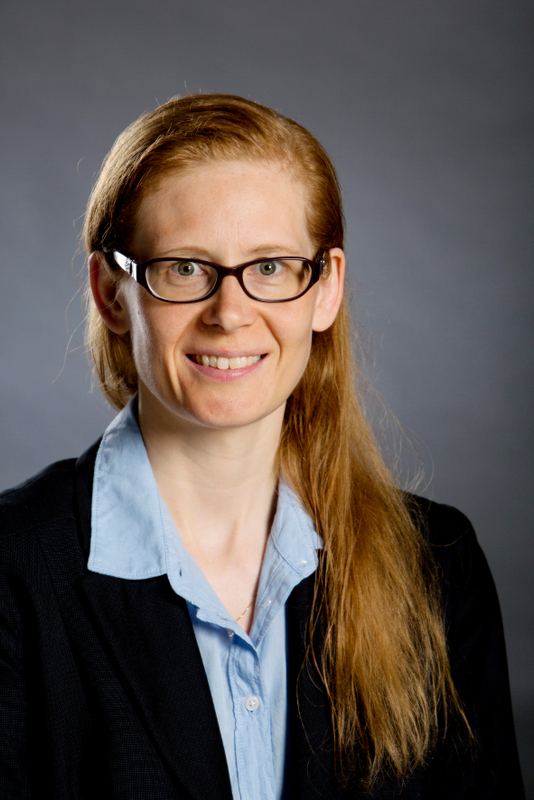
Assoc. Prof. Dr. Sema Alaçam Doğan has been affiliated with Istanbul Technical University since 2014, serving as an Associate Professor in the Department of Architecture . She has held administrative roles including Deputy Head of Department and Erasmus Coordinator. Education : PhD in Informatics in Architectural Design (2008-2014), MS in Informatics in Architectural Design (2005-2008), and BS in Architecture (1999-2005) from Istanbul Technical University. Her research explores Computational Design , Artificial Intelligence in Architecture , and Sustainable Material Innovation . She investigates digital tools for heritage preservation, daylight optimization in BIM, and cognitive development in architecture students. Recent publications analyze AI-assisted design literacy , machine learning for Sinan mosques , and environmental comfort in Harran houses . Her work integrates algorithmic frameworks with sustainable practices. Scientific awards include multiple ITU Publication and Performance Awards (2021-2024), FABFEST Prizes , and the 2024 Artemis Educator Award from NASA. Active projects like "Physical Computation in Architectural Drawing" and "Robotic Fabrication with Recycled Wind Turbine Blades" demonstrate her leadership in computational and sustainable research.
Ulrik Schroeder is a Universitätsprofessor (Full Professor) at RWTH Aachen University, leading the Chair of Learning Technologies within the Faculty of Computer Science. His research focuses on the intersection of educational technology, learning analytics, and immersive technologies with particular emphasis on practical implementations in higher education settings. Professor Schroeder's research spans multiple interconnected domains in educational technology. His primary interests include Learning Analytics implementation (particularly using xAPI standards), Virtual Reality applications for education, Open Educational Resources development and conversion, and gamification approaches for programming education. He has developed several notable tools including convOERter for OER conversion, WebWriter for creating explorable explanations, and various xAPI-based learning analytics infrastructures. His work consistently bridges theoretical frameworks with practical educational applications, often focusing on computer science education contexts. Analysis of his recent publications reveals a strong trend toward integrating Learning Analytics with immersive technologies, particularly Virtual Reality environments. His research demonstrates a systematic approach to educational technology development, with emphasis on scalability, interoperability through standards like xAPI, and practical implementation in real educational settings. The work increasingly focuses on personalized learning paths, quality assurance for educational resources, and privacy-conscious data collection. Co-editor of 21. Fachtagung Bildungstechnologien (DELFI) (2023) Co-editor of Hochschuldidaktik der Informatik HDI 2018 Co-editor of DeLFI 2018 conference proceedings Professor Schroeder has supervised numerous doctoral and postdoctoral researchers who frequently appear as co-authors on his publications, indicating an active research group. His projects often involve interdisciplinary collaborations across computer science, education, and psychology. Current major initiatives include the AIStudyBuddy project for study path analysis and the development of VR classroom simulations for teacher training. His research group, the Learning Technologies Innovation Lab, develops open research tools that support various aspects of educational technology research and implementation.
Teemu Roos is a Professor at the Department of Computer Science , University of Helsinki , and a Principal Investigator for the Complex Systems Computation Group under the Helsinki Institute for Information Technology. He serves as a Supervisor for the Doctoral Programme in Computer Science and leads multiple research initiatives, including Distributed AI in Supercomputing , AI & Kids , and Generation AI . Dr. Roos also holds a Docent title in Computer Science. His research spans Artificial Intelligence , Machine Learning , and Data Science , with a focus on AI education , graph neural networks , Bayesian modeling , and health informatics . He has pioneered tools like Elements of AI , a free online course now translated into 22 EU languages, and explores the ethical implications of AI-generated content in authorship and inventorship. The 15 most recent publications highlight applications in environmental forecasting (e.g., Mediterranean Sea via graph-based deep learning), healthcare (e.g., skin cancer detection with transfer learning), and social media analysis (e.g., explainable AI platforms for K-12 education). Methodologically, his work advances clustering algorithms , dimensionality reduction , and approximate nearest neighbor search . Scientific Awards: Cor Baayen Award (2009) Nokia Foundation Recognition Award (2019) Best Paper Honorable Mention Award (2013) ICT Influencer of the Year 2019 (Vuoden TiVi-vaikuttaja 2019) World Summit AI's Top-50 Innovators in 2020 Dr. Roos has supervised 2 doctoral students and contributed to 163 academic activities , including invited talks at MIT, University of Cambridge, and the Finnish Institute in Rome. He has secured funding from the Academy of Finland and the Strategic Research Council, focusing on projects like Fast AI-assisted Space Environment Prediction and Urban Exerciser .
Senior Lecturer Outi Salo-Ahen is affiliated with Åbo Akademi University's Faculty of Natural Sciences and Engineering , Department of Pharmacy. Her research focuses on computational pharmacology, drug design, and pharmaceutical chemistry, particularly targeting chemokine receptors (CCR5/CXCR4) and transient receptor potential channels (TRPA1) for therapeutic applications. Doctor of Pharmacy (2006, University of Kuopio/UEF) MSc in Pharmaceutical Chemistry (2001, UEF) BSc in Pharmacy (1999, UEF) University Pedagogy Modules 1-5 (2012-2015) Her work contributes to UN Sustainable Development Goals through education and pharmaceutical innovation . Recent research trends include: Antimicrobial resistance solutions TRPA1 channel modulation Nanotechnology-enabled drug delivery Multi-target HIV-1 inhibitors 3D printing of biocompatible materials Computational analysis of nucleic acid frameworks She actively supervises doctoral projects, serves on assessment panels, and leads collaborations like Nordic Pharmaceutical Translation and Innovation. Her 60+ publications demonstrate expertise in molecular modeling and drug discovery.
Dr. Bimlesh Wadhwa is an Associate Professor in the Department of Computer Science at the National University of Singapore (NUS) and serves as Assistant Dean for Student Life at Tembusu College. She holds dual affiliations as a Residential Fellow at Tembusu College and an active member of the School of Computing's academic community. Her work bridges software engineering, human-computer interaction (HCI), and computing education. Dr. Wadhwa's research focuses on gender issues in HCI, software design quality, and digital well-being. She has pioneered initiatives like the Code for Community program to bring computing education to underserved groups. Her pedagogical contributions include developing courses on object-oriented design, software engineering principles, and interaction design. She actively engages with professional communities through roles such as Faculty Representative at the Singapore Computer Society Student Chapter and advisor to the Computing Club at NUS. Her recent work addresses pressing societal challenges like technology-facilitated sexual violence and integrates AI into educational contexts. She has organized major competitions including CodeXtreme and the Singapore Science and Engineering Fair, fostering innovation among students. Her interdisciplinary collaborations span healthcare applications, smart city technologies, and educational equity initiatives. Dr. Wadhwa’s scholarly contributions include over 80 publications in top venues such as FSE, CHI, and IEEE conferences. She has co-edited book chapters for Springer and Wiley on HCI and informatics, reflecting her commitment to advancing both technical and societal dimensions of computing. In addition to her academic roles, she leads MakerLab initiatives and contributes to national educational policies on computational thinking. Her work emphasizes bridging academia-industry gaps through projects like the GEAR mobile game-assisted rehabilitation system and cloud service brokerage frameworks.
Dr. Hanbo Shim is an Assistant Professor in the Department of Management at The University of Texas at Arlington, College of Business. He holds a PhD in Industrial Relations and Human Resources from Rutgers University and a BA in Mathematics and Economics from the University of Illinois at Urbana-Champaign. His research and teaching focus on Human Resource Management, Organizational Behavior, and HR Analytics. PhD, Industrial Relations and Human Resources, Rutgers University (2022) MS, Industrial Relations and Human Resources, Rutgers University (2019) MA, Human Resource Management, Rutgers University (2016) BA, Mathematics and Economics, University of Illinois (2012) Dr. Shim's research explores the temporal dynamics of employee performance, compensation systems, emotional intelligence, and social networks in organizations. He uses longitudinal analysis, multilevel modeling, meta-analysis, and computer simulation to examine how individual and interpersonal factors influence organizational outcomes. His work bridges HR analytics with behavioral science. His recent publications span topics such as green HRM, pay policy dynamics, emotional intelligence, and HR analytics education. These works reflect a strong interdisciplinary approach integrating psychology, sustainability, data science, and strategic management. His research has been presented at leading conferences including the Academy of Management and European Reward Management Conference. Award highlights include: Ralph Alexander Best Dissertation Award (2024) Innovative Teaching Award, Academy of Management HR Division (2022) Best Student Convention Paper Award (2020) Best Doctoral Conference Paper Award, Samsung Economic Research Institute (2020) Dr. Shim actively advises students through capstone and honors projects and serves on PhD and graduate studies committees. He has collaborated with SL Corporation on HR analytics and developed open-source educational materials. His service includes editorial board membership for Compensation & Benefits Review and ad hoc reviewing for top journals. He is also engaged in professional development workshops and public speaking, including for the Society for Human Resource Management at UTA. His lab and research activities emphasize simulation-based methods and real-world HR analytics applications.
Sara Hennessy is a Professor of Educational Dialogue and Pedagogical Inquiry at the Faculty of Education, University of Cambridge , where she teaches and supervises Masters and doctoral students. She serves as Research Director of the £30m+ FCDO-funded EdTech Hub and leads the Cambridge Educational Dialogue Research (CEDiR) Group . Her research spans high- and low-income countries, focusing on classroom dialogue analysis, technology-mediated pedagogy, and teacher professional development. Education: BSc in Social Psychology (LSE), MA (Cantab), PhD in Psychology (UCL) Professional Memberships: American Educational Research Association (AERA), British Educational Research Association (BERA), European Association for Research into Learning and Instruction (EARLI) Research Interests: Hennessy’s work examines how digital technologies can enhance classroom dialogue and collaborative learning, particularly in sub-Saharan Africa. She developed the T-SEDA toolkit for classroom dialogue analysis, which underpins multimedia professional development resources. Her projects include Camtree (global practitioner research platform) and the EdTech Hub , investigating equitable uses of educational technology in low-income contexts. Publications: Her recent articles analyze mixed-methods approaches to classroom dialogue, technology’s role in Tanzanian teacher development, and linguistic considerations in resource localization. Earlier works focus on interactive whiteboards, OERs, and socio-cultural perspectives on technology integration. Scientific Awards: ESRC Research Fellowship (2007-2010): Consolidated practitioner-researcher collaboration methodologies Editorial Roles: Former editor of the British Journal of Educational Technology (2016-2024) and editorial board member of the International Journal of Science Education .
Susan Powers is a Professor of Civil & Environmental Engineering at Clarkson University, where she also serves as the Spence Professor of Sustainable Environmental Systems, Director of the Institute for a Sustainable Environment, and Associate Director of Sustainability. She earned her Ph.D. in Environmental Engineering from the University of Michigan in 1992. Research Interests: Dr. Powers specializes in lifecycle assessment and environmental impact metrics for energy systems, with recent interdisciplinary work on anaerobic digestion for food waste management and smart housing to encourage energy conservation. Her educational research integrates project-based learning to enhance energy and climate change literacy across K-12 and college levels. Scientific Awards: AEESP Distinguished Service Award (2019) AEESP Fellow (2019) Spirit of Entrepreneurship Award (2012) Premier Curriculum Award for K-12 Engineering (2009) NSF Directors Award – Distinguished Teaching Scholar (2004) Grants & Educational Leadership: Dr. Powers has led multiple education-oriented grants, including the NSF Distinguished Teaching Scholars award, to develop project-based modules for sustainability education. She actively incorporates campus sustainability initiatives into student projects to teach real-world environmental problem-solving.
Samia Khan is a Professor in the Department of Curriculum & Pedagogy at the University of British Columbia's Faculty of Education, where she also serves as Associate Dean of Research. Her academic work bridges educational technology, science education, and teacher preparation across K-16 contexts. Dr. Khan earned her PhD from the University of Massachusetts. Her educational background informs her interdisciplinary approach to learning sciences and technology integration. Her research centers on how digital technologies transform science learning , with emphases on model-based teaching , visualization tools , and equitable participation in STEM . She investigates simulation technologies, future-state modeling, and strategies to broaden science engagement through interpretive and mixed-methods research. Her work particularly examines teacher epistemologies, scientific reasoning development, and socio-cultural factors in technology-mediated learning environments. Analysis of her recent publications reveals three dominant trends: (1) International comparative studies of science curricula across Southeast Asia, (2) Efficacy of digital tools (PhET, GeoGebra, Symbolab) in conceptual understanding, and (3) Pre-service teacher development in model-based science instruction. Her research spans diverse contexts from Canadian classrooms to Rwandan and Vietnamese educational settings. Dr. Khan's contributions have been recognized through: New Scholar Award from the Canadian Society for Study in Education Prime Minister’s Award of Canada for Teaching Excellence in Science, Technology, and Mathematics As former MET Director (2021-2022) and author of foundational courses ETEC 530/533, she has significantly shaped UBC's educational technology programs. Her Faculty Associate role at the Institute of Resources, Environment, and Sustainability demonstrates cross-disciplinary engagement with sustainability education. Her research appears in leading journals including Journal of Technology and Teacher Education, Computers and Education, and Educational Technology Research and Development, with consistent citation as field-shaping work in educational technology.
Marcia C. Linn is the Evelyn Lois Corey Professor of Instructional Science in the Berkeley School of Education at the University of California, Berkeley. She serves as Chair of the Graduate Group in Science and Mathematics Education (SESAME) and has made significant contributions to the field of science education for over five decades. Dr. Linn is a member of the National Academy of Education and a Fellow of multiple prestigious organizations including the American Association for the Advancement of Science (AAAS), the American Psychological Association (APA), the Association for Psychological Science (APS), the American Educational Research Association (AERA), and the International Society of the Learning Sciences (ISLS). Dr. Linn earned her B.A. in Psychology and Statistics (1965), M.A. in Educational Psychology (1967), and Ph.D. in Educational Psychology (1970) from Stanford University, where she worked under Lee Cronbach. Her early career included working with Jean Piaget at the Institute Jean Jacques Rousseau in Geneva, Switzerland (1967-68), serving as a Fulbright Professor at the Weizmann Institute of Science in Israel (1983), and conducting research at University College in London. She has been a fellow at the Center for Advanced Study in Behavioral Sciences three times and a Writing Resident at the Rockefeller Foundation Bellagio Center twice. Dr. Linn's research focuses on how students learn science and how technology can be used to improve science education. She developed the Knowledge Integration framework, which has become widely used in science education. Her work explores the intersection of cognitive science and educational practice, with particular attention to how students develop understanding of complex scientific concepts. She has pioneered the use of technology in science education, developing the Web-based Inquiry Science Environment (WISE) and directing the NSF-funded Technology-Enhanced Learning in Science (TELS) center. Dr. Linn's recent publications demonstrate a clear trajectory toward integrating artificial intelligence with science education. Her work increasingly focuses on how AI can support knowledge integration, facilitate science learning opportunities, and promote equitable educational experiences. She examines how technology can help students develop deeper understandings of scientific concepts through inquiry-based learning while addressing issues of social justice in science education. Scientific Awards and Honors National Association for Research in Science Teaching Award for Lifelong Distinguished Contributions to Science Education American Educational Research Association Willystine Goodsell Award Council of Scientific Society Presidents first award for Excellence in Educational Research Fulbright Professor (1983) Apple Wheels for the Mind grant (1985) National Institute of Education grant (1983) Throughout her career, Dr. Linn has secured significant funding for educational research, including multiple National Science Foundation grants. She directed the NSF-funded Technology-Enhanced Learning in Science (TELS) center and has led numerous projects investigating the cognitive consequences of computer environments for learning. She has advised countless students and researchers in the field of science education, shaping the next generation of educational researchers and practitioners. Dr. Linn directs the Web-based Inquiry Science Environment (WISE) project and has been instrumental in developing technology-enhanced learning environments for science education. Her laboratory has been at the forefront of creating and testing innovative learning technologies that support students in developing deep understanding of scientific concepts through inquiry-based approaches.
Marcos Cruz is Professor of Innovative Environments at The Bartlett School of Architecture, University College London (UCL), where he leads research in bio-integrated design. He runs Bio-ID with Dr. Brenda Parker, a multidisciplinary research platform investigating design driven by biotechnology, computation, materials, and fabrication. Previously, he served as Director of The Bartlett from 2010-2014 and founded the BiotA Lab (2014-2018). His academic career spans multiple institutions including University College London (where he ran MArch Unit 20 for 19 years), University of Westminster (2008-2010), UCLA (2010), and IAAC (2014-present). Professor Cruz holds a Licenciatura from ESAP Porto, a Masters with distinction from UCL, and a PhD from UCL (2007), sponsored by the Portuguese Foundation for Science and Technology. His doctoral research on 'Neoplasmatic Architecture' earned him the RIBA President's Research Award in 2008. He is a registered architect with both the Architects Registration Board (ARB) and the Portuguese Architecture Chamber. His primary research area is Bio-Integrated Design, which explores how biotechnology and computation can reshape our built environment in response to climate change. This work goes beyond using nature as inspiration; instead, it treats nature as the medium for a multi-layered design approach. His key research project, Poikilohydric Living Walls, investigates integrating growth systems directly on building facades using algae and mosses that can switch photosynthetic activity on and off without additional maintenance. Another significant research area is The Body in Architecture, which examines the relationship between human flesh and architectural flesh, proposing a 'thick embodied flesh' that creates truly inhabitable architectural interfaces. His recent publications demonstrate a strong progression toward integrating living systems directly into building materials and facades. The research spans from microbial to tectonic scales, with increasing focus on biomaterials, robotic fabrication, and sustainable design approaches that actively participate in urban ecosystems rather than merely responding to them. RIBA President's Research Award (2008) for 'Neoplasmatic Architecture' Multiple Best Unit awards at Bartlett Summer Show (awarded by Thom Mayne, Paul Finch, Richard Rogers, Claude Parent, and Ross Lovegrove) Work part of permanent collection at FRAC Orleans Exhibitions at Venice and São Paulo Biennales Professor Cruz has supervised numerous PhD students through UCL's Research-by-Design programme and currently directs the MArch/MSc in Bio-Integrated Design. His research has been supported by EPSRC and involves industrial partners including Laing O'Rourke, Pennine Stone Limited, and Amorim, with academic partners at UCL Biochemical Engineering, University of Coimbra, and IST Tomar. He co-founded MAM-ARCH London (formerly marcosandmarjan) in 2000, whose work has built buildings and pavilions, won international competitions including the Kunsthaus Graz, and been exhibited globally. His practice represents a significant bridge between architectural design and biological systems, positioning him at the forefront of bio-integrated architectural research.
Timothy Bretl is a Professor of Aerospace Engineering at the University of Illinois at Urbana-Champaign, holding the Severns Faculty Scholar position since 2021. He also serves as Associate Head of the Aerospace Engineering department. His research focuses on robotics, control systems, rehabilitation robotics, and engineering education. Bretl earned his Ph.D. from Stanford University (2005), with prior degrees from Swarthmore College. He holds affiliate roles across multiple departments, including Neuroscience, Coordinated Science Laboratory, and Computer Science. Education: Ph.D. in Aeronautics and Astronautics, Stanford University (2005) B.A. in Mathematics and B.S. in Engineering, Swarthmore College (1999) His research spans engineering education innovations, robotic manipulation, and brain-machine interfaces. Notable awards include the NSF CAREER Award (2010), Best Manipulation Paper (2012), and multiple teaching honors like the Rose Award for Teaching Excellence (2016). Bretl’s work integrates theoretical foundations with practical applications in prosthetics, autonomous systems, and educational technology. He has advised numerous projects on robotics, control systems, and human-robot interaction. His lab explores advanced topics like elastic rod manipulation, magnetic positioning, and curriculum reform in STEM education. Collaborative projects include partnerships with industry and interdisciplinary teams at the Beckman Institute.
Dr. Gary Scavone is a Professor and Department Chair in the Music department at McGill University's Schulich School of Music. He holds a PhD in Computer-Based Music Theory & Acoustics and MS in Electrical Engineering from Stanford University, alongside degrees from Syracuse University in Music and Electrical Engineering. His research focuses on music technology, including acoustic modeling, sound synthesis, and instrument design. He directs the Computational Acoustic Modeling Laboratory (CAML), which explores advanced techniques for simulating musical instruments and developing software tools. As a saxophonist, he specializes in contemporary concert music performance. Research interests include physically-based sound synthesis, wind instrument acoustics, and digital waveguide modeling. He has contributed to studies on brass and woodwind impedance measurements, violin soundpost dynamics, and free-reed instrument modeling. His work bridges engineering and artistry, with applications in music pedagogy, instrument design optimization, and virtual acoustic replication. Key contributions include open-source projects for wind instrument modeling and the development of tools for automated timbre assessment. His research often combines experimental methods with computational simulations, addressing challenges in both theoretical and applied music acoustics. Current projects focus on deep learning for friction modeling, impedance measurement systems, and cross-cultural instrument analysis.
Professor Behzad Fatahi is a distinguished academic in Civil and Environmental Engineering at the University of Technology Sydney (UTS), specializing in geotechnical engineering, railway infrastructure, and sustainable construction technologies. With a career spanning over 16 years at UTS, he has served as Deputy Head of School - Teaching and Learning (2024-present), Head of Discipline (2020-2024), and School Research Coordinator (2012-2017). His research focuses on unsaturated soil mechanics , dynamic soil-structure interaction , and green infrastructure solutions . Academic Appointments : Professor (2024-present), Associate Professor (2017-2024), Senior Lecturer (2011-2017), Lecturer (2008-2011) Research Leadership : Supervised 21 PhD students to completion, developed groundbreaking techniques for landfill waste reuse and tyre-derived aggregates in railway construction His work on seismic resilience of LNG tanks and bioengineered soil stabilization has received international recognition, including the 2023 Best Research Paper Award at the Australasian Association for Engineering Education conference. Professor Fatahi's industry experience includes geotechnical engineering roles at Coffey International and SES Engineering prior to academia. Key Research Contributions : Developed green corridor models for railway lines using coupled flow-deformation equations Pioneered AI-integrated teaching frameworks for civil engineering education Advanced machine learning techniques for intelligent compaction and structural buckling analysis As a Category 1 supervisor , he mentors graduate researchers in Civil Engineering , Geomechanics , and Earthquake Engineering . His peer-reviewed work (>240 publications) demonstrates technical excellence and innovation across multiple geotechnical domains.
Svitlana Rogovchenko is a Professor at the Department of Engineering Sciences, University of Agder, Norway. Her academic work bridges pure mathematical research in differential equations with innovative pedagogical approaches in engineering and interdisciplinary education. Educational Background: Doctor of Philosophy in Differential Equations (1988), Institute of Mathematics, National Academy of Sciences, Kyiv, Ukraine Master of Science in Mathematics (1983), Kyiv State University, Ukraine Research Interests: Qualitative theory of ordinary and impulsive differential equations, asymptotic methods in nonlinear mechanics, mathematical modeling, and the intersection of mathematics education with engineering and biology curricula. She focuses on conceptual understanding, pedagogical challenges, and commognitive conflicts in learning differential equations. Recent Publications Trends: Her work spans mathematical modeling of vehicle crashworthiness, interdisciplinary education for biologists and engineers, and pedagogical innovations in ordinary differential equations. Articles emphasize assessment design, group work tensions, and bridging mathematical theory with applied contexts.