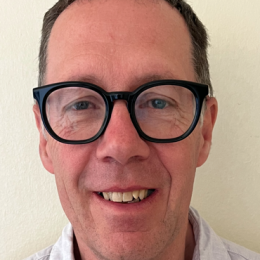
Tony Hansson is a Professor in the Department of Physics at Stockholm University, focusing on chemical physics and surface reaction dynamics. His research employs advanced spectroscopic techniques like femtosecond photoelectron spectroscopy and sum frequency generation to study molecular interactions with laser pulses and catalytic surfaces. Research Areas: Ultrafast laser-matter interactions, hydrocarbon decomposition, catalyst passivation, and excited state molecular relaxation. Methodologies: Combines experimental approaches (TPD, SFG, XPS, STM) with computational methods (DFT, molecular dynamics). Recent publications highlight his work on naphthalene dehydrogenation on nickel surfaces, sulfur's role in carbon formation, and oxide-derived gold electrode characterization. His studies bridge fundamental atomic-level processes with industrial catalysis applications. Key collaborations include Oliver Schalk and Ting Geng, with affiliations to Stockholm University's Fysikum facility. Contact: thansson@fysik.su.se
Richard Brenner is a Professor and Head of Department at the Department of Physics and Astronomy , Uppsala University. He is a key member of the ATLAS detector team at the CERN Large Hadron Collider (LHC) , focusing on instrumentation development and real-time data processing for dark matter detection. His work bridges semiconductor detector signals with machine learning systems , emphasizing radiation resistance in high-energy environments. Role: Head of Department of Physics and Astronomy Affiliation: Uppsala University and CERN Research Focus: Dark Matter, Higgs Boson, Particle Physics His recent 15 publications (2025) span topics like dark matter searches , Higgs boson production , vector boson fusion , and machine learning applications in data analysis. Keywords include High Energy Physics , Experimental Physics , and Quantum Interactions , with subfields such as Collider Physics , Detector Engineering , and Theoretical Modeling
Emil Björnson is a Professor of Wireless Communications and Head of the Communication Systems Department at KTH Royal Institute of Technology since 2024. He received his Master of Science in Engineering Mathematics from Lund University (2007) and PhD in Telecommunications from KTH (2011). After postdoctoral work at SUPELEC, France (2012-2014), he held faculty positions at Linköping University (2014-2021) before returning to KTH in 2020. Research Focus: MIMO communications, reconfigurable intelligent surfaces, radio resource allocation, machine learning for communications, and energy efficiency Editorial Roles: Editor for multiple IEEE transactions and magazines His research has significantly advanced wireless communication technologies, particularly in Massive MIMO and cell-free systems. He has authored four textbooks, including Massive MIMO Networks (2017) and Introduction to Multiple Antenna Communications and Reconfigurable Surfaces (2024). Scientific awards include: IEEE Fellow Clarivate Highly Cited Researcher Wallenberg Academy Fellow Digital Futures Fellow Multiple IEEE and EURASIP awards (2014-2024)
Zinat Behdad is a Researcher at the Division of Communication Systems within the School of Electrical Engineering and Computer Science (EECS) at KTH Royal Institute of Technology , Stockholm, Sweden. Her work bridges wireless communications and sensing technologies. Education: Master of Science in Electronics and Communications Engineering, Isfahan University of Technology, Iran (2017) Research Interests: Wireless Communications Integrated Sensing and Communication (ISAC) Cell-Free Massive MIMO URLLC (Ultra-Reliable Low-Latency Communication) Energy Efficiency RF Energy Harvesting Article Trends: Her publications emphasize Cell-Free Massive MIMO systems, with a focus on integrated sensing and communication (ISAC) , mmWave technology , and energy efficiency . Key areas include target detection , power allocation , and URLLC optimization , reflecting her work on balancing sensing accuracy and communication reliability. The 2018 paper explores RF energy harvesting in IoT networks through cooperative strategies. Affiliation and Lab: She is based at the Division of Communication Systems , KTH EECS, working on advanced wireless technologies with applications in security, energy sustainability, and 5G/6G networks.
Antonios Pantazis is an Associate Professor and Docent at Linköping University, affiliated with the Department of Biomedical and Clinical Sciences (BKV) within the Faculty of Medicine and Health Sciences. He leads the Pantazis Laboratory of Cellular Excitability (PaLaCE), focusing on ion channel biophysics and their role in health and disease. His work integrates electrophysiological, optical, and computational methods to study ion channel structure-function relationships, particularly in cardiac and neuronal systems. Research interests include voltage-gated ion channels, cellular excitability, and the molecular mechanisms underlying arrhythmias and neurological disorders. Key contributions involve understanding mutations in genes like SCN5A and KCNA2, which are linked to epilepsy and cardiac arrhythmias. He has been awarded the Swedish Fernström Prize (2021) for his work on ion channels. Publications span topics such as ion channel regulation, molecular transitions in voltage-dependent processes, and drug targets for arrhythmia suppression. His laboratory also explores cutting-edge techniques like voltage-clamp fluorometry and optical methods to visualize protein dynamics. Collaborations include institutions like the Wallenberg Centre for Molecular Medicine (WCMM) at Linköping University, emphasizing translational research in medical technology and bioengineering.
Martin Ingvar is a Senior Professor at Karolinska Institutet's Department of Clinical Neuroscience, affiliated with the Pain and Brain Imaging research group led by Karin Jensen. He holds a Medical Degree from Lund University (1984) and a Doctor of Medical Science degree (1982), specializing in experimental neurological research. His research focuses on knowledge processes in healthcare, integrating cognitive science, information theory, and medical informatics to develop clinical information systems that enhance patient care. He leads the Vinnova Demonstrator project (2023–2027) on multi-use health data and has held prominent roles such as Dean of Research at Karolinska Institutet (2010–2013) and Board Chair of Swelife (2013–2017). Ingvar’s academic career includes leadership positions like Deputy Head and Head of the Department of Clinical Neuroscience (2004–2010), and directorships of facilities like the Karolinska MR Center (1998–2022). His grants span topics like psychiatric prediction systems, chronic pain mechanisms, and healthcare data innovation. He has contributed to over 400 publications, emphasizing brain imaging, psychiatric disorders, and health informatics. Key contributions include pioneering work on the National MEG Center and advancing integrative medicine. His research bridges clinical neuroscience with societal health challenges, emphasizing data-driven solutions for healthcare systems.
Sten Ternström is a Professor at KTH Royal Institute of Technology's Division of Speech, Music and Hearing. He holds a MScEE (1982), PhD (1989), and has been a Professor since 2003. His research focuses on voice acoustics, particularly singing voice analysis and synthesis, with emphasis on clinical applications. Current interests include addressing voice variability, electroglottography, and audio technologies for music and voice clinics. He has led projects like FP7 EUNISON and SkAT-VG, and is a Fellow of the Acoustical Society of America. Education: All degrees at KTH—MScEE (1982), PhD (1989). Research Interests: Voice acoustics, choir acoustics, voice synthesis, biomedical signal processing. His work combines technical innovation with clinical relevance, e.g., developing FonaDyn software for real-time voice analysis. He explores how vocal fold dynamics influence voice quality and investigates non-invasive methods for voice assessment. Publications: Over 100 peer-reviewed articles, including recent work on WaveNet-based EGG prediction (2025), voice mapping post-thyroidectomy (2024), and pediatric voice analysis (2021). His research spans voice disorders, Parkinson’s disease voice therapy, and choral singing acoustics. Awards: Fellow of the Acoustical Society of America, Guest Editorships, and editorial roles in Acta Acustica. His contributions bridge engineering and clinical practice in voice science. Teaching: Leads courses in music acoustics, sound engineering, and supervises MSc projects on voice clinic software and singing synthesis. Active in outreach for choir acoustics and pedagogy. Labs/Teams: Involved in FonaDyn software development for voice analysis. Collaborates internationally on voice biomechanics and clinical voice measurement.
Kalle Åström is a Professor at Lund University's Centre for Mathematical Sciences within the Faculty of Engineering. He coordinates Lund University's Natural and Artificial Cognition profile area and the AI Lund network. His affiliations include ELLIIT (Linköping-Lund IT initiative), eSSENCE (e-Science Collaboration), Stroke Imaging Research group, and Computer Vision and Machine Learning research groups. His research spans computer vision, machine learning, and mathematical modeling with applications in medical imaging, autonomous systems, and cognitive vision. Key interests include geometry of multiple views, structure from motion using heterogeneous sensors, medical image analysis, and handwriting recognition. His work contributes to UN Sustainable Development Goals through AI applications in healthcare and engineering. Recent publications (2025) demonstrate strong trends in medical AI (Alzheimer's diagnostics, breast cancer classification) and autonomous systems (safety testing, sensor fusion). His work bridges theoretical mathematics with practical applications across healthcare and robotics domains. Best Nordic Ph.D. Thesis in Pattern Recognition (1995-1996) Innovation Cup 1991 for Autonomous Guided Vehicles EU IST Grand Prize 2003 (Decuma startup) Åström supervises graduate students and leads multiple active research projects including machine learning for Parkinson's disease analysis, audiovisual drone detection (Vinnova-funded), and Alzheimer's disease modeling. He co-founded startups Decuma (1999), Cognimatics (2003), Spiideo (2012), and Neuromathics (2015), and serves on boards of the Royal Swedish Physiographic Society and Swedish AI Society (SAIS). His research integrates mathematical rigor with real-world AI applications through extensive industry-academia collaborations.
Joakim Jaldén is a Professor at the Division of Information Science and Engineering, School of Electrical Engineering and Computer Science (EECS), KTH Royal Institute of Technology. He holds a Ph.D. in Electrical Engineering from KTH (2007) and completed post-doctoral studies at Vienna University of Technology (2007-2009). With affiliations at Stanford University and ETH Zürich, his academic journey reflects global expertise. 2002: M.Sc. in Electrical Engineering, KTH 2007: Ph.D. in Electrical Engineering, KTH 2007-2009: Post-Doctoral Researcher, Vienna University of Technology Jaldén's research spans Signal Processing , Wireless Communications , and Biomedical Data Analysis . He pioneered MIMO communications and later developed ELISpot/FluoroSpot analysis algorithms commercialized by Mabtech AB. His work on cell migration tracking (IEEE ISBI 2012) and distributed optimization (ECO-PANDA method) demonstrates interdisciplinary impact. Key publication trends include Hidden Markov Models for DNA sequencing, Reinforcement Learning in communication systems, and Low-Complexity Beamforming for MU-MIMO networks. His 2024 work on mmWave MIMO beam coherence showcases continued leadership in wireless channel modeling. Scientific recognition includes: IEEE Signal Processing Society 2006 Young Author Best Paper Award Ingvar Carlsson Career Award 2009 (Swedish Foundation for Strategic Research) IEEE ISBI 2012 Best Paper Award Bitplane Awards (2013-2015) for cell tracking challenges As Program Director of KTH's 5-year Electrical Engineering Degree Program (CELTE) since 2016 and Vice-Chair of EECS Faculty Board , Jaldén leads academic initiatives. His collaborations with industry (e.g., Mabtech AB) and roles as examiner for advanced courses in communication systems highlight his educational impact.
Håkan Johansson is a Professor in the Dynamics division of the Department of Mechanics and Maritime Sciences at Chalmers University of Technology. His research focuses on computational methods to analyze controlled mechanical systems, with applications in wind turbines, heavy vehicle drivelines, and wave propagation in soft biological tissues. Professor Johansson's primary research interests include computational mechanics, wind turbine dynamics, railway system dynamics, biomechanics, condition monitoring systems, optimization methods, and structural dynamics. His work bridges theoretical computational methods with practical engineering applications across multiple domains, particularly in renewable energy systems and transportation infrastructure. Analysis of his publication record reveals a strong focus on computational modeling applied to real-world engineering problems. His recent work demonstrates significant contributions to wind turbine technology, railway infrastructure monitoring, and biomechanical modeling. The publications show a consistent pattern of applying advanced computational techniques to solve complex mechanical system challenges, with increasing emphasis on digital twin technology and model-based condition monitoring systems. Professor Johansson leads or participates in multiple research projects including 'Towards Digital Twins of the Human Body for Personalized Safety' (2025-2026), 'AI-Driven Constrained Optimal Control for Bi-manual Loco-Manipulation' (2024-2029), and 'A Digital Twin for Durability to Accelerate Development and Enable Predictive Maintenance' (2024-2027). His research has received funding from various sources including VINNOVA, Wallenberg AI program, and Swedish Wind Power Technology Center. His research group focuses on computational methods for mechanical systems with applications across multiple domains. The work involves developing advanced computational models, validation through experimental data, and implementation in real-world monitoring and optimization systems. Current efforts emphasize digital twin frameworks and model-based condition monitoring for various engineering systems.
Cajsa Bartusch Kätting is a Senior Lecturer at Uppsala University's Department of Civil Engineering and Industrial Engineering within the Faculty of Science and Technology, and a Researcher at the Institute for Research on Conflicts of Goals in Sustainable Social Transition. As leader of the Uppsala Smart Energy Research Group (USER), she investigates electricity consumer and prosumer roles in smart grid development, focusing on demand response, decentralized generation, and sustainable energy transitions through industry-academic collaborations with partners including Ellevio and STUNS Energi. Her research centers on demand flexibility and consumer behavior in energy systems, examining how dynamic pricing, feedback mechanisms, and IT services influence residential and commercial electricity consumption. She integrates social psychology with engineering to design interventions for sustainable energy use, particularly studying gender differences in tariff understanding, prosumer integration challenges, and the impact of occupancy patterns on consumption. Analysis of her 15 most recent publications reveals increasing focus on behavioral aspects of smart grids, with empirical studies on dual-price signal confusion, microgrid optimization, and pandemic-driven consumption shifts. Her work consistently addresses the human dimension of energy transitions, moving beyond technical solutions to examine cognitive processes and social barriers in demand response adoption. Bartusch has secured significant funding from the Swedish Energy Agency and Familjen Kamprads stiftelse for projects like Användarnas roll i implementeringen av smarta elnät (2019-2024) and Holistiska affärsmodeller för prosumenter (2015-2018), often collaborating with municipalities and energy companies to translate research into practical solutions for grid congestion and renewable integration. She leads the USER research group which conducts applied interdisciplinary work combining engineering, psychology, and social sciences. The group's projects with partners like Uppsala Municipality and KTH focus on real-world implementation of demand response programs, prosumer business models, and microgrid optimization in multi-dwelling buildings, directly addressing Sweden's energy transition challenges.
Lennart Svensson is a Professor at Chalmers University of Technology in the Signal Processing research group. His work focuses on nonlinear filtering, multi-object tracking, Bayesian statistics, and deep machine learning with applications in autonomous systems and sensor fusion. Research Interests Nonlinear Filtering and Bayesian Inference Multi-Object Tracking and Sensor Fusion Deep Learning for Autonomous Systems Performance Metrics (GOSPA, T-GOSPA) Lidar-Camera Fusion and Radiance Fields 5G SLAM and mmWave Sensing Publications Trends Recent work emphasizes uncertainty-aware multi-object tracking metrics, trajectory estimation using Poisson Multi-Bernoulli Mixtures, and sensor fusion techniques for autonomous driving. His research integrates Bayesian methods with deep learning for applications in automotive radar, lidar, and 5G positioning systems. Contact Email: lennart.svensson@chalmers.se
Håkan Fischer is a Professor of Human Biological Psychology at Stockholm University, where he has served as Head of the Department of Psychobiology and Epidemiology since 2011. He also holds an associate professor position at Karolinska Institutet, is affiliated with the Aging Research Center and Stockholm University Brain Imaging Centre, and is a faculty member at Digital Futures at the Royal Institute of Technology. Since September 2025, he has additionally served as a visiting professor at Linköping University. Fischer has established himself as a leading researcher in emotional and cognitive processing, with particular expertise in socio-emotional aspects across the lifespan. Fischer earned his PhD in psychology from Uppsala University in 1998, followed by postdoctoral research at Harvard Medical School (1999-2001). He then worked at the Aging Research Center at Karolinska Institutet before joining Stockholm University in 2011. His academic journey includes a sabbatical year (2021-2022) at the University of Florida's Department of Psychology. Fischer is actively involved in university governance as a member of the Swedish Research Council's Subject Council for Humanities and Social Sciences (2023-present) and represents Stockholm University in multiple international collaborations. Håkan Fischer's research primarily focuses on investigating intra- and interindividual differences in affective, cognitive, social and perceptual processing, with special emphasis on age-related differences in adults. His laboratory employs advanced neuroimaging techniques including fMRI, PET, and fNIRS to examine brain function, while also utilizing structural imaging methods like T1-weighted imaging, DTI, and perfusion imaging to study brain structure. Fischer advocates for single-subject small-N designs to better understand emotional and cognitive mechanisms. His current research lines include socio-emotional perception and recognition, oxytocin effects on socio-emotional processing across the lifespan, and AI development for interpersonal communication analysis. Analysis of Fischer's recent publications reveals a strong focus on emotion recognition across populations, neurobiological mechanisms of socio-emotional processing, and methodological innovations. His work consistently integrates behavioral testing, neuroimaging, and genetic analysis to provide comprehensive insights. The increasing incorporation of AI approaches demonstrates his adaptation to emerging technological advances in psychological research. Fischer has published 136 peer-reviewed articles with over 12,200 citations and a Google Scholar h-index of 53. Fischer has received consistent funding since 2002 from prestigious sources including the Swedish Research Council, Wallenberg Foundation, STINT, Riksbankens Jubileumsfond, and Konung Gustav V och Drottning Victorias stiftelse. He currently leads nine funded research projects (two as principal investigator totaling 6.9 million SEK, seven as co-applicant totaling 24.8 million SEK) spanning multiple international collaborations in Sweden, Germany, and the USA. As an educator, Fischer leads the basic course in Cognitive Neuroscience and the master's course in Emotion Psychology and Affective Neuroscience. He regularly teaches at both undergraduate and advanced levels, primarily in biological psychology, cognitive neuroscience, and emotion psychology. Fischer currently supervises six doctoral students (one as main supervisor, four as assistant supervisor) and has mentored graduate students since 2002. Håkan Fischer leads a dynamic research laboratory that investigates emotional, social, perceptual, and cognitive processing. The lab examines how intraindividual variations across stimuli and time, as well as interindividual differences in age, gender, genetics, personality, and sleep deprivation affect these processes. His lab maintains active national and international collaborations with researchers at Stockholm University, Uppsala University, Karolinska Institutet, University of Florida, and University of Gothenburg, creating a robust interdisciplinary research environment focused on translating basic neuroscience into practical applications.
Jan Stake is a Professor of Terahertz Electronics and head of the Terahertz and Millimeter-Wave Laboratory at Chalmers University of Technology. He holds a MSc (1994) and PhD (1999) in electrical engineering and microwave electronics from Chalmers. His research focuses on terahertz technology for space missions, climate science, and industrial applications. Key projects include developing THz components for the Jupiter Icy Moons Explorer (Juice) and MetOp satellites, and creating sensors for pharmaceutical manufacturing. He has authored 388+ publications, served as Editor-in-Chief of IEEE Transactions on Terahertz Science and Technology , and is an IRMMW-THz board member. Current work emphasizes integrated THz components for space science and wireless communication. Awards include visiting research fellowships at the UK’s National Physical Laboratory (2023). Teaching includes semiconductor physics and microwave engineering, with a weekly journal club for PhD students. Research Interests: Terahertz fundamental science and applications Space instrumentation (e.g., SWI instrument for Juice mission) Climate monitoring via atmospheric THz measurements Graphene-based THz detectors and amplifiers THz radar systems for industrial process monitoring Recent Work Trends: Recent articles (2023–2025) emphasize high-precision quantum-cascade lasers , antenna alignment optimization , industrial THz sensing systems , and space-borne receiver reliability . Key themes include improving THz component integration, enhancing spectral resolution for molecular analysis, and advancing THz applications in manufacturing and environmental science. Awards & Roles: Editor-in-Chief, IEEE Transactions on Terahertz Science and Technology (2016–2018) Chair, IEEE THz Best Paper Award Committee (2019–2021) Elected IRMMW-THz Board Member (2017–2024) Visiting Research Fellow, UK National Physical Laboratory (2023) Grants & Collaborations: Active in EU and industry partnerships for space instrumentation (e.g., Juice mission) and pharmaceutical sensing. Lab develops THz components with companies in aerospace and medical sectors. Labs/Teams: Leads the Terahertz and Millimeter-Wave Laboratory, collaborating with National Physical Laboratory (UK) and ESA on space instrument development.
Isak Samsten is a Senior Lecturer at Stockholm University's Department of Computer and Systems Sciences (DSV), specializing in data science and machine learning. He leads research in temporal machine learning, counterfactual explanations, and interdisciplinary applications in healthcare and environmental science. His work includes developing the wildboar Python module for time series analysis. Current research projects focus on AI for insurance fraud detection and environmental remediation. Samsten is affiliated with the Data Science Research Group, which bridges algorithmic innovation with practical decision-making. He holds an ORCID identifier (0000-0002-3056-6801) and is active in publishing influential papers on topics like time series classification, ESG performance prediction, and clinical decision support systems. Education: Unspecified in text (assumed doctoral degree given academic rank) Affiliations: DSV, Stockholm University; Data Science Research Group Research Interests: Time series analysis, interpretable machine learning, healthcare informatics, environmental sustainability metrics, and AI ethics. Key contributions include shapelet-based classification methods (e.g., Castor algorithm) and counterfactual explanation frameworks (e.g., Glacier system). Grants & Awards: None explicitly listed in provided text. Labs/Teams: Leads the Data Science Research Group, collaborating on projects like AI to detect unclear insurance claims and Toxicity guided inverse design of materials .