
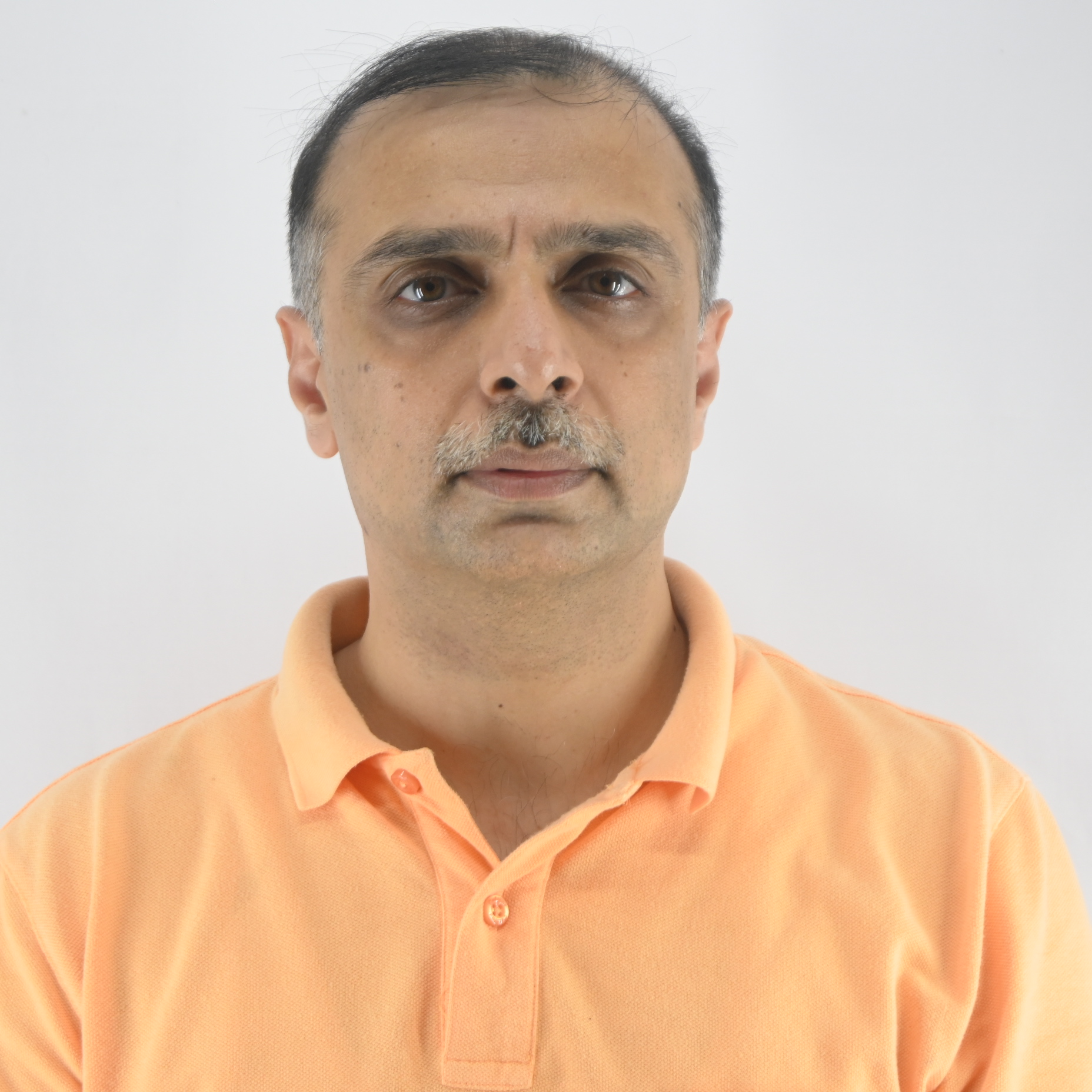
Ajit Rajwade is a Professor at the Department of Computer Science and Engineering , Indian Institute of Technology Bombay. His research spans Artificial Intelligence , Compressed Sensing , and Medical Imaging , with affiliations to the Centre for Machine Intelligence and Data Science and the Koita Centre for Digital Health . Education : PhD in Computer and Information Science and Engineering, University of Florida (2010) MSc in Computer Science, McGill University (2004) BTech in Computer Engineering, University of Pune (2002) His research interests focus on intelligent data acquisition, particularly in neural network analysis , graph signal processing , and medical imaging . He develops compressed sensing algorithms for inverse problems like tomography and MRI reconstruction , alongside applying group testing to pandemic response. Scientific awards include the Prof. S. P. Sukhatme Award (2024) and Departmental Teaching Excellence (2019). His publications demonstrate expertise in image restoration , noise modeling , and epidemiological algorithms . He has advised PhD students like Sabyasachi Ghosh and Jerin Geo James , with a focus on computationally efficient methods in medical imaging and machine learning .
جستجوی استاد راهنمای دانشگاهی
برای مسیر پژوهشیتان، استاد راهنما، استاد دانشگاه و پژوهشگر مناسب را پیدا کنید و با آنها ارتباط بگیرید.
نمایش ۱-۱۵ از ۷۴ استاد راهنما
اطلاعات پروفایلها از صفحات عمومی دانشگاهها گرفته شده و ممکن است بهروز نباشد.
Aditya K. Jagannatham is a Professor in the Department of Electrical Engineering at the Indian Institute of Technology Kanpur (IIT Kanpur). With expertise in wireless communications and signal processing, he has established himself as a leading researcher in 5G/6G technologies, MIMO systems, and cognitive radio networks. His educational background includes: PhD in Electrical and Computer Engineering from UC San Diego (2007) M.S. in Electrical and Computer Engineering from UC San Diego (2004) B.Tech. in Electrical Engineering from IIT Bombay (2001) Professor Jagannatham's research primarily focuses on next-generation wireless communication systems, with special emphasis on 5G and 6G technologies. His work spans OTFS modulation, Terahertz communications, Visible Light Communication (VLC), Intelligent Reflecting Surface (IRS) technology, Massive MIMO, mmWave MIMO, Non-Orthogonal Multiple Access (NOMA), and Filter-Bank Multi-Carrier (FBMC) systems. His research integrates theoretical analysis with practical implementation challenges, addressing critical issues in modern wireless networks. His recent publications demonstrate a strong trend toward advanced signal processing techniques for next-generation wireless systems, particularly focusing on Sparse Bayesian Learning approaches for channel estimation, cooperative communication systems with energy harvesting capabilities, and millimeter wave MIMO technologies. His work bridges theoretical communication theory with practical implementation challenges in emerging wireless standards. Professor Jagannatham has received numerous prestigious awards and fellowships: Arun Kumar Endowed Chair Professorship (2019) Qualcomm Innovation Fellowship (2018) P.K. Kelkar Young Faculty Research Fellowship for excellence in research (2015-2018) IEEE Signal Processing Society travel grant to attend ICASSP 2015 Gopal Das Bhandari Memorial Distinguished Teacher Award (2012-13) Cal(IT)2 fellowship for graduate study at UC San Diego As an educator, Professor Jagannatham has received commendation letters from the Director of IIT Kanpur for excellence in teaching courses including EE624 Information and Coding Theory, EE670 Wireless Communications, and EE320 Principles of Communication Systems. His research has attracted significant funding, though specific grant details are not provided in the available information. He likely supervises graduate students working on cutting-edge wireless communication research. Professor Jagannatham is based in the Advanced Centre for Electronic Systems (ACES) at IIT Kanpur, where he leads research in wireless communications. His work appears to be closely connected with the Center for Developing Intelligent Systems (CDIS) and other research centers at IIT Kanpur focused on next-generation communication technologies.
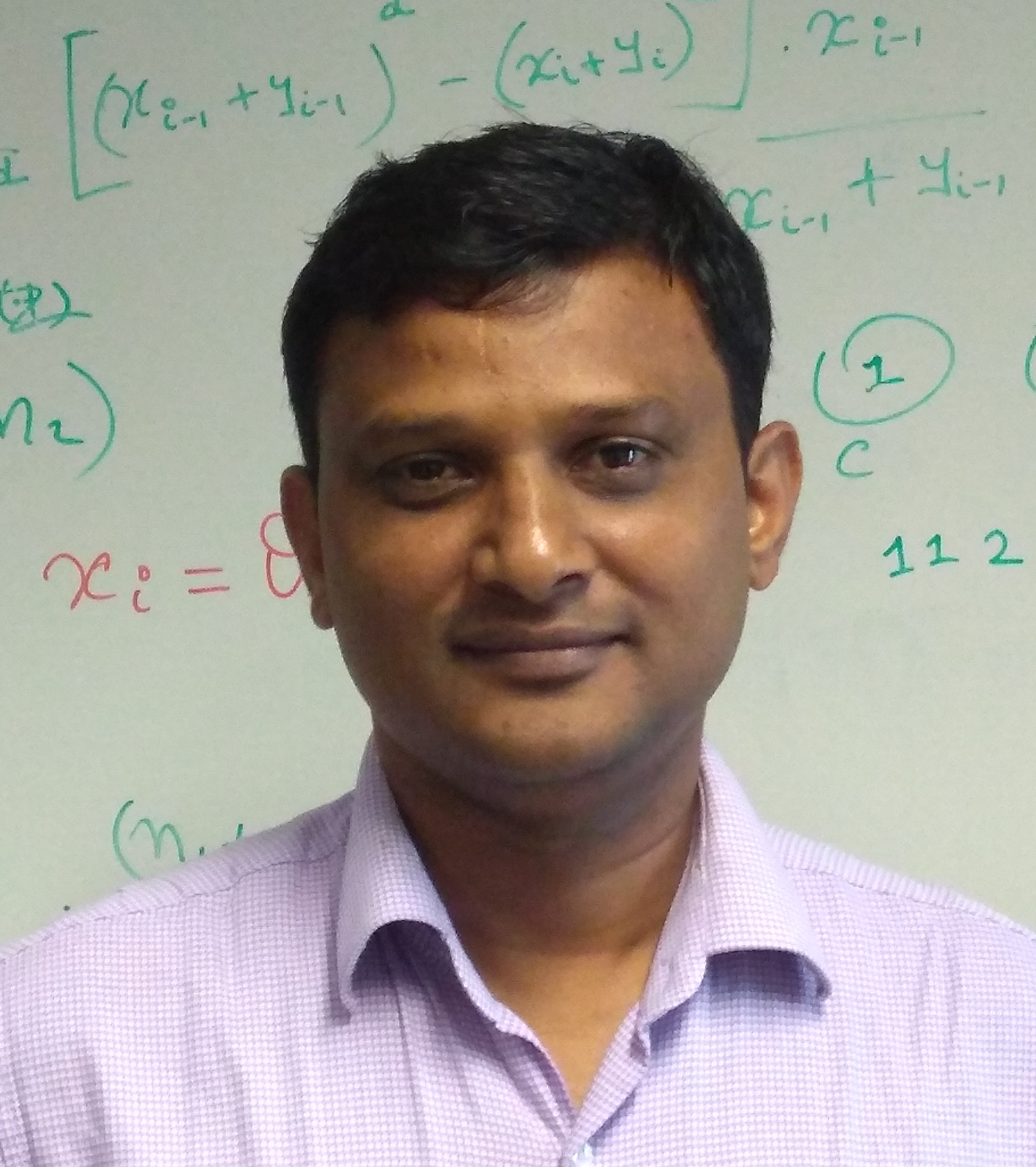
Manjesh Kumar Hanawal is an Associate Professor at the Industrial Engineering and Operations Research (IEOR) center of IIT Bombay , India. His academic journey includes a Ph.D. from University of Avignon/INRIA (2013), M.Sc (Engg) from IISc Bangalore (2009), and B.E. from NIT Bhopal (2004). Pre-Ph.D. work: Scientist-B at DRDO's CAIR Postdoctoral: Boston University (2013-2015) Appointed as first Professor-In-Charge of TCA2I center Research focuses on Machine Learning algorithms for limited feedback environments, Communication Networks resource allocation, and Cybersecurity threat detection. Publications span top venues like IEEE Transactions, NeurIPS, INFOCOM, and AISTATS. Recent work trends include: Bandit algorithms for distributed learning in heterogeneous networks Contextual information integration in sequential selection Energy efficiency optimization in wireless sensor networks Net neutrality violation detection frameworks Anti-jamming countermeasures in cognitive networks Scientific recognition includes the SERB Early Career Research Award (2019-2022) for machine learning applications in wireless networks. Advisees include Ph.D. awardee Arun Verma and Best Masters Thesis Awardee Sayan Chatterjee.

- Geoinformatics
- Remote Sensing
- LiDAR Technology
- +۵ مورد دیگر
Bharat Lohani is a Professor at the Department of Civil Engineering in Indian Institute of Technology Kanpur . His work focuses on Geoinformatics , utilizing LiDAR and GIS for 3D modeling and spatial analysis. Education : PhD (University of Reading, UK), ME (IIT Roorkee), BE (MMM Engineering College Gorakhpur) Research Interests : LiDAR simulation, motion correction in scanning, flood propagation modeling, historical urban mapping, GPS signal analysis, agricultural land consolidation Article Trends : His publications emphasize LiDAR data processing , sensor integration , and optimization algorithms for geospatial applications. Scientific Awards : ISRS National Award (2012), Best Paper at INCA Congress (2012), Silver Award at ISPRS (2008) Advising : Mentored 8+ students in LiDAR and spatial data analysis Labs/Teams : Leads a research group at IITK including Aswani Kumar Munnangi and Salil Goel, affiliated with the Wadhwani School of AI & Intelligent Systems .
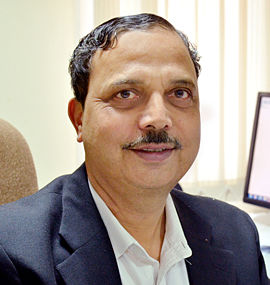
- Power system dynamics & stability studies
- Optimal power dispatch and state estimation
- Security analysis and control
- +۵ مورد دیگر
S. C. Srivastava is a Professor in the Department of Electrical Engineering at the Indian Institute of Technology Kanpur (IIT Kanpur) and serves as the Director of the IIT Kanpur-La Trobe University Research Academy, highlighting his leadership in international academic collaboration. Dr. Srivastava earned his PhD in Electrical Engineering from IIT Delhi in 1987 and completed his B.Tech from Banaras Hindu University in 1976. His research spans power system dynamics & stability studies, optimal power dispatch and state estimation, security analysis and control, smart grid technologies, and renewable energy integration including DC and AC micro-grids. His publication record shows consistent research output through 2018 with significant contributions to power system state estimation, microgrid protection, and wide area control systems. His work demonstrates a clear progression toward addressing contemporary challenges in power systems, particularly renewable integration and smart grid applications. Malaviya Award for Excellence in Power Systems (2018) Prof GK Dubey Memorial IEEE UP Section Life Time Achievement Award (2016) The Life time Achievement Award for Academic Excellence (2016) Dr. Srivastava serves in influential advisory roles including Chairman of the Expert Committee on Mission Innovation in Smart Grids (DST, New Delhi) and Member of the R&D Advisory Committee of NETRA, NTPC. His leadership in the IIT Kanpur-La Trobe University Research Academy demonstrates ongoing commitment to addressing global energy challenges through international collaboration.
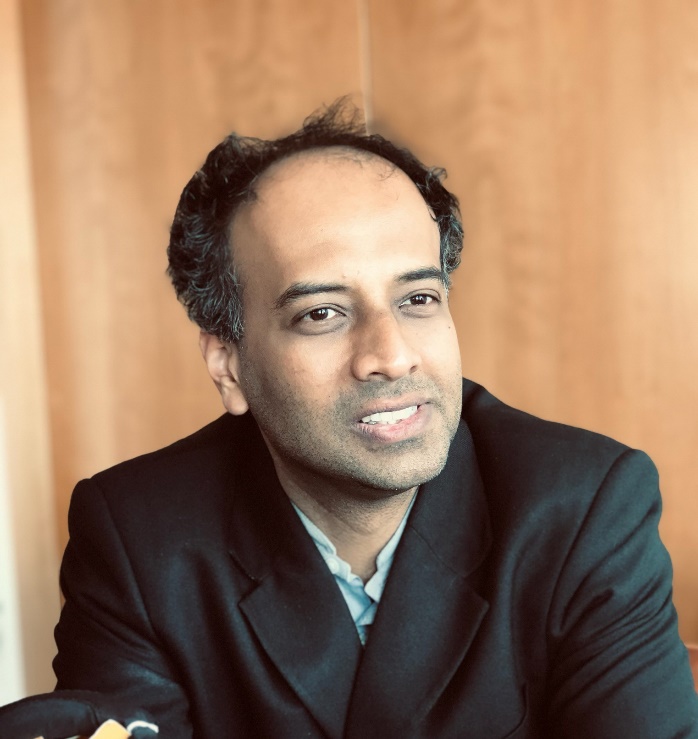
Krishna Jagannathan is a full-time Professor in the Department of Electrical Engineering at the Indian Institute of Technology Madras (IIT Madras), India. He specializes in stochastic modeling, communication networks, information theory, and queuing theory. He obtained his B.Tech from IIT Madras in 2004, followed by S.M. and Ph.D. degrees from MIT in 2006 and 2010, respectively. After post-doctoral positions at Caltech and MIT, he joined IIT Madras in 2011. Education: B.Tech in Electrical Engineering, IIT Madras (2004) S.M. in Electrical Engineering and Computer Science, MIT (2006) Ph.D. in Electrical Engineering and Computer Science, MIT (2010) Research Interests: His research focuses on stochastic modeling and analysis of communication networks , information theory , and queuing theory . He has made significant contributions to understanding network performance, resource allocation, and risk-aware decision-making in complex systems. He leads the Networks and Stochastic Systems lab at IIT Madras, mentoring a large cohort of Ph.D. and M.S. students working on cutting-edge problems in networking, optimization, and stochastic systems. Scientific Awards: Best Paper Award at WiOpt 2013, Tsukuba, Japan Young Faculty Recognition Award for Excellence in Teaching and Research, IIT Madras (2014) Teaching & Mentorship: He has taught a wide range of courses including Probability Foundations , Stochastic Modeling and Queuing Theory , Convex Optimization , and Signals & Systems , consistently receiving high teaching evaluations. He has supervised over 15 Ph.D. and M.S. students to completion and continues to guide several active researchers.
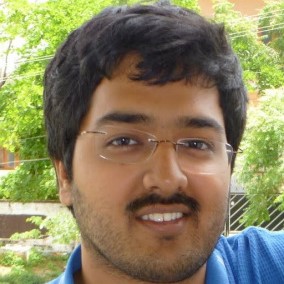
Aditya T Siripuram is an Associate Professor at the Indian Institute of Technology Hyderabad (IITH), holding joint appointments in the Department of Electrical Engineering and the Department of Artificial Intelligence. He completed his PhD at Stanford University and holds B.Tech and M.Tech degrees from IIT Bombay. Education: PhD in Electrical Engineering, Stanford University (2017) - GPA: 4.17/4 M.Tech in Electrical Engineering, IIT Bombay (2009) - GPA: 9.79/10 B.Tech in Electrical Engineering, IIT Bombay (2009) - GPA: 9.79/10 Research Interests: His research spans Fourier analysis, signal processing, machine learning, convex and combinatorial optimization, with applications in AI/ML and applied mathematics. His work particularly focuses on computational aspects of Fourier analysis, including fast DFT computation for structured signals, convolution idempotents, and graph-based signal processing techniques. His recent research directions involve developing efficient algorithms for computing Discrete Fourier Transforms for signals with structured frequency support, investigating relationships between additive structures in frequency domains and computational complexity, and exploring graph learning techniques under spectral constraints. Awards and Recognition: Excellence in Teaching Award, IIT Hyderabad (2019, 2022) Stanford Graduate Fellowship Qualcomm Innovation Fellowship (awarded to his PhD student Charantej Reddy P in 2021) Teaching and Service: He has taught courses including AI1110 Probability and Stochastic Processes, EE5609 Matrix Theory, EE5606 Convex Optimization, and EE5328 Introduction to Submodular Functions. He serves as Departmental Undergraduate Committee Chair for the Department of AI at IITH (2020-present) and was MTech Admissions Coordinator for the same department (2019-2022). Research Group: He currently advises three PhD students working on signal processing based graph learning techniques, DFT computation for structured signals, and coded computing problems.
- River Science
- Fluvial Geomorphology
- Sedimentology
- +۵ مورد دیگر
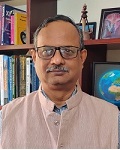
Prof. Rajiv Sinha is a Professor in the Department of Earth Sciences at Indian Institute of Technology Kanpur . With a PhD from the University of Cambridge (1992), his career spans over two decades at IITK, including roles as Head of Department since 2014. Education: PhD (University of Cambridge, 1992), M.Tech (University of Roorkee, 1987), B.Sc (Patna University, 1983) Key Affiliations: Member of International Association of Sedimentologists, SEPM, Quaternary Research Association, and Indian Professional Societies Research Focus: Specializing in river science , Prof. Sinha investigates fluvial geomorphology , sedimentology , and natural hazards like Kosi floods . His work integrates remote sensing and GIS for climate change and paleoclimate reconstruction , notably studying the Ganga river system and its anthropogenic impacts . Scientific Leadership: His publications (2013-2017) reveal: Anthropocene river systems (2016) Indus Civilization paleohydrology (2017) Kosi megafan dynamics (2015) Monsoon evolution (2010, 2014) Groundwater management (2016) Awards & Recognitions: Pandit Girish Ranjan Chair Professorship (2013) National Mineral Award (2002) Alexander von Humboldt Fellowship (2000) UGC Research Fellowship (1988) University Gold Medal (1987) Collaborative Network: Partners include University of Durham , Imperial College London , and Institute du Physique de Globe, Paris . Currently leading Ganga River Basin Management studies and river science initiatives at IITK.
Professor Vinay Kumar Gupta is a faculty member in the Department of Civil Engineering at Indian Institute of Technology Kanpur. He specializes in Structural Engineering with research focus on Random Vibrations and Earthquake Engineering. With over two decades of service at IIT Kanpur, he has established himself as a leading expert in seismic analysis and structural dynamics. His educational background includes a PhD and M.S. from University of Southern California, USA (1989, 1990), and M.E. and B.E. from University of Roorkee (1985, 1982). Professor Gupta teaches courses in Mechanics of Solids, Structural Analysis, Structural Design, Structural Dynamics, Earthquake Analysis and Design of Structures, and Random Vibrations. His research focuses on earthquake engineering, particularly in the areas of random vibrations, response spectrum analysis, and structural dynamics under seismic loads. His publications demonstrate expertise in analyzing multistoried buildings, spectral velocity ordinates, modal combination rules, and wavelet-based simulation of aftershock accelerograms. His work bridges theoretical analysis with practical applications in seismic design. Young Engineer Award, 1997 from Indian National Academy of Engineering (INAE) Editor, ISET Journal of Earthquake Technology (since May, 1998) Vice-President, Indian Society of Earthquake Technology (ISET) (04/03-03/07) Life Fellow, ISET since February, 2003 Kapitsa Gold Medal in 2004 from the Russian Academy of Natural Sciences Professor Gupta has mentored students including Riya Catherine George and Varun Kumar Singla. His research group contributes significantly to advancing knowledge in earthquake engineering and structural dynamics. His work has practical applications in improving building safety standards and seismic design methodologies.
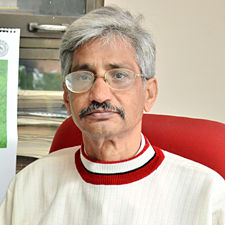
Govind Sharma is a Professor in the Department of Electrical Engineering at the Indian Institute of Technology Kanpur. He holds a PhD from the University of Southern California, Los Angeles, and completed both his M.Tech. (1984) and B.Tech. (1979) in Electrical Engineering from IIT Kanpur. His research interests span multiple areas of signal processing and communications, with a focus on: Signal Processing Communication Systems Video signal processing Medical image processing Professor Sharma has published numerous research papers in prestigious journals and conferences. His work primarily focuses on signal processing techniques, including time delay estimation in acoustic channels, direction of arrival estimation, adaptive filtering algorithms, wavelet transforms, and spectrum estimation. His research has contributed significantly to both theoretical foundations and practical applications in these fields, with publications spanning from 1986 to 2011. He can be reached at his office in ACES-205A, Department of Electrical Engineering, Indian Institute of Technology, Kanpur, UP, India-208016, or by phone at 0512-259-7922.
Rajesh M. Hegde is a Professor in the Department of Electrical Engineering at the Indian Institute of Technology Kanpur. He holds a PhD in Computer Science from IIT Madras (2005), an M.E. in Electronics Engineering from Bangalore University (1988), and a B.E. in IT Engineering from Mysore University. His research focuses on Machine Learning , AI , and multimodal systems, with applications in wireless networks, IoT, and speech/audio processing. Specific interests include federated learning, WSN, and information fusion for ASR/VR systems. His lab is located in ACES 203-204. Publications predominantly explore signal processing techniques for multimedia and speech applications, showing consistent focus on feature extraction, multimodal fusion, and real-time system design across 15+ years of research. Awards & Honors: P.K Kelkar Research Fellowship (2009-2013) Undergraduate design mentorship award, UC San Diego ISCA Grant at INTERSPEECH-ICSLP 2004 IBM Best Thesis Award recommendation Teaching excellence commendation
Naren Naik is a Professor in the Department of Electrical Engineering at the Indian Institute of Technology (IIT) Kanpur, specializing in computational tomographic reconstructions and analysis for subsurface imaging and shape/target tracking. His educational background includes: PhD from the Indian Institute of Science (IISc) Bangalore in 2000 M.E. in Electronics and Communication Engineering from IISc Bangalore in 1992 B.Sc. from Bangalore in 1988 Professor Naik's research focuses on development and analysis of reconstruction algorithms for nonlinear tomography , with particular emphasis on shape-based and dynamic tomography, tracking and battlefield surveillance, and numerical solutions to partial differential equations in electromagnetics. His work spans multiple imaging modalities including subsurface imaging with Ground Penetrating Radar (GPR), fluorescence optics, electrical impedance tomography, and photoacoustic tomography. His research bridges theoretical mathematics with practical applications in electromagnetic imaging and target tracking systems, addressing complex inverse problems in computational imaging. His publication record shows a clear progression from electromagnetic tomography to advanced Kalman filtering techniques for target tracking applications. The most recent works focus on wireless sensor networks and maneuvering target tracking, demonstrating his ability to adapt theoretical frameworks to evolving technological contexts while maintaining mathematical rigor in solving inverse problems. His professional recognition includes: Invited presentation at the special session on advances in model based inversion at the 2011 IEEE AP-S International Symposium on Antennas and Propagation Professor Naik maintains an active research program with consistent publication output in high-impact journals and conferences. His work demonstrates strong interdisciplinary collaboration, particularly with researchers in electromagnetics, signal processing, and imaging sciences. His research has significant applications in defense technology (battlefield surveillance), medical imaging, and subsurface exploration systems, contributing to both theoretical advances and practical implementations in these fields. He is based in Office 303A ACES (Advanced Centre for Electronic Systems) at the Department of Electrical Engineering, IIT Kanpur, where he leads research activities in computational imaging and tomographic reconstruction.
Pradeep Kumar is a Professor in the Department of Electrical Engineering at the Indian Institute of Technology Kanpur (IIT Kanpur), specializing in quantum cryptography, quantum optics, and fiber-optic communications. His research focuses on secure quantum communication systems and the application of quantum phenomena in information processing. Dr. Kumar received his PhD from IIT Madras in 2009 under the supervision of Anil Prabhakar. He completed his B.E. at M.V.J. College of Engineering, Visweswaraiah Technological University in 2002. His research interests span quantum cryptography and computation, quantum and nonlinear optics, and fiber-optics. Dr. Kumar's work primarily explores quantum key distribution systems, examining various approaches including frequency coding, decoy states, and spin wave-optical interactions. His research has significant implications for secure communications and quantum information processing. Dr. Kumar's publications demonstrate a consistent focus on quantum communication technologies, with particular emphasis on improving the reliability and security of quantum key distribution systems. His research trajectory shows progression from fundamental quantum state manipulation to practical implementations of quantum cryptography. He maintains an active research laboratory within the Advanced Centre for Electronic Systems (ACES) at IIT Kanpur, where he supervises graduate students working on quantum communication technologies and optical systems.
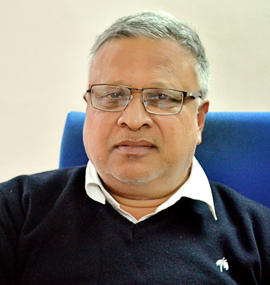
R K Bansal is a Professor in the Department of Electrical Engineering at Indian Institute of Technology Kanpur (IIT Kanpur). He has been actively contributing to the fields of Detection Theory and Information Theory for several decades with a strong academic background including a PhD from University of Connecticut (1987). His research interests include: Universal data compression with applications Sequential detection of a change in distribution Robust detection Ergodic theory and large deviation theory applications Stochastic processes Dr. Bansal's recent publications primarily focus on data compression algorithms, particularly variations of the Lempel-Ziv algorithm, and detection theory applications. His work demonstrates a strong theoretical foundation with practical applications in information processing and analysis, showing consistent research activity from the 1980s through 2013. He has received significant recognition for his teaching excellence: Letter of commendation from Director on best teaching (2011) Outstanding tutor for Mathematical Statistics (BSO209) based on student feedback (1998-II) Consistently high teaching evaluations exceeding institute averages Dr. Bansal has advised students and maintained active research in his specialized areas, though specific names of current advisees are not mentioned in the available information. His research has been published in prestigious venues including IEEE Transactions on Information Theory. His laboratory is located in room 202 ACES (Advanced Centre for Electronic Systems) at IIT Kanpur, serving as the base for his research activities in detection theory and information theory applications.
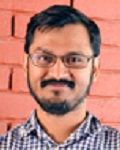
Dibakar Ghosalمشاهده پروفایل
دانشیار
- Seismology
- Tomography
- Subduction tectonics
- +۷ مورد دیگر
Dr. Dibakar Ghosal is an Associate Professor in the Department of Earth Sciences at the Indian Institute of Technology Kanpur (IIT Kanpur). He leads the Crustal Imaging Laboratory (CIL) which is equipped with state-of-the-art seismic data acquisition setup and processing software for both land and marine seismic datasets. His research spans exploration seismology, tectonic studies, and algorithm development for subsurface imaging across diverse geological settings. Dr. Ghosal's educational background includes: PhD in Geophysics (2008-2013) from Institut de Physique du Globe de Paris (IPGP), France M.Sc. in Geophysics (2004-2006) from Indian Institute of Technology Kharagpur, India B.Sc. in Geology, Mathematics and Physics (2001-2004) from Jadavpur University, India His research focuses on three major themes: (1) Tectonic studies across Himalaya, Sumatra-Andaman, and Bay of Bengal using high-resolution seismic datasets; (2) Development of algorithms for petrophysical parameter estimation of hydrocarbon and ore reserves; and (3) Ambient Noise and earthquake data analysis. His work integrates field data acquisition, computational modeling, and advanced algorithm development to address fundamental questions in Earth sciences, with particular emphasis on crustal architecture and resource exploration. His recent publications demonstrate expertise in crustal imaging techniques, tectonic analysis of subduction zones, and algorithm development for seismic data processing. The research spans diverse geographical regions including the Himalayas, Sumatra-Andaman region, Bay of Bengal, and Southern Indian Ocean, with applications to hydrocarbon exploration, tectonic studies, and crustal architecture analysis. Dr. Ghosal has received several prestigious fellowships and awards: 2023: Scientific High Level Visiting Fellowship (SSHN) from French Institute in India (IFI) 2022: INSA visiting scientist fellowship 2019: Visiting Faculty at IPG Paris, France 2019: Visiting Faculty at NTU Singapore 2014-2015: Postdoctoral fellowship, Geocentrum, Uppsala University, Sweden 2008-2012: PhD fellowship, IPG Paris, France Dr. Ghosal actively mentors students and has supervised numerous PhD, MTech, and BS-MS students. His research is supported by multiple sponsored projects from DST-SERB, MoES, ONGC, and other funding agencies. He has successfully completed projects on topics including seismic imaging of the Himalayan foothills, gas hydrate reservoir modeling, and petrophysical property estimation. He leads the Crustal Imaging Laboratory (CIL) at IIT Kanpur, which conducts field work across various regions of India including the Himalayas and offshore areas. The laboratory is equipped with RAUs, 3C Tromino sensors, seismic thumpers, and advanced processing servers. He collaborates with national institutions including NIO Goa, IISER Pune, and NGRI, as well as international institutions such as IPG Paris, Uppsala University, and Texas A&M University.